Hood design-Week 2
OBJECTIVE:-
Design a Car Hood's outer panel, Inner panel, and Reinforcements by following master section references and considering all dimensions.
1. INTRODUCTION:-
HOOD:-
A car hood also referred to as a bonnet in some other countries is the hinged cover that rests over the engine of a front-engine vehicle. Its purpose is to provide access to the engine for repair and maintenance. A concealed latch is typically used to hold down the hood. On vehicles with an aftermarket hood and on racecars, hood pins may be used to hold down the car hood. Hoods sometimes also contain a hood scoop, wiper jets, power bulge, and/or hood ornament. Car hoods are typically constructed from steel and sometimes from aluminum. Aftermarket car hoods may be constructed from various other materials, including carbon fiber, fiberglass, or dry carbon. The hood design may vary from one make and model to another.
DESIGN CONSIDRATION:-
The hood of the engine is designed in such a way that reduces the air effect and all the maintenance parts are easy to do it should also protect from the external disturbance of the engine. When the car comes to an accident it must be impact force and distributed outside so it should be the Y-shape.
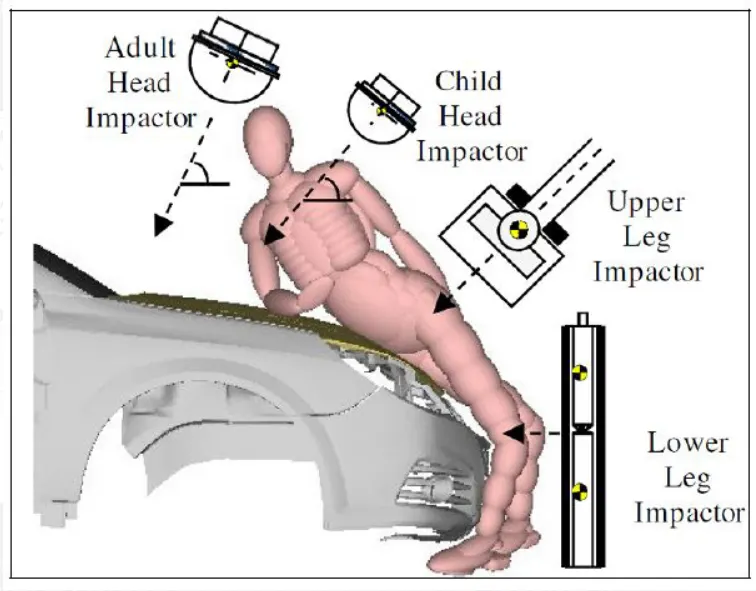
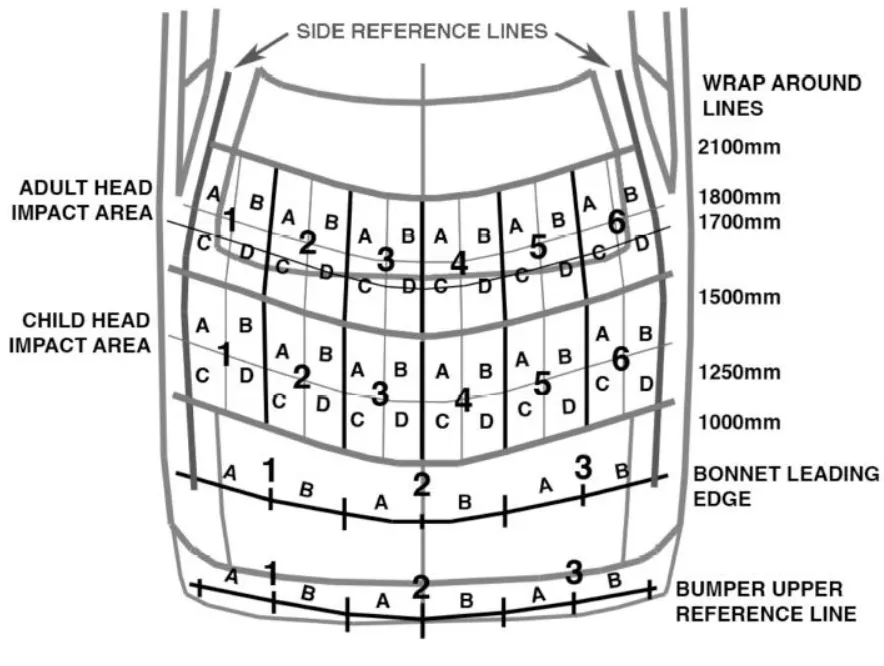
While designing Hood should take care of Safety, Quality, Styling, and manufacturing. The Most critical safety requirement to be considered while designing the Hood is pedestrian safety from collision from the front side. Pedestrian safety, It’s a norm that provides a safety feature to the body when a car gets collide from the front side and reduces injuries to the body.
MANUFACTURING REQUIREMENTS:-
- Before getting into production it is very important to design it and look into the requirement. The material should be an impact absorber and lighter in weight.
- Avoid providing sharp corners, corners, and Negative drafts.
- Outer Panel Thickness= 0.75 mm
- Inner Panel Thickness= 0.75mm
- Reinforcement Thickness= 1.5mm
Master Section:-
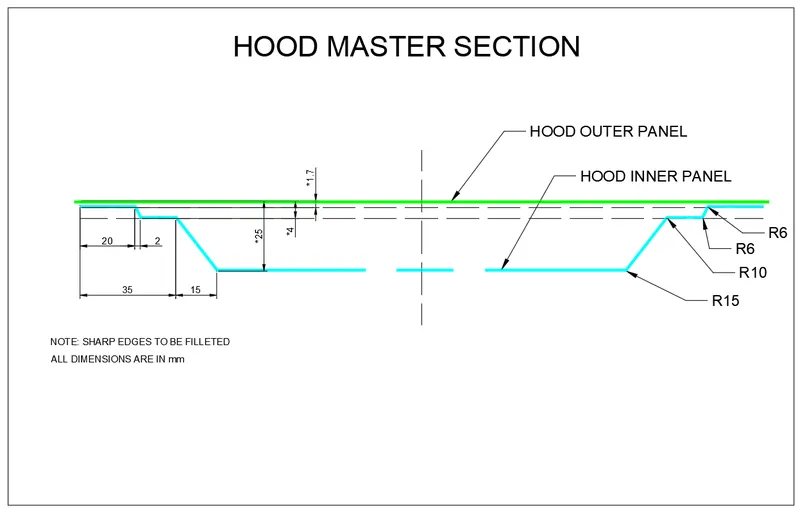
It gives information about the Hood's inner and outer panels to get the desired shape and size. After getting the shape Embossing is a feature used to raise the surface. It also provides strength and directs the force from the front collision toward the hinge and body of the car.
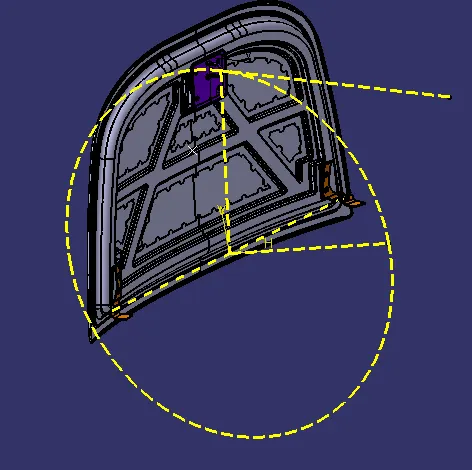
Position of Hinge and Striker:-
For the proper opening and closing of the hood, the striker should be perpendicular to the trajectory of the hood.
Latch and Hing Reinforcement:-
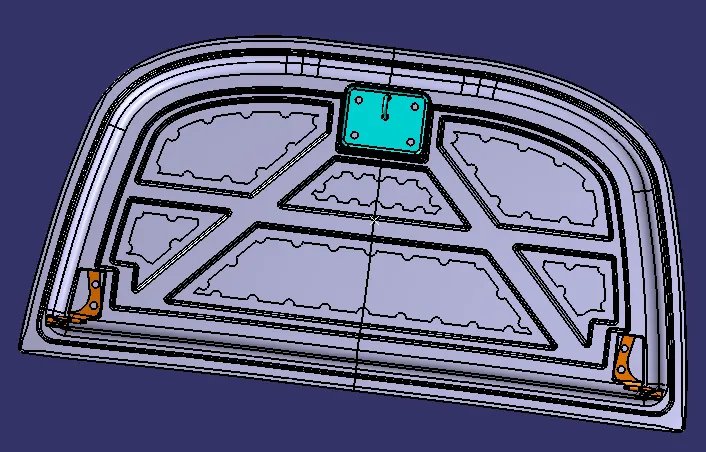
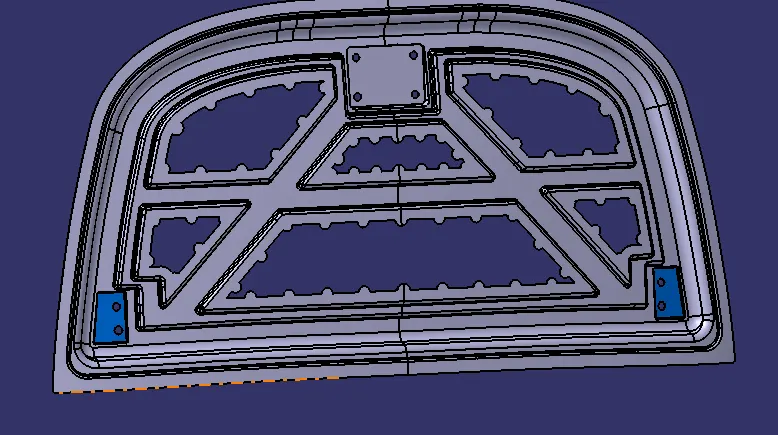
Hinge:- It is used to mount the Hood into the desired position so that it can easily close and open when required.
Latch:- It is mounted in the inner panel and provides a locking system.
Mastic:-
As the outer panel provides a luxurious look so we can’t provides nut & bolts or welding on that. So here mastic sealant is used to pack the inner and outer panels including hamming. It is in liquid form but when it goes into the hot bath furnace it gets hard and provides strength to the hood.
HEMMING:-
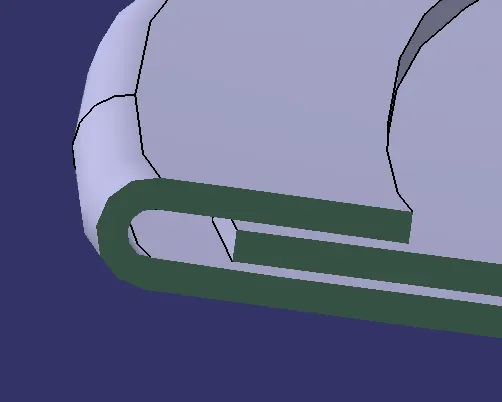
Here, the edge is rolled like U-shape for joining and it also improves the appearance of the combined body.

Common Metal Stamping Processes
Disregarding steps such as design and prototyping, which are necessarily performed prior to stamping, there are nine primary processes involved in the actual stamping of metal parts.
Blanking
When required, blanking is the first step of the stamping process. Blanking is the process of cutting larger sheets or coils of metal into smaller, more manageable pieces. Blanking is usually performed when a stamped metal piece will be drawn or formed.
Piercing
If a part requires slots, holes, or other cutouts, piercing can be employed. Piercing, which can be performed simultaneously with blanking, punches the requisite shapes out of the metal sheet.
Drawing
Drawing is the actual stamping in the metal stamping process. A punch forces a section of metal through a die, providing the primary shape of the part. When the depth of the part is less than the primary opening, it is considered shallow drawing; parts with a depth greater than the opening are deep drawn.
Bending
Bending is a fairly self-explanatory process. The part-in-progress is placed on a specially designed die and a ram pushes against the metal, providing the required bend. Bending is performed after drawing, as attempting to punch an already bent piece of metal causes the entire part to deform.
Air Bending
Air bending is when the flat surface of a part is bent by a punch into a die, often V-shaped. The space between the punch and die is larger than the metal thickness, resulting in a bend that relaxes slightly when the part is released. Air bending uses less power and pressure than other bending methods.
Bottoming and Coining
Bottoming and coining are bending processes that are similar to air bending, but use anywhere from two to 30 times the pressure, and the material is forced fully into a tight-fitting die, resulting in a more permanent bend.
Forming
Forming is a bending process similar to bending, bottoming, and coining. It creates parts with multiple bends, such as U-bends, in one step.
Pinch Trimming
Pinch trimming is a method of cutting a piece from a metal sheet, and separating it from the scrap metal. It is an unconventional process: the metal is pinched against a flat vertical surface. It is often, but not exclusively, used to cut deep drawn round cups from the sheet.
Lancing
A unique process, lancing is a type of metal cutting used to make vents or tabs. A section of a part is cut along three edges and simultaneously bent. This creates the opening or hook-like feature required but eliminates a scrap collection or secondary machining step.
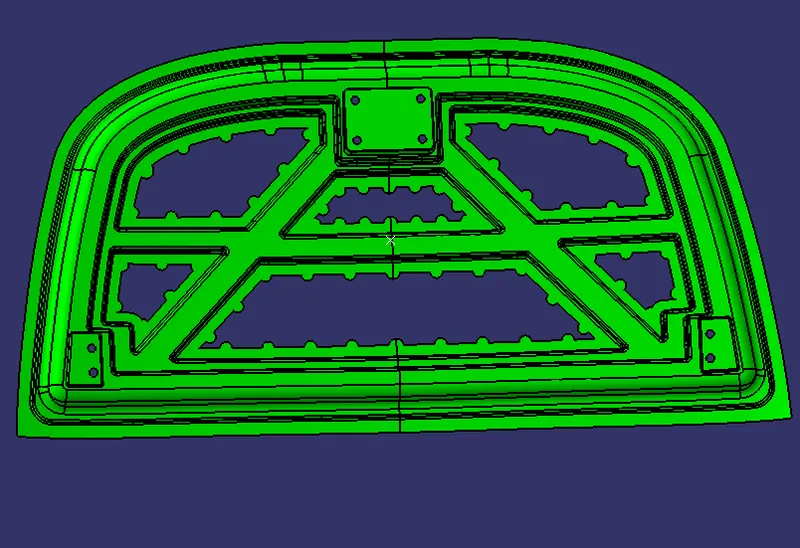
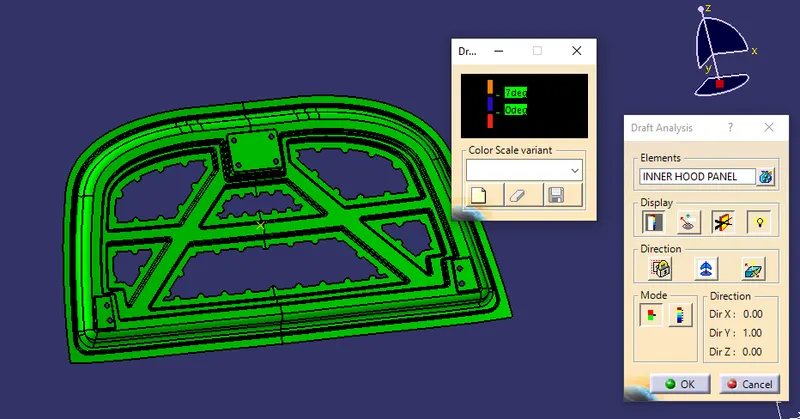
Draft analysis for the inner panel:-
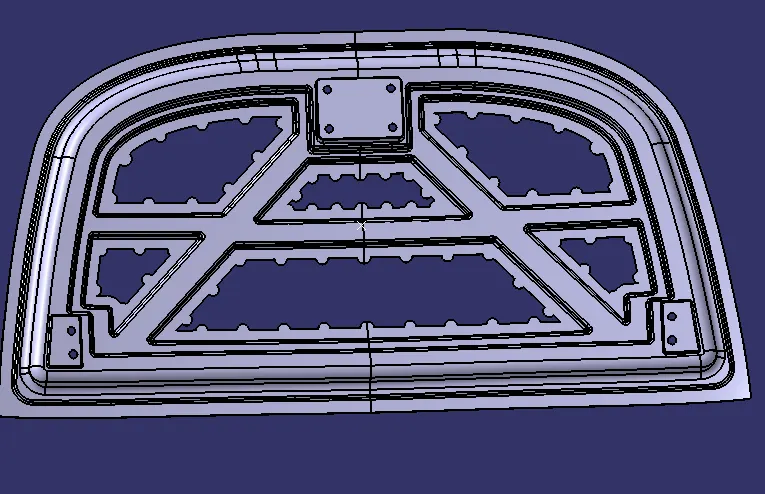
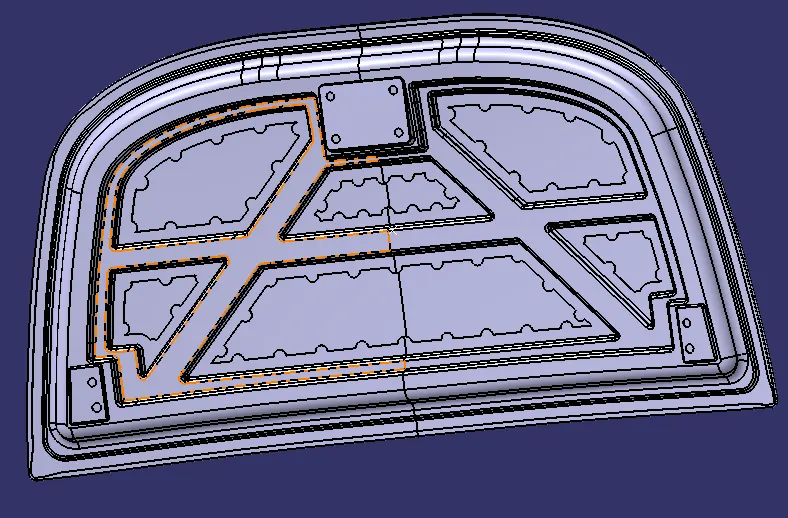
Assembly Of Hood Design:-
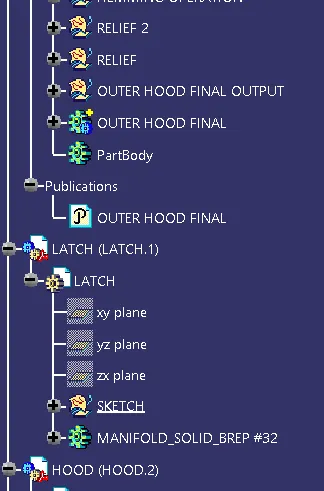
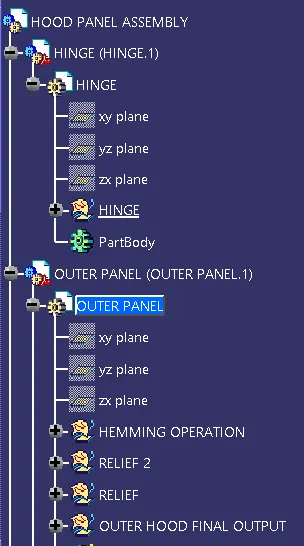
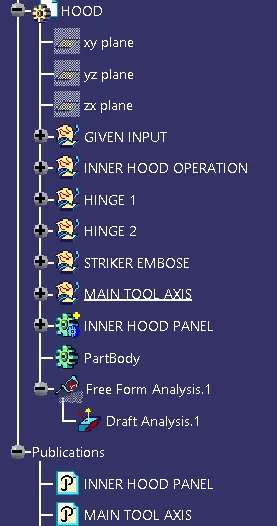
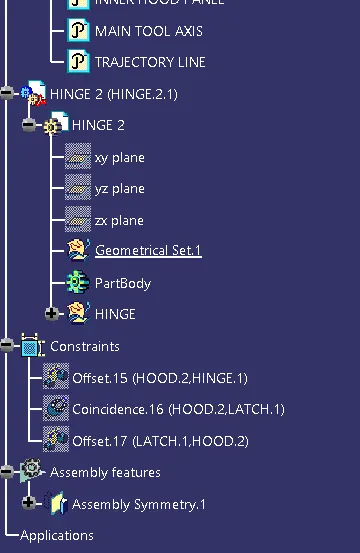
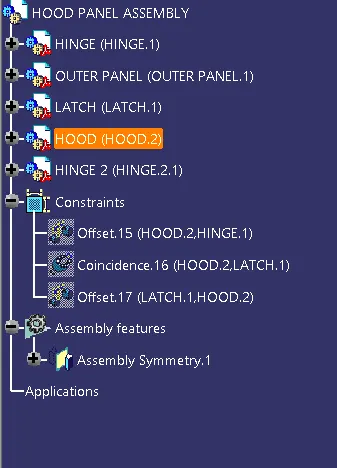
Tree Feature: