Hood design-Week 2
AIM:
Our aim for this project is to create a hood assembly from the hood outer panel which is provided as input surface to us according to the master section sketch.
Software used: Siemens NX 12.01
the report contains
1.introductions
2. Design Consideration
3. Design
4. Draft Analysis
5. Conclusion
Introduction:
Bonnet is an important component of the front portion of the car which is used for many purposes. Bonnet is used to decorate front portion of the car and to add luxurious look. It is made aerodynamic in shape to reduce air effect. Generally it is used to cover car engine, radiator and many other parts, therefore bonnet must be designed in such a way that all the maintenance parts should be ease of access and it should give a minimum impact of external disturbance on the engine. When car come across any accident from the front portion most of the time bonnet system gets damaged and absorbs some part of impact energy resulting from crash
Hood mainly consist of 4 components:
Inner panel, Outer panel, Hinges and Latch striker.
Outer panel gives the aesthetic look whereas inner panel have some embossing on it according to the force distribution and safety requirements.
Design Consideration:-
opening angle of the hood.
This criterion average height of the humans in the region of consideration. For example, the average height of a human being in India is 5.8 feet whereas in European countries the average height of a human being is 6 feet. Hence the opening angle of the hood greatly depends on the height of the human which can be controlled by the support rod or gas stay.
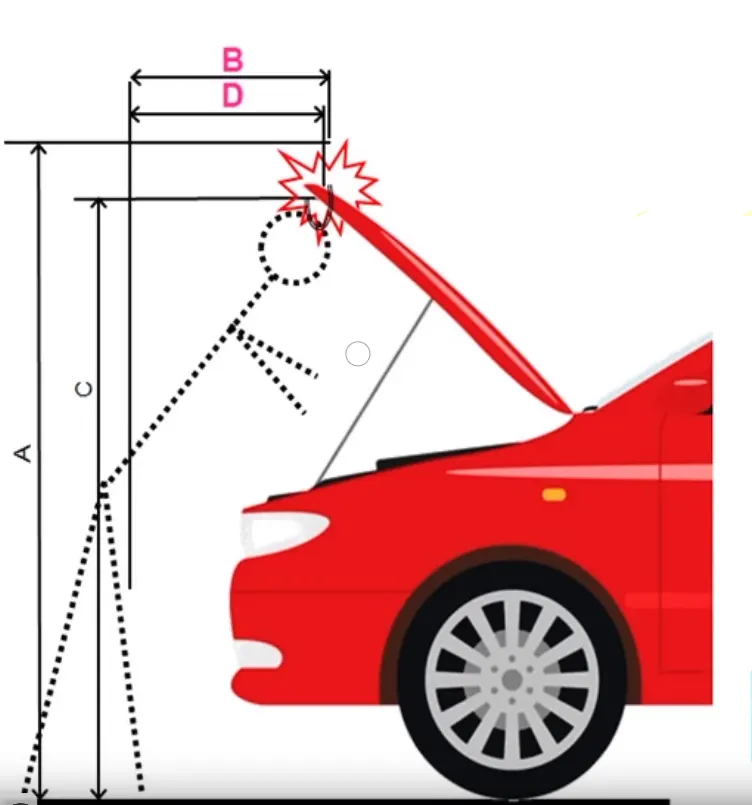
The opening angle is considered important criteria because when the opening angle is less there is a chance of head injury to the human.
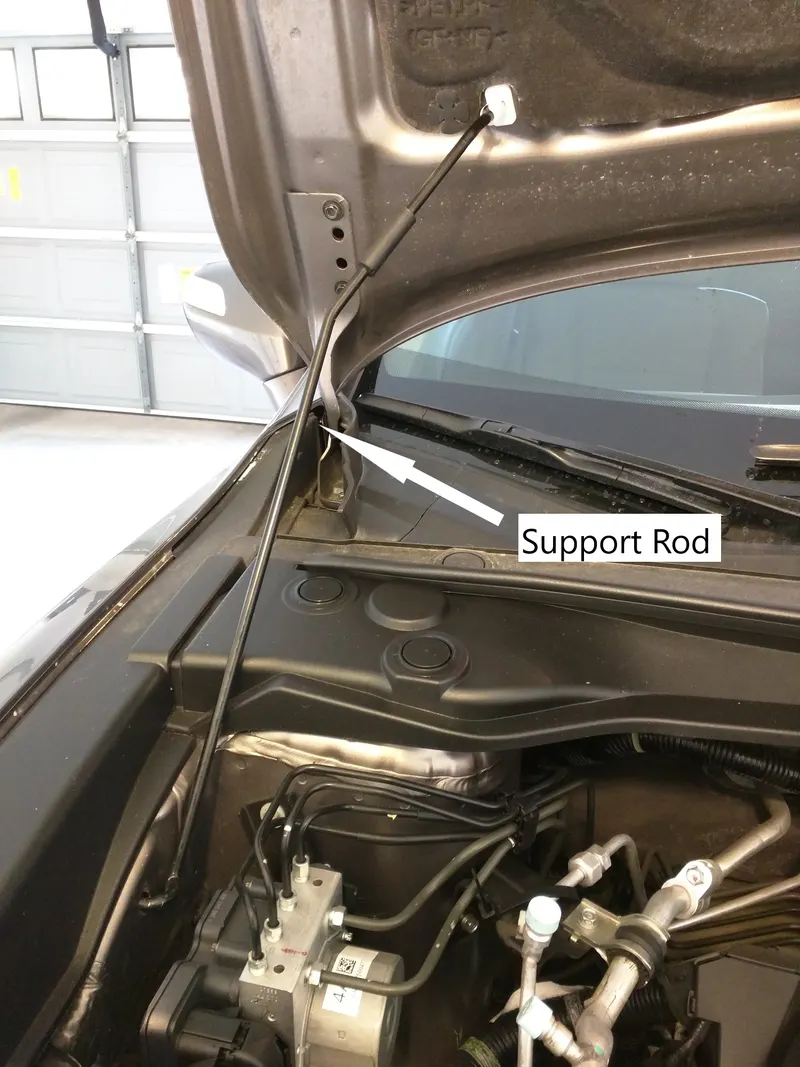
By varying the length of the support rod the opening angle can be varied.
Gas Stay is a mini version of the bicycle pump in which the compressed nitrogen is stored in the pump with oil and tightly sealed so that the gas can't escape. The gas allows to store energy which produced by the force acting on the piston and oil damps the movement of the piston and also lubricates it. When force is acted upon the piston, it compresses the gas, and energy is stored and when force is stopped acting on the piston, the stored energy is released moving the piston to its free state position.
Consideration of Noise Vibration Harshness (NVH): Noise, vibration, and harshness (NVH), also known as noise and vibration (N&V), is the study and modification of the noise and vibration characteristics of vehicles, particularly cars and trucks. While noise and vibration can be readily measured, harshness is a subjective quality, and is measured either via "jury" evaluations, or with analytical tools that can provide results reflecting human subjective impressions.
Manufacturing Process:
The following are the manufacturing steps done to generate the outer and inner panel of the hood.
Blanking: It is the process where the required sheet metal material is cut from the sheet metal coil for the manufacturing of the hood using a blanking die.
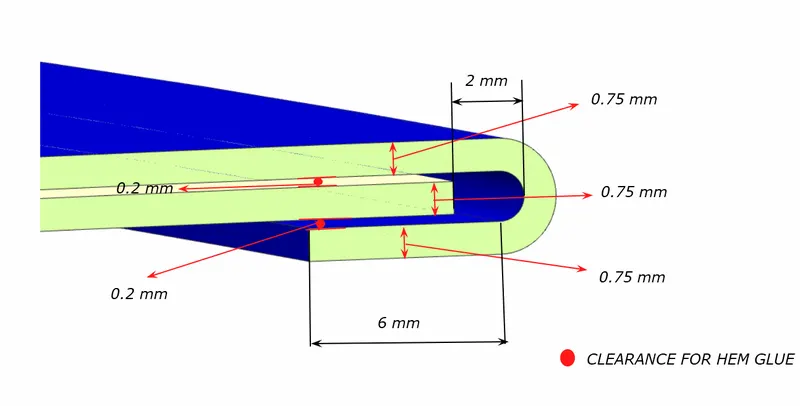
Hemming is a technology used in the automotive industry to join inner and outer closure panels together (hoods, doors, tailgates, etc.). It is the process of bending/folding the flange of the outer panel over the inner one. The accuracy of the operation significantly affects the appearance of the car’s outer surfaces and is, therefore, a critical factor in the final quality of a finished vehicle
Different types of hemming methods are
1. Die hemming method
2. Table-top hemming method
3. Robotic Roller hemming method.
Design specifications for the automotive hood component
Data to be used:
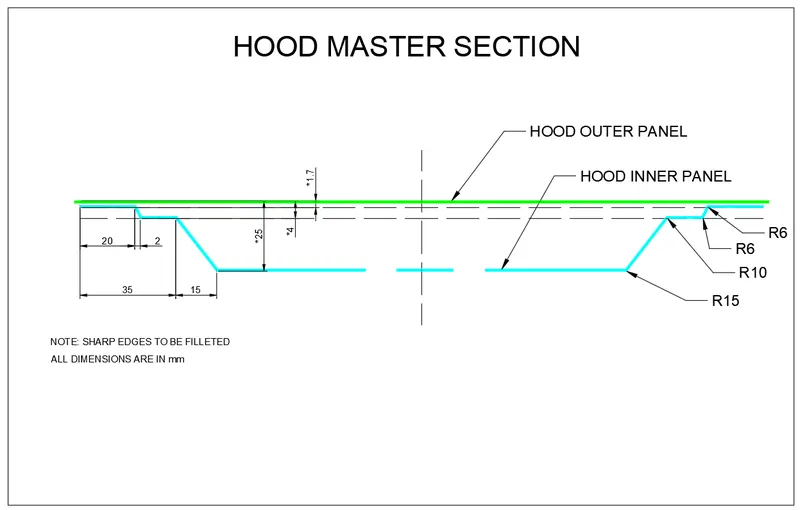
Hood Thickness Information
- Outer Panel Thickness = 0.75mm
- Inner Panel Thickness = 0.75mm
- Reinforcement Thickness = 1.5mm
Master Section:
Hemming Data:
Relief rear section:
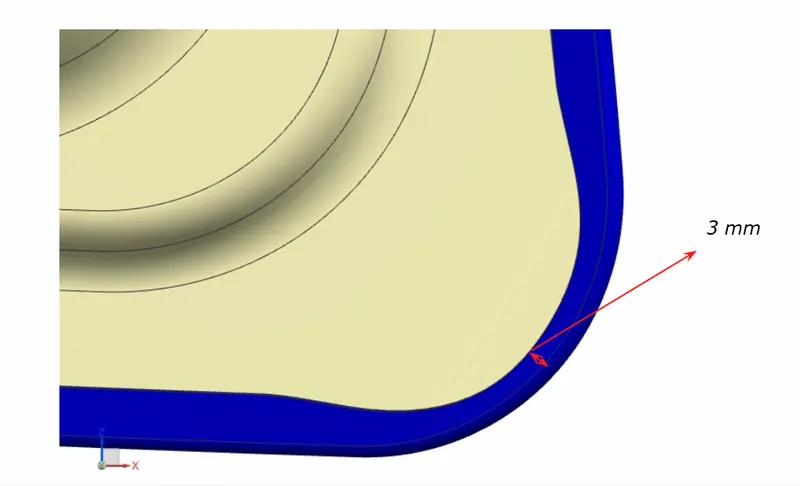
Front relief:
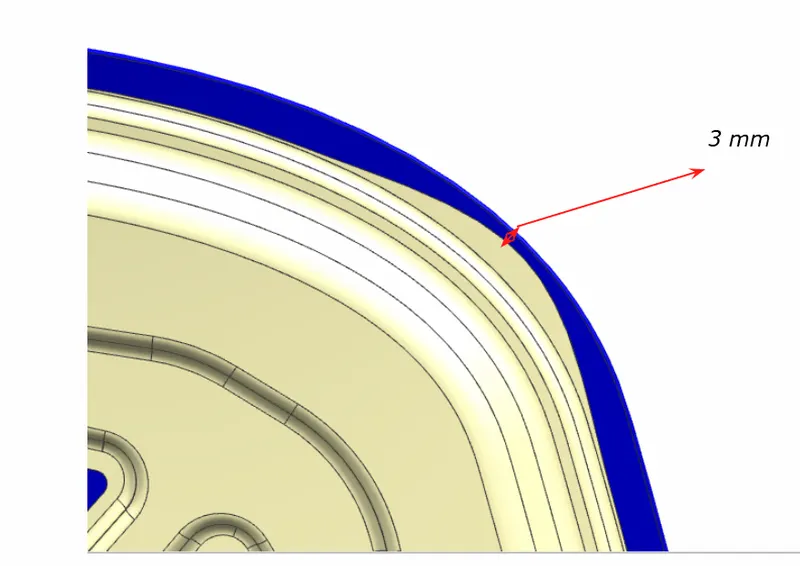
inputs:
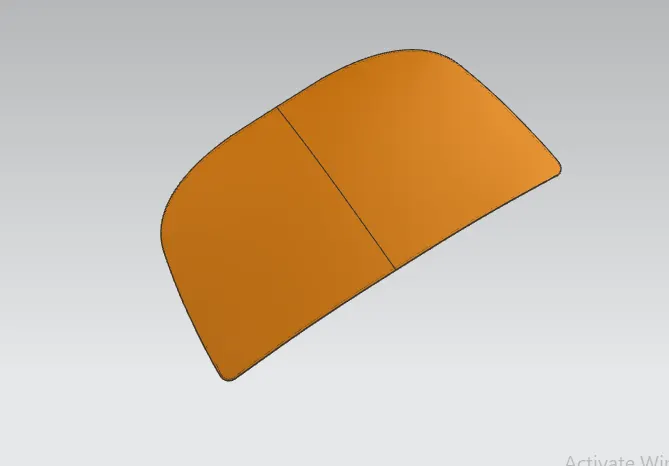
class a surface of outer panel:
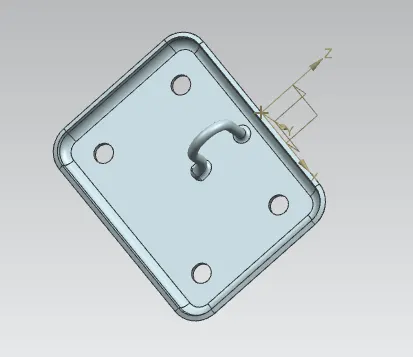
striker:
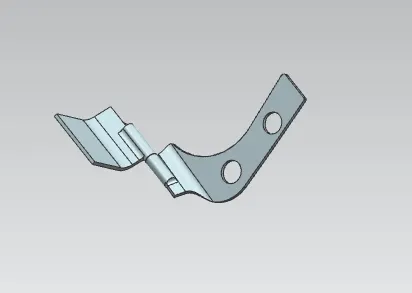
hing assembly:
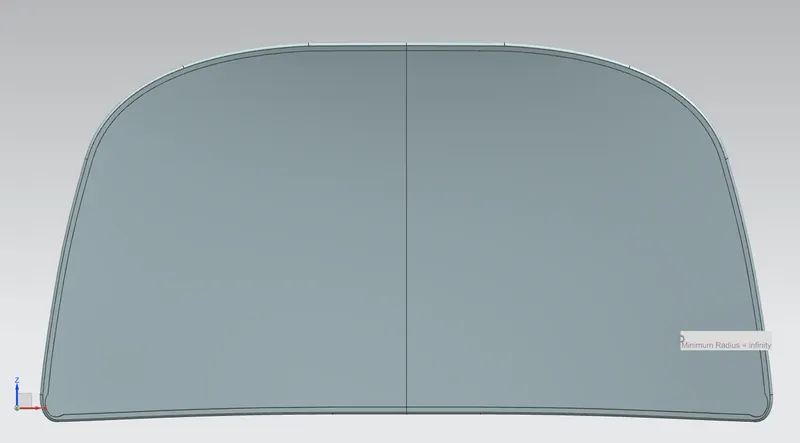
Outer Panel :-
We get the outer panel skin surface from style department with proper aesthetic look, gap etc. The shape of the Outer panel is made aerodynamic in order to minimize the air effect. Shape of Outer panel is reffered as a base to design a inner panel.
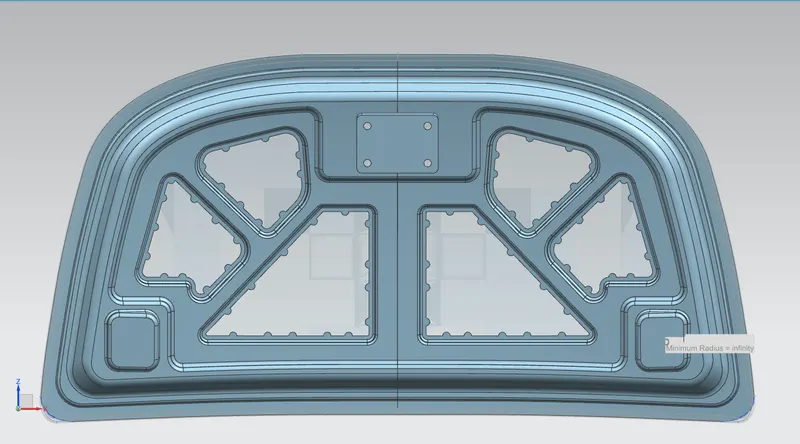
Inner Panel :-
Hood Inner panel is main functional part in hood design. It gives structural support and strength to the outer panel of Hood. The outer and inner panels of the Hood are typically attached together using a hemming operation at the edges.
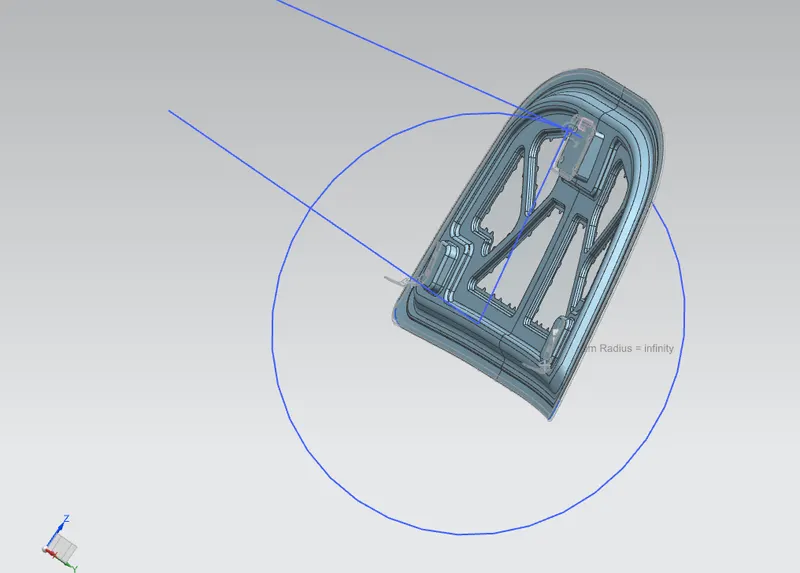
Latch Trajectory :-
Circle is drawn from the hinge axis center so we can finalize the position of latch striker. For proper mating, the tip of the striker should be tangential to the latch trajectory. the position of latch striker follows the path of this circle.
Final assembly :-
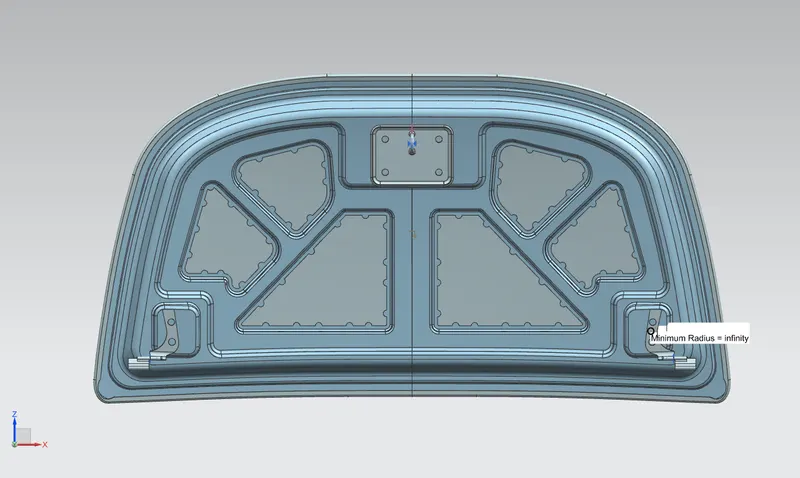
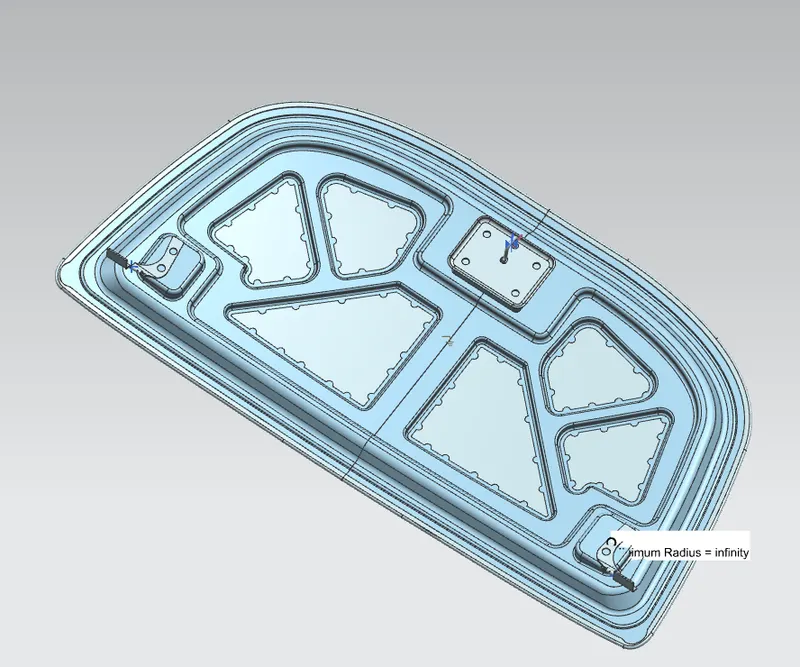
Conclusion
Thus the hood was successfully designed by following the procedures. Hood inner and outer panels are usually manufactured through metal stamping processes. Metal stamping is a manufacturing process used to convert flat metal sheets into specific shapes. It is a complex process that can include a number of metal forming techniques — blanking, punching, bending and piercing, to name a few. Stamping — also called pressing — involves placing flat sheet metal, in either coil or blank form, into a stamping press. In the press, a tool and die surface form the metal into the desired shape. Punching, blanking, bending, coining, embossing, and flanging are all stamping techniques used to shape the metal.