Hood design-Week 2
AIM:
Our aim for this project is to create a hood assembly from the hood outer panel which is provided as input surface to us according to the master section sketch
HOOD INTRODUCTION:
.he hood is the hinged cover over the engine of motor vehicles. Hoods can open to allow access to the engine compartment,Hood stay is an apparatus for supporting the engine hood of a moto vehicle in its open position. It is the most critical part of the car as it is always exposed to the frontal crash, climatic conditions, heat generation by the engine compartment,
Hood mainly consist of 4 components:
Inner panel
Outer panel
HingesLatch
striker
Inner panel;
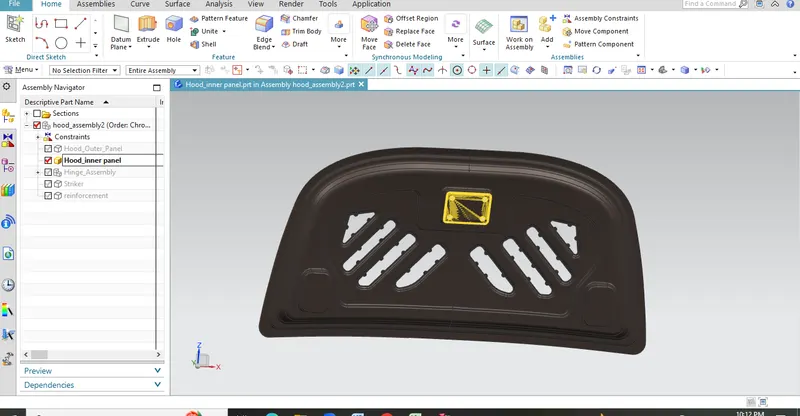
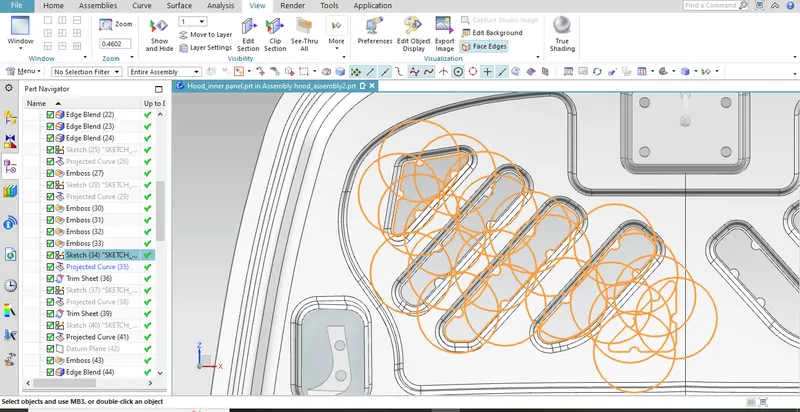
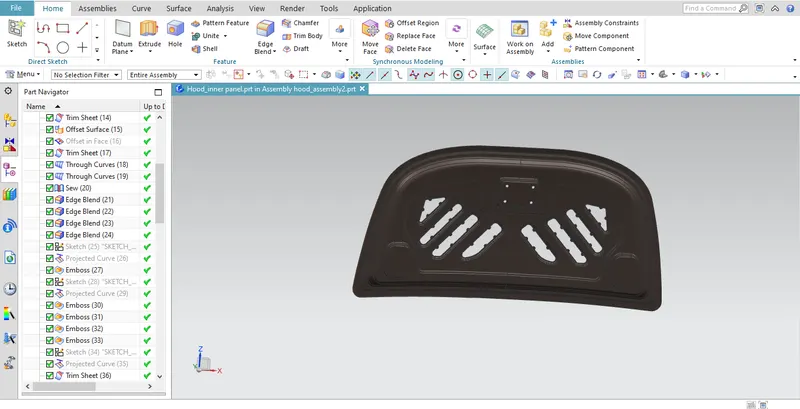
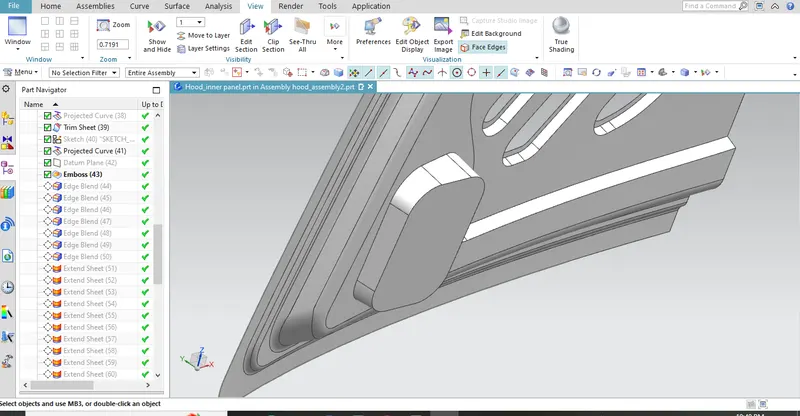
Inner panel is the part that gives strength and rigidity to the outer panel. The master section represents the initial emboss shape and size. Then we provide the emboss for the latch and hinge elements after fixing the location.
In the inner panel only we can research and implement the safety of pedestrians and as well as the driver.in this panel only we can attach the reinforcement, embossed, mastic points
Outer panel;
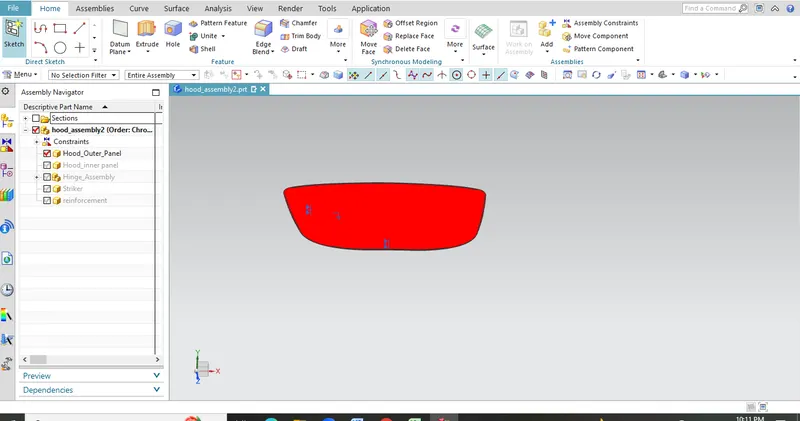
Outer panels are the aesthetic elements of a car. It is the styling team who provides the skin for the outer panel. The shape, position and size of the hood should satisfy the safety norms. So while designing the hood we should give more importance to pedestrian safety. The outer panel is attached to the inner panel by hemming. So, it is necessary to provide required hemming flange and reliefs for the hemming operation. We also provide mastic sealants between outer panel and inner panel to reduce vibration.
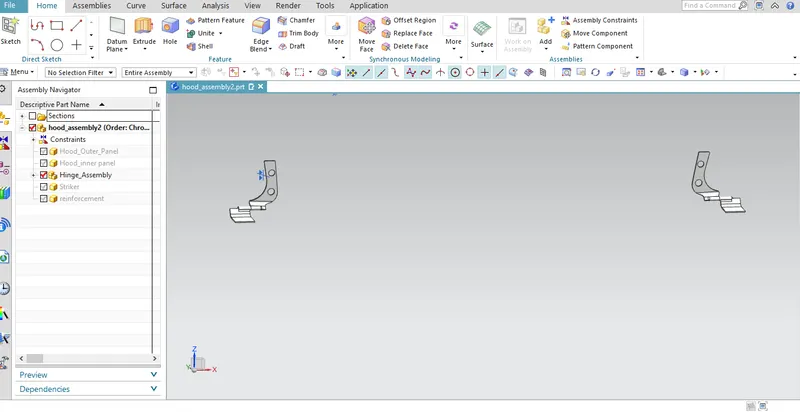
Hinges
Latch trajectory is given by the circle drawn from the hinge axis point. Hinge axis point is the centre point of the hinge axis.
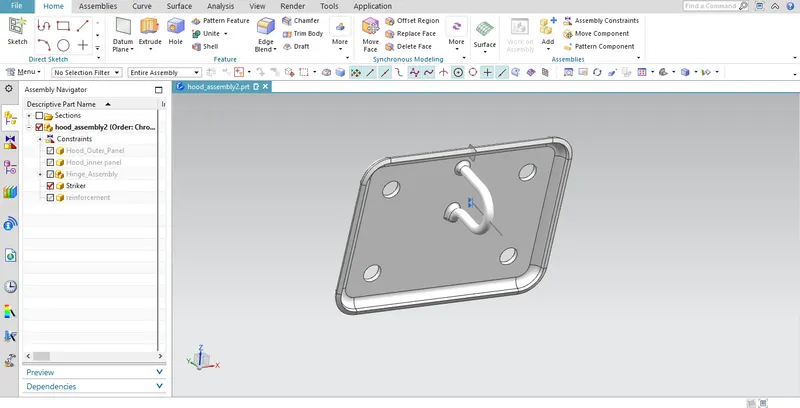
First, we can fix either the latch or the hinge. If we have fixed the hinge position then we should plot the Trajectory circle for the latch. For proper mating condition the striker axis through the tip of the striker should be tangential to the latch trajectory.
LATCH
A hood latch is a very simple component. It's basically the fastener that keeps your hood closed shut. This latch ensures that your hood is securely connected to your vehicle and that it doesn't pop open unexpectedly
When tension is applied to the cable from the hood release handle, it pivots the secondary latch, which pulls away from a retaining seat located under the hood. By design, the secondary latch then releases the hood a few inches before a safety latch takes over.
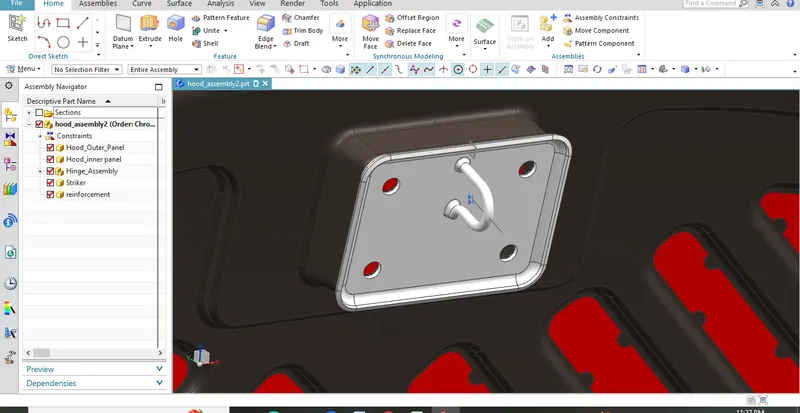
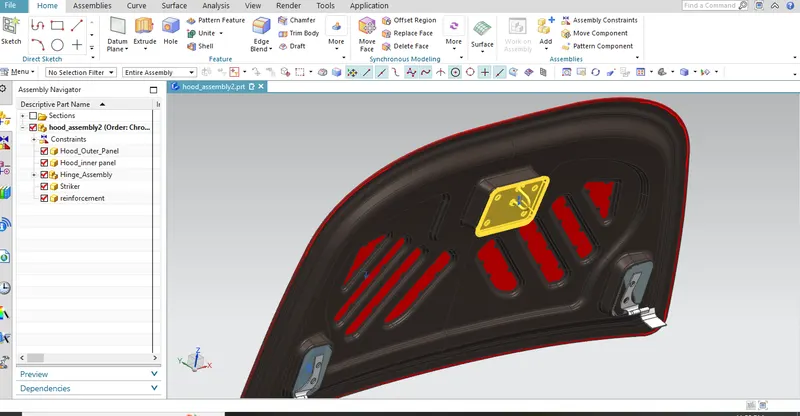
HOOD ASSEMBLY;
Conclusion;
Therefore, we have designed a hood that falls under the rules and regulations of the manufacturer's standards.