Hood design-Week 2
Objective:- Designing of hood, understand the mechanisms behind hood design, and then develop safety features according to design considerations.
TASK to be Performed:-
- Design Outer Panel and Heming.
- Develop the Inner Panel.
- Develop all the Necessary Reinforcements.
- Mirror and position the Hinge & Striker.
- Provide Mastic Data.
- Provide the required Emboss definition.
- Develop a detailed Report for the Mastic position and Embosses you have placed.
The hood of the car is considered the front BIW housing component. The hood is designed to reduce drag as air flows around the car. The hood design is very important as it affects the aerodynamic flow around the car. Additionally, the hood is designed to meet other requirements. They go a long way in protecting vehicle occupants and pedestrians in the event of an accident. Also works as an engine cover.
The following are the guidelines should be considered while designing the hood:-
- Outer Panel Thickness = 0.75mm
- Inner Panel Thickness = 0.75mm
- Reinforcement Thickness = 1.5mm
- Minimum fillet radius = 3mm+thickness
- No sharp edges
- Provide proper corner relief
- Emboss maximum depth =6-7mm
Components:-
Car hood consists of several components such as Outer pannel, Inner Pannel, Hinges, Stricker, reinforcement and Stay rod.
Outer Pannel:-
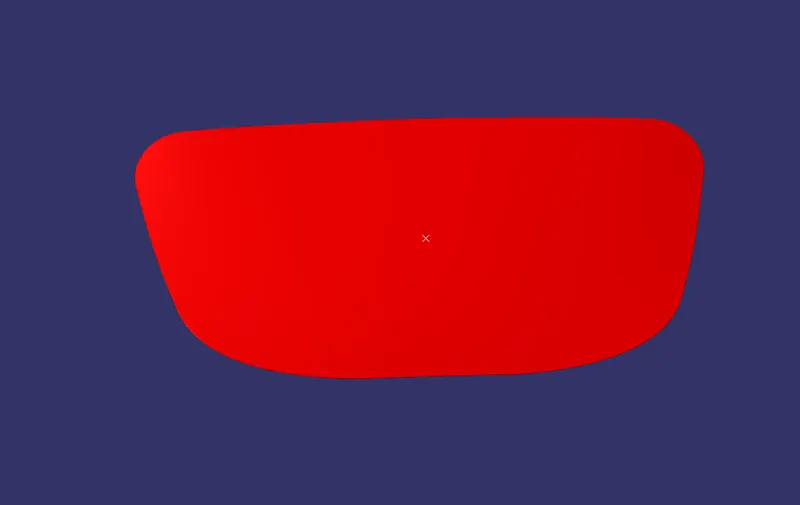
The external board functions as a metal cover. It is responsible for aesthetics of the vehicle.
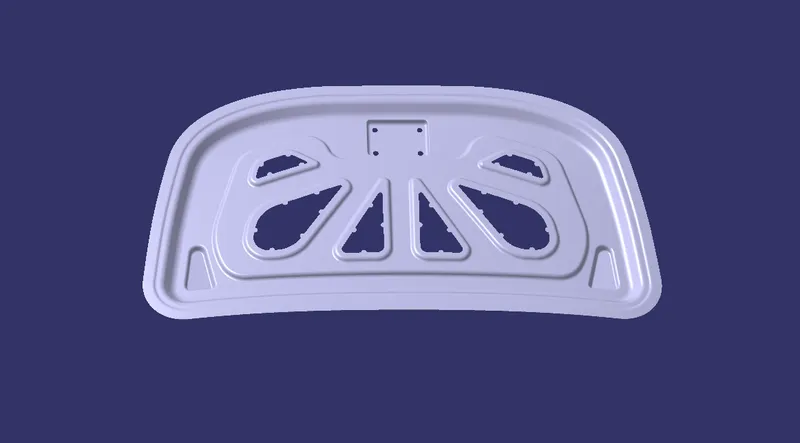
Inner Pannel :-
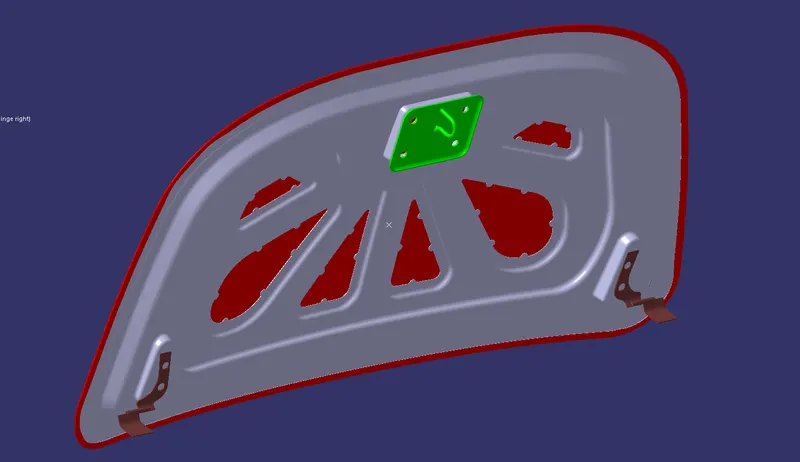
The inward board gives strength and supports the external board. It is where hood balancer and pivots are appended.
Hinges :-
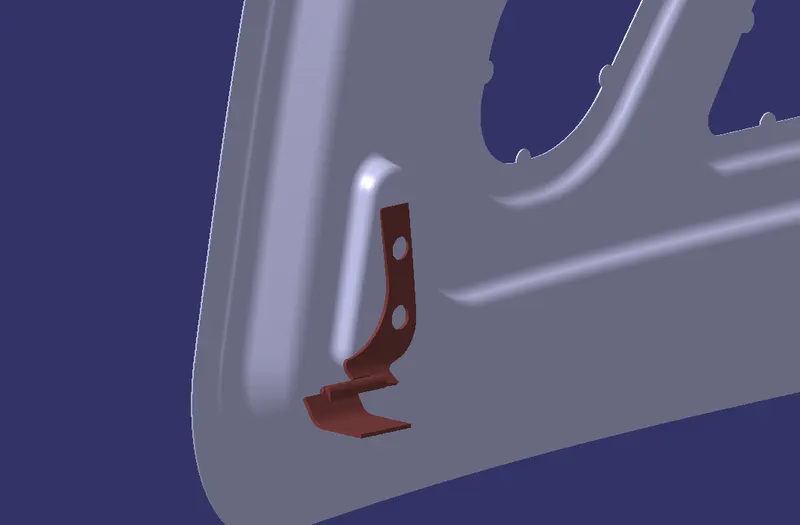
Pivots permit the hood to turn around a decent hub for opening and shutting development. One piece of the pivot is fixed with the motor compartment, while other part is associated with hood.
Striker:-
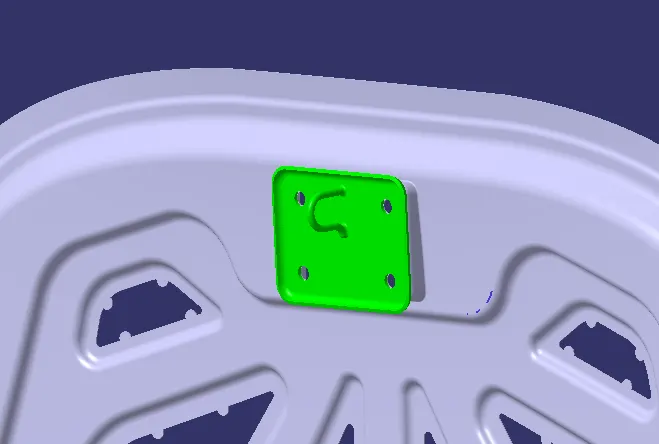
Striker component is given to lock the hood, to forestall unplanned opening of the hood during driving. The hook is available on the engine compartment while the striker is connected to internal piece of hood.
Stay Rod:-
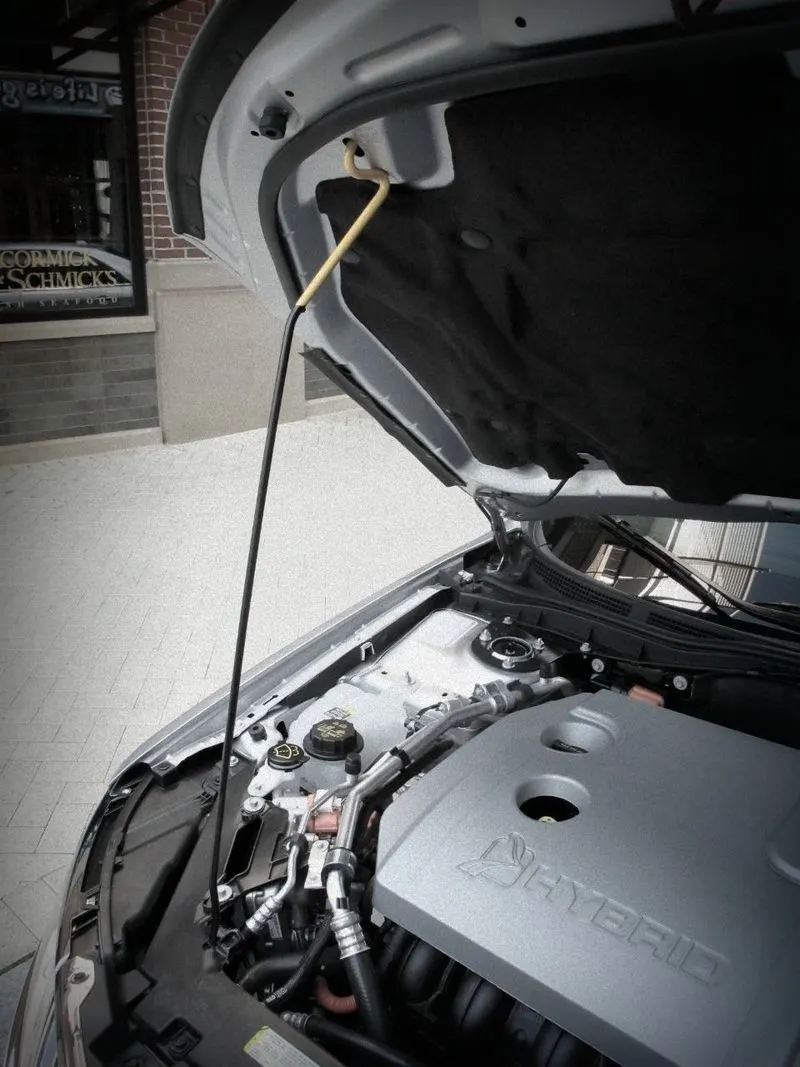
It is a device that supports the hood in open position. It is also called as strut.
Reinforcements:-
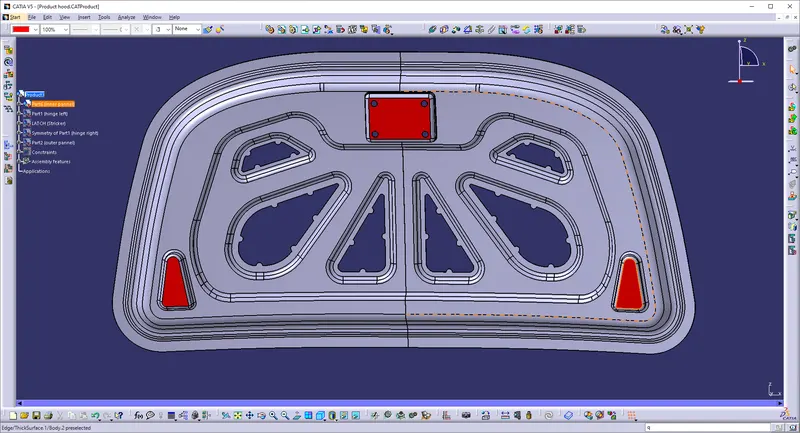
Stiffeners are provided to add material to the inner panels to add strength to the hood and compensate for strength loss near component mounting areas.( Denoted in red )
Mastic Sealant:-
A mastic sealant can help add extra strength to the hood locally. It's basically a hard elastic strip that appears midway between the inner and outer panels of the hood and solidifies inside the heater. With this in mind, mastic foci are placed with the ultimate goal of covering most of the food area.
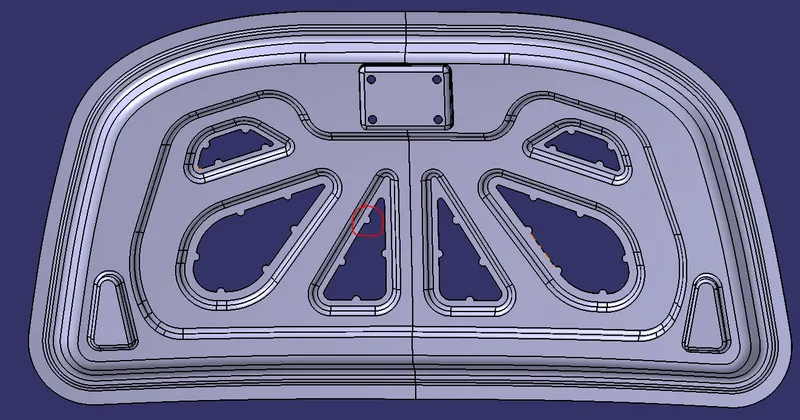
so these are the components used in the developement of a Car hood.
Methodology
Trajectory:-
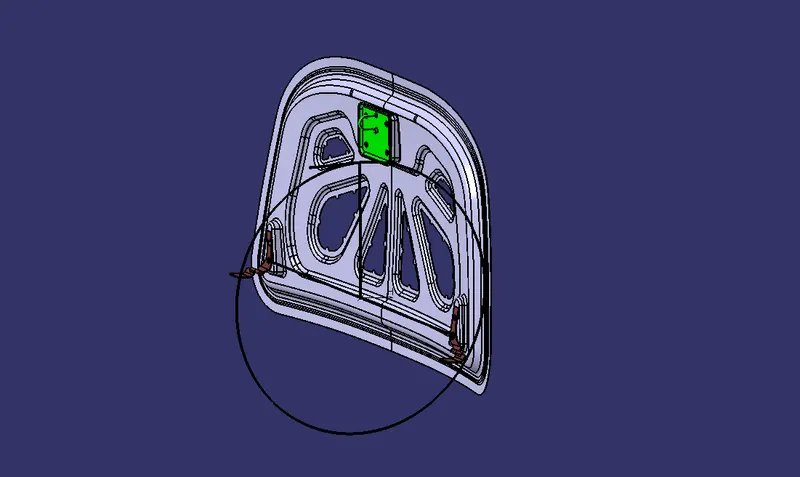
This is the path along which the hood rotates during open-close evolution. The hood striker follows a specific path around the circumference of a circle centered on the pivot hub when the hood is opened or closed. This method is for the hook direction only. Choosing the focal point of the pivot, hook, and firing pin setup is an important aspect in hood configuration.
Design Methodology:-
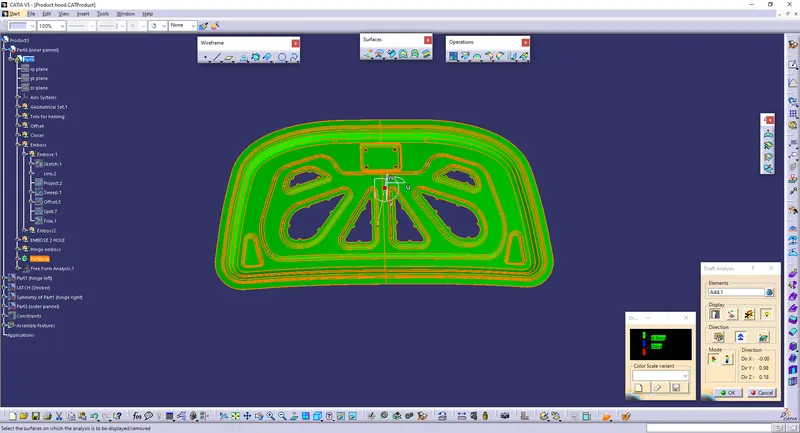
First design the interior trim from the given master section using various commands and functions. Create an embossment using an offset face from the original master section. Similarly, sketch and use the 'Trim Surface' option to create a cut in the embossment.
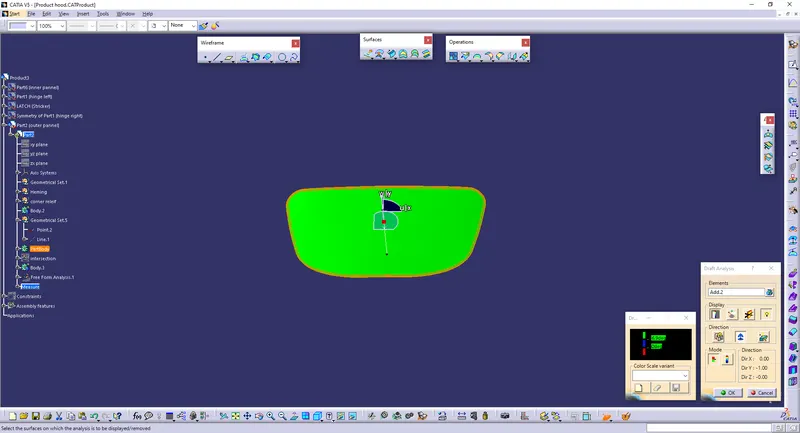
Next, the outer sheets are made from the same master profile. Here we deliver the hem to the outer panel. The folding parameters are taken according to the specified values.
Hinge and locking embossments are made on the inner panel, taking into account their respective dimensions and mounting positions. By first creating the hinge embossing and then fixing the hinge in place, draw an axis through the hinge axis on both sides to form a common axis. Then position the clubs so that they travel along the circumference of a circle with its center at the midpoint of the common axis. This way the firing pin position is fixed and you can create the same embossing.
You can create a hinge reinforcement by creating a new part in the assembly itself using the hinge embossment you just created.
Given Data -
Outer Panel Thickness - 0.75 mm
Inner Panel Thickness - 0.75 mm
Reinforcement Thickness - 1.5 mm
Draft analysis for inner and outer pannel:-