Hood design-Week 2
Introduction:
Hood
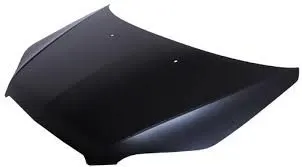
The Hood is the outer panel covering the front engine of the vehicle. It opens to allow access to the engine compartments for the ease of maintenance or repair of the vehicle. Hood is also considered as another door as it consists of the outer panel, an inner panel like side doors of a vehicle.
Outer panel: It is the aesthetic part of the hood. In other words, it is the outer skin of the hood which provides a luxurious look to the vehicle.
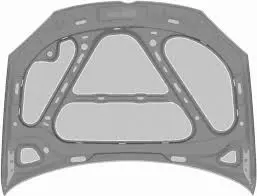
Inner Panel: The hood inner panel provides strength and rigidity to the hood. It also directs the force of the collision outwards instead of into the engine compartment of the car.
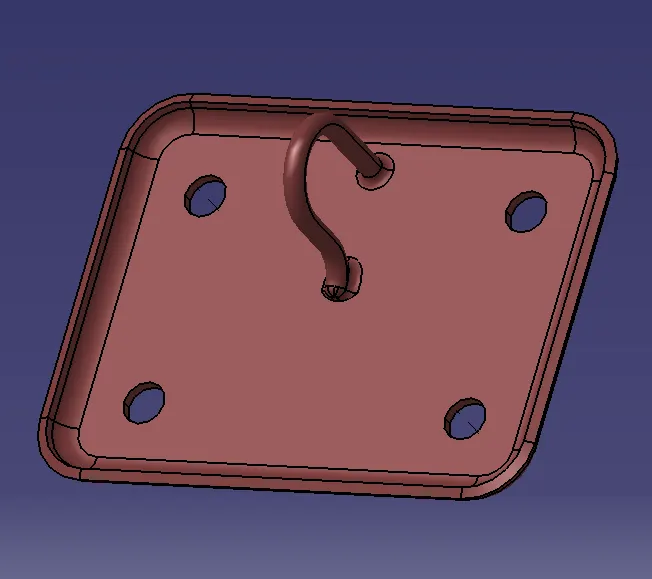
Striker: It is U shaped bend that attaches to the latch in order to lock the hood and prevent any loose movement during the car motion.
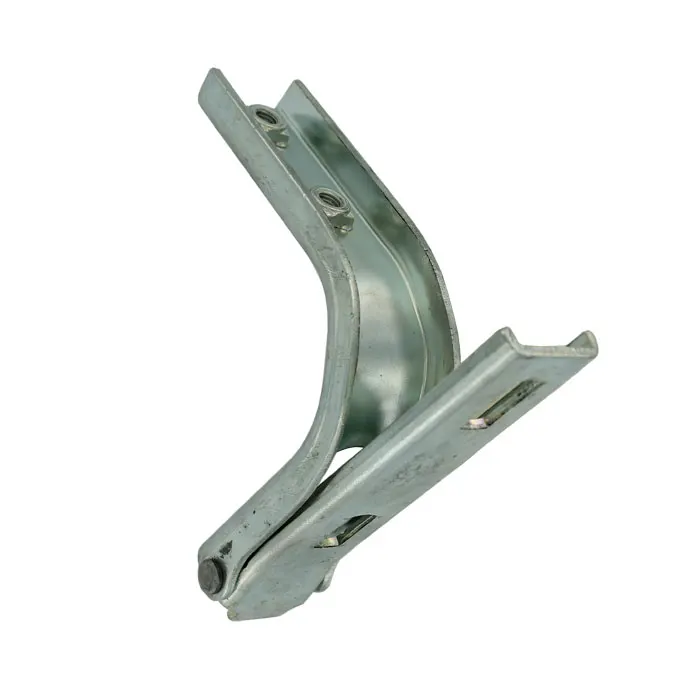
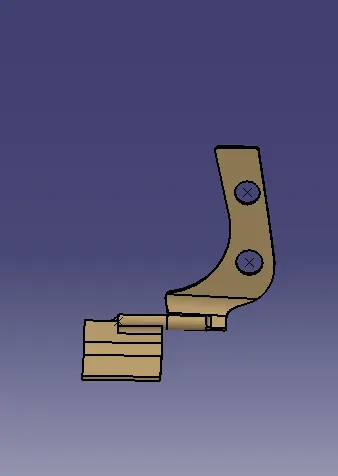
Hinge: It is the pivoting point from which the hood opens and closes.
Materials
Conventional car bonnets today are mostly made of steel or aluminum. Such car bonnets weigh about 10 kgs. This is considered too high and the potential for improvement by weight reduction is expected. The greatest change for weight reduction is material changes and redesign of the inner panel of the bonnet. The most important criteria to be considered is to reduce pedestrian head injury.
Design Considerations:
The first important criterion for designing the hood is the opening angle of the hood.
This criterion average height of the humans in the region of consideration. For example, the average height of a human being in India is 5.8 feet whereas in European countries the average height of a human being is 6 feet. Hence the opening angle of the hood greatly depends on the height of the human which can be controlled by the support rod or gas stay.
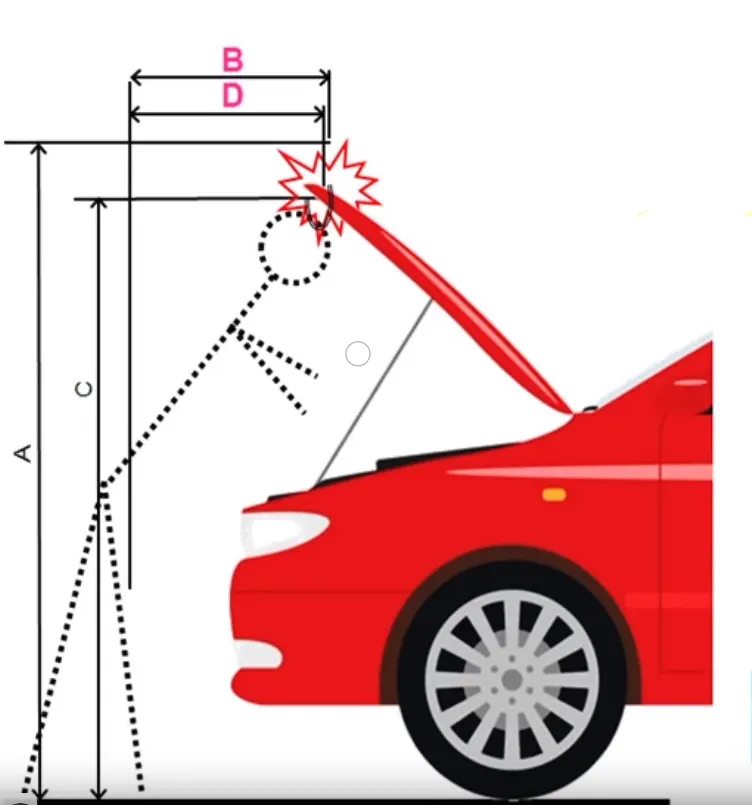
The opening angle is considered important criteria because when the opening angle is less there is a chance of head injury to the human.
By varying the length of the support rod the opening angle can be varied.
Gas Stay is a mini version of the bicycle pump in which the compressed nitrogen is stored in the pump with oil and tightly sealed so that the gas can't escape. The gas allows to store energy which produced by the force acting on the piston and oil damps the movement of the piston and also lubricates it. When force is acted upon the piston, it compresses the gas, and energy is stored and when force is stopped acting on the piston, the stored energy is released moving the piston to its free state position.
Gas stay aids in easily lifting the heavy hood and holding the hood in the open position. Hence there is no human effort needed
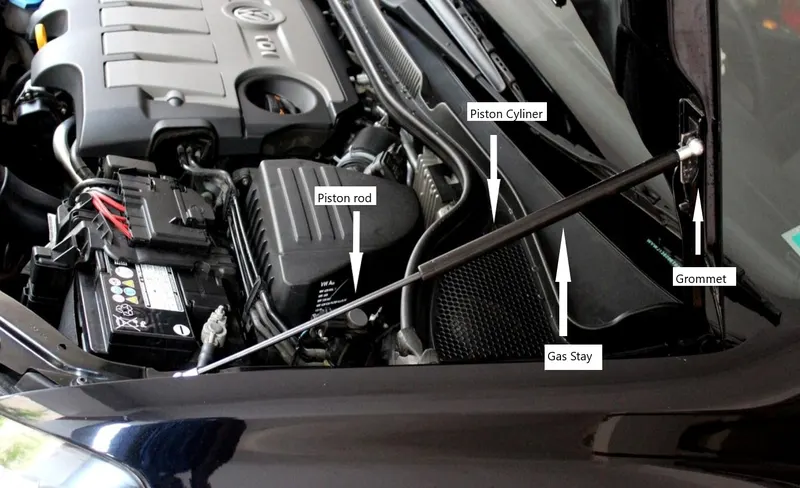
Since gas stay supports the weight of the hood reinforcements should be given at the mounting points of the gas stay and grommets are used to attach the gas stay to the hood inner panel. It rotates with a pivoting point at grommets.
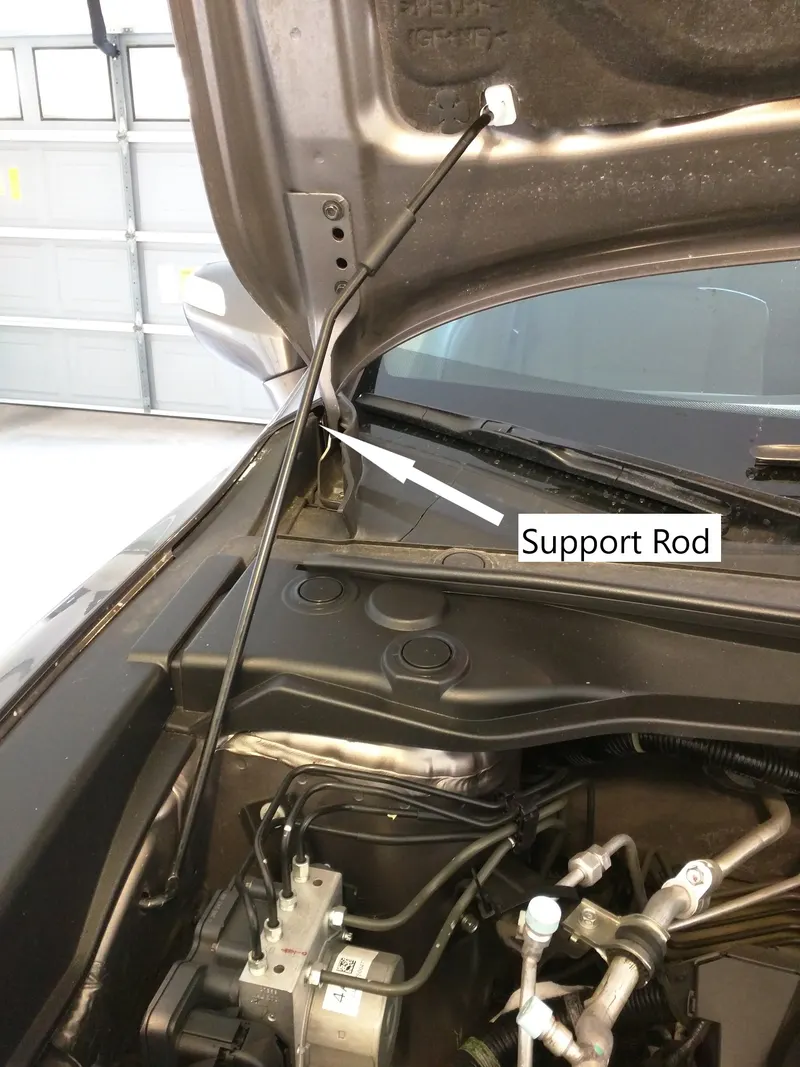
Support rods serve the same function as the gas stay but in this case, the hood has to lift with all the loads and it is held in position using the support rods.
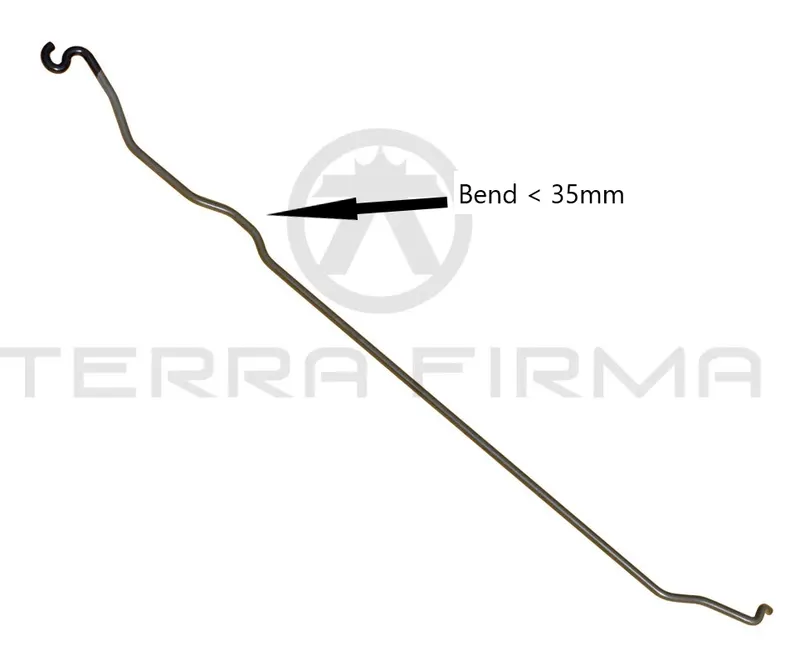
Support rods length is decided based on the opening angle of the hood. In the support rod maximum bend of 35mm is given in order to strengthen the support rod to bear all the load of the hood. There is the human effort needed.
Support rods can either mounted on the hood or on the body of the car. The mounting of the support rod is always on the opposite side of the engine compartment.
Manufacturing Process:
The following are the manufacturing steps done to generate the outer and inner panel of the hood.
Blanking: It is the process where the required sheet metal material is cut from the sheet metal coil for the manufacturing of the hood using a blanking die.
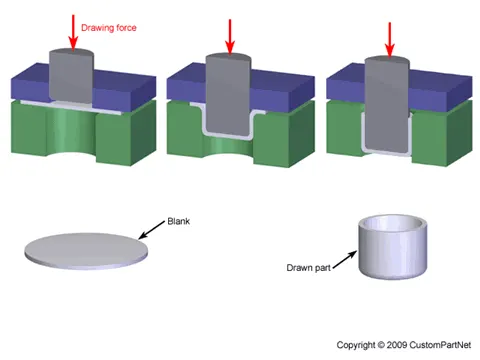
Stamping: The material obtained from blanking is stretched using the stamping die. The stamping die is designed according to the embossed design. This process is called deep drawing.
Trimming and punching: The outer and inner panel is obtained from the forming is placed in the trimming and punching die to carry out trimming and shaping operations to obtain the hood panel with the required dimensions and emboss cutouts
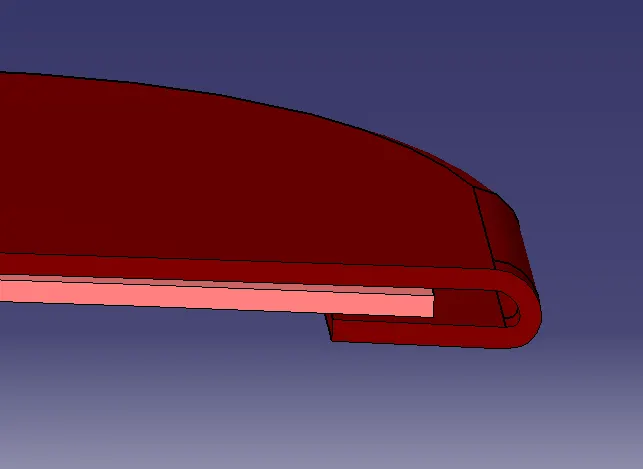
Hemming is a technology used in the automotive industry to join inner and outer closure panels together (hoods, doors, tailgates, etc.). It is the process of bending/folding the flange of the outer panel over the inner one. The accuracy of the operation significantly affects the appearance of the car’s outer surfaces and is, therefore, a critical factor in the final quality of a finished vehicle
Different types of hemming methods are
1. Die hemming method
2. Table-top hemming method
3. Robotic Roller hemming method.
Types of Hemming:
3t flat hem is used to join the outer and inner panel of the hood.
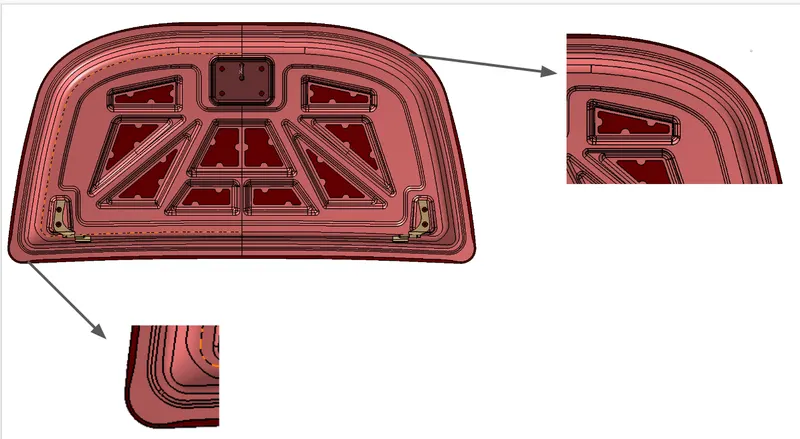
Corner Relief
Corner relief has to be provided for sheet metal bending. In this case, before the hemming process to control the deformation of the sheet metal and to avoid any tear of the sheet metal during bending.
Sealants
Sealants are used to close the gap between two or more substrates. It also acts as a leakproof between the components. It forms a barrier through the physical properties of the sealant itself and by adhesion to the substrate.
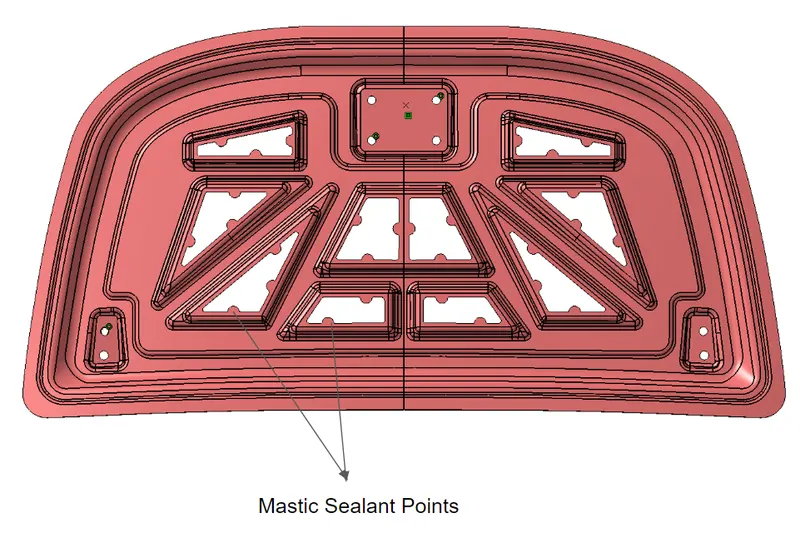
Mastic Sealants are used to join one surface to another or protect the area to which it is applied. It has heat resistant properties and the ability to form a strong bond which is applied using a mastic sealant gun.
Mastic Sealants have an influence area of 80mm diameter.
Mastic Sealant points in the designed hood are shown below.
Reinforcements
Whenever there is an addition of material to the component there is a loss of strength locally. In this case, the additional material is the striker and hinge where additional reinforcements had to be attached due to loss of strength locally in the attachment areas.
Reinforcement for Striker and Hinge.
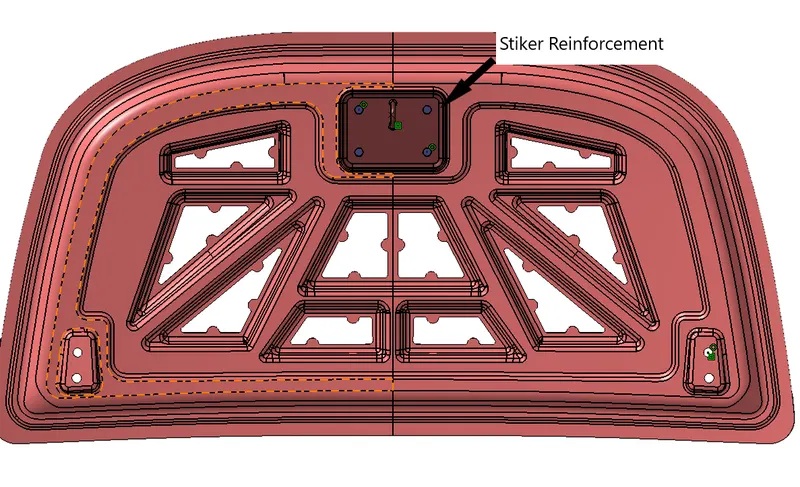
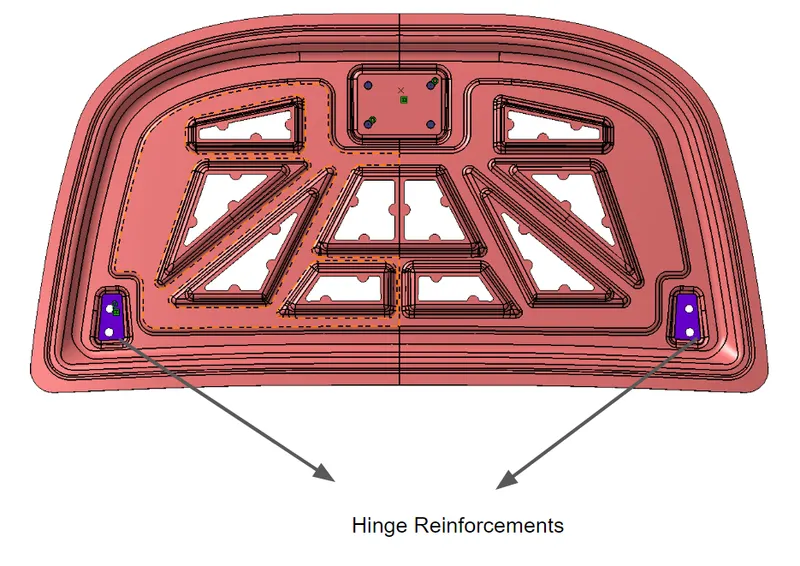
The thickness of the reinforcements should be in the range of 1.5mm. This parameter can be obtained from the CAE team or with a carry-over study.
There is additional reinforcement called a stiffener pad which is attached between the hood inner and outer panel. This is done in order to reduce the noise and vibration during the motion of the car.
Distance between the outer and inner panel should be 5mm where mastic sealants are placed in the mastic sealant points to form a strong bond between them. This also reduces the noise and vibration in the hood in the car.
We are using sealants to join the hood outer and inner panel because the sheet metal used is 0.75mm thick and welding is not possible as it would affect the Class A surface.
Emboss
Sheet metal embossing is the stamping process to obtained raised or sunken edges for the desired design pattern on the sheet metal. This is done with help of male and female dies between which sheet metal is placed and the dies are pressed against the sheet metal to obtain the designed pattern. In some cases, roller dies are used to get the raised edges in the sheet metal.
Manufacturing considerations for the emboss creation
1. The distance between the outer edges of the emboss should be a minimum of 5mm.
2. Draft angle should be provided to the emboss with 7
3. No sharp corners to be provided in the emboss can it would lead to inefficient manufacturing.
4. The height of the emboss should not be more than 5mm.
Position of the hinge and Striker.
The hinges should be positioned on the hinge tentatively such that they lie on the same plane. The position of the hinge can also be decided based on the carry over study.
From the axis of the hinges create a midpoint, from that midpoint draw a circle with a radius from the midpoint to the center of the striker. The circle created is called the trajectory circle. With the trajectory circle, it is to be checked that the striker is tangent to the trajectory circle if not then the position of the hinge should be moved accordingly such that the striker is tangent to the trajectory circle.
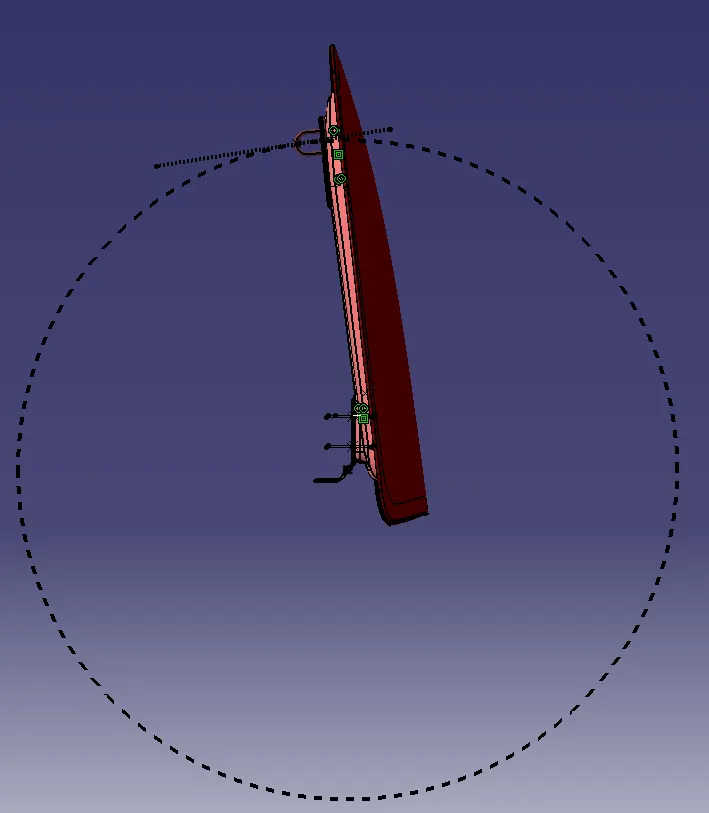
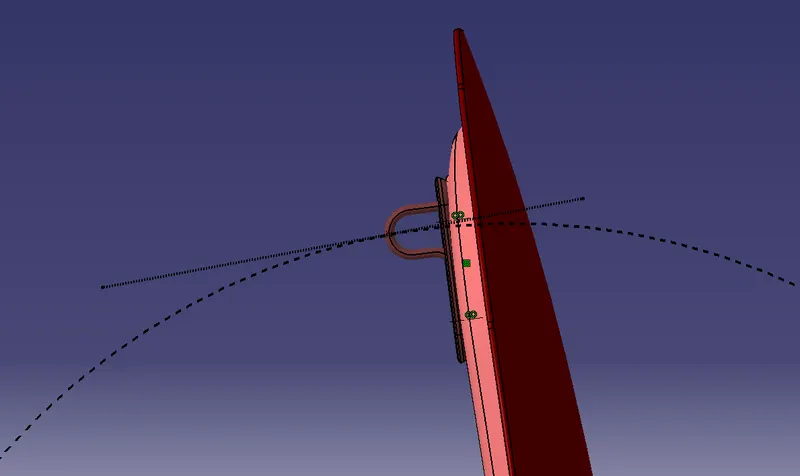
This is done because the latch where the striker strikes and locks the hood is positioned with respect to the trajectory circle. If the striker is not positioned accordingly then there will be difficulty in locking the hood.
Note: For all the closure components the position of the hinge and hinge axis is important and it influences the position and orientation of the striker.
Design Standards
The most important criteria in designing a bonnet are pedestrian safety from a frontal collision.
The EURO NCAP has developed series of crash test and rating systems for assessing pedestrian, driver, and passenger injuries during impact with of the vehicle.
The below image illustrates a pedestrian is in standing perpendicular to the road and a crash test performed with a head-on collision.
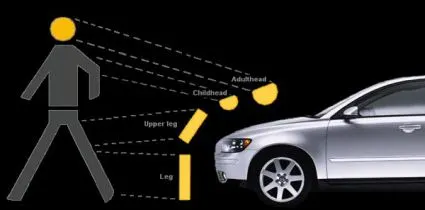
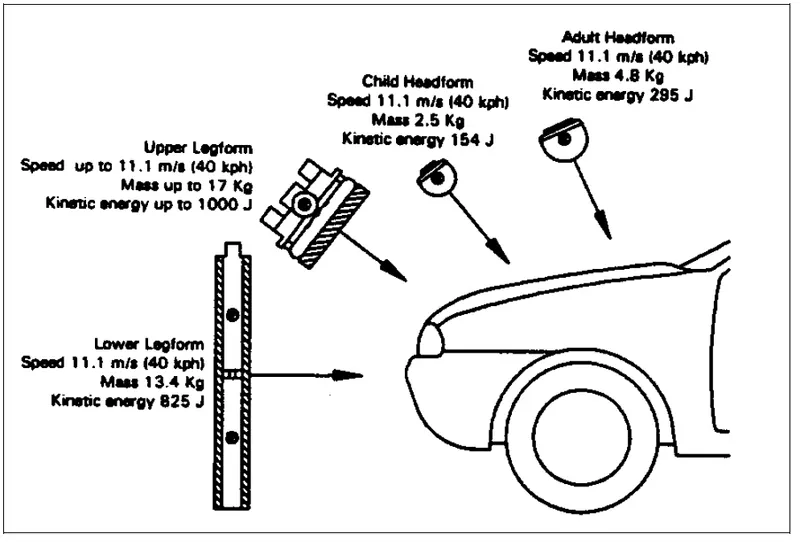
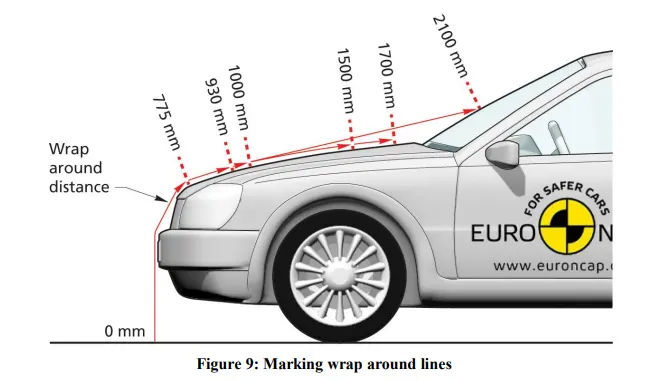
Wrap around distance: It is the distance from the road to the point where the head of the pedestrian collides with the hood.
In the below images we can see the wrap-around distance for adults and children.
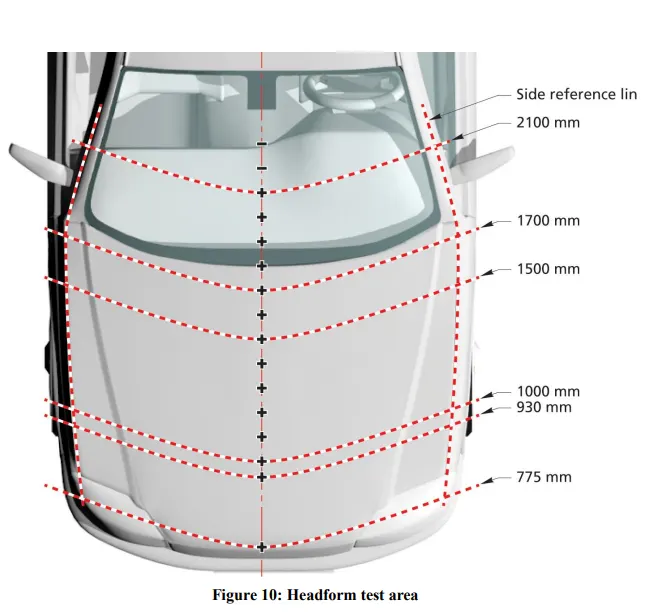
Side reference line: A line is drawn at 45
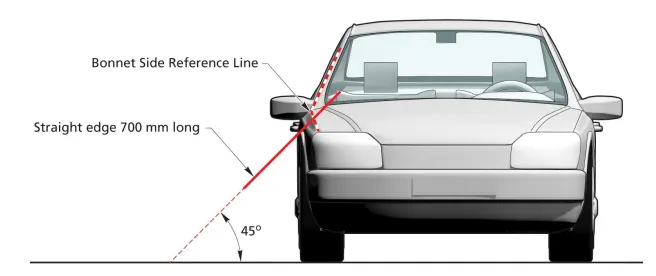
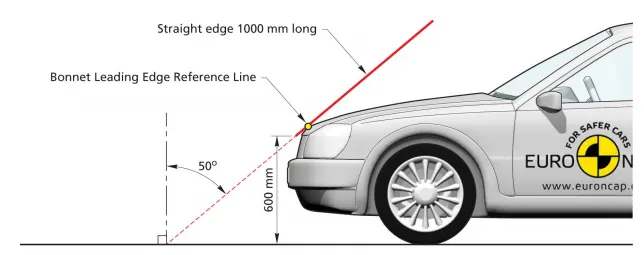
The position of the side reference line is important because if the side reference line is on the hood resulting in a bigger hood the wrap-around distance will be less and hence the impact zone will be more. But if the side reference line falls on the fender which makes the size of the fender bigger resulting in a lesser hood size which in turn results in high wrap around distance and lowering the impact zone.
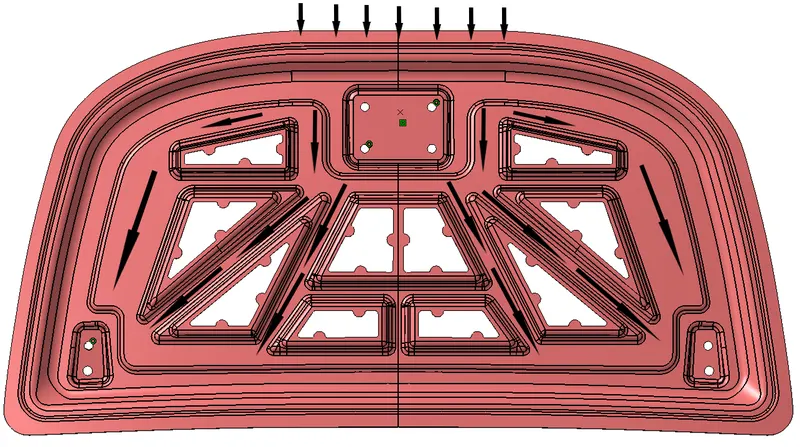
Another important aspect to be considered is the safety of the driver and passengers of the car. This is done by strengthening the inner panel by creating embosses and the design of the embosses should be such that the force due to impact should be directed outside the car rather than inside the engine compartments.
The arrows represent the direction of the force.
Under Bonnet clearance
The designed hood is offset to 90mm towards the engine compartment to check the interference of the hood with the hardpoints in the engine compartment.
This 90mm offset is considered the deformation caused due to the impact and package components that penetrate the deformation zone are checked with different colors as shown in the below figure.
HIC criteria
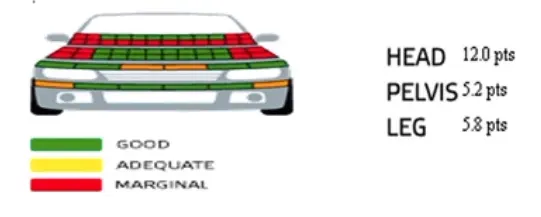
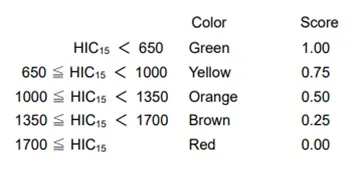
The responsibility of the design engineer is to reduce the red points and increase the green points to pass the safety criteria. This is done after the creation of emboss to reduce the deformation during a collision. Then cut-outs are made such that the penetration points are reduced.
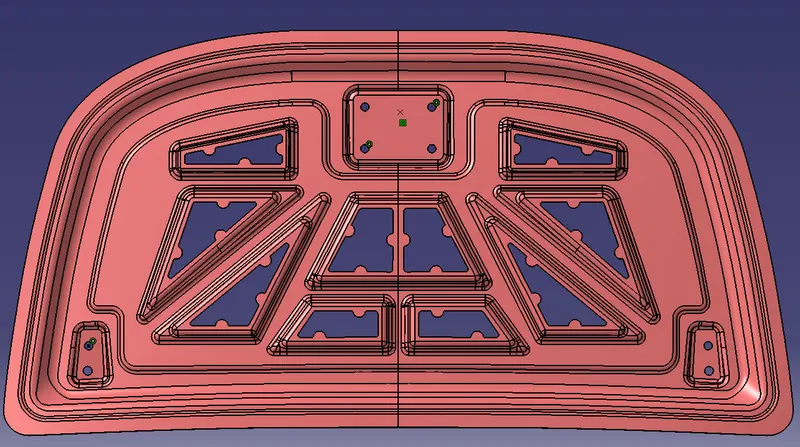
When the material is removed the hood gets softer in that region which results in lesser force impact force during the collision. This is done to increase the rating in the crash safety test.
It is to make sure that there is no reinforcement given at the wrap-around distance in order to reduce damage to head injuries to pedestrians in case of head-on collisions.
Inputs
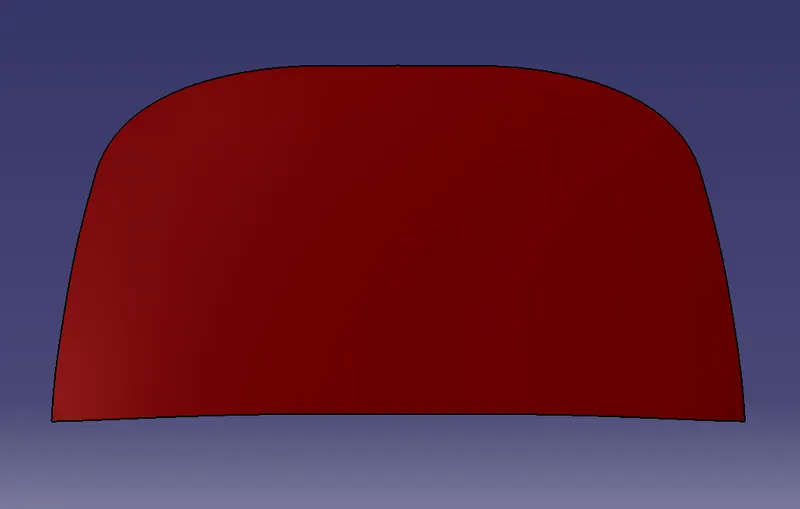
Class A of the outer panel
Striker
Hinge
Master Section for the inner hood.
The hood inner panel is designed according to the master section given. The above master section illustrates the depth of the inner hood in accordance with the engine compartments.
Inner panel with emboss
Hemming
Corner Relief.
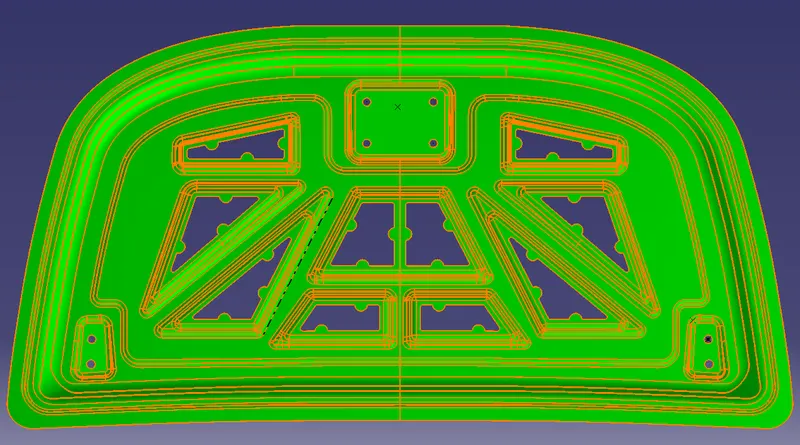
Draft Analysis for manufacturing feasibility:
Conclusion:
1. The design considerations for the Hood is taken are discussed and taken into consideration while designing the hood.
2. The manufacturing feasibility of the hood is taken into consideration.
3. Draft Analysis is performed to check if the faces are clearing for the required draft angle for manufacturing the emboss.