Hood design-Week 2
Week 1- Hood Design Challenge
Objective:
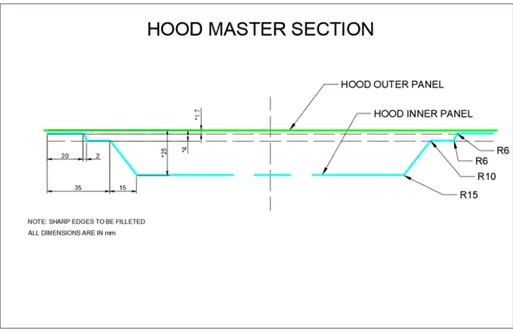
- Design Hood Outer Panel, Inner Panel, and the necessary reinforcements by following the Master Section mentioned with the Design parameters.
- Convert the surface data to a thickened BIW sheet.
- Create embosses on the outer panel using NX Commands.
- Create a Hemming flange and hemming relief on the outer panel.
Input Data:
Hood Thickness Information
- Outer Panel Thickness = 0.75mm
- Inner Panel Thickness = 0.75mm
- Reinforcement Thickness = 1.5mm
Master section:
Design Methodology:
Design of Hood Inner panel
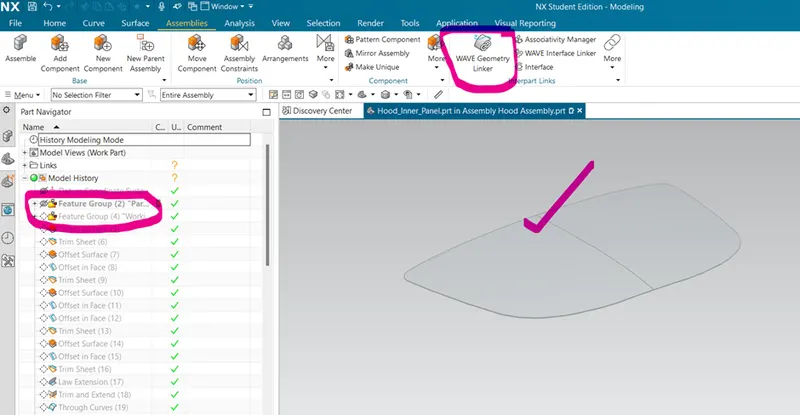
From the given master section, we have to create an assembly file and insert the outer panel. Using wave geometry linker extract the input file and create another file and name it as Hood inner panel. Now we can start creating the inner panel from the master section.
The outer panel surface is obtained by offsetting the input surface according to the dimension given in the master section.
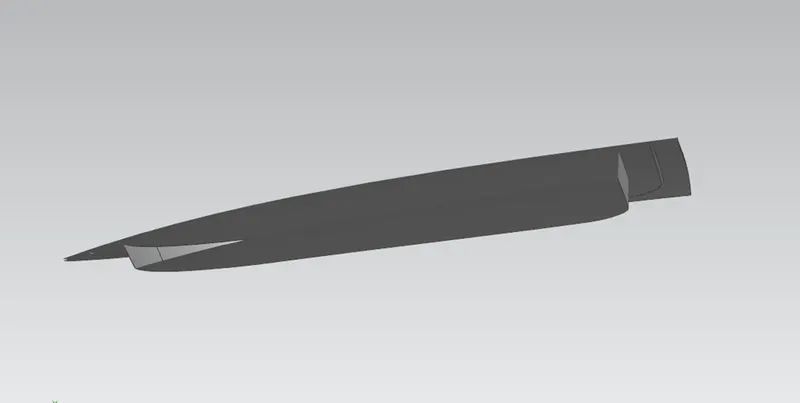
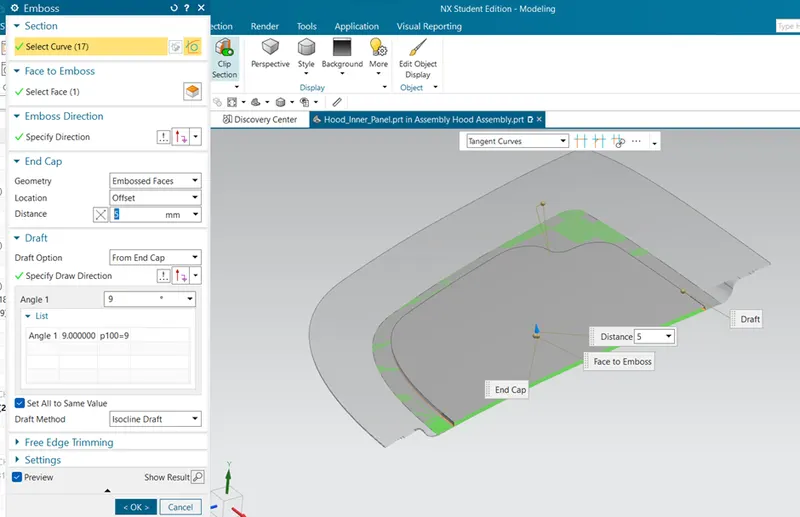
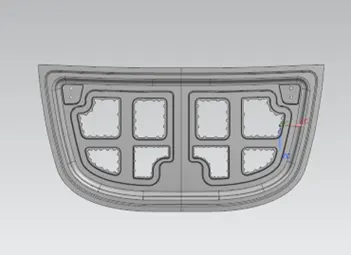
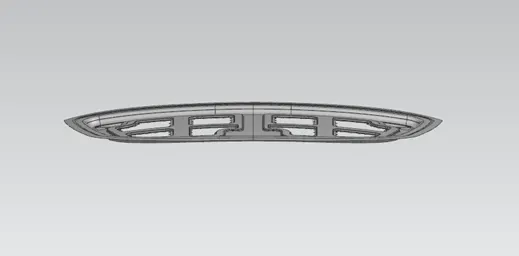
Once the surface is created according to dimensions, we have to create embosses for attaching the hinges , latch , striker, and reinforcements.
Embossing Definition:
Embossing is the process of creating a raised image, design, or text on a material, such as paper, leather, or metal sheets. Embossing can be found on cards, and stamps, leather notebooks, paper cups, stamps, etc, and is a popular technique in DIY crafts and activities.
Debossing is the same effect except instead of the image being raised against the background, the pattern is sunken into the material.
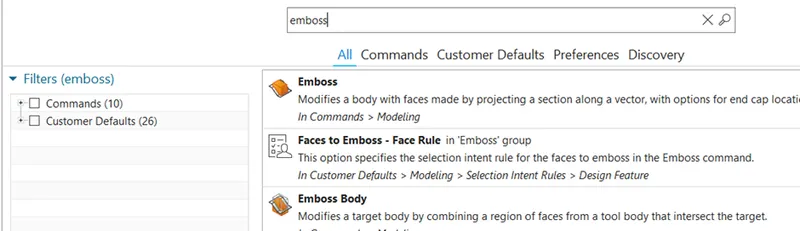
You can find the embossing command in the menu bar or else we can directly type the command in the command search box.
Emboss are created to strengthen the sheet metal part and it is created in particular pattern in the case of hood to avoid the transmitted force reaching the driver. It is created in such a way that, during crash analysis the force travelling through the hood gets redirected away from the driver. Also it is used for attachment purposes.
Mastic sealants:
Since there is a gap between the Hood outer and inner panel, during any impacts the outer panel gets deformed because of these gaps. In order to avoid these deformations and vibration of hood outer panel, these gaps are filled by mastic sealants and provides a good adhesion to the inner panel.
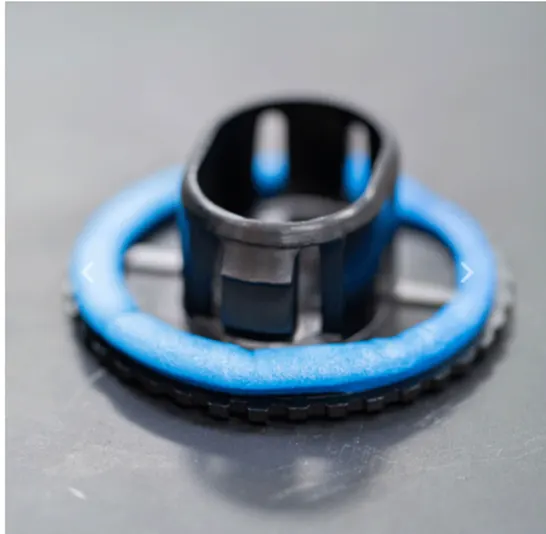
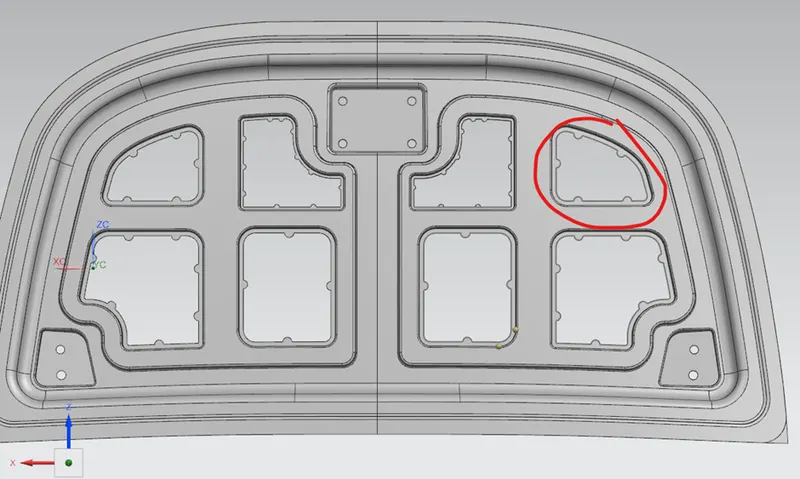
Mastics are rubber compounds that are used in non-structural application areas during the BIW stage and help fill up empty zone in a vehicle, which aids in shock absorption leading to increase passenger's safety.
Latch Trajectory:
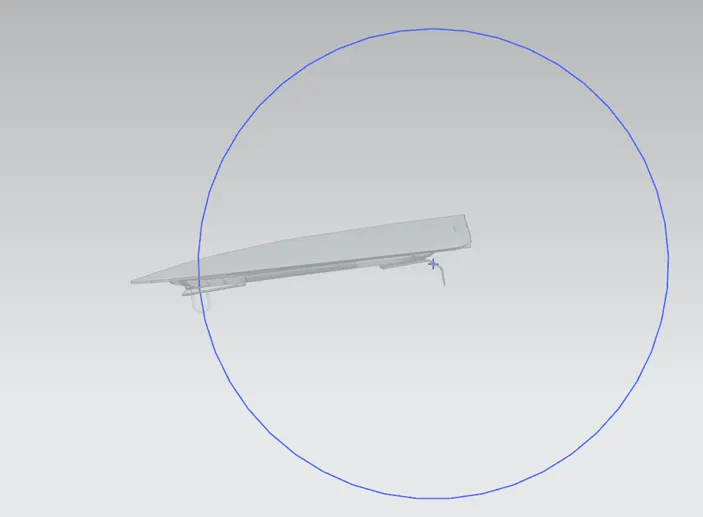
For placing the latch in the correct position, Hinge axis is created and its centre point is found out. A circle is drawn with hinge centre point as the centre. When the striker point is in tangent with the circle, that position chosen for placing the striker. The Circle is the latch trajectory circle. The hood opens and close in this path.
Hemming :
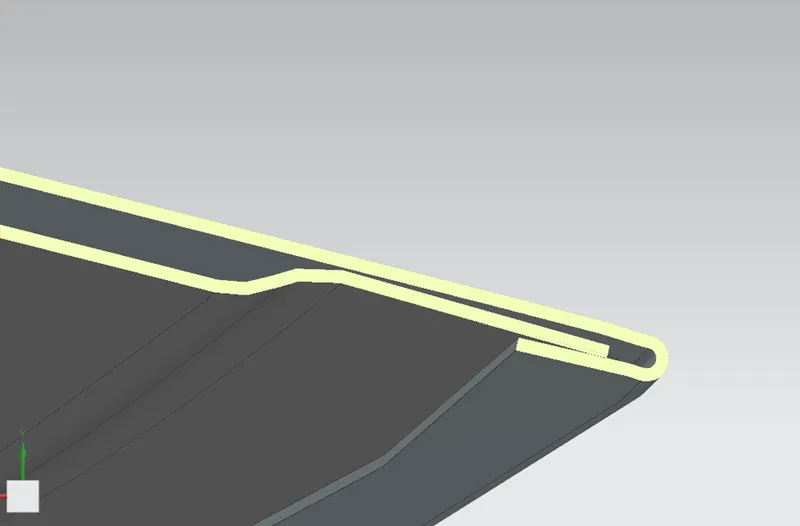
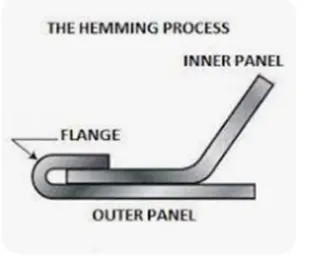
Hemming is a manufacturing strategy during which the edge of a sheet of metal is folded over itself meets the surface of the sheet. Unlike seaming, a similar process used to join separate edges of a sheet, hemming entails the bending of a single edge over itself.
Hemming consists of two distinct stages. At first, the edge of the sheet is bent to an acute angle, usually around 30°. A flattening die is then used to apply sufficient pressure to the sheet, finishing the hem in the process. Hemmed edges can be either closed or open, the former being fully flattened and the latter containing an air pocket.
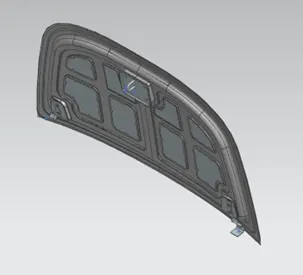
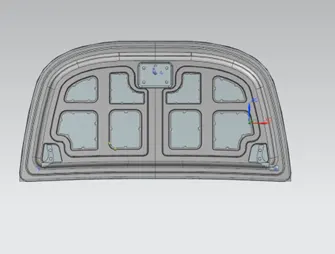
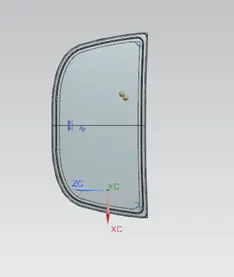
Final Part :
Deep Drawing:
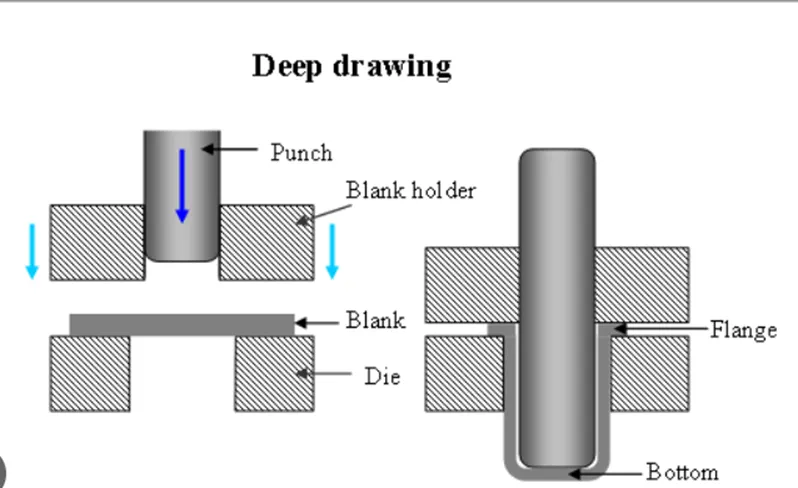
The deep drawing process is a forming process which occurs under a combination of tensile and compressive conditions. A flat sheet metal blank is formed into a hollow body open on one side or a hollow body is formed into a hollow body with a smaller cross-section. [DIN 8584]