Hood design-Week 2
Aim:To design and model a car hood model having outer,inner panel along with hinge and the striker as a component along with there assembly also provide the embossing at the required place.
PROCEDURE:A car hood, also referred to as a bonnet in some other countries, is the hinged cover that rests over the engine of a front-engine vehicle. Its purpose is to provide access to the engine for repair and maintenance.
(i)Firstly we have got to split the surface into 2 halves and can be mirrored after the completion of the 1st part.
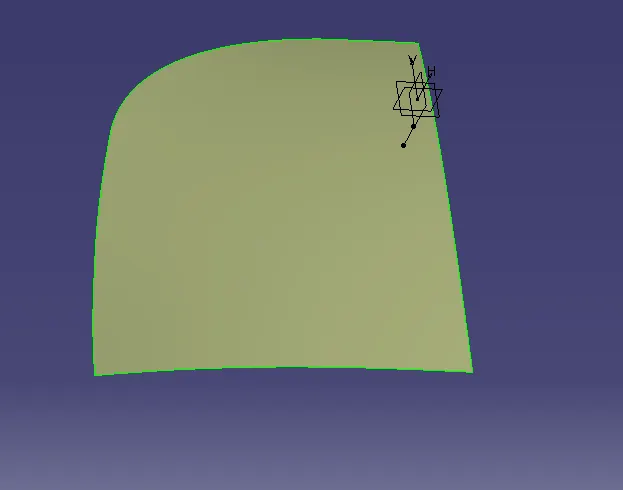
(ii)Then offseted the surface to create the 2 surfaces then joined and giving it out the fillets respectively parallelarly using multi-section surface.After to it again offseted to it for the inner panel.
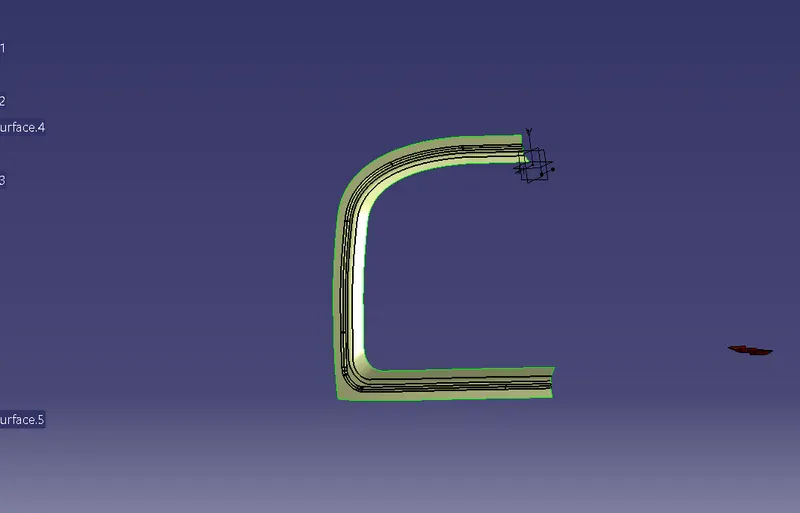
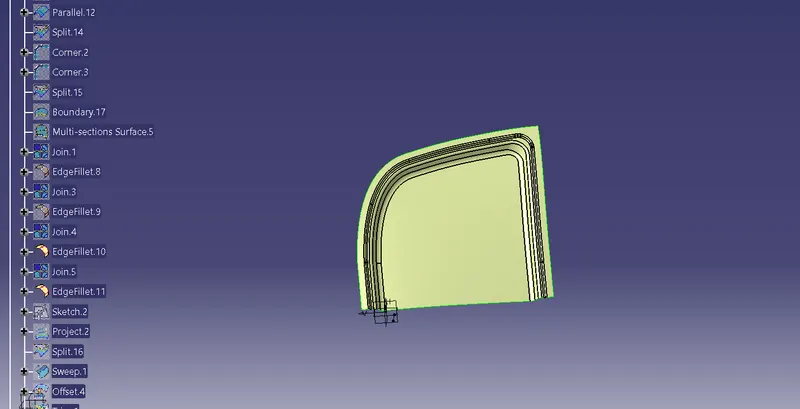
(iii)Then we have to introduced the embossing in the inner panel of the model and the fillets in it parallerly.Embosses work is to distribute the stress concentration radially outward from center to periphery of the hood also distribute the direct impact to the passenger.
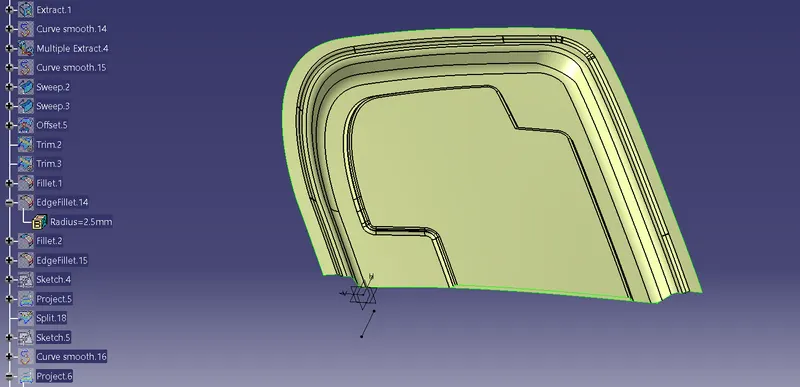
Now in order to join the inner and the outer panel we need Mastics always designed in such a way that it distribute the load properly made of semi circular section for instance shown below:
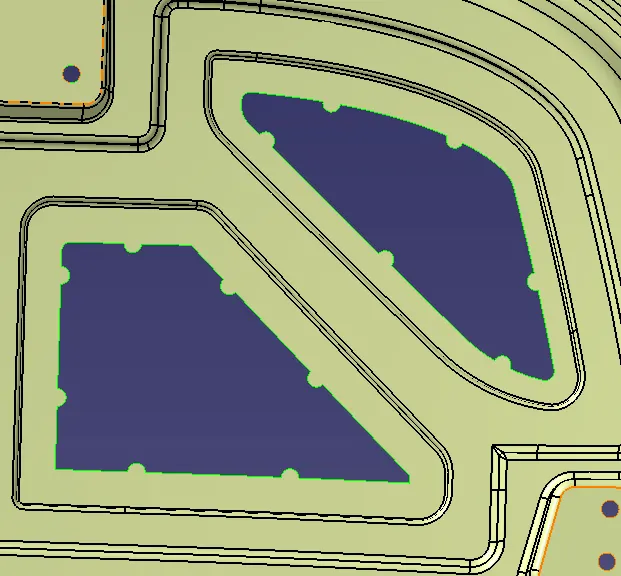
(iv)Then we have got create the slots for the Hinge and the latch Part,When tension is applied to the cable from the hood release handle, it pivots the secondary latch, which pulls away from a retaining seat located under the hood. By design, the secondary latch then releases the hood a few inches before a safety latch takes over. The safety latch is integrated in the hood latch system in case of accidental release of the handle inside the passenger compartment during operation of the vehicle.
(v)When used in connection with the hood of a motor vehicle, the support of this exemplary embodiment is, in the support position, resiliently biased so that the pawl rides along the ratchet teeth of the first hinge half as the hood is moved from a closed position in which the hood closes the engine compartment to an open position in which the hood allows access to the engine compartment.
(vi)Then we have got the whole assembly of the inner panel shown below:
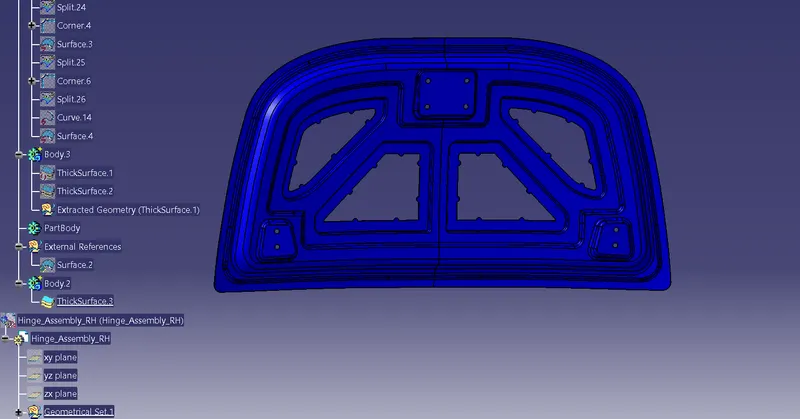
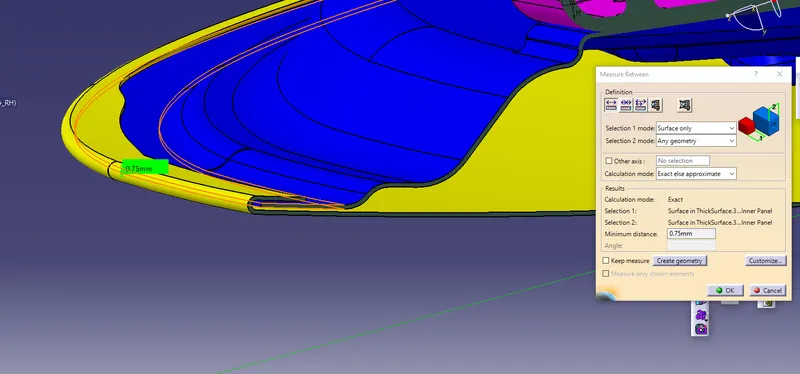
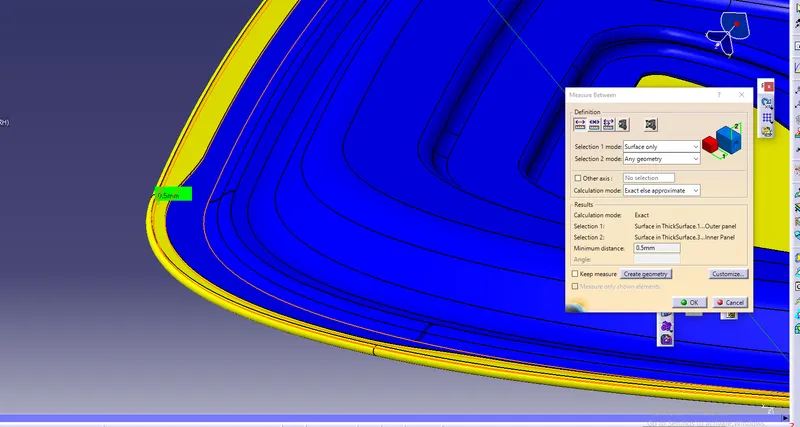
(vii)Now comes the Hemming in the outer to inner region,Hemming is a technology used by the automotive industry to join inner and outer closure panels together (hoods, doors, tailgates, etc.). It is the process of bending/folding the flange of the outer panel over the inner one.Hemming is the process in which the edge is rolled flush to itself, while a seam joins the edges of two materials. Hems are commonly used to reinforce an edge, hide burrs and rough edges, and improve appearance.At the corner we have got to provide the cuts in the hemming because while wraping it will overlap with each other which could be leads to torsion problem.The images shown below:
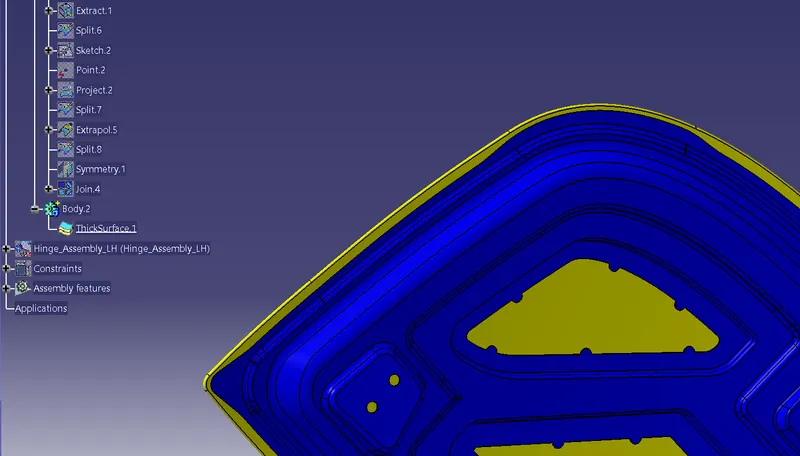
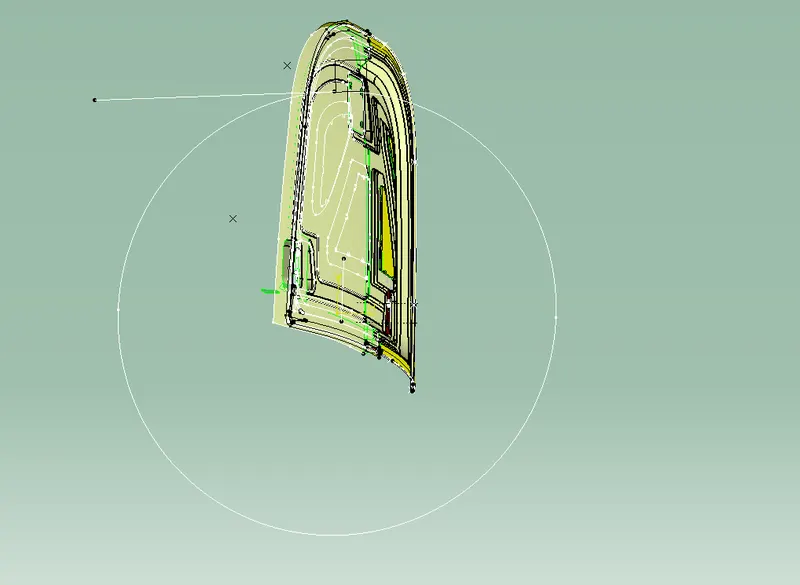
(viii)Now comes into the assembly of the panel with hinge and latch firstly we have to set the angle constraint to the perpendicular to the axis,then coincide the body axis of hinge with the panel and for the latch to get perpendicular to the slot created in the inner panel for that shown something below in which a circle is created along there mastersection and the line which is tangent to it.
The model which we have got from the following the procedure is shown below:
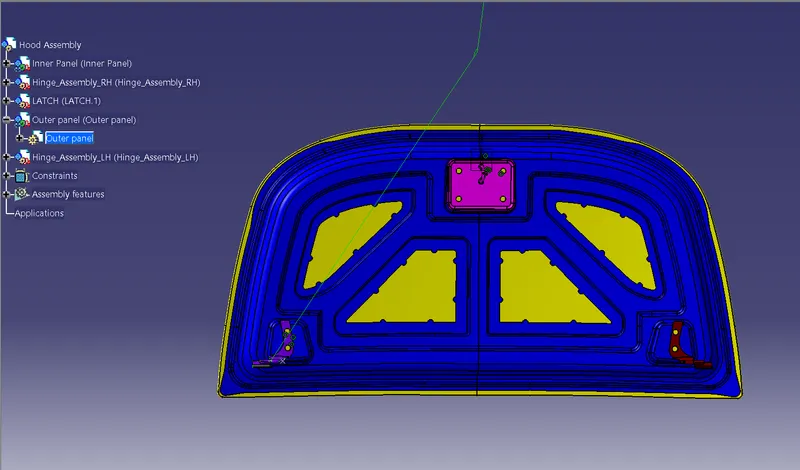
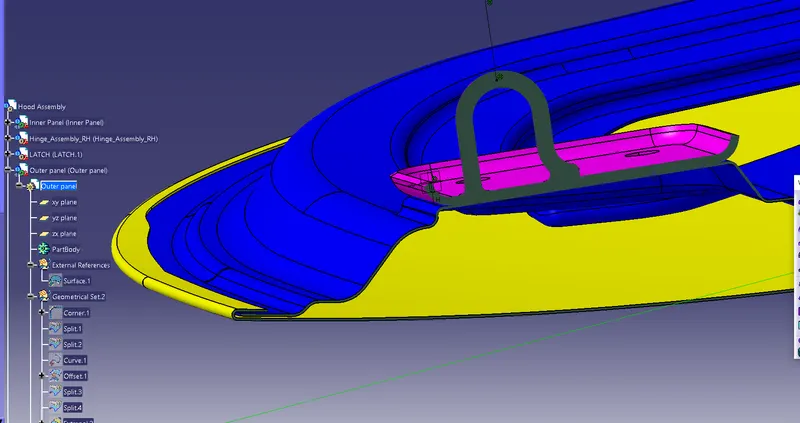
Section part of the model shown above that the surfaces of panel and hemming region and the rest parts are not intersecting with each other .