Grid dependence study for steady flow over an Ahmed body using ANSYS Fluent
Objective: Perform grid dependence study for steady flow over an Ahmed body using ANSYS Fluent and write a detailed report explaining the results obtained.
Question:
As the body is perfectly symmetric, we can run the simulation by considering the only half body. This is the best practice where you can save on the number of cells and get the results faster as well.
The geometry which is provided with the challenge needs a modification which you should be able to do at this stage of a course. You need to use the 'split body' command in SpaceClaim to perform the operation and then you can use the symmetry boundary condition in fluent to perform the simulation.
Run the simulation for the velocity of 25 m/sec with the default air properties in fluent.
For this challenge, you will have to provide answers to the following questions:
Q1. Describe Ahmed's body and its importance.
Q2. Explain the reason for the negative pressure in the wake region.
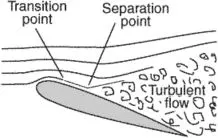
Q3. Explain the significance of the point of separation.
Expected Results:
1. Velocity and pressure contours.
2. The drag coefficient plot for a refined case.
3. The vector plot clearly showing the wake region.
4. Perform the grid independency test and provide the values of drag and lift with each case.
Q1. Describe Ahmed's body and its importance.
The Ahmed body is a generic car body. The airflow around the Ahmed body captures the essential flow features around an automobile and was first defined and characterized in the experimental work of Ahmed. Although it has a very simple shape, Ahmed body allows us to capture characteristic features that are relevant to bodies in the automobile industry.
This model is also used to describe the turbulent flow field around a car-like geometry. Once the numerical model in validated, it is used to design new models of the car.
Significance of Ahmed Body -
- The airflow around the ahmed body captures the essential flow around an automobile body.
- It is used to study parameters like drag coffecient,turbulence,flow velocity,etc.
- By studying the ahmed body models and its results, automobiles are designed and manufactured.
Q2. Explain the reason for the negative pressure in the wake region.
- Value of Pressure is negative due to formation of vaccum. When a fluid flows over an object with high speed, few layers of fluid sticks to the surface of the object which results in the separation of flow & the formation of the wake.
- This wake formation leads to a significant reduction in pressure. The pressure inside the wake region remains low as the flow separates, Hence pressure becomes negative.
Q3. Explain the significance of the point of separation.
The position at which the boundary layer leaves the surface of a solid body. It may occur with the laminar flow (laminar separation) or when the boundary layer is turbulent (turbulent separation). Separation is sometimes followed by reattachment of the flow.
Case Setup and Execution:
Geometry: Ahmed body is imported to ANSYS Space Claim and an enclosure is created for the simulation as show below.
As the body is perfectly symmetric, we can run the simulation by considering the only half body. This is the best practice where you can save on the number of cells and get the results faster as well.
By using 'split body' command in SpaceClaim the body cut into half as shown below.
Named Selections: Named selections has been created for boundaries as shown below.
Solver: Steady-State, Density-Based solver
Turbulence Model: Standard k epsilon
Fluid Material: Air
Boundary Conditions
Inlet: Velocity = 25 m/s
Outlet: Pressure = 0 Pa (Gauge Pressure)
Number of Iterations: 1000
CASE-1:
Mesh:
Outer Enclosure:
Method: MultiZone
Element Order: Linear
Element Size: 80 mm
Inner Enclosure:
Body Sizing
Element Size =37.5 mm
Car Wall:
Face Sizing
Element Size = 5 mm
Inflation Layer:
Option: Total Thickness
Number of Layers = 7
Growth Rate = 1.2
Max. Thickness = 18 mm
Number of Nodes: 62657
Number of Elements: 209456
Results:
Residuals: Number of iterations to converge - 874.
Drag Force: 8.47N after the solution is converged.
Lift Force: 5.88N after the solution is converged.
Drag Co-efficient: 13.8 after the solution is converged.
Velocity Contour:
Pressure Contour:
Vector plot:
CASE-2:
Mesh:
Outer Enclosure:
Method: MultiZone
Element Order: Linear
Element Size: 75 mm
Inner Enclosure:
Body Sizing
Element Size =30 mm
Car Wall:
Face Sizing
Element Size = 5 mm
Inflation Layer:
Option: Total Thickness
Number of Layers = 11
Growth Rate = 1.2
Max. Thickness = 30 mm
Number of Nodes: 99438
Number of Elements: 373458
Results:
Residuals: Number of iterations to converge - 710.
Drag Force: 8.05N after the solution is converged.
Lift Force: 6.931N after the solution is converged.
Drag Co-efficient: 13.15 after the solution is converged.
Velocity Contour:
Pressure Contour:
Vector plot:
CASE-3:
Mesh:
Outer Enclosure:
Method: MultiZone
Element Order: Linear
Element Size: 75 mm
Inner Enclosure:
Body Sizing
Element Size =27 mm
Car Wall:
Face Sizing
Element Size = 5 mm
Inflation Layer:
Option: Total Thickness
Number of Layers = 14
Growth Rate = 1.2
Max. Thickness = 50 mm
Number of Nodes: 127522
Number of Elements: 500452
Results:
Residuals: Number of iterations to converge - 634.
Drag Force: 7.796N after the solution is converged.
Lift Force: 6.42N after the solution is converged.
Drag Co-efficient: 12.72 after the solution is converged.
Velocity Contour:
Pressure Contour:
Vector plot:
Conclusion:
- For all three cases the velocity distribution is almost similar.
- The velocity decreases at the front of the Ahmed body because of the impact of the fluid with the body due to which the pressure increases.
- Due to the impact, there is an initial acceleration of the flow on the top, followed by which the velocity decreases gradually. The pressure decreases in the regions where velocity increases.
- The flow once again speeds up because of the sudden change in geometry at the end of the top surface, which results in the separation of flow & the formation of the wake.
- This wake formation leads to a significant reduction in pressure at the rear region of the Ahmed body as compared to front region, where pressure is higher due to the impact of flow on the body and this results in the generation of a drag force.
From the grid dependency test we can conclude that a smoother mesh gives accurate results and increases the computational time. Also the flow is less diffused if we use finer mesh.