Gate Valve Parametric Study
Project Title: GATE VALVE SIMULATION
Objective:
1. Study the movement of the gate valve.
2. Do a parametric study of the gate valve.
3. Study the change in mass flow rate when valve position change.
Theory:
A gate valve, also known as a sluice valve, is a valve that opens by lifting a barrier (gate) out of the path of the fluid. Gate valves require very little space along the pipe axis and hardly restrict the flow of fluid when the gate is fully opened. The gate faces can be parallel but are most commonly wedge-shaped (in order to be able to apply pressure on the sealing surface).
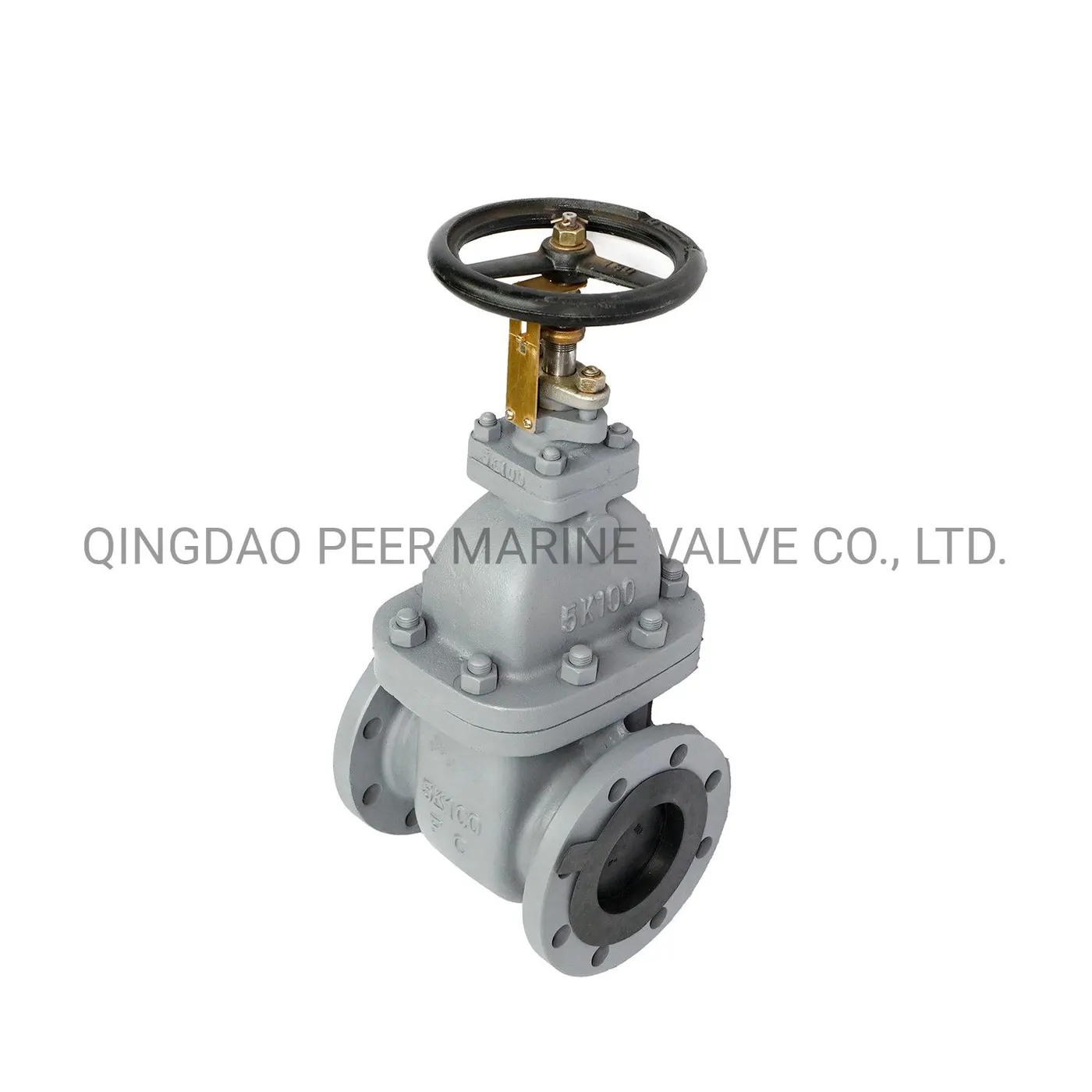
fig 1 shows the actual gate valve
Gate valves are used to shut off the flow of liquids rather than for flow regulation. When fully open, the typical gate valve has no obstruction in the flow path, resulting in very low flow resistance. The size of the open flow path generally varies in a nonlinear manner as the gate is moved. This means that the flow rate does not change evenly with stem travel. Depending on the construction, a partially open gate can vibrate from the fluid flow.
Gate valves are mostly used with larger pipe diameters (from 2" to the largest pipelines) since they are less complex to construct than other types of valves in large sizes.
At high pressures, friction can become a problem. As the gate is pushed against its guiding rail by the pressure of the medium, it becomes harder to operate the valve. Large gate valves are sometimes fitted with a bypass controlled by a smaller valve to be able to reduce the pressure before operating the gate valve itself.
Gate valves without an extra sealing ring on the gate or the seat are used in applications where minor leaking of the valve is not an issue, such as heating circuits or sewer pipes.
In this project parametric study is performed at various valve position. mass flow rate is checked at various valve position.
Geometry:
Fig 2 Geometry of valve
Fluid volume extraction
Fig 3 Fluid volume extraction
inlet and outlet extension is made for fully developed flow entrance in valve
Meshing
Fig 4 Meshing of gate valve
Default mesh is made. The tetrahedral mesh is used.
Fig 5 Outline of meshing
Fig 6 Element quality
In this mesh, element quality is above 0.21
Fig 7 Orthogonal quality
In this mesh, the orthogonal mesh is above 0.18
Fig 8 Total mesh count
Total mesh element is 131127
Setup
1. Time = Steady state
2. Type = Pressure base system is used
3. Model = k-epsilon realizable scalable wall function is used
4. Fluid= water
5. Scheme = SIMPLE second-order upwind scheme is used.
6. Hybrid initialization is done
Boundary condition
1. Inlet = Pressure inlet 10 pascal
2. Outlet = Pressure outlet 0 pascal
Parametric Study
Case 1
10 mm lift of the valve
Case 2
20 mm lift of the valve
Case 3
30 mm lift of the valve
Results
Case 1
Convergence
Convergence occurs at 250 iteration
Mass flow rate
Mass flow rate plot
Mass flow rate at the outlet is 0.2350 kg/sec
Case 2
Convergence
Convergence takes place at 190 iteration
Mass flow rate
Mass flow rate plot
Mass flow rate at the outlet is 0.3530 kg/sec
Case 3
Convergence
Convergence takes place at 200 iteration
Mass flow rate
Mass flow rate plot
Mass flow rate at the outlet is 0.4684 kg/sec
Parametric Study
in the parametric study, we change the opening of the valve from 10% to 90% and see the mass flow rate varies with respect to valve opening
Mass flow rate Vs Valve position
The graph shows that as the valve opening changes the mass flow rate also increases in the upward direction.
Flow coefficient (Cv)
The flow coefficient of a device is a relative measure of its efficiency at allowing fluid flow. It describes the relationship between the pressure drop across an orifies valve or other assembly and the corresponding flow rate.
Mathematically the flow coefficient Cv (or flow-capacity rating of the valve) can be expressed as :
where:
- Q is the rate of flow (expressed in US gallons per minute),
- SG is the specific gravity of the fluid (for water = 1),
- ΔP is the pressure drop across the valve (expressed in psi).
flow coefficient Vs Valve opening
The graph shows that the valve opening starts increasing flow coefficient also start increasing.
Flow factor (Kv)
When selecting the correct valve type and size, various operands can be decisive. For example, the Kv factor, the flow rate and the characteristic value for the pressure drop help you to choose the right valve for the desired requirements and applications.
What does the flow factor Kv indicate?
The Kv factor is a standardised key figure for the achievable flow rate of a fluid through a valve and has been in use since the 1950s. The Kv factor is calculated according to standard DIN EN 60 534, wherein the value is defined according to VDE/VDI 2173 guidelines by the measurement of water at a pressure drop of approx. 1 bar and a temperature of 5-30°C. The unit of the result is given in m3/h.
In addition, this characteristic value of the valve only represents a certain valve stroke, i.e. a specific degree of opening. A valve has as many Kv factors as it has setting levels. An on/off valve therefore only has one Kv factor while control valves have Kv factors for each position. The key figure for the maximum 100% stroke is the Kvs factor.
Difference between Cv value & Kv factor
The often equated Cv value is the US measurement unit, which is given in USG/min (US-Gallon per minute), and can therefore not be compared with the Kv factor. Conversion formulas exist for these values:
Kv = 0.857 * Cv
Cv = 1.165 * Kv
Flow factor Vs Valve opening
The graph shows that the valve opening starts increasing flow factor also start increasing.
Conclusion
Valve efficiency depends on flow coefficient, flow factors, flow rate and pressure drop across the valve.