Frequency Analysis of a rotating shaft
OBJECTIVE:
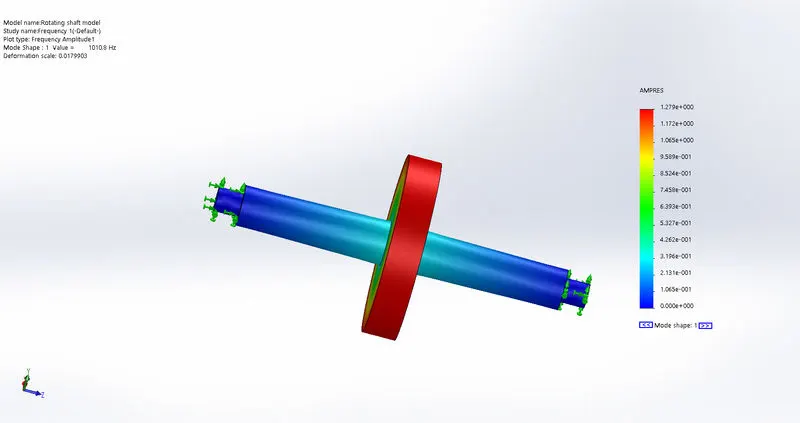
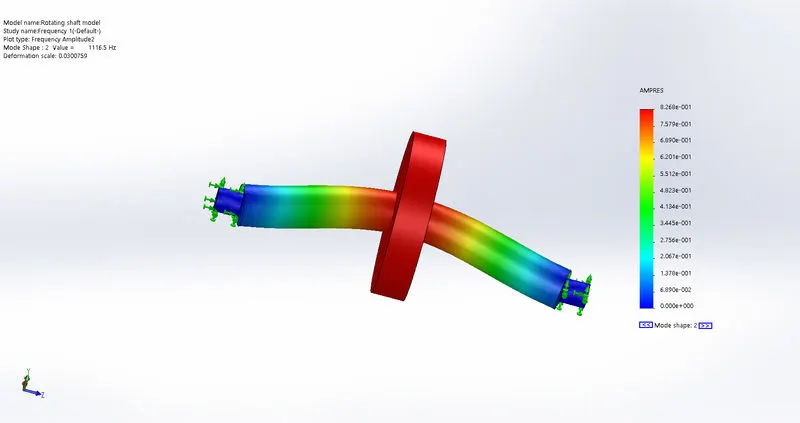
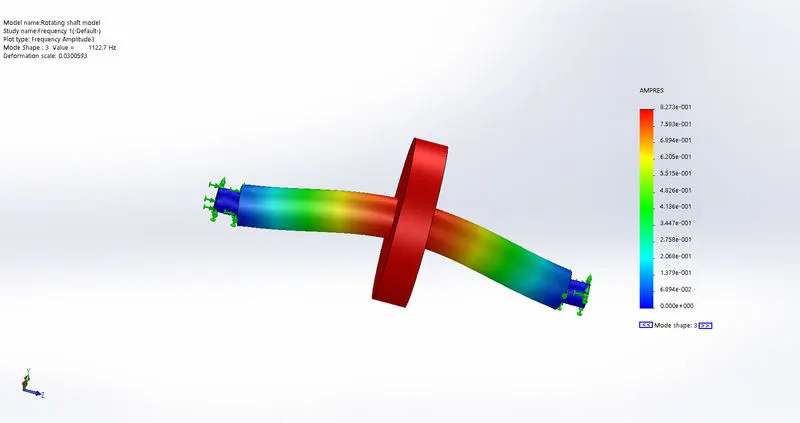
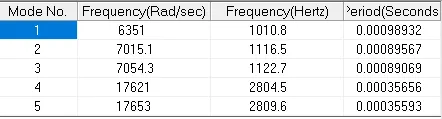
This project aims to find out the natural frequency of a rotating shaft. So that the operating conditions of the system can be taken care of without causing resonance. The first five-mode shapes and natural frequencies are found out.
Software used- Solidworks 2017
INTRODUCTION:
- Natural Frequency: All physical structures have natural frequencies.These are the frequencies at which the structure will tend to vibrate when subjected to certain external forces. These frequencies are dependent on the way mass and stiffness are distributed within the structure.
- Resonance: Resonance is a phenomenon in which a dynamic force drives a structure to vibrate at its natural frequency. When a structure is in resonance, a small force can produce a large vibration response.
What does this mean in practice? When a dynamic force is applied to a physical object, it will vibrate. When a force is applied at the object’s natural frequency, it goes into resonance, and a higher amplitude vibration response is created. Resonance can cause discomfort or be catastrophic.
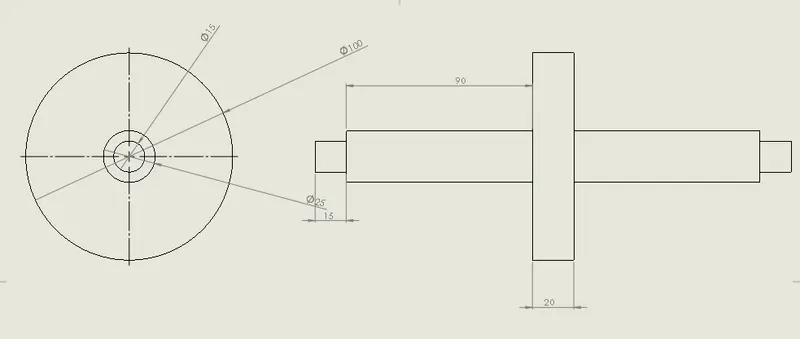
GEOMETRY
BOUNDARY CONDITIONS:
The rotating shaft is considered as Homogeneous, isotropic bodies
- Shaft material is taken as Alloy steel.
- Applied a bearing fixture on the stepped face of the rod at the two ends.
- Mesh conditions.
Mesh type: Solid mesh
Mesher used: standard mesh
RESULTS:
MODE-1
MODE-2
MODE-3
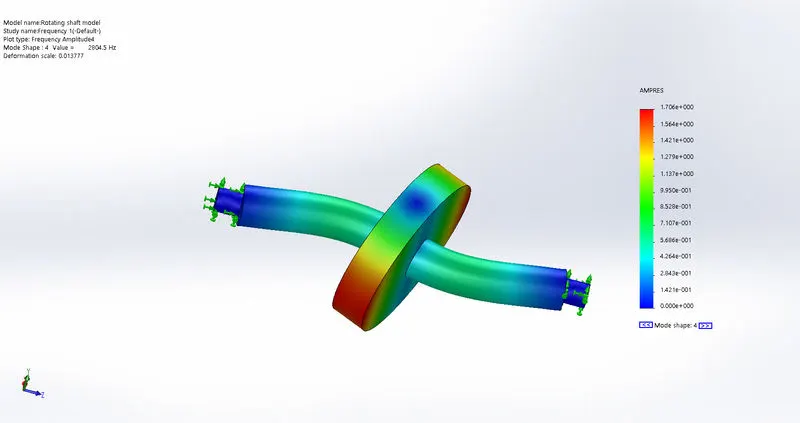
MODE-4
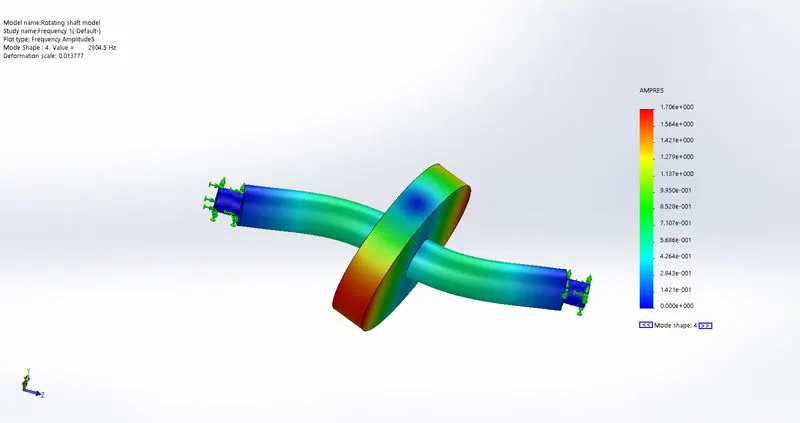
MODE-5
LIST OF RESONANT FREQUENCY OF THE ROTATING SHAFT:
Observation:
The shaft can be operated apart from the above resonant frequencies. Whenever the natural frequencies become equal to the frequencies of the applied force the shaft vibrates with high vibration amplitude which ultimately fails the system