Forces Acting on a vehicle
Aim:
To find the maximum speed of the motor (driver) & propulsion power of electric scooter.
OBJECTIVE :-
- To calculate the maximum speed of the vehicle from the given tire specification.
- Prepare a excel calculator to evaluate vehicle propulsion power.
Theory:
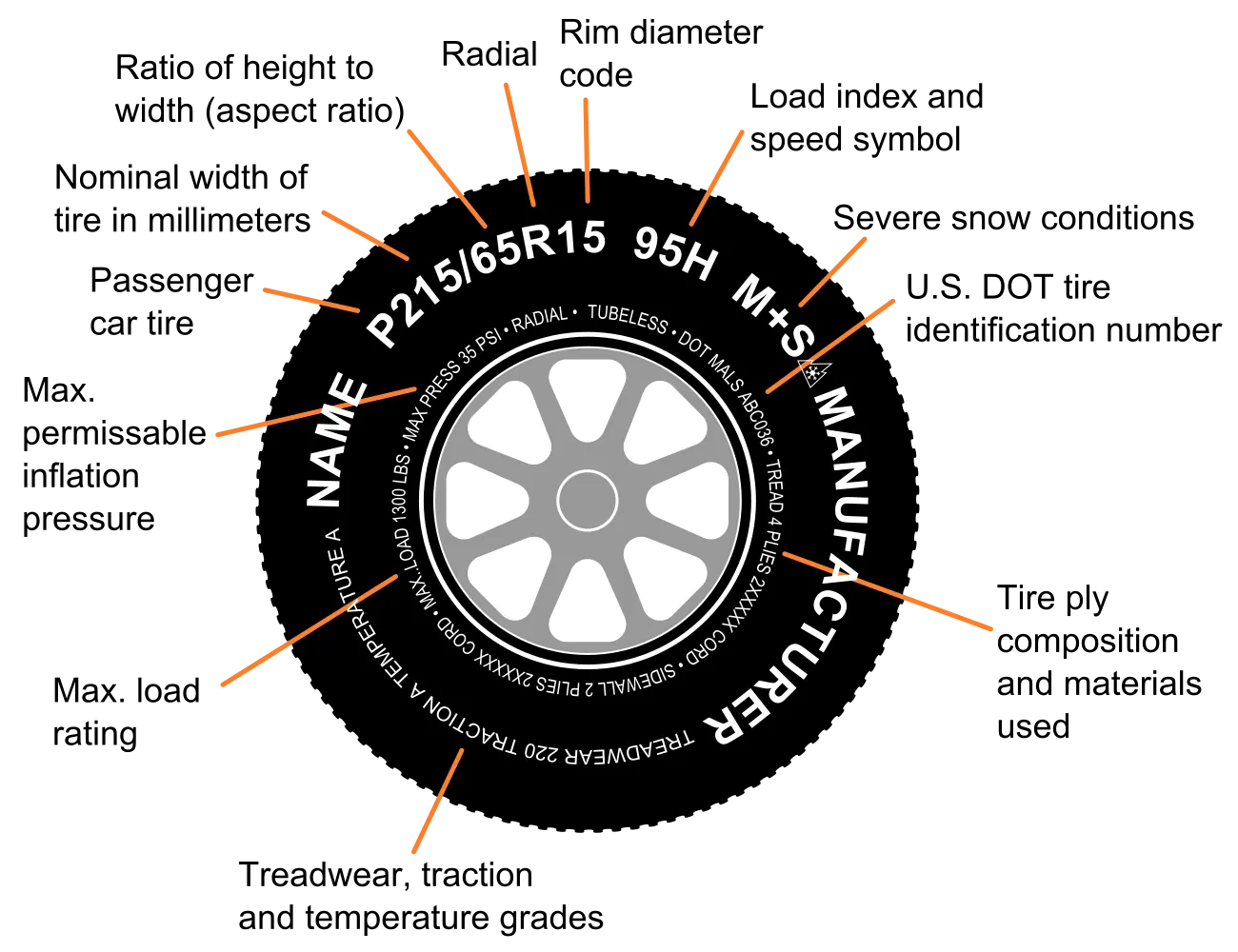
Tire nomenclature:
Load Index:
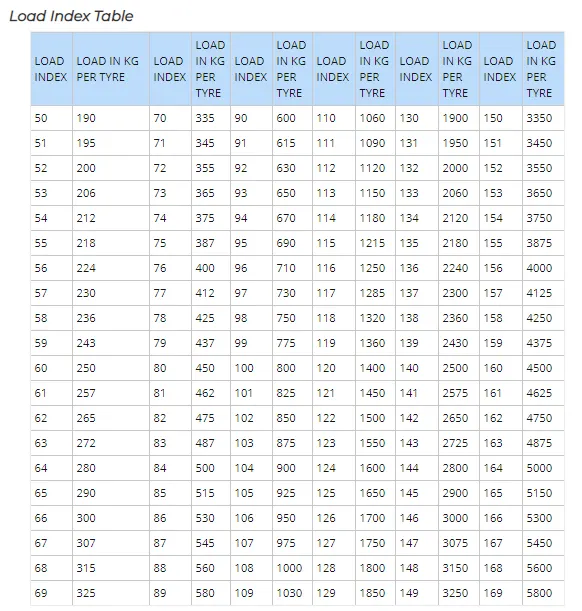
Load Index is the numerical value representing the maximum weight, a tire can carry. For the selected tyre, Load Index is 53, which corresponds to a load capacity of 206kg. Most passenger vehicles have a Load Index value ranging from 20 to 169 as shown in below image.
Speed rating of tyre:
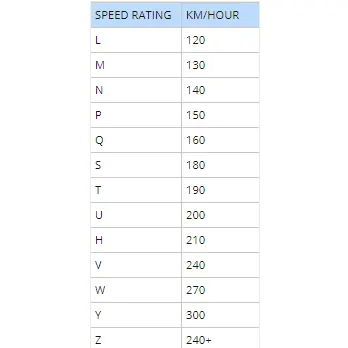
Speed Rating, represented by an alphabet, denotes the maximum ‘vehicle speed’ a tire can withstand, while carrying a load corresponding to its Load Index. Speed Rating of the selected tyres are 'J' and 'P' , which refers to a maximum speed capacity of 100km/h and 150Km/h respectively.
Governing Equations:
- Diameter of tire`(Dt):`
`Dt = Dr+2*Hs`
Where,
`Dr` = Rim Diameter (m)
`Hs` = Section Height (m)
`Ws`= Section Width (m)
- Aspect ratio `(AR):`
`R = (Hs)/(Ws)`
- Angular Velocity `(ω):`
`ω = vr*G Radian`
Where,
`v = velocity (m/s)`
`r = Radius (m2)`
- Relation between Speed & Gear Ratio:
`S1.T1 = S2.T2`
Where,
`S1` = Speed of Driven Wheel (Tire)
`S2` = Speed of Driver Wheel (Motor)
`T1` = Teeth of Driven Gear
`T2`= Teeth of Driver Gear
- Gear Ratio`(G):`
`(G) = (T1)/(T2)`
- Rolling Resistence Force (`F_(rr)`)
`F_(rr) = μ_(rr)*m*g (N)`
Where,
`μ_(rr)` = Coefficient of rolling resistance
`m = mass (kg)`
`g = 9.81 (m/s^2)`
- Aerodynamic Drag Force `(F_(ad)):`
`F_(ad) = 0.5*rho*A*Cd*v^2 (N)`
Where,
`ρ` = Air Density `((kg)/m^3)`
`A` = Frontal Area `(m^2)`
`Cd`= Drag Coefficient
`v` = Velocity `(m/s)`
- Hill Climbing Force`(F_h):`
`F_h = m.g.sin(θ) (N)`
Where,
`theta =` Angle of Inclination
- Total Tractive Force in case of no inclination`(F_(te)):`
`F_(te) = F_(rr)+F_(ad)`
- Power `(P) = F_(te).v`
Calculations:
1. What should be the maximum speed of the motor used in an electric scooter capable to run at 90 kmph, if the fixed gear ratio is 7 and tire size is 90/100 R10 53J and 90/90 R18 51P ?
Maximum Speed of the Motor used in Electric Scooter:
i) Given:
Linear Velocity = 90 kmph = 25 m/s
Gear Ratio = 7
Tire Size = 90/100 R10 53J
Angular Velocity:
ω = G*v/r
where,
- G = Gear ratio
- v = linear velocity(m/s)
- r = radius of tyre
Radius of Tyre:
Tyre Height = Aspect ratio * width/100
= 100 * 90/100
Tyre Height = 90 mm
Tyre Diameter = 25.4*Wheel Diameter + 2*Tyre Height
= 25.4*10 + 2*90
Tyre Diameter =434 mm
Tyre Radius = 217 mm = 0.217m
Angular Velocity, ω = G*v/r
= 7 * 25/0.217
= 806.45 rad/s
Angular Velocity = 7705 RPM
ii) Given:
Linear Velocity = 90 kmph = 25 m/s
Gear Ratio = 7
Tire Size = 90/90 R18 51P
Radius of Tyre:
Tyre Height = Aspect ratio * width/100
= 90 * 90/100
Tyre Height = 81
Tyre Diameter = 25.4*Wheel Diameter + 2*Tyre Height
= 25.4*18 + 2*81
Tyre Diameter =619.2 mm
Tyre Radius = 309.6 mm = 0.3096 m
Angular Velocity, ω = G*v/r
= 7 * 25/0.3096
= 565.2 rad/s
Angular Velocity = 5398 RPM ~ 5400 RPM
------------------------------------------------------------------------------------------------------------------------------
2. Prepare a simple excel calculator to identify vehicle propulsion power based on given inputs and outputs.
Formulae Used:
- Rolling Resistence Force (`F_(rr)`)
-
`F_(rr) = μ_(rr)*m*g (N)`
-
Where,
`μ_(rr)` = Coefficient of rolling resistance
`m = mass (kg)`
`g = 9.81 (m/s^2)`
- Aerodynamic Drag Force `(Fad):`
`F_(ad) = 0.5⋅ρ⋅A⋅Cd⋅v^2 (N)`
Where,
`ρ` = Air Density `((kg)/m^3)`
`A` = Frontal Area `(m^2)`
`Cd`= Drag Coefficient
`v` = Velocity `(m/s)`
- Total Tractive Force in case of no inclination`(F_(te)):`
`F_(te) = F_(rr)+F_(ad)`
- Power `(P) = F_(te).v`
- Hill Climbing Force`(F_h):`
`F_h = m.g.sin(θ) (N)`
Where,
`theta =` Angle of Inclination
Results:
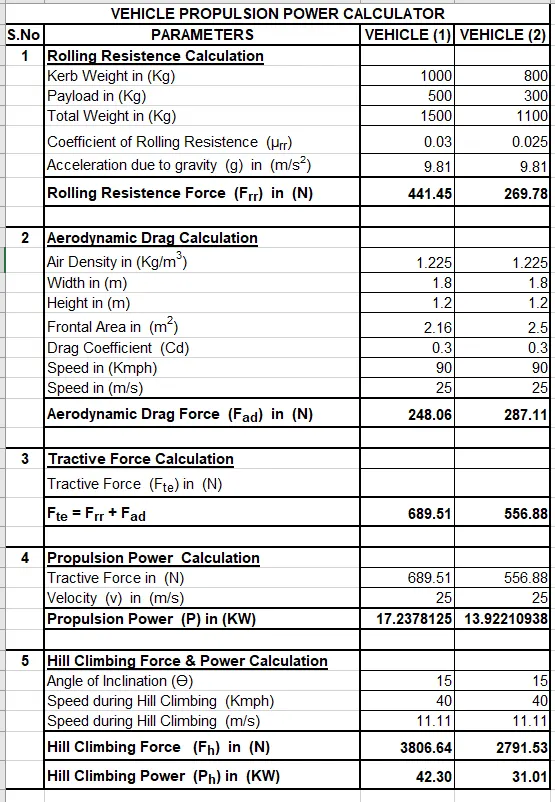
Screeenshot shows excel sheet for calculation of Propulsion Power of two different vehicles,
a) Travelling at same velocity on a flat surface without any hill climbing force acting on it.
b) Travelling at same velocity but on an inclined surface of angle 15 degrees with hill climbling force acting on it.
Output:
Propulsion Power of vehicles traveliing on a flat surface in KW,
- Vehicle (1) = 17.23 KW
- Vehicle (2) = 13.92 KW
Hill Climbing Power of vehicles travelling on an inclined surface in KW,
- Vehicle (1) = 42.30 KW
- Vehicle (2) = 31.01 KW
Spreadsheet Link:
https://drive.google.com/file/d/1cDe2Z9VORMQ6yzPajAPrJC0IfCUHzryz/view?usp=sharing