Flow over Backward Facing Step
AIM
The aim is to Simulate the flow of air over Backward facing step
OBJECTIVES
- The case should be run with 3 different mesh sizes
- Post processing of the flow parameters
BACKWARD FACING STEP
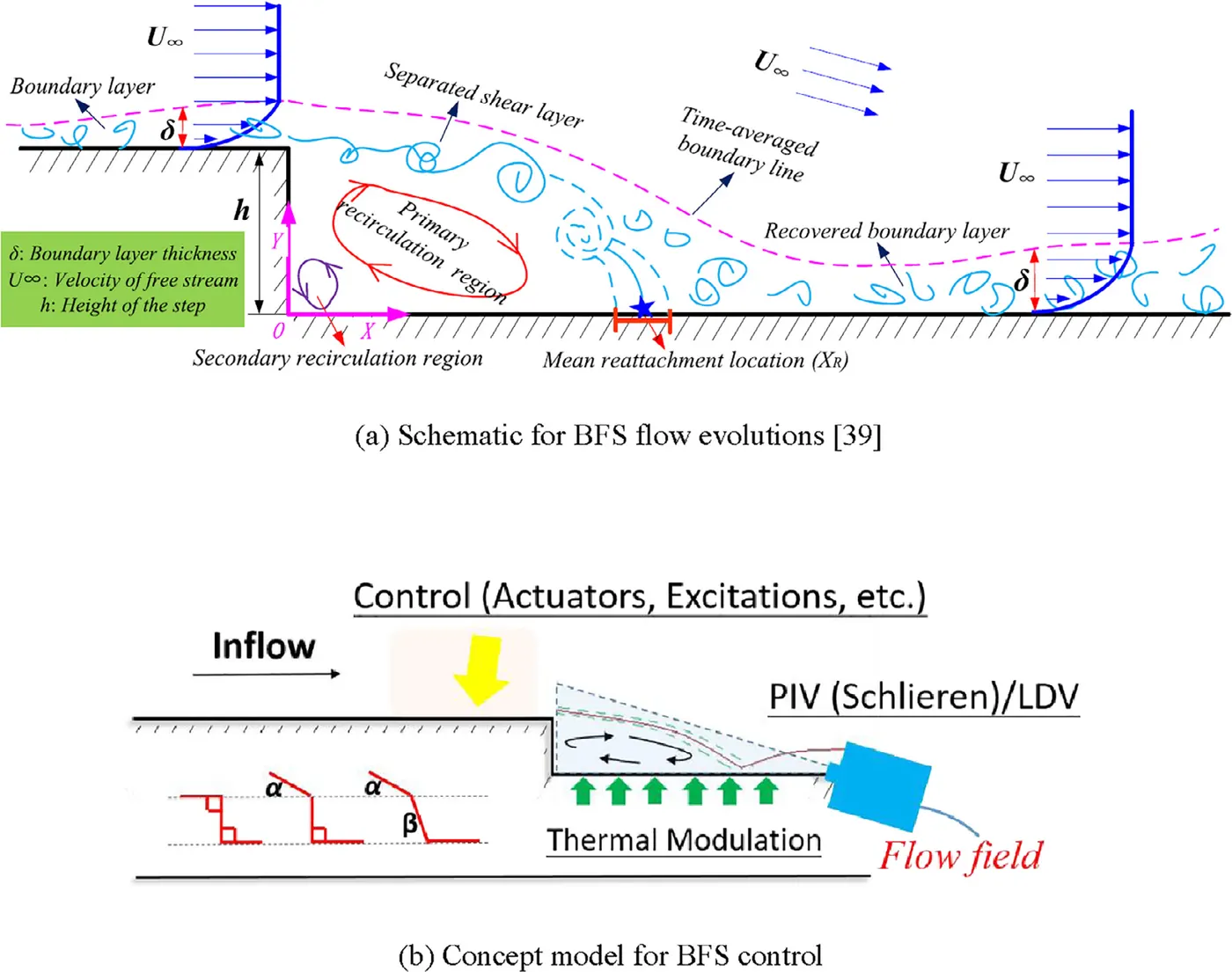
Backward-Facing Step (BFS) flow is one representative separation flow model, which is of significance in both theoretical and engineering development. Various applications for BFS flow can be found in our daily life, such as the air foils at large attack angle, the spoiler flows, separation flow behind a vehicle, inlet tunnel flow of engine or inside a condenser/combustor, and also the flow around a boat or a building. It is a basic model that involves the most important features of a separated flow: free shear flow separation, vortex evolution and re-attachment. As is well known that the flow separation near the BFS will possibly lead to additional flow resistance and noise, and under critical conditions even for stalling of an aircraft, the general understanding of the physics in BFS flow has become one hot topic in recent years. In addition, for some other applications such as mixing chamber or combustors, effective mixing is preferred and can be designed with detailed BFS geometric considerations, which also leads to the study of various mechanism and controlling studies in this field. Backward-Facing Step (BFS) has also been partially discussed in general previous studies of flow separation dynamics. Flow separation is one classic topic in fluid dynamics, which has become one key topic in external flows and is closely related to aerodynamic design of vehicles, mechanics and other moving bodies . The free shear layer evolutions are the dominant factor for separation process. According to Brown and Roshko, the shear layer indeed defines the coherent structures after a flow stability transition, vortex mixing and pairing process. Bernal and Roshko then reported the 3-D structure and its extensions after separation, which governs the ensuing flow structure evolutions. There are many studies on the detailed technological aspects of separation process published in recent years. Among those, separation flow in external and internal flows show different behaviours due to the confinement of walls and the specific design of model geometry. The researchers conducted a series of studies with compressible effects on natural convection with boundary flow separation/reversal under high Reynolds numbers and also the microscale effects under confining walls that relates to the classic theory of Roshko and his colleagues. Such surface pressure changes and the separation bubble variations with Reynolds numbers and inflow conditions. Such compressible effects on heat transfer not only happen in aerodynamic flow field, but also happen in a wide variety of engineering conditions, such as chemical mixing, airfoil heating/cooling and building. Such local boundary unstable flow under flow separation and reversal process with actuators/ heat control become very important when related to spacecraft re-entry process (with high Re and Ma number) where after-body steps are often seen. Such series studies lead to a more general thinking about the general laws of flow separation in generalized models such like BFS, one most often seen in models for separation flow.
BACKWARD FACING STEP FLOW [CASE 1]
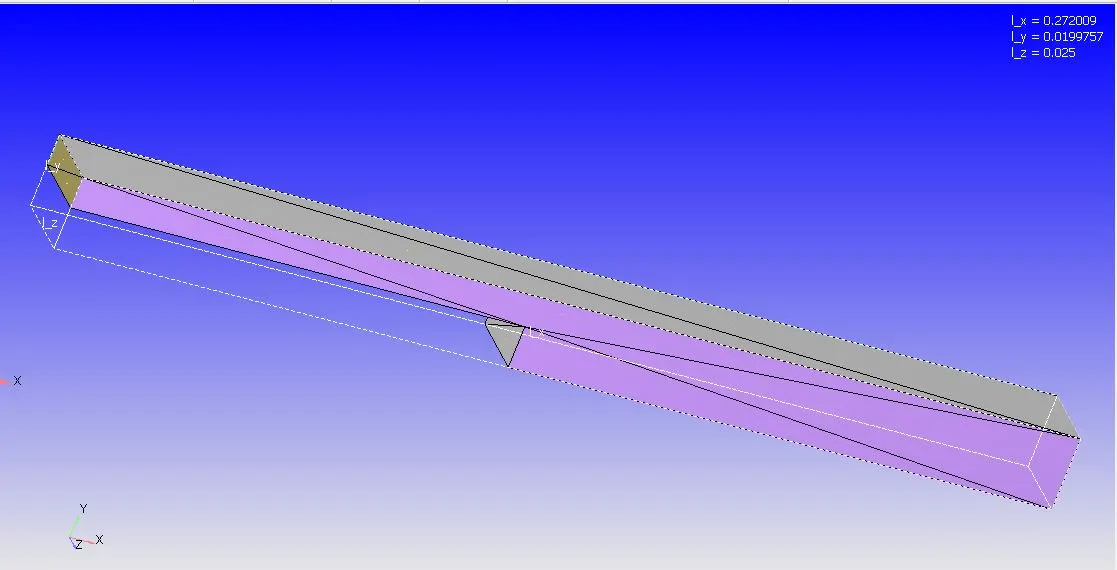
Geometry
Meshing
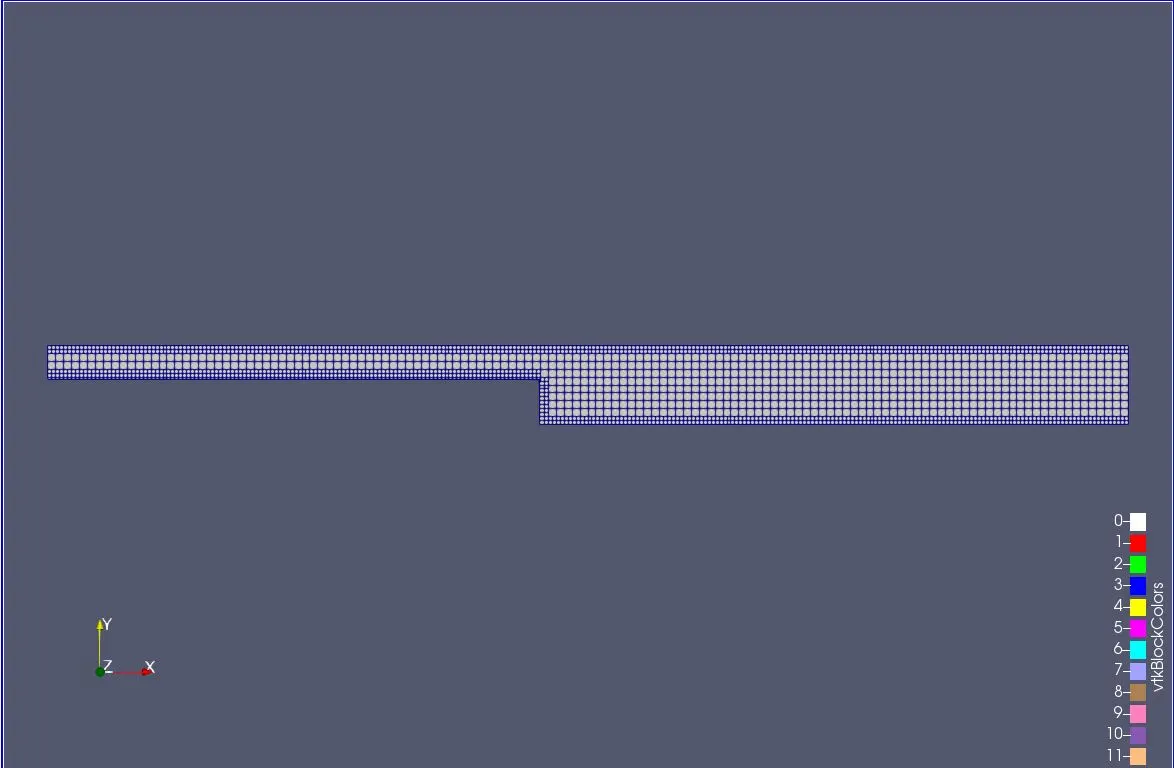
Now for the mesh we have taken the mesh size of
dx = 2e-3m
dy = 2e-3m
dz = 2e-3m
BOUNDARY CONDITIONS
Inlet Boundary
- INFLOW BOUNDARY
- Pressure = 110325 Pa
- Mixture - Air
Outlet Boundary
- OUTFLOW BOUNDARY
- Pressure = 101325 Pa
- Mixture - air
Top and Bottom Walls
- WALL BOUNDARY
- Temperature = 300 K
- Velocity - Stationary
- Temperature - Law of Wall
- Turbulent Kinetic Energy - Zero normal gradient
- Turbulent Dissipation - Wall model
Results
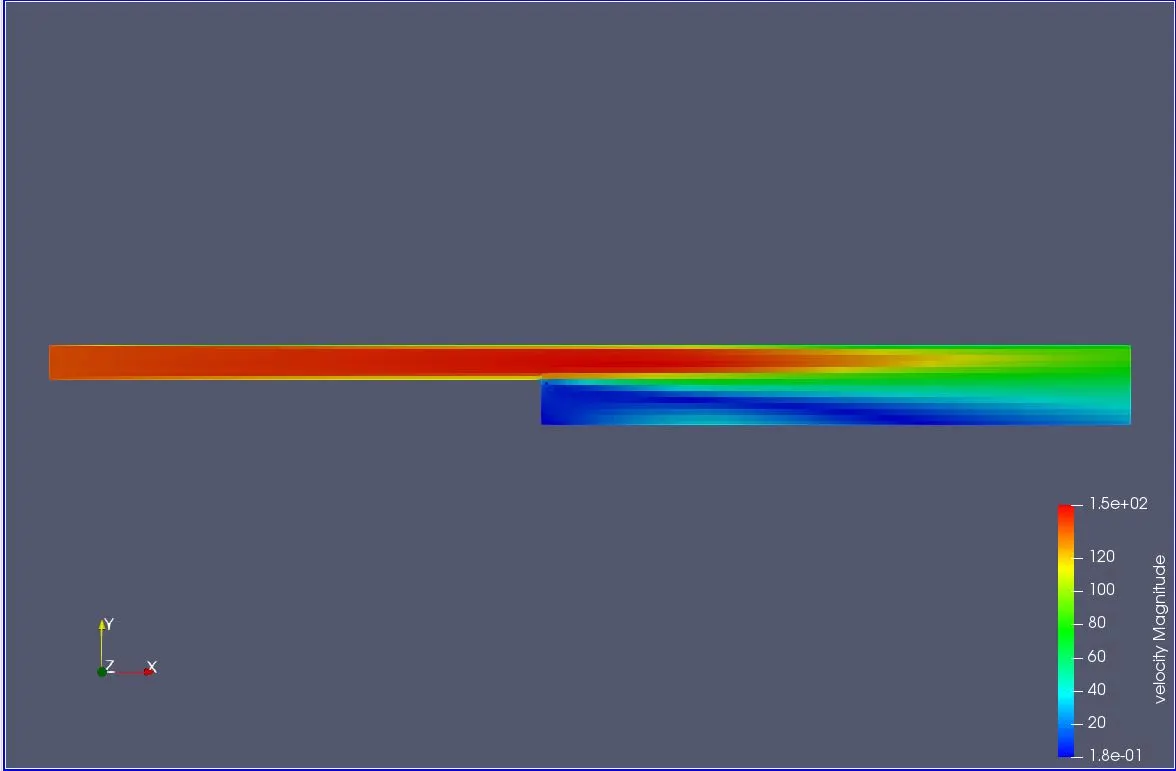
Velocity Contour
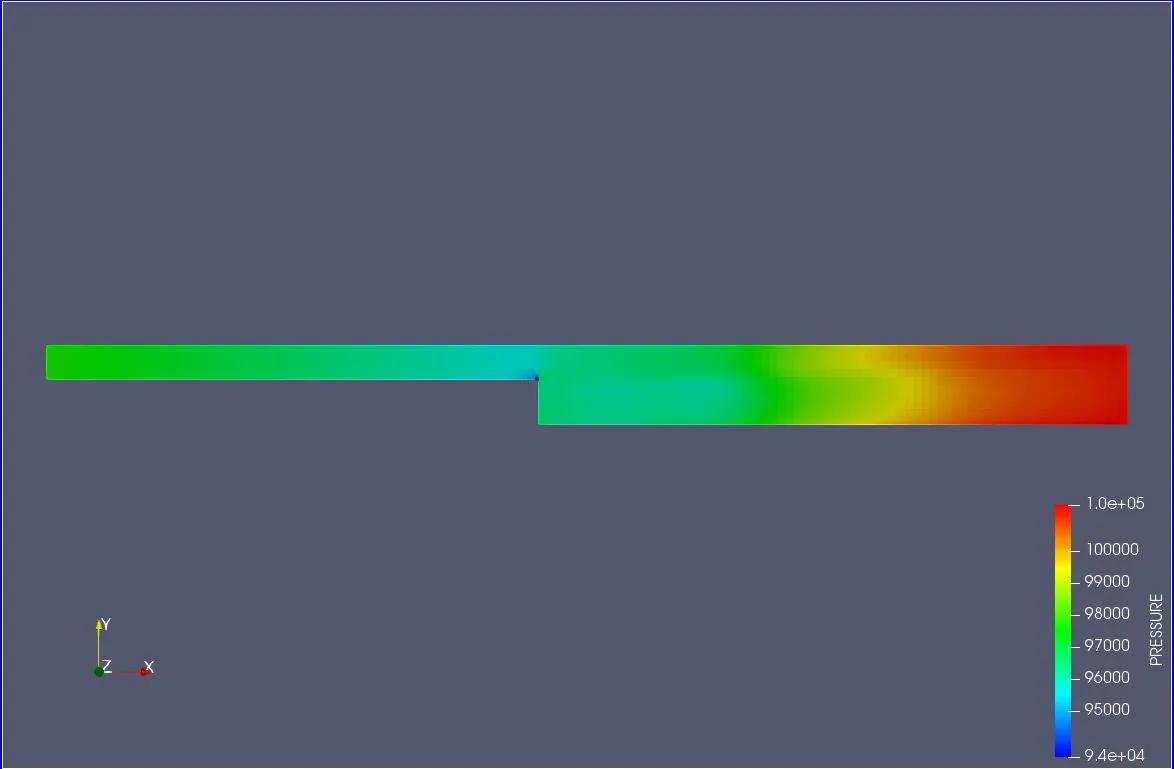
Pressure Contour
Mass flow rate versus cycles
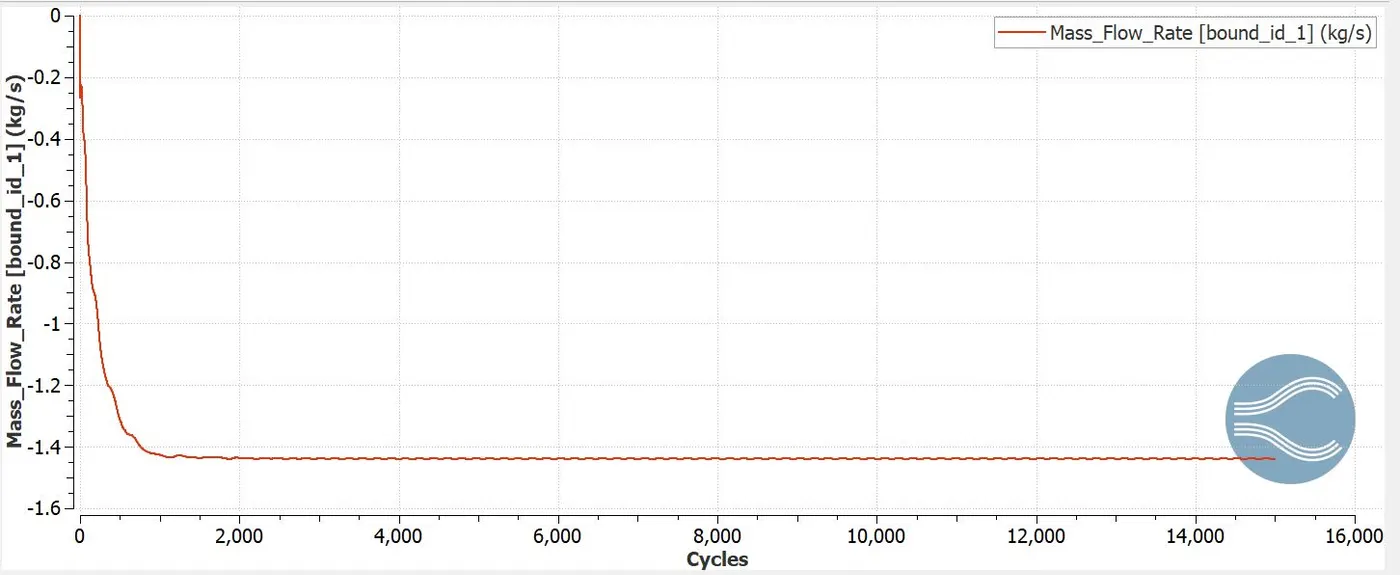
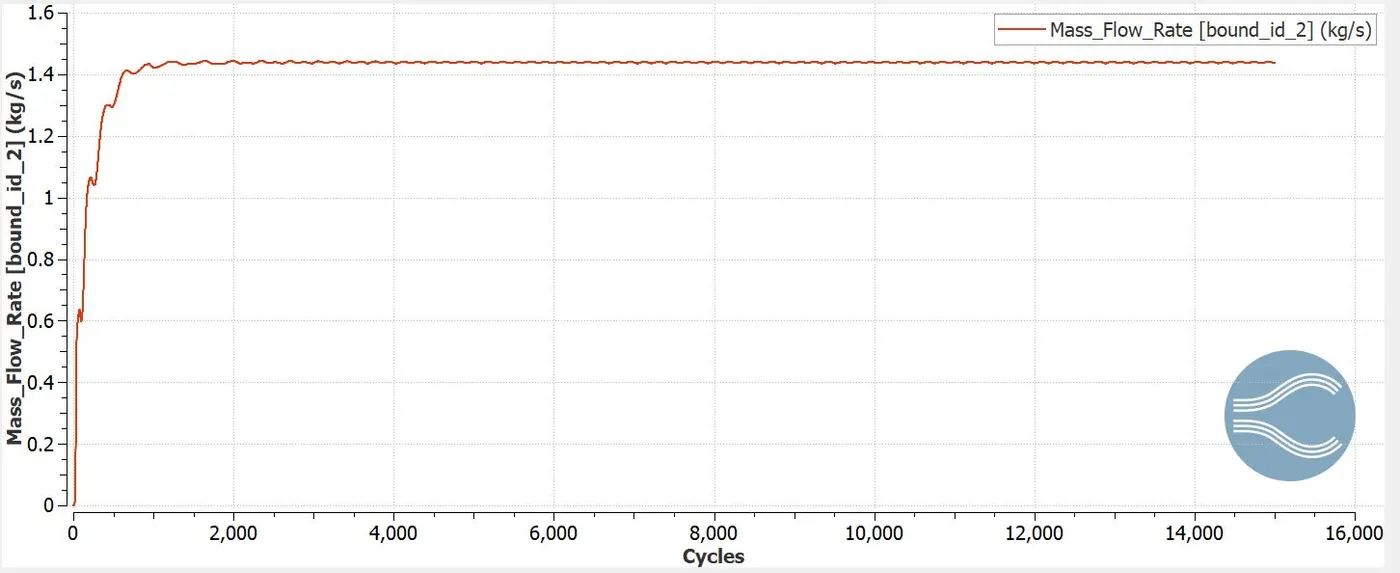
As the air enters the domain there is mass flow rate of 1.4 kg/s. When the air enters there is a negative sign, when the flow of direction is opposite to the normal. The opposite signs almost cancel each other to say that the mass has been conserved.
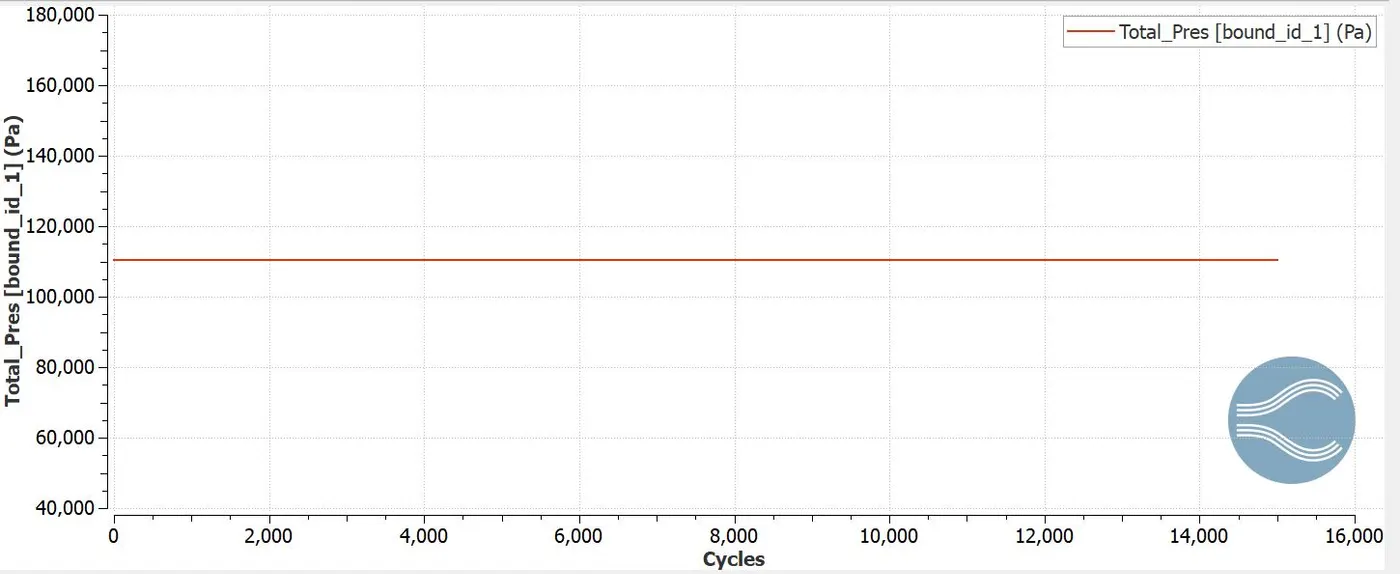
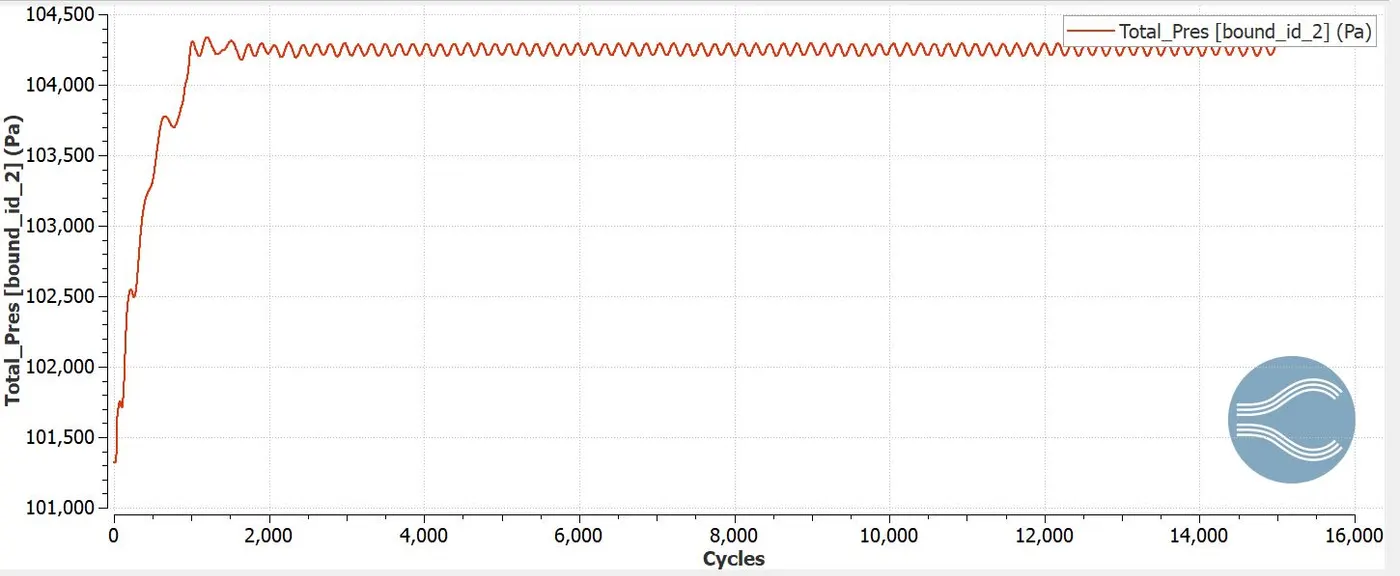
Pressure versus Cycles
Velocity versus Cycles
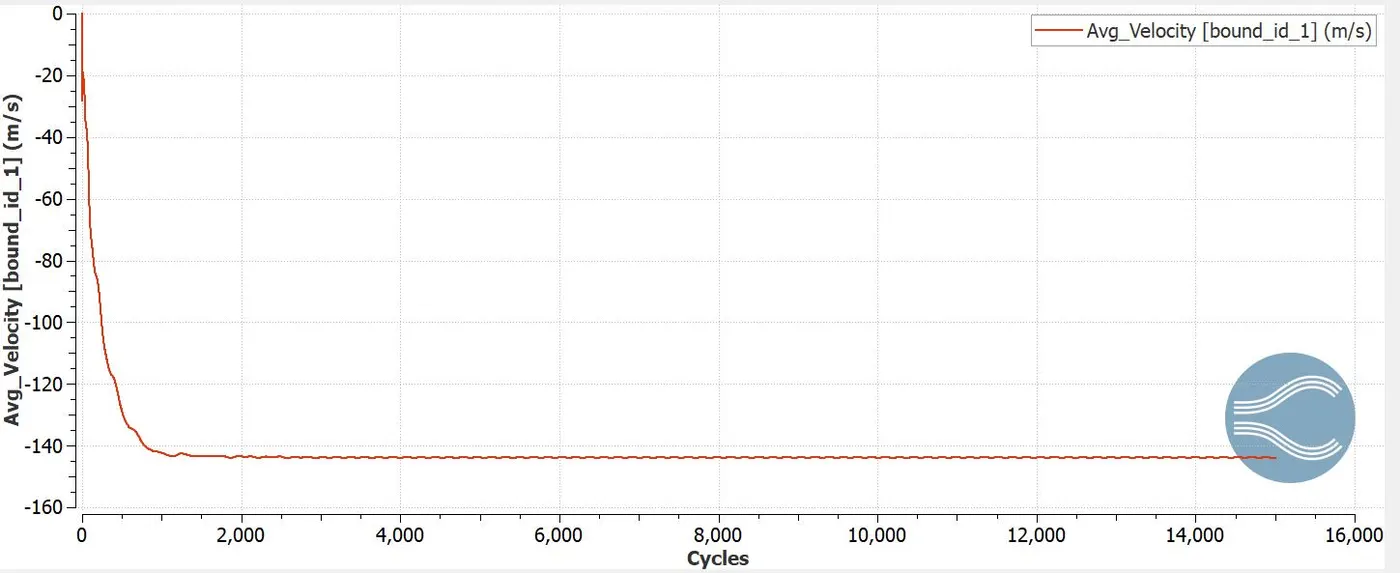
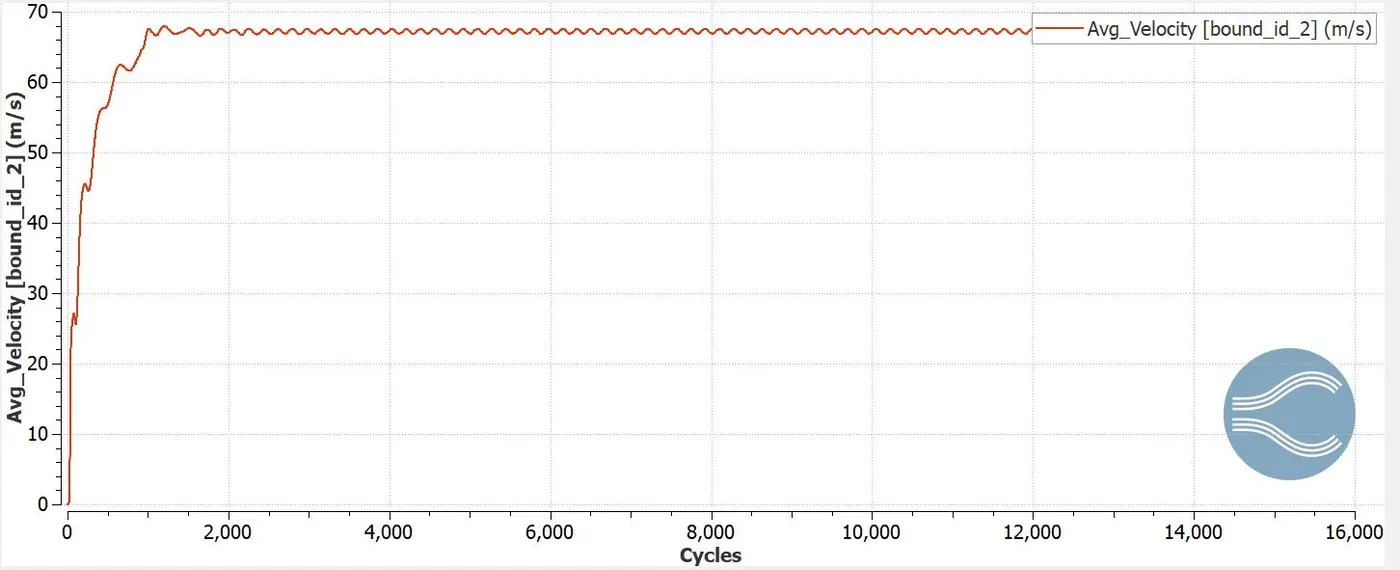
Inlet velocity approaches a value of -140 m/s, whereas outlet velocity takes a value of 70 m/s. The opposite signs gives a clear indication that momentum has been conserved. There is a difference in the value of the velocity as the area of cross section increases as the air flows from left to right.
Cell Counts
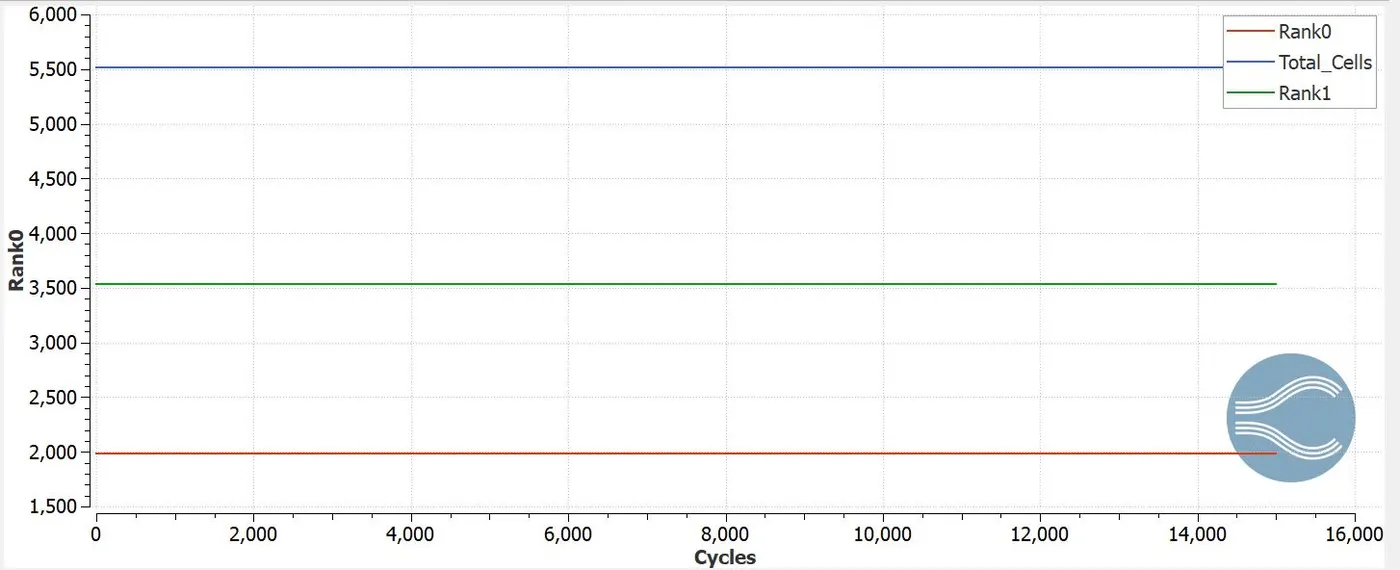
The cell count goes to somewhere around 5600 cells. The first processor was allotted 2000 cells but the second processor was given 3600 cells for the solution of the simulation
BACKWARD FACING STEP FLOW [CASE 2]
Geometry
Meshing
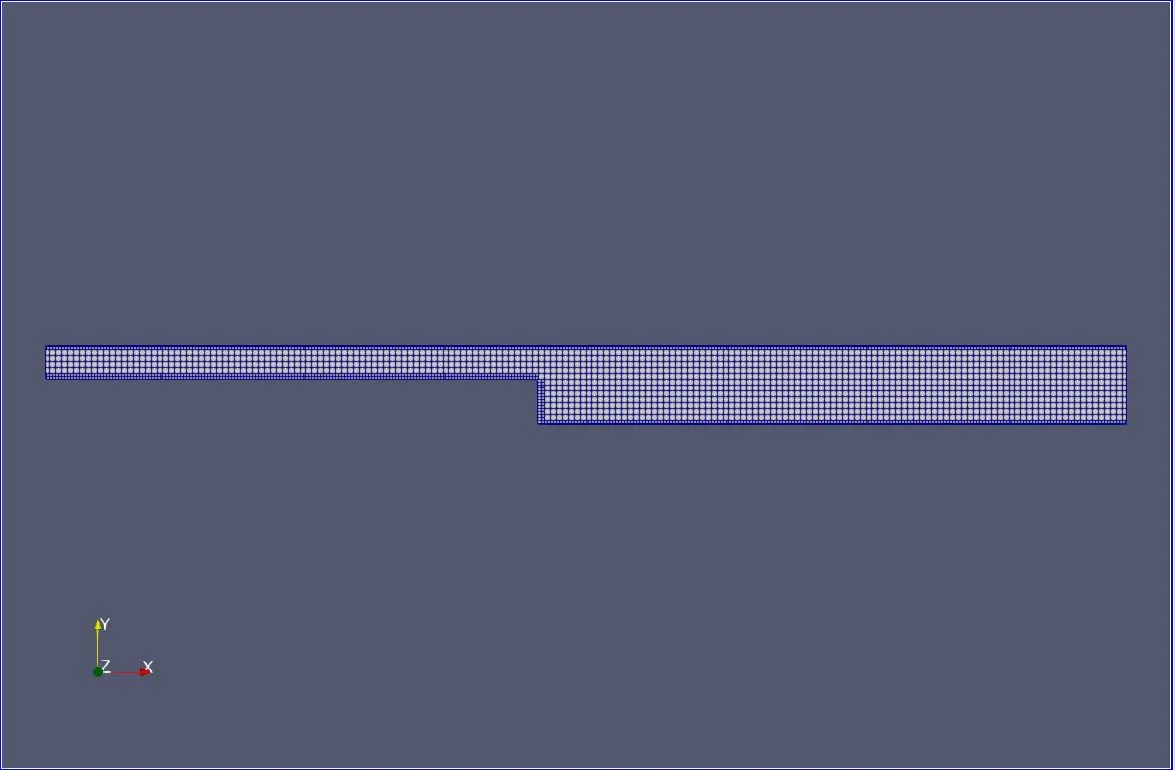
Now for the mesh we have taken the mesh size of
dx = 1.5e-3m
dy = 1.5e-3m
dz = 1.5e-3m
BOUNDARY CONDITIONS
Inlet Boundary
- INFLOW BOUNDARY
- Pressure = 110325 Pa
- Mixture - Air
Outlet Boundary
- OUTFLOW BOUNDARY
- Pressure = 101325 Pa
- Mixture - air
Top and Bottom Walls
- WALL BOUNDARY
- Temperature = 300 K
- Velocity - Stationary
- Temperature - Law of Wall
- Turbulent Kinetic Energy - Zero normal gradient
- Turbulent Dissipation - Wall model
Results
Velocity Contour
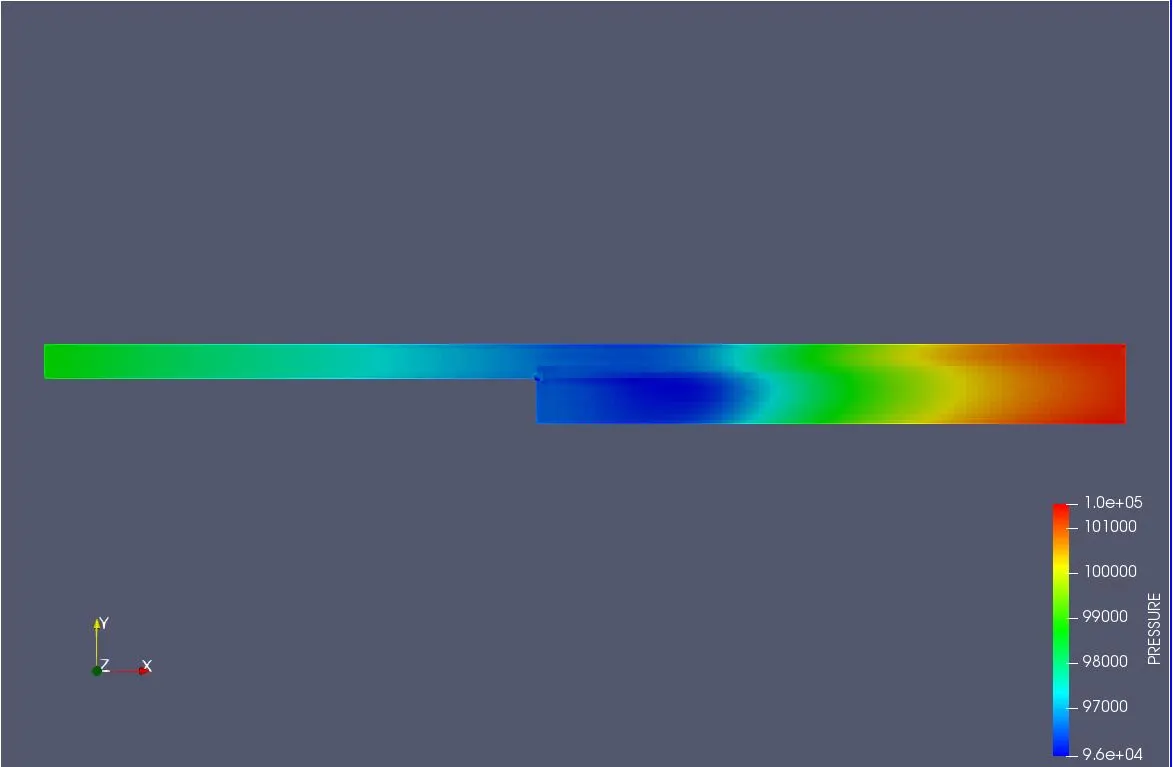
Pressure Contour
Mass flow rate versus cycles
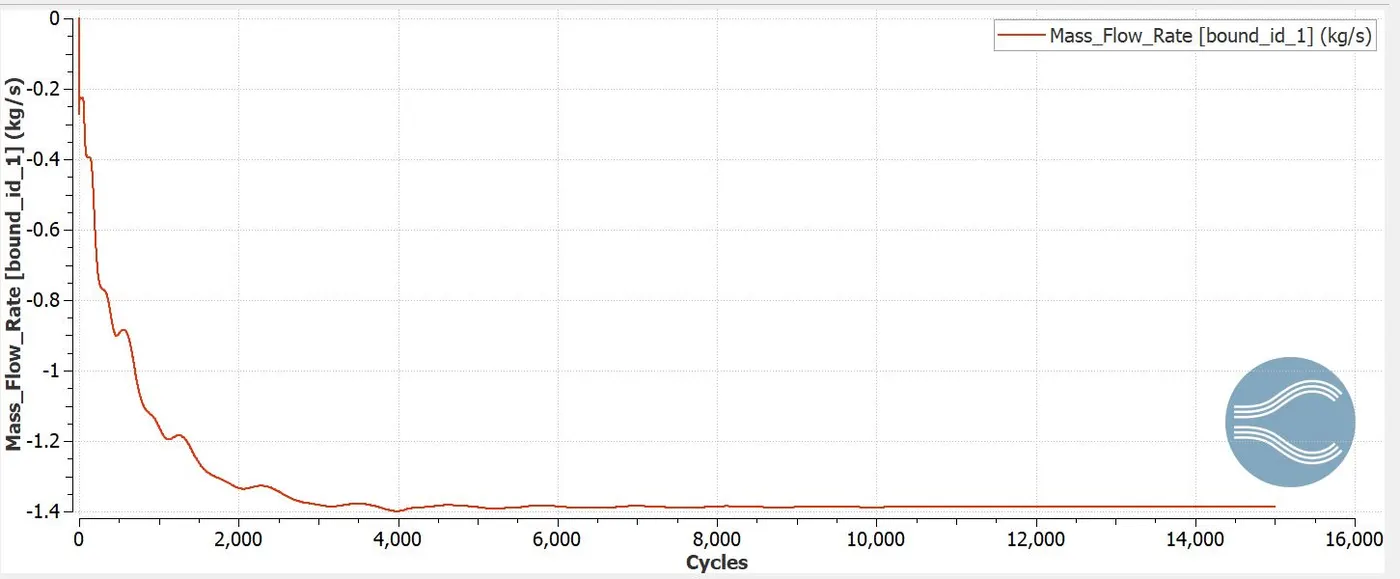
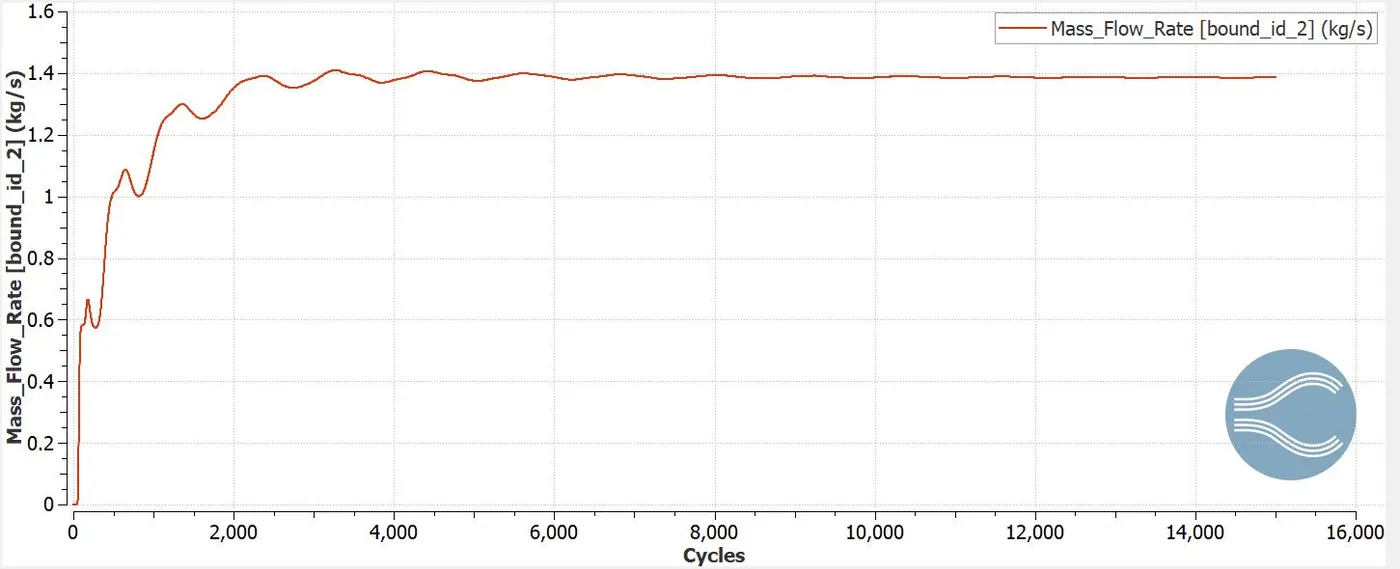
As the air enters the domain there is mass flow rate of 1.4 kg/s. When the air enters there is a negative sign, when the flow of direction is opposite to the normal. The opposite signs almost cancel each other to say that the mass has been conserved.
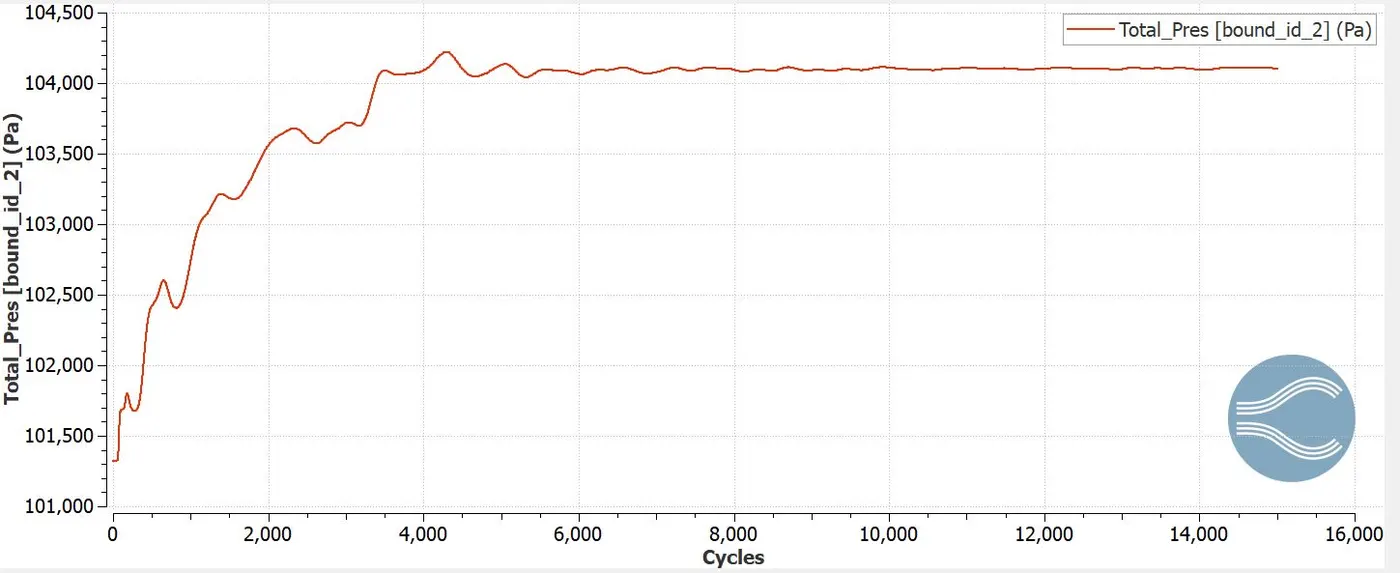
Pressure versus Cycles
Velocity versus Cycles
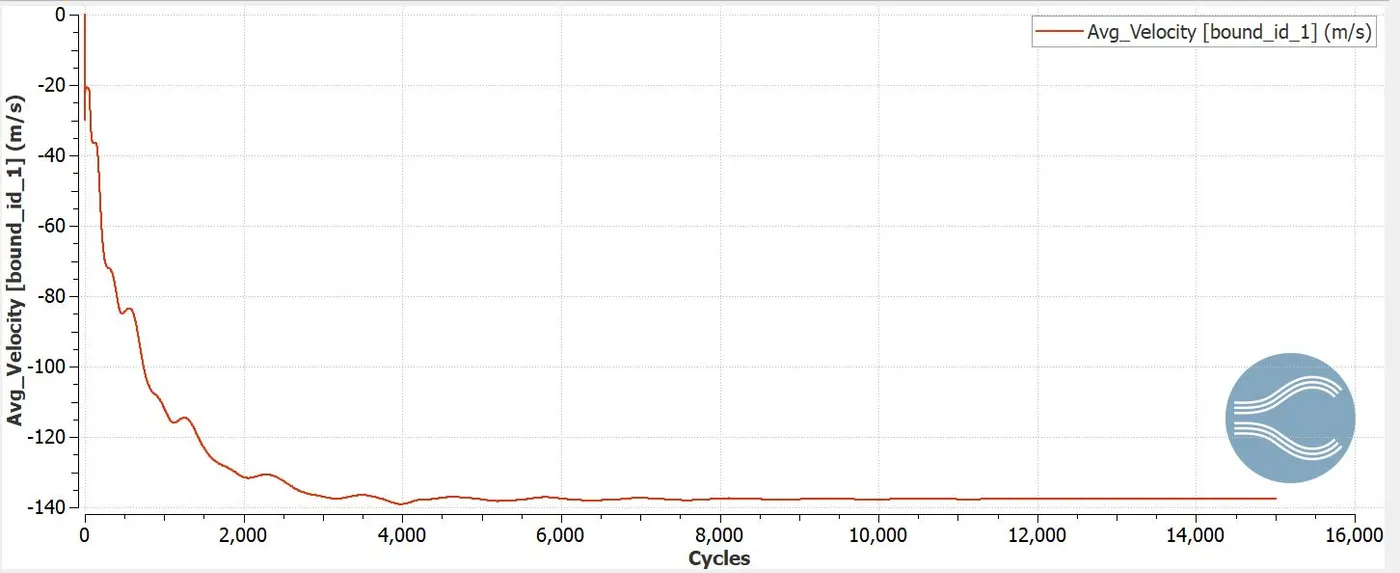
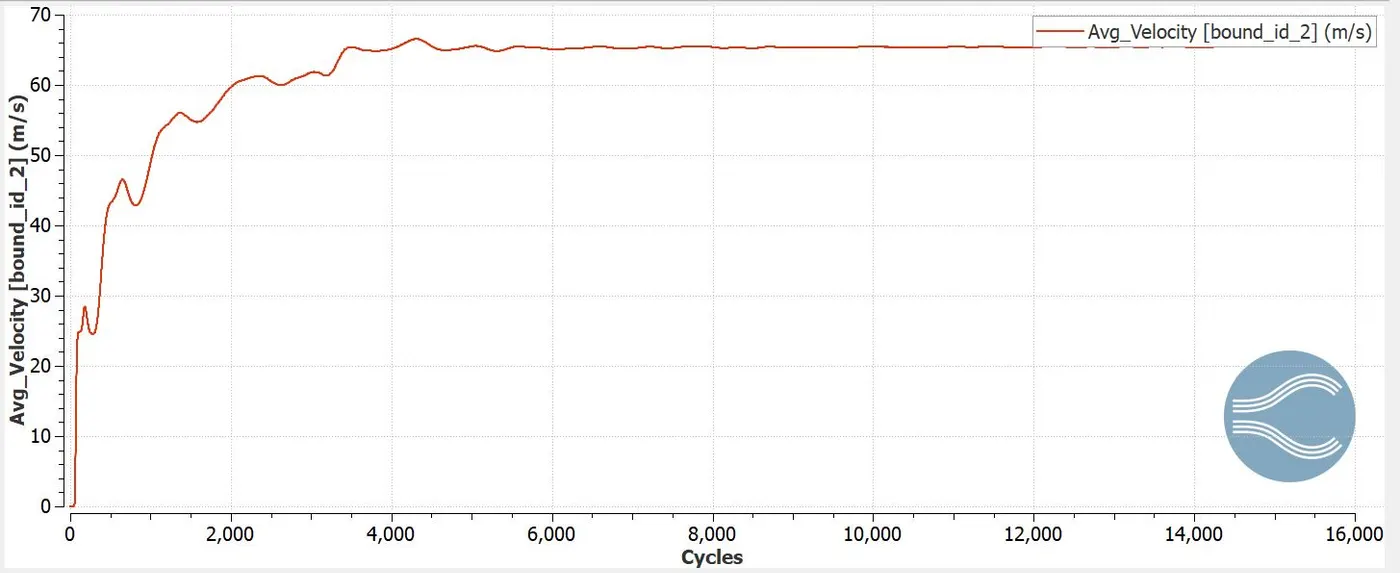
Inlet velocity approaches a value of -140 m/s, whereas outlet velocity takes a value of 70 m/s. The opposite signs gives a clear indication that momentum has been conserved. There is a difference in the value of the velocity as the area of cross section increases as the air flows from left to right.
Cell Counts
The cell count goes to somewhere around 5600 cells. The first processor was allotted 2000 cells but the second processor was given 3600 cells for the solution of the simulation
BACKWARD FACING STEP FLOW [CASE 3]
Geometry
Meshing
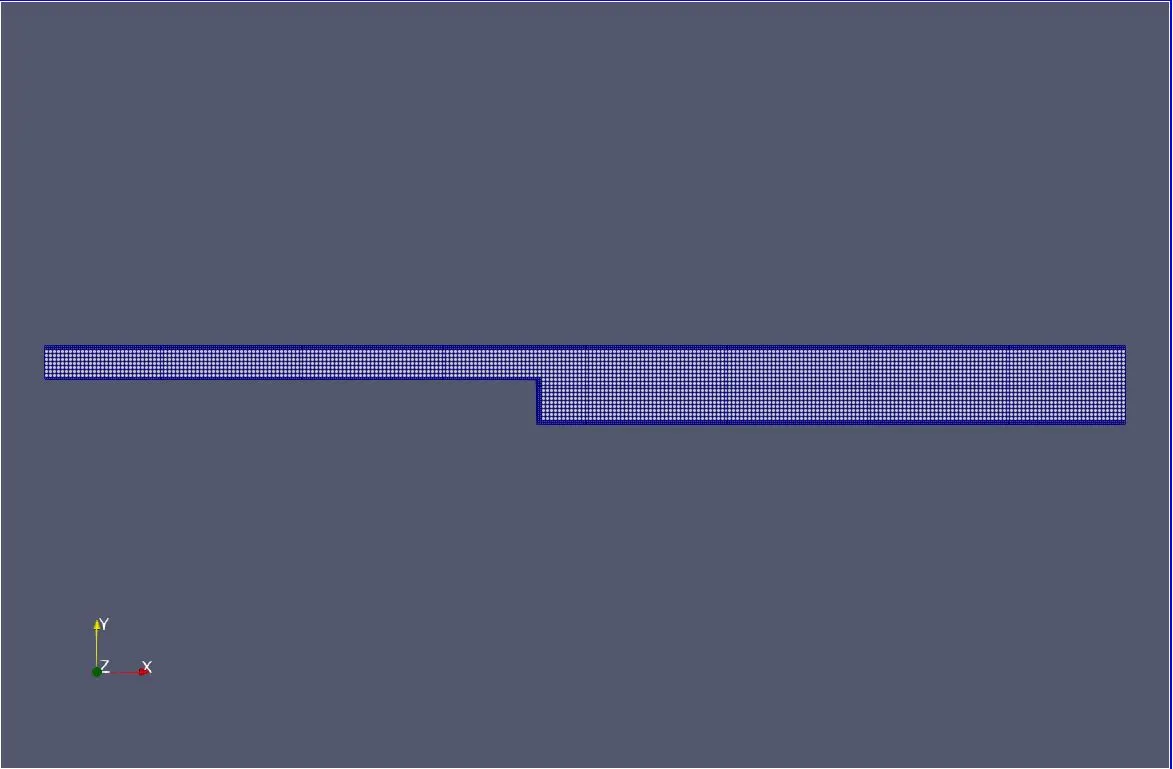
Now for the mesh we have taken the mesh size of
dx = 1e-3m
dy = 1e-3m
dz = 1e-3m
BOUNDARY CONDITIONS
Inlet Boundary
- INFLOW BOUNDARY
- Pressure = 110325 Pa
- Mixture - Air
Outlet Boundary
- OUTFLOW BOUNDARY
- Pressure = 101325 Pa
- Mixture - air
Top and Bottom Walls
- WALL BOUNDARY
- Temperature = 300 K
- Velocity - Stationary
- Temperature - Law of Wall
- Turbulent Kinetic Energy - Zero normal gradient
- Turbulent Dissipation - Wall model
Results
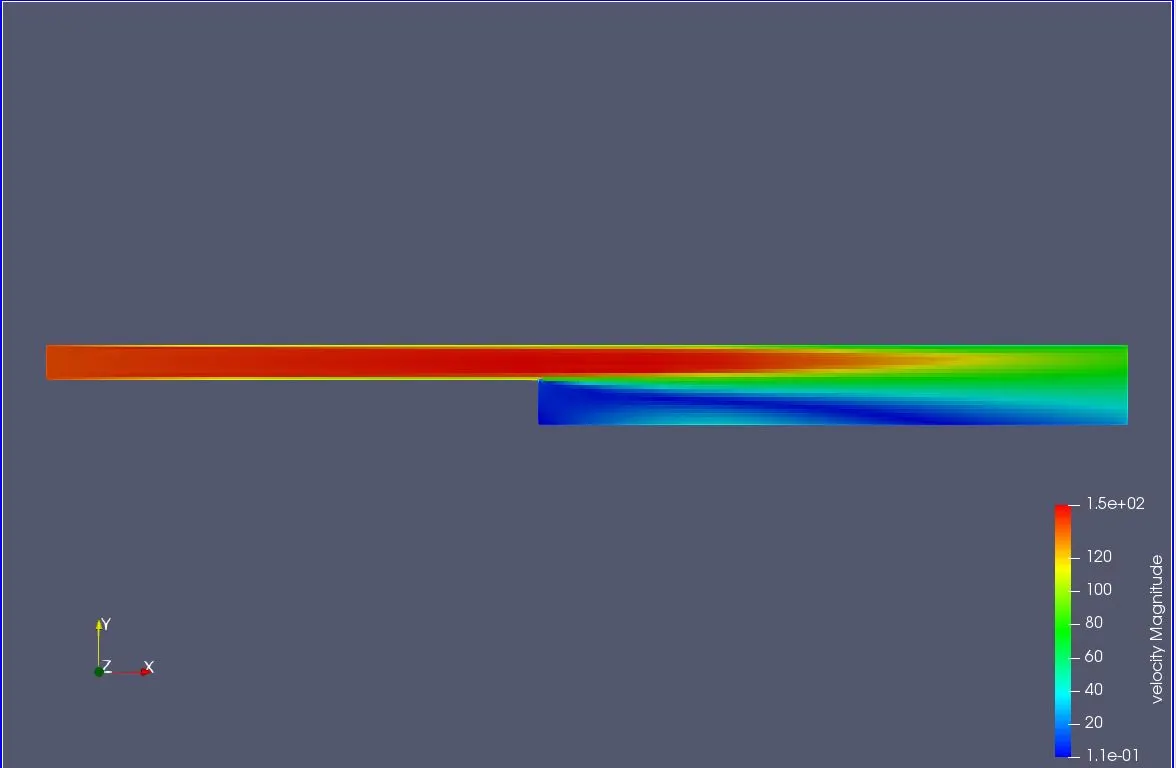
Velocity Contour
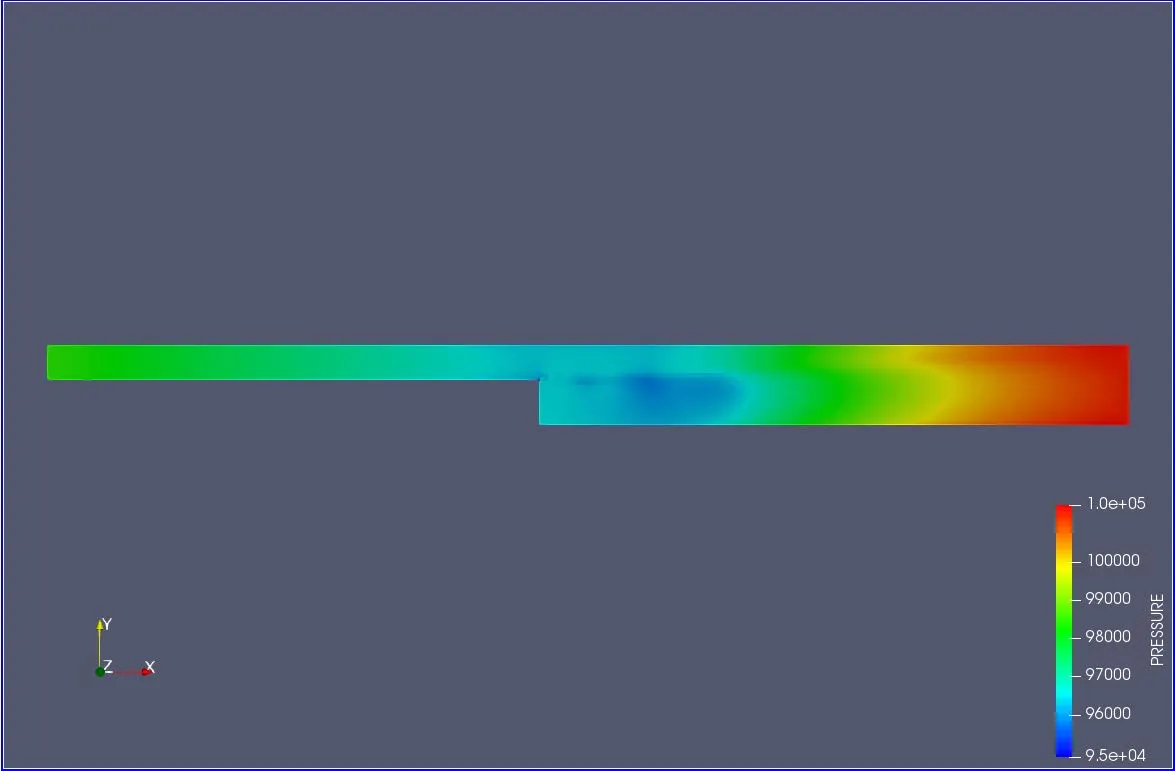
Pressure Contour
Mass flow rate versus cycles
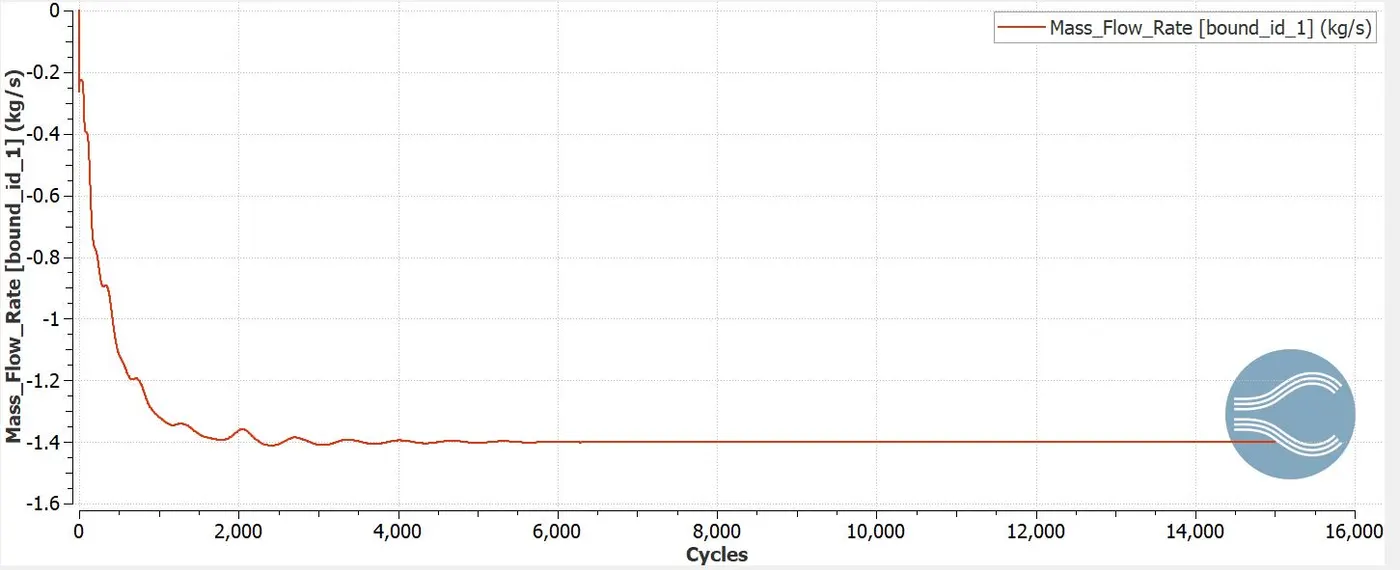
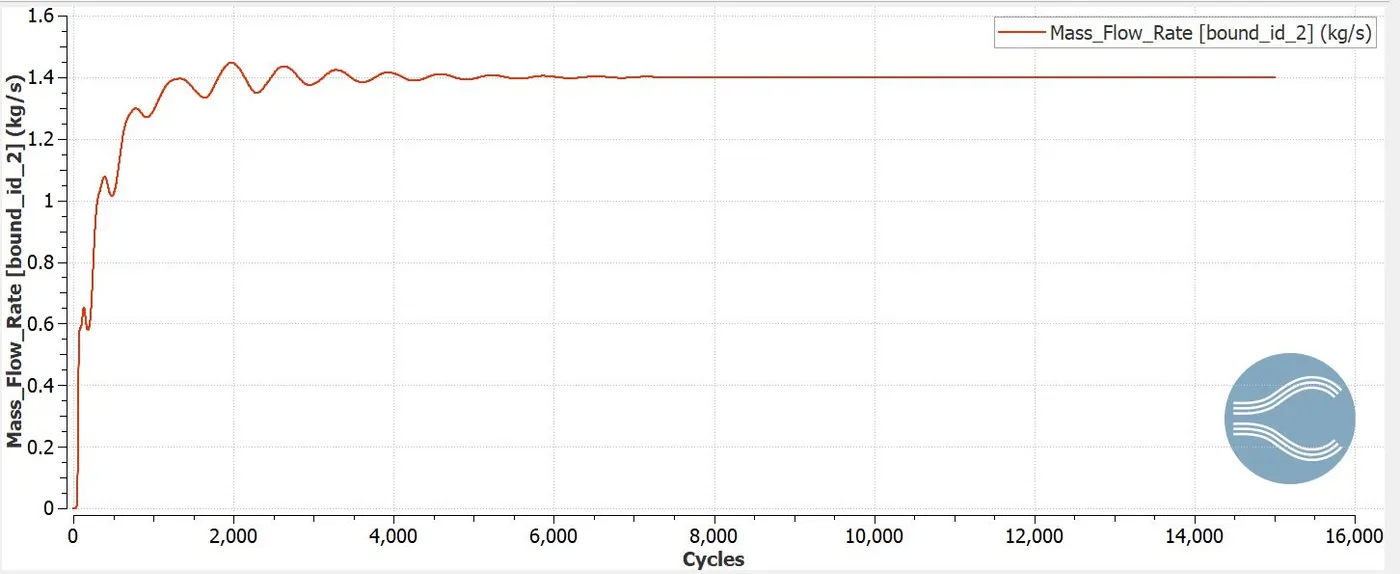
As the air enters the domain there is mass flow rate of 1.4 kg/s. When the air enters there is a negative sign, when the flow of direction is opposite to the normal. The opposite signs almost cancel each other to say that the mass has been conserved.
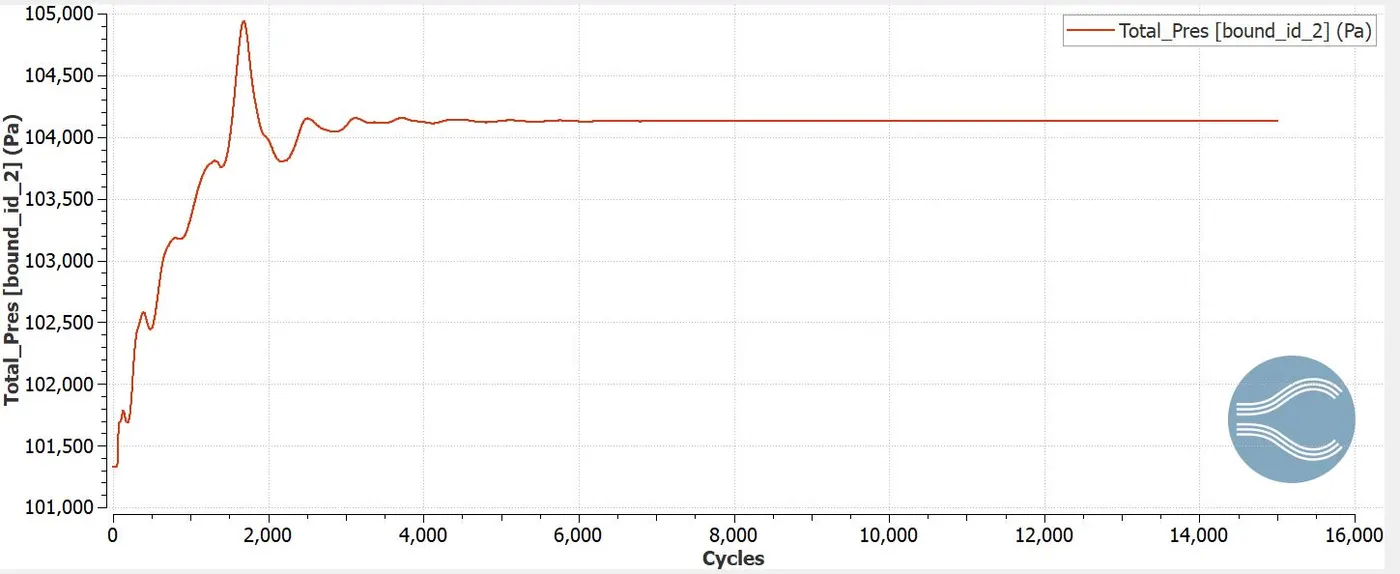
Pressure versus Cycles
Velocity versus Cycles
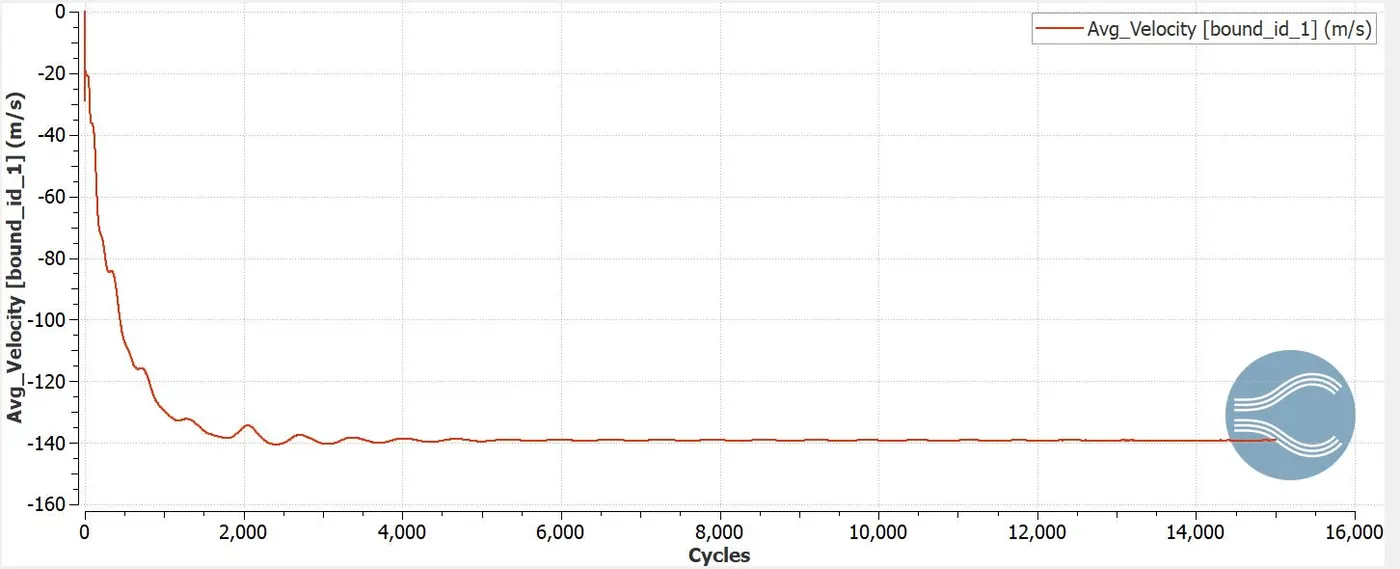
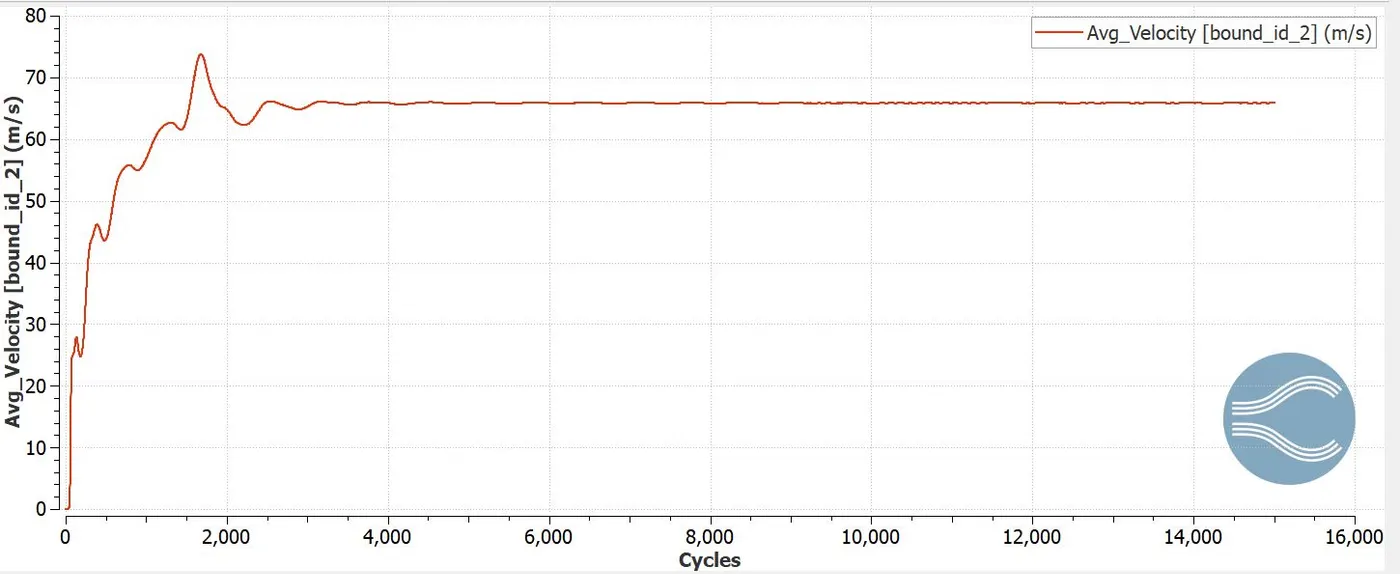
Inlet velocity approaches a value of -140 m/s, whereas outlet velocity takes a value of 70 m/s. The opposite signs gives a clear indication that momentum has been conserved. There is a difference in the value of the velocity as the area of cross section increases as the air flows from left to right.
Cell Counts
The cell count goes to somewhere around 5600 cells. The first processor was allotted 2000 cells but the second processor was given 3600 cells for the solution of the simulation
VELOCITY ANIMATION
PRESSURE ANIMATION
CONCLUSION
- Simulation was run with 3 different mesh sizes
- Flow variables were plotted against the number of cycles
- Contour plots gives us the distribution of the flow variables