Design of an Electric Vehicle
Design of an Electric Vehicle
Aim: Creating a Simulink model of an Electric Car using a battery and a DC motor
Theory:
The three main components of EV vehicles are;
1. Battery
2. Motor
3. Controls
Motors and Controls both account for the DC Drive.
Procedure:
we will design the body of the vehicle. The body will compromise of four wheels. The wheels are getting the power from the motor but only after getting through the transmission, which in this case in Simple Gear.
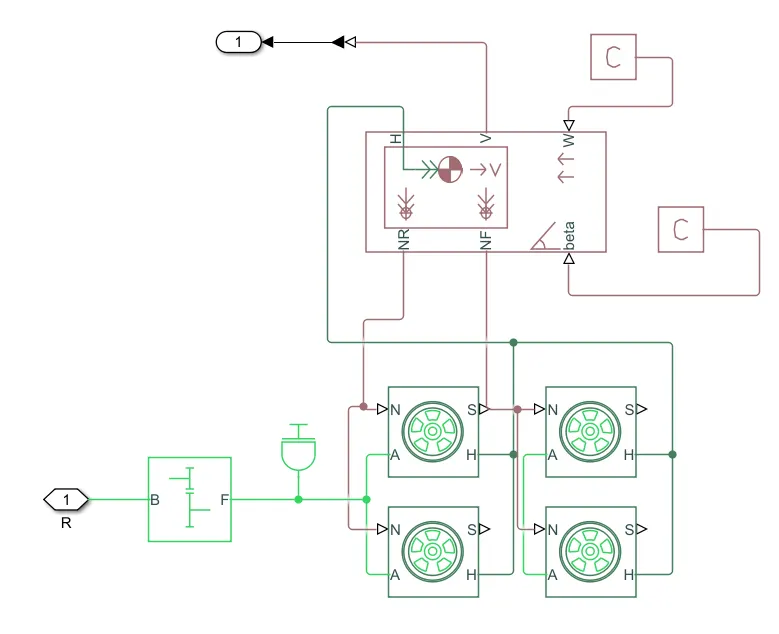
Fig: Vehicle Body
We will create a subsystem of these blocks. Then, the motor will be made using the Brushless DC Motor.
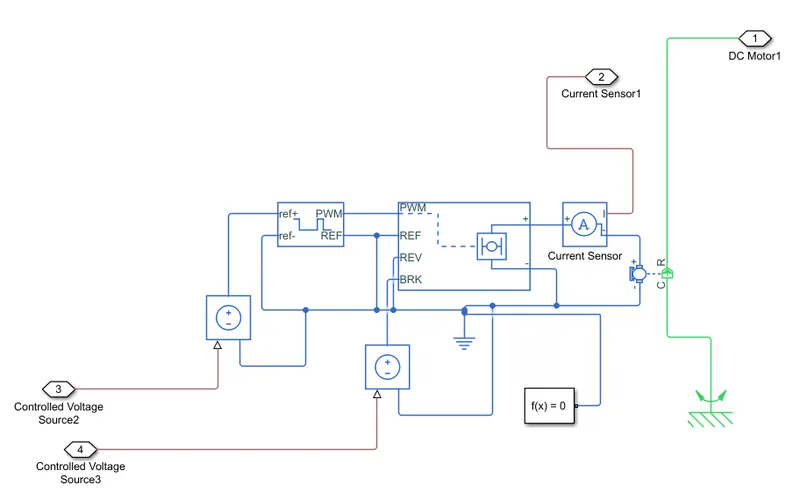
Fig: DC Drive
We will make use of the H-Bridge Rectifier to convert AC current to DC current. For the Duty Cycle, a PWM block is used. All of the negative ends are connected to the electrical reference. Again this will be created a separate subsystem.
Once this is done, the power source is created.
The Simple voltage source is used for this purpose. The Negative end goes to electrical reference, whereas the positive end goes to the motor to provide the drive. A control current source is used. This is created a separate subsystem.
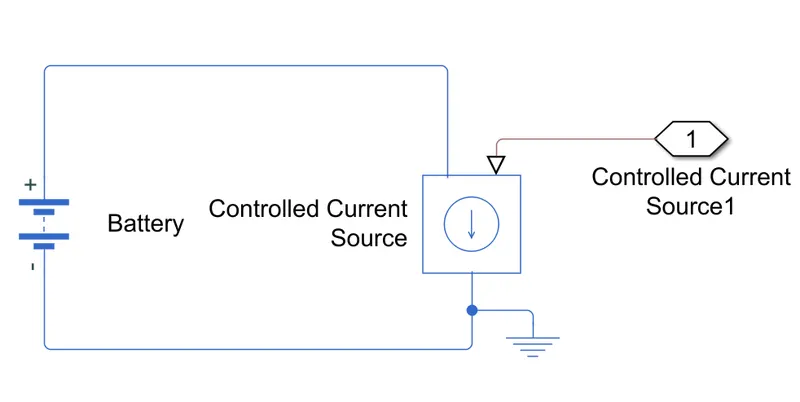
Fig: Battery
Once this is done, we will configure them. The following is the configuration of the Battery, DC drive, and Vehicle Body. Battery and Motor plays a pivotal role, as a result, they need to be configured properly.
First, for the battery, the Nominal Voltage is set at 300V. Internal resistance is set at 2 Ohm. The battery is 25 Ah capacity.
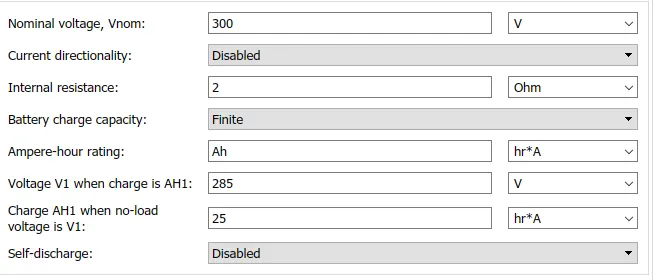
Fig: Configuration of Battery
Secondly, the motor is configured. The Voltage here needs to be higher than the voltage by the battery. Here it is set at 330 V. The total bridge on-resistance is set at 0.1 Ohm, whereas freewheeling diode resistance is taken as 0.05 Ohm.
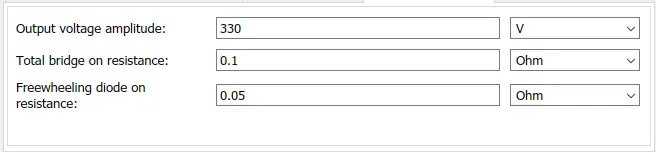
Fig: Configuration of Brushless DC Motor
Thirdly, the PWM signal is configured. Here the frequency is set at 4000 Hertz whereas the Simulation mode is set at Average.

Fig: Configuration of PWM Signal
Lastly, for Vehicle Body, the total mass is considered as 800 kg. Rest we will configure with an educated guess. I have kept the default values. The number of the wheel per axle is taken as 2.
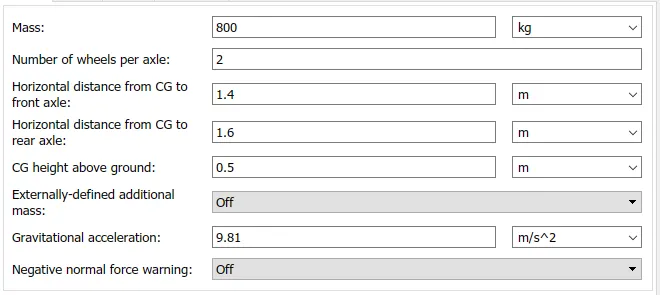
Fig: Configuration of Vehicle Body
To provide the input to it, we will provide the Longitudinal Driver. The Vehicle feedback is provided by the output of distance covered. Acceleration and deceleration are provided to the motor. The grade is assumed as 0.
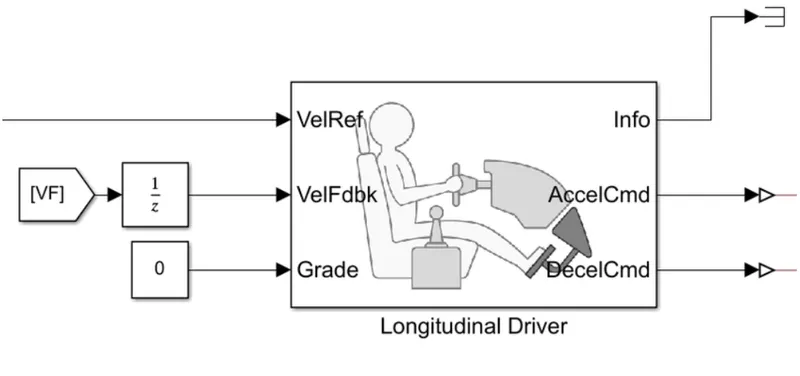
Fig: Longitudinal Driver
To provide traction, we need a particular input from the user. The input can is the power required for a particular speed. That is at every time interval we need the speed required at a particular load.
For this model, I have selected FTP75 Drive Cycle. Using Signal Builder block the input can be provided. The Slider gain is another method of providing the input. The electric powertrain can also be given using the excel sheet data of time v/s speed.
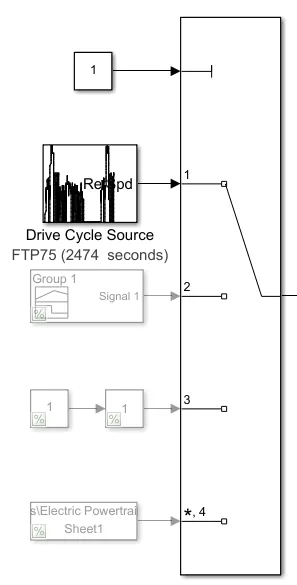
Fig: List of Drive Cycle provided
The State of Charge is calculated with the current drawn from the battery. The following represents the conversion of the current into a state of charge. The difference between this with 1 will give the Actual State of Charge.
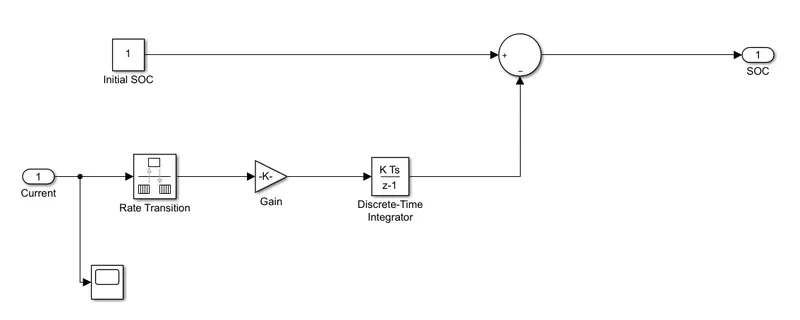
Fig: SOC Calculator
The output from the vehicle body is integrated at every time interval and it is divided by 1000 to convert into a kilometer.
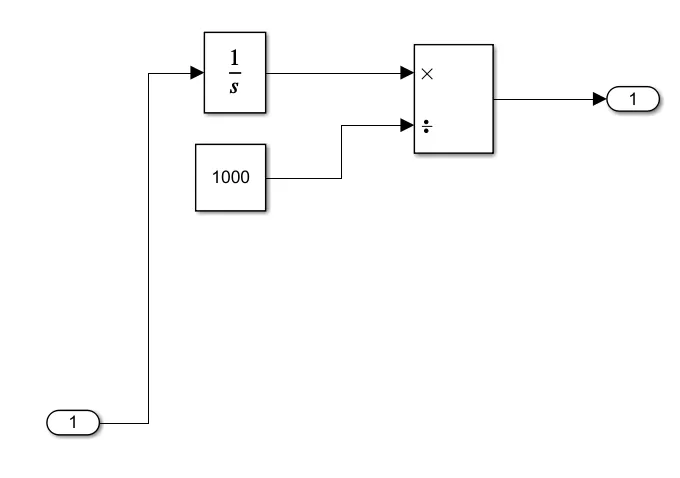
Fig: Distance covered Calculator
Both of these are put into a subsystem. The subsystem to calculate SOC and Distance covered.
I have used dashboard output for better visualization. The Display block is used for showcasing distance. The Speed and SOC are depicted by Full and Half Gauge Block. The current drawn is shown by the vertical gauge.
Result:
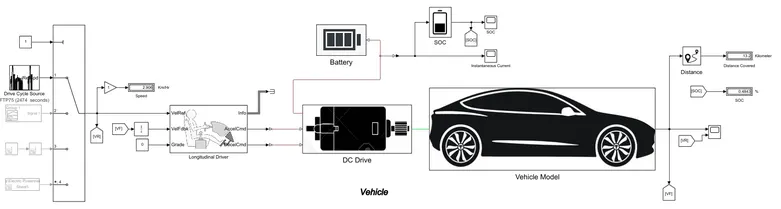
Final Model of the Electric Vehicle with FTP75 Drive Cycle Result
State of Charge
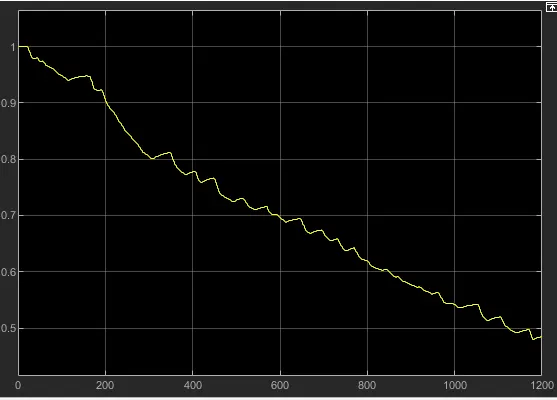
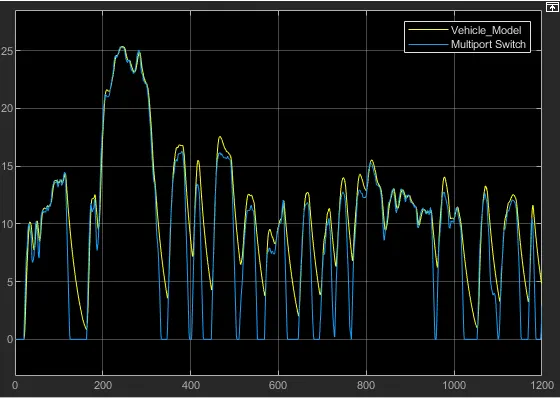
Input of Multiport Switch and Vehicle Model
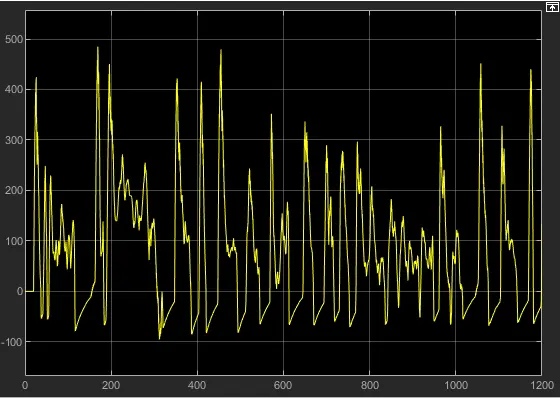
Current drawn from the battery
Conclusion:
MATLAB model of an Electric Car using a battery and a DC motor.
The car covered nearly 13.2 km with FTP75 drive cycle in 1200 seconds.