Fender Design - Wheel Arch Challenge
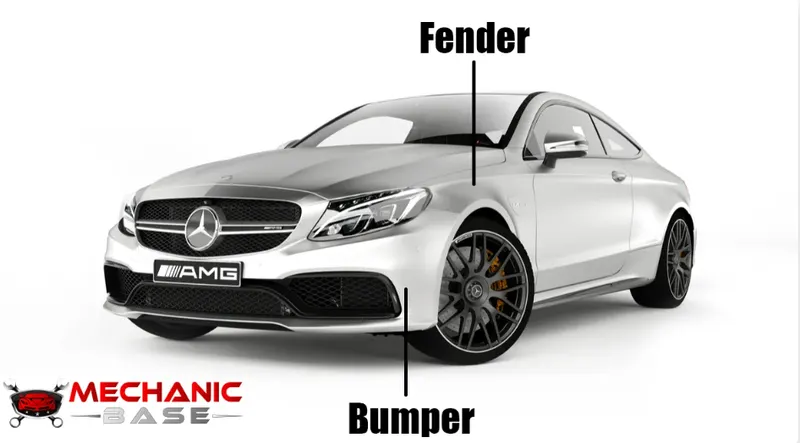
What is a Car Fender?
The car fender covers the wheel. It’s a prominent part, especially in the front of older vehicles. In modern cars, the design is usually flatter, lying against the frame. The purpose of the fender is to hold back debris kicked up by the tires.
When the tire rotates, rocks, debris, dust and water are all picked up from the road. The tires throw these materials, leading to impact to nearby objects or an accident. However, fenders prevent these items from being thrown away from the vehicle.
On some classic cars, you can find a long fender that’s welded on. It runs the entire length of the vehicle from the front to the back. Today, cars have separate fenders for the front and back of the vehicle.
Fenders can be designed from numerous materials. You can find some built from ABS, a high-strength plastic. There are also some designs made from a metallic material.
Car Fender Pros
The fender is responsible for protecting the body of the car. If debris could flow freely from the moving tires, a lot more body damage would occur, requiring repairs. The fender is the shield that protects both your car and others near you on the road.
The fender also helps to keep the car from getting too messy. Because the fender blocks dust and mud from being sprayed from the tires, you will need to clean your car less frequently.
On top of that, the vehicle fenders have such a beautiful appearance, perfectly complementing the style of your vehicle. When perfectly matched, the fenders flow seamlessly with the rest of its appearance.
Car Fender Cons
If a car repair occurs and the fender isn’t put on the vehicle properly, you will notice the trouble. It has a dramatic impact on the way the vehicle looks. The protruding fender will draw attention, especially if the color isn’t matched perfectly.
Oversize fenders can also impact the aerodynamics of the car. If you are driving at higher speeds, there could be higher resistance that could create a level of instability.
If the fenders are set too low, they can start to brush into the wheels. This can create noise and damage to the fenders over time.
Procedure:
below given snap is to check the wheel arch gap to pass the car with European standard.
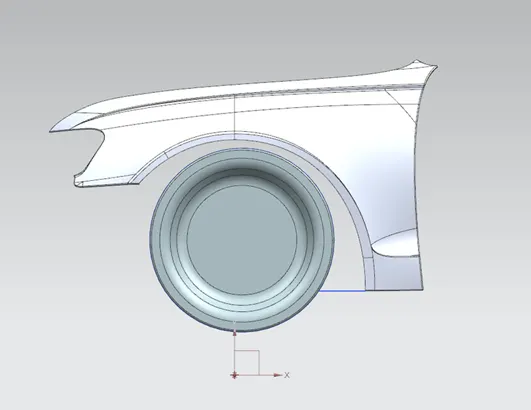
European standards are not following here and it is shown in below figure clearly.
we can see that it is not following the European standards and the fender is inside the tyre.
it must be outside of the tyre.
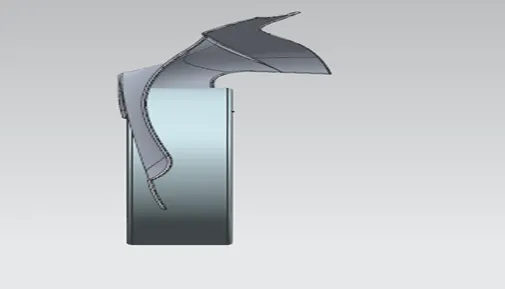
the process to follow according to the european standards given below.
European standards are not following here and it is shown in below figure clearly.
European standards says that the distance between the tyre and fende must be above 10mm or equal to it.
I took a plane on the surface of the tyre and start drawing the sketch.
at first I took a line from the center of the tyre and draw a line vertically from centre.
next I took a line 30 degrees to the left and second line 5o degrees to the right.
I took the 150mm point on the wheel arc and drawn a line through it.
and here using bisector command we will create a line between right side both lines.
and taken the intersecting points for those five lines as shown below.
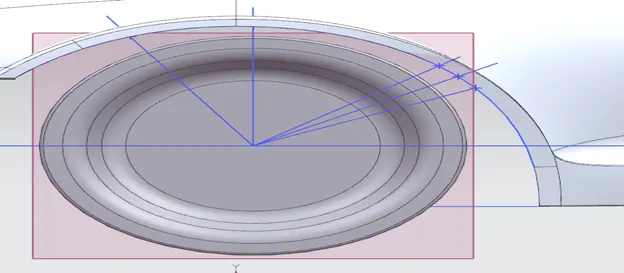
here we cannot see the two points means they are in inside the fender, which is good.
but we can see 3 points means failure design of fender.
using project curve, I projected 6 points onto the fender.
and it is shown below.
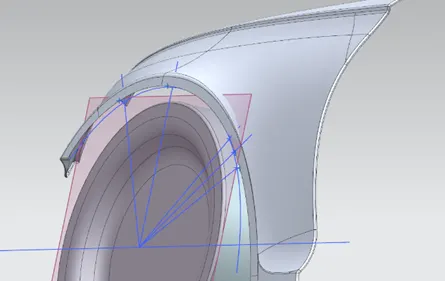
Now here started to measure distance between the points as shown in below snap.
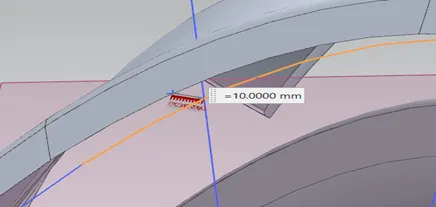
Above shown snap shows that first points is good according to European standards.
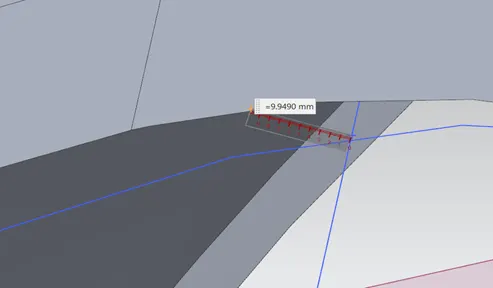
Second point also good it is approximately equal to 10mm.
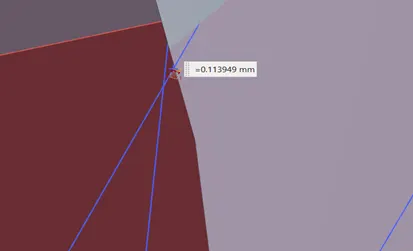
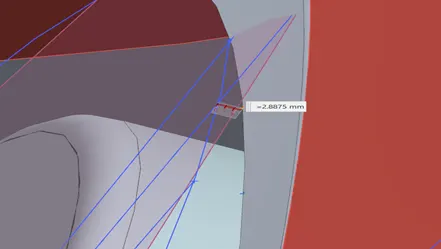
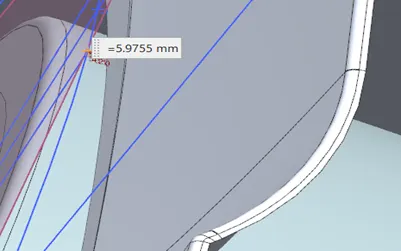
3,4,5 points are too near to tyre and it is failure of fender design at those points.
From above figures, we can conclude that this design is not upto European standards.
Cad design attached to this challenge below.