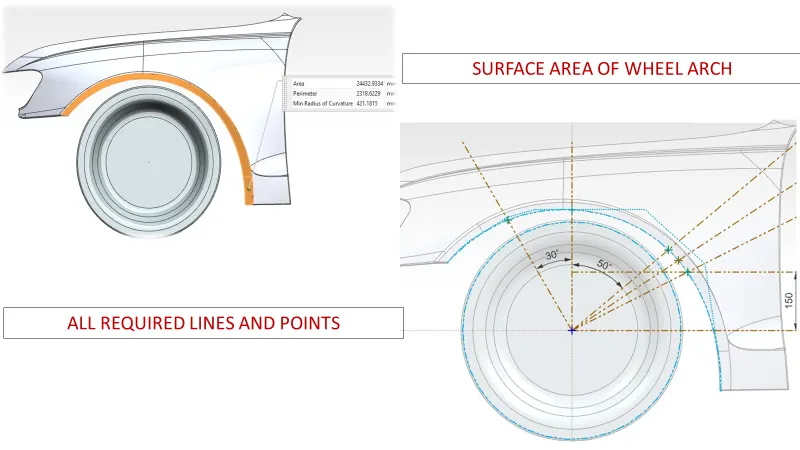
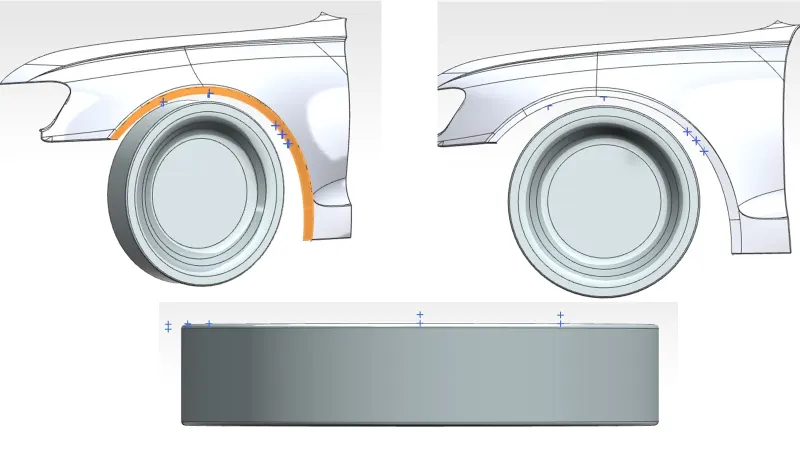
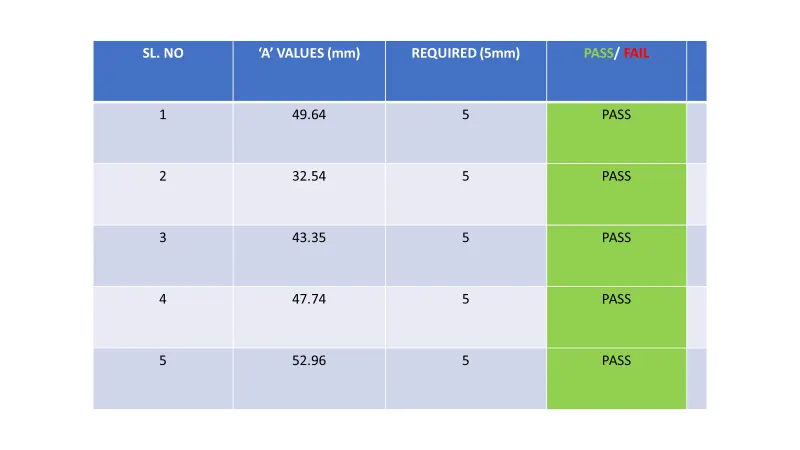
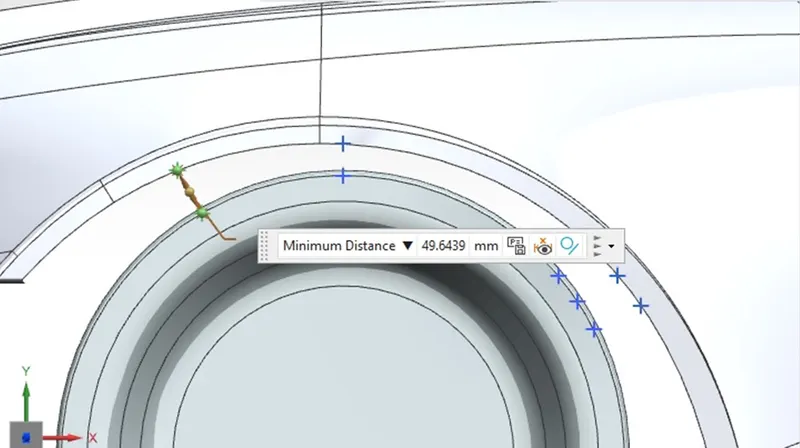
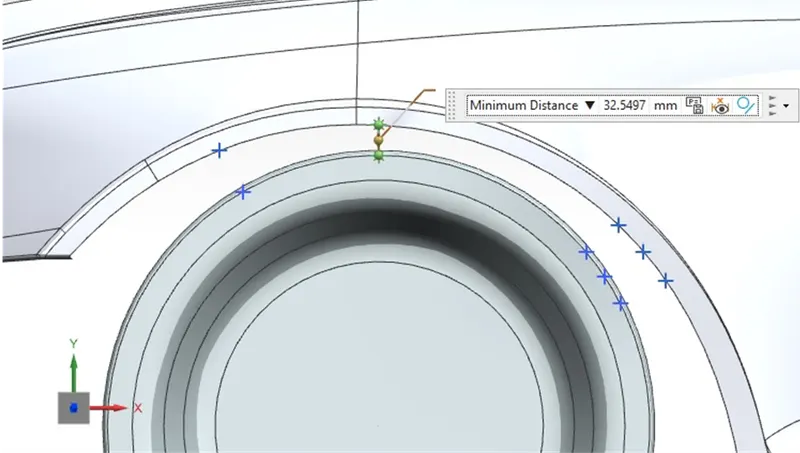
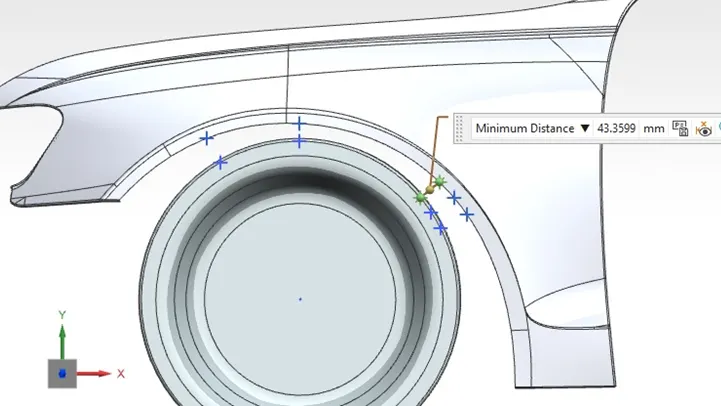
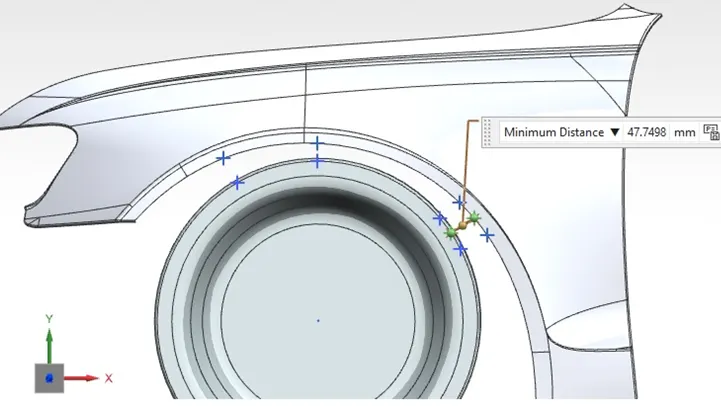
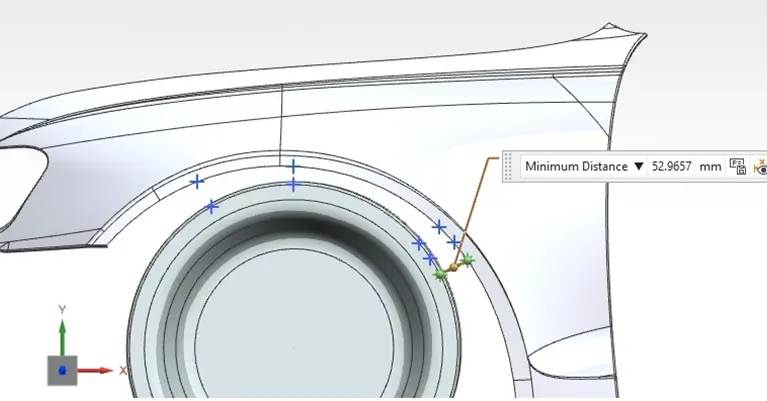
Fender Design - Wheel Arch Challenge

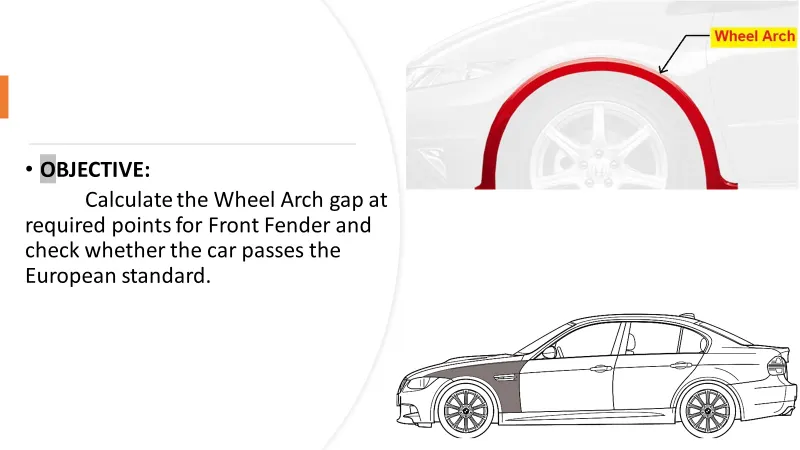
- A. FENDER:
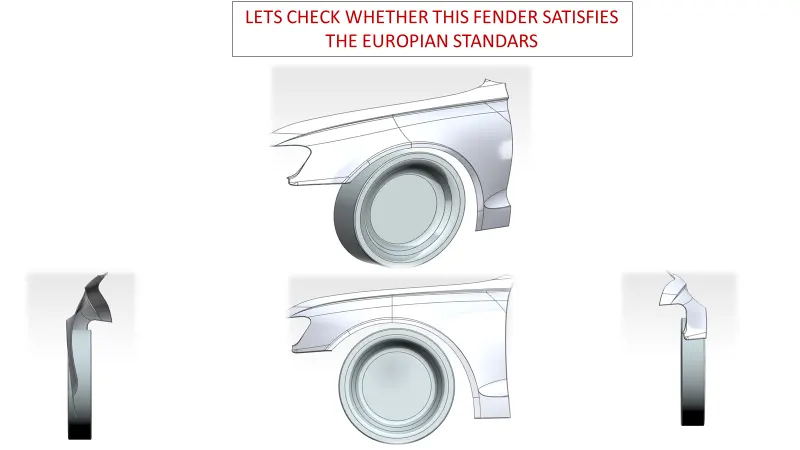
Fender is the body that frames a wheels well (the fender underside). Its primary purpose is to prevent sand, mud, rocks, liquids, and other road-spray from being thrown into the air by the rotating tire. Fenders are typically rigid and can be damaged by contact with the road surface.
- Sticky materials, such as mud, may adhere to the smooth outer tire surface, while smooth loose objects, such as stones, can become temporarily embedded in the tread grooves as the tire rolls over the ground. These materials can be ejected from the surface of the tire at high velocity as the tire imparts kinetic energy to the attached objects. For a vehicle moving forward, the top of the tire is rotating upward and forward and can throw objects into the air at other vehicles or pedestrians in front of the vehicle.
- In British English, the fender is called the wing. (This may refer to either the front or rear fenders. However, in modern unibodyvehicles, rear fenders may also be called quarter panels). The equivalent component of a motorcycle, or the "cycle wing" style of wing fitted to vintage cars, or over tires on lorries which is not integral with the bodywork, is called a mudguardin Britain, as it guards other road users – and in the case of a bicycle or motorcycle, the rider as well – from mud.
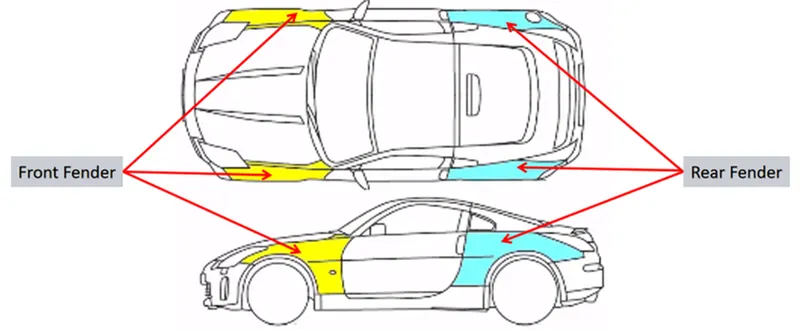
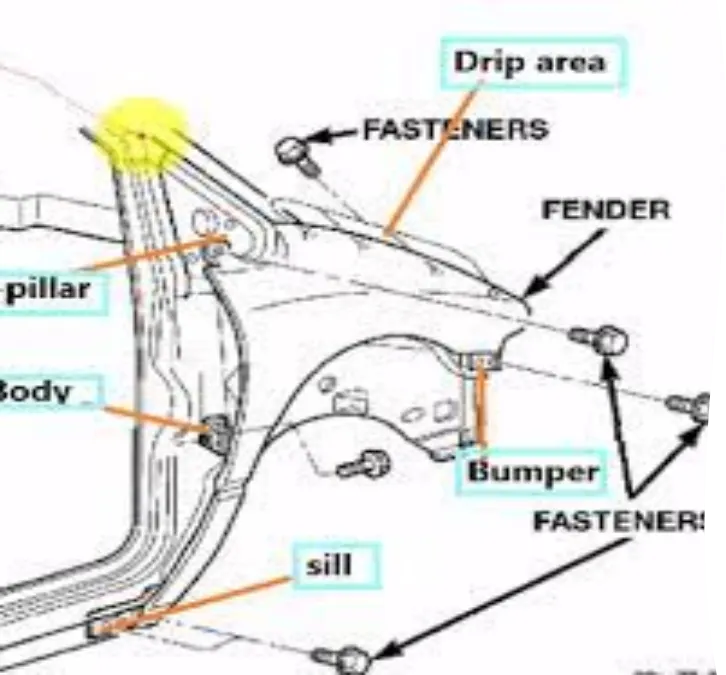
Fenders nowadays came in a more integrated form compared to old vehicles, as the old vehicle’s fenders had a pronounced appearance. Old vehicles, especially from the 1950s, had a unique flair and style, with most of them featuring bubble fenders that stuck out prominently. Modern fenders have evolved a lot with time in comparison to old ones because they not only serve an aesthetic purpose but play an important role in enhancing the aerodynamics of the vehicle. Furthermore, modern fenders are engineered to absorb impact from minor collisions as well. They have a fender liner attached to them that protects the engine bay and other components from potential damage that can be caused by rocks and flying debris.
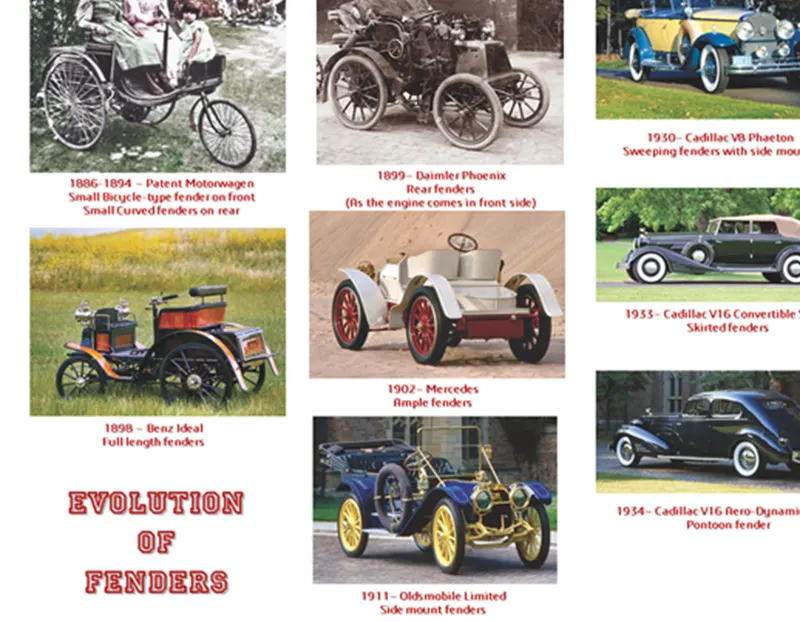
- B. TYPES:
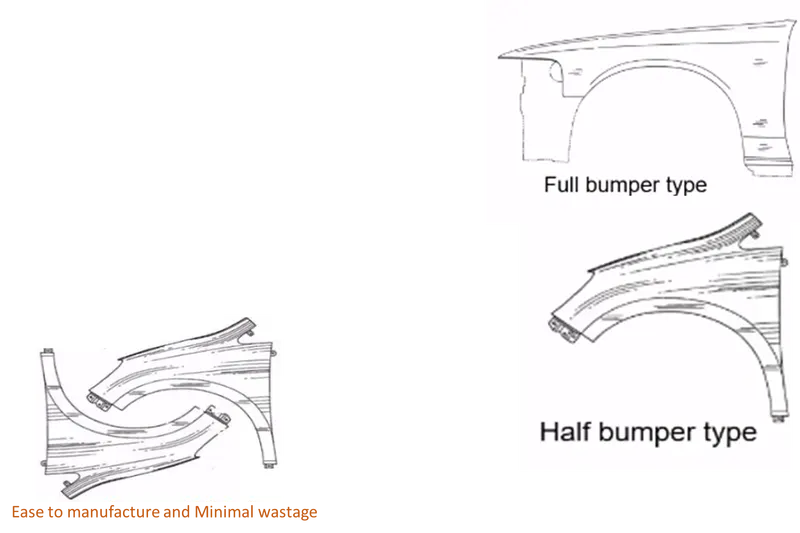
Typically, Fenders have 2 types,
1.Full Bumper Type: The Fender extends to semi circle, this design is was not much cost effective, the manufacturing wastage was more, so to improve it, the Half bumper type is being introduced.
2.Half Bumper type: This is the Evolved/ Improvised design from the Full Bumper type where here the Fender is Quarter the circle which was cost effective since the wastage during production was nominal.
- C. VARIOUS COUNTRY STANDARS:
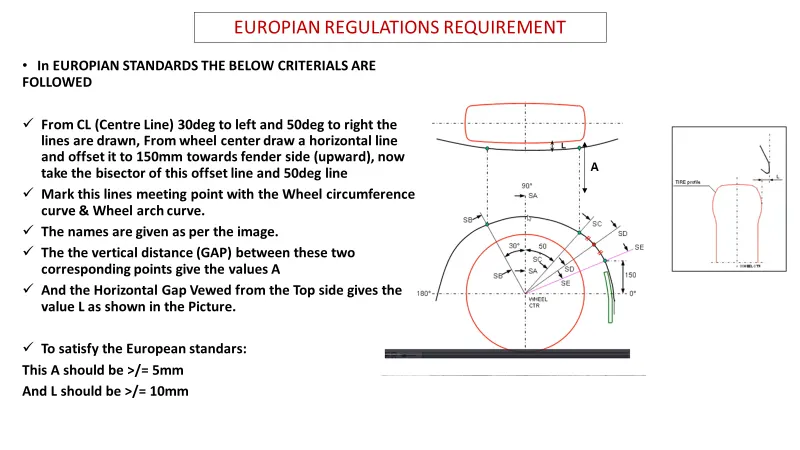
1.EUROPIAN STANDARDS
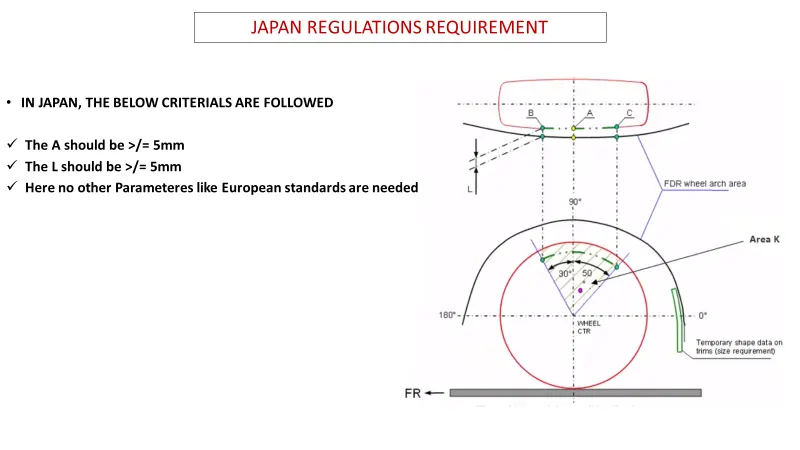
2.JAPAN STANDARDS
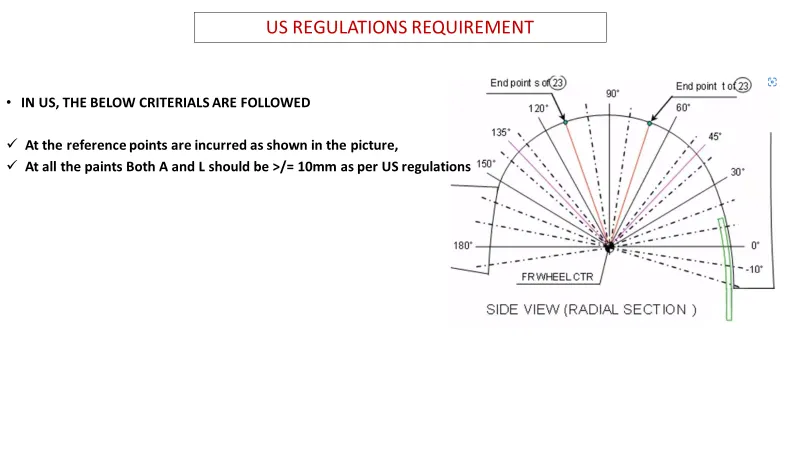
3.US STANDARDS