Fender Design - Wheel Arch Challenge
FENDER DESIGN-WHEEL ARC CHALLENGE
Aim:
To Calculate the Wheel Arch gap at required points and check whether the car passes the European standard.
Introduction:
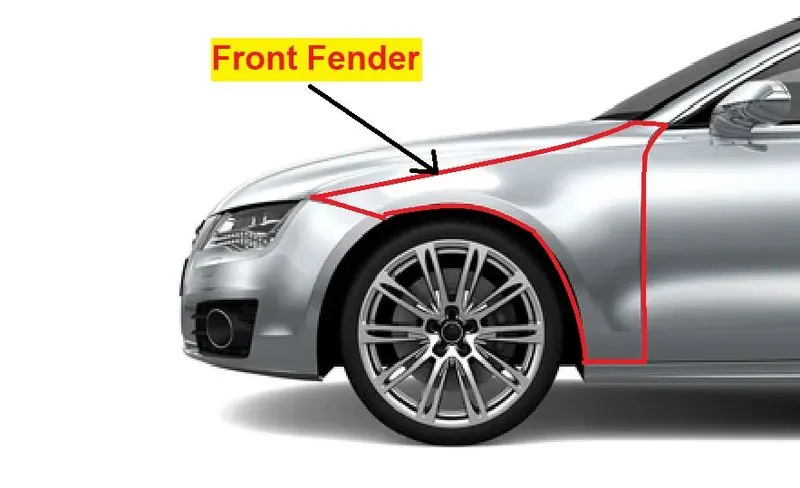
Fender is Body in White part of an automobile (vehicle body) which houses or frame wheels in order to prevent sand, mud, rocks, liquid, and other road debris to throw into the air when tyre is in motion, which may lead to a pedestrian accident and protect the engine compartment from damages. Apart from pedestrian safety, it serves the purpose of providing an aerodynamic shape to the car thus performing better at higher speeds and give aesthetic look to the body.
Types of car fenders:
- Full Bumper type
- Half Bumper type
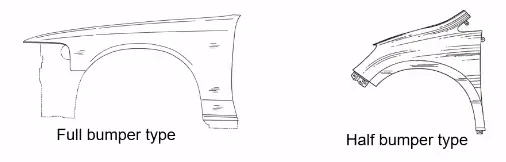
Either a single full bumper type or two half bumper type fenders can be produced from a single blank. Half bumper type is widely used because of less wastage of material, which in turn reflects the car's overall price.
Fenders based on location:
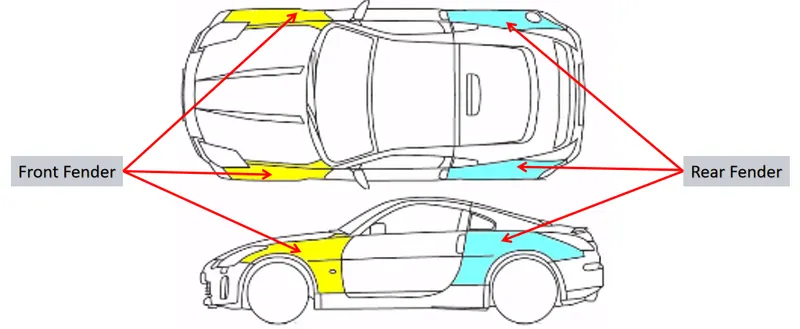
- Front Fenders or Front Quarter Panels:
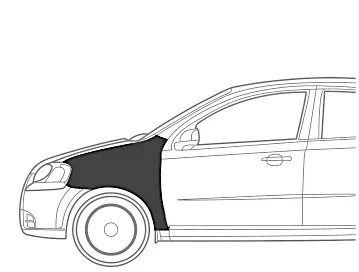
Front fender panels are located on the sides of each front wheel. These panels typically cover the sides of the headlights to the hinge of the driver and passenger doors on the A-pillar. A car front fender runs vertically from the hood to the wheel well.
- Rear Fenders or Rear Quarter Panels:
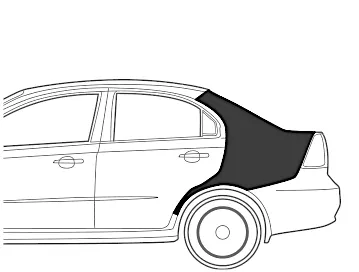
Rear fender panels are located on the sides of each rear wheel. They extend from the edge of the rear doors on the C-pillar all the way towards the edge of the taillights. Rear fenders also usually feature a fuel hole with a gas cap. These features can be found on either the driver or passenger rear panels, depending on the year and model of the vehicle.
WHEEL ARCH:
- Wheel Arch is the semicircular curve on the fender just above the wheels of the car
- It has some standard specifications
- For a vehicle to has its use permit in different countries, the wheel arch of the fender must compliant with the standards set by the respective countries
EUROPEAN REGULATIONS REQUIREMENTS:
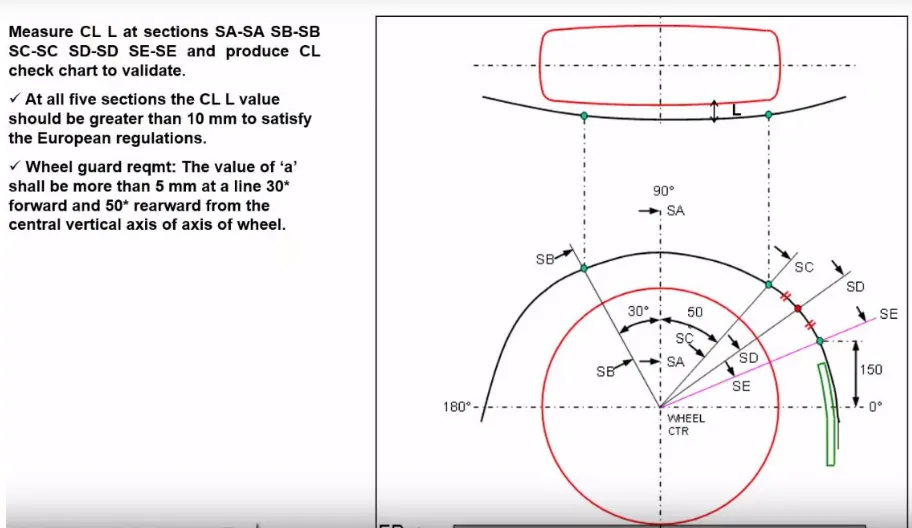
INPUT:
WHEEL ARCH CALCULATION:
Drawing the sketch as per the European standards and regulations and projecting the sections on the fender to obtain the measurements for 'L' AND 'a'.
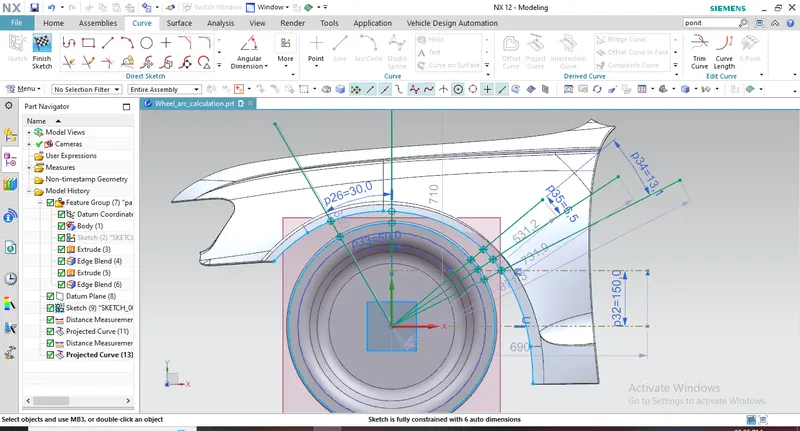
FOR BETTER UNDERSTANDING THE MEASUREMENT
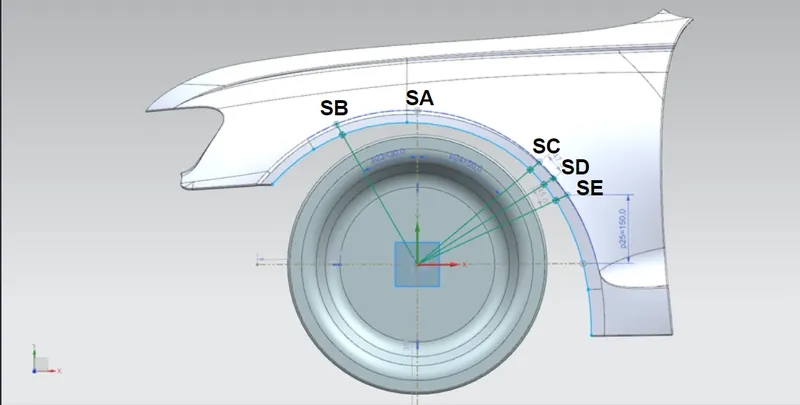
At all five sections the value of 'L' should be greater than 10mm to satisfy the European regulations
Measuring 'L' at SB:
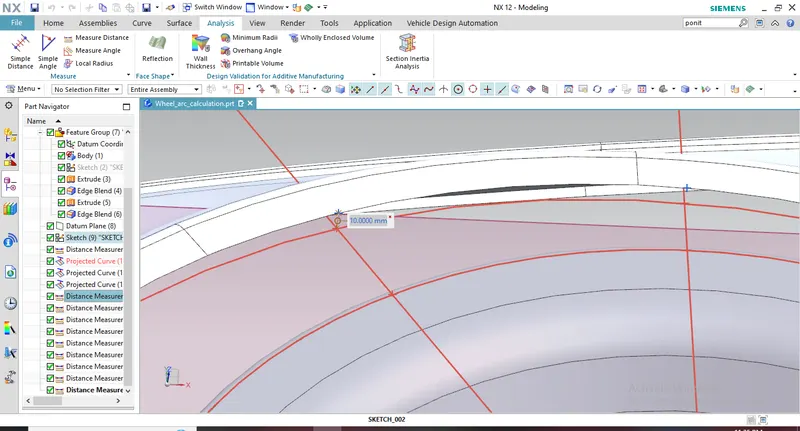
=10mm
Measuring 'L' at SA:
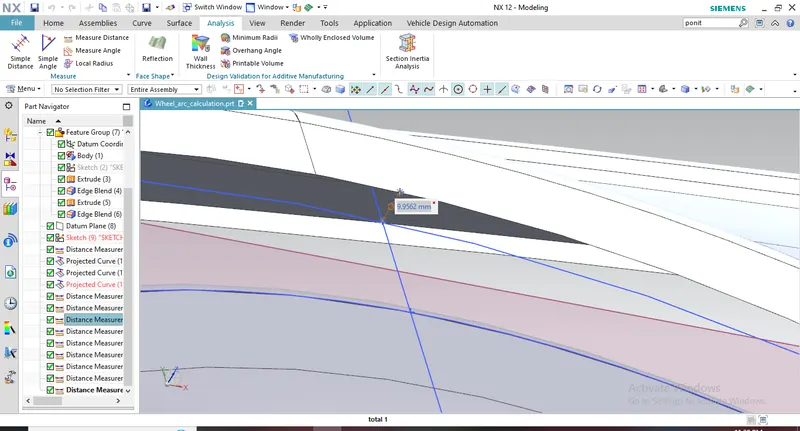
=9.9562mm
Measuring 'L' at SC:
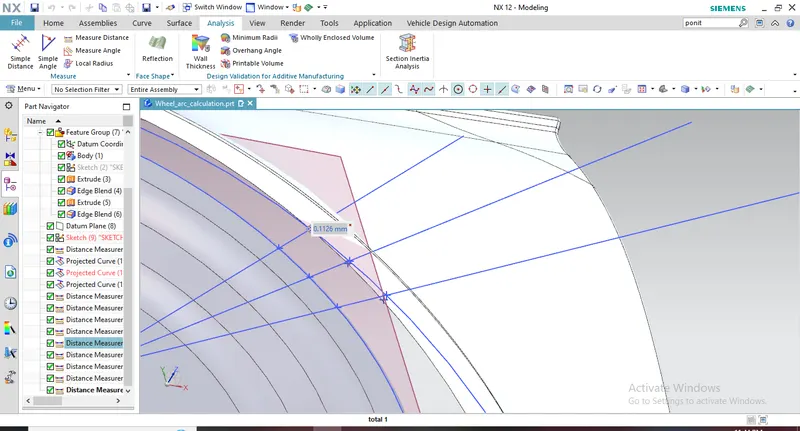
=0.1126mm
Measuring 'L' at SD:
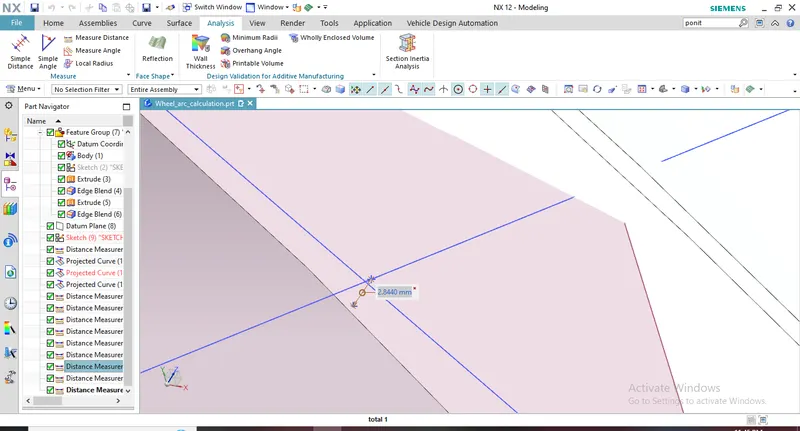
=2.8440mm
Measuring 'L' at SE:
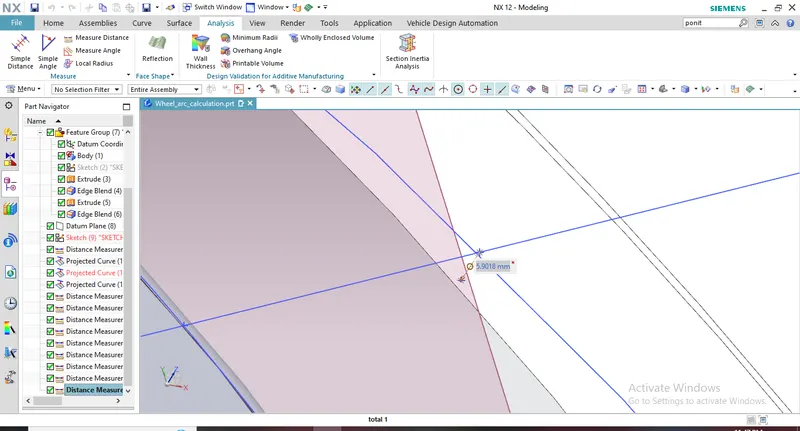
=5.9018mm
OBSERVATION TABLE:
| SECTION | CLEARANCE 'L' in (mm) | RESULT |
|---|---|---|
| SA | 9.9562 | FAIL |
| SB | 10 | PASS |
| SC | 0.1126 | FAIL |
| SD | 2.8440 | FAIL |
| SE | 5.9018 | FAIL |
Measuring the values of clearance "a" Wheel Guard requirement:
To satisfy the European requirements the value of 'a' should be more than 5mm at a line 30° forward and 50° rearward from the central vertical axis of wheel
Measuring the value of 'a' at line 30° forward from the central vertical axis of wheel:
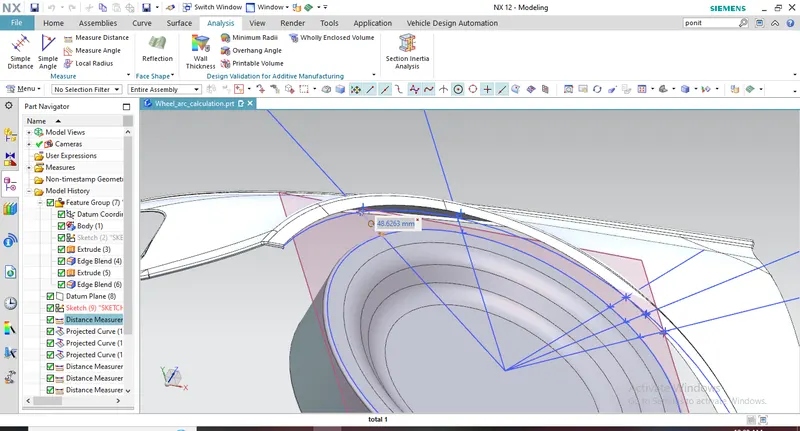
=48.6263mm
Measuring the value of 'a' at line 50° forward from the central vertical axis of wheel:
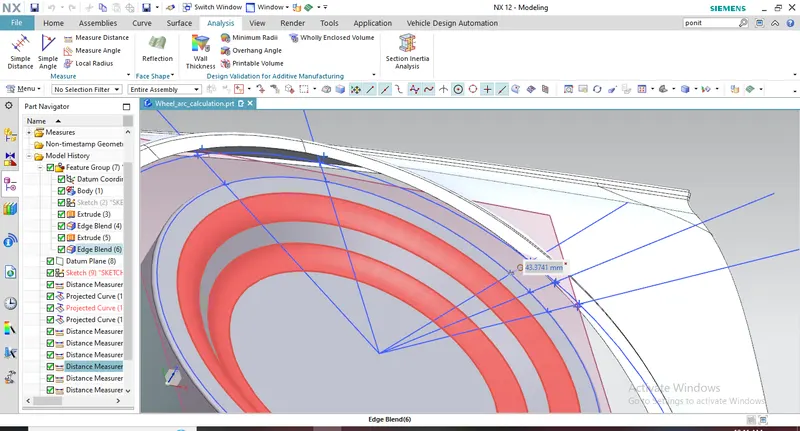
=43.3741 mm
OBSERVATION TABLE:
| SECTION | ANGLE | CLEARANCE 'a' in (mm) | RESULT |
|---|---|---|---|
| SB | 30° | 48.6263 | PASS |
| SC | 50° | 43.3741 | PASS |
CONCLUSION:
From the above measurements it was observed that the clearance value 'L' at sections SA,SC,SD & SE was lower than 10mm and therefore it does not satisfy the European regulations. Whereas, the clearance value 'a' was more than 5mm at a line 30° forward and 50° rearward from the central vertical axis of wheel.