Fender Design - Wheel Arch Challenge
Aim - Analysis wheel arc with europeon standards
Objective -
- Calculate the wheel arc for given Fender model, by means of the European standards regulations.
A report explaining the different car fender regulations:
Car fender regulations are guidelines that determine the size, shape, and placement of fenders on cars. Fenders are important for preventing mud, debris, and other objects from being thrown into the air by the wheels of the car. This report will discuss the different car fender regulations that apply in various regions of the world.
- America:
In America, car fender regulations vary by state or province. However, the general requirement is that the fenders must cover the full width of the tire. This means that the fenders must extend out to the outer edge of the tire and must be wide enough to prevent debris from being thrown onto other vehicles or pedestrians.
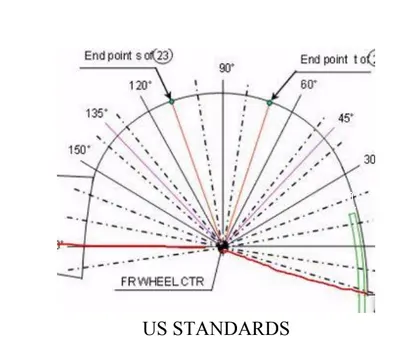
- Europe:
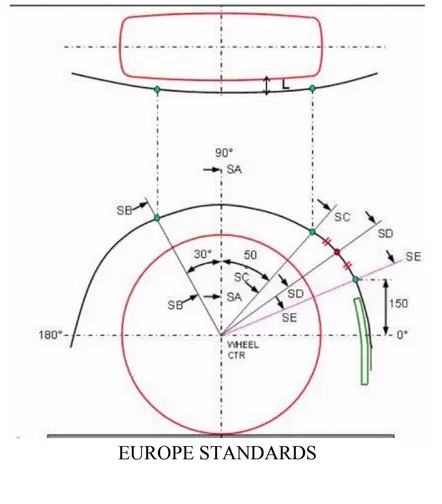
In Europe, car fender regulations are more stringent than in North America. The fenders must be securely attached to the body of the car and must not interfere with the proper functioning of the wheels. In addition, the fenders must be positioned so that they provide adequate protection against mud, debris, and other objects that may be thrown up by the tires. The fenders must also be made of durable materials and must not break or become detached during normal use.
- Australia and New Zealand:
In Australia and New Zealand, car fender regulations are similar to those in North America. The fenders must cover the full width of the tire and must be securely attached to the body of the car. Additionally, the fenders must be positioned so that they provide adequate protection against mud, debris, and other objects that may be thrown up by the tires.
- JAPAN:
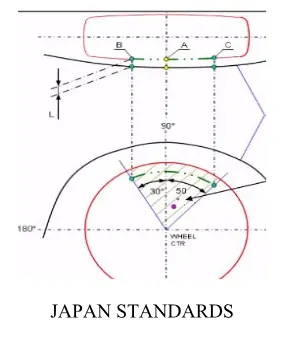
In Asia, the fender regulations for cars vary by country. In some countries, the regulations are similar to those in North America, while in others, the regulations are more stringent. In Japan, for example, the fenders must be made of flexible materials that can absorb impact and must be securely attached to the body of the car. In China, the regulations require that the fenders be made of durable materials and must cover the full width of the tire.
Conclusion:
In conclusion, car fender regulations vary by region and are important for ensuring the safety of both the vehicle and its passengers. While the general requirement is that the fenders must cover the full width of the tire, there are additional regulations that determine the materials used, the attachment method, and the position of the fenders. Understanding and complying with these regulations is crucial for maintaining road safety.
Procedure
Opn Nx cad and load the skin data
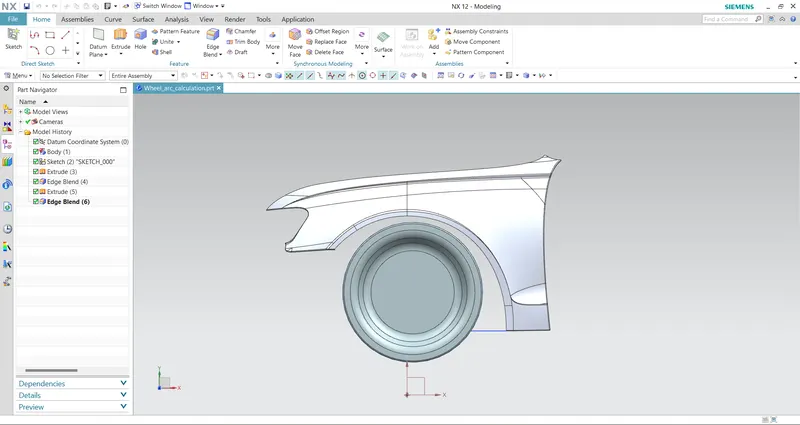
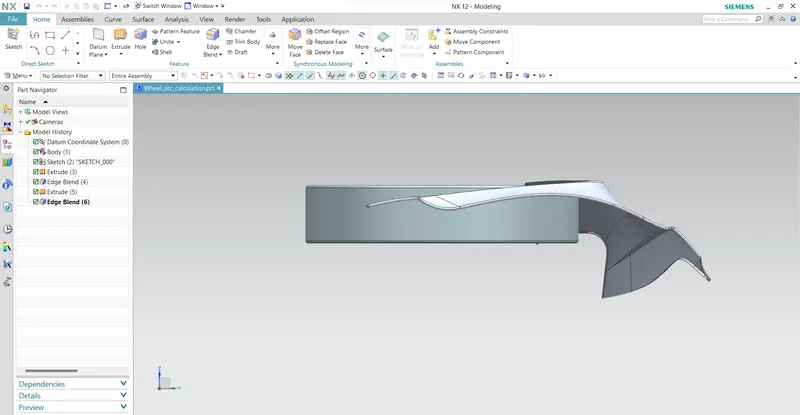
If we see from rear side We see that tyre is coming outside the fender area
Now lets see from from side,
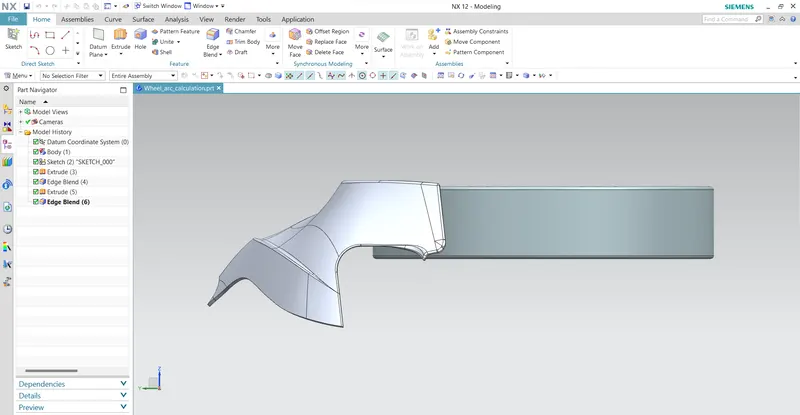
Now we an see that tyre is completely inside the fender
As per europeon standard regulation wheel should be completely inside the fender
In India the clearance should be greater than 10mm. Clearanace is depend on road conditions.
from above diagram we can see that there are five angles, our wheel arc angles should match this condition so lets check it.
We need to measure distance between wheel outer and fender outer
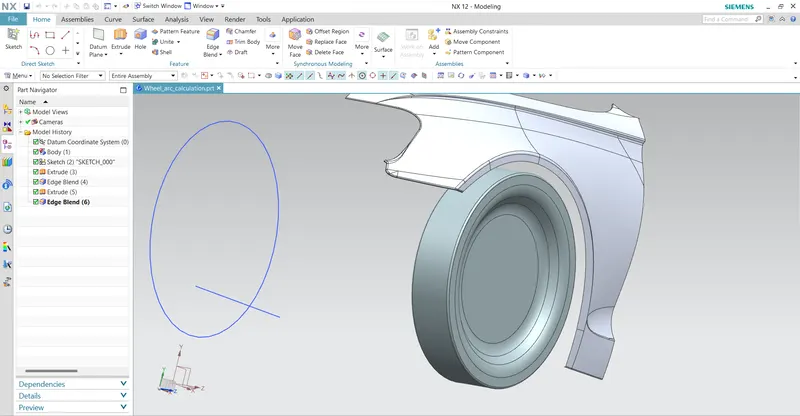
Initially we need some reference where we can sketch, so lets create datum plane on most outer face of tyre for sketch
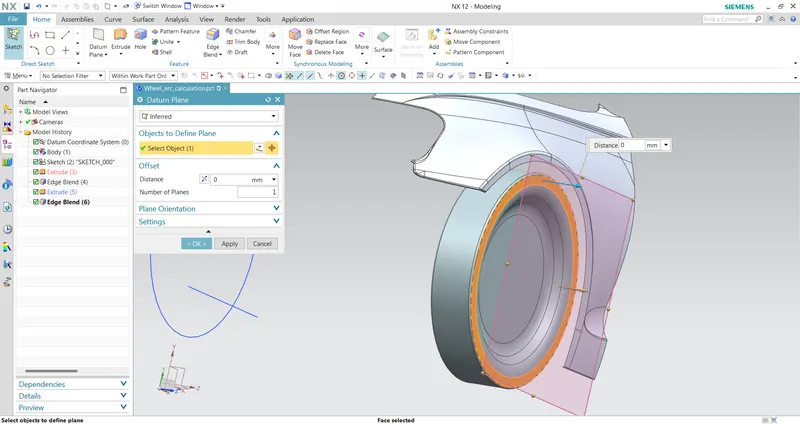
Go to datum plane - select most outer face on wheel - select offset at 0 mm - ok
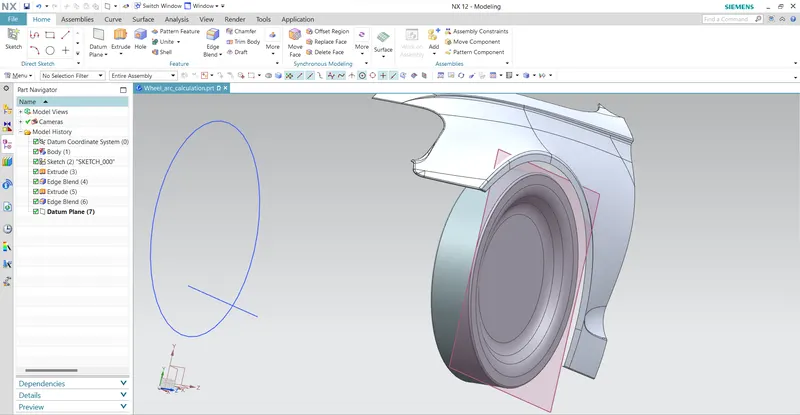
Now we have to sketch on it
Go to sketch - select datum plane - reference horizontal - method should be work part - ok
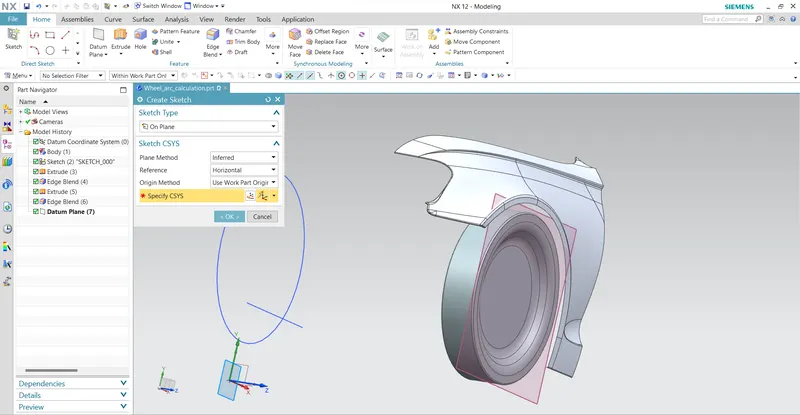
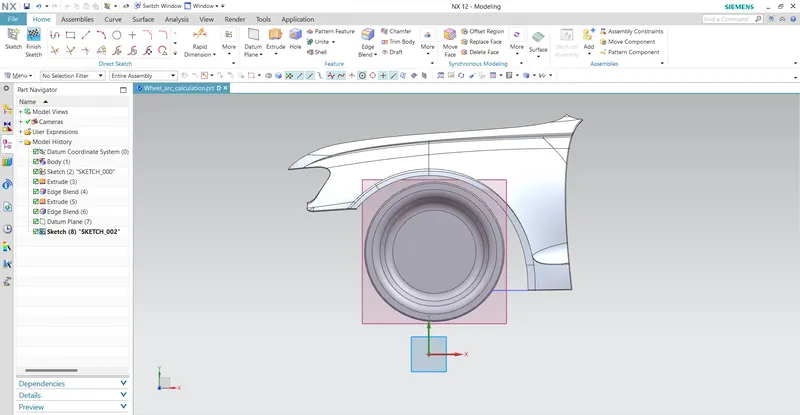
Now we have to mark line on the center
Click on point - select center point method - select any circle of wheel - ok
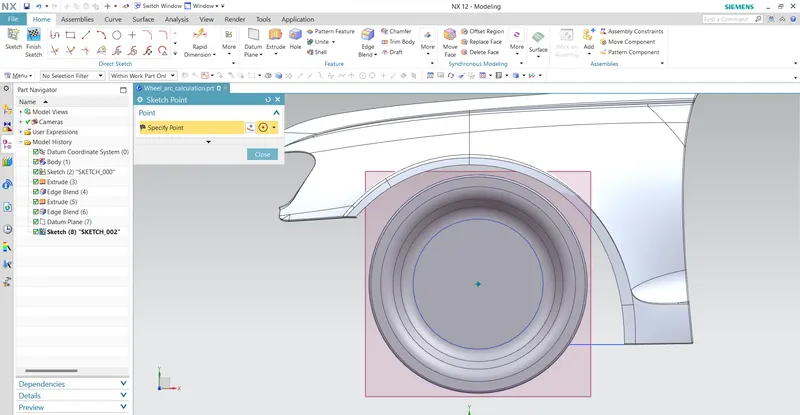
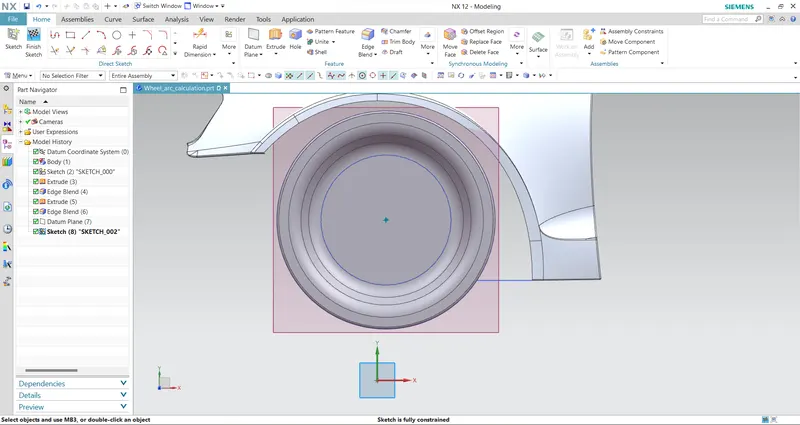
Now draw one horizontal and one vertical line using line command
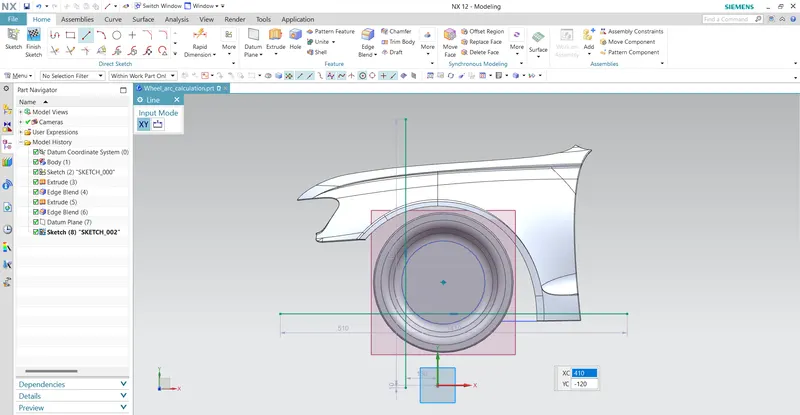
Now apply diamnesions
Select rapid diamension and apply diamensions as per requirements
Distance between vertiacal line and center of wheel should be 0
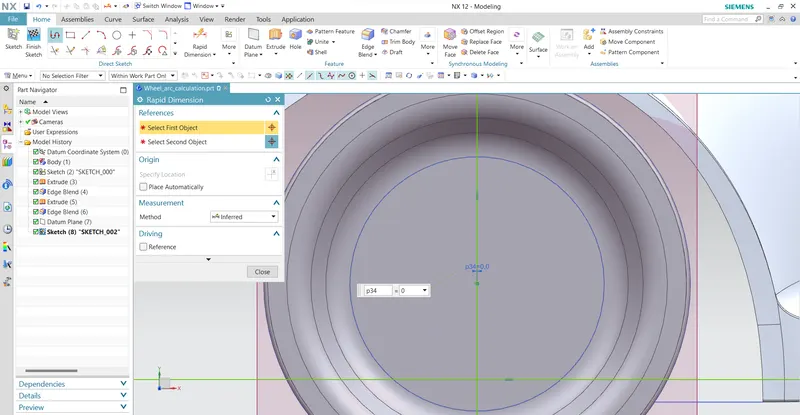
Similarly distance between horizontal line and center of circle should be 0
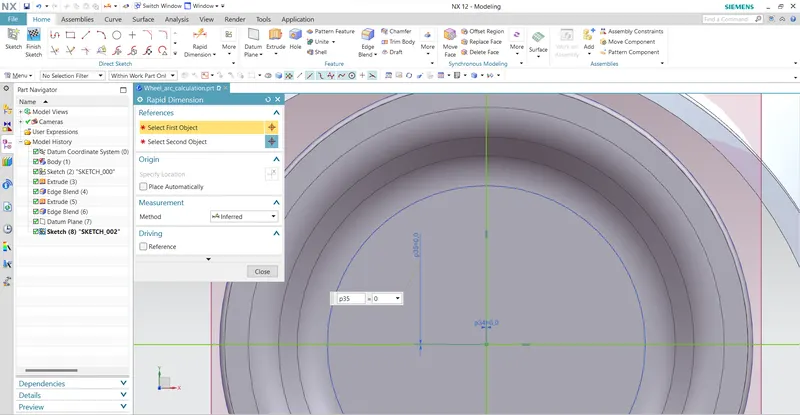
Convert both lines into reference line
Right click on line - select Convert to reference
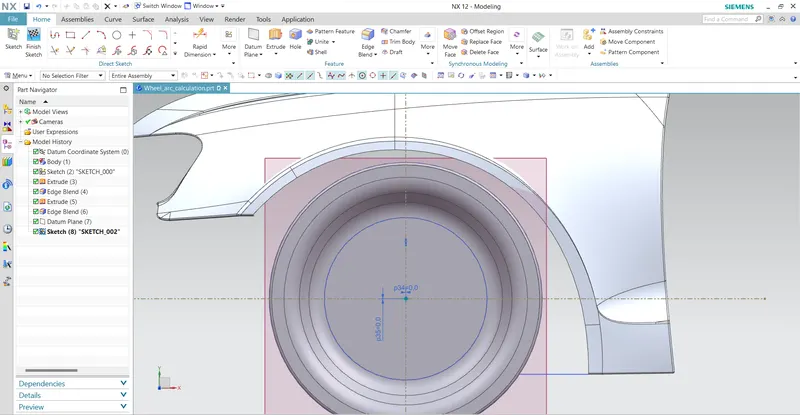
Now create 3 lines after that give them diamensions
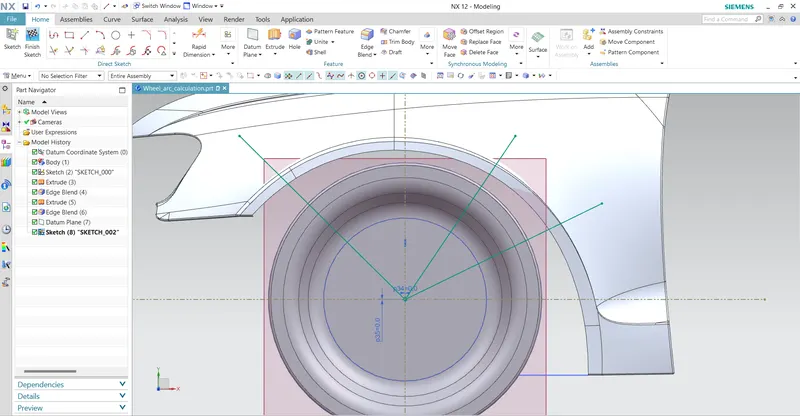
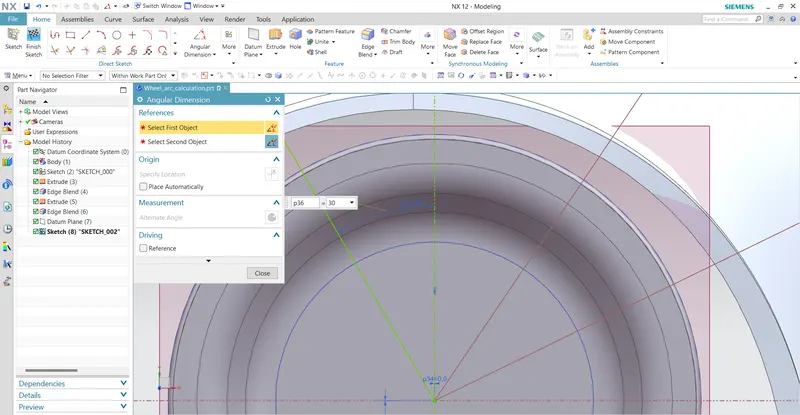
Now apply the angles
Angle between the vertical referene line and first line is 30 degree
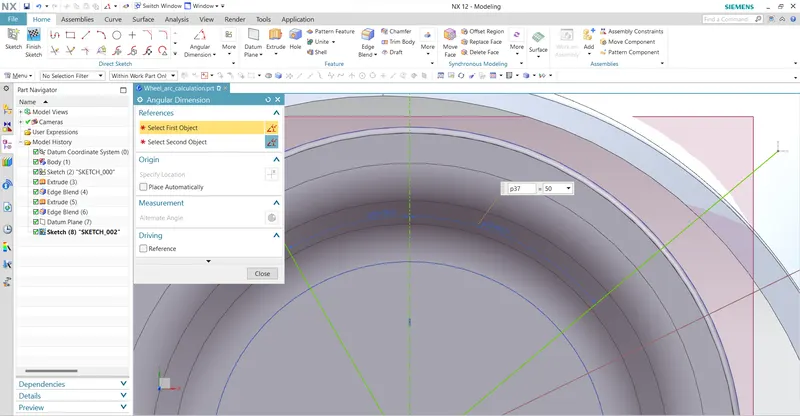
Anle between vertical reference line and second line is 50 degree
Now we need to apply vertical diamension between the point where line intersects the fender and horizontal reference line
for this we need to create a point, but we cant create a point over there os make a projective curve and then make a point
click on 2d project curve - select tangent curves - select fenders arc - ok
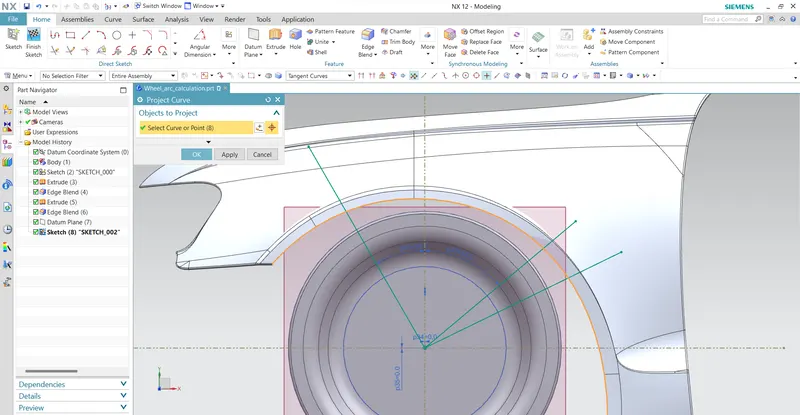
Now create a intersection point
select a point - select intersection point method - select lines and ok
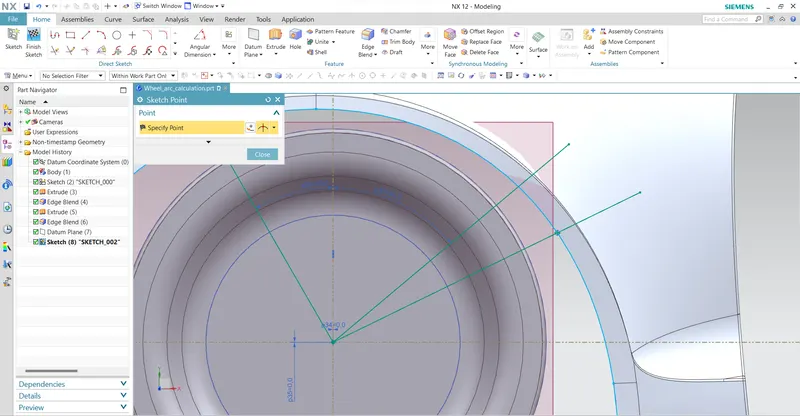
Similarly create other points
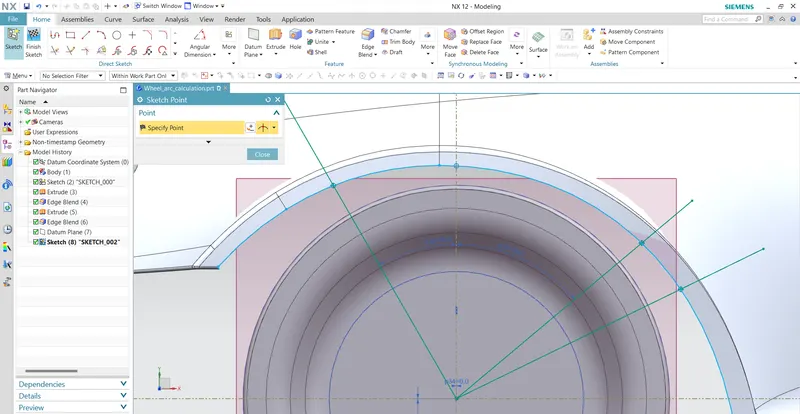
We have four intersection points
Now mark the diamension between horizonatal reference line and third line intersection point. Distance should be 150
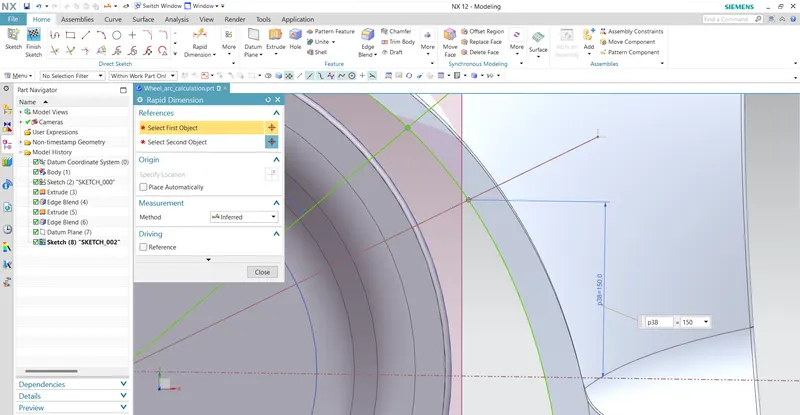
Now we have to get a line in between the two lines.
Select derived line - select second and third line - ok
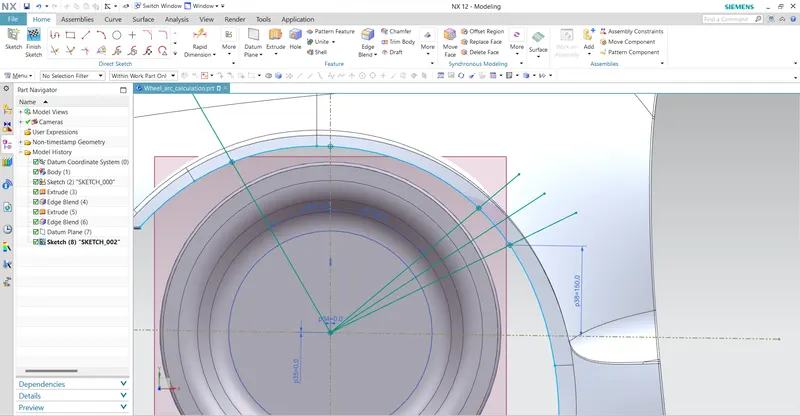
Create a intersection point on it
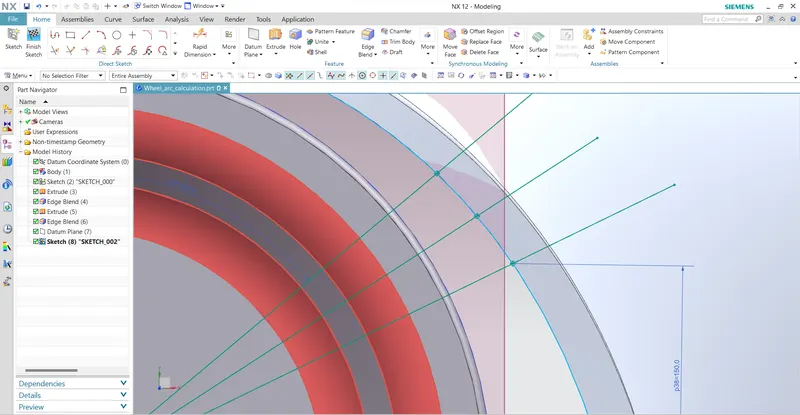
We only need the intersection points so simply right click on lines makes it to reference geometry
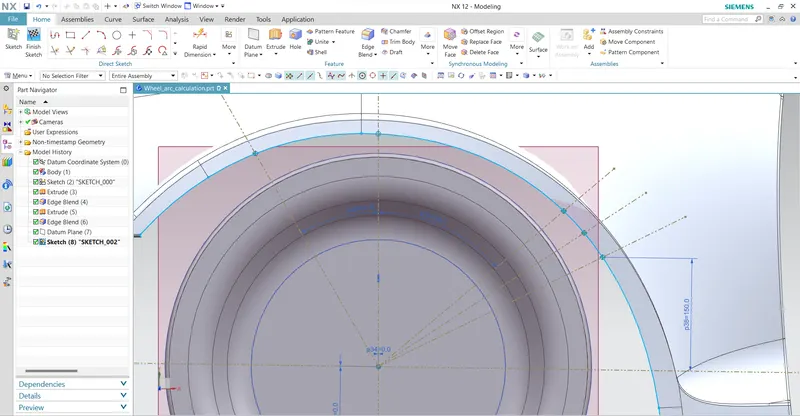
Now we marked points on wheel, we need to measure the distance between wheel and fender so we need some reference point on fender as well
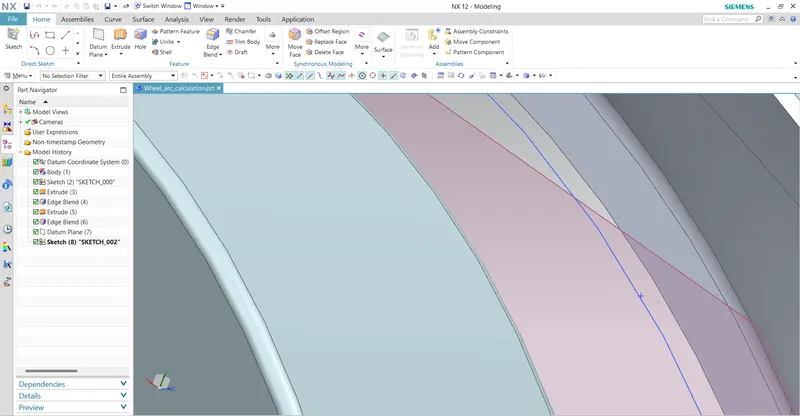
We see some gap we have to measure it
Now finish the sketch
We need to project the points on fender
go to project cureve - select points - select fender as object - select along vector - ok
Now some point are projected and some points are not projected
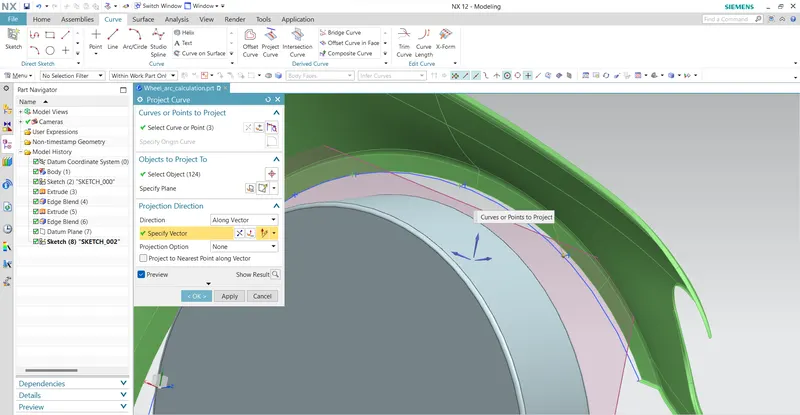
Now all points are created
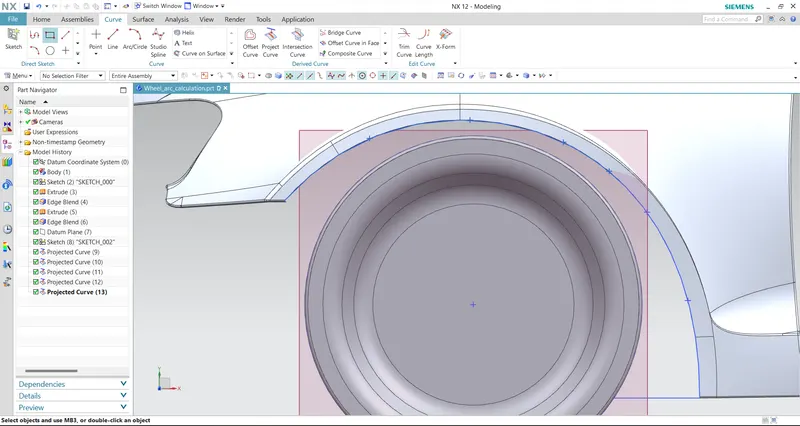
Now measure the distance between these points
Go to analysis click on distance - select points
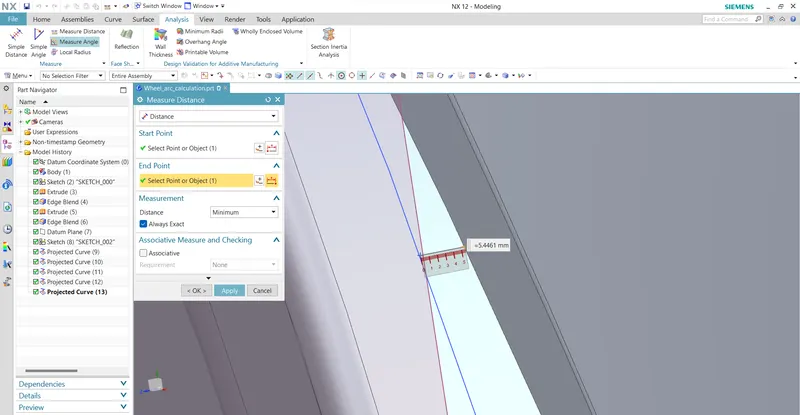
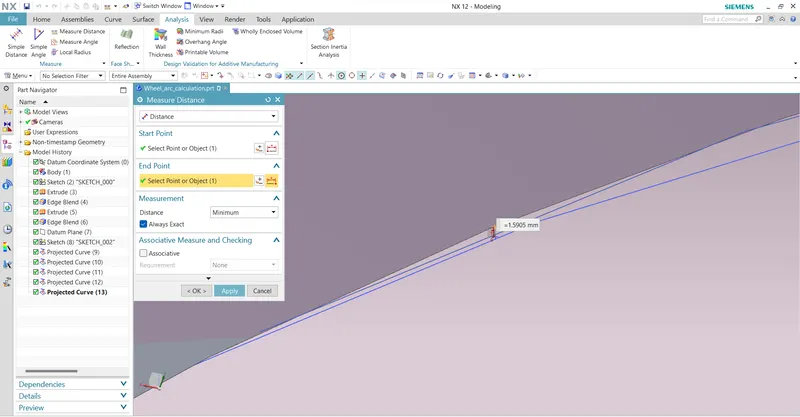
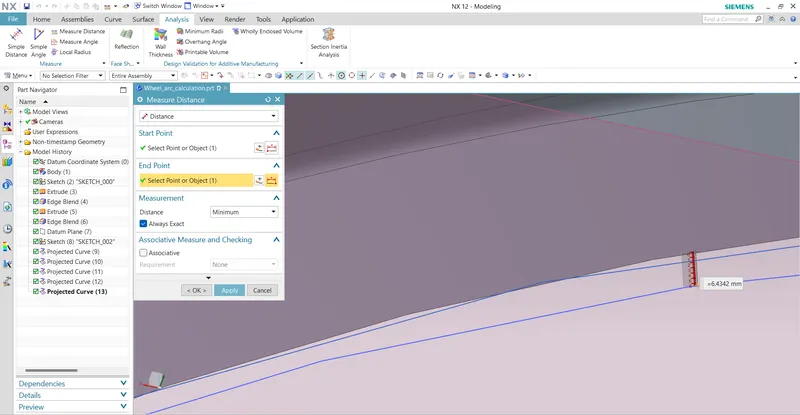
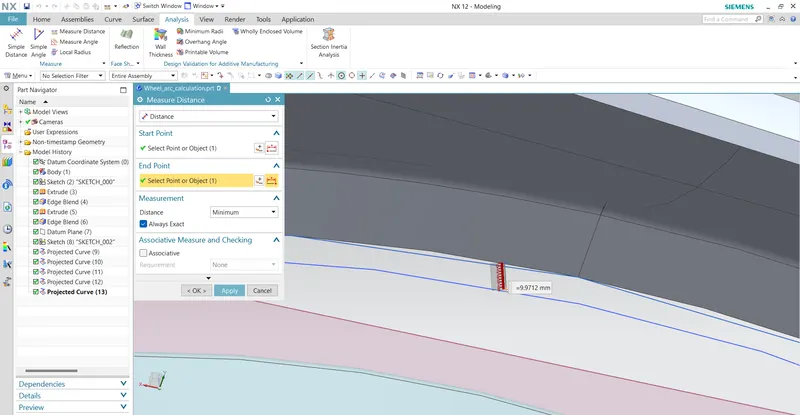
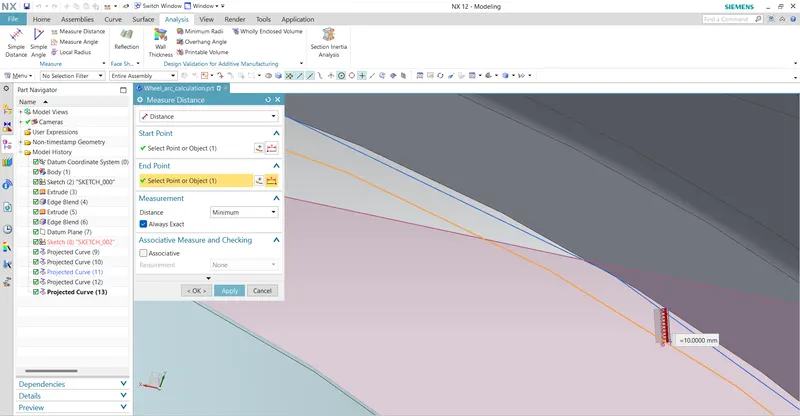
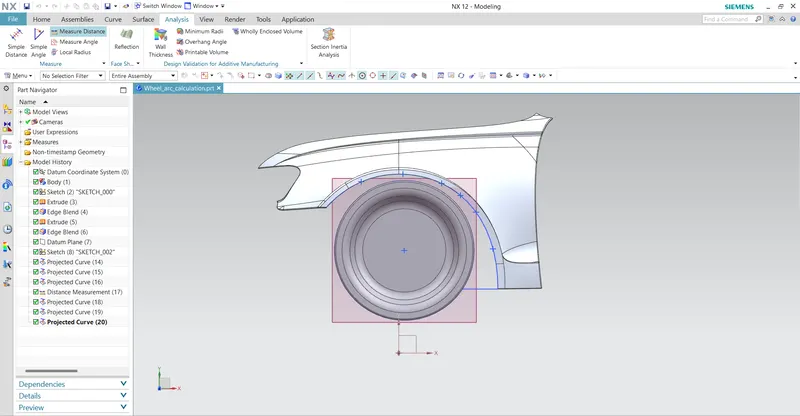
Lets tabulate all values
| Sections | Clearance (L) |
Status Criteria |
| SA | 9.97 mm | FAIL |
| SB | 10 mm | PASS |
| SC | 6.43 mm | FAIL |
| SD | 1.59 mm | FAIL |
| SE | 5.44 mm | FAIL |
Conclusion -
As per europeon standards all values of SA, SB,SC,SD, SE should be greater than 10mm but in our case only SB value matches the criteria. So this fender design fails to meet the europeon standards regulations.