Fender Design Challenge
OBJECTIVE
The ultimate objective is to create a fender using the fender design skin fender and to create mounting features to attach the fender to the vehicle
FENDER

Fender is the part of an automobile body that frames a wheel well (the fender underside). Its primary purpose is to prevent sand, mud, rocks, liquids from being thrown into the air by the rotating wheel
Sticky materials, such as mud, may adhere to the smooth outer tire surface, while smooth loose objects, such as stones, can become temporarily embedded in the tread grooves as the tire rolls over the ground. These materials can be ejected from the surface of the tire at high velocity as the tire imparts kinetic energy to the attached objects. For a vehicle moving forward, the top of the tire is rotating upward and forward, and can throw objects into the air at other vehicles or pedestrians in front of the vehicle.
TYPES OF FENDER
fender for an automotive vehicle is of two types
* Full Bumper type
* Half Bumper type
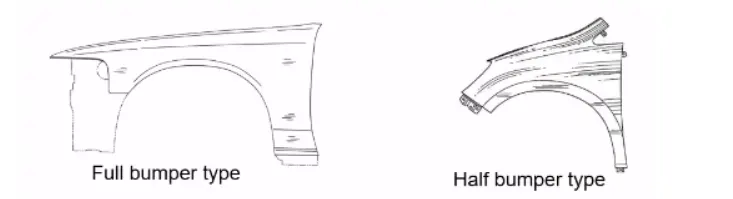
- Nowadays most of the companies use half Bumper type instead of full Bumper type because the blank used for manufacturing the part is very large and comparatively its reduces the wastage of materials than a full Bumper type fender , but in the half Bumper type we possibly reduce scraps
- Compared to full Bumper type , half Bumper type consumes less Steel , which helps in increasing the performance of the vehicle fairly
MOUNTING REGIONS
Fender needs 5 mounting regions to fix them perfectly without being vibrated during vehicle in motion , which also satisfies the 3 to 1 principle , which is used to constrain the part to the vehicle perfectly , and they are
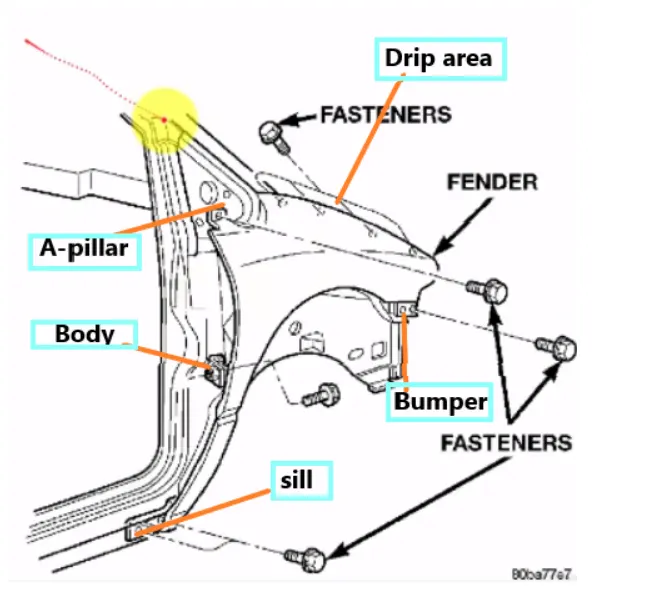
* Sill mounting
* Drip area
* Bumper mounting
* A pillar mounting
* Engine mounting
DESIGN OF SILL MOUNTING AREA:
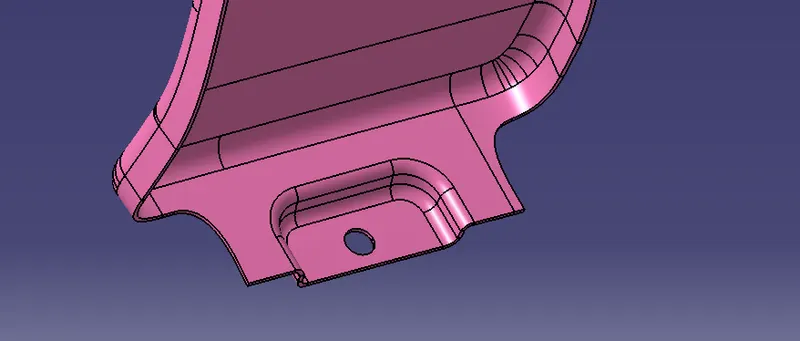
Sill can be seen directly below the bottom of the door supporting the floor and may be used to combine the floor and the body. The bottom of the fender is connected to the sill , which provides the reinforcement to the fender for attachment
For mounting the fender to sill , a flange is created with emboss , it is the place where M5 fasteners are going to get screwed . Embosses are used for strengthening the flange to withstand the Fasteners
DESIGN OF BUMPER MOUNTING AREA:
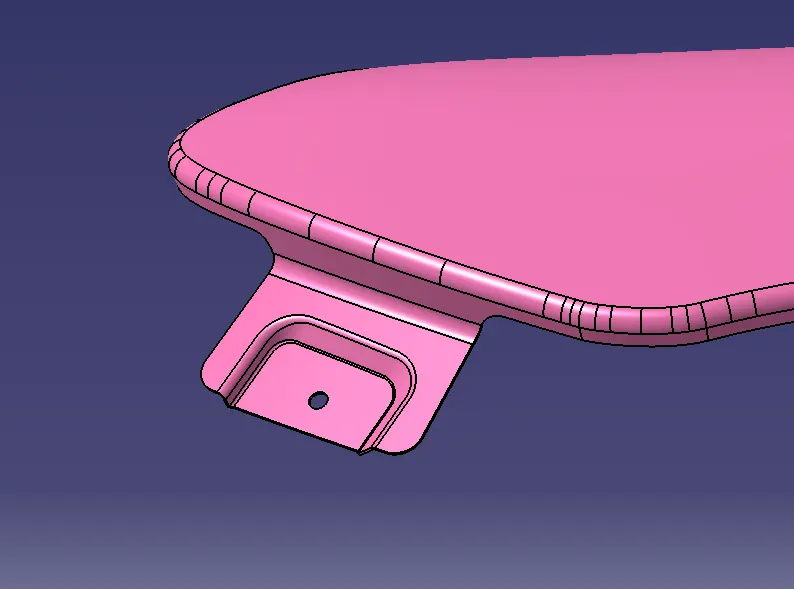
Bumper mounting area is used to fix the fender to the plastic bumper bumper , with the help of the fasteners , here also the flanges have embosses to support the fatseners
DESIGN OF DRIP AREA MOUNTING :
DESIGN RULES FOR DRIP AREA MOUNTING
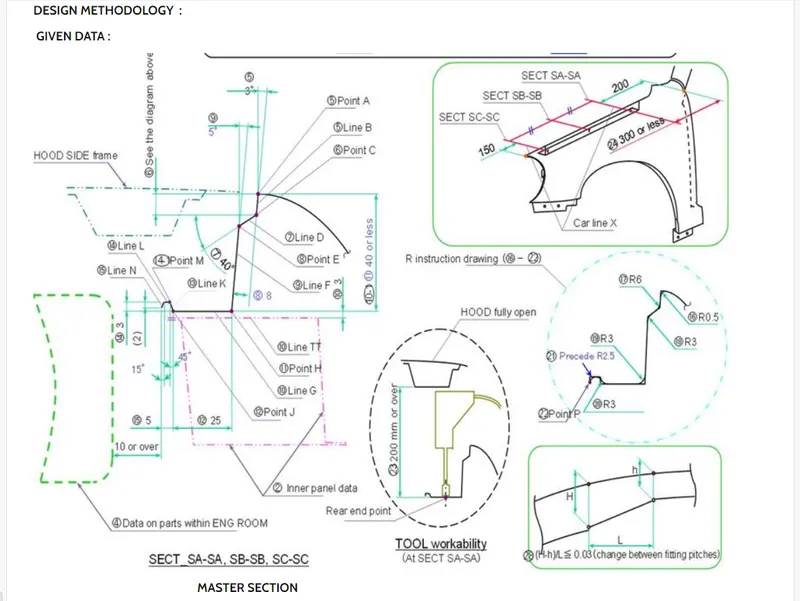
• It is the most important mounting region in the fender because it's going to get connected the engine block directly , its the priliminary supporting region for the fender
So it is wise to concentrate more on this area , and this area also demands more rules to be followed to meet the required standards , if it doesn't satisfies the rules , we would really get a bad fit on those mandatory areas .
• While designing the drip area we have to initially leave 200-300 mm for cowl top . Cowl top part consists pf wiper motor and its instruments ,
• For placing the headlamp we have to leave at least 150 mm at the front while designing the fender
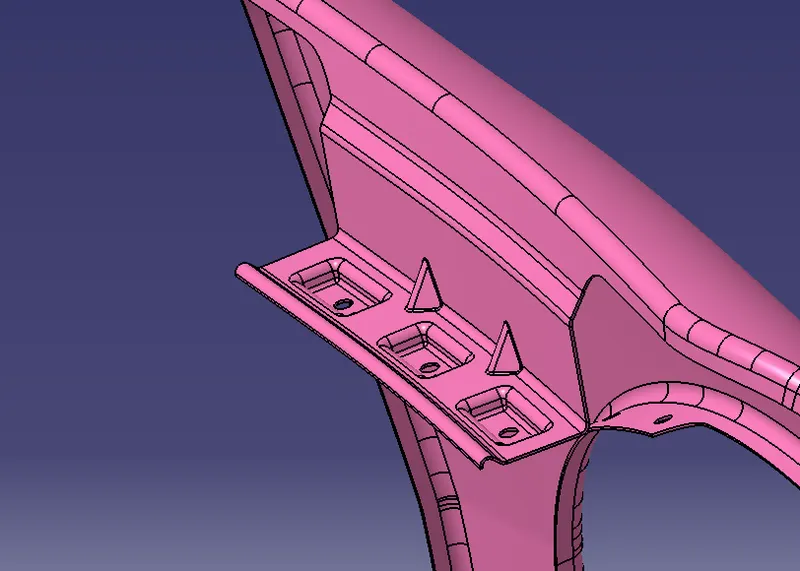
• Two beats are added on the longer side of the drip area in order to provide the stiffness and adds strength to the part. This helps the fender to not to vibrate and impact the forces outside of the fender during motion of the vehicle
Embossing are provided on the mounting to strengthen them during fastening
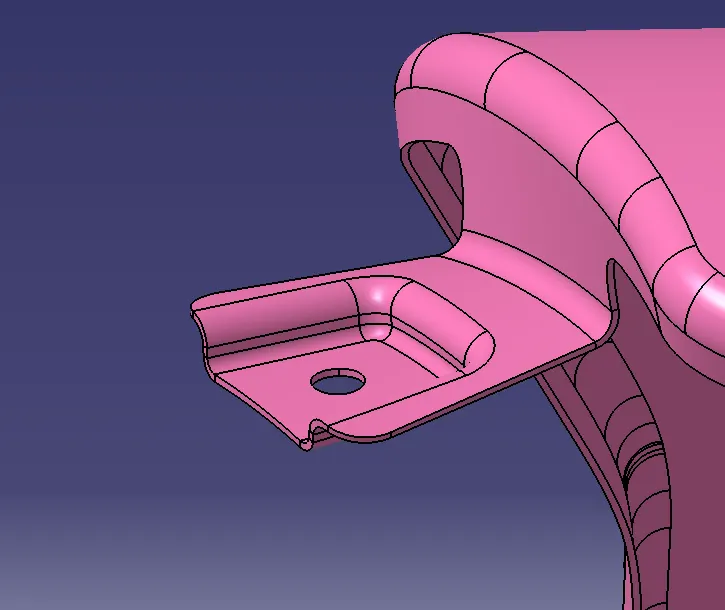
DESIGN OF A PILLAR MOUNTING :
A pillar is the area in which both the roof and the body of the vehicle meets , on this region the rear end of the fender is going to meet , it also have emboss and fasteners mounting holes like the others ,
BAFFLES
After designing the required considerations , the fender is now ready to mounted on the vehicle ,
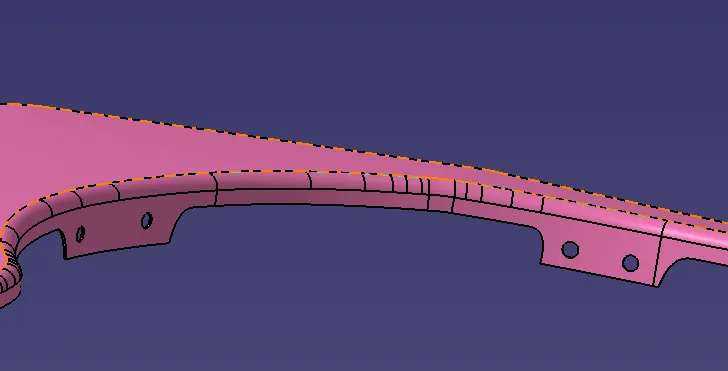
Some of the fender have a mounting region for the baffles , if baffles are going to get used in the fender to reduce vibrations and provides strength to the fender .
MANUFACTURING PROCESS FOR FENDER :
Hot stamping is a manufacturing process used by the automotive industry to create stronger, lighter components which in turn improves the fuel efficiency and safety in vehicles. Hot stamping allows manufacturers to form relatively complex parts in a single-step pattern
hot forming or press hardening, HOT STAMPING is the process of forming metal while it is hot – usually at temperatures exceeding 900 degrees C – and then quenching the piece to rapidly cool the material. Hot stamping converts low-strength metal into a high-strength steel. Hot stamping can be used to create a number of structural automotive components , such as body pillars, roof rails, rockers, bumpers, and door intrusion beams. The hot stamping process helps to ensure these components are strong enough to withstand a large load and light enough to improve gas mileage.
CONCLUSION
Finally , the fender is designed with all the required considerations ( Sill mounting , Drip area ,Bumper mounting , Bumper mounting , Engine mounting ) , now its ready to get attached completely to the vehicle .