Fender Design Challenge
Challenge 5: Fender Design
Objective: To design a fender with the help of a master section and create mounting areas that will help to fix It to the body of the vehicle.
Introduction:
A fender is a part in the automobile that is usually placed above the wheels and below the hood. A fender connects to the hood through the drip area and the body of the vehicle through the sill mounting area and to the A-Pillar through the cowl area. A fender is manufactured based on the road conditions in each country. Every country has their own standards that the manufacturer needs to follow. Fender also protects the vehicle from mud and dirt including small pebbles. It also covers the inner parts of the car to make it aesthetically beautiful. A baffle region is also created to mount the baffle between the wheel and the fender. The most important and crucial part of a fender is its drip area. The angles and distances need to be maintained for perfect mounting.
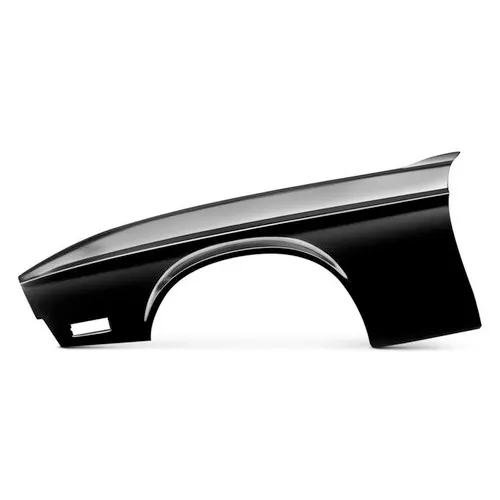
There are two types of fenders: a) Full Bumper type and b) Half Bumper type.
The styling team gives the BIW engineers a surface that looks similar to this:
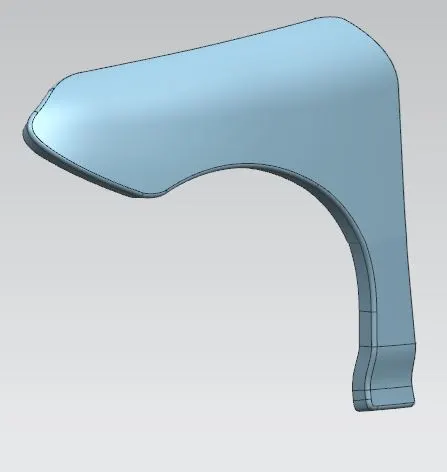
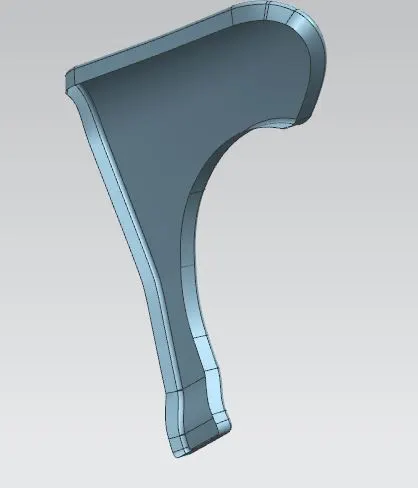
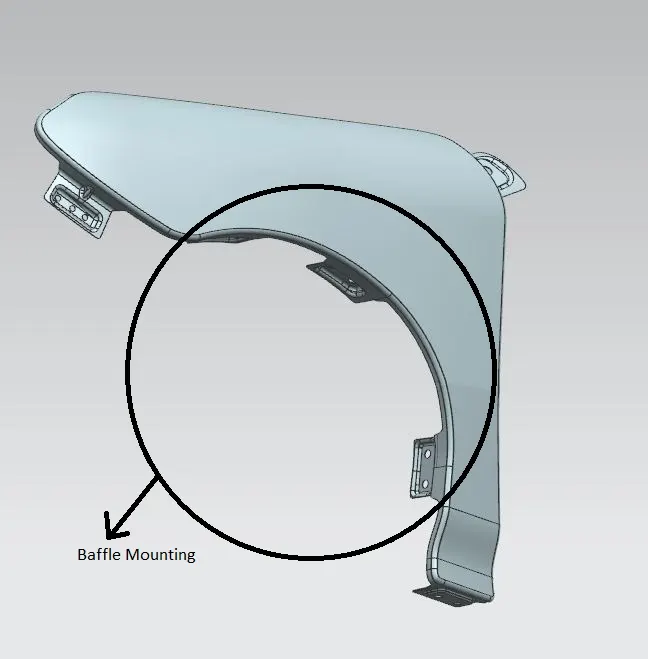
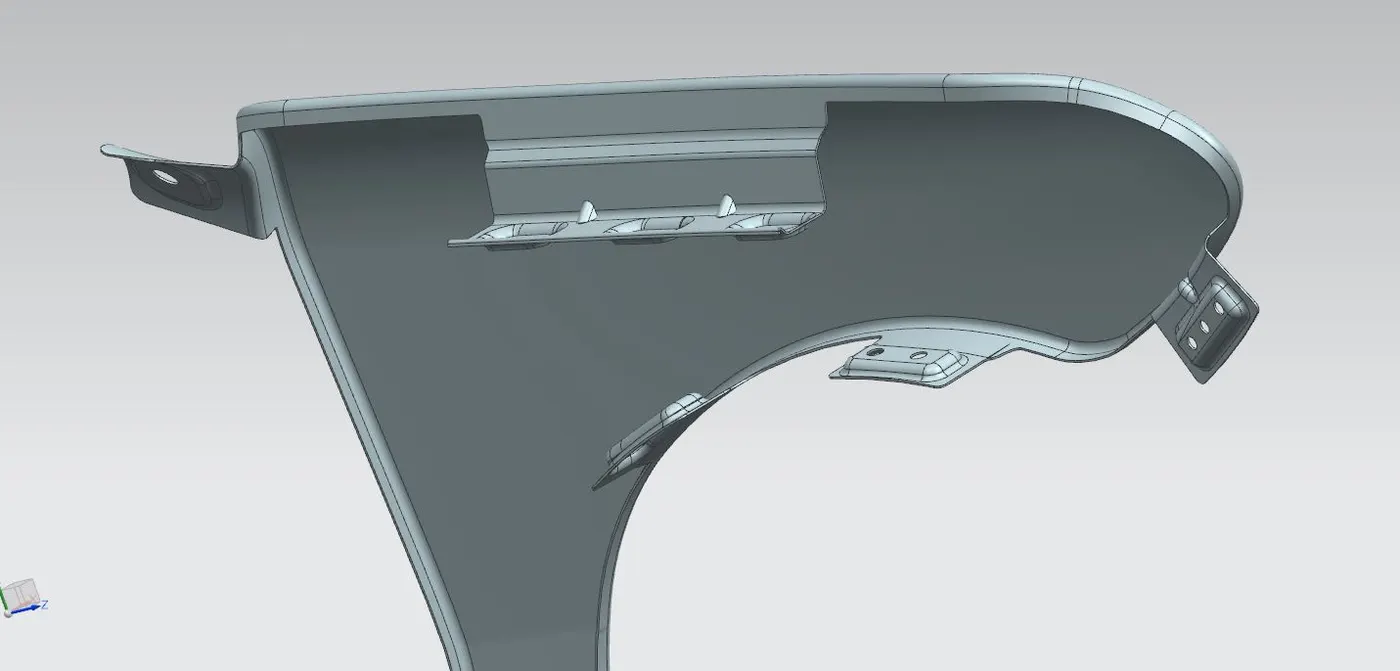
While designing the Fender the engineer takes the reference of a master section. All the mounting surfaces are estimated to be flat from the bottom. All the edges are ensured to be round with some curvature before or after thickening. Below is the picture of the designed fender with its respective mounting regions:
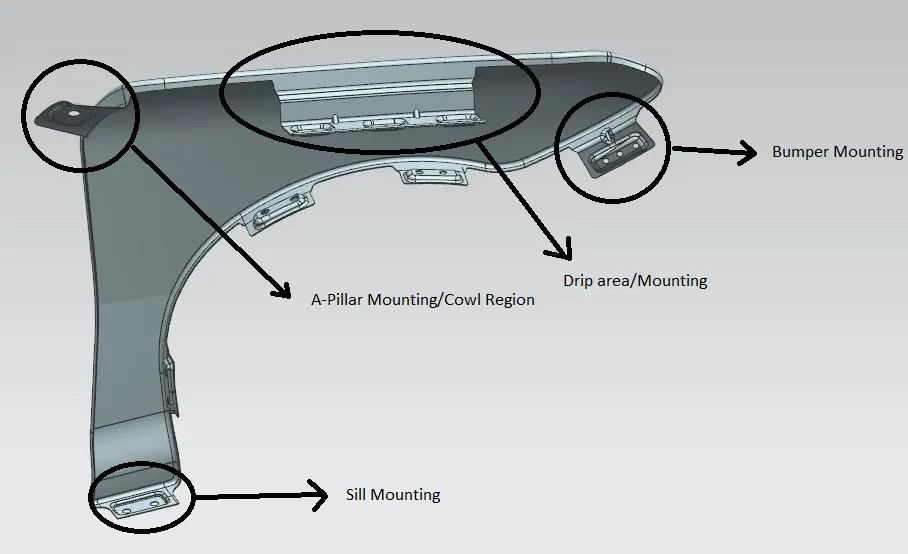
Conclusions:
By using a curve on surface, trim sheet, datum planes, sew, project curve, thicken and law extension commands the fender was designed. All the corners of the mountings are ensured to be curved for the ease of manufacturability.