Fender Design Challenge
What is a Fender?
A fender is the part of a car, truck, motorcycle, or another vehicle that frames or covers a wheel well. Its main purpose is to prevent debris, rocks, mud, liquids, sand, and other road debris from getting thrown in the air while the tyres rotate.
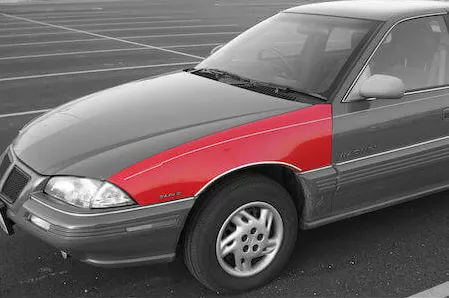
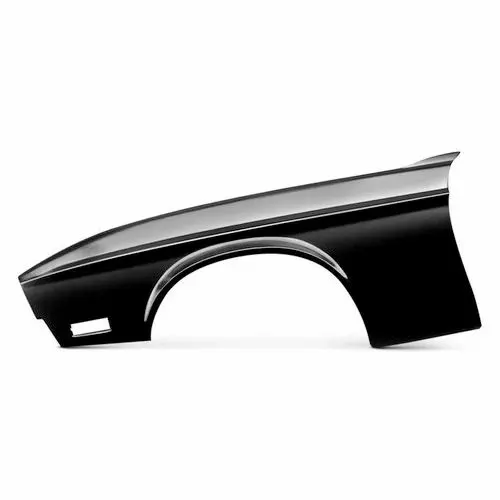
Fenders may be made from fibreglass, steel, or other materials. Many of these materials are designed to crumple in a crash, distributing the impact across the frame of the car to make the crash more survivable for the occupants of the vehicle.
Manufacturing Processes behind making Fenders
For automotive metal forming, the blank is often made of sheet metal, which can be stamped, cut or bent into a shape needed for an automobile's body. Alternatively, it can be a solid block of metal in a cubical or lens-like shape. Here are some ways that a metal workpiece can be deformed during the automotive manufacturing process:
Bending: In bending, force is applied to a sheet metal workpiece to produce curvature of the surface. Bending is generally used to produce simple curved surfaces rather than complex ones. A mechanically operated press drives a punch against sheet metal, forcing it into a simple die with enough pressure to produce a permanent change in the metal's shape. The amount of pressure is important. If not enough pressure is applied, the metal can simply spring back into its original shape. If too much is applied, it can break.
Drawing: In drawing, the sheet metal is forced against a die that has been cut into the three-dimensional, often curved shape that the sheet metal is to take on. In effect, the die is used as a mould for the metal. This technique can produce relatively complex shapes. Once again, pressure is applied to the workpiece using a hydraulically or mechanically operated punch. There are several dangers involved, not so much to people (since the process is largely mechanised) but to the metal itself. It can crack from too much pressure or wrinkle from its interaction with the die. Lubricant can be used to make the metal slide more smoothly against the die, avoiding the possibility of wrinkling. Alternatively, the wrinkled edges can be trimmed from the metal in a separate operation. This method is commonly used to make auto body parts and fuel tanks.
Stamping: In stamping, a device called a stamping press is used with a series of dies to cut and form metal into various shapes. This is commonly used to make auto parts such as hubcaps and fenders.
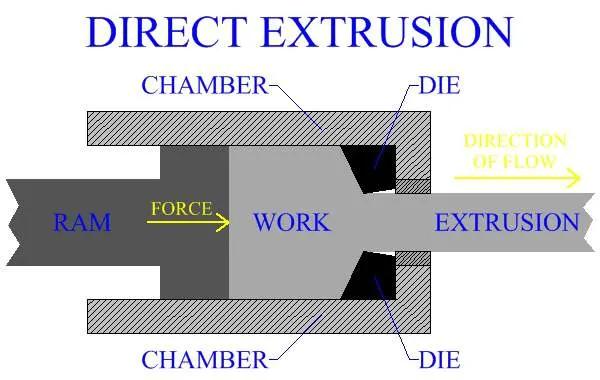
Extrusion: Extrusion can be used to produce long metal objects, such as rods and tubes. The metal workpiece is forced into a die with a hole in the opposite end. The metal is extruded through the hole to form the shape. Extrusion can be used to manufacture important parts of a car's drive train or the anchors that hold seatbelts in place.
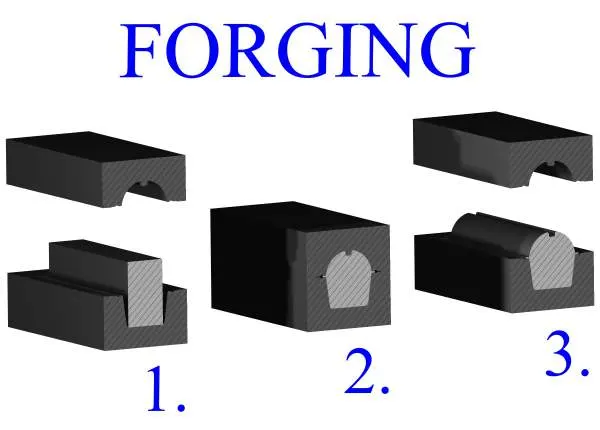
Forging: The forging process uses a hammer or press that is essentially a mechanized version of the hammers used by ancient blacksmiths. The metal is hammered against a surface that serves as an anvil. It can be hammered repeatedly to form complex shapes. This can be used as an alternative to the drawing process.
The above processes are generally used with cold metal. Hot metal can also be used, sometimes at high enough temperatures that the molten metal can be poured into a die. This requires very expensive dies that can withstand the heat and must be done quickly, to minimize the exposure of the die to the molten metal.
Challenge:
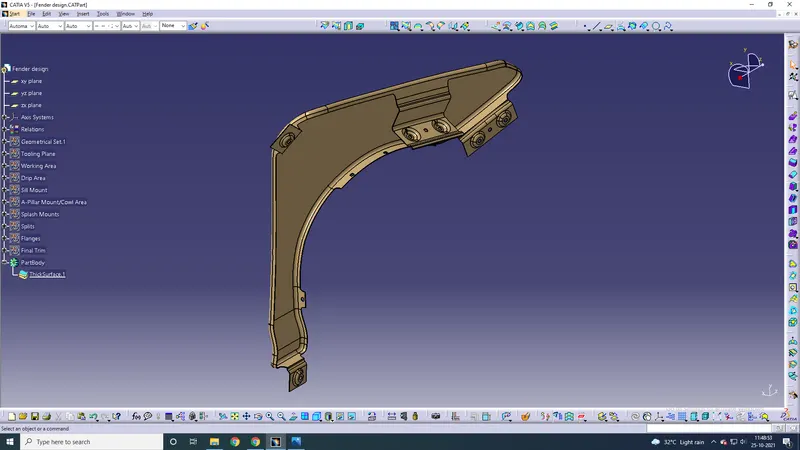
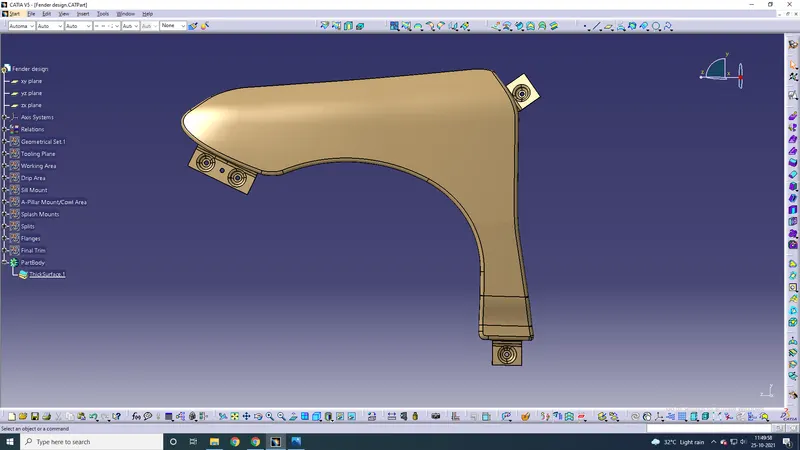
Given skin of Fender
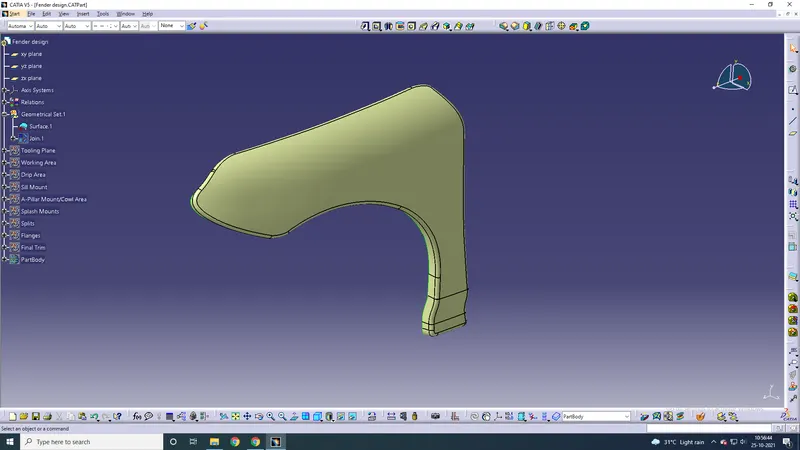
Next up, we need to make the drip area, A-pillar, sill, bumper, and splash mountings.
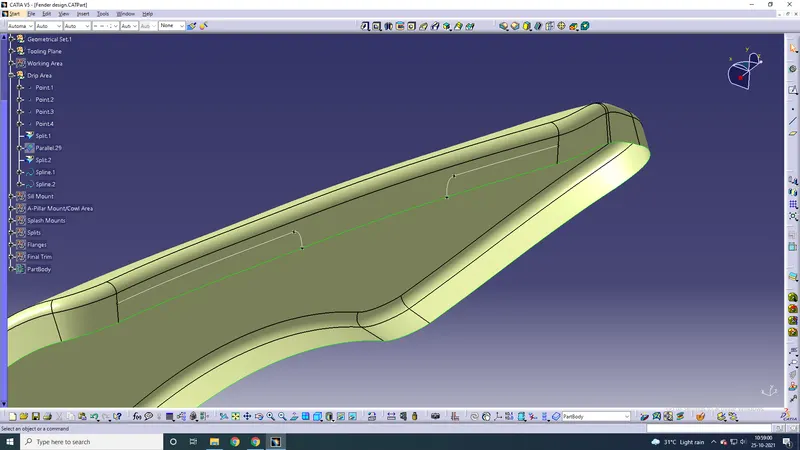
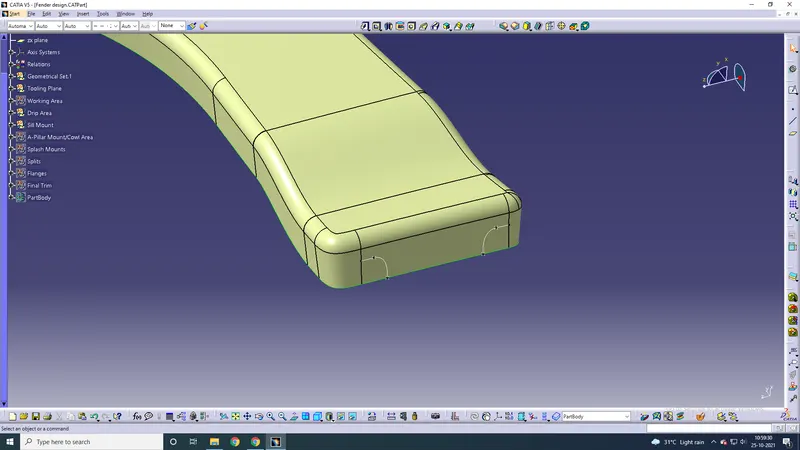
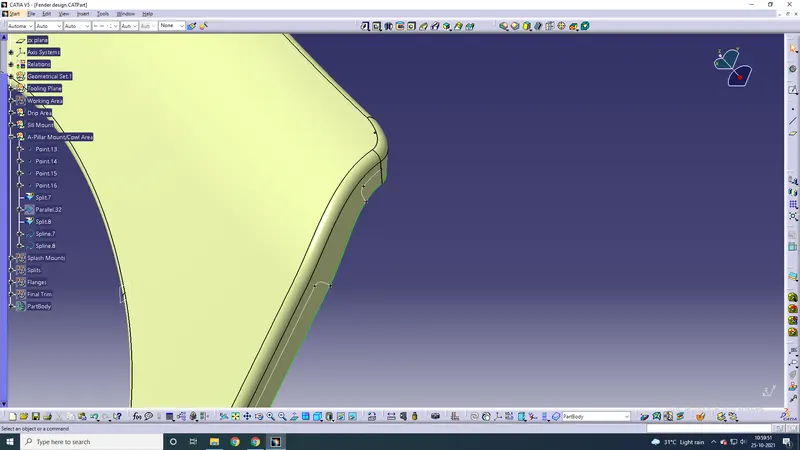
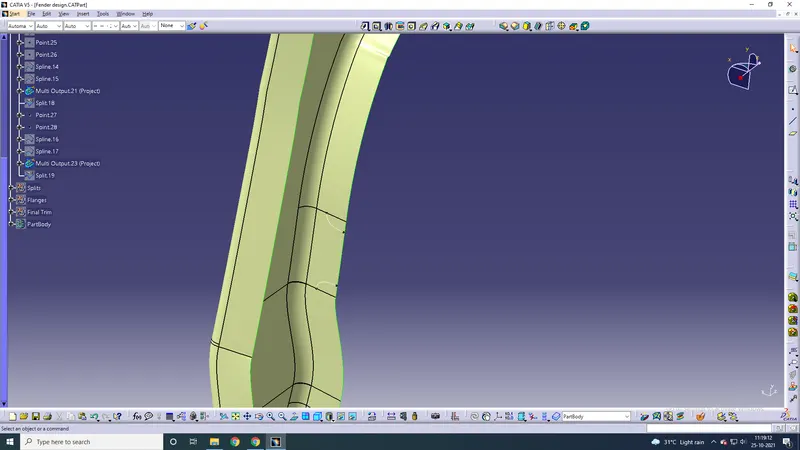
Making parallel curves of 5mm from the outline of the skin.
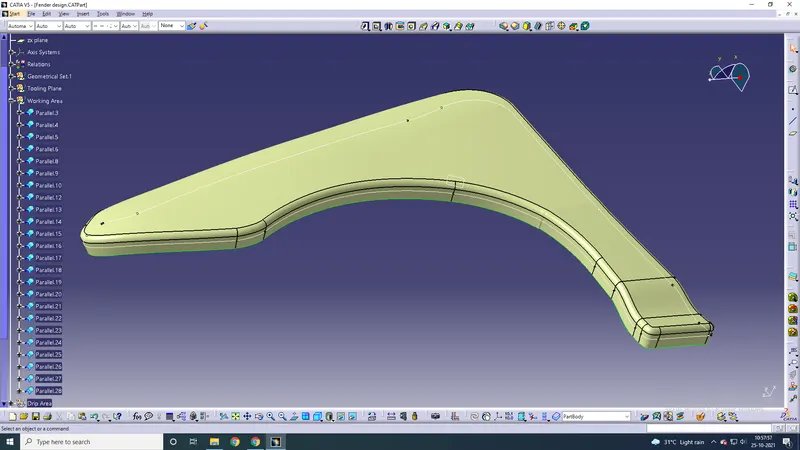
For Drip Area
For Sill Mounting
For A-Pillar Mount
For Splash Mounts
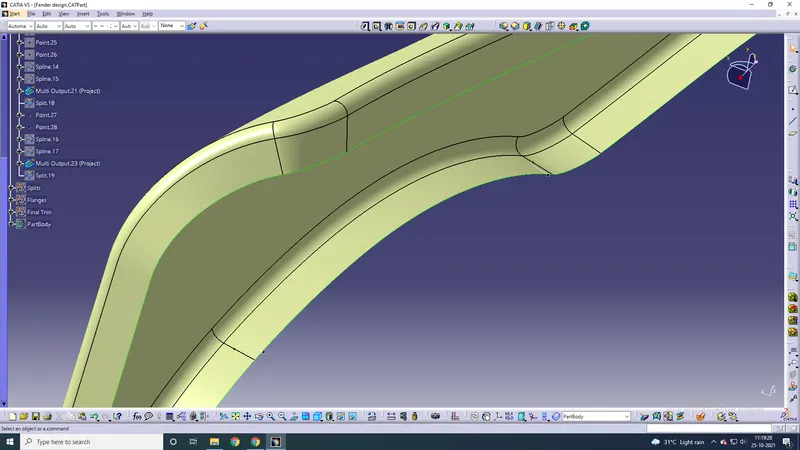
Next, split the skin with the outlines.
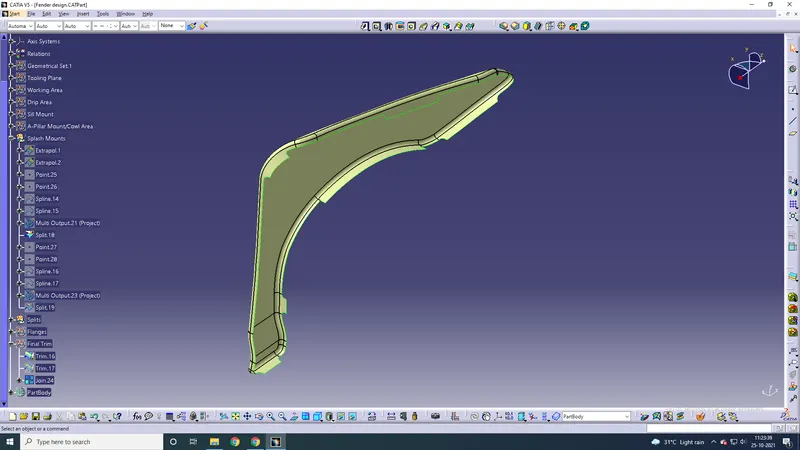
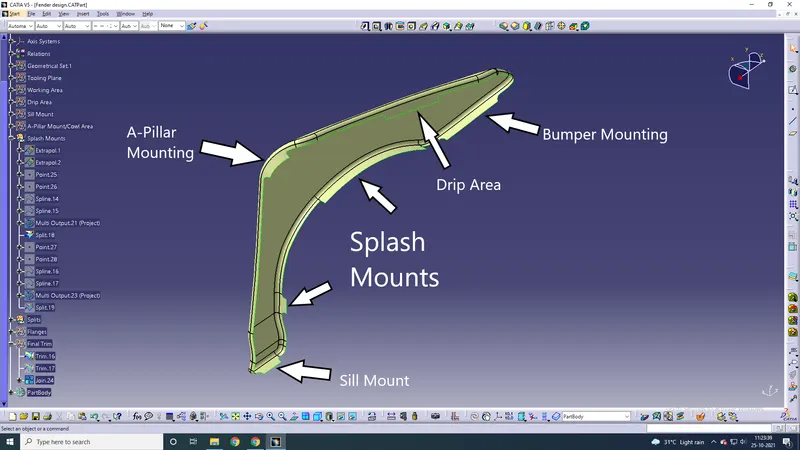
The various parts have been mentioned in the diagram below.
Making of Drip Area (according to the master section)
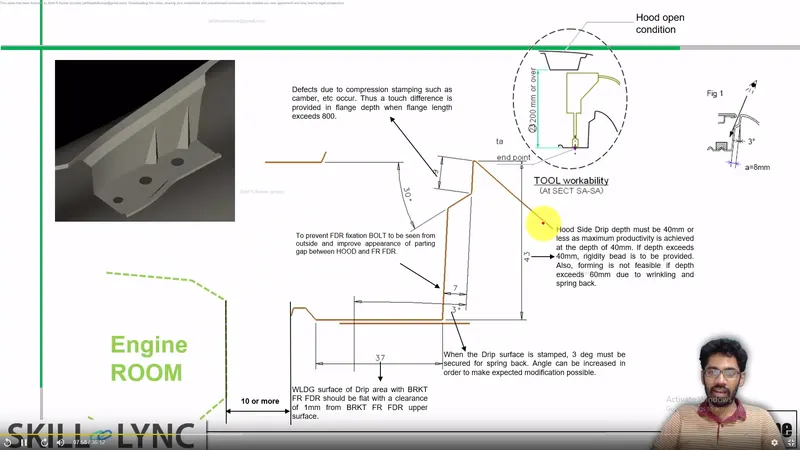
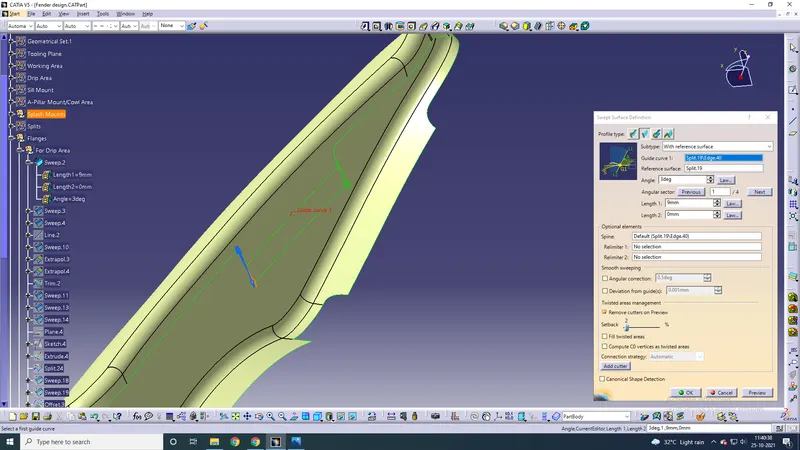
The first sweep of 9mm and 3 deg
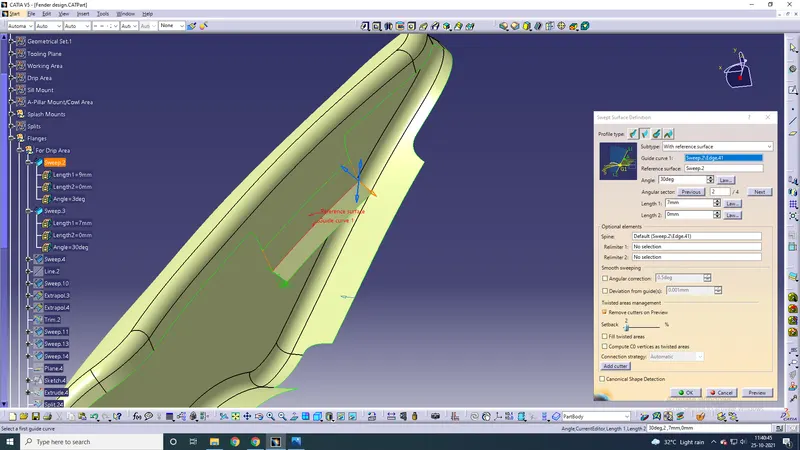
Second sweep of 7mm and 30 deg
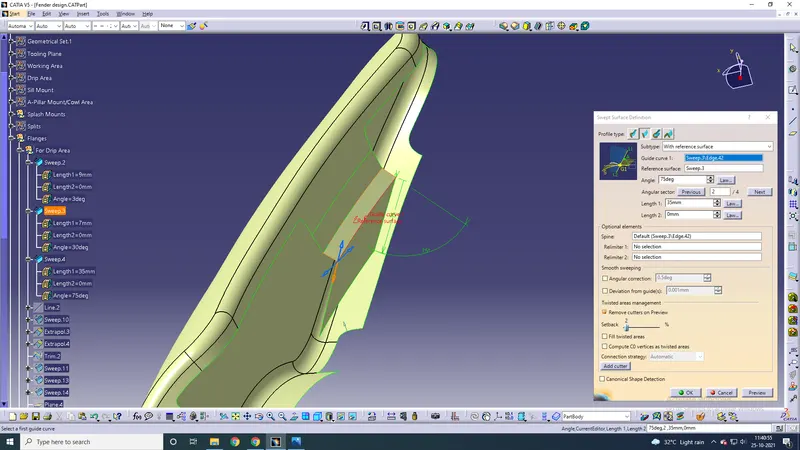
Third sweep of 35mm and 75 deg
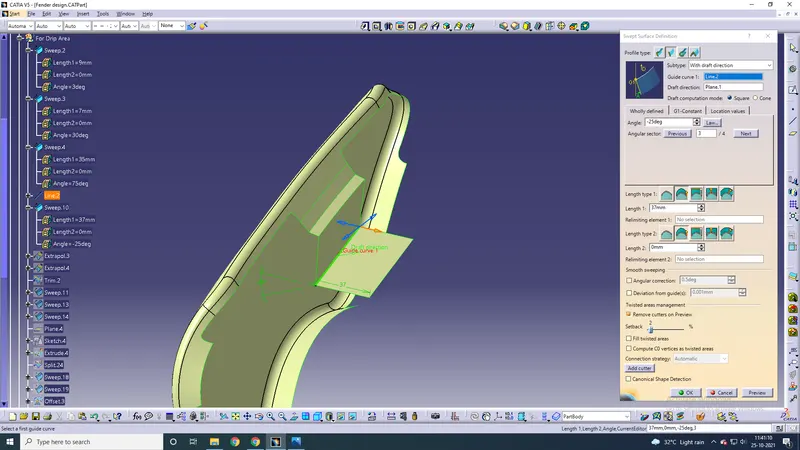
Fourth sweep of 37mm perpendicular
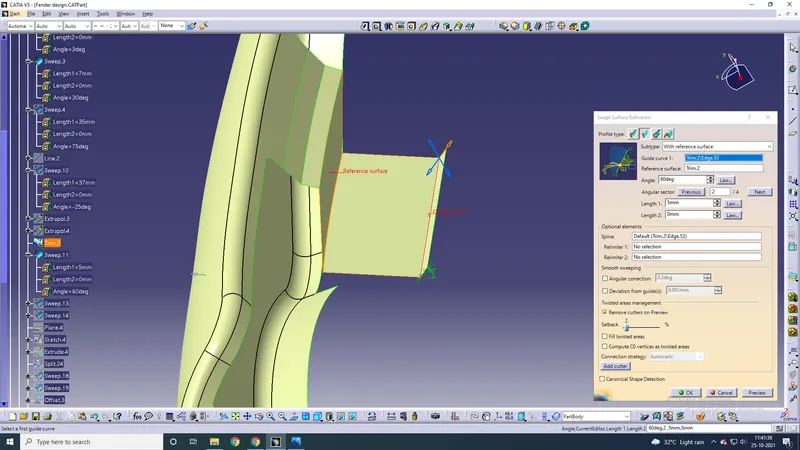
Making the embossing
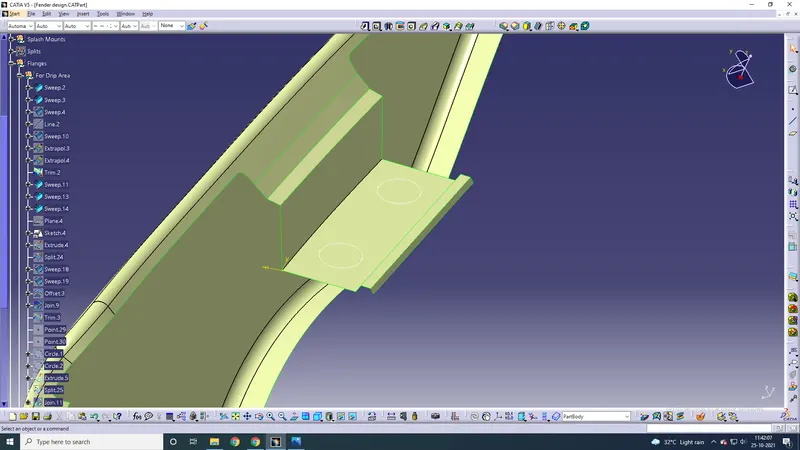
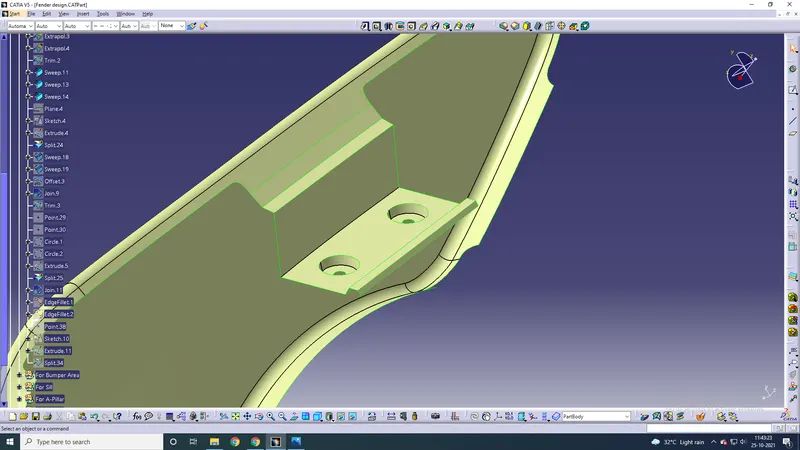
Giving fillets
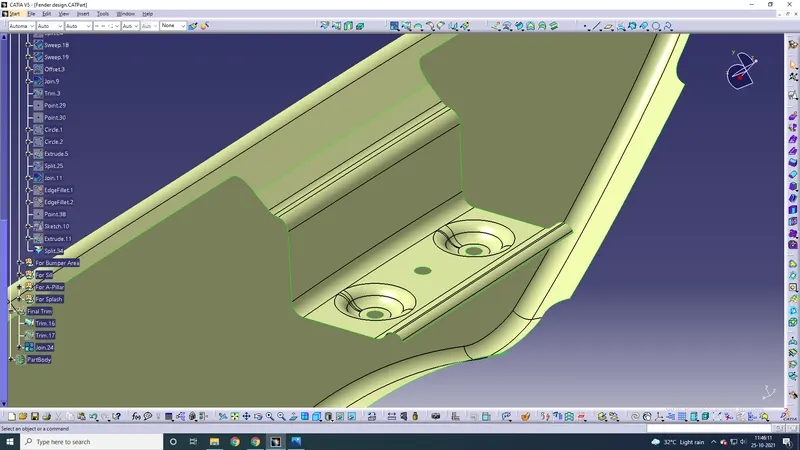
The other mounting points don't need to follow the same rules as the drip area.
Bumper Mounting
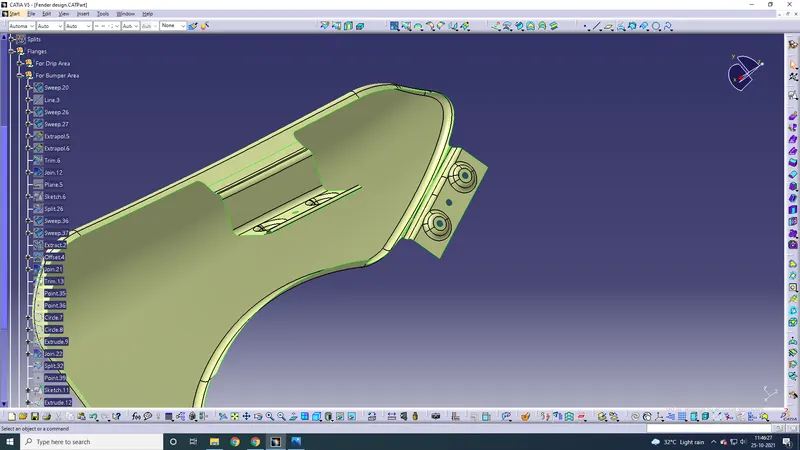
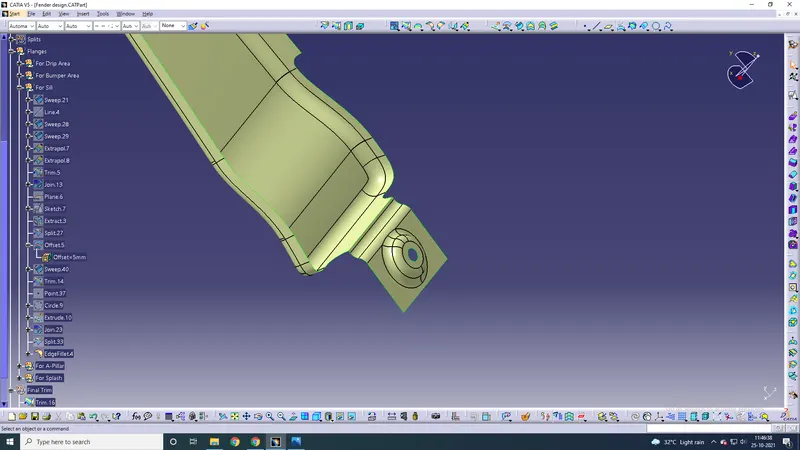
Sill Mounting
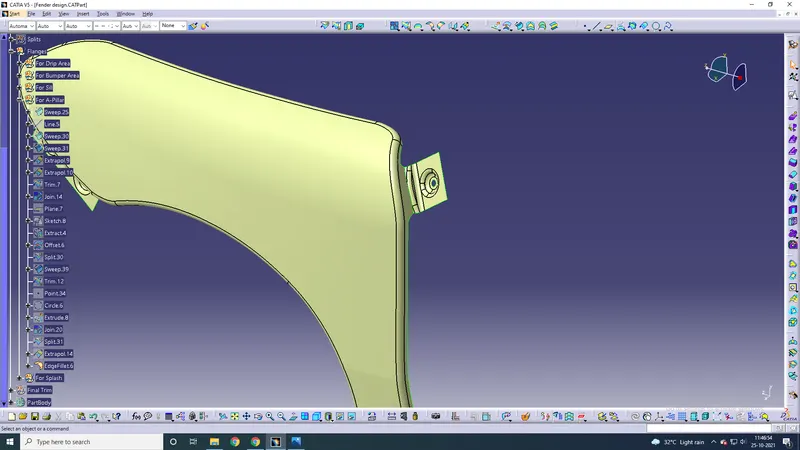
A-Pillar Mounting
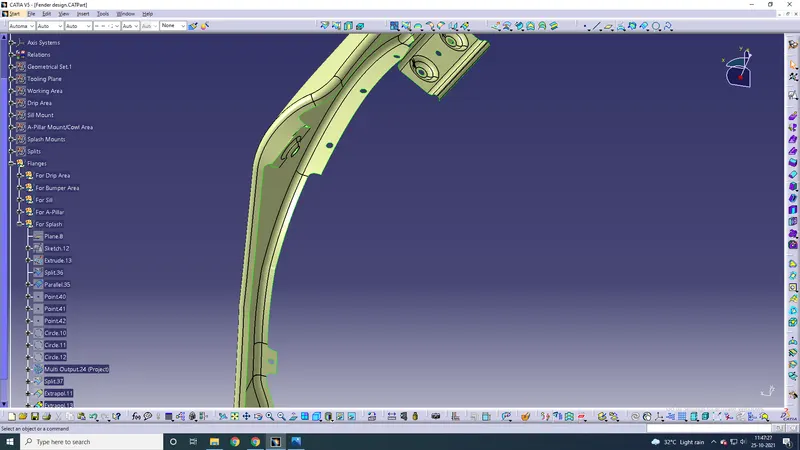
Splash Mounts
Final
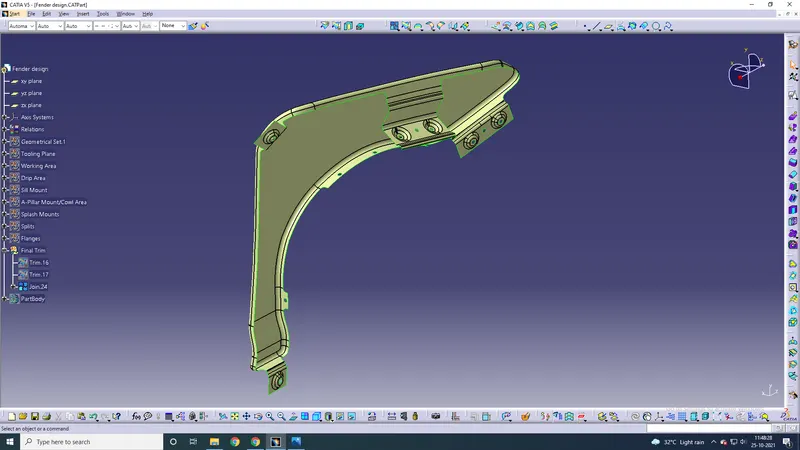
Making it a Solid
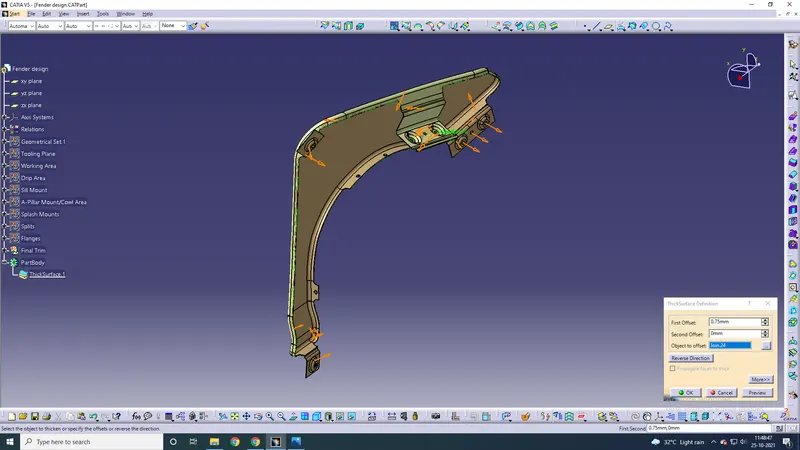
Final Product