Fender Design Challenge
AIM
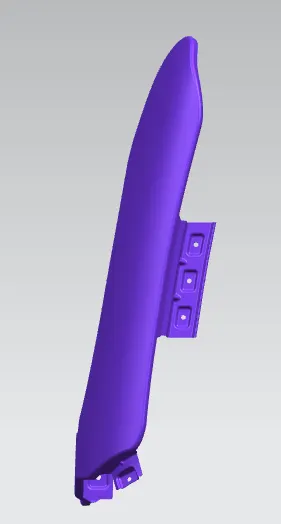
The aim of this project is to design the BIW of a Fender using the fender skin data as the input data and then attach mountings on the fender for attaching it with the surrounding BIW bodies.
INTRODUCTION
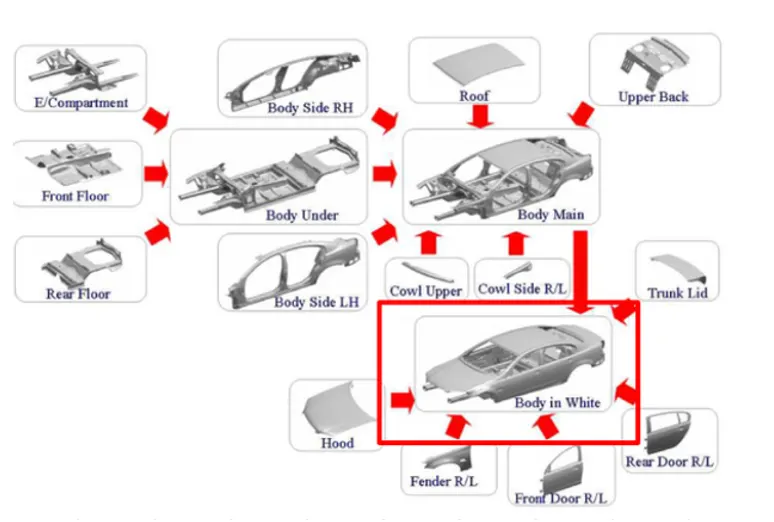
Body-in-white (BiW) is the name given to a car body’s sheet when all its components—barring moving parts (e.g., hoods, fenders, etc.), trims (e.g., glass, seats, etc.), or chassis subassemblies—have been welded together. Usually, BiW constitutes about 27% of a car’s curb weight [42], and remains the key determinant of how the car will perform. BiW can be made into two structures: the more common monocoque structure where all body members are carrying load with chassis in-built with BiW and are integrated with each other, and the body-on-frame structure where the frame is the main load-carrying member.
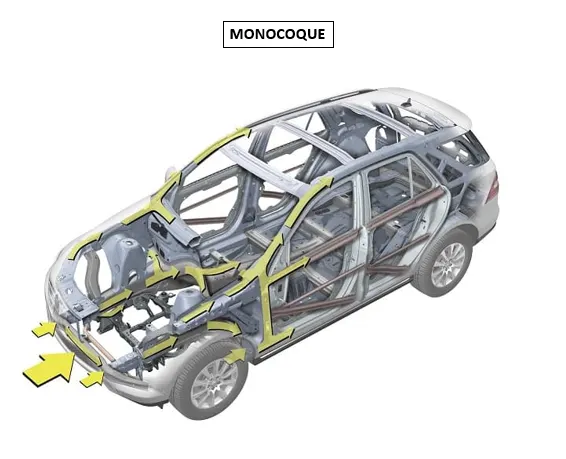
BiW is expected to possess a number of significant properties. It must have high tensile strength as well as high stiffness—bending, torsional, static, and dynamic. It must also provide good quality safety both to the car body and to its occupants against crashes of all kinds—front, rear, side, or even rollover, meeting the Federal Motor Vehicle Safety Standard No. 208 [44]. It should also be able to protect occupants from noise, vibration, and/or harshness (NVH) by absorbing or reducing these conditions. Also, it should be easy to weld and form, as well as be highly paintable and easy to design. It should provide a good surface finish that is smooth, and should also be corrosion resistant. Improvement of fuel economy also necessitates the use of lightweight materials in BiW, as it constitutes a significant share of car’s weight; in addition, given environmental concerns in recent times, it is also expected to be recyclable. Given such extensive requirements, only steel and aluminum have been used for making BiW; the former is preferred for its high strength and low cost, while the latter is preferred for its lower density that helps reduce car weight.
BIW components in a vehicle
FENDER
Fender is the American English term for the part of an automobile, motorcycle or other vehicle body that frames a wheel well (the fender underside). Its primary purpose is to prevent sand, mud, rocks, liquids, and other road spray from being thrown into the air by the rotating tire. Fenders are typically rigid and can be damaged by contact with the road surface.
Sticky materials, such as mud, may adhere to the smooth outer tire surface, while smooth loose objects, such as stones, can become temporarily embedded in the tread grooves as the tire rolls over the ground. These materials can be ejected from the surface of the tire at high velocity as the tire imparts kinetic energy to the attached objects. For a vehicle moving forward, the top of the tire is rotating upward and forward, and can throw objects into the air at other vehicles or pedestrians in front of the vehicle.
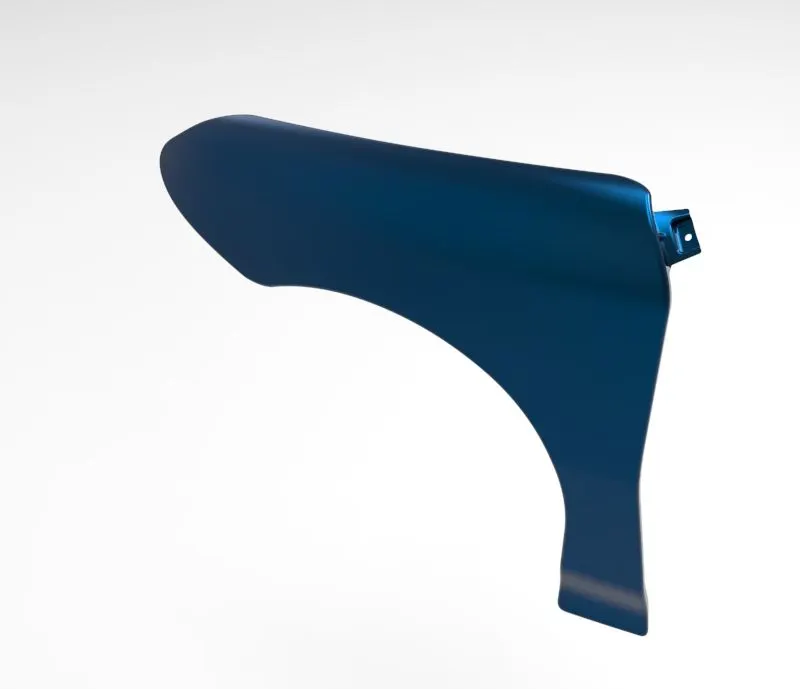
Purpose of fender:
Cleanliness: Protect the car, occupants and passsersby from items, water, mud, snow, ice, thrown off the tires as you drive.
Safety: Protects pedestrians from the wheel, e.g. its better to be it by a laterally moving fender than a rolling tire, keeps loose, streaming items from being wrapped up in a rolling wheel.
Aerodynamics: smooths the car profile so you don't get a lot of drag off the uncovered wheels. Some fenders are enclosed on the side for this.
General appearance: looks better with fenders, gives a finished look, looks more streamlined.
Different designs of fender:
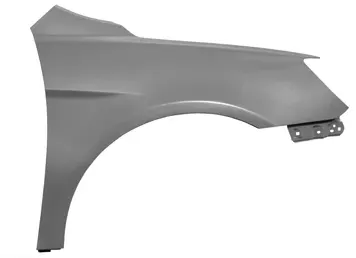
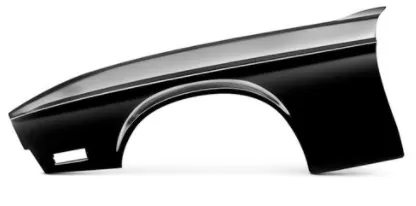
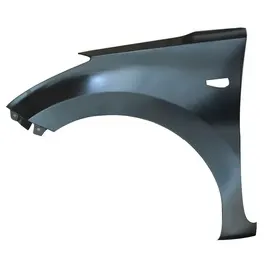
Fenders are classified into two types:
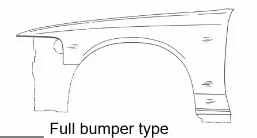
1. Full bumper type
These types of fenders are longer and were designed in previous modes of vehicles.
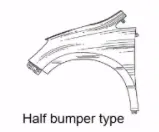
2. Half bumper type
These types of fender are smaller in length and are used in present generation of vehicles.
Advantages of hald bumper type fender
1. Lower weight
2. Less cost.
3. Improved aerodynamics.
MANUFACTURING PROCESS IN METAL FORMING
One of the most important things about metal is that it can undergo plastic deformation. That doesn't mean metal is made out of plastic, but it can do one of the things that plastics can: It literally can take on almost any shape that we can imagine.
The process of deformation begins with a blank, a quantity of metal in some basic form that will undergo the change in shape. The blank becomes the workpiece -- the piece of metal to be reshaped -- in the metal forming process. For automotive metal forming, the blank is often made of sheet metal, which can be stamped, cut or bent into a shape needed for an automobile's body.
Here are some ways that a metal workpiece can be deformed during the automotive manufacturing process:
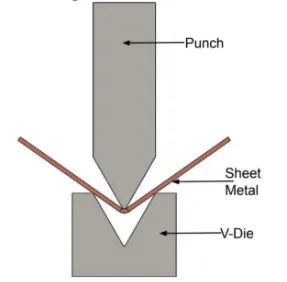
Bending: In bending, force is applied to a sheet metal workpiece to produce a curvature of the surface. Bending is generally used to produce simple curved surfaces rather than complex ones. A mechanically operated press drives a punch against sheet metal, forcing it into a simple die with enough pressure to produce a permanent change in the metal's shape. The amount of pressure is important. If not enough pressure is applied, the metal can simply spring back into its original shape. If too much is applied, it can break.
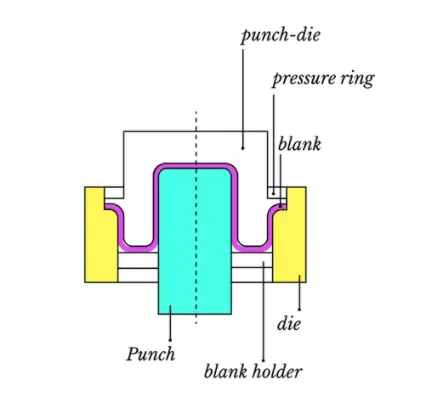
Drawing: In drawing, the sheet metal is forced against a die that has been cut into the three-dimensional, often curved shape that the sheet metal is to take on. In effect, the die is used as a mold for the metal. This technique can produce relatively complex shapes. Once again, pressure is applied to the workpiece using a hydraulically or mechanically operated punch. There are a number of dangers involved, not so much to people (since the process is largely mechanized) but to the metal itself. It can crack from too much pressure or wrinkle from its interaction with the die. Lubricant can be used to make the metal slide more smoothly against the die, avoiding the possibility of wrinkling. Alternatively, the wrinkled edges can be trimmed from the metal in a separate operation. This method is commonly used to make auto body parts and fuel tanks.
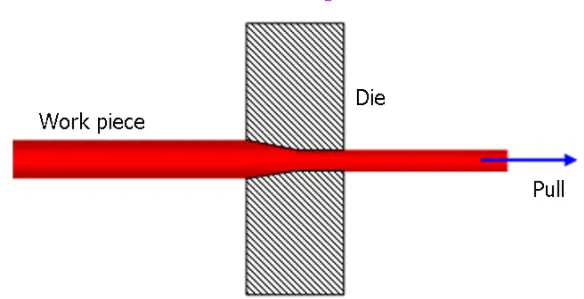
Stamping: In stamping, a device called a stamping press is used with a series of dies to cut and form metal into various shapes. This is commonly used to make auto parts such as hubcaps and fenders.
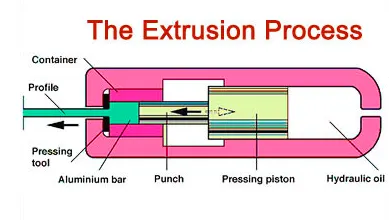
Extrusion: Extrusion can be used to produce long metal objects, such as rods and tubes. The metal workpiece is forced into a die with a hole in the opposite end. The metal is extruded through the hole to form the shape. Extrusion can be used to manufacture important parts of a car's drive train or the anchors that hold seatbelts in place.
Forging: The forging process uses a hammer or press that is essentially a mechanized version of the hammers used by ancient blacksmiths. The metal is hammered against a surface that serves as an anvil. It can be hammered repeatedly so as to form complex shapes. This can be used as an alternative to the drawing process.
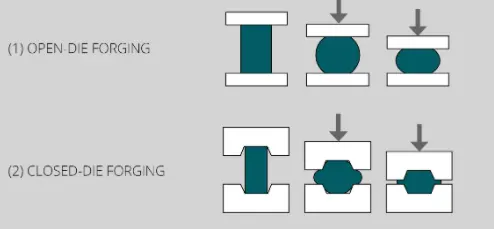
Manufacturing process of car fender
The manufacturing process includes the following steps that firstly, unfolding and shearing are carried out on a plate, wherein a proper cold roll specification is selected at first, a cold roll is unfolded, and then the unfolded cold roll is sheared to an iron plate of the corresponding size according to production material specifications; secondly, oil pressing and punching are carried out, wherein the iron plate is extended at first, then side shearing and punching are conducted on the iron plate, folding and shaping are carried out on the iron plate, and finally reshaping is carried out on the iron plate; thirdly, small first parts of the fender are machined, wherein first of all, the iron plate is punched to a needed outer contour blank, then the iron plate completing the outer contour blank is further shaped, and the iron plate is punched at last; fourthly, installation and welding of a metal plate are conducted. The manufacturing process for the car fender is simple and high in production efficiency.
A body of the fender and the small parts can be separately machined, so waiting time is shortened and working efficiency of production is improved.
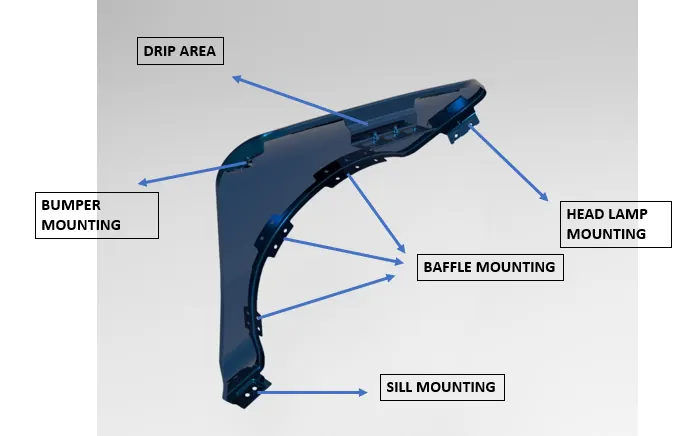
DIFFERENT MOUNTINGS IN THE FENDER
The fender which is designed in this project have mountings attached to it which would help the fender to fix with the adjacent components.
The mountings present on the fender are:
1. A-Pillar mounting
2. Drip Area
3. Sill mounting
4. Bumper Mounting
5. Baffle Mounting
DESIGN CONSIDERATIONS FOR DRIP AREA
Drip area is the mounting by which the fender is attached to the engine compartment. This is done with the help of the fasteners which are used to hold the fender with the engine compartment.
Design standards for designing the drip area is shown below:
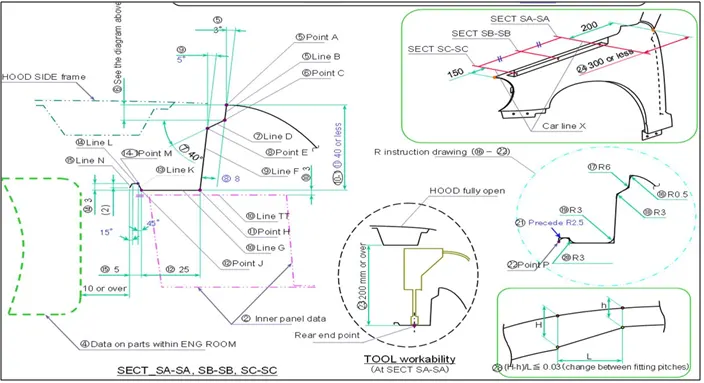
From the above image we can observe that the drip area needs to be placed at a distance of 200 mm apart from the A-Pillar mounting and 150 mm apart from the head lamp mounting.
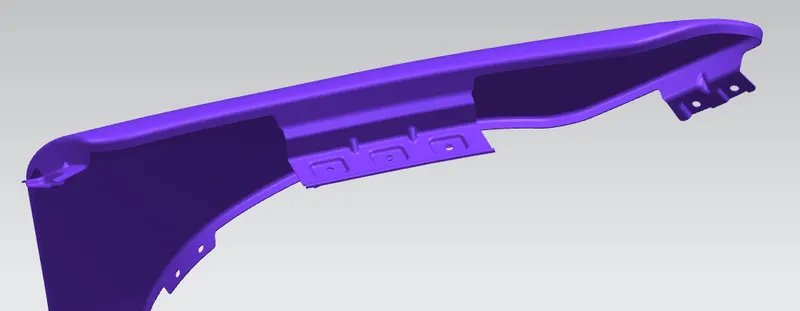
Considering the above requirements the drip area is designed at appropriate position.
Embosses are made on the mounting to provide strength to the drip area so that it holds the engine compartment firmly.
Stiffners are provided in the bend region in order to above vibrations and also for the purpose of strengthing.
A-PILLAR MOUNTING
Manufacturers provide the A-pillars on both sides of the vehicle. The A-pillar is made of strong steel alloys. This is to make it withstand a crash and meet safety standards. However, the vehicle’s roof and doors are the most expensive parts to carry out repairs. The blind spot occurs due to the blocking of the driver’s vision by the A-pillar. So, some car-makers made the A-pillar slimmer and chamfered to decrease the blind spots. And, thus it improves the driver’s vision.
In order to fix the fender with the A-Pillar a mounting is designed on it.
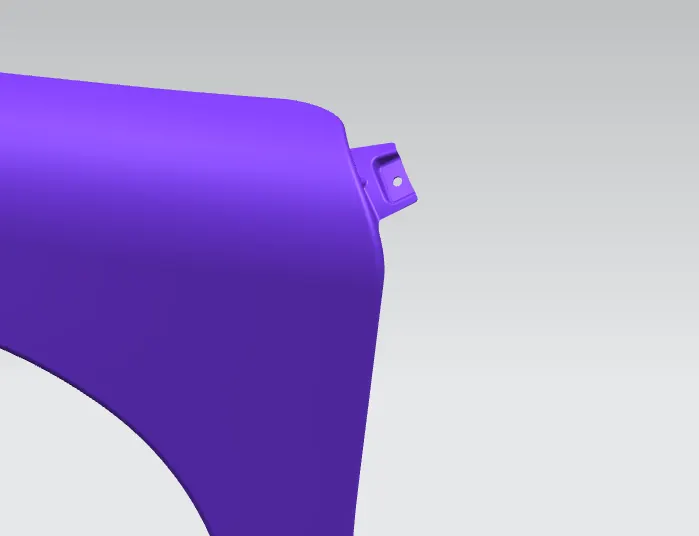
The above image shows the A-pillar mounting designed on the fender.
SILL-MOUNTING
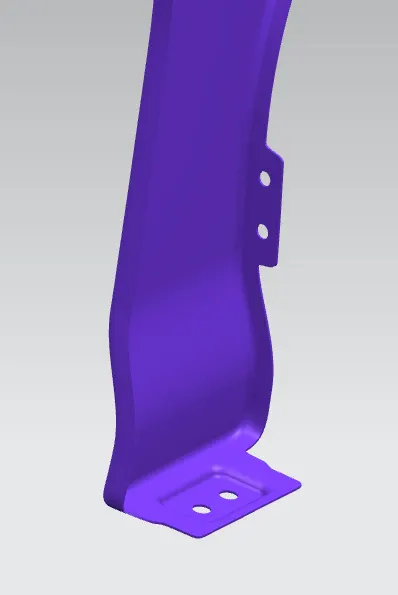
Sill mounting is designed at the bottom of the fender.
The below image shows the position of sill mounting.
BUMPER MOUNTING
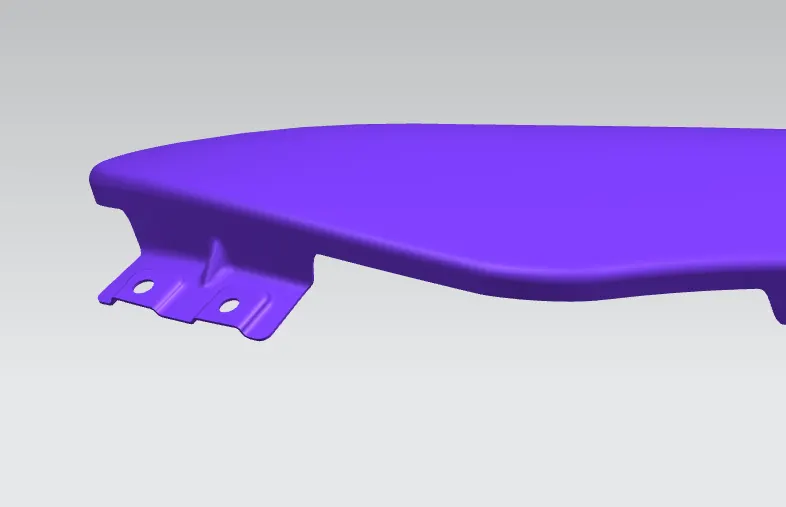
Bumper is present at the front portion of the vehicle. The purpose of bumpers is to reduce or prevent physical damage to the front and rear of vehicles in low-speed crashes. The bumpers are designed to protect the hood, trunk, grill, fuel, exhaust and cooling system. A bumper is a shield that is usually made of steel, aluminum, rubber or plastic.
The below image shows the bumper mounting on the fender
BAFFLE MOUNTING
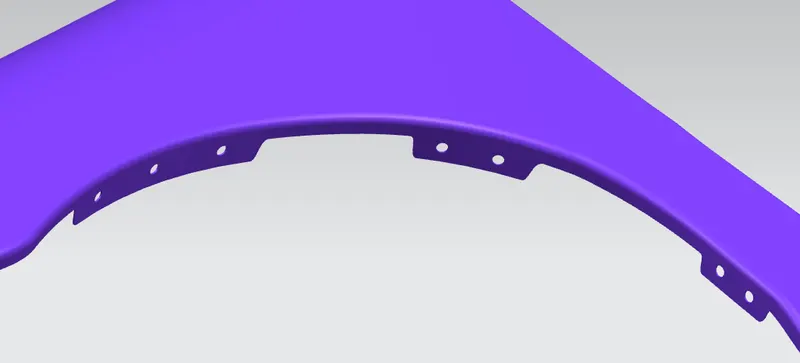
Baffle is mounted on the above portion of the wheel so that the mud and the stones are prevented from hitting the vehicle.
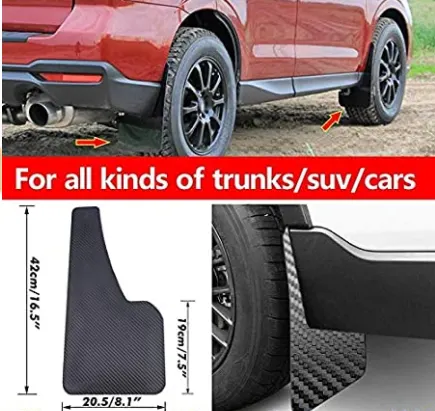
The below image shows the baffle mounting on the fender:
DIFFERENT VIEWS OF THE FENDER
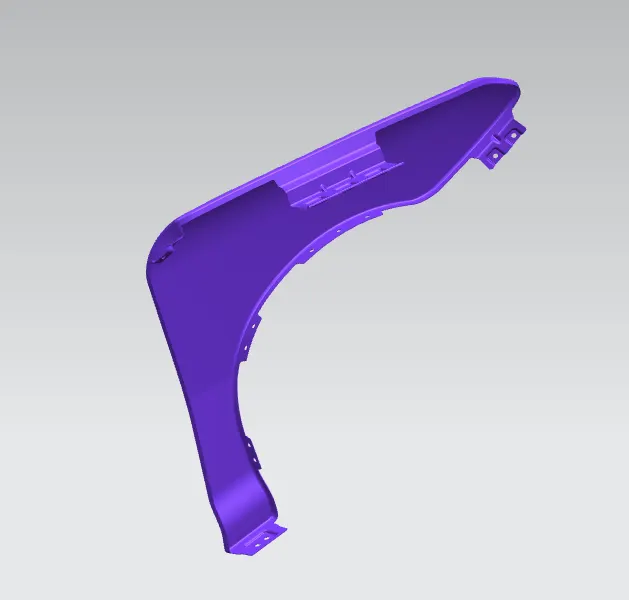
1. ISOMETRIC VIEW
2. FRONT VIEW
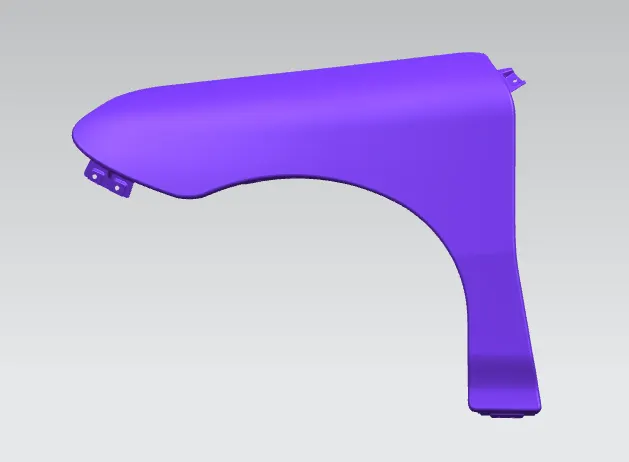
3. SIDE VIEW
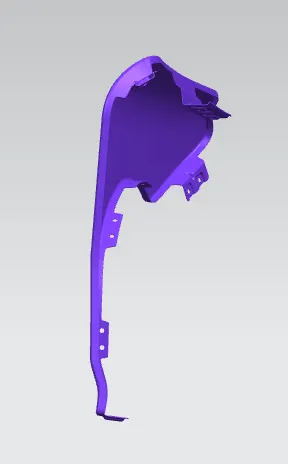
4. TOP VIEW
CONCLUSION
The fender was designed for the vehicle as per the requirement.
All the mountings were placed at appropriate positions.