Fender Design
INTRODUCTION:
Fender is the American English term for the part of an automobile, motorcycle or other vehicle body that frames a wheel well. Its primary purpose is to prevent sand, rocks, muds, liquid and other spray from being thrown into the air by the rotating tyre.
Fender are typically rigid and can be damaged by contact and the road surface. Sticly material, such as muds, may adhere to the smooth outer tyre surface while smooth loose objects, such as stones, can become temporarily embedded in the thread grooves as the tyre rolls over the ground.
FENDER:
It is an aesthetic component/part of a car that frames the wheels. Prevention of sands, mud particles, and other road contaminants being thrown into the engine compartment and also to the pedestrains and the rotating tyre are the main purpose served by the fenders.
TYPES OF FENDER:
They are two types of Fender. They are:
1. Full Type Bumper
2. Half Type Bumper
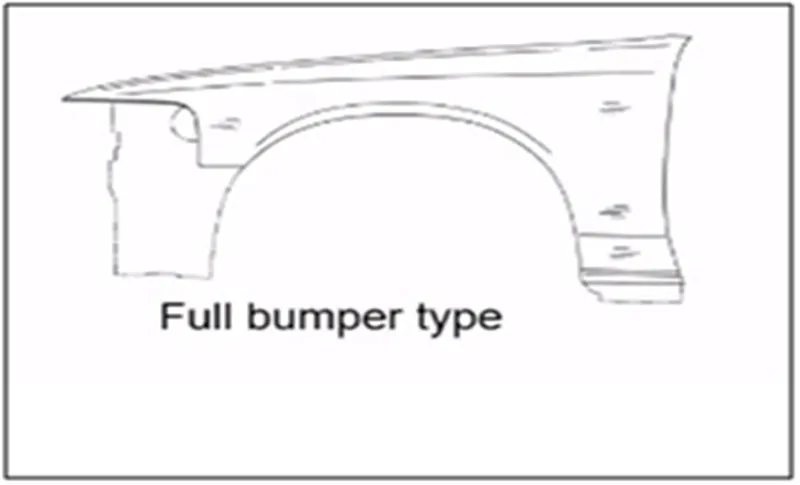
1. Full Type Bumper:
These types of fenders were used in earlier models of vehicles. They contribute to the major increment of the steel weight by just covering the front headlights with respect to the bumper region. The problem associated with this kind of fender is there is alot of wastage in the blank and every inch of a material is a cost of the industry.
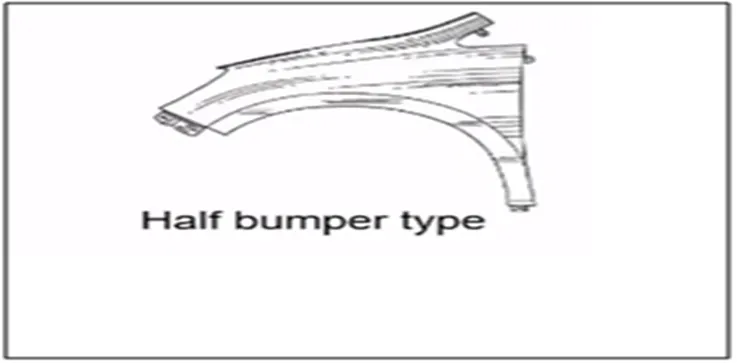
2. Half Type Bumper:
These type of fenders is mainly used for serving the purpose of cost-cutting and reducing enough proportions of the steel wait resulting in the reduction of the weight of the vehicle slightly. They can be economically manufactured. I.e Slightly increasing the blank size, we can produce two fenders at a time.
MOUNTING REGION OF FENDER:
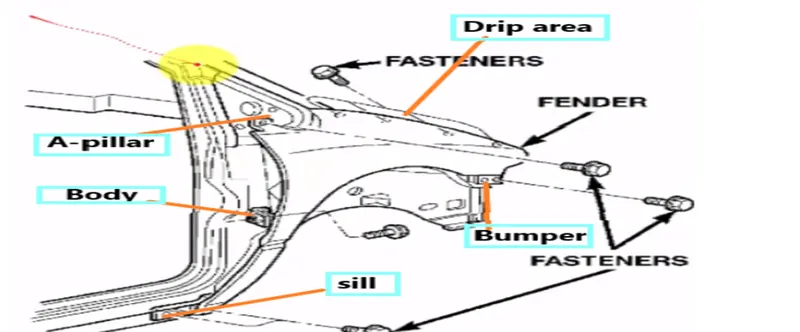
They are Five mounting region of the fender, They are:
1. A Pillar Mounting
2. Body Mounting
3. Sill Mounting
4. Bumper Mounting
5. Drip Mounting
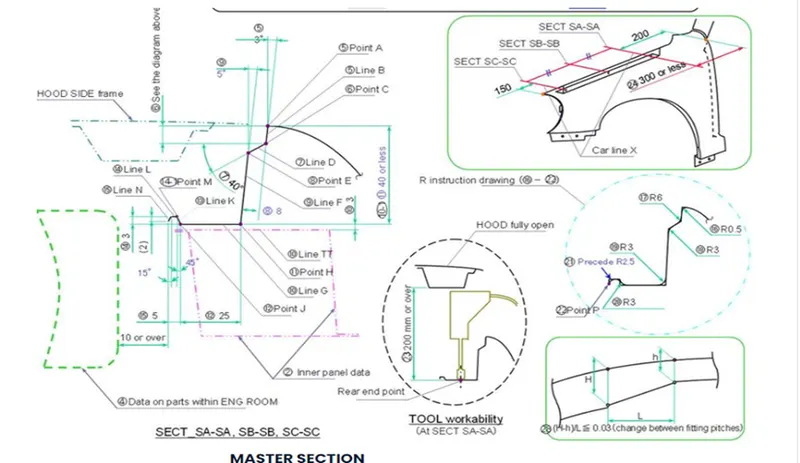
MASTER SECTION:
DESIGN OF DRIP AREA MOUNTING:
It is the most important unit in the fender. It connects with the engine department, therefore the lot of design constraints are to be followed while designing the fender.
While designing the drip area we have to initially leave 200-300mm for cowl top.
For placing the headlamp we have to leave atleast 150mm at the front while designing the fender.
Cowl Top part consists of wiper motor and its instruments.
Two parts are added on the longer side of the drip area in order to provide the stiffness and adds strength to the part. This helps in fender outside of the fender during motion of the vehicle.
Embossing are provided on the mounting to strengthen them during fastening.
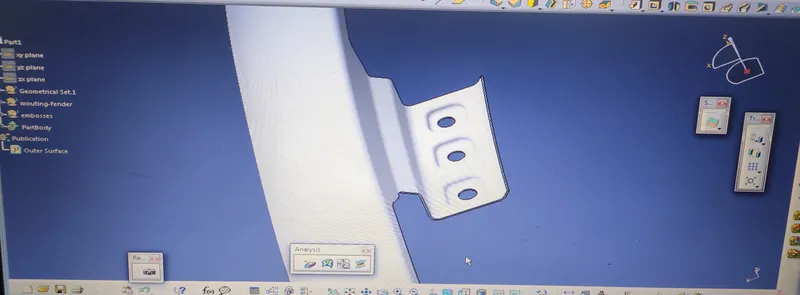
DESIGN OF SILL MOUNTING AREA:
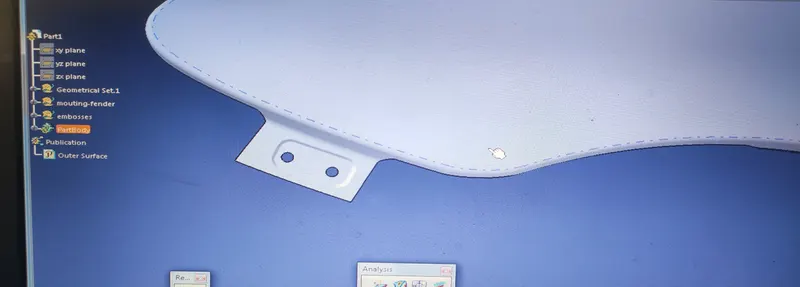
Sill is the panel directly below the bottom of the door supporting the floor and may used to combine the floor and the body. The bottom end of the fender is mounted on the sily body for reinforcement of the fender panel Thus the sill mounting position is designed with holes and emboss. M5 Fasteners are used to fix the fenders on the sill body.

DESIGN OF MOUNTING BUMPER AREA:
Bumper Mounting area is used to fix the plastic bumper to the fender with the help of the fasteners.
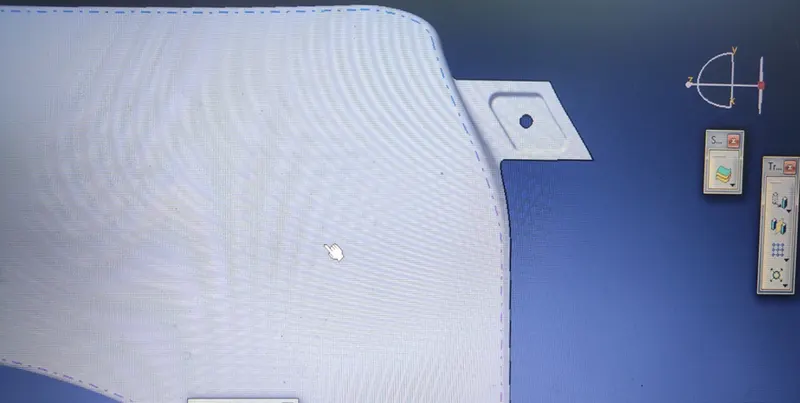
DESIGN OF A PILLAR MOUNTING AREA:
It is the structural pillar that combines the body to the roof. This makes this sides of the windshield rest.
Front fenders are fasterened to the A pillar mounting area to form the robust structure.
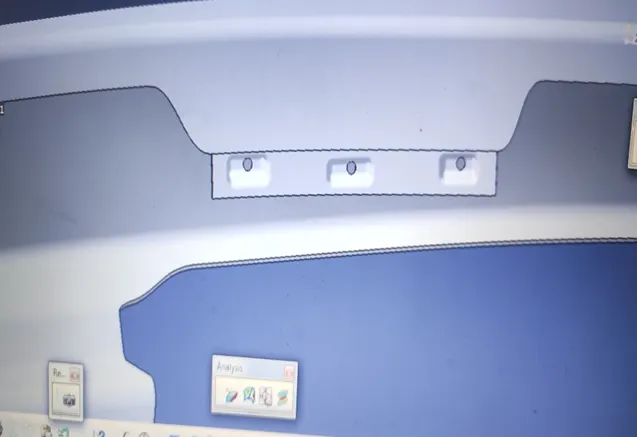
DESIGN OF BAFFLE MOUNTING AREA:
Baffle Mounting or mudguard are clip type of mounting of the inner side of the fenders arch over the tyre. It protects the car engine departments and pedestrains from causing injuring from chip out debris on the road when the car is in motion. They are mounted on the fender using a special type of locking clips of which are made up of plastics.
APPLYING THICKNESS TO THE SURFACE:
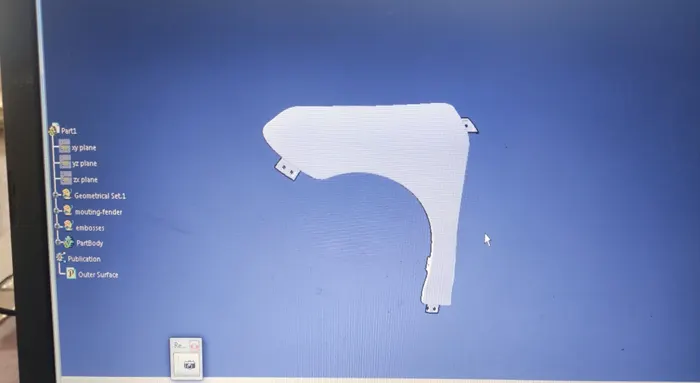
The thickness of 0.75mm inward of the sewed surface of the fender to the sheet metal parameters.
PURPOSE OF FENDER:
CLEANLINESS: Protect the car, occupants, and passes by from items, water, mud, snow, ice, thrown off the tyres as you drive.
SAFETY : Protects pedestrains from the wheel, eg. Its better to be it as a laterally moving fender than a rolling tyre, keeps loose and streaming items from being wrapped up in a rolling wheel.
AERODYNAMICS : Smooths the car profile so you dont get a lot of drag off the uncovered wheels, Some fenders are enclosed on the side for this.
GENERAL APPEARANCE : Looks better with the fenders, gives a finished look, looks more streamlined.
CONCLUSION:
Thus, all mounting areas for the fenders designed from skin data and master section is done by following all design rules.