Fender Design
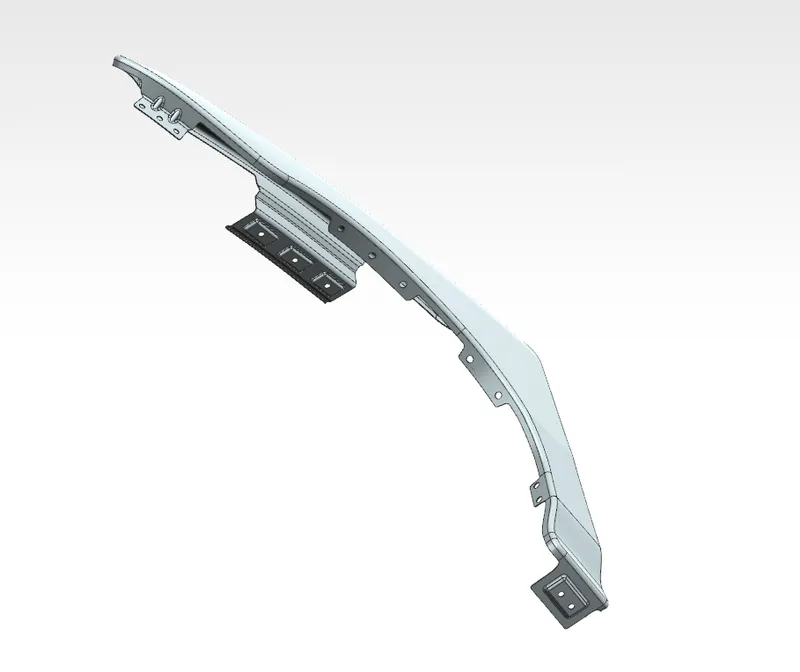
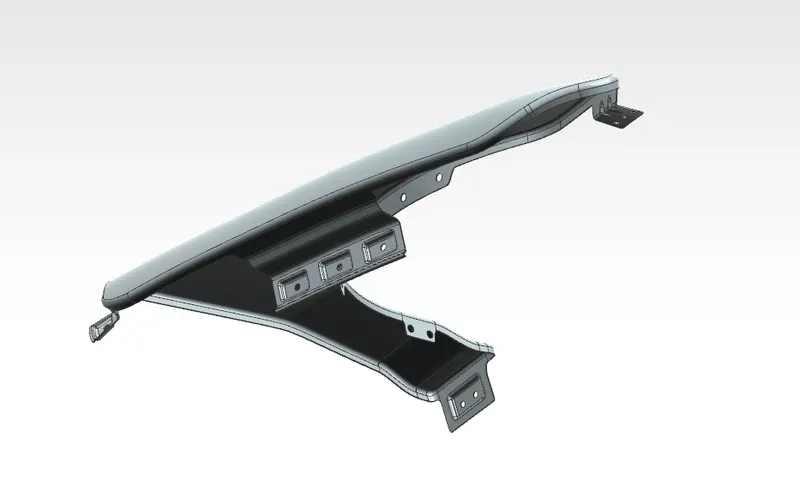
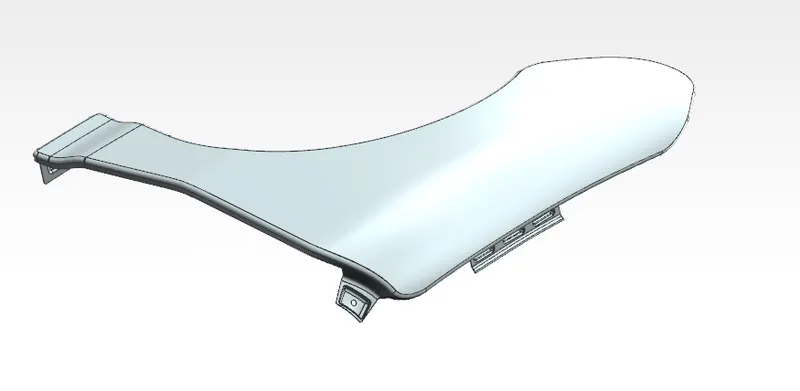
AIM : To design a front fender of a car by following the given master section as per the design considerations of OEM.
Fender
A fender is the curved portion of the car's body that sits over and houses the wheels.The purpose of a fender is pretty simple. Its purpose is to keep mud, rocks, and other road debris from being thrown around by the tires. In other words, the fender is a housing for the wheels that keeps road debris contained. If there was nothing covering the wheels, all kinds of debris would be kicked up by the rotating tires.
Advantages of Fenders
- Protect the car, occupants and passers by from items, water, mud, snow, ice, thrown off the tires as you drive.
- Prevents loose, flowing objects from being caught in a rolling wheel and shields pedestrians from the wheel.
- Reduces drag from the exposed wheels by smoothing the car's profile. For this, some fenders have side enclosures.
- Looks more sleek, gives off a polished appearance, and looks great with a fender.
Types of Fenders:
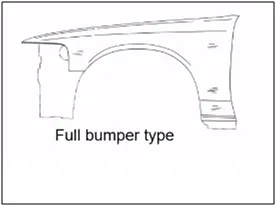
Full Bumber Type:These fenders were a common feature of previous car models. By only covering the front headlamps in relation to the bumper area, they significantly increase the steel weight. The issue with this type of fender is that the blank is wasted a lot, and the industry pays for every inch of material used.
Half Bumber Type:These fenders are primarily used to decrease costs and reduce the proportion of steel used on the vehicle, which helps to lighten the weight of the car a little. By significantly expanding the blank size, we can make two fenders at once, making their production economically feasible.
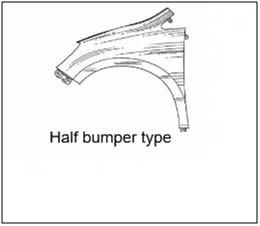
Fender Design:
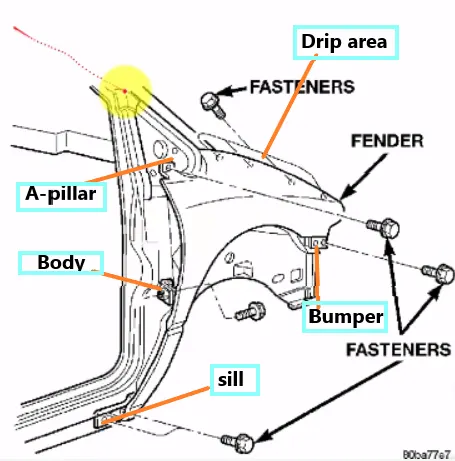
We need design all the above mentioned mounting regions.Master section is given below
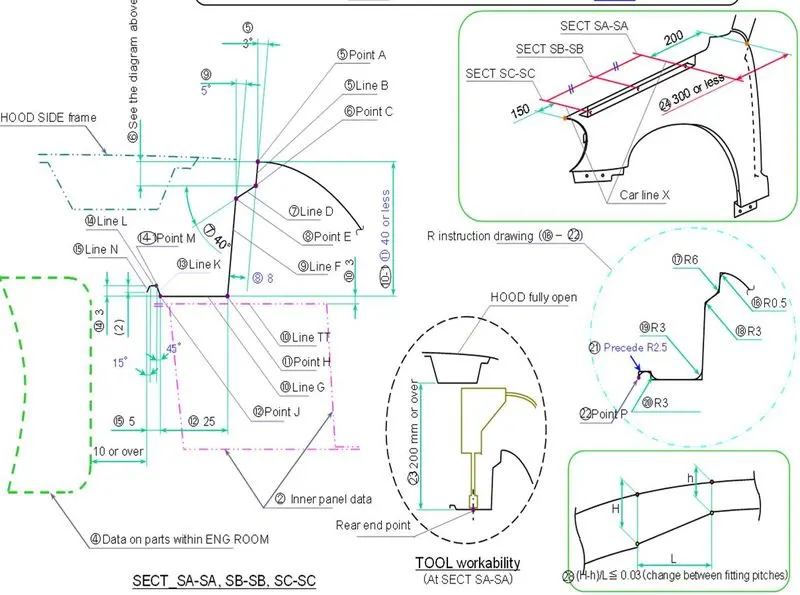
Mountings
1.Drip Area Mounting
It is the crucial component that holds the fender in place. The fender must adhere to numerous design restrictions because it is attached to the engine compartment. While designing the drip area we have to initially leave 200-300 mm for cowl top.For placing the headlamp we have to leave at least 150 mm at the front while designing the fender.Wiper motor and associated instruments are located in the cowl top section.In order to give the part stiffness and extra strength, two darts are inserted on the longer side of the drip region. This prevents the fender from vibrating and impacting external forces when the car is moving.Embossing are provided on the mounting to strengthen them during fastening.
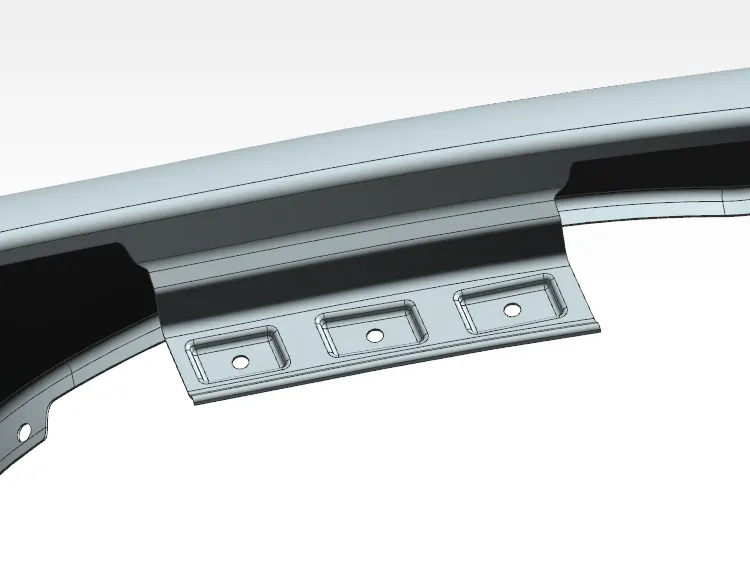
2.Sill Mounting Area
The sill, which connects the floor and the body, is the panel that supports the floor right beneath the bottom of the door. The sill mounting location is built with holes and emboss because the bottom end of the fender is fastened to the sill body for reinforcement of the fender panel. The fenders are fastened to the sill body with M5 bolts.
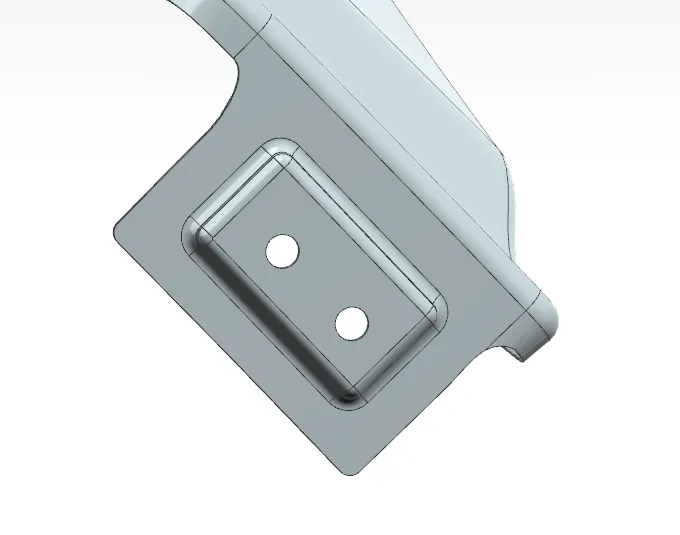
3.Bumber Mounting Area
Bumper mounting area is used to fix the plastic bumper to the fender with the help of the fasteners
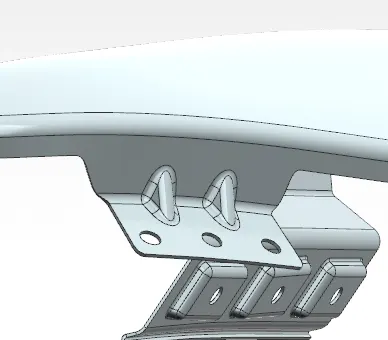
4.A-Pillar Mounting Area
The structural pillar connecting the body to the roof is known as the A-pillar. This causes the windshield's sides to rest. An effective framework is created by attaching the front fenders to the A-pillar.
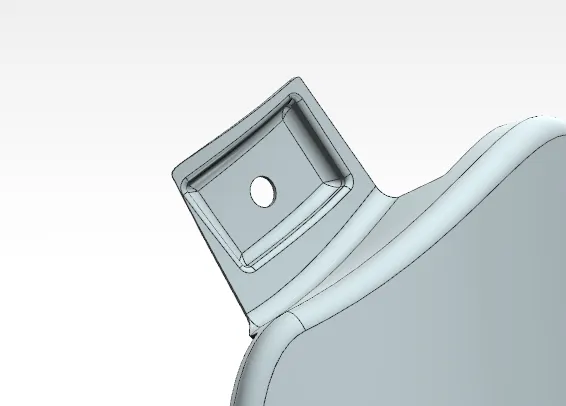
5.Baffle Mounting Area
On the inside of the fender arch, over the tyre, baffle mounting or mudguards are clip-fit mountings. When the automobile is moving, it shields the engine compartment from damage and prevents pedestrians from getting hurt by road debris. Using a unique style of locking clips made of plastic, they are mounted on the fender.
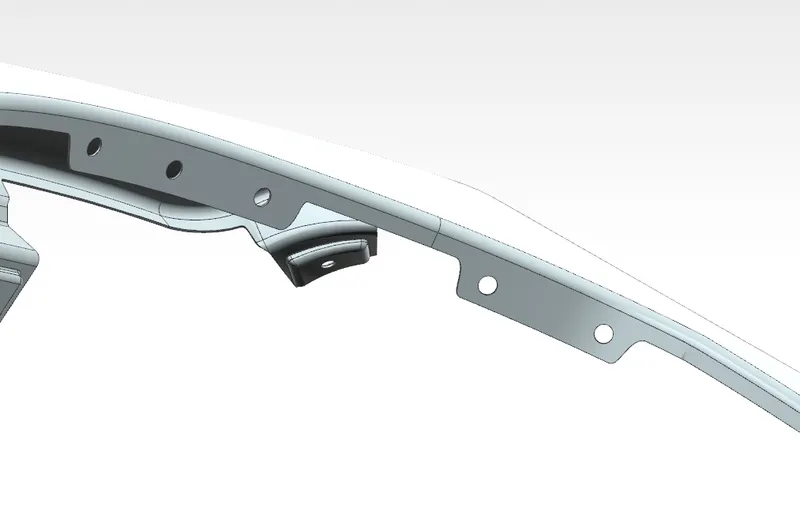
Final Fender Design In Different angles (thickened at .75mm)