Fender Design
AIM:
The aim of these projects is to design the fender and the main design requirements for the Drip area, Bumper, A-pillar, and Sill mounting areas.
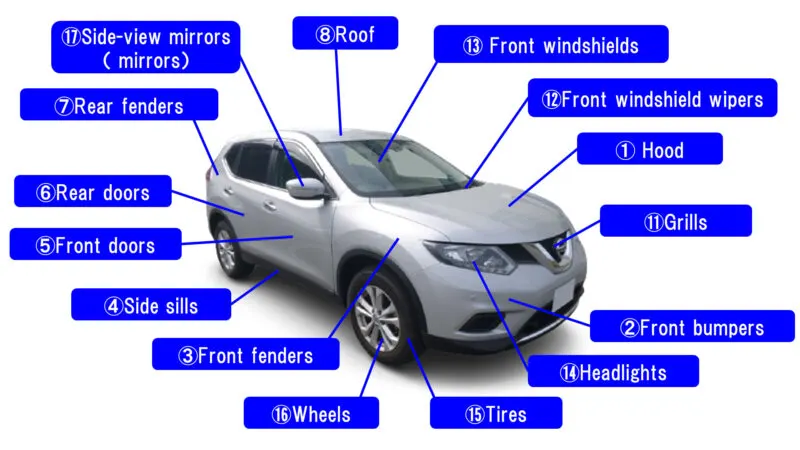
Outer of car :
Fender :
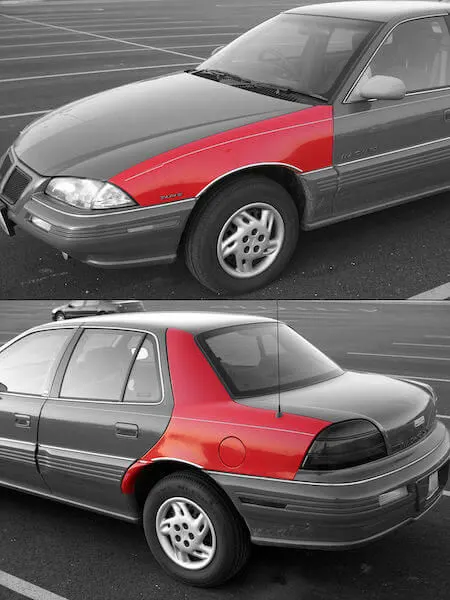
A fender is a front outer side member of a car that covers the wheel side. Fender's purpose is to prevent sand, mud, rocks, liquids, and other particles.
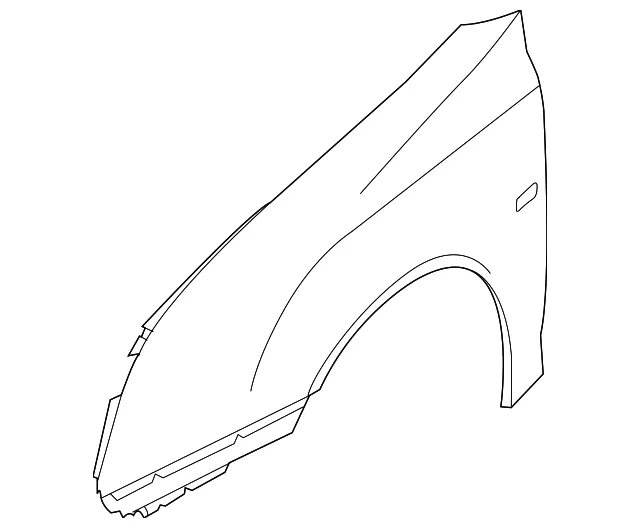
Fender is a closure component, closing the engine compartment and other compartments. The major role of the fender is to avoid chipping inside the engine compartment. During the motion, the wheel picks up sand mud, and small stone particles and throws it inside the car and these fenders will be helpful in preventing them by hitting inside the engine compartment and car body. These fenders will have a plastic part that lies on the wheel arch area. The fender plays a major role to avoid problems for pedestrians also. Fenders are typically rigid and can be damaged by contact with the road surface. It is often also called a Mudguard.
Types of fender :
- Full Bumper Type.
- Half Bumper Type.
Full Bumper type :
It is not used nowadays because they require bigger size blank to produce the part and large scrap is also produced.
Half Bumper Type :
Half bumper types are used in the present and future also because the blank size is less and the wastage or scrap is less compared to full bumper type fenders.
Uses of car Fenders :
- Car Fender limits the exposure of your car's body and engine to external elements that are harmful.
- Fender flares are attached to ensure that both the body and engine have minimal contact with corrosive elements
- Car Fenders provide safety to the driver and the passengers at the time of accidents or collisions. They are manufactured in a way to offer bend during front and side collisions.
- Car Fenders are designed to avoid wind resistance and make your car more aerodynamic.
- Car Fender enhances the overall look of your cars. Fender flares are available in distinctive designs in the market. Mostly you find universal Fender flares, but you can get customized cars Fenders to fit your car wheels.
Areas to be considered while designing a fender :
- Drip area
- Bumper mounting area
- Sill mounting area
- A pillar mounting area
Drip area :
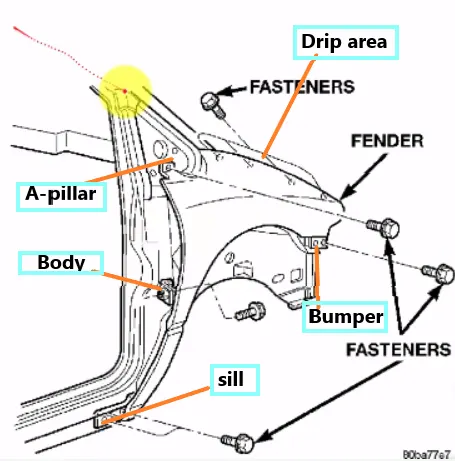
Drip area mounting is an important part of the fender. this mounting is attached to the engine compartment of the car. fender drip area is mounted via walnuts to the engine compartment. a min of 150mm distance is kept from the front side and a distance of 300mm or less can be kept on the rear side. the total length of the drip area from the top of the fender should be less than 40mm, this is to avoid the spring back during the manufacturing. the edge of the mounting should be at least 10mm away from any nearby component in the engine. a rigidity bead is provided at the end to increase the strength of the mounting.
Bumper mounting area :
Sometimes fender is also provided with the cowl area mounting. this mounting is on the top side of the fender.
A-pillar mounting area :
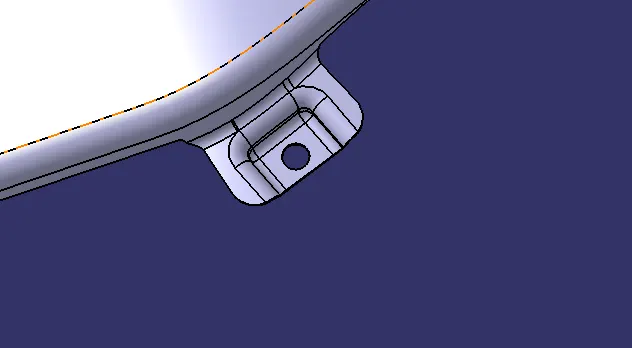
The A-pillar area mounting depends upon the A-pillar of the car. the mounting can also be provided with ribs to strengthen the part. this mounting is critical in design as it has to be mounted on A-pillar properly.
Sill mounting area :
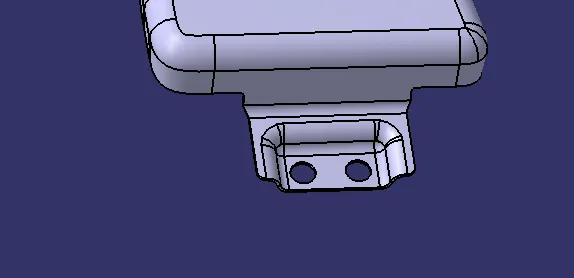
Sill area mounting is also an important mounting part .this mounting point is on the bottom of the fender. the mounting part should be created such that the fender is firmly attached to the sill.
GIVEN FENDER SURFACE:
The side faces of the fender are split to create a mounting surface, to create flanges in drip area, sill mounting, A-Pillar, number, and wheel arch area.
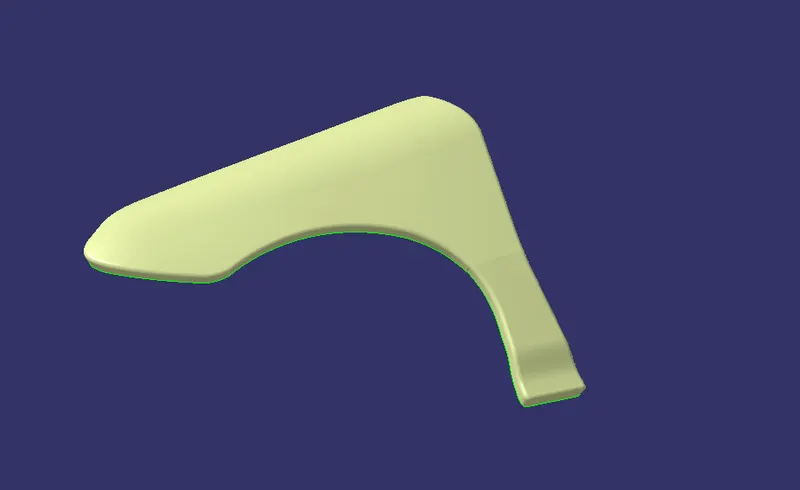
MASTER SECTION FOR DRIP AREA:
Considering the above design constraints we have to design the drip area. Embosses are provided to increase strength, and corners of the flanges are smoothened to ease production. The uniform wall thickness of 0.75mm.
- Design Consideration for drip area is 150 mm distance from the front end of the fender and the gap is filled with a headlamp 200mm distance from the rear end of the fender and the gap is filled with wiper motor assembly.
- Initially, a 3-degree angle and 8-mm length are given while creating a drip area because the engine component should not be visible from the outside.
- The depth of the drift should be between 40 to 60mm. If the depth exceeds 60mm then forming is not feasible due to spring back and wrinkles.
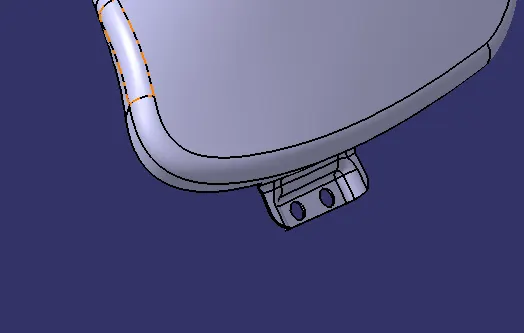
BUMPER
A-PILLAR MOUNTING:
SILL MOUNTING
SPLASH COVER MOUNTINGS:

FINAL OUTPUT