Fender Design
FRONT FENDER
What is fender
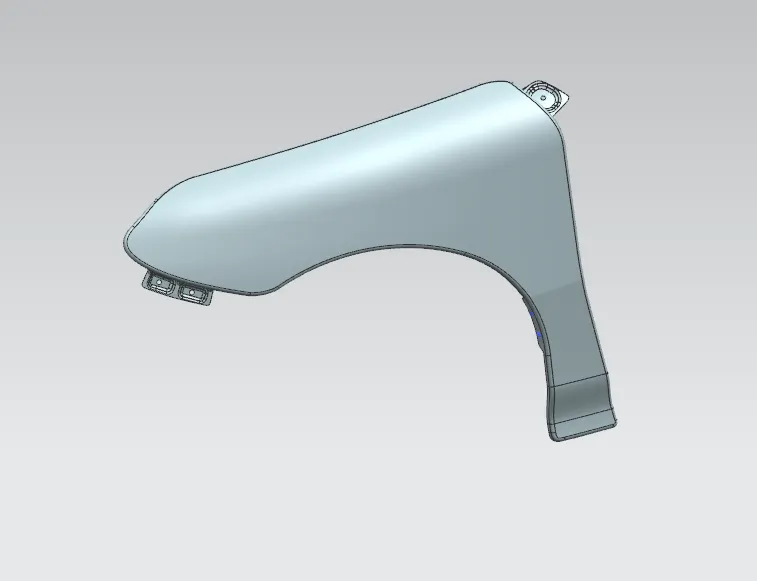
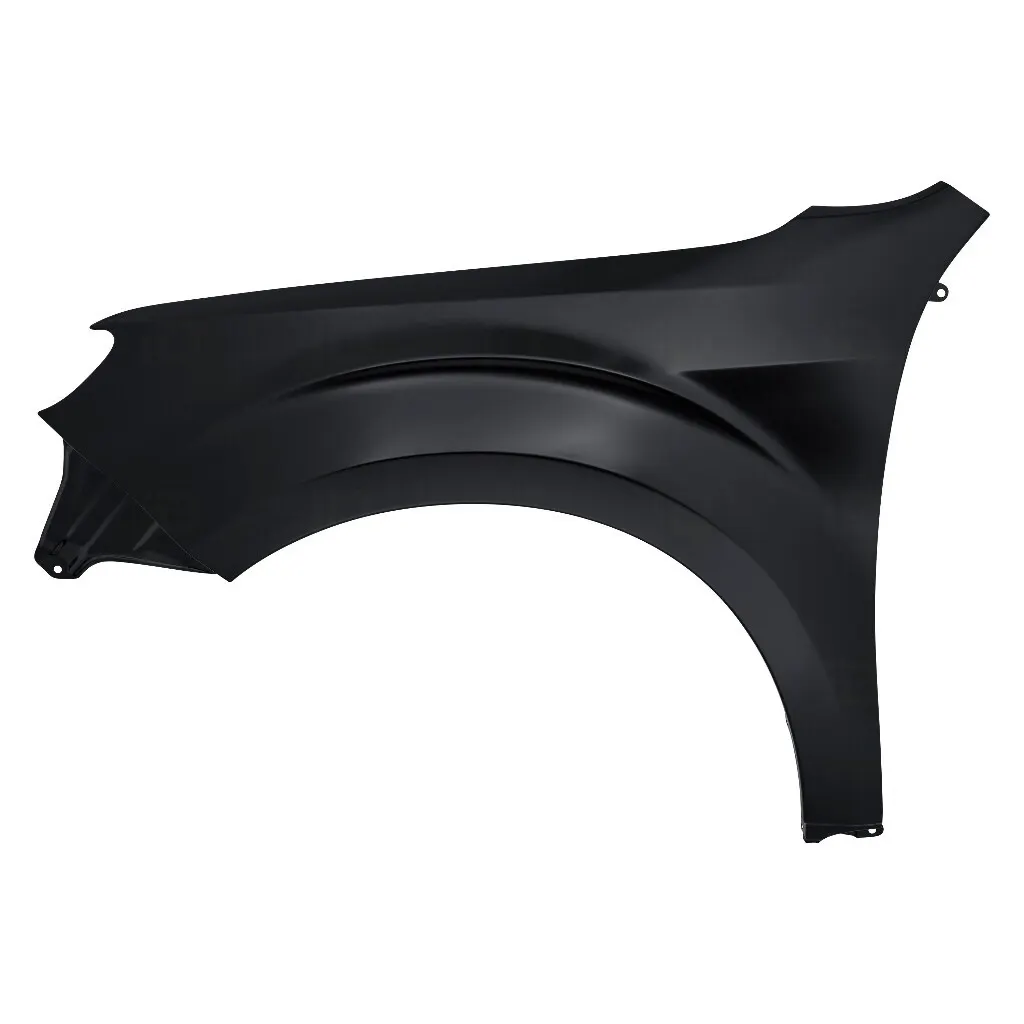
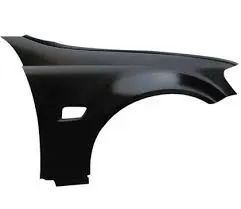
A fender is the part of a car that protects and frames its wheels and keeps mud from splashing it. Its primary purpose is to prevent sand, mud, rocks, liquids, and other road spray from being thrown into the air by the rotating tire. Fenders are typically rigid and can be damaged by contact with the road surface.
Types of fender
1.Full Bumper Type
2. Half Bumper type
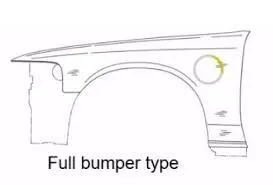
Full bumper type
The full bumper type fender was used in old cars, it covers the full area until the front lighting. But it has a lot of sheet metal material which is unnecessary and increases the weight of the fender. These type fenders are no longer used in the automobiles.
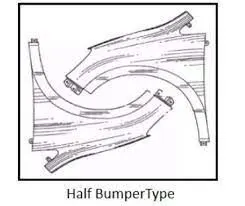
Half bumper type
Half bumper fender is used because the waste of material is less & can produce two fender at the same time by slightly increare the raw sheet. and to reduce the weight & cost mostly bumper fender are been produced.
Fender mountings
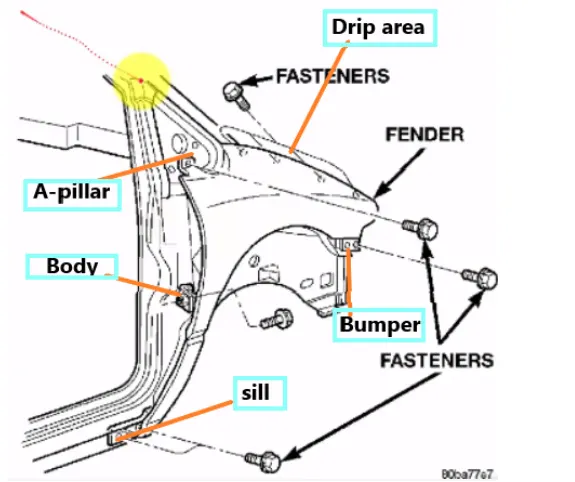
There are five mountings in the front fender. They are
1. Body
2. A piller
3. Sill
4. Cowl
5. Drip area
Important factor to be considered for the fender design. They are known as
1. Drip area
2. Wheelarch area
Drip area
It is the area through which fender is attached to engine housing through fasteners. There should be some consideration followed to design the drip area of fender. From back side of front fender, there will be 200mm clearance for cowl(wiper motor) mounting area.
Wheelarch area
The wheel arch is an arch-shaped cavity in the body of a vehicle, which houses a wheel. It has two important functions. It serves for the safety of pedestrians and other cars because the wheel is situated in the body of a vehicle. The second function is to protect the car from the sticky materials, such as mud, may adhere to the smooth outer tire surface, while smooth loose objects, such as stones, can become temporarily embedded in the tread grooves as the tire rolls over the ground. These materials can be ejected from the surface of the tire at high velocity as the tire imparts kinetic energy to the attached objects. For a vehicle moving forward, the top of the tire is rotating upward and forward and can throw objects into the air at other vehicles or pedestrians in front of the vehicle.
Types of wheel arch regulation
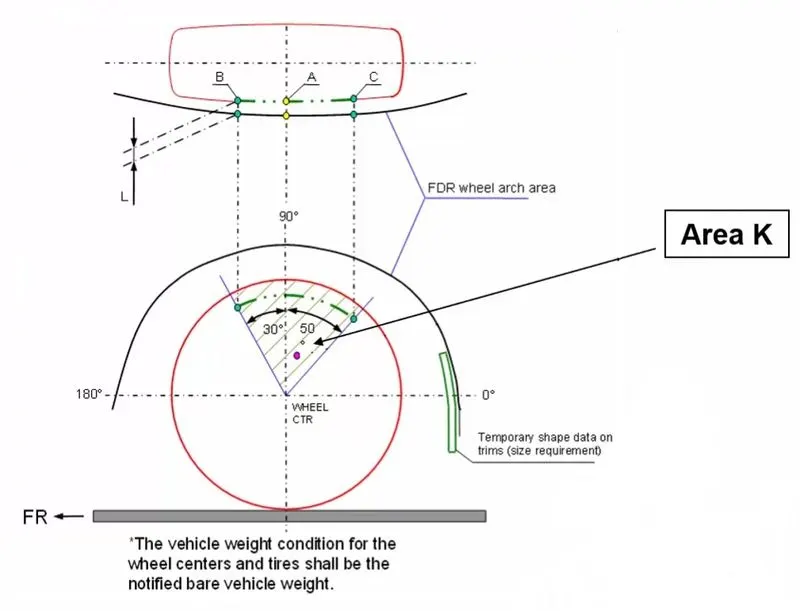
1. JAPAN REGULATIONS
- Measure clearance L of tire ,hub, cap & fender in three different positions within area K and produce clearance check chart to validate.
- Clearance must be greater than 5 mm in all the three positions.
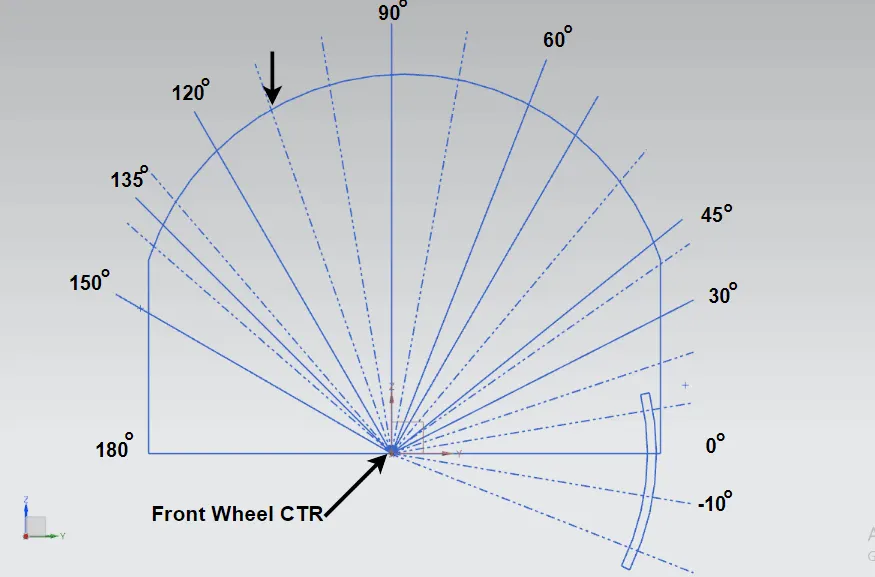
- Wheel guard reqmt: The value of a shall be more than 5 mim at a line 30" forward and 50 rearward from the central vertical axis of axis of wheel.
2. EUROPEAN REGULATIONS
- Measure CL L at sections SA-SA SB-SB SC-SC SD-SD SE-SE and produce CL check chart to validate.
- At all five sections the CL L value should be greater than 10 mm to satisfy the European regulations.
- Wheel guard regmt: The value of 'a shall be more than 5 mm at a line 30* forward and 50* rearward from the central vertical axis of axis of wheel.
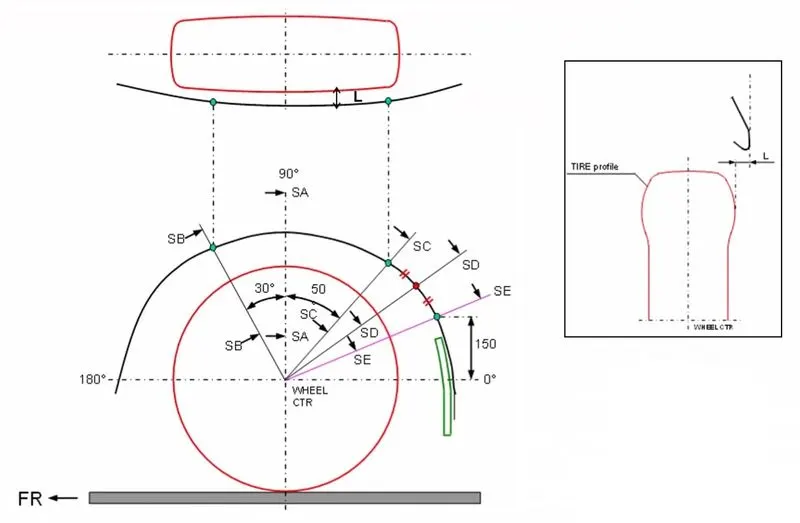
3. US REGULATIONS
- Measure CL L at sections SA-SA SB-SB SC-SC SD-SD SE-SE and produce CL check chart to validate.
- At all five sections the CL L value should be greater than 10 mm to satisfy the European regulations.
- Wheel guard regmt: The value of 'a shall be more than 5 mm at a line 30* forward and 50* rearward from the central vertical axis of axis of wheel.