Fender Design
AIM
Design fender with all kinds of mounting according to the given data.
Objective
1. Design Drip Area,
2. Design Sill Mount Area
3. Design Body Mount Area
4. Design Bumper Mount Region and A-pillar mount Region.
INTRODUCTION
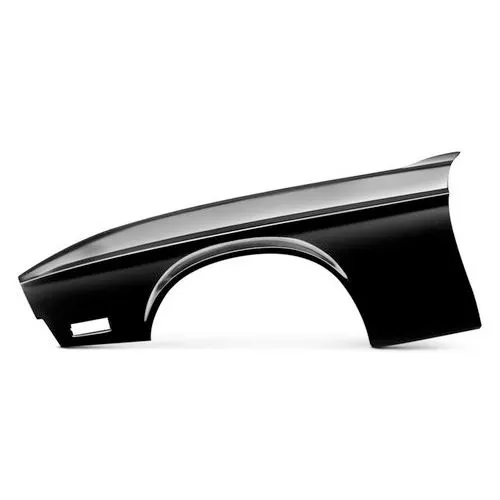
Fender is the part of an automobile, motor cycle or other vehicle body that frames a wheel well (the fender underside). Its primary purpose is to prevent sand, mud, rocks, liquids, and other road spray from being thrown into the air by the rotating tire. Fenders are typically rigid and can be damaged by contact with the road surface.
Sticky materials, such as mud, may adhere to the smooth outer tire surface, while smooth loose objects, such as stones, can become temporarily embedded in the tread grooves as the tire rolls over the ground. These materials can be ejected from the surface of the tire at high velocity as the tire imparts kinetic energy to the attached objects. For a vehicle moving forward, the top of the tire is rotating upward and forward, and can throw objects into the air at other vehicles or pedestrians in front of the vehicle
Most passenger automobiles have four fenders, one over each wheel. For vehicles with a narrow car body that exposes the tire, the fender is an exposed curve over the top of the tire. For wide body vehicles that cover the tire, the fender forms the wheel well surrounding the tire, and is not directly visible from above the car body.
Wheel wells tend to be much larger than the diameter of the tire, because they do not move with the tire suspension and consequently must be large enough to allow the full range of tire motion on the suspension without touching the interior of the wheel well.More elaborate designs include fender skirts for enclosing the outside edge of the wheel well, and stylized pontoon fenders for exposed fenders.
MANUFACTURING PROCESS
A car Fender bumper is made by a process called reaction injection molding (RIM), which basically consists of making a special polyurethane compound and introducing it into a large fender. RIM is a process that conserves raw materials and reduces costs. It is similar to injection molding except thermosetting polymers are used, which requires a curing reaction to occur within the mold. Common items made via RIM include automotive bumpers, air spoilers, and fenders.
TYPES OF FENDER
- Full Bumper type
- Half Bumper type
MOUNTING
1. Bumper
2. Drip
3. A Pillar
4. Sill
5. Cowl
Data provided for designing fender
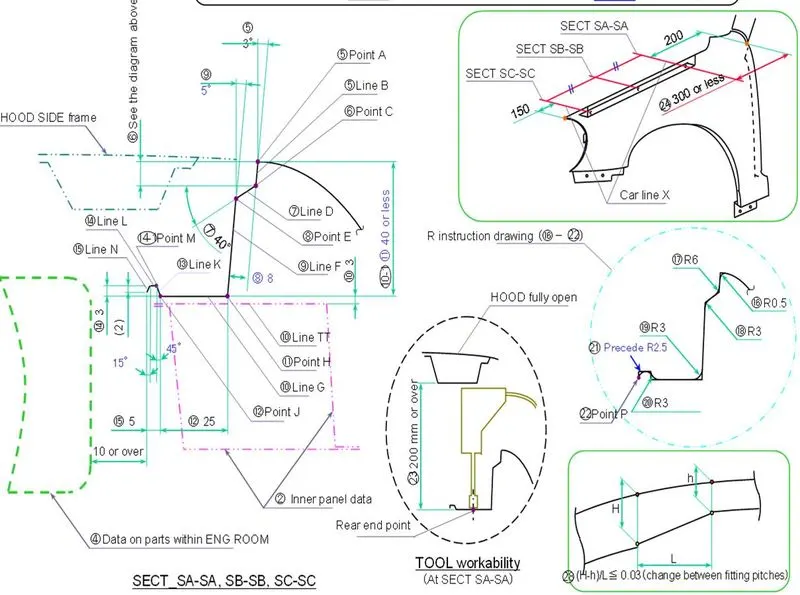
Thickness of the sheet metal is 0.75
- Given class A surface of fender.
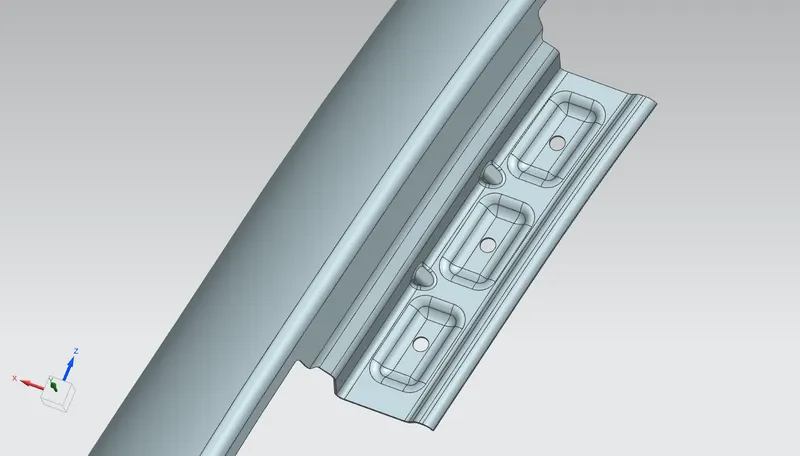
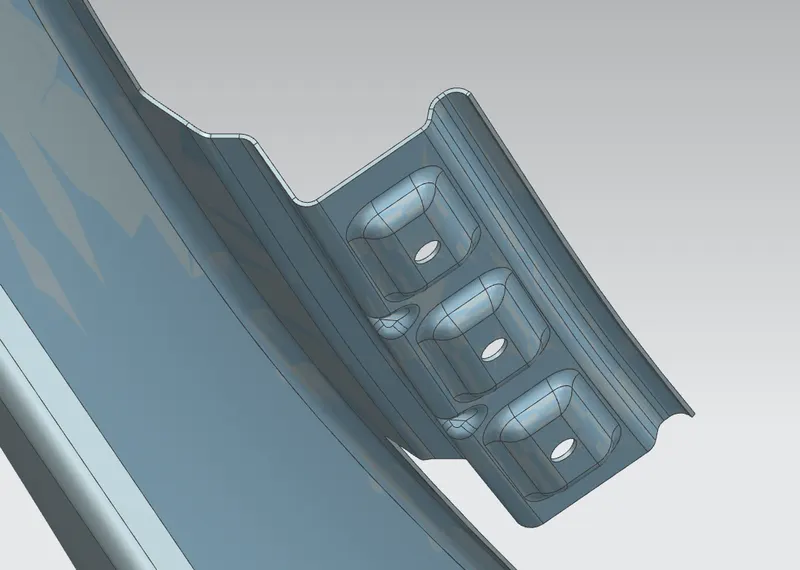
DRIP AREA
• It is the area which the fender is to be attached to engine housing through bolts. There are some standards to design the drip area, from the backside of the fender there should be 200mm clearence for cowl mounting and from the front the side the clearence should be 150mm for the head lamp.
• Considering the above design wen have to design emboss, holes to attach the fender to housing & some stiffners to provide strength to the drip area.Engine components should not be visible from outside for this we have purposely given 3 degree of angle and 9mm length is given.
SILL MOUNTING
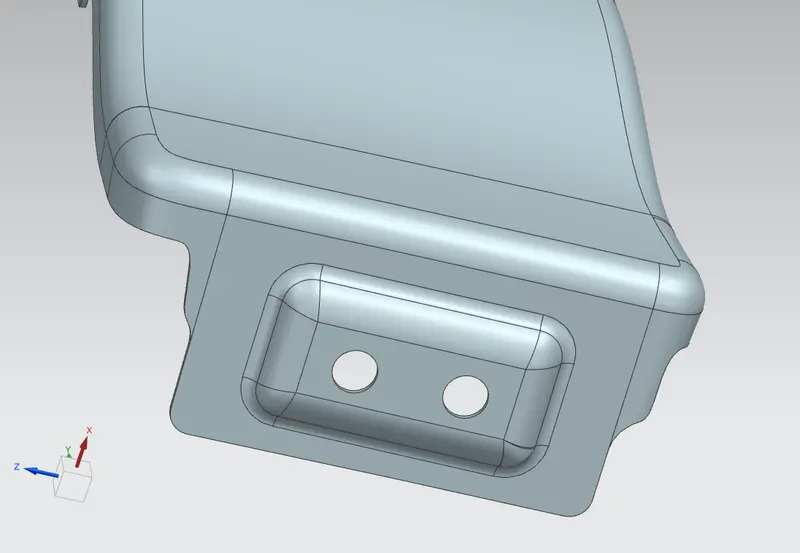
This mounting is use to link the fender with the sill (underside of the door) of the car. Emboss & holes are given to attach the fender to sill.
BUMPER MOUNTING
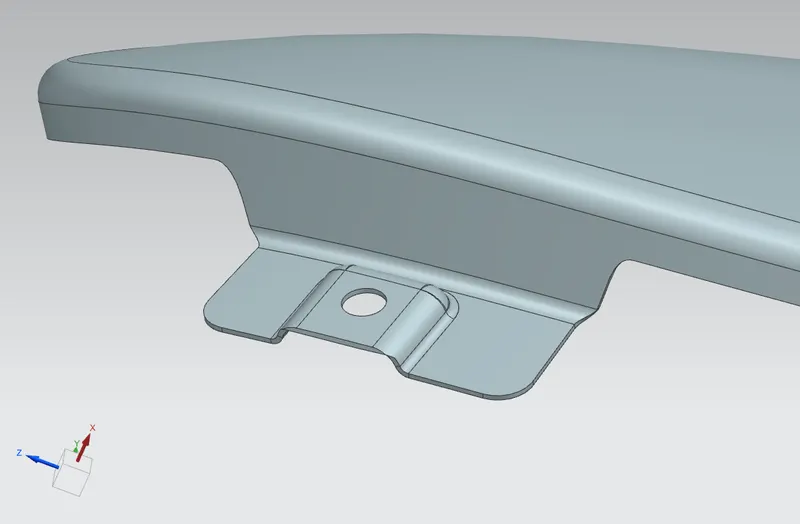
A mounting area of the fender to bumper. Bumpers are usually made of plastic which covers the front of the car & protect it at time collisions. Emboss & holes are given to attach the fender to Bumper.
A-PILLAR MOUNTING
The mounting of this area is a joint where we have to ensure that the hole provided for mounting the fender shouldn't affect the clearance at the joint and the aesthetics of the vehicle.
and also provideing the single hole to reduce the complexity while mounting.
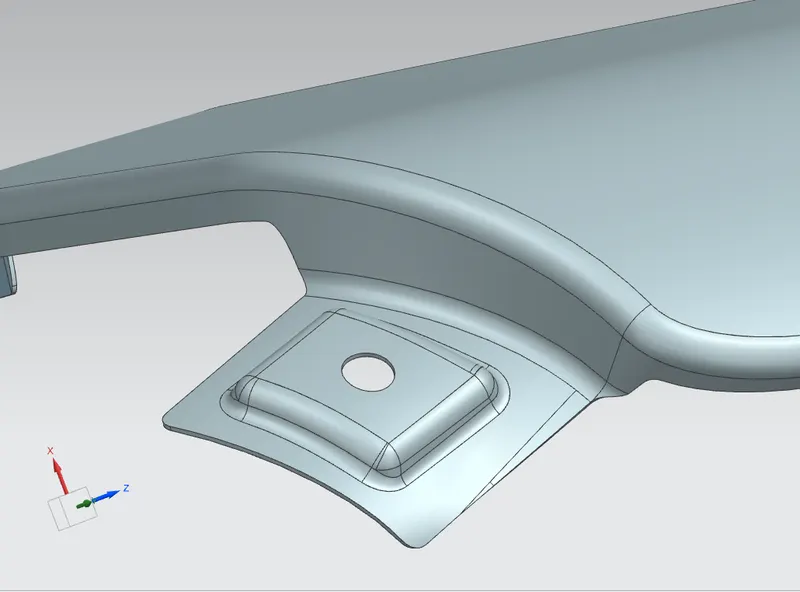
SPLASH COVER MOUNTING
There are additional holes are provided to support the fender lining, it is a Plastic which is used as a barrier between fender & outside particles, dust, rocks Plastic cover is used to protect the dust & rock and it is mounted on Fender via Trim clips.
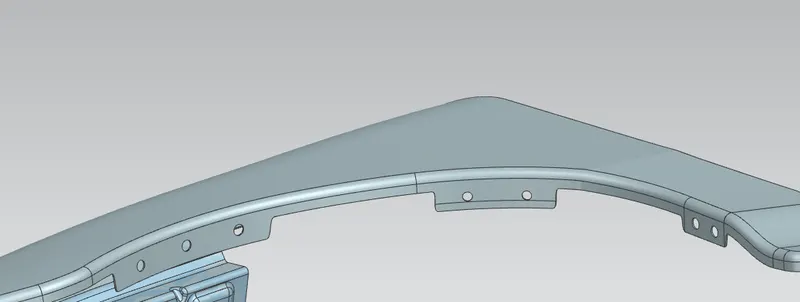
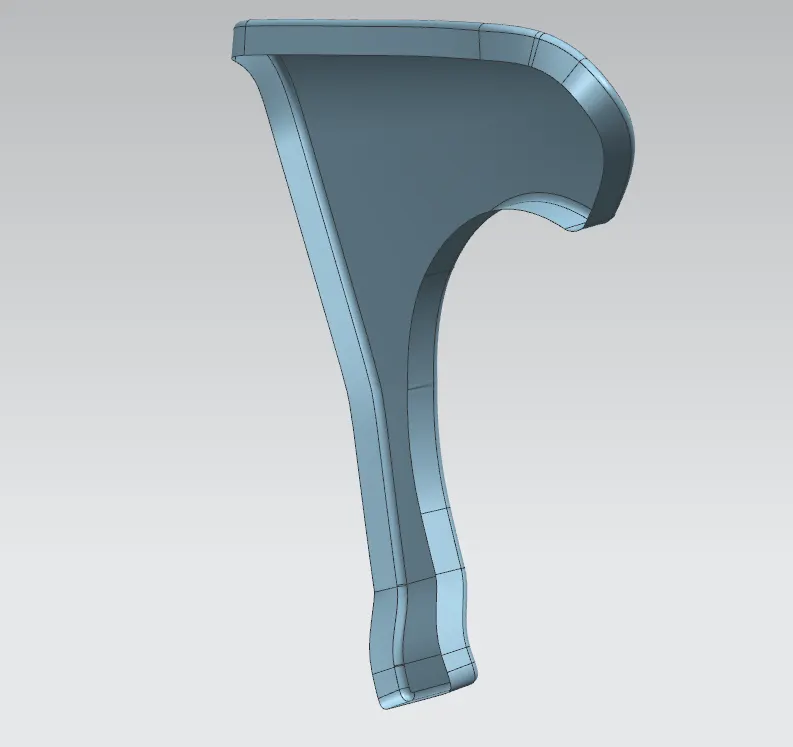
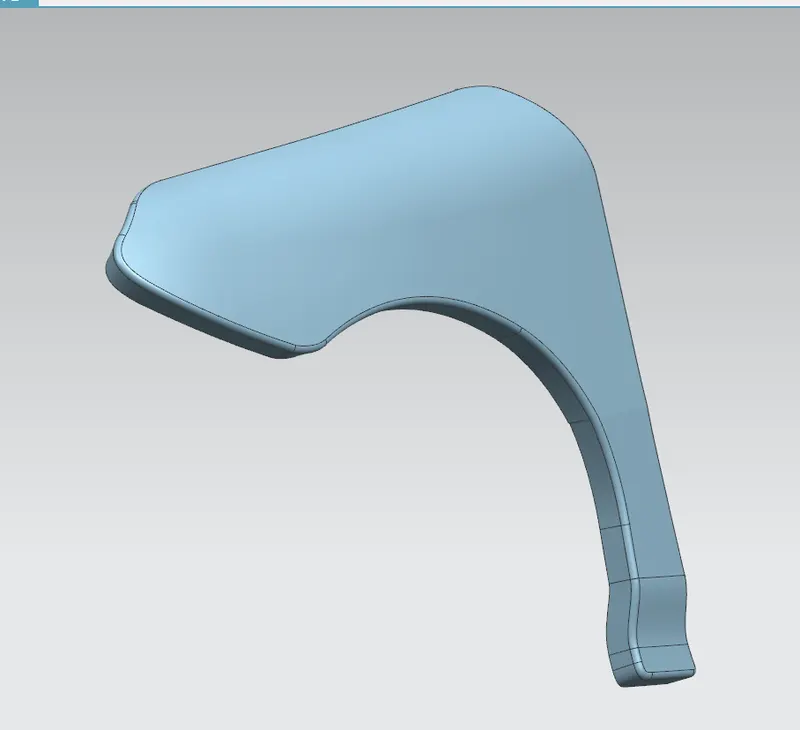
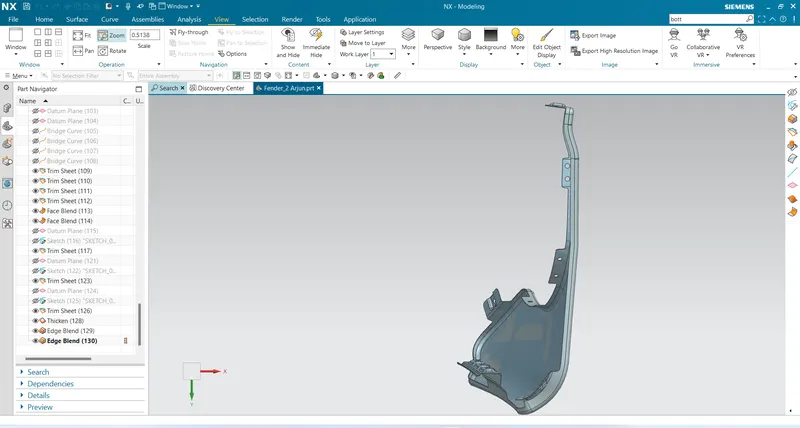
ISOMETRIC VIEW OF FENDER
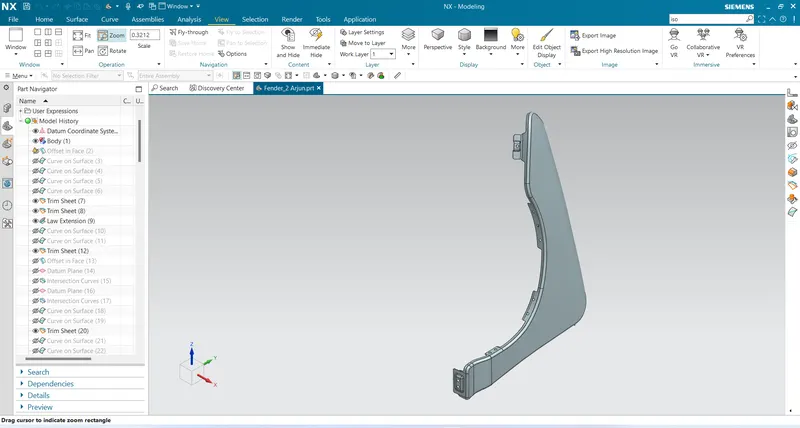
OTHER VIEWS OF FENDER
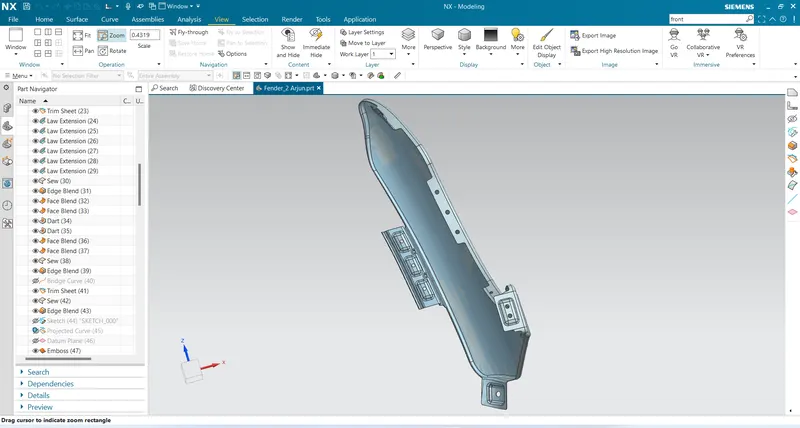
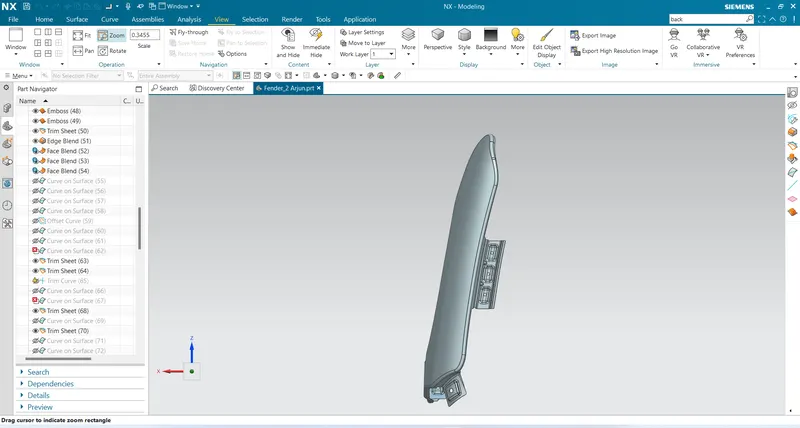
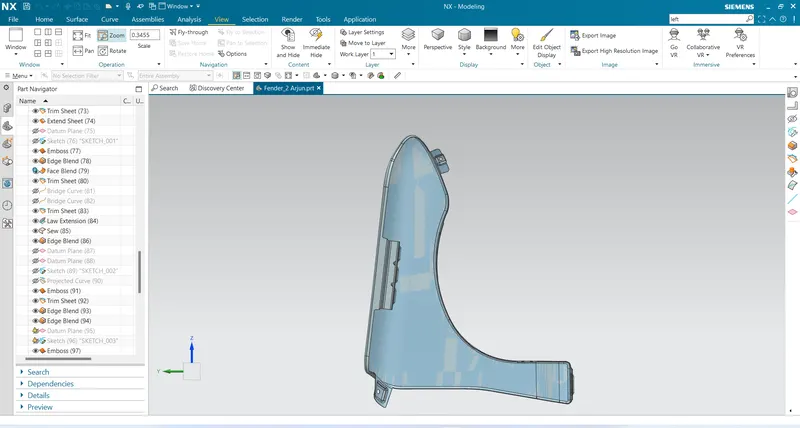
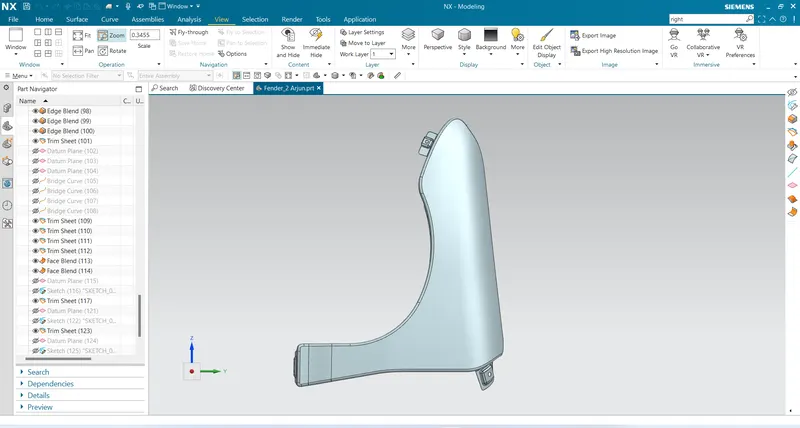
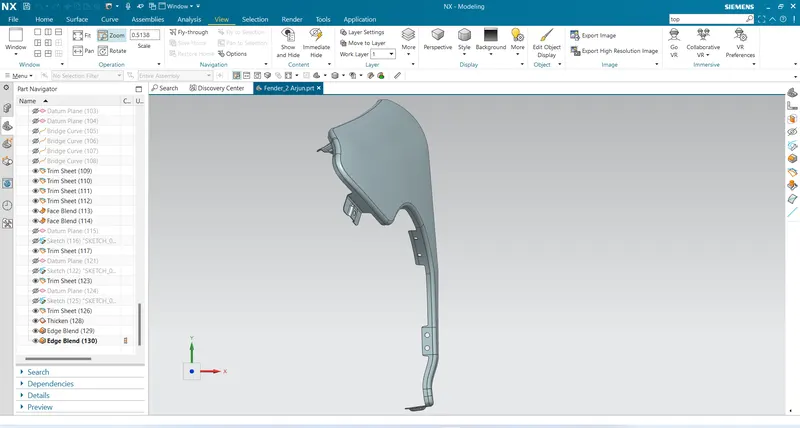
CONCLUSION
Fender Design in completed by using UG NX. and satisfying all the requirments with the given data.