Fender Design
Objective
To design various mounting points on the fender, according to the design parameters.
Fender
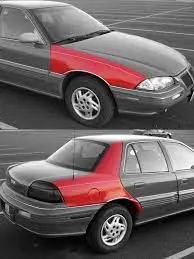
Fender is the US English term for part of an automobile (vehicle body of car) that frames the wheel well (the fender underside). A fender is the part of an automobile which may be a car, motorcycle or any other vehicle body which frames the wheel. The primary purpose of this part is to prevent mud, rock, sand, or other road sprays from being thrown into the air by the rotating tire. Fenders are typically rigid and can be damaged by contact with the road surface. Sticky materials, such as mud, may adhere to the smooth outer tire surface, while smooth loose objects, such as stones, can become temporarily embedded in the tread grooves as the tire rolls over the ground. These materials can be ejected from the surface of the tire high velocity as the tire imparts kinetic energy to the attached objects. For a vehicle moving forward, the top of the tire is rotating upward at and forward and can throw objects into the air at other vehicles or pedestrians in front of the vehicle. This may cause injury to the pedestrians and also damage other vehicles which are nearby to avoid this Fender is provided on the top of the wheel which covers the wheel well and avoids all the road stuff to be thrown into the air.
Fender is one of the styling components which is exposed to customer front which cannot be welded. Most of the assembling joining is done using fasteners, retainer clips and proper fitting.
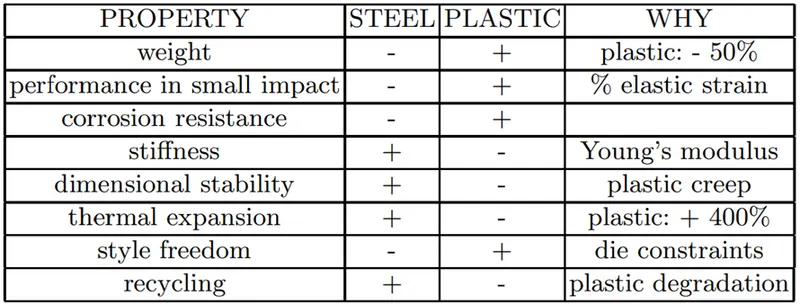
Fenders are either made of steel or thermoplastics.
Steel versus Plastic Fenders
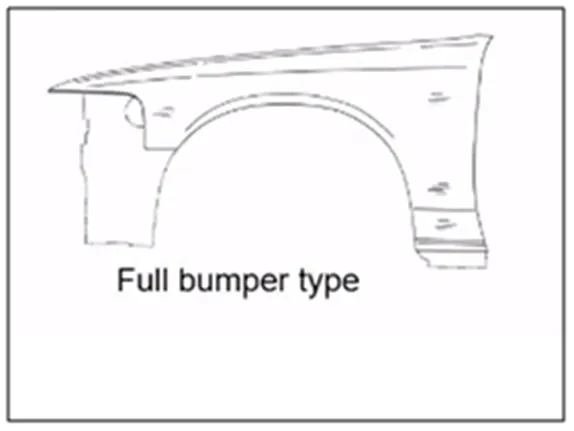
Types of Fenders
Full Bumper type
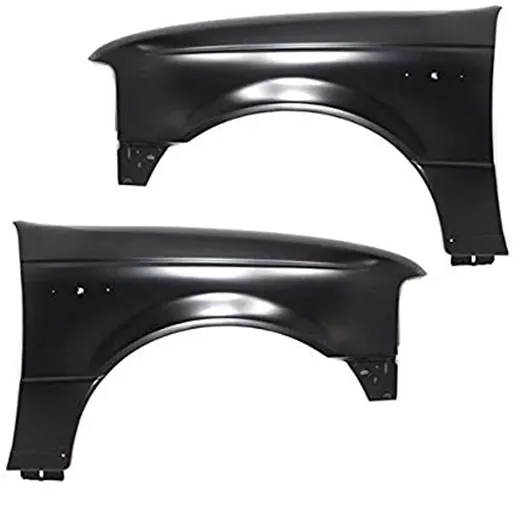
Half Bumper type
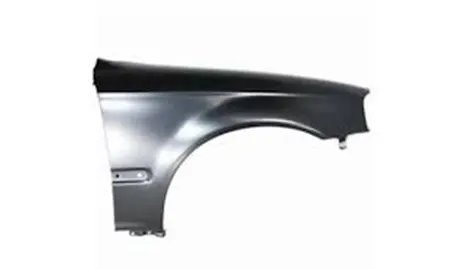
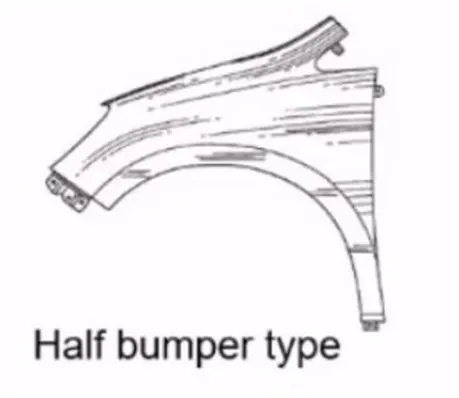
Mounting Points of Fender
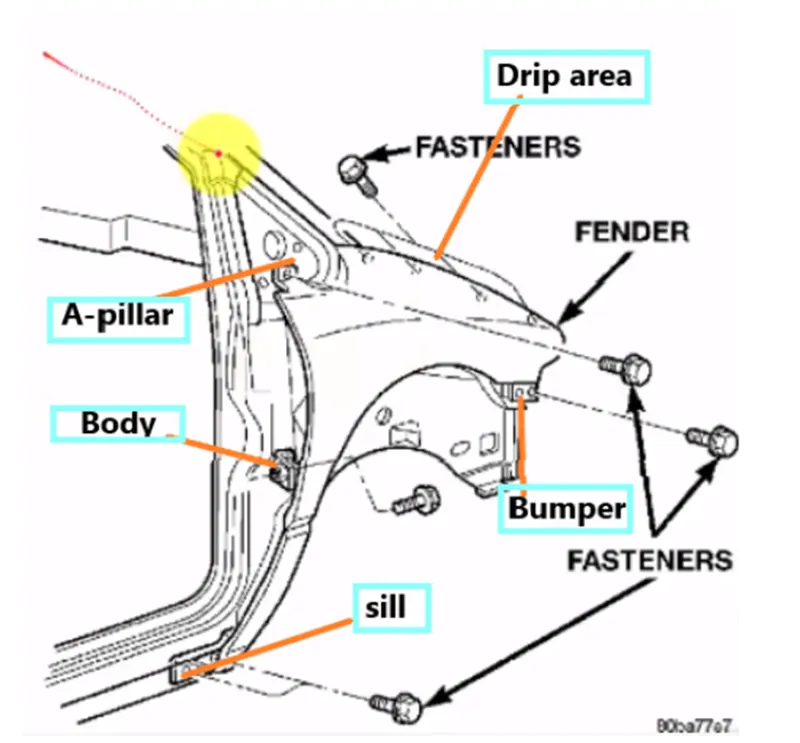
A-Pillar
Bumper
Sill
Drip Area
Splash Cover / Wheel Well
Drip area
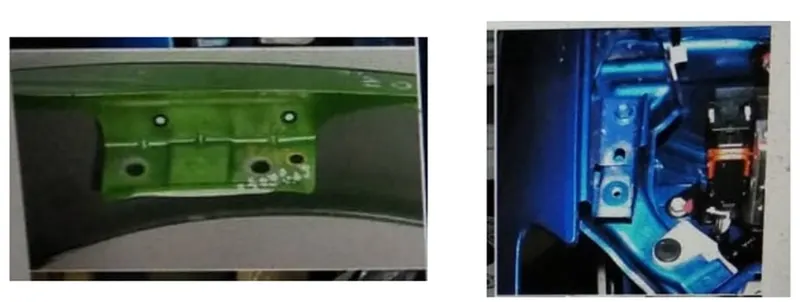
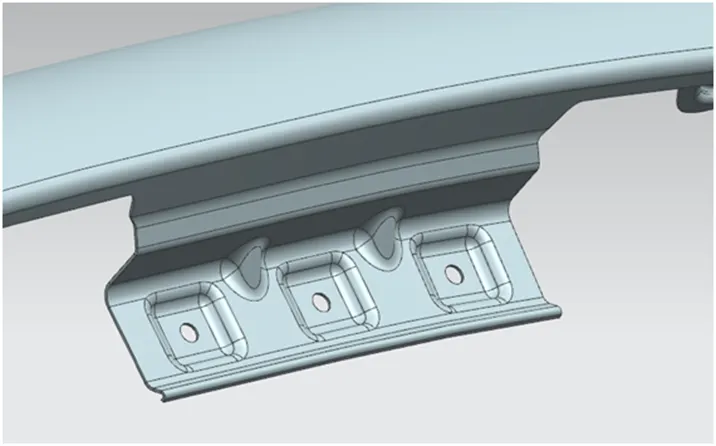
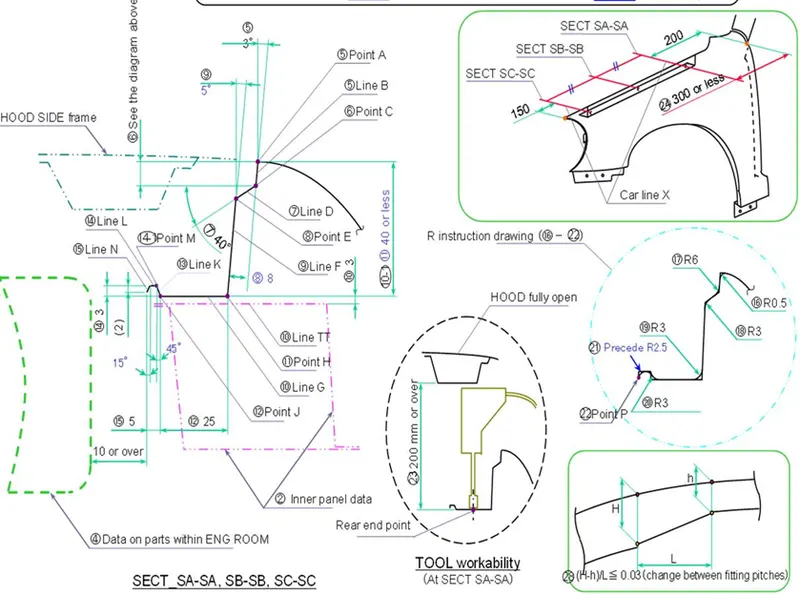
Drip area mounting is the important part in the fender. this mounting is attached to the engine compartment of the car. fender drip area is mounted via weldnuts to the engine compartment a min of 150mm distance is kept from the front side and a distance 300mm or less can be kept on the rear side. the total length of drip area from the top of fender should be less than 40mm, this is to avoid the springback during the manufacturing. the edge of the mounting should atleast 10mm away from any nearby component in the engine. a rigidity bead is provided at the end to increase the strength of the mounting.
A-pillar area
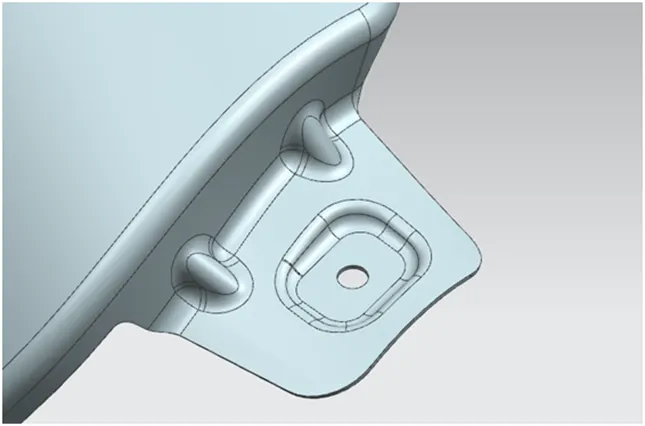
The A-pillar area mounting depends upon the A-pillar of the car. the mounting can also be provided with ribs to strengthen the part. this mounting is critical in design as it has to be mounted on A-pillar properly
Body side area
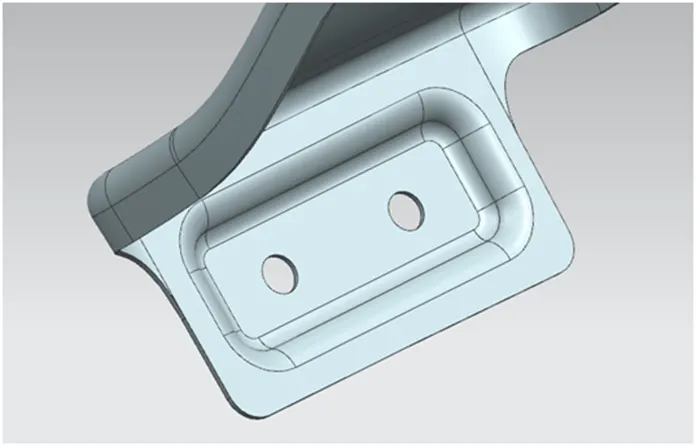
Another mounting point is created for the body side on the fender. this mounting is created such that it can be mounted on the body of he car. it may consist of one or two bolting holes
Sill area
Sill area mounting is also an important mounting part this mounting point is basically on the bottom of the fender. the mounting part should be created such that the fender is firmly attached to the sill.
Cowl area
Sometimes fender is also provided with the cow area mounting. this mounting is on the top side of the fender.
Design Data provided
Master Section given
Design of Fender
The main objective here is to design Drip area, Bumper mounting region, Sill mount region, A-Pillar mount region and Splash cover or wheel well mount regions for the given fender skin or styling surface.
Design Considerations
Embosses are provided to increase strength.
The corners of the flanges are smoothened to ease the producibility of part.
Fillet of 2-3mm is provided to avoid sharp corners and edges.
Cut outs are provided at certain regions in order to save material as possible.
Uniform wall thickness of 0.75 mm is maintained.
RESULTS
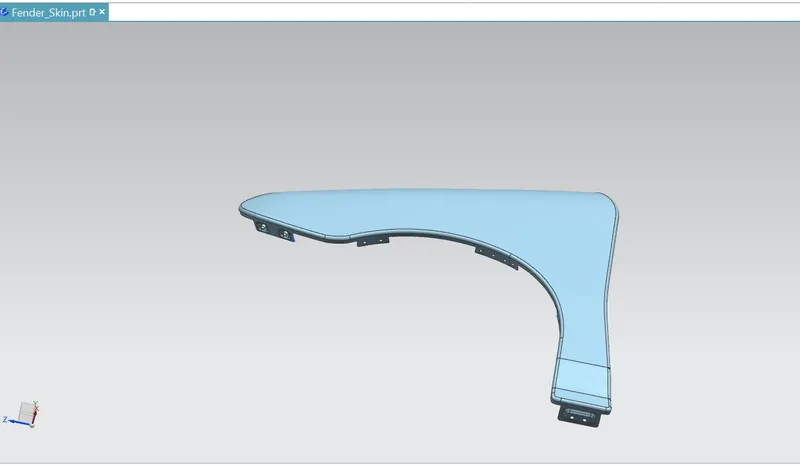
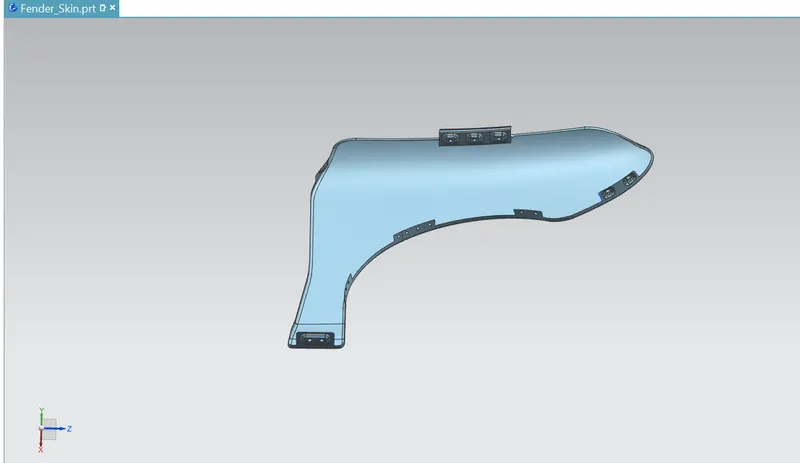
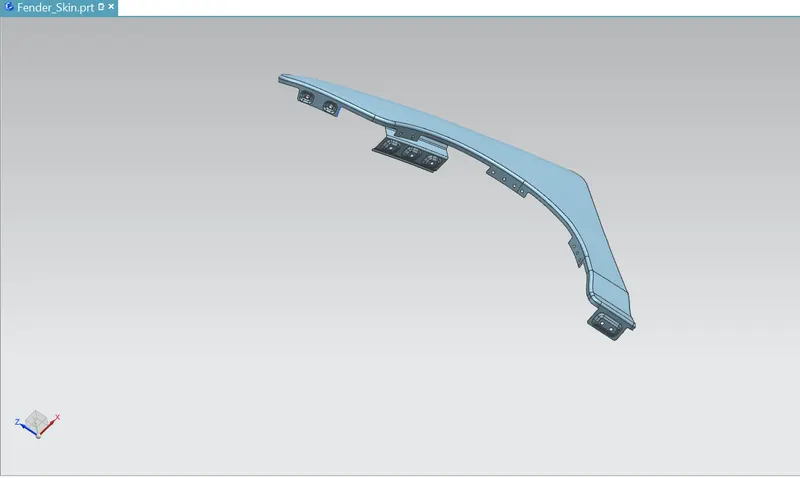
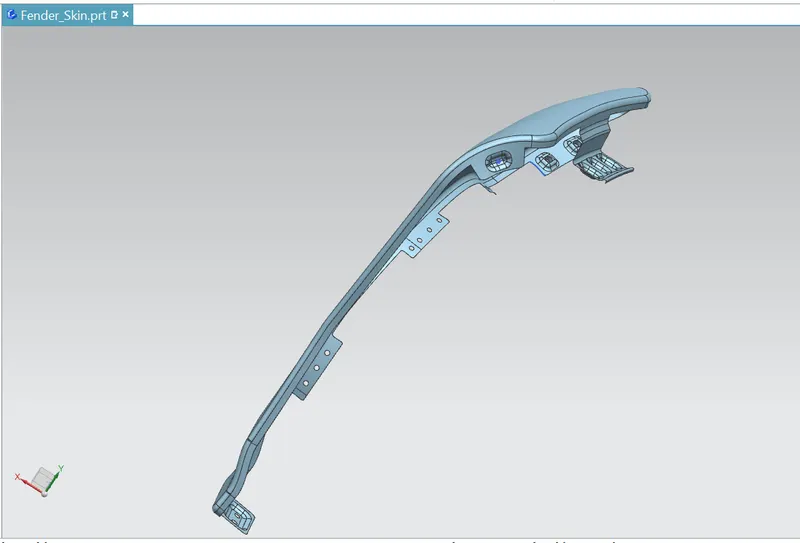
CONCLUSION
Finally design of fender is done with the help of NX-CAD software by following the master section.