Fender Design
Objective
To design various mounting points on the fender, according to the design parameters.
Introduction
Fender
Fender's purpose is to prevent rocks, mud, sand, liquids from being thrown into the air or on to the pedestrians by a rotating wheel. Fender is made aerodynamic in shape to reduce the air drag.
There are two types of of fenders
1. Full Bumper Type.
2. Half Bumper Type.
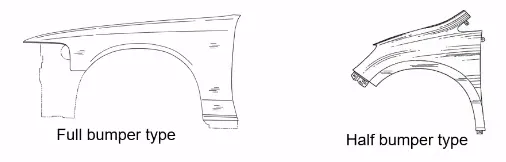
Full Bumper type
This type of fender is used in olden days, it is no more in use due to its heavyweight of the structure and consumes more raw material in manufacturing.
Half Bumper Type
Half Bumper Type fenders are widely used now, due to its mini size and the scrap or wastage is less compared to the full bumper type.
Manufacturing process
The manufacturing of the fender majorly involves these operations.
1.Embossing
2.Bending
3.Cutting and Blanking
Embossing
Embossing is a metal forming process for producing raised or sunken designs or relief in sheet material using matched male and female roller dies, theoretically with no change in metal thickness, or by passing sheet or a strip of metal between rolls of the desired pattern.
Bending
Metal bending is a process by which metal can be deformed when applying force to the subject, which causes it to bend at an angle and form the anticipated shape, which often results in it being in a ‘V’ or a ‘U’ shape. This is done through the application of force on a workpiece. The force on the work piece can be mechanical, pneumatic or hydraulic.
Cutting and Blanking
Cutting processes are those in which a piece of sheet metal is separated by applying a great enough shearing force to cause the material to fail.
Blanking is a steel manufacturing process in which a flat, geometric shape is created by feeding a coil of sheet metal into a press and die. In this process, the blank is punched out from the large metal sheet.
USES OF FENDER :
- Get other vehicles or pedestrians on the road side dirty
- Hurt pedestrians
- Scratch the bodies of other vehicles
- Cause minor, and even major damage to other vehicles
MOUNTING REGIONS ON FENDER :
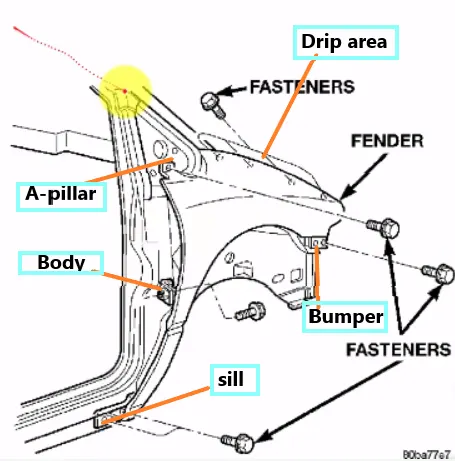
There are 5 mounting regions on the fender , they are
- A- pillar mounting
- Body mounting
- Sill mounting
- Bumper mounting
- Drip mounting
DESIGN METHODOLOGY :
GIVEN DATA :
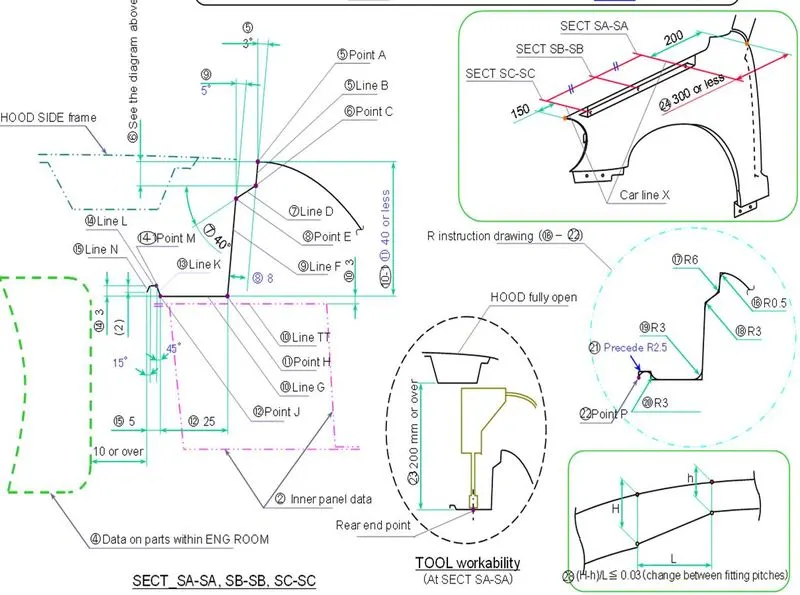
MASTER SECTION
DESIGN 0F DRIP AREA MOUNTING :
- It is the important mounting uni of the fender . it is connected with the engine compartment , therefore the lot of design constraints are to be followed while designing the fender
- While designing the drip area we have to initially leave 200-300 mm for cowl top
- For placing the headlamp we have to leave at least 150 mm at the front while designing the fender
- Cowl top part consists pf wiper motor and its instruments
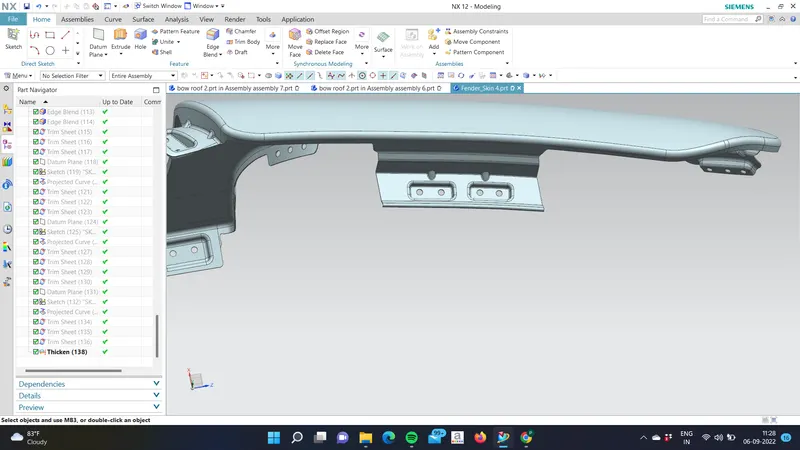
DRIP AREA
- Two darts are added on the longer side of the drip area in order to provide the stiffness and adds strength to the part . This helps the fender to not to vibrate and impact the forces outside of the fender during motion of the vehicle.
- Embossing are provided on the mounting to strengthen them during fastening
DESIGN OF SILL MOUNTING AREA :
Sill is the panel directly below the bottom of the door supporting the floor and may be used to combine the floor and the body . The bottom end of the fender is mounted on the sill body for reinforcement of the fender panel , thus the sill mounting position is designed with holes and emboss . M5 fasteners are used to fix the fenders on the sill body.
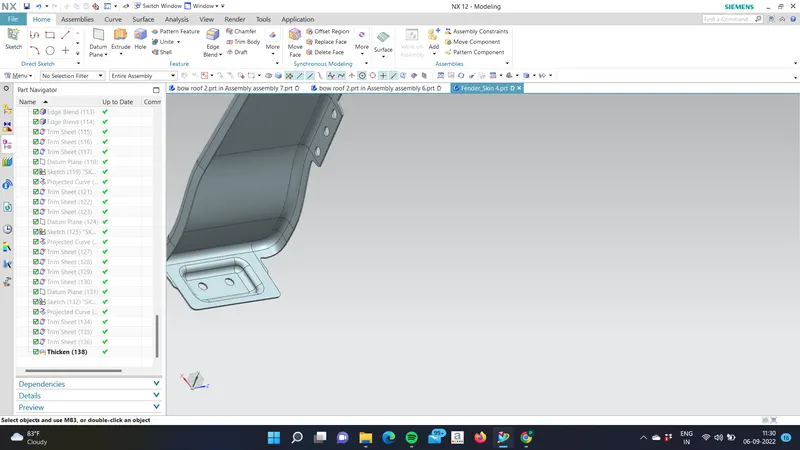
SILL MOUNTING
DESIGN OF BUMPER MOUNTING AREA :
Bumper mounting area is used to fix the plastic bumper to the fender with the help of the fasteners
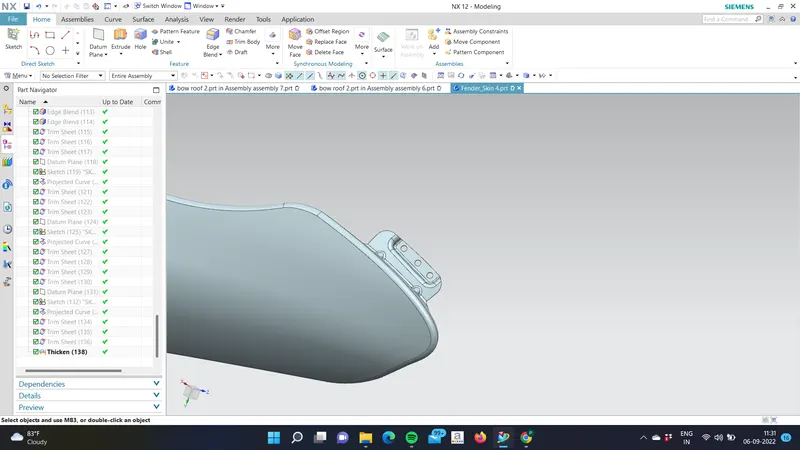
BUMPER MOUNTING
DESIGN OF A-PILLAR MOUNTING AREA :
The A -pillar is the structural pillar that combines the body to the roof . this make the sides of the windshield rest . front fenders are fastened to the A -pillar to form a robust structure .
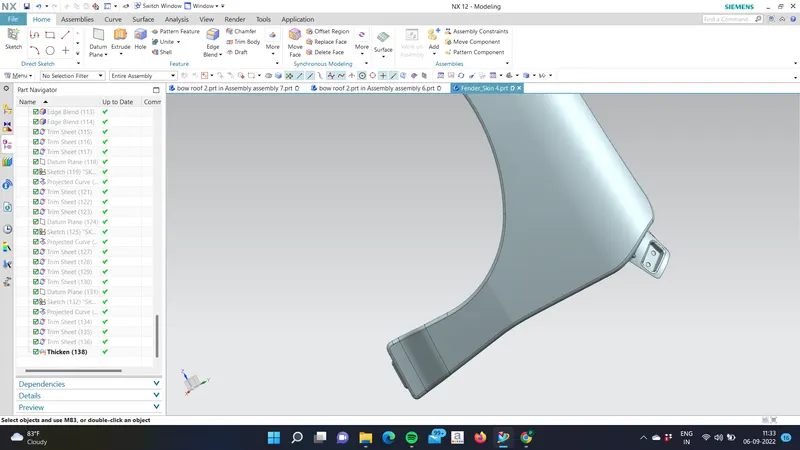
A-PILLAR MOUNTING
DESIGN OF BAFFLE MOUNTING AREA :
Baffle mounting or mudguard are clip fit type of mounting on the inner side of the fender arch over the Tyre . it protects the car engine compartment and pedestrians from causing injuries from chip out debris on the road when the car is in motion . they are mounted on the fender using a special type of locking clips which are made up of plastics .
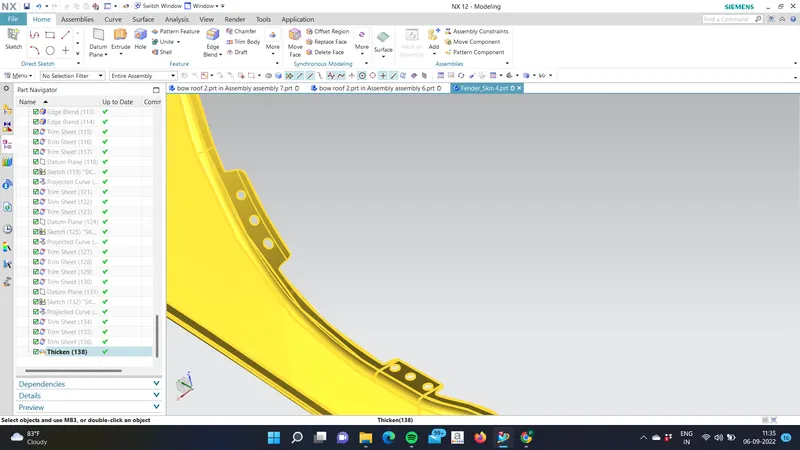
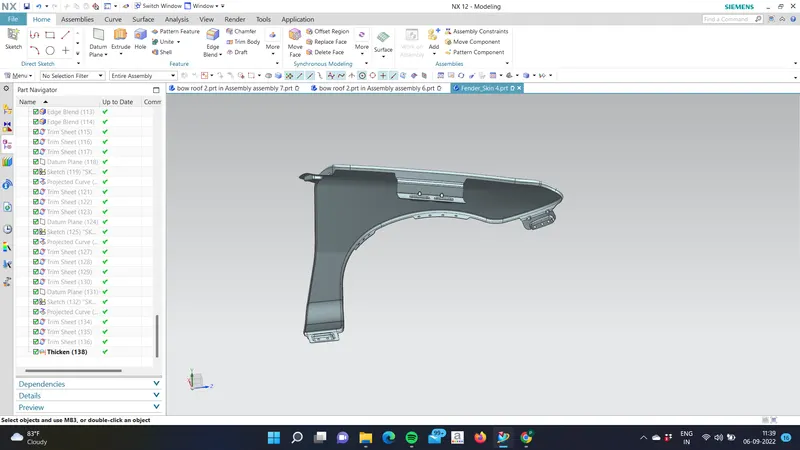
APPLYING OF THICKNESS TO THE SURFACE .
The thickness of 0.75 mm inward on the final sewed surface of the fender to the sheet metal parameters
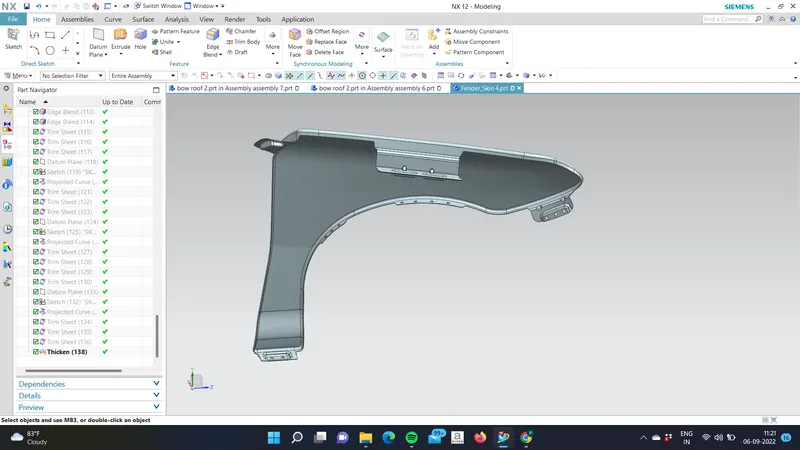
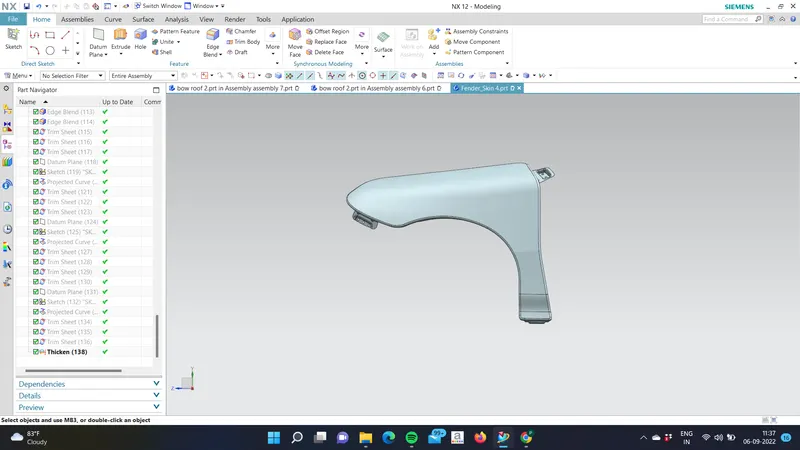
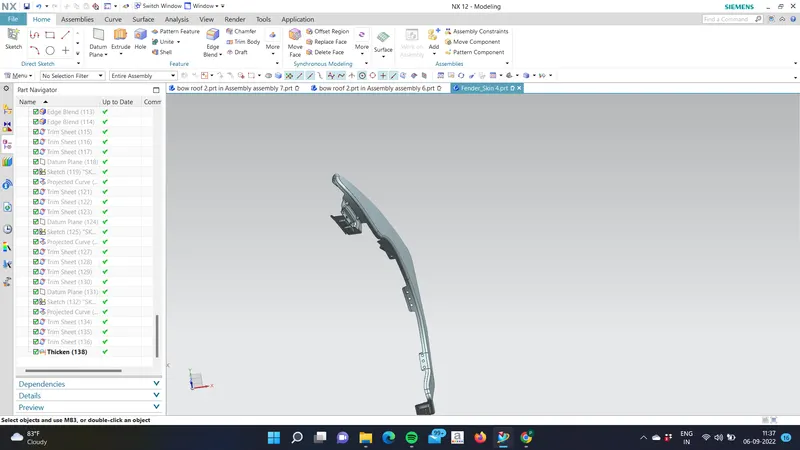
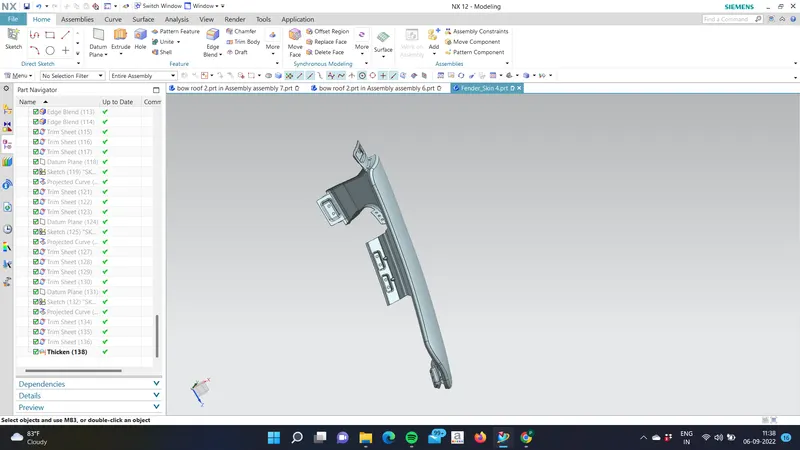
DIFFERENT VIEWS OF FENDER :
CONCLUSION :
Finally design of fender is done with the help of NX-CAD software by following the master section