Exhaust Port Challenge
AIM:-
- To give a brief description of why and where a CHT analysis is used.
- To maintain the y+ value according to the turbulence model and justify the results.
- To calculate the wall/surface heat transfer coefficient on the internal solid surface & show the velocity & temperature contours in appropriate areas.
- To verify if the HTC predictions from the simulations are right? On what factors does the accuracy of the prediction depend on?
DESCRIPTION:-
Conjugate Heat Transfer (CHT):-
- The term conjugate heat transfer (CHT) is used to describe processes which involve variations of temperature within solids and fluids, due to thermal interaction between the solids and fluids.
- The exchange of thermal energy between the two physical bodies is called study of Heat Transfer, the rate of transferred heat is directly proportional to the temperature difference between the bodies.
- A typical example is the heating or cooling of a solid object by the flow of air in which it is immersed and some other example includes conduction through solids, free and forced convection in the gases/fluids and thermal radiation.
- Conjugate heat transfer corresponds with the combination of heat transfer in solids and heat transfer in fluids. Efficiently combining heat transfer in fluids and solids is the key to designing effective coolers, heaters, or heat exchangers.
- Heat transfer in solids and heat transfer in fluids are combined in the majority of applications. This is because fluids flow around solids or between solid walls, and because solids are usually immersed in a fluid.
Modes of Heat Transfer:-
- Conduction: diffusion of heat due to temperature gradients. A measure of the amount of conduction for a given gradient is the heat conductivity. Mostly seen in solids
- Convection: when heat is carried away by moving fluid. The flow can either be caused by external influences, forced convection; or by buoyancy forces, natural convection. Convective heat transfer is tightly coupled to the fluid flow solution.
- Radiation: transfer of energy by electromagnetic waves between surfaces with different temperatures, separated by a medium that is at least partially transparent to the (infrared) radiation. Radiation is especially important at high temperatures, e.g. during combustion processes, but can also have a measurable effect at room temperatures . Example:- we get radiation from the sun.
CHT analysis and examples used as below:-
- Overall heat transfer coefficient, e.g. for a car radiator.
- Highest (or lowest) temperature in a system, e.g. in a gas turbine, chemical reaction vessels, food ovens.
- Temperature distribution (related to thermal stress), e.g. in the walls of a spacecraft.
- Temperature response in time dependent heating/cooling problems, e.g. engine cooling, or how fast does a car heat up in the sun and how is it affected by the shape of the windshield?
- The fluid flow and heat transfer problems can be tightly coupled through the convection term in the energy equation and when physical properties are temperature dependent. While analytical solutions exist for some simple problems, we must rely on computational methods to solve most industrially relevant applications.
- CHT can be performed to improve cooling performance of the water jacket and increase engine life. Advancements in cooling for applications such as gas turbines components require improved understanding of the complex heat transfer mechanisms and the interactions between those mechanisms, which our engineers can perform without hassle.
- Critical cooling applications often rely on multiple thermal protection techniques, including internal cooling, external film cooling, etc. which are efficiently used by our analysis to cool components and limit the use of coolant.
- Conjugate Heat Transfer analysis provides the temperature distribution in solid and coolant of the engine and clear insight on velocity distribution and mechanism of heat transfer of coolant. Results of CHT analysis become input to structural simulations as thermal loads.
- We have a wide experience in Engine CHT Analysis for various type of engines like Bikes, Passenger Cars, Racing cars, Commercial Vehicles, Marine, Agricultural equipment and Earth-moving equipment etc.
- I am using the given geometry of exhaust port.
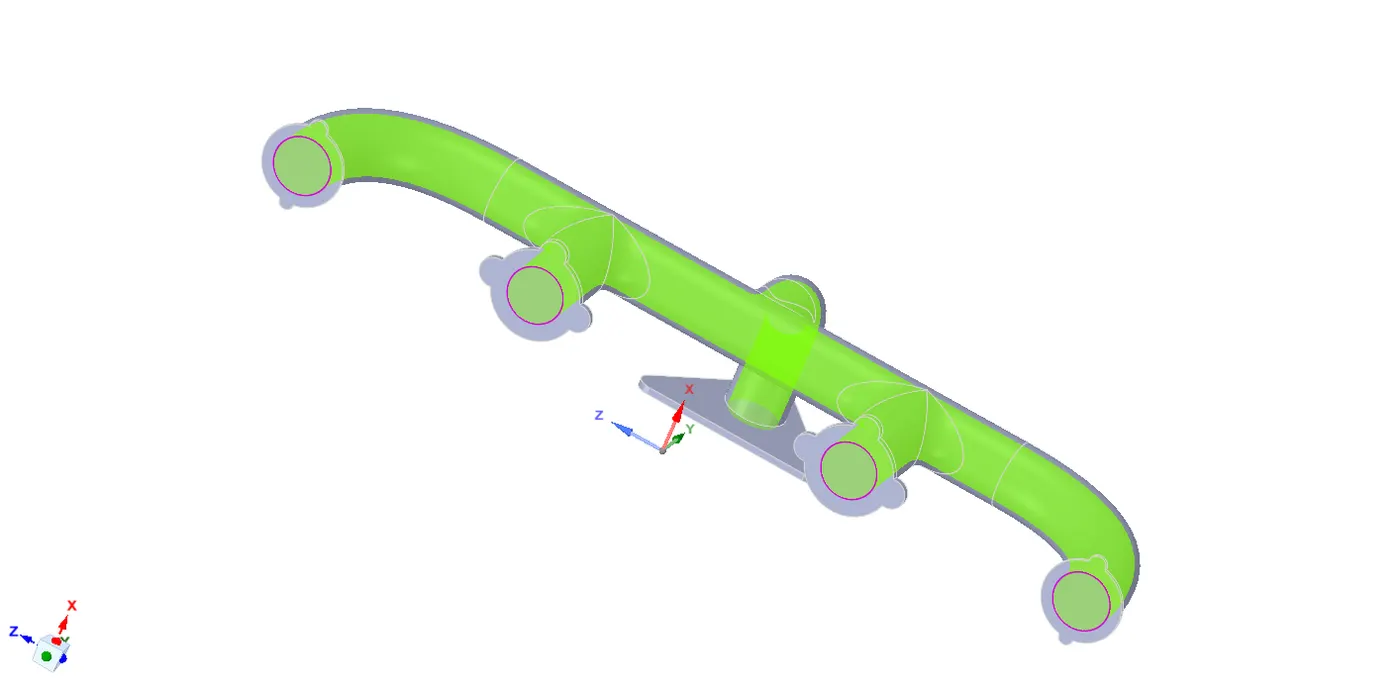
- Open the geometry in the spaceclaim. We will use volume extract to extract the outer volume using edge selection.
- Now we have two volumes, name them Solid volume(outer) and fluid volume(inside).
- Make sure that you select 'share' in the share topology.
- So now the last step is to shareprep the geometry. Otherwise the information will not be shared in both the volumes.
- If you have done is properly, you can see the pink circles at the edges as shown below.
Mesh:-
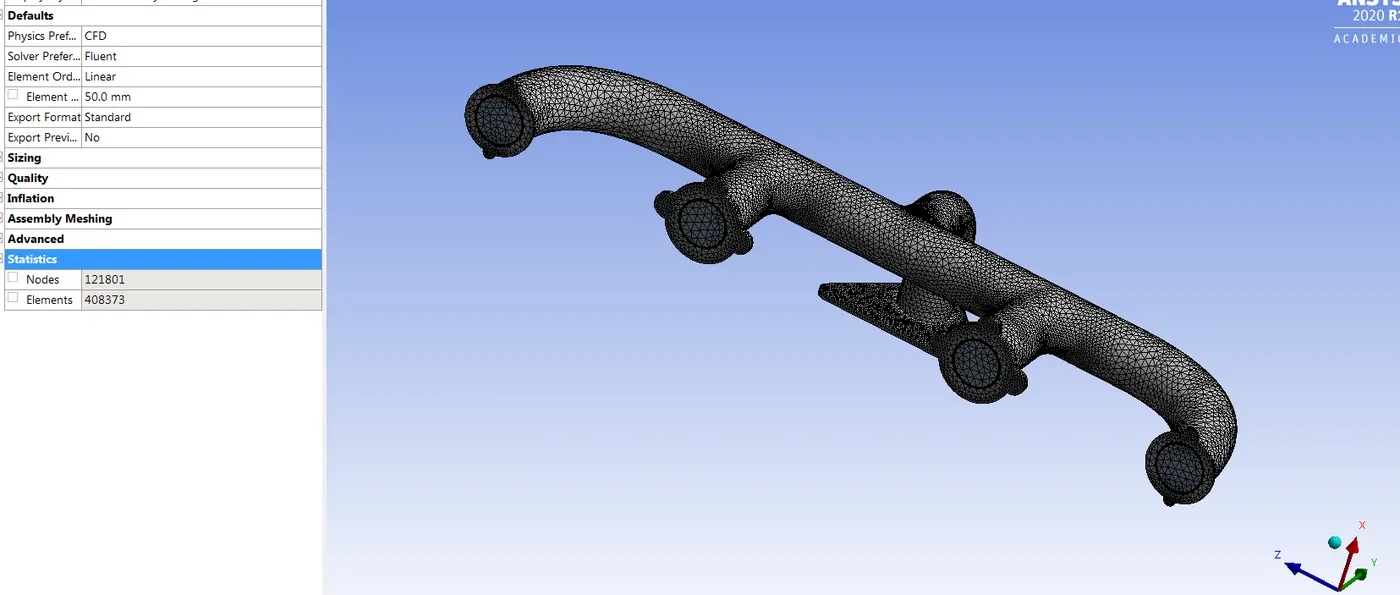
I have used two cases of mesh here.
Named sections for both the cases are same
4 inlets
1 outlet
Wall-outlet-convection (body)
Others will be considered as adiabatic in fluent
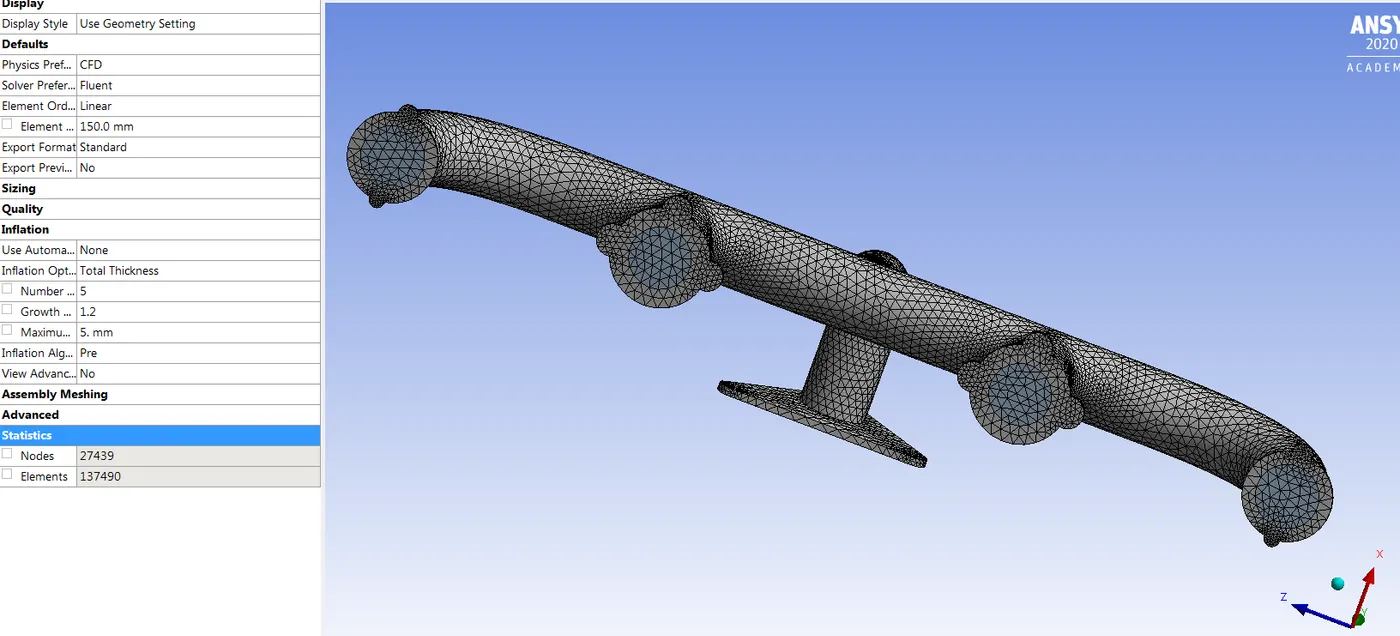
Case1:-
Baseline mesh with a minimum number of cells as shown below
Case setup and simulation:-
I have used K-epsilon viscous model
Gneral solver model is Pressure-based, Staedy absolute velocity.
Energy equation is turned on as we are dealing with temperature.
Hybrid initialization with 150 iterations.
Boundary condtions:-
Inlet:-5m/s
Temperature:-700k
Outlet:- pressure outlet
Wall-outlet-covection- 'convection', Heat transfer coefficient-20 W.m^2.k^-1
Others are wall conditions and are adiabatic by default.
Necessary temperature and animations are created to see the convergence and flow of physics.
RESULTS:-
CASE 1:- (BASELINE MESH)
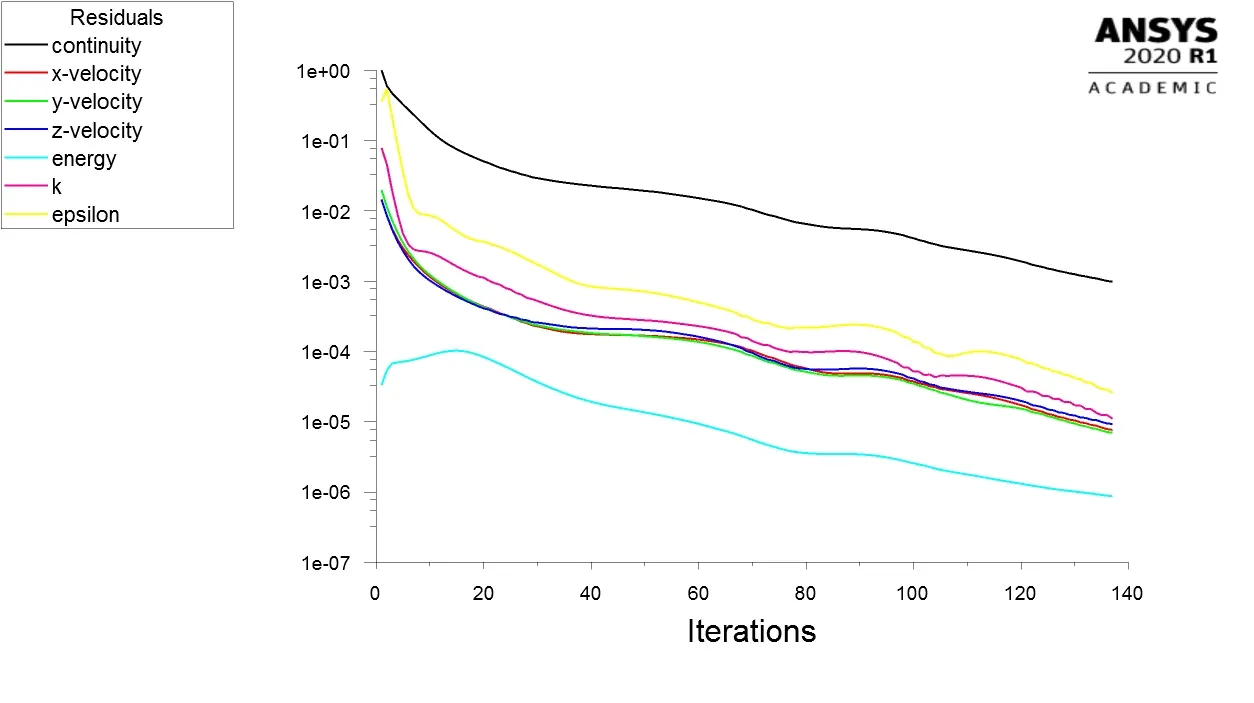
Residuals:-
Temperature:-

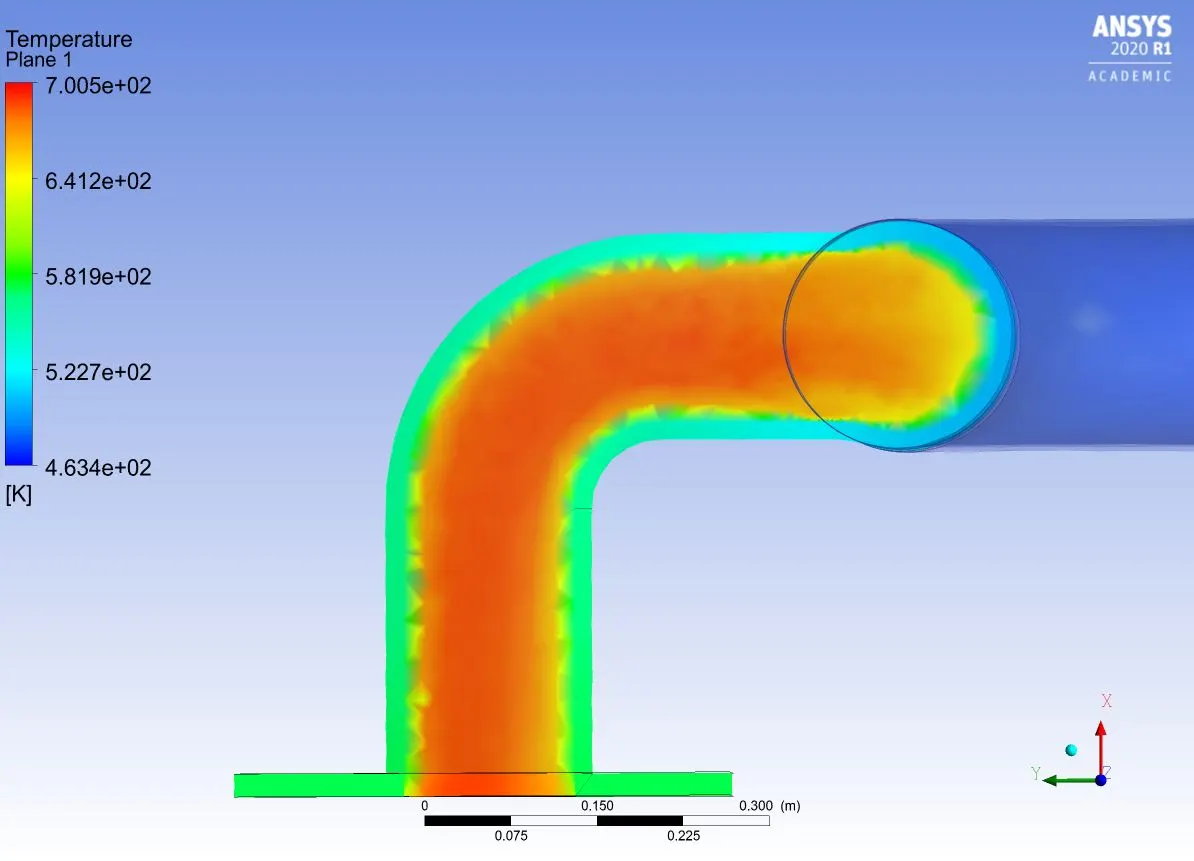
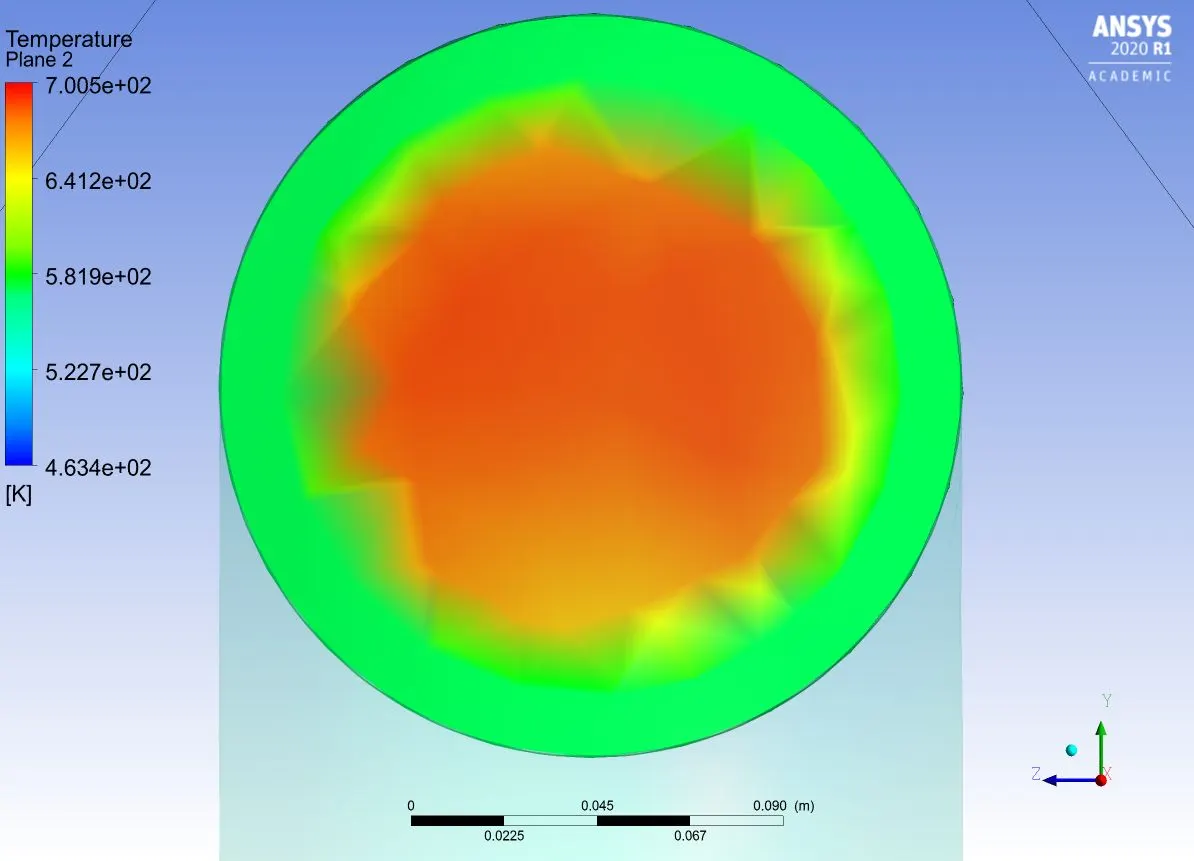
The maximum temperature is 700k
The temperature at the outlet throat is around 600k
Velocity:-
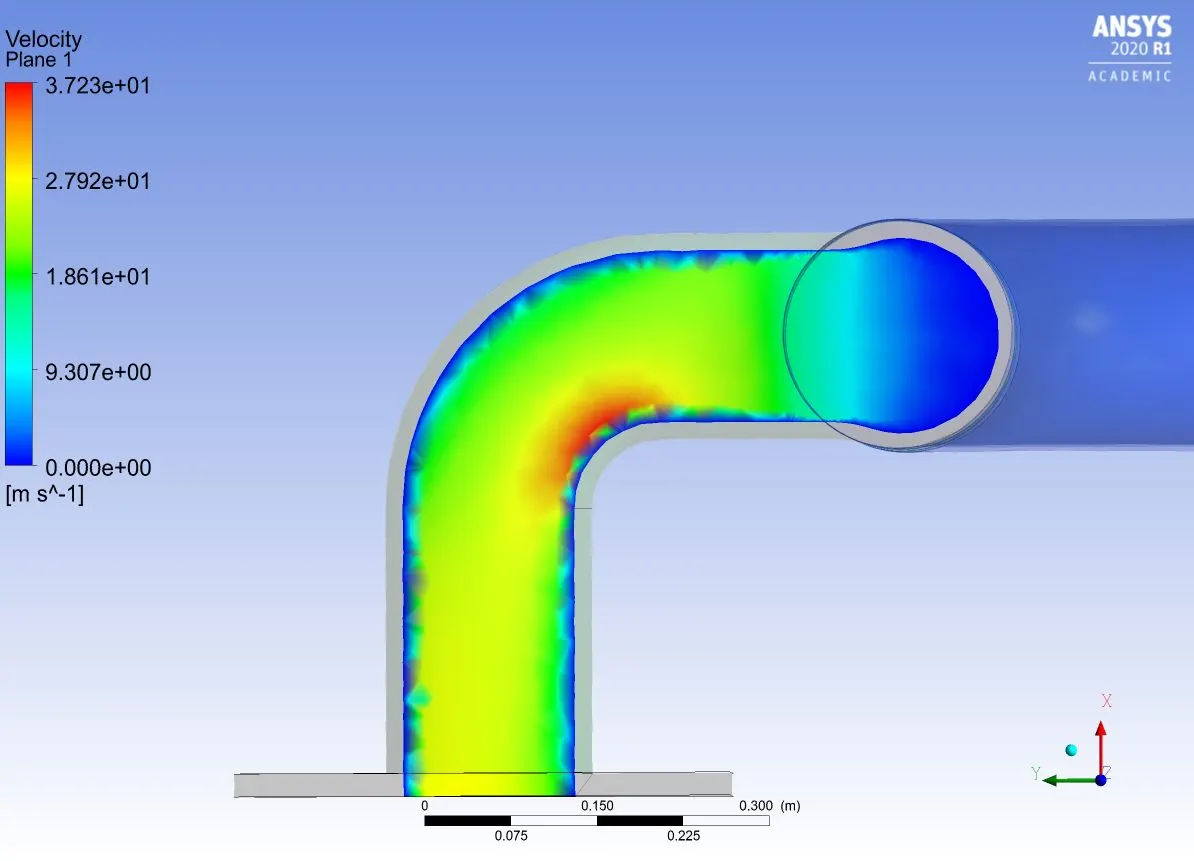
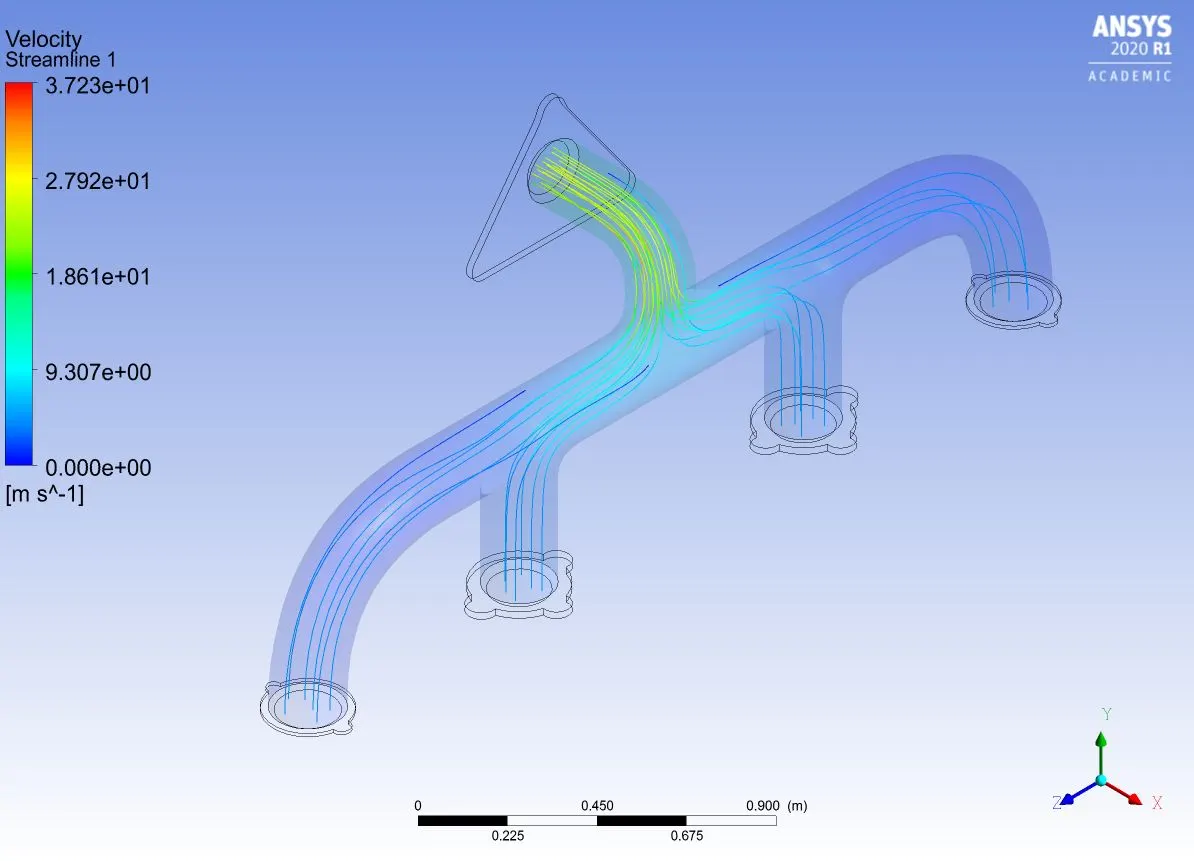
Maximum velocity is 37m/s
Wall Heat Transfer:-
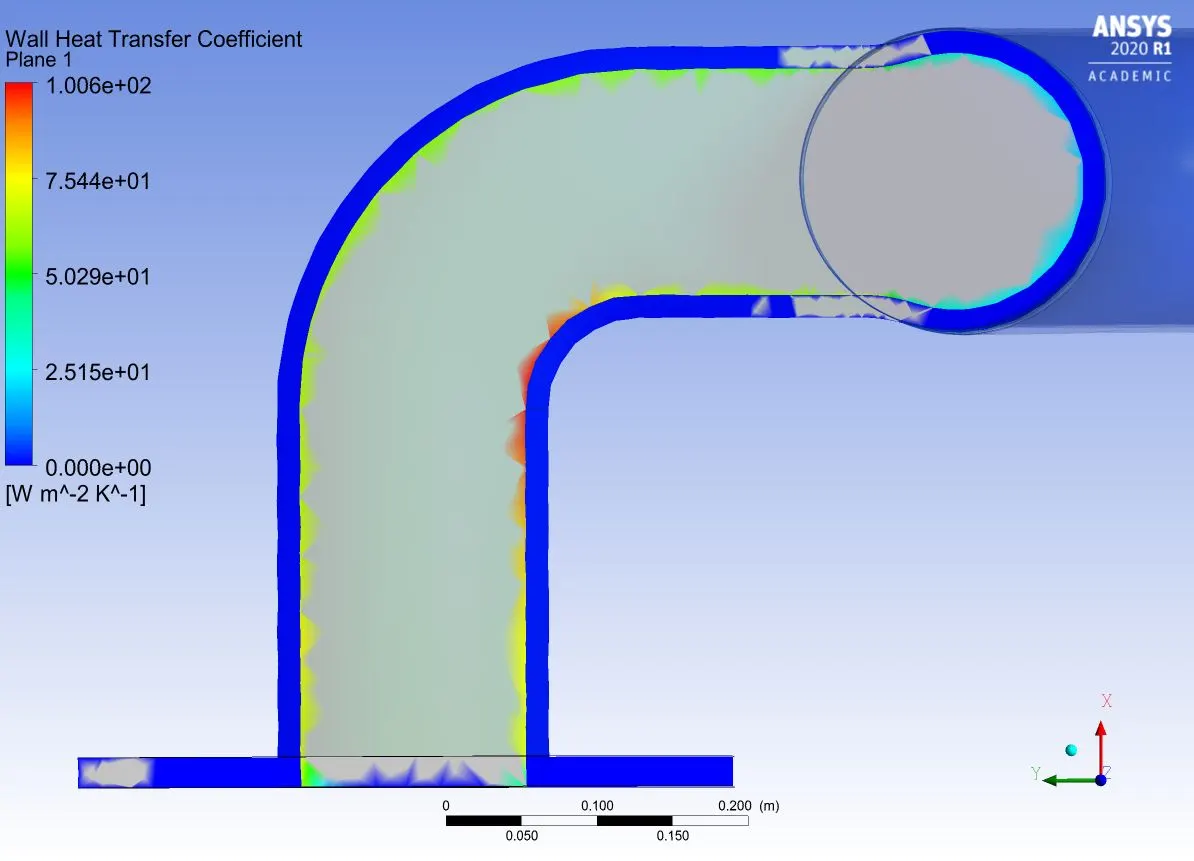
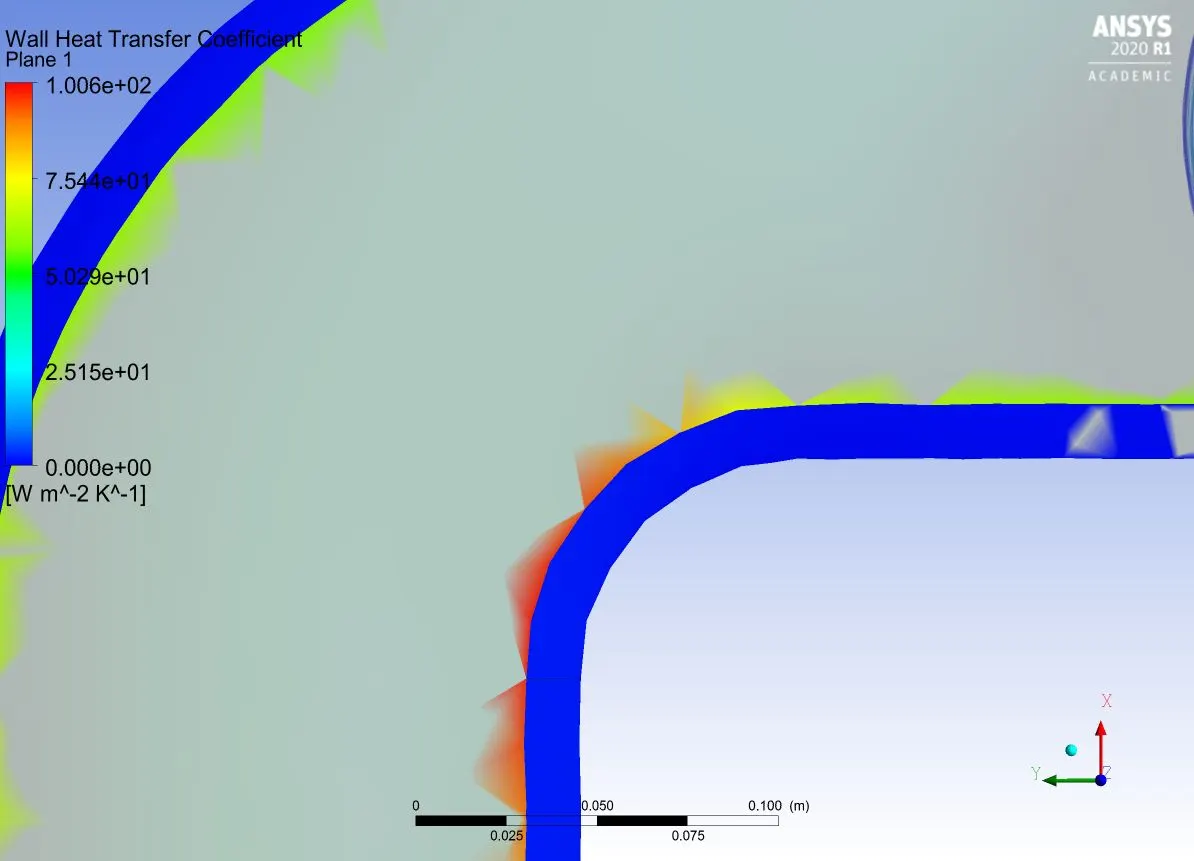
The maximum heat trabnsfer coefficient is 100W.m^-2.K^-1.
CASE 2:- (FINE MESH)
Residuals:-
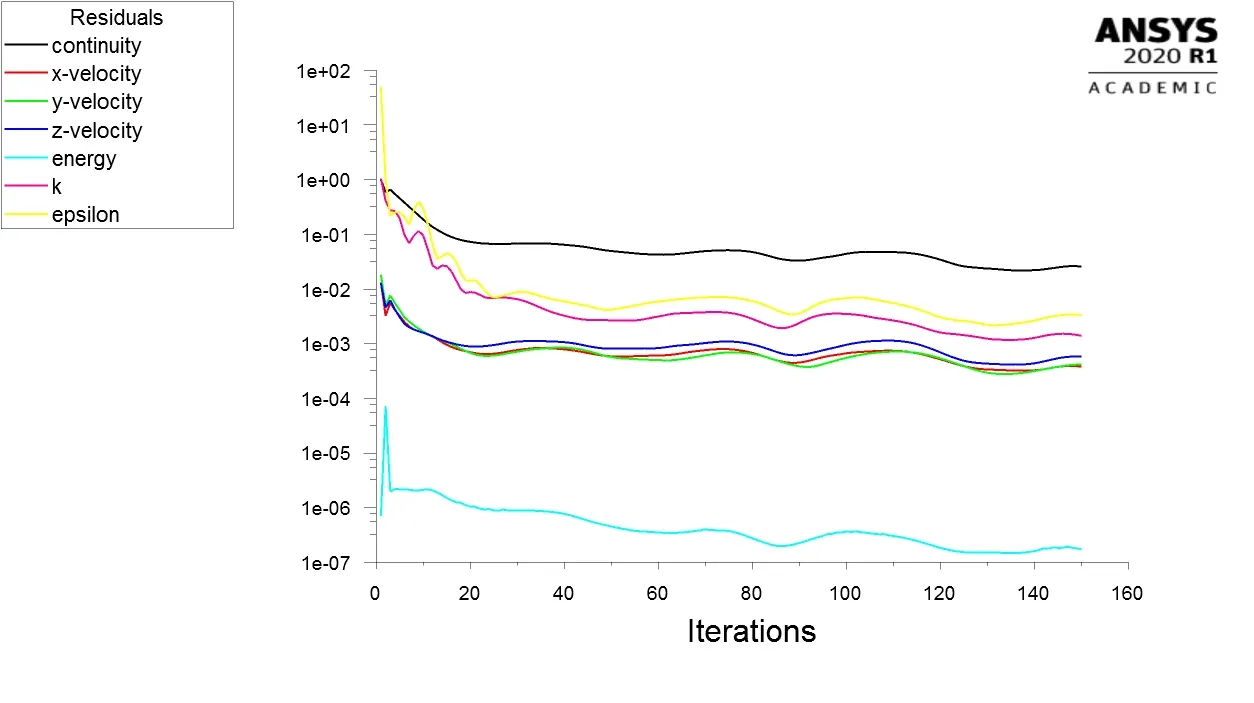
Temperature:-
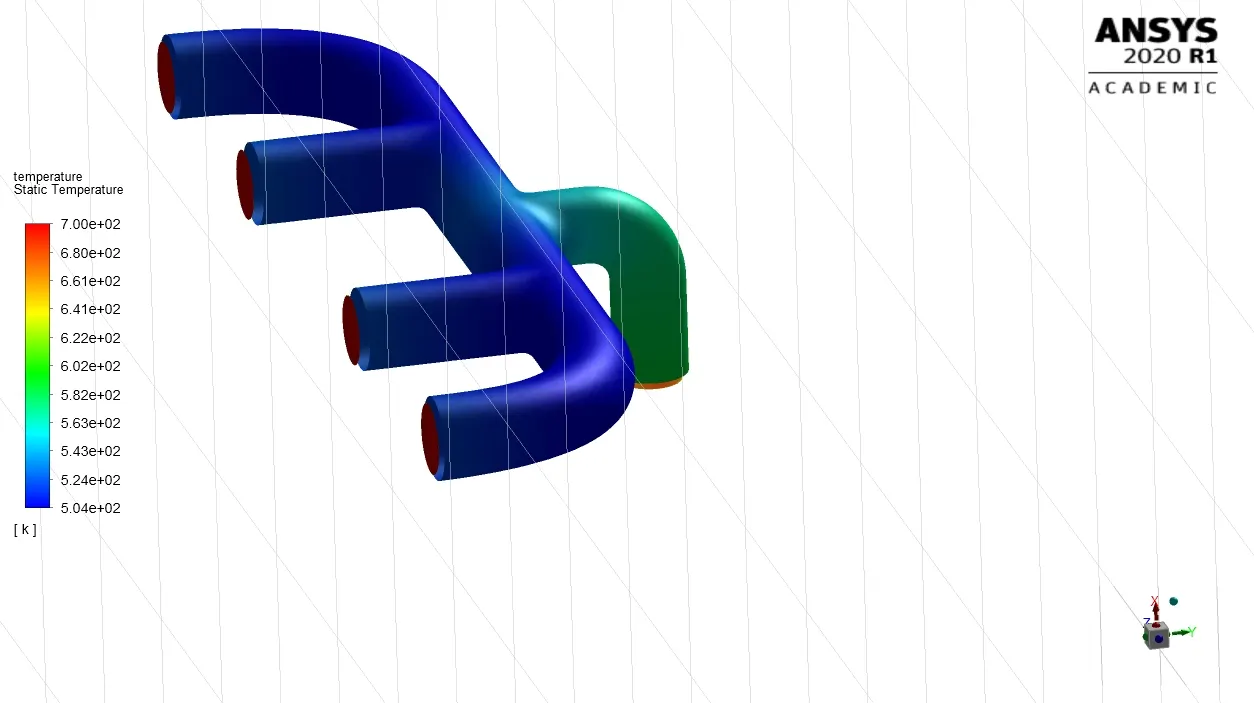
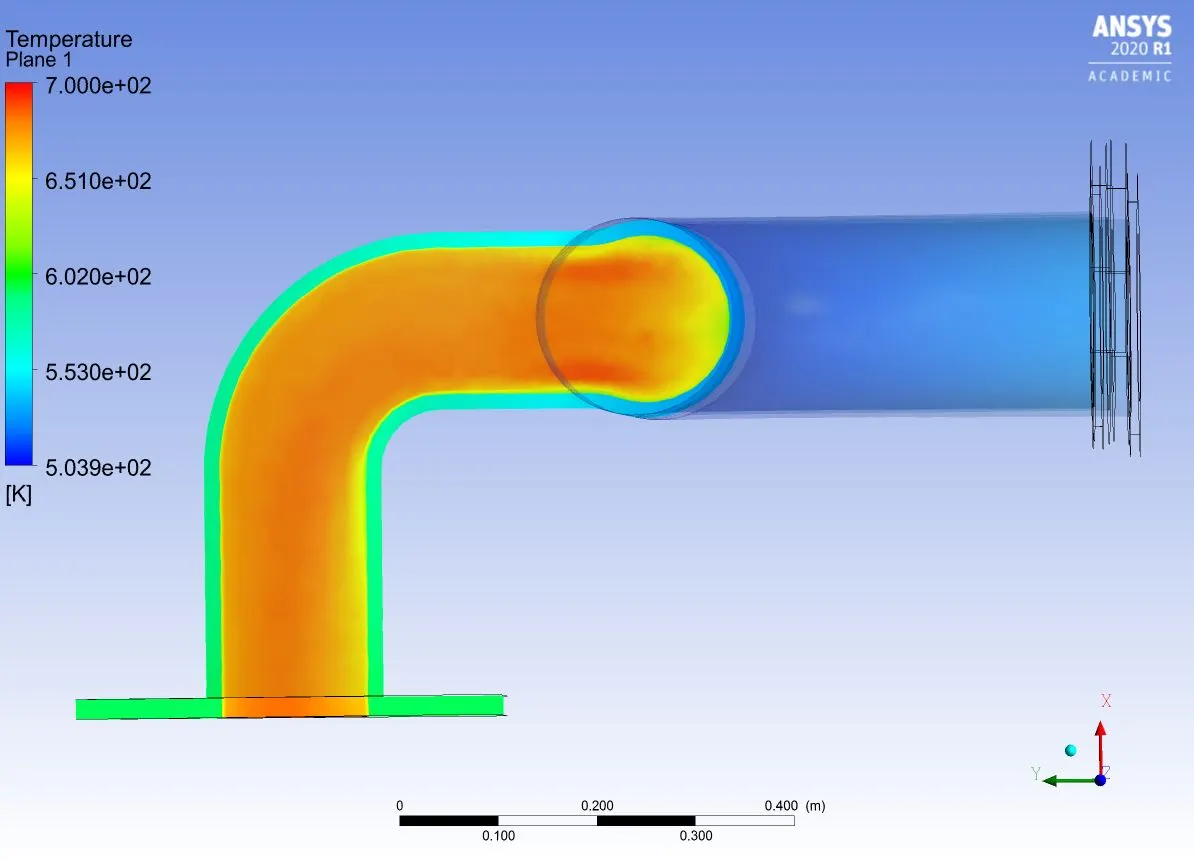
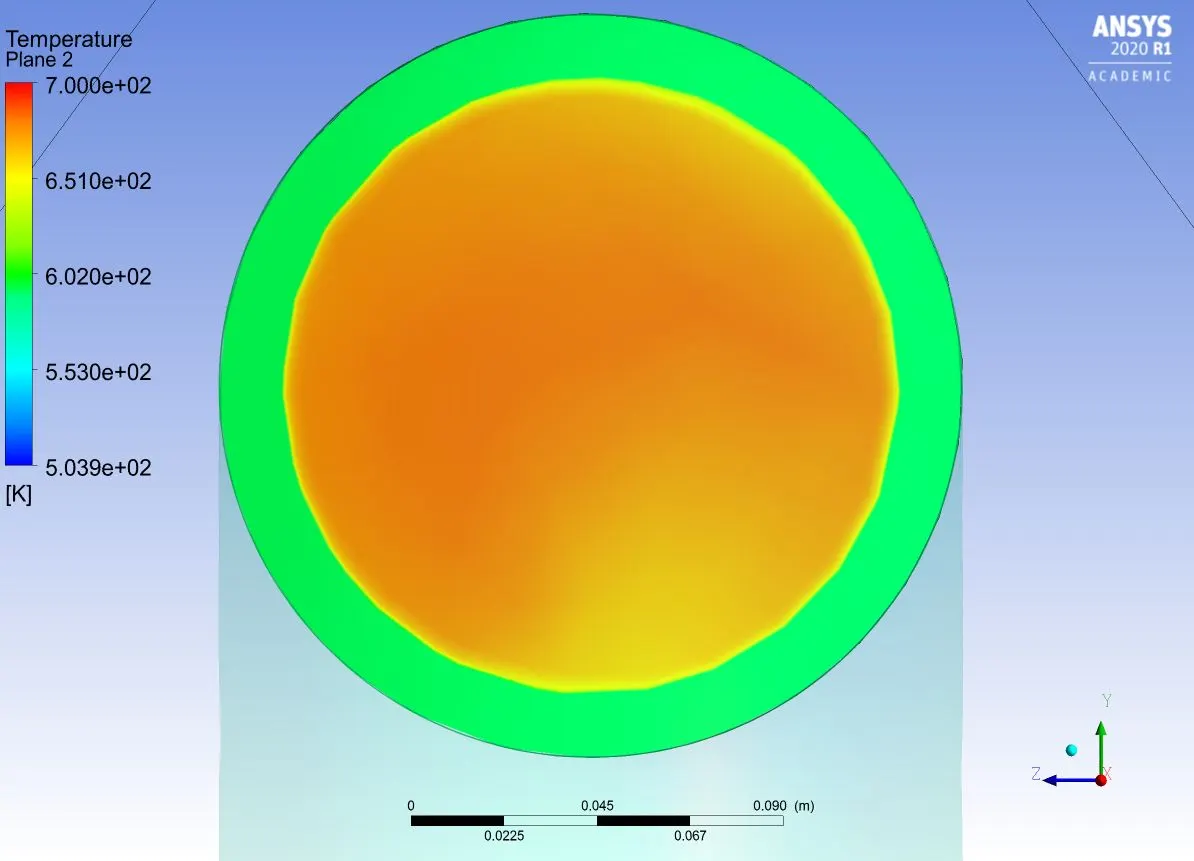
The maximum temperature is 700k
The temperature at the outlet throat is around 600k.
Velocity:-
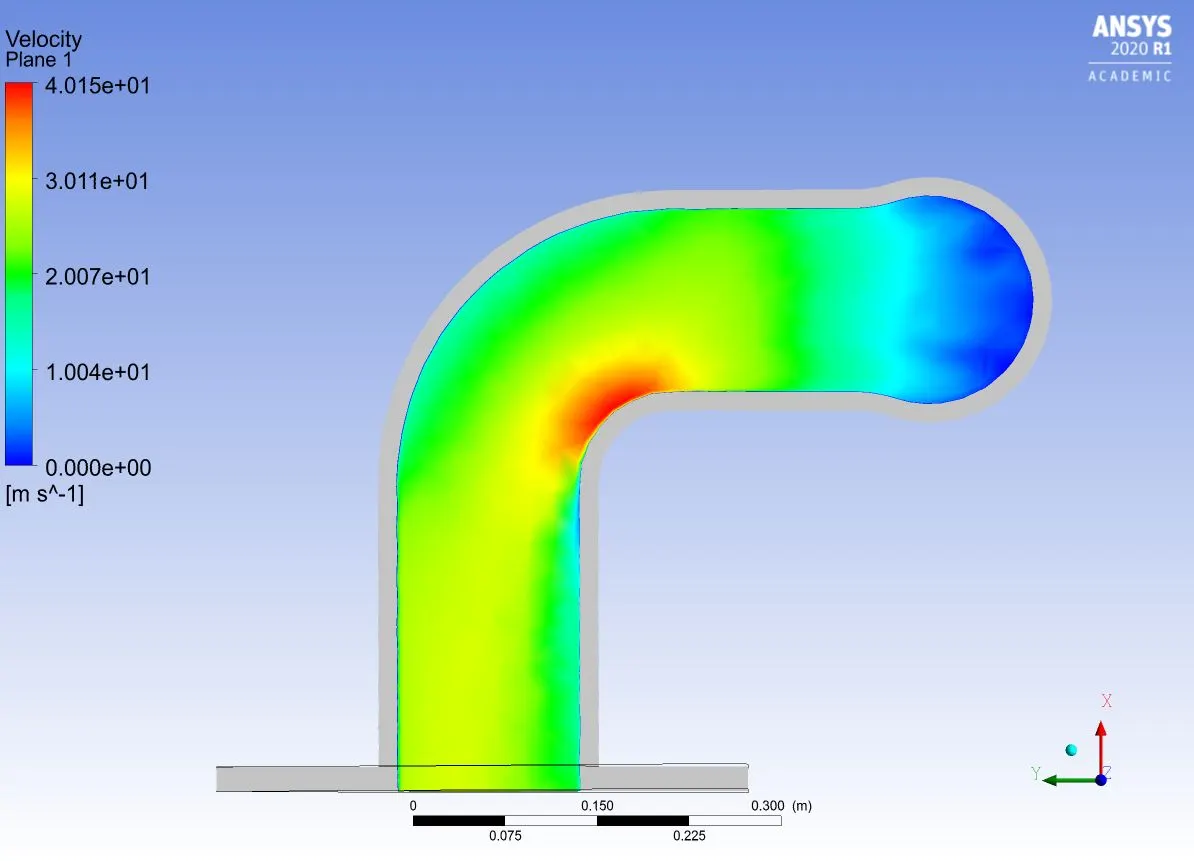
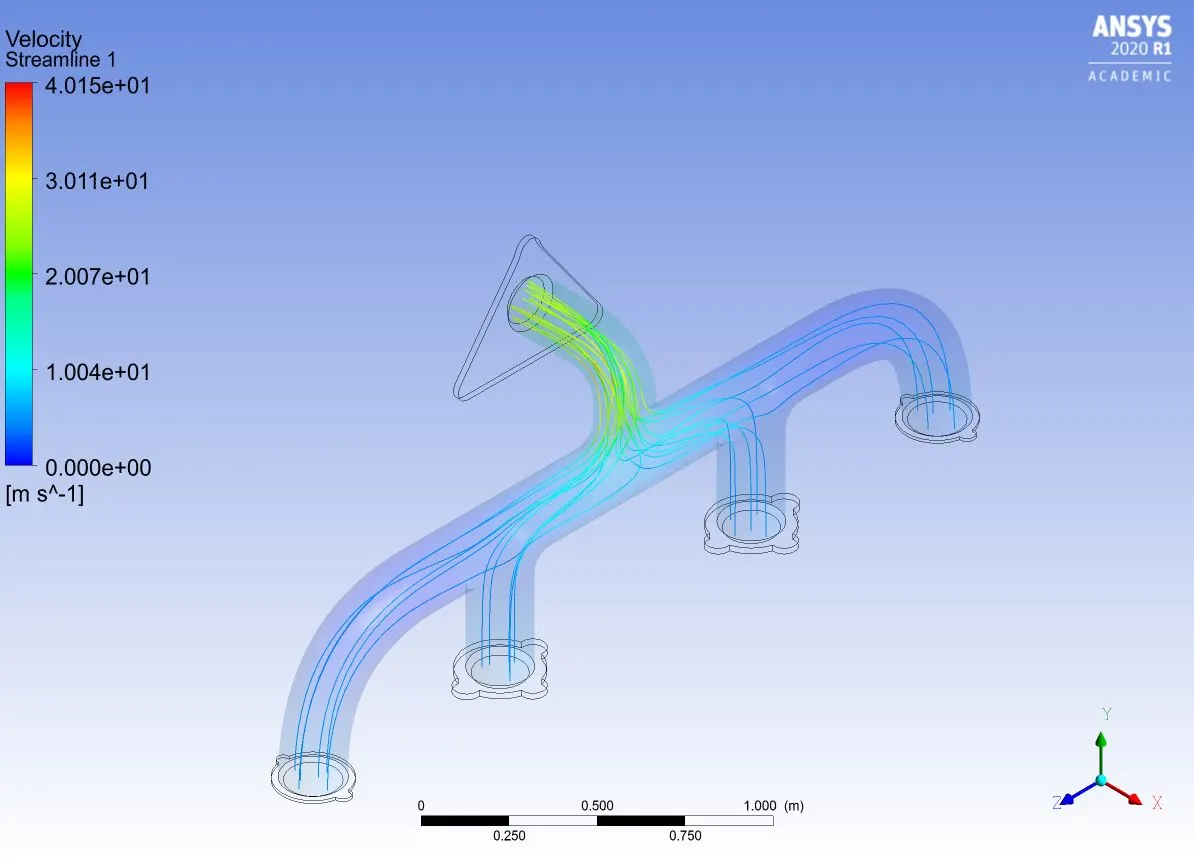
The maximum velocity is 40m/s.
Wall Heat Transfer:-
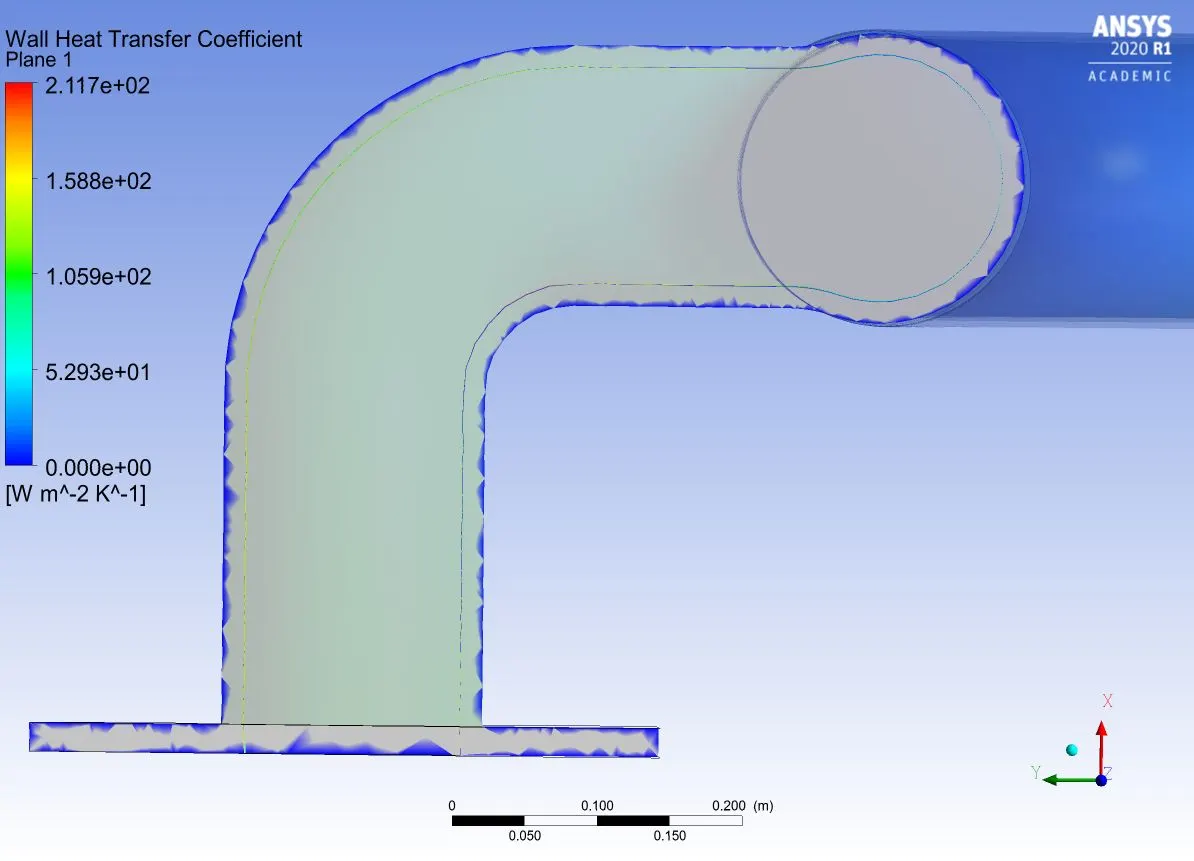
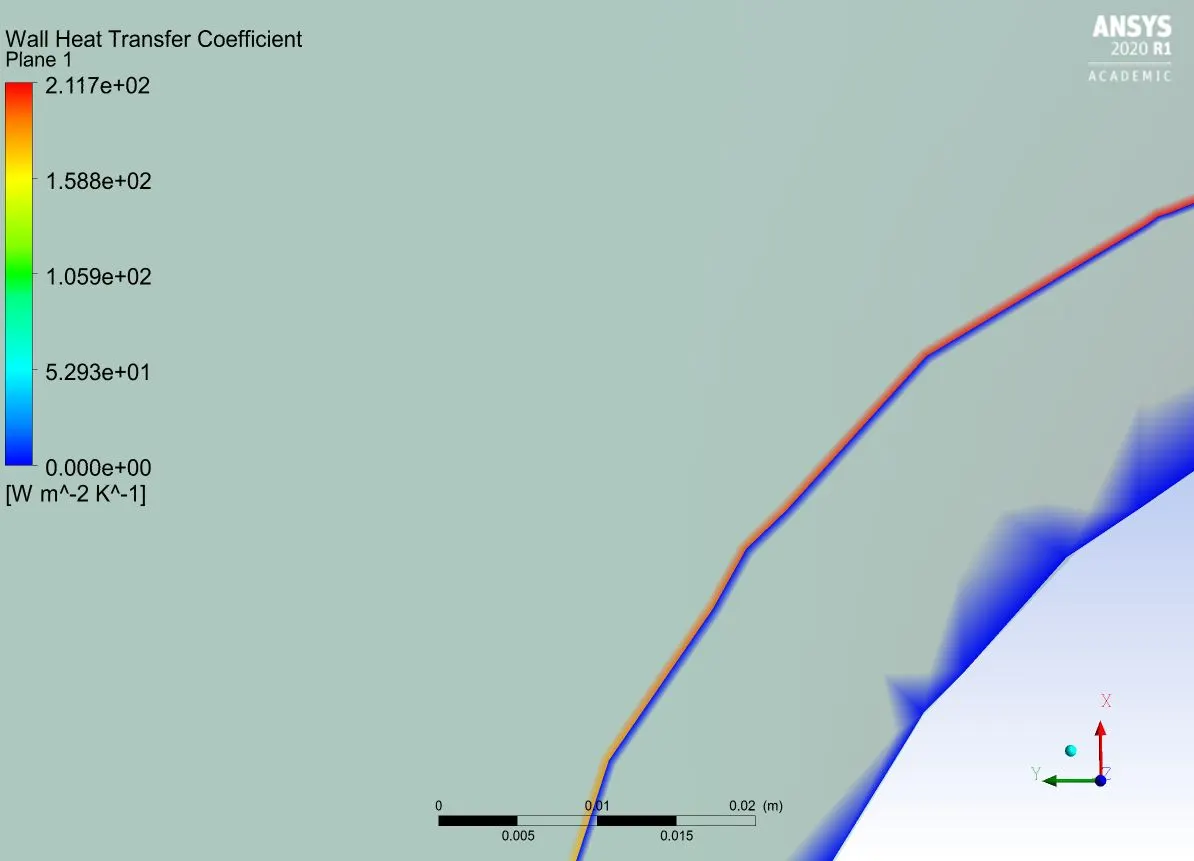
The maximum wall heat transfer coefficient is 211w.m^-2.k^-1.
The wall heat transfer is clearly visible in a good pattern as we used inflation layers the physics is captured properly.
OBSERVATION AND CONCLUSION:-
How can I verify the HTC predictions from the simulation are right?
I can verify by using the Nusselt number, where
Nu = convective heat transfer/conductive heat transfer
`Nu=(hL)/k`
where
h- convection heat transfer
L- characteristic length
k - thermal conductivity of the fluid
- Nusselt numbe ris also directly proprtional to renold's number.
- So if the velocity is increased the Nusselt number will also get increased or if convective heat transfer is increased the nusselt number wil also increase.
On what factors does the accuracy of the prediction depend on?
- There are many factors that the accuracy is depending on
- The finer the mesh is the results are getting accurate as the physics is captured well enough.
- The right viscous model and proper number of elements are required to get the required results.
- Inflation layers are used to at the edges to capture the heat transfer at the walls.
- Maintaing proper Y+ will also maintain the accuracy.