Exhaust Port Challenge
Aim :- Exhaust gas thermal effect on Exhaust port using conjugate heat transfer.
Theory :-
The term conjugate heat transfer (CHT) is used to describe processes which involve variations of temperature within solids and fluids, due to thermal interaction between the solids and fluids. The exchange of thermal energy between the two physical bodies is called study of Heat Transfer, the rate of transferred heat is directly proportional to the temperature difference between the bodies. A typical example is the heating or cooling of a solid object by the flow of air in which it is immersed and some other example includes conduction through solids, free and forced convection in the gases/fluids and thermal radiation.
Conjugate heat transfer corresponds with the combination of heat transfer in solids and heat transfer in fluids. In solids, conduction often dominates whereas in fluids, convection usually dominates. Efficiently combining heat transfer in fluids and solids is the key to designing effective coolers, heaters, or heat exchangers. Forced convection is the most common way to achieve high heat transfer rate. In some applications, the performances are further improved by combining convection with phase change (for example liquid water to vapor phase change).
Heat transfer in solids and heat transfer in fluids are combined in the majority of applications. This is because fluids flow around solids or between solid walls.
Modes of heat transfer :-
(i) Conduction: diffusion of heat due to temperature gradients. A measure of the amount of conduction for a given gradient is the heat conductivity.
(ii) Convection: when heat is carried away by moving fluid. The flow can either be caused by external influences, forced convection; or by buoyancy forces, natural convection. Convective heat transfer is tightly coupled to the fluid flow solution.
(iii) Radiation: transfer of energy by electromagnetic waves between surfaces with different temperatures, separated by a medium that is at least partially transparent to the (infrared) radiation. Radiation is especially important at high temperatures, e.g. during combustion processes, but can also have a measurable effect at room temperatures.
An accurate description of heat transfer modes, material properties, flow regimes, and geometrical configurations enables the analysis of temperature fields and heat transfer. For this purpose, conjugate heat tranfer problems becomes an significant.
Application :-
Analysis of Exhaust gas thermal effect on Exhaust port using conjugate heat transfer.
A. Typical design problems involve the determination of:
- Highest (or lowest) temperature in a system.
- Temperature distribution (related to thermal stress).
- Temperature response in time dependent heating/cooling problems.
- Overall heat transfer coefficient.
Hence, in order to underastand how does conjugate heat transfer impact on design consideration. So Here in this Project I have performed simulation on thermal effect of Exhaust gas on Exhaust port using conjugate heat transfer.
The detail report of project have been mentioned below :-
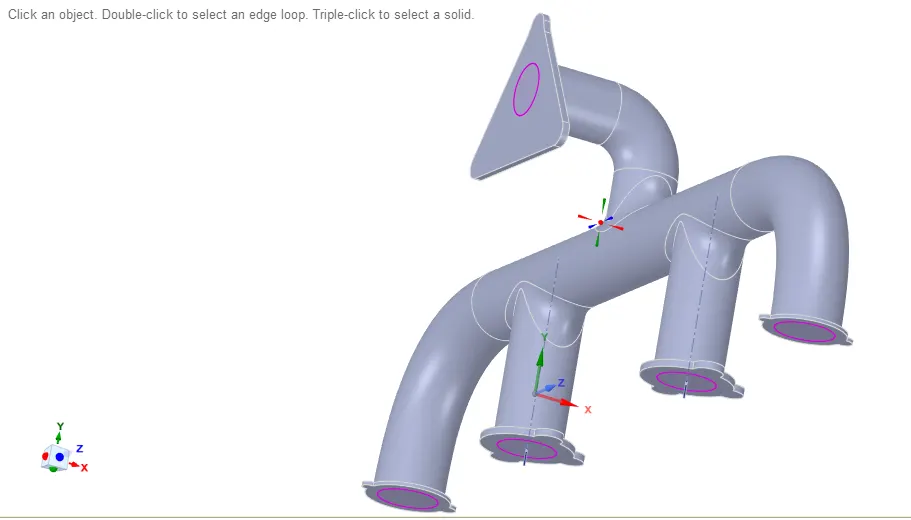
1. Imported geometry from solidworks to Space-claim of Ansys workbench :-
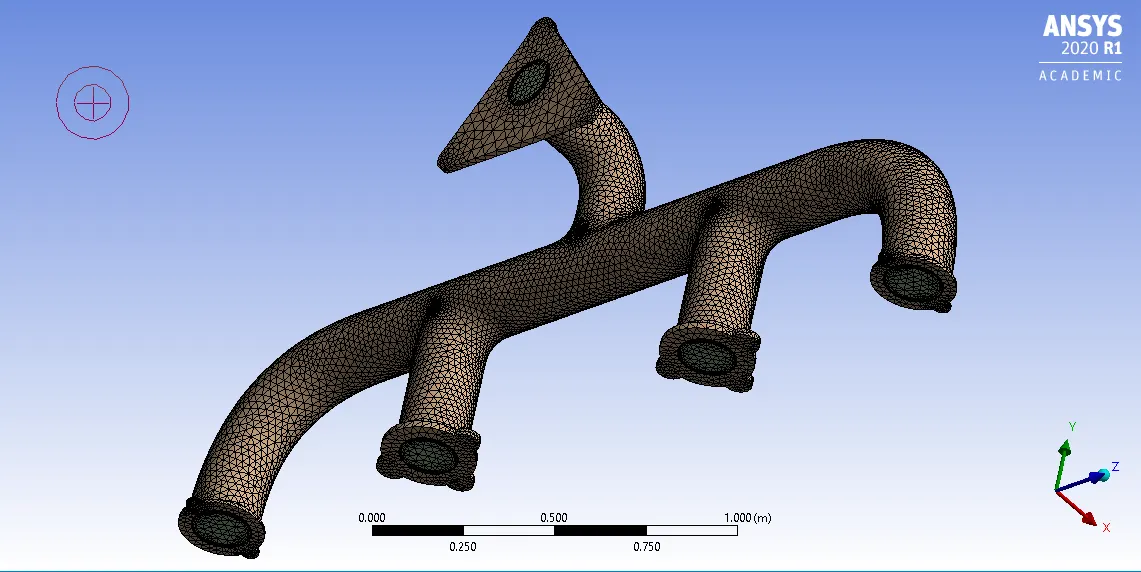
2. Setup mesh on geometry using Design-modeler :-
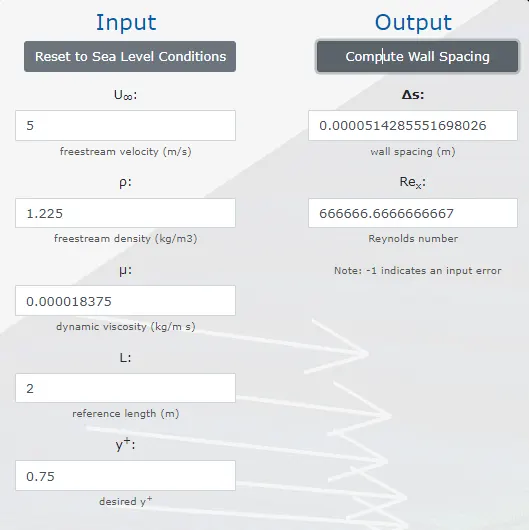
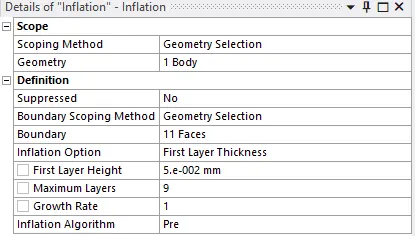
Calculate first layer thickness of the cell at the surface of the wall :-
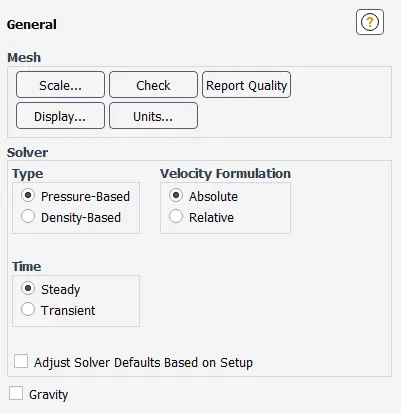
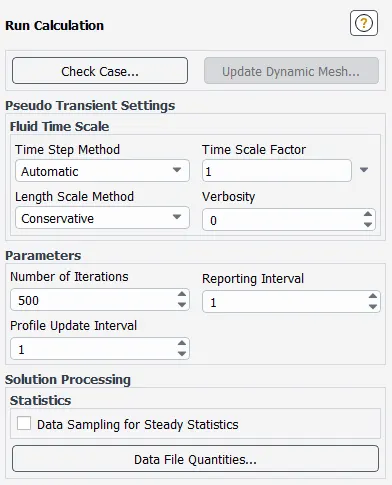
3. Setup physical conditions and solver setting for simulation:-
A. Boundary conditions:-
1. Inlet
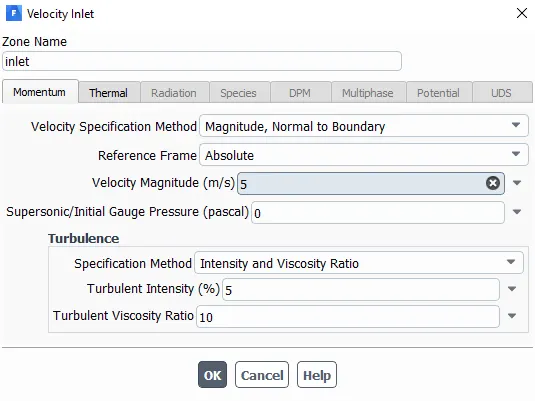
2. Outlet
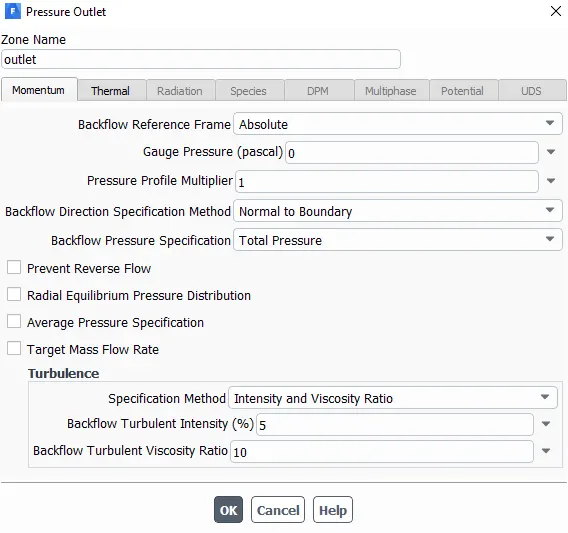
3. Walls condition for outer wall and jointed part
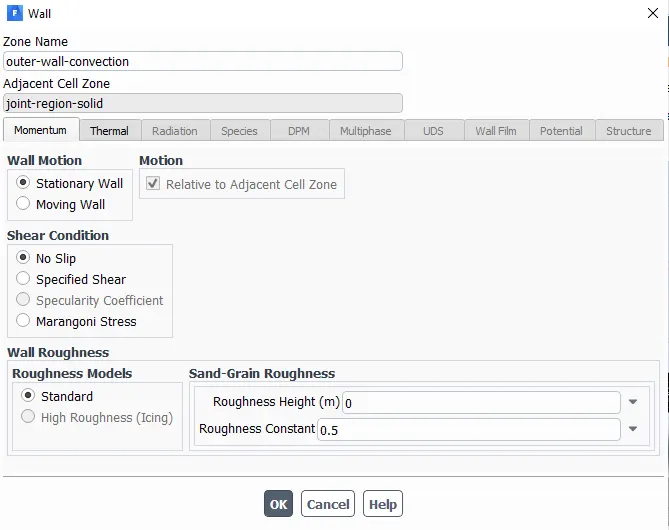
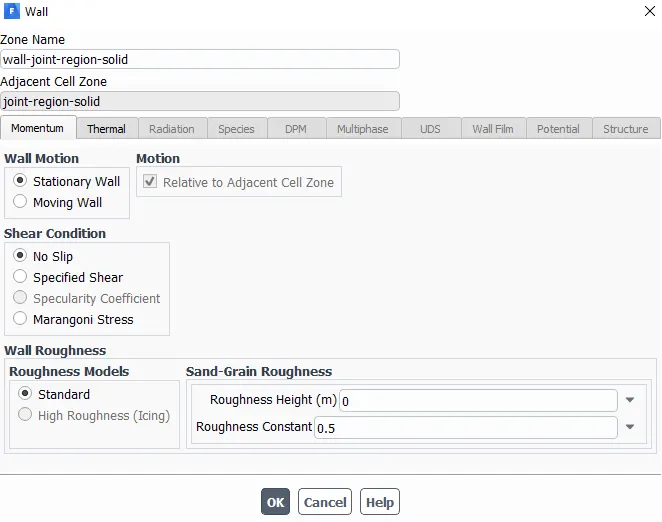
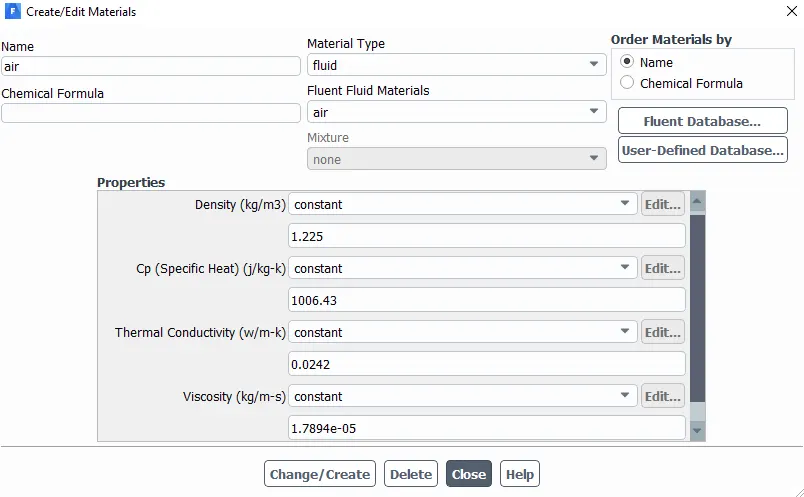
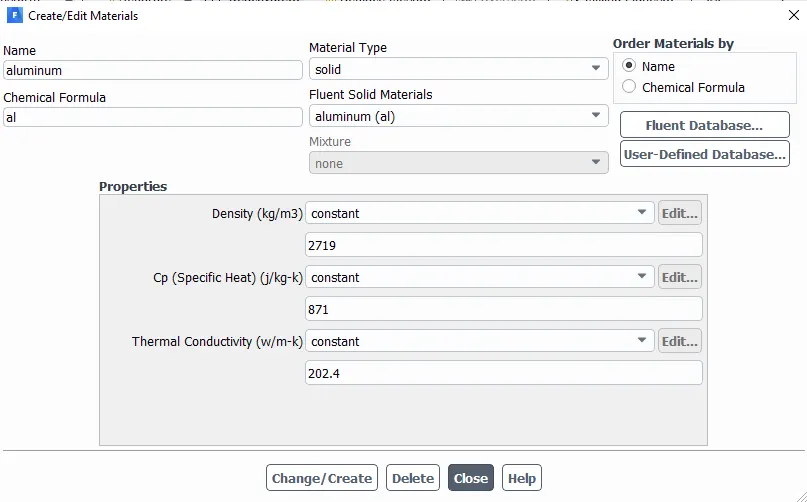
B. Material used for fluid and solid region of pipe
1. Fluid Region
2. Solid Region
C. Solver setup and Run parameters
Results :-
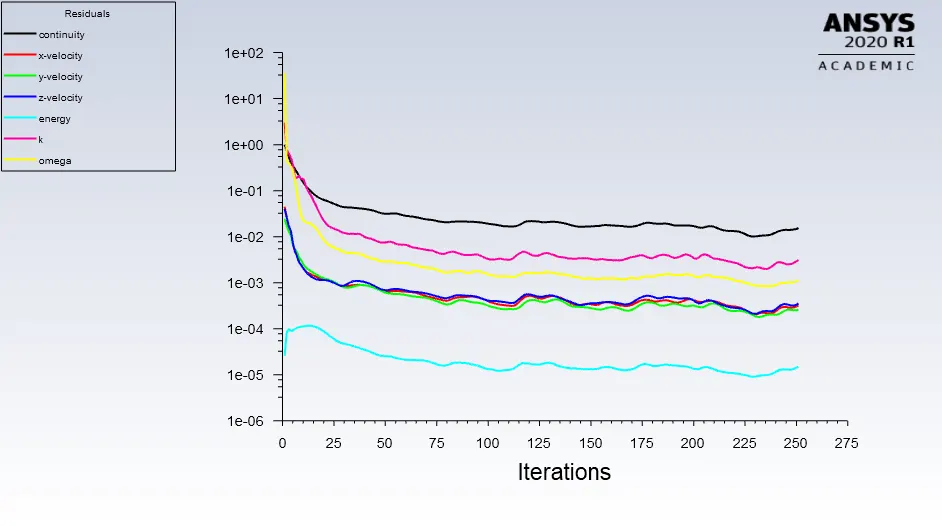
Residual plot for convergence of different variable :-
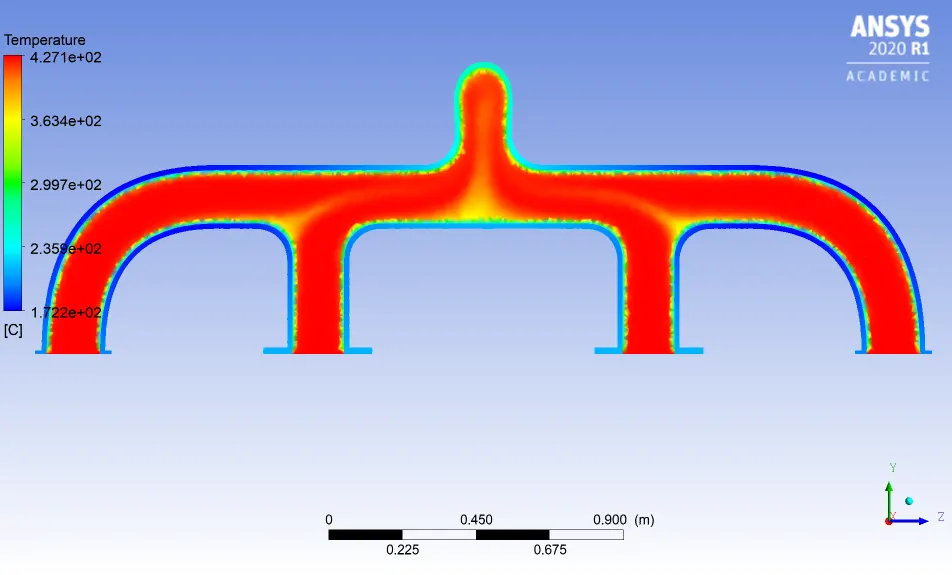
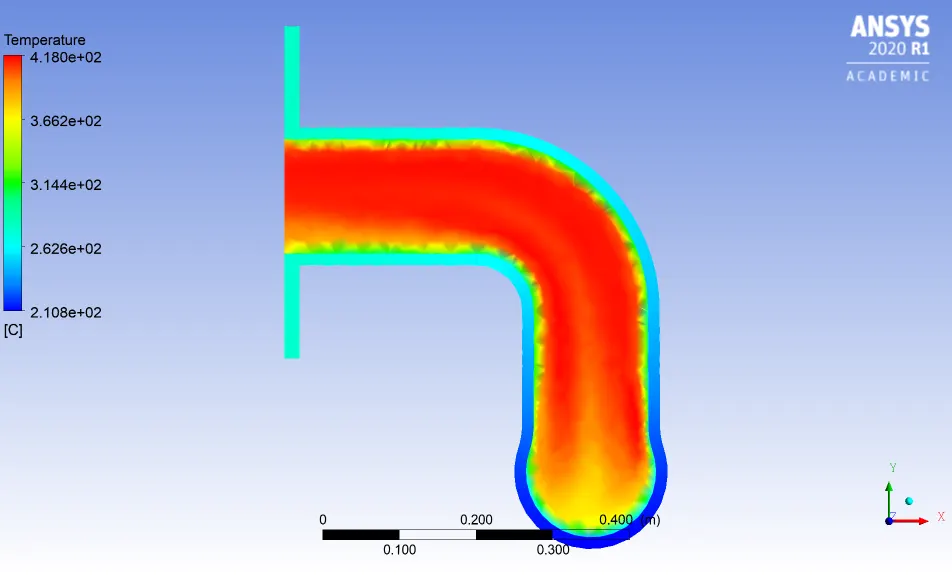
Temperature contour along and across the exhaust pipe :-
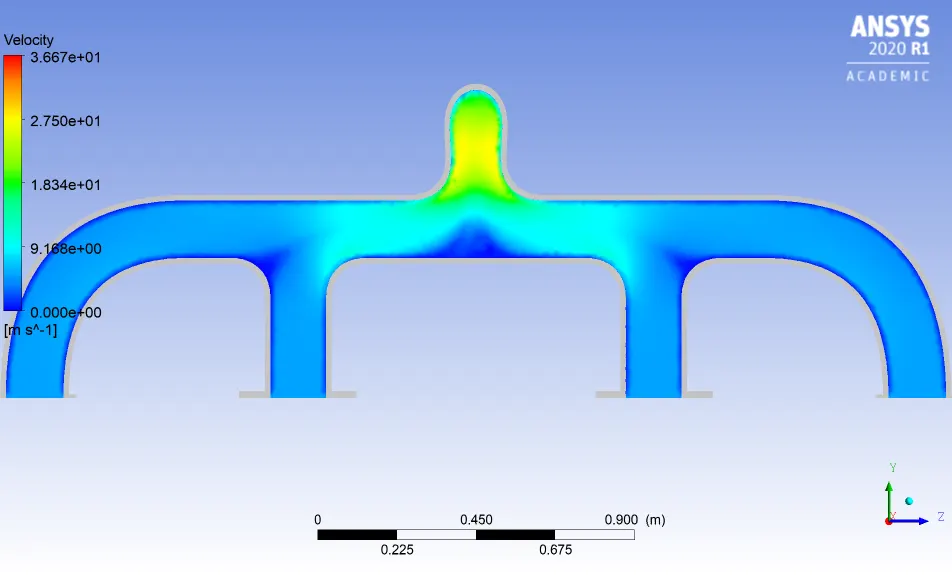
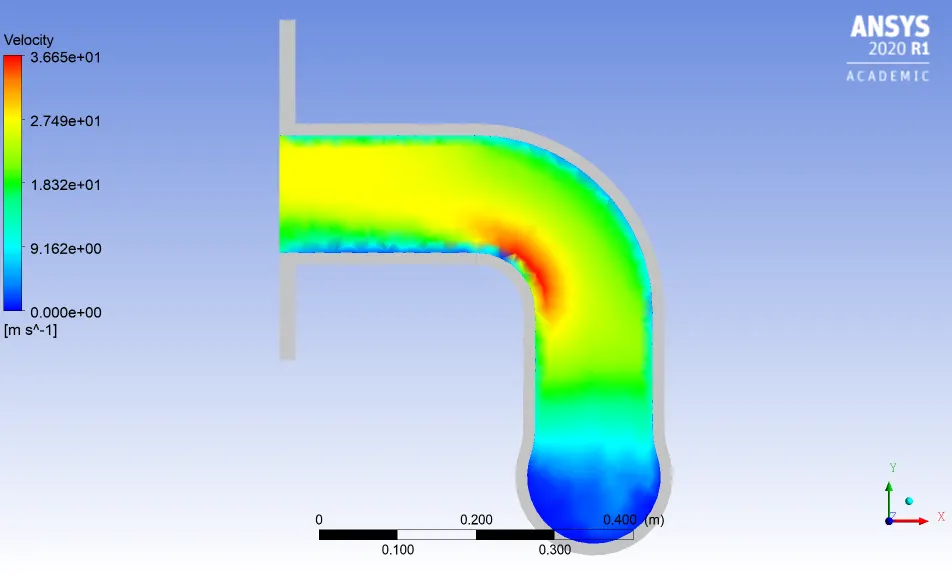
Velocity contour along and across the exhaust pipe :-
Calculated heat transfer coefficient from the plot :-
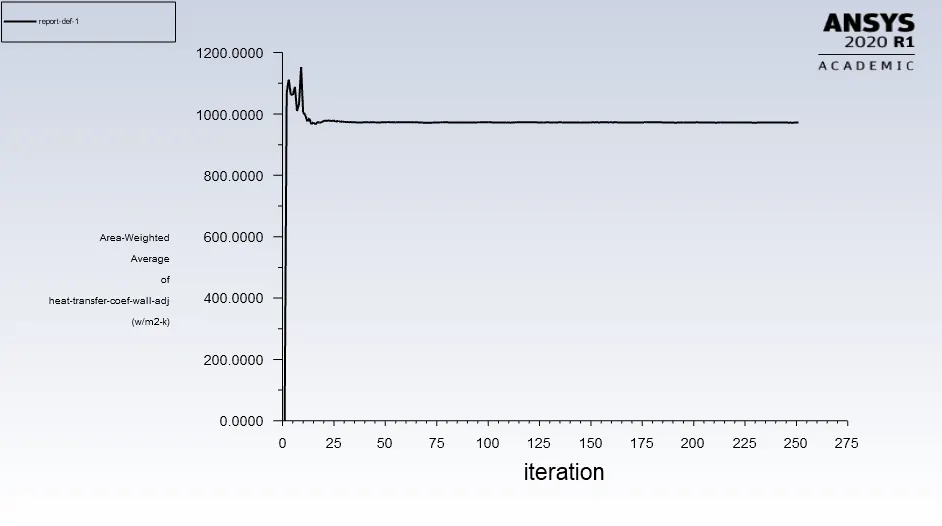
Here, The average-weighted value of adjacent heat transfer coefficient for fluid region is 971.5 W/ (m^2-K).
Y-Plus plot :-
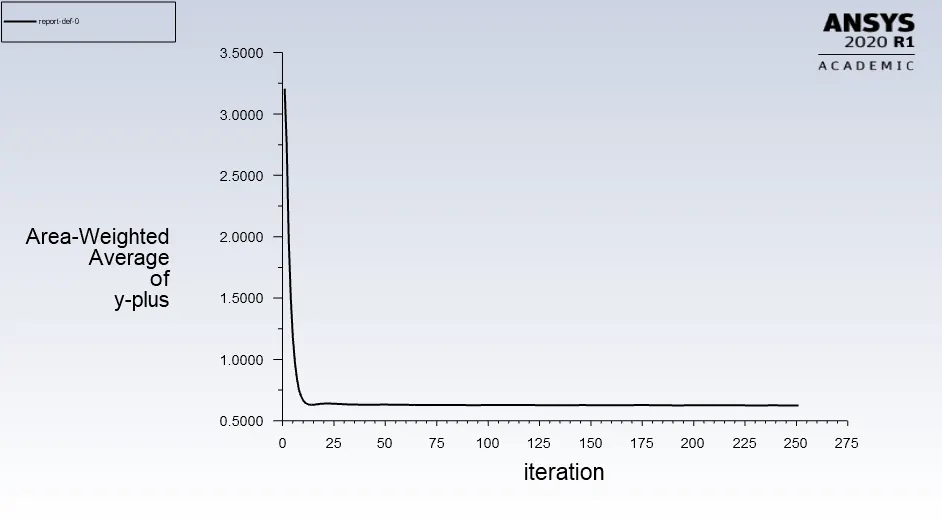
Here from Y-plus plot, We get information that value for y+ plus is around 0.64 which is lower than calculated y-plus value.
Observation :-
From velocity contour, We noticed that velocity is higher at the outlet region of the exhaust port.
From temperature contour, We noticed that its value was overall higher across all the region of exhaust port.
Conclusion :-
We concluded that if We don't have any reference experimental data for verification of result then y-plus is best option for prediction of accurate result.
If y-plus value from simulation is within the calculated y-plus value then We become confirm that our simulation is right.