Emission characterization on a CAT3410 engine
Aim- To perform CFD analysis for W-piston and omega-piston bowl geometry.
Governing equation- The equation used to solve this case is Navier-Stokes Unsteady equations. It comprises of 5 equations continuity, x-momentum, y-momentum, z-momentum, and energy equation.
Objective - The present study used CONVERGE simulation software for the CFD analysis for different piston bowl geometries. In order to make the computation a lot faster, we are using 60 degrees sector models for the current study. CONVERGE automatically generates orthogonal structures grids using AMR (adaptive mesh refinement) based on simple user-defined grid control parameters this simplicity helps the user to avoid the manual grid creation.SAGE model has been incorporated into CONVERGE which helps in including detailed chemistry in combustion applications with a set of chem.in format input files.
Geometry
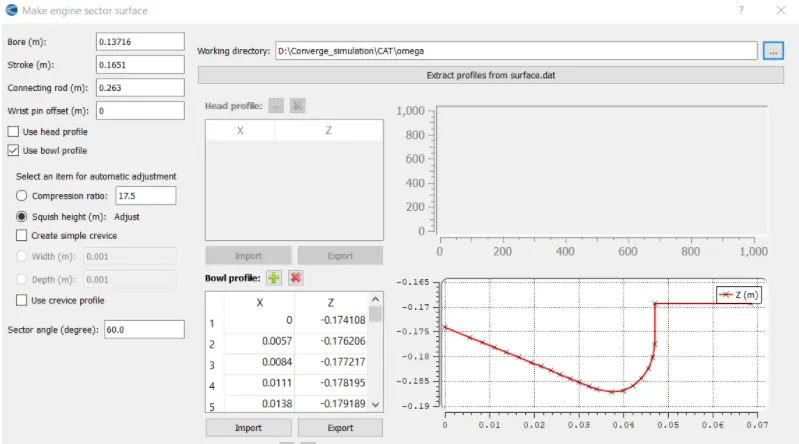
Parameters for creation of omega-piston engine sector
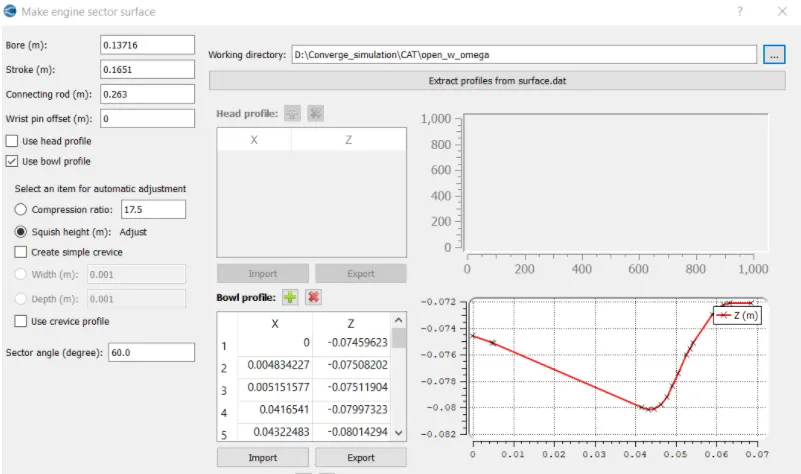
Parameters for creation of w-piston engine sector
Images of 60deg sector of w-piston and omega-piston geometry.
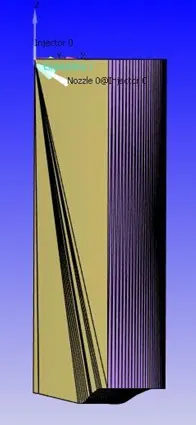
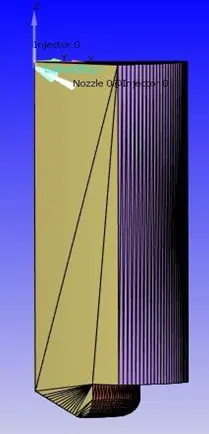
CFD models used
|
Turbulence models |
RNG k-ε |
|
Injection drop distribution |
Χ2 distribution |
|
Drop drag |
Dynamic drag model |
|
Droplet collision model |
NTC model |
|
Collision outcome model |
Post collision model |
|
Drop turbulent dispersion |
O’Rourke model |
|
Drop/wall interaction |
Rebound slide model |
|
Evaporation model |
Chiang model |
|
Spray breakup |
KH-RT |
|
Combustion model |
SAGE |
Mesh - Images of the mesh of w-piston and omega-piston geometry.
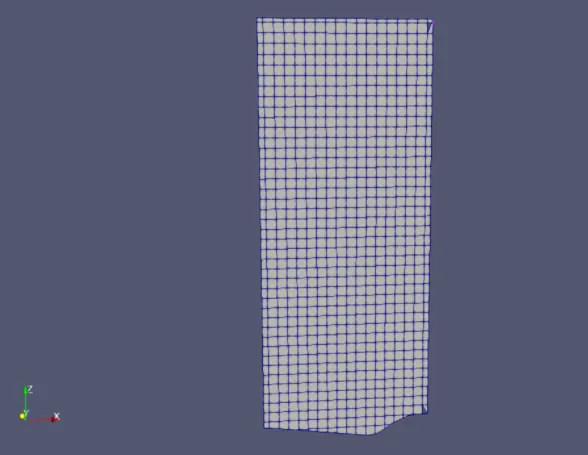
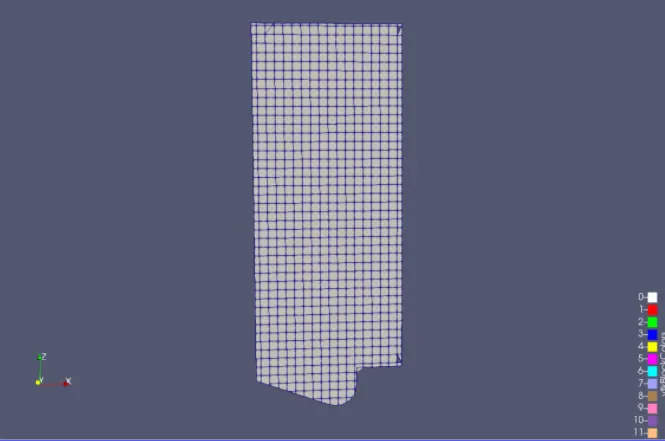
Results-
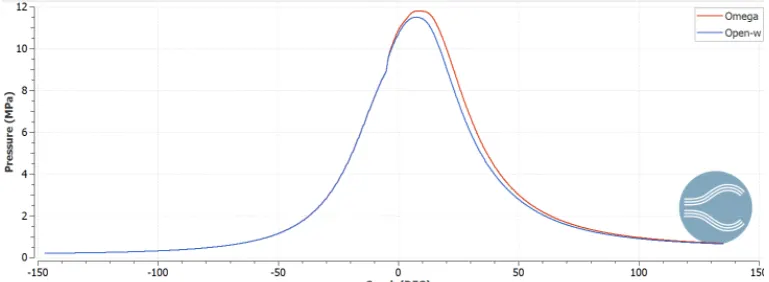
W pistons have higher peak pressure compared to omega pistons per cycle the peak pressure for the w piston the peak pressure is around 11.5336 Mpa and the omega piston’s peak pressure is reaching around 11.2571 Mpa as seen from the above figure. The angle of the crank while attaining the peak pressure for the omega and W pistons is 12.48 and 10.69 degrees, since the injection starts at -9 degrees the omega pistons can produce better combustion compared to W pistons which may be the reasons for the higher indicated power.
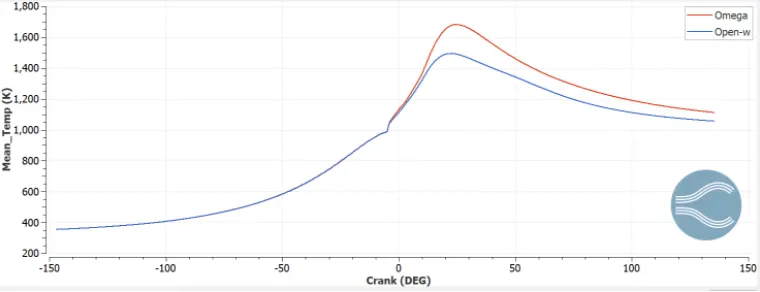
The omega piston has reached a temperature of 1768 K at 25.47ᵒ while the W pistons have reached a temperature of 1464.55 K at 39.434ᵒ. when viewing the results there happens to be some anomaly going on, it’s due to the injection timing. As it’s evident that the injection time starts at -9ᵒ at this time the peak pressure at both piston geometries is almost the same that is 11 Mpa and the injection duration is for other 21ᵒ i.e.: up to 12ᵒ.
It’s evident the omega pistons have a 68J upper hand over W pistons per cycle hence since combustion energy release is more for the former it has more work output than the later as expected.
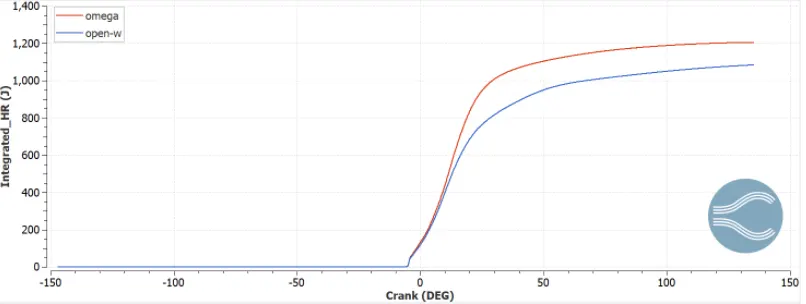
The amount of work done in the omega piston is around 3409.28 J and for the W piston, the work is about 3028.5 which is an 11.16 % increase in power when compared to the W pistons.
Also, there is a clear advantage of the combustion energy for the omega piston The energy surplus from the combustion energy alone = 68 J
For 1000 cycles the energy = 68 KJ
Where RPM =1600 rpm
hence Time = 1.04*10-04 sec/degree
Total duration is 270.189 ᵒ hence the total Time (seconds) =270.189 * 1.04*10-04 = 0.02809 Power (omega piston) = 3409.28/0.02809 = 121.369 KW
Power (w piston) = 3028.50/0.02809 = 107.8114 KW
N=1600 rpm
Power (omega piston) = 3409.28/0.02809 = 121.369 KW
Power (w piston) = 3028.50/0.02809 = 107.8114 KW
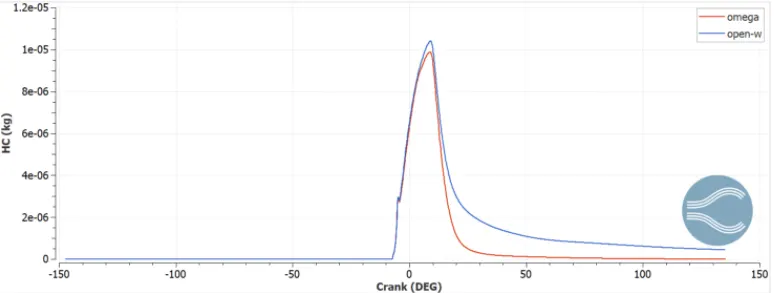
It is clear that the gaseous fuel is not fully burnt that is it undergoes late combustion inside the cylinder of the engine for omega piston. As it’s evident from the graph, for the same amount of fuel injected the fuel remains in the cylinder for a long time without undergoing combustion also the amount of fuel in a gaseous state is more in the cylinder.
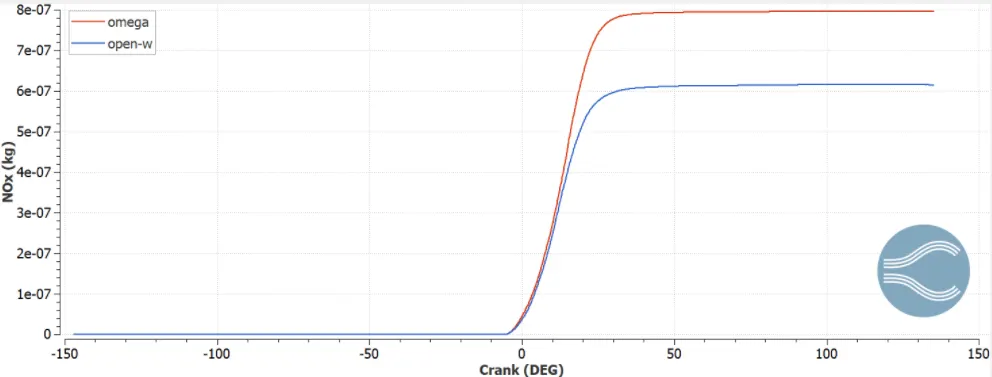
According to the above graph, the NOx for the W pistons is less compared to the omega pistons so the main aim of the designer is the environmental concern rather than the performance it’s advised to move into the W pistons.
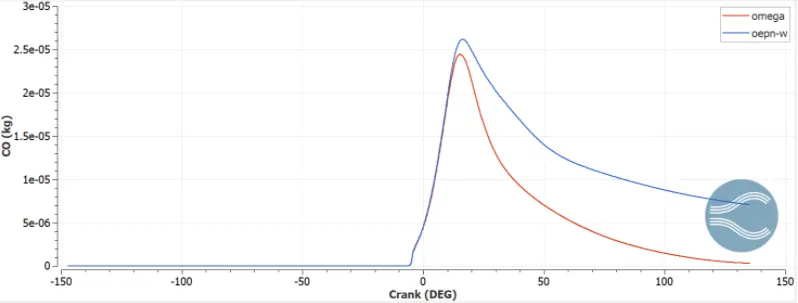
You can see that the graph for the omega piston is narrower compared to the W pistons hence the time taken for the complete combustion is less for the omega pistons that is while the crank rotates about 70deg the CO concentrations diminishes, the CO emissions mainly depends on the richness of the fuel.
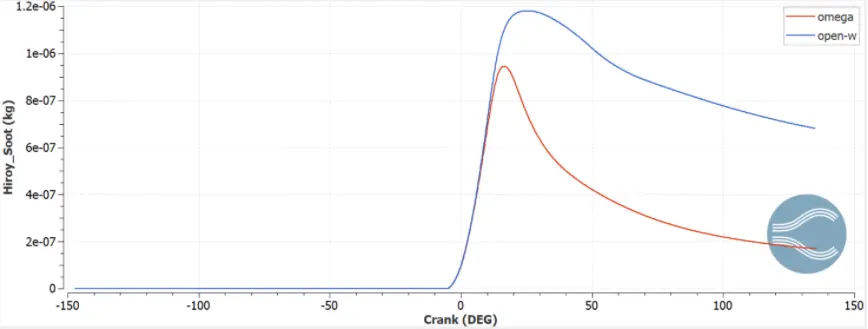
The omega pistons combust at a faster rate than W pistons soot formation also becomes more, the turbulence and mass motion continue to mix the components of the combustion chamber, most of the carbon particles find sufficient oxygen to further react and convert into carbon dioxide. The majority of the soot comes from the lubrication oil used in the engine.
Conclusion
It can be concluded that if the performance parameters are focussed it gives a slight upper hand for the omega pistons since it produces more work output as seen above .but as we know the open pistons have a slight advantage over the emissions compared to the omega pistons it really depends on the designer, at last, to design an optimum design so he gets a balanced result regarding the performance and the emissions. If we change the injector parameters like angle, pressure, etc. the performance parameters can be increased for the w-pistons can be improved to great extent apart from this various engine management systems can be used to eliminate emissions such as controlling injection timing, injection pressure many of which can be reduced solely by the engine design and controlling the injection parameters.