DOOR TRIM PANEL
AIM : objective of this project is to make the door trim panel in catia-V5 from the provided Class-A surfaces.
INTRODUCTION: The door panel covers internal parts like the window regulator, the power window motor, and the wiring. It is attached to the sheet metal part of the door. It is designed differently based on the design of the sheet metal part of the door. Besides its aesthetic look, it also has many functional features attached to it such as an armrest, bottle holder, speaker attachment, etc. In older cars, door panels used to be made out of cardboard and upholstered with material that matches the rest of the upholstery within the cabin. On the other hand, most modern cars have door panels made from plastic. The main materials used include kenaf, which grows year-round and has excellent CO2 absorbing properties, and plant-derived plastic, making them environmentally friendly as well.
PARTS IN DOOR TRIM PANEL :
- ARM REST
- LOWER SUBSTRATE
- MAP POCKET
- BOTTLE HOLDER
Creation of Tooling Axis:
- Create a point on surface A
- Create a line using the Line-Definition command while choosing point-direction as a line type.
- Select point and direction will be toward the Y component.
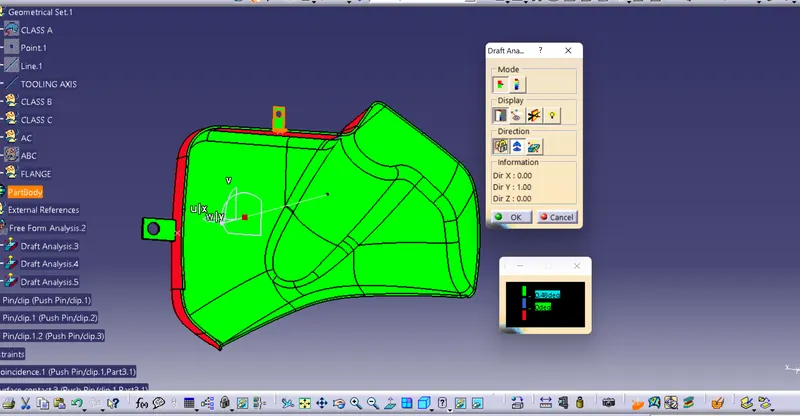
Draft Analysis:
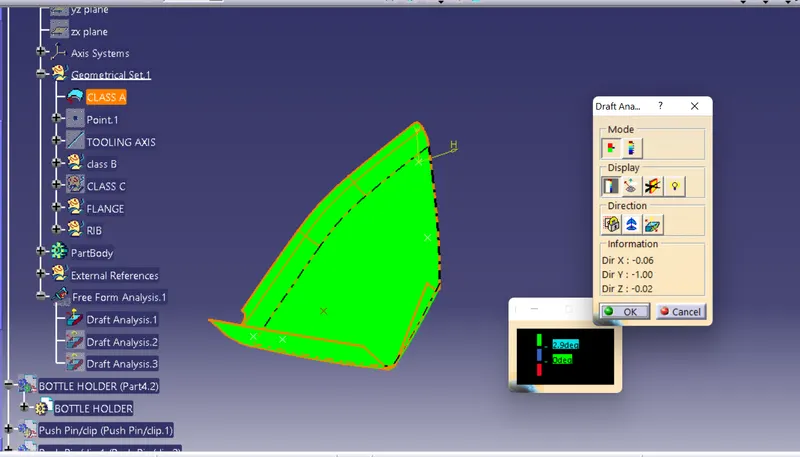
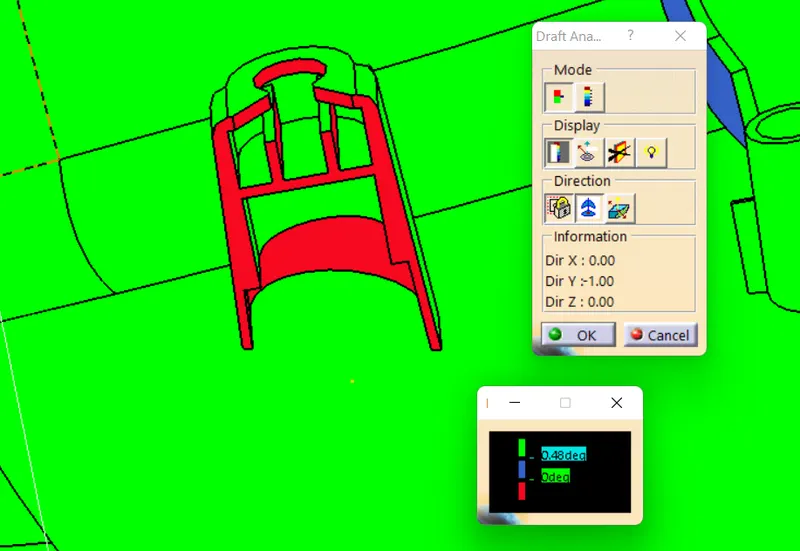
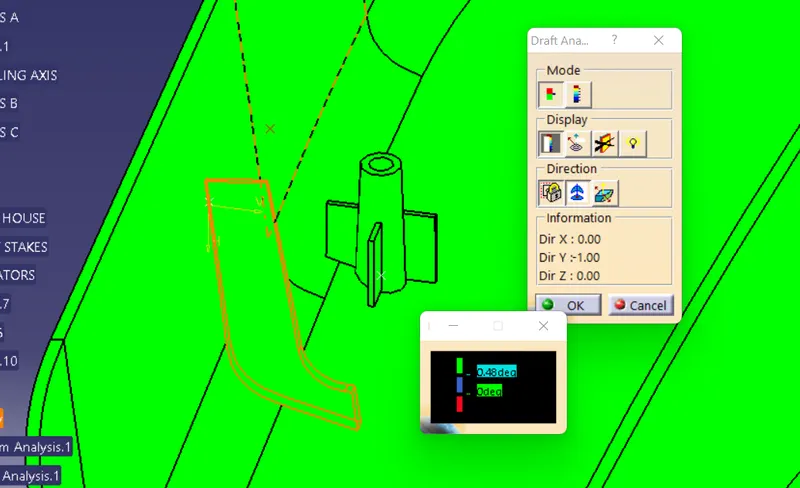
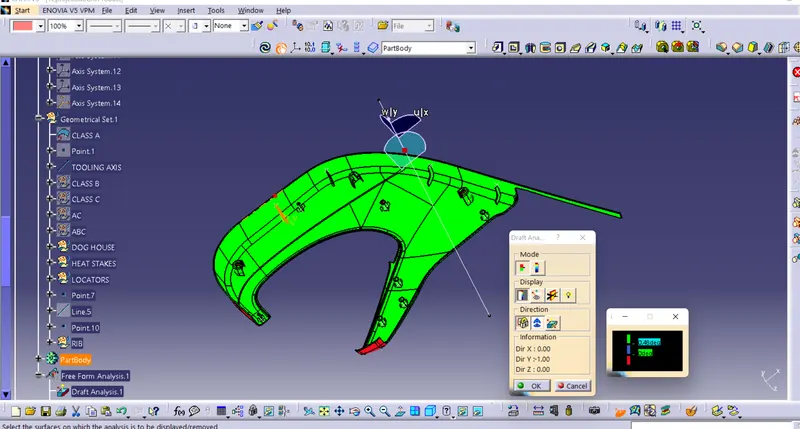
The draft is the amount of taper for moulded or cast parts perpendicular to the parting line. Draft angles are a design consideration that makes it much easier for a part to release cleanly from a mould.
Procedure to Perform Draft Analysis:
- Click on the Draft Analysis under the Aanalysis Toolbar in the part workbench.
- Now drag the compass and place it on the Tooling Axis.
- Next Adjust the compass and lock it on the Tooling Axis.
- Select the Final Part in which the Draft Analysis should Perform
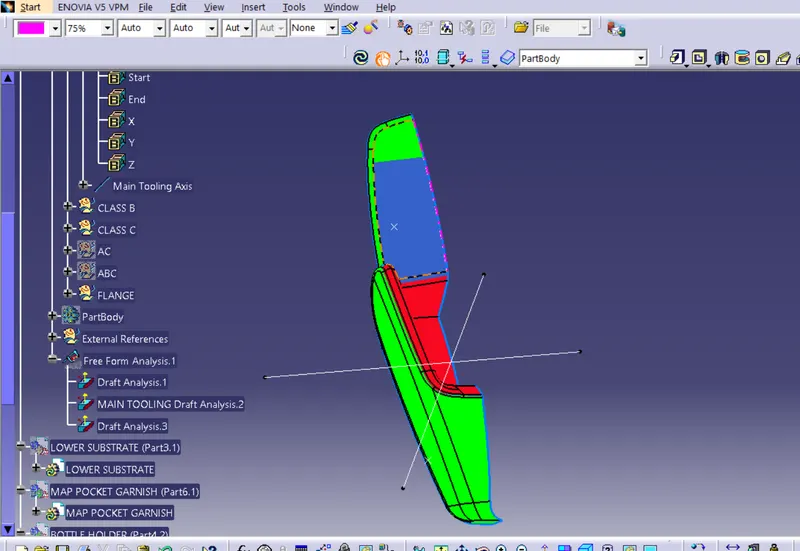
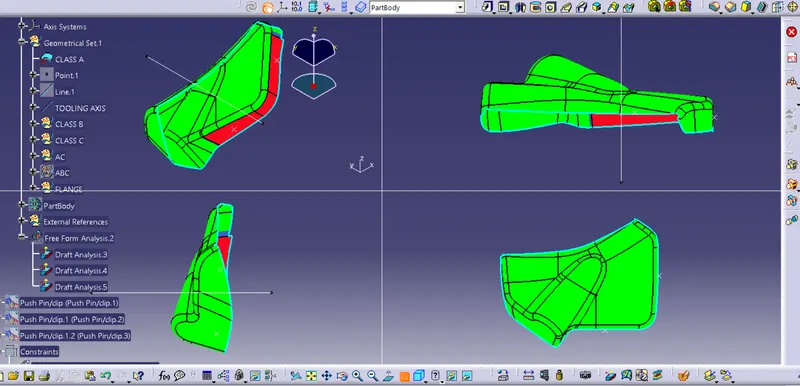
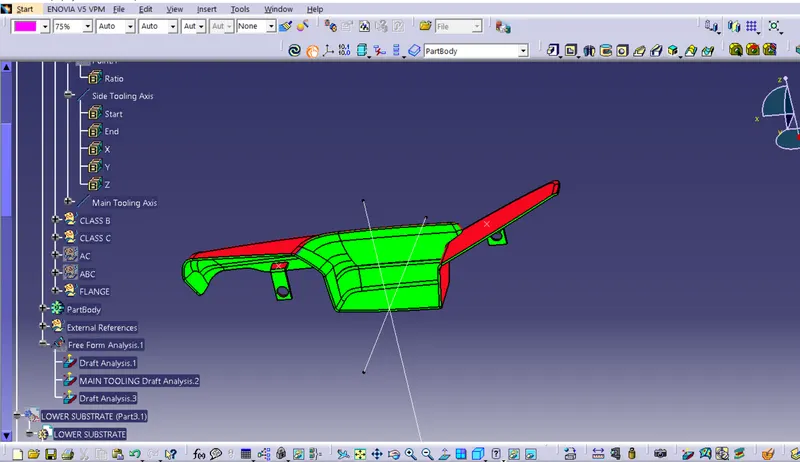
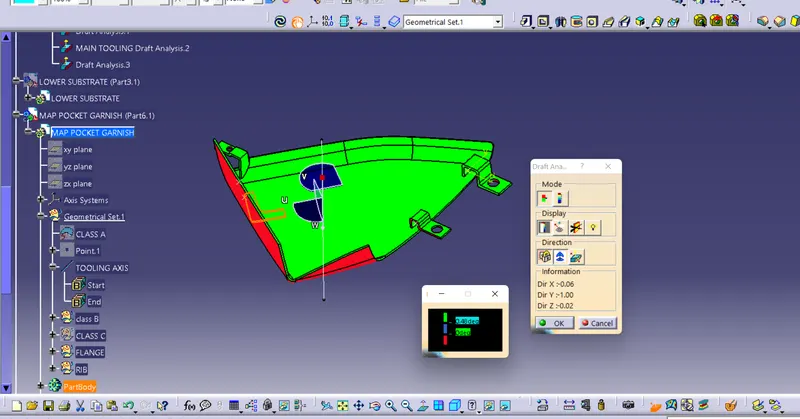
Green colour - Draft Angle is more than 2.9 degrees
Blue colour - Draft Angle is between 0-2.9 degrees
Red Colour - Draft Angle is less than 0 degrees
ROCEDURE:
Steps that followed for this project is mentioned below:
1) Extracting the class A surface from the input
2) Draft Analysis of class A
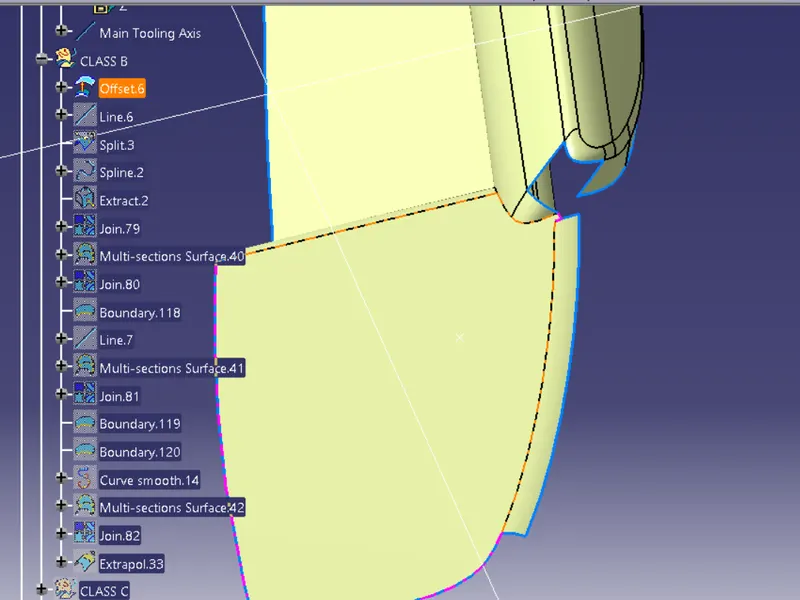
3) Creation of Class B and Class C surface from Class A
4) Created the solid body and performed the draft analysis on the solid body
5) created the flanges
6) Created the Engineering features
7) Draft analysis of the component with Engineering features.
1.ARM REST
- DRAFT ANALYSIS OF CLASS A SURFACE
- OFFSET OF CLASS A SURFACE
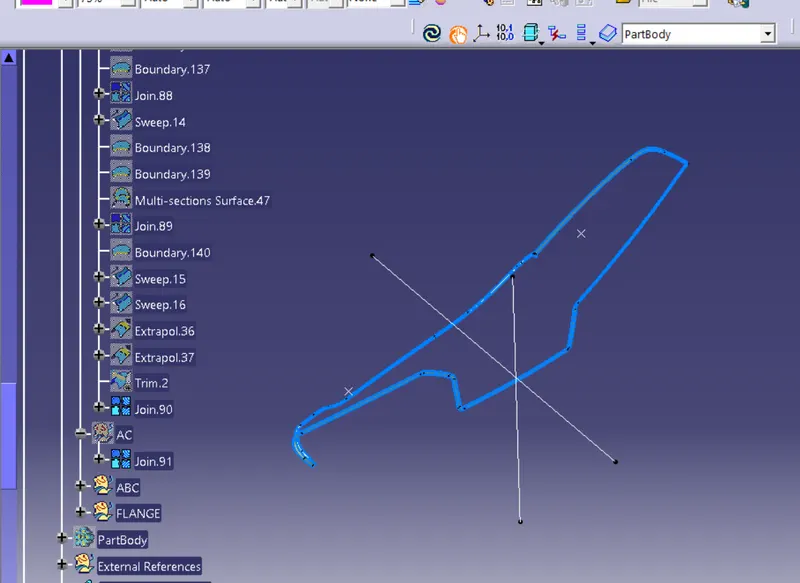
- CLASS C SURFACE
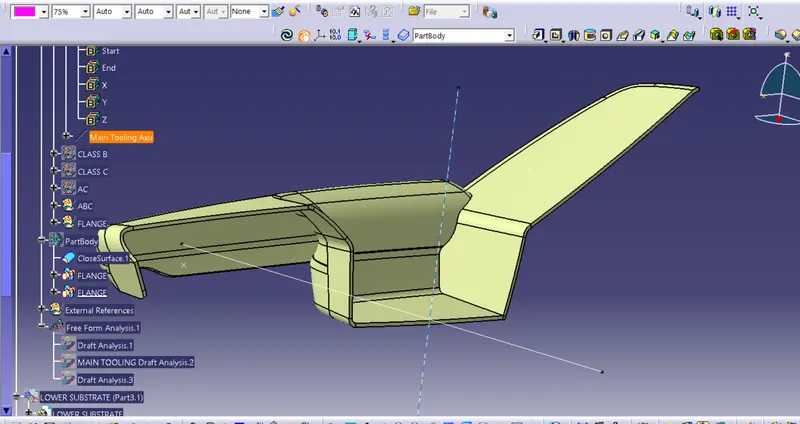
- ABC SURFACE
2.LOWER SUBSTRATE:
- CLASS A SURFACE
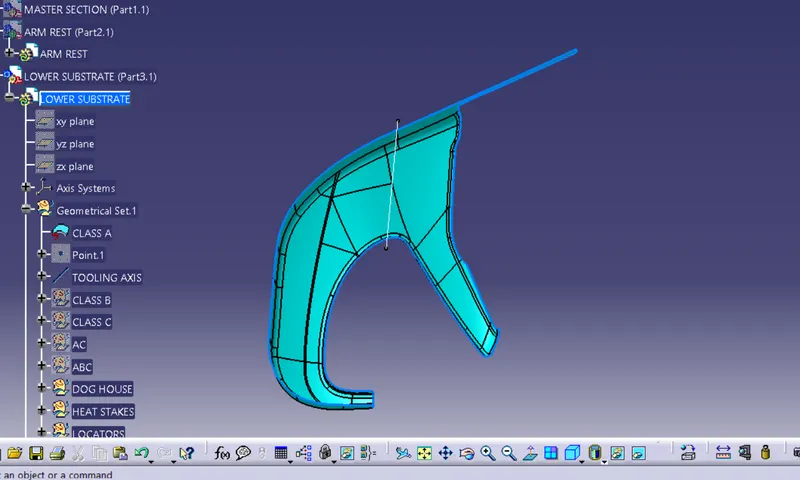
- DRAFT ANALYSIS OF CLASS A SURFACE
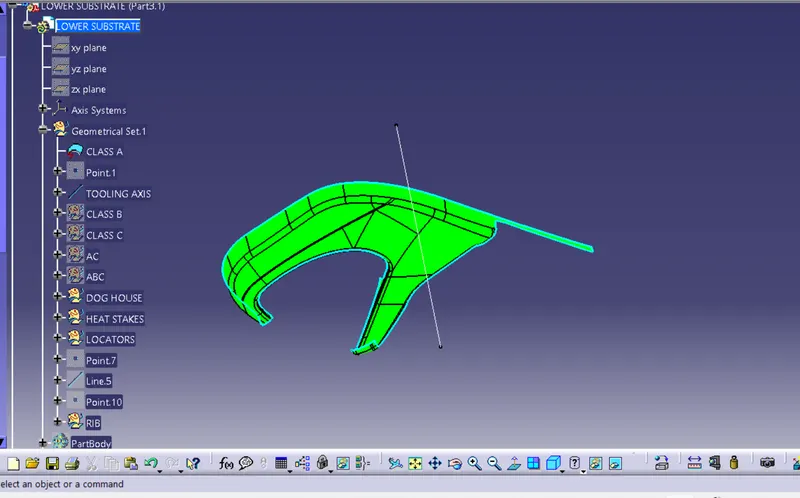
- CLASS B SURFACE
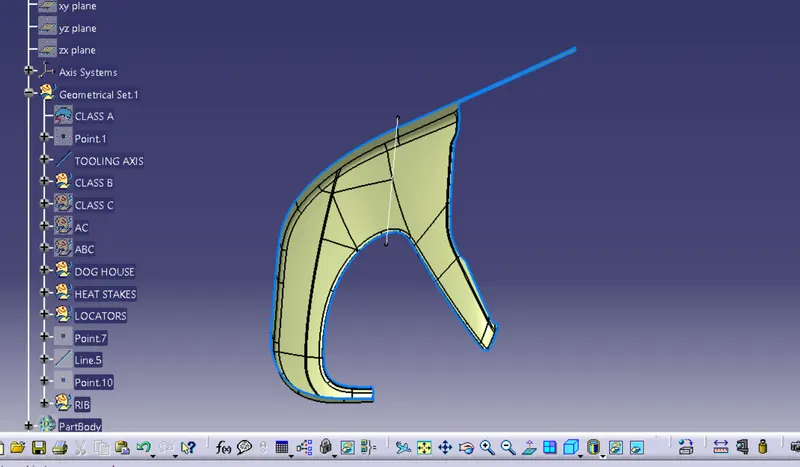
- CLASS C SURFACE
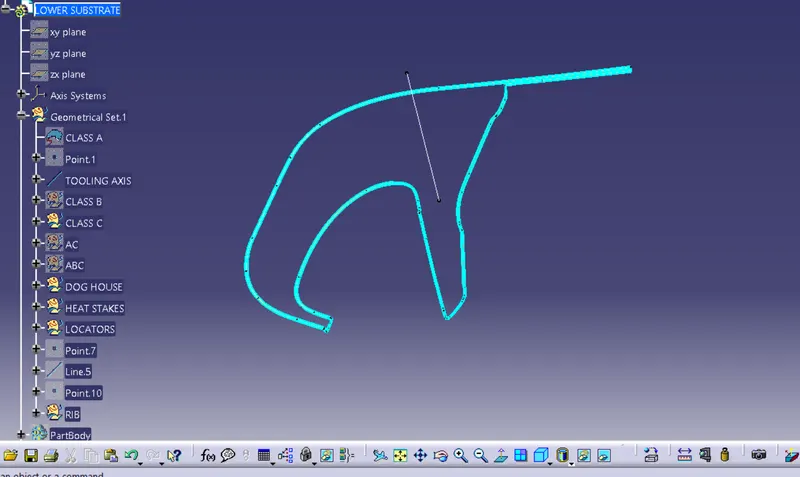
ABC SURFACE
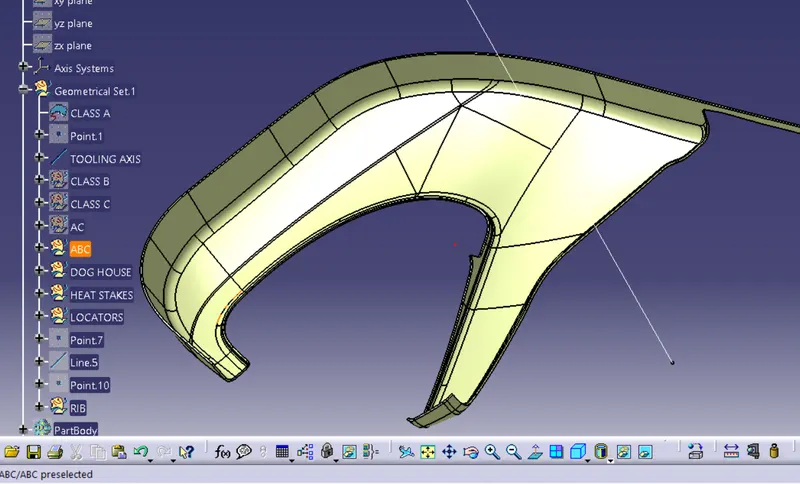
CLOSED SURFACE
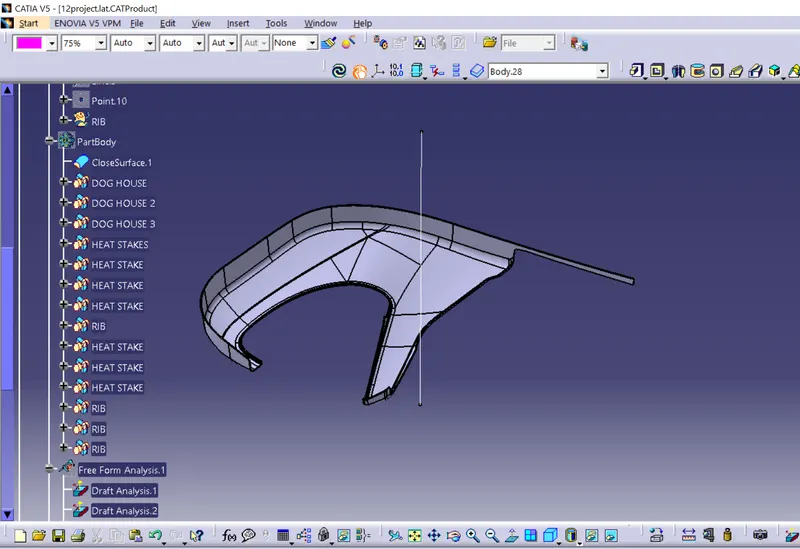
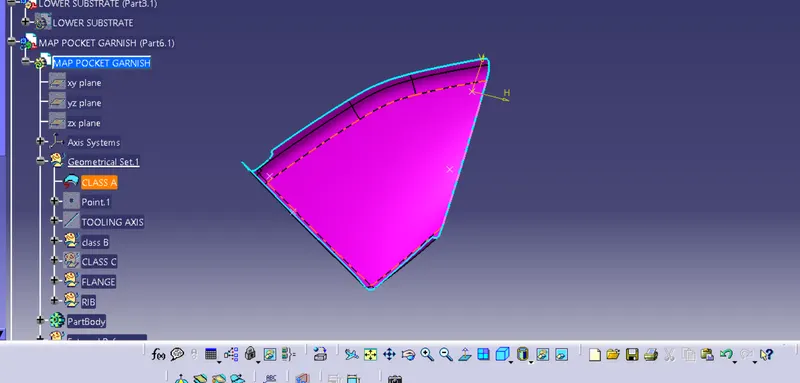
3.MAP POCKET:
- CLASS A SURFACE
DRAFT ANALYSIS OF CLASS A SURFACE
CLASS C SURFACE
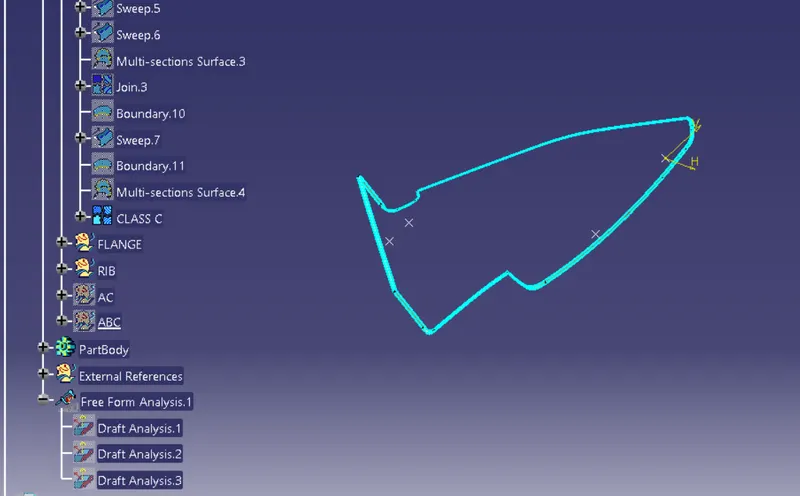
ABC SURFACE
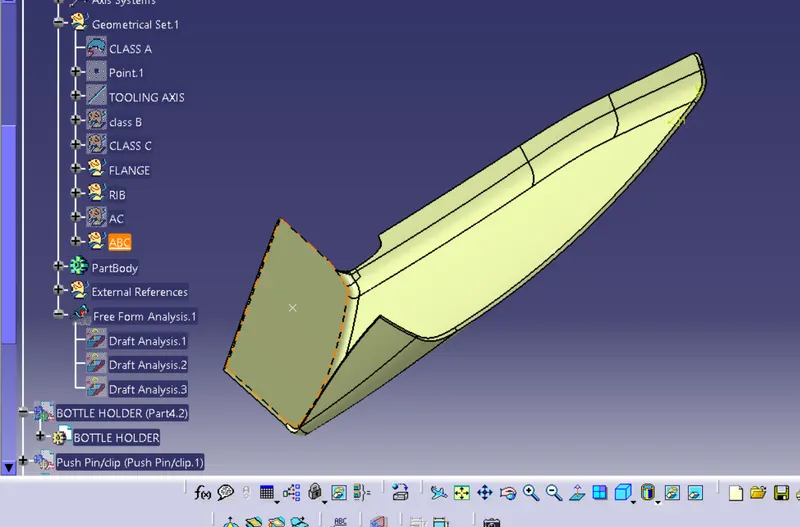
SOLID COMPONENT
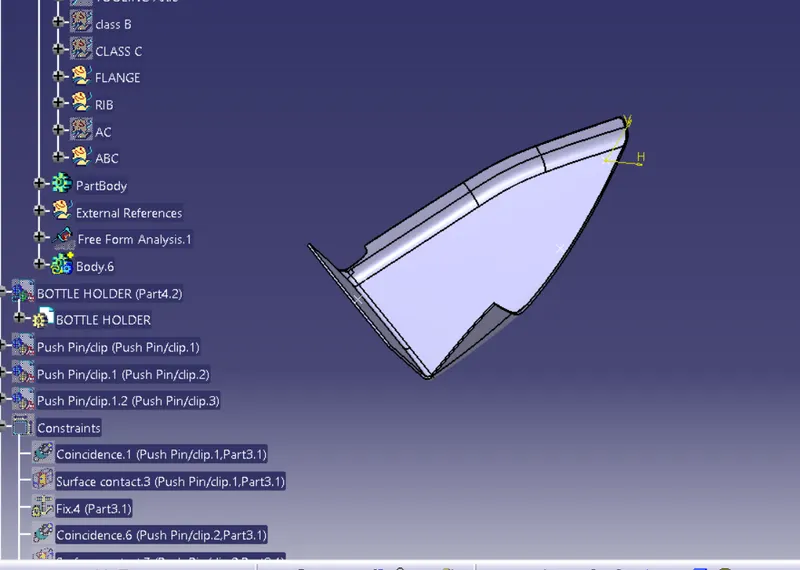
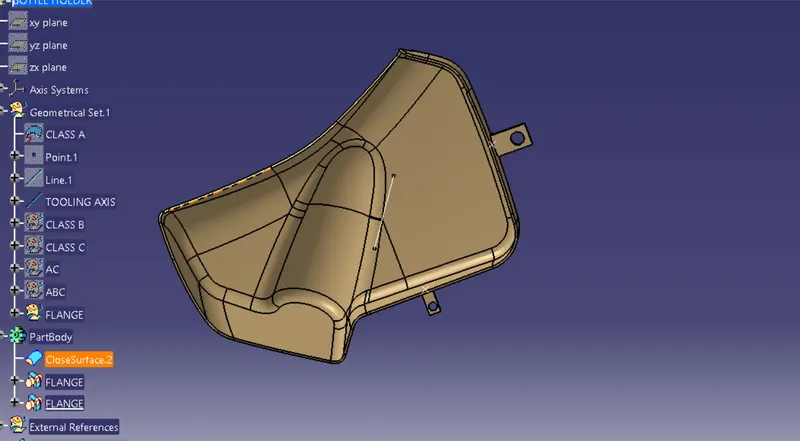
4.BOTTLE HOLDER:
- CLASS A SURFACE
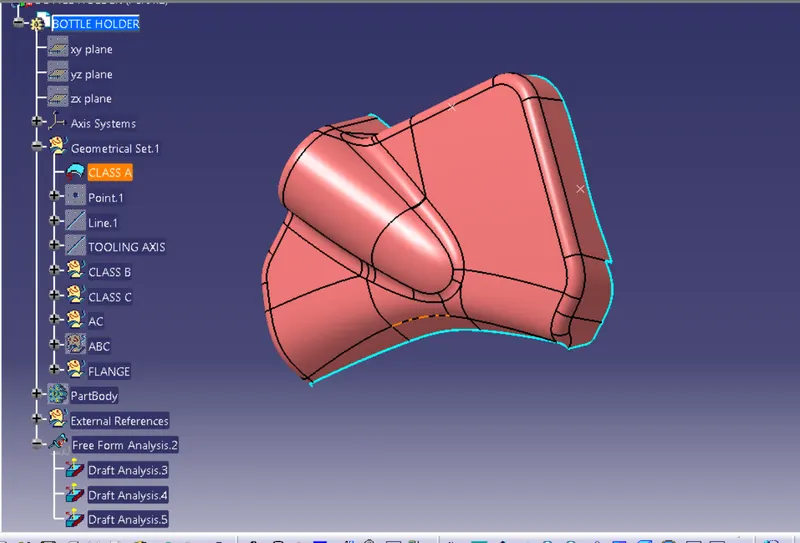
DRAFT ANALYSIS OF CLASS A SURACE
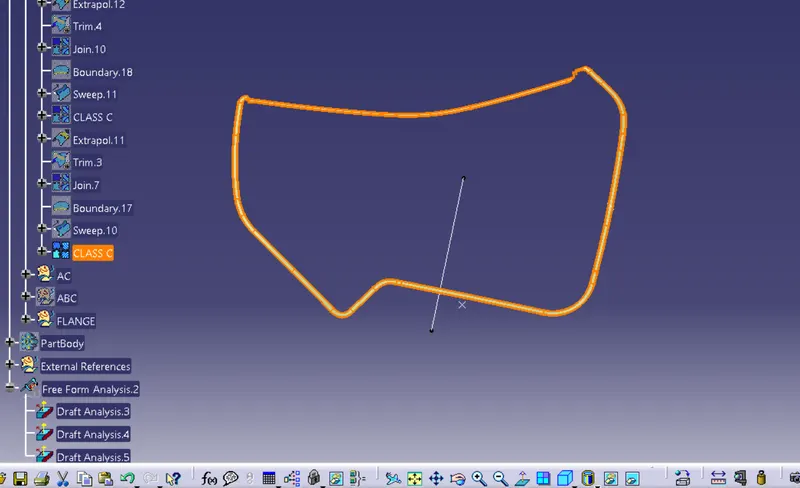
CLASS C SURFACE
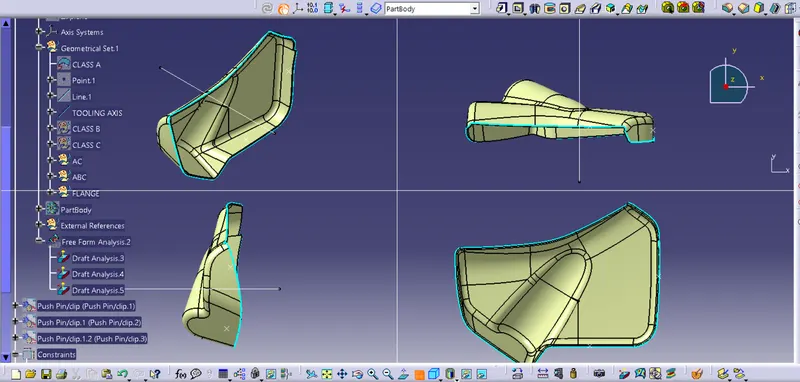
ABC SURFACE
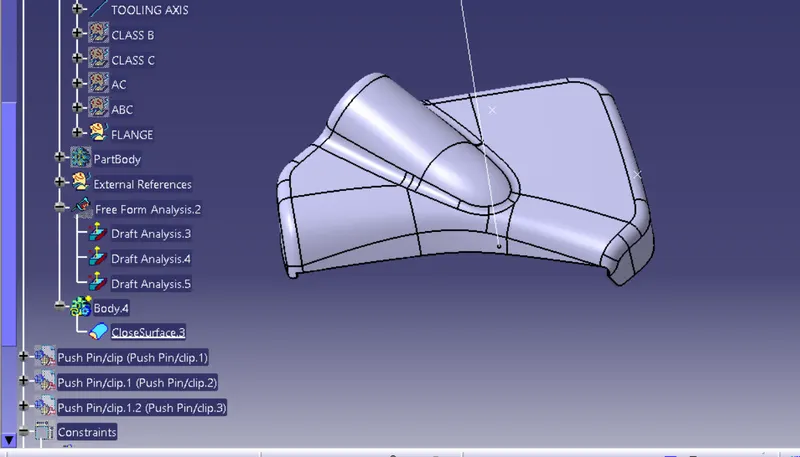
CLOSED SURFCE
MASTER SECTION:
Master section are the guides for a design that shapes the component after technical styling of class A surface. The Master section is parameterized model of the vehicle body that outlines the guidelines for the NPD team.
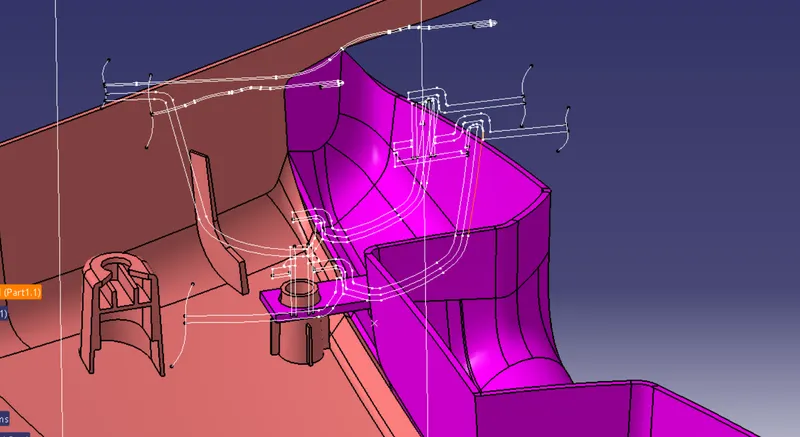
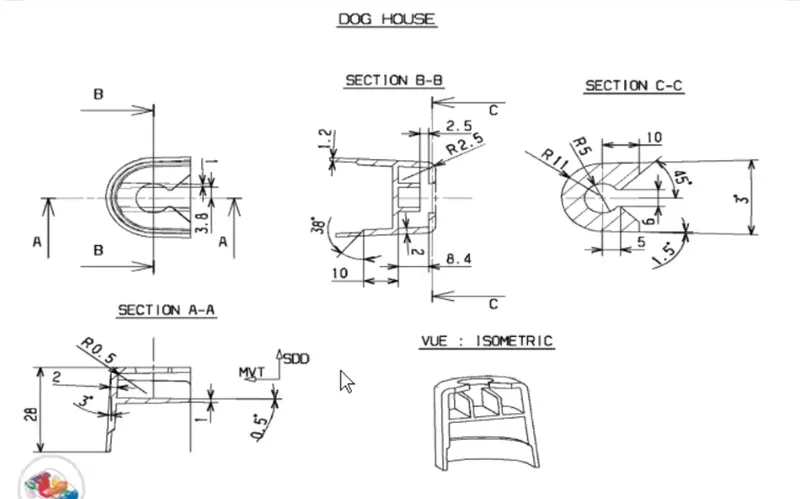
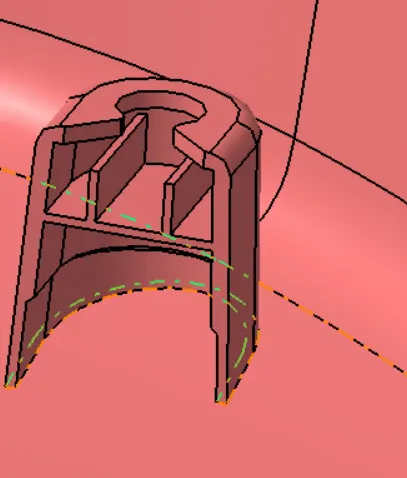
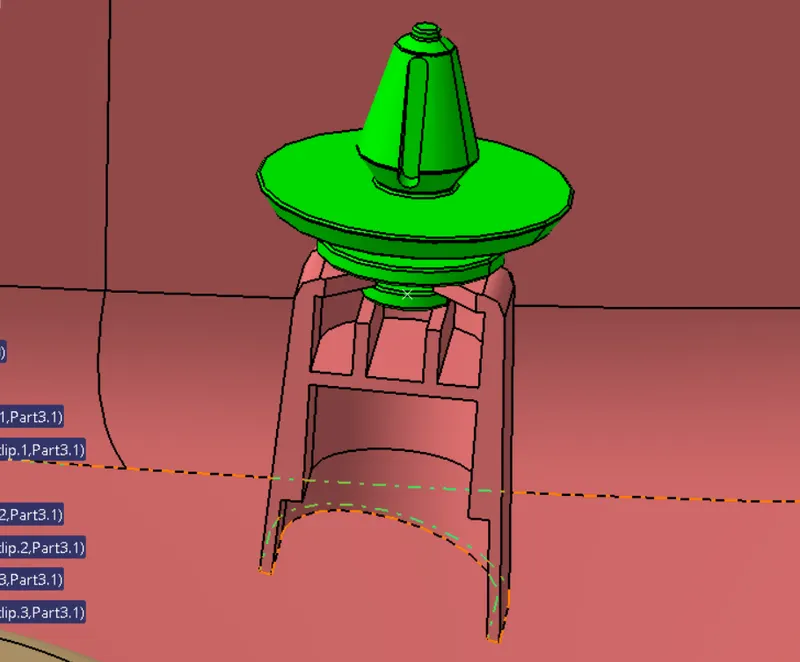
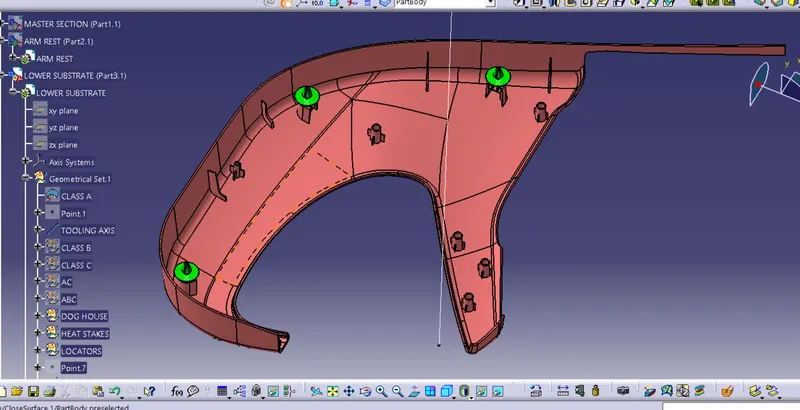
- DOG HOUSE : Dog house is an engineering feature used in the plastic trim design. Doghouses are used as supporting features. Sometimes other engineering features like snaps; locators, etc. are mounded on them to increase their strength. Dog houses are subjected to draft analysis to prevent breakage of the component during ejection from the mold cavity. Dog house and other engineering components are built on B-surface.
2.RIBS :
Ribs increase the stiffness and strength without increasing overall wall thickness of the model which is not desired. They also facilitate:
- Locating and arresting components of an assembly
- Providing alignment in mating parts
- Acting as stopper or guides for mechanisms.
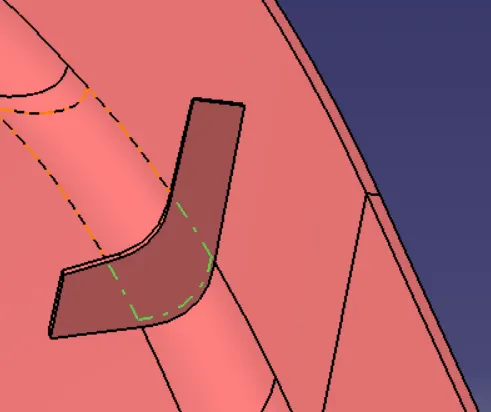
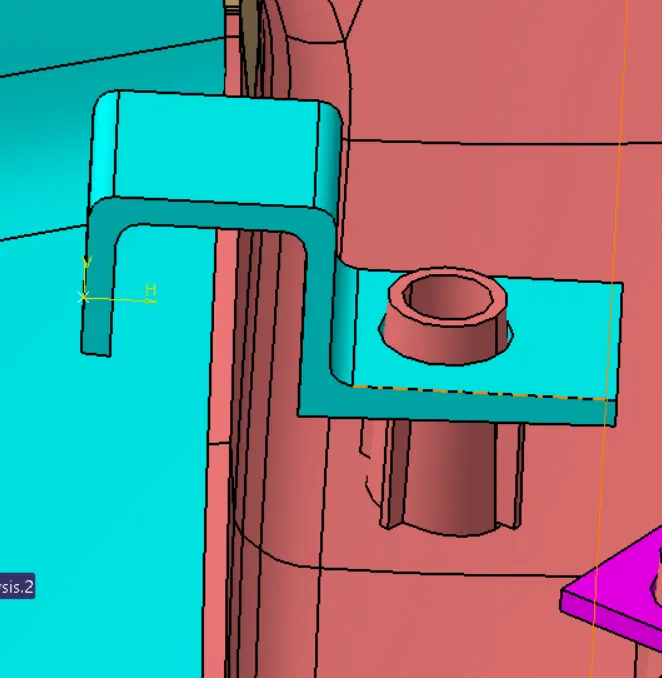
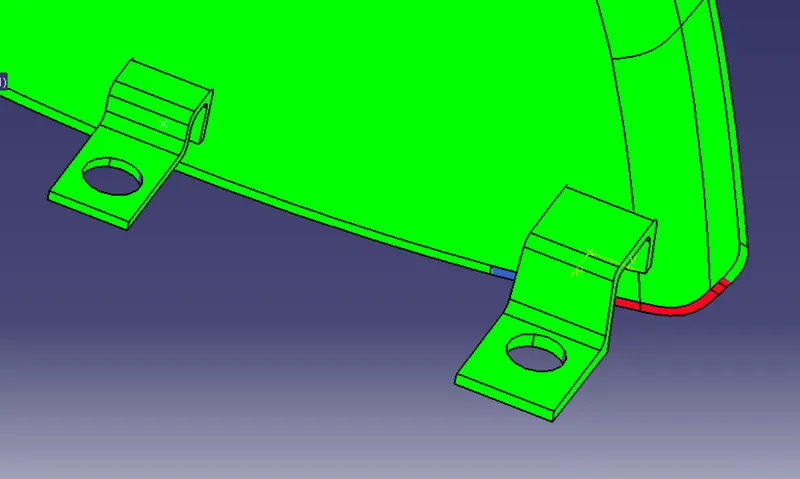
3.HEATSTAKE & FLANGES : Heat staking also known as thermoplastic staking is the process of joining two dissimilar materials together. In heat staking, we use local heating and cooling to raise the temperature of plastic components and allow plastic reforming to be carried out. This reforming can be used in a wide variety of applications.
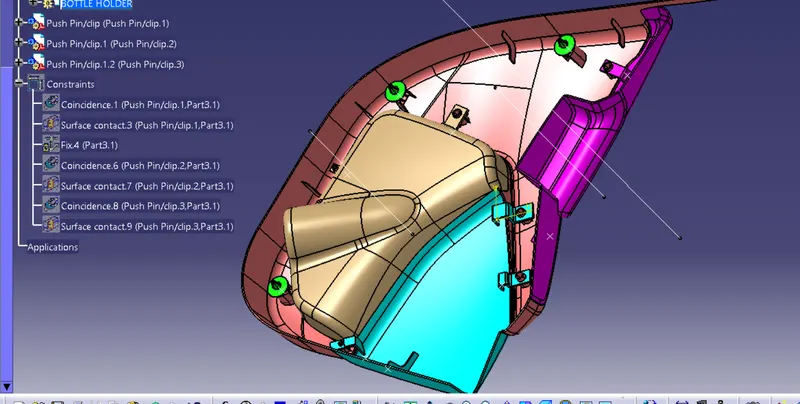
PUSH CLIPS:
Push clips are mounted on the Doghouse, it is used to connect the parts
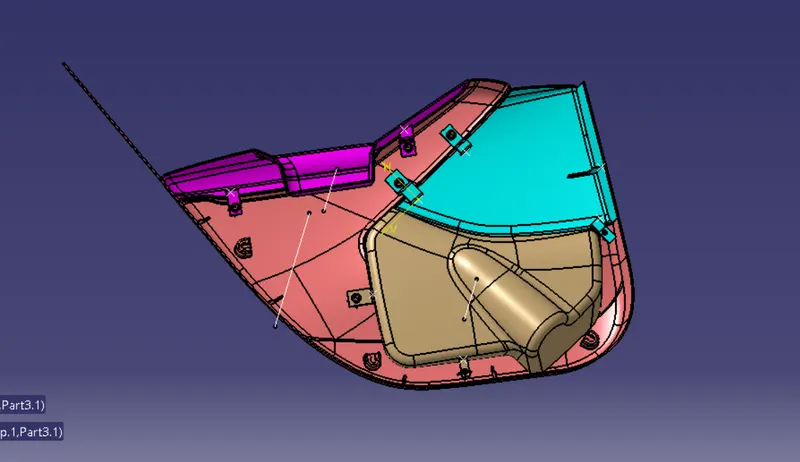
FINAL COMPONENT:
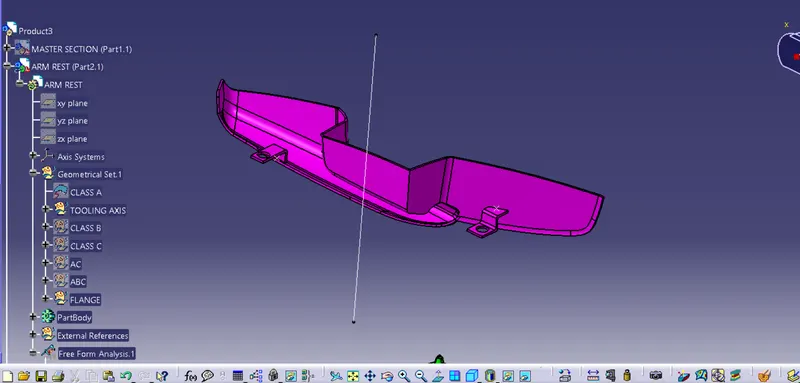
1.ARM REST
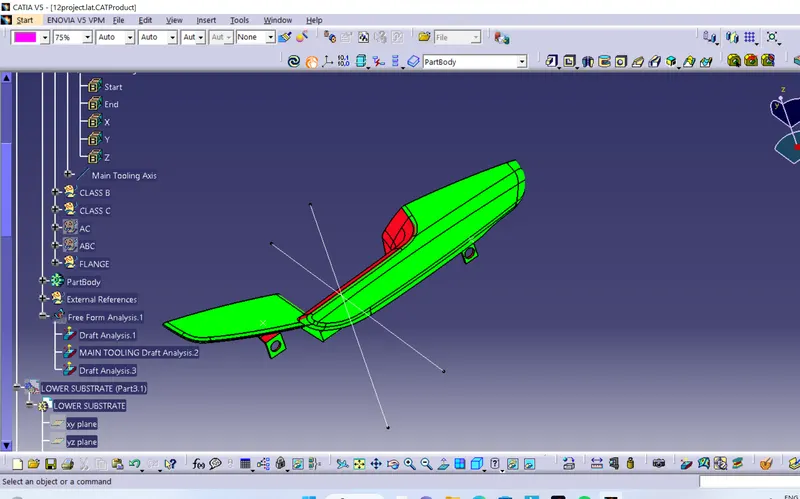
2.LOWER SUBSTRATE
3.MAP POCKET:
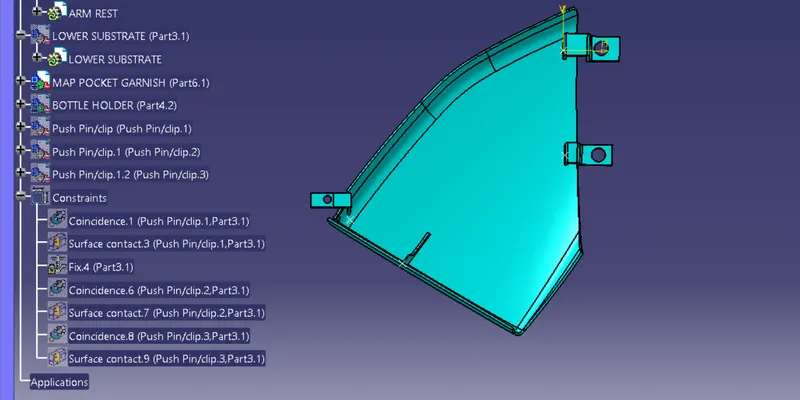
4.BOTTLE HOLDER:
CONCLUSION:
The creation of the Door Trim Panel along with engineering features using the master section given as the input and the draft analysis has also been performed on the component.