Design of backdoor
BACK DOOR DESIGN
Aim:
To create a back door design and the back door reinforcements with the design consideration using NX cad software.
Objectives of a back door design:
1. To create a Outer panel upper & lower
2. To create a Inner panel
3. To create a reinforcement of back door
4. To analysed in draft analysis
what is back door of a car?
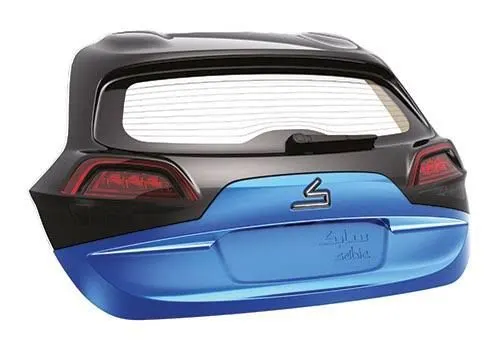
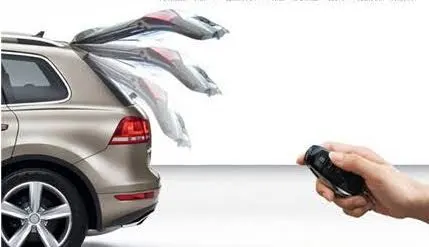
A door which is located at the rear side of a car which gives access for the boot space to store luggage, spare wheel etc. These doors can be operated manually or electric powered. In most of the luxury cars door is electrically operated.
Back door also known as tailgate. A tailgate is a door at the back of a truck or car, that is hinged at the bottom so that it opens downwards.
Types of the back door
- Top Mounted Door
- Side mounted Door
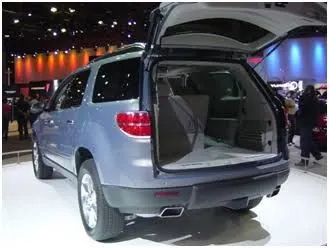
Top Mounted door
This type of back doors is used in a station wagon, pickup trick and some of the sport utility vehicles. Today modern cars use top mounted tailgating systems which are both powered and also gas stay supported.
Thsese top mounted tailgates provided greater rear visibility comppared to side-mounted or bar doors which have center pillars in it.
Side Mounted door
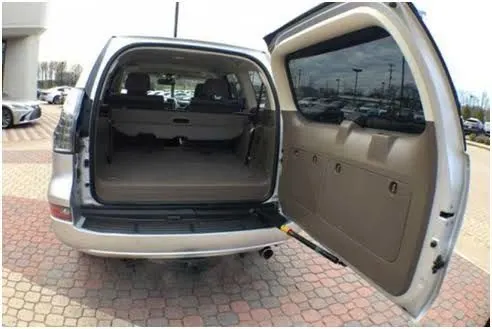
As the name signifies side mounted doors are the one which is used in the van type MPVs, SUVs, pickup truck vehicles. These side mounted doors or barn doors are a lot easier compared to top mounted doors.
These doors are generally smaller in size and can be easilly accessed.
Types of mechanisms for back door:
- Gas stay
- Power lifted system
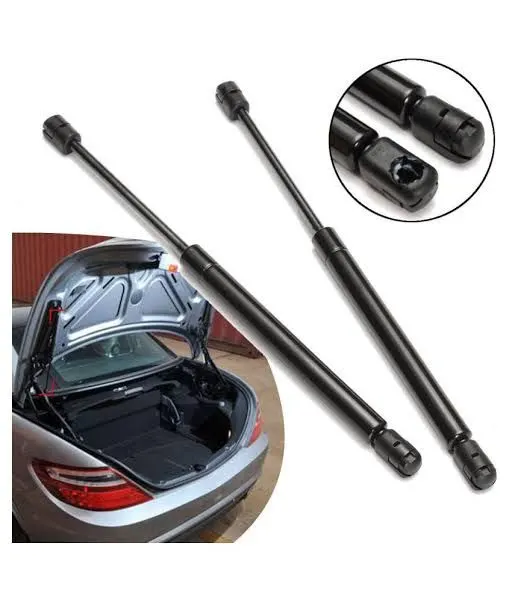
Gas stay:
Gas stay types backdoor/liftgate/tailgate is an ideal and most commonly used tailgate mechanism from lower segment car to luxury car segment.
The ideal components of tailgate consist of a hinge, door, gas stay and some rubber beadings for sealing of door.
Power lifted systems:
This systems is opening mechanism which is to automatically open and close of the truck/liftgate and release if the latch by the touch of the button.
Different Sheetmetal Processs used for manufacturing the Back Door
Deep Drawing:
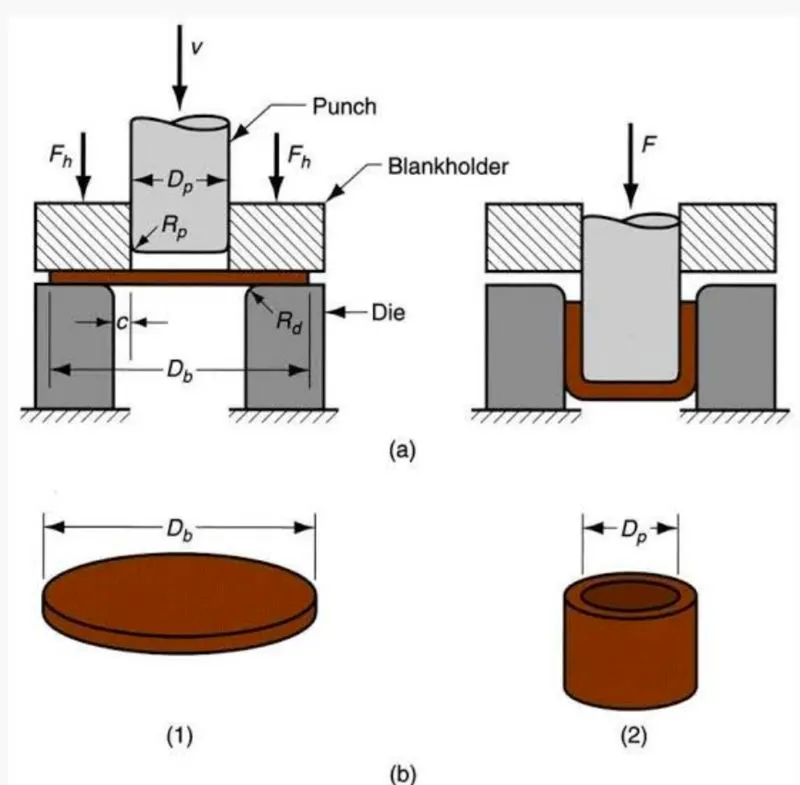
The metal deep drawing process is an effective method of manufacturing of cups, cans and other similar deep drawing products. The deep drawings having two main categories.
1. First-Stag drawing:
The blank shape of metal is placed on the die and contact with the punch. When the metal speciment is flat piece of sheet metal used in forming and finish the product. Initially the punch moves rim of black is subjected to pure moves in downward direction.
The outer rim of black is subjected to pure radial drawing (drawing toward in vertical axes) between die and land and sliding over die and also stretched between die and punch. The metal in vincinity of punch head and contact with it bend and slide over punch head.
2.Redrawing:
The components drawn from first stage again it is redrawn convert into more depth to form a cup shape in the die and punch.
The second stage of drawing is called as redrawing.
Embossing is metal forming process for producing raised or sunken designs or relief in sheet materials by means of mathed male nand female roller dies, theoretially with no change in metal thickness or by-passing sheet or a stirp of metal between rolls of the desired pattern.
Metal sheet drawn through the Male and female roller dies used, different patterns can be produced on the metal sheet.
HEMMING:
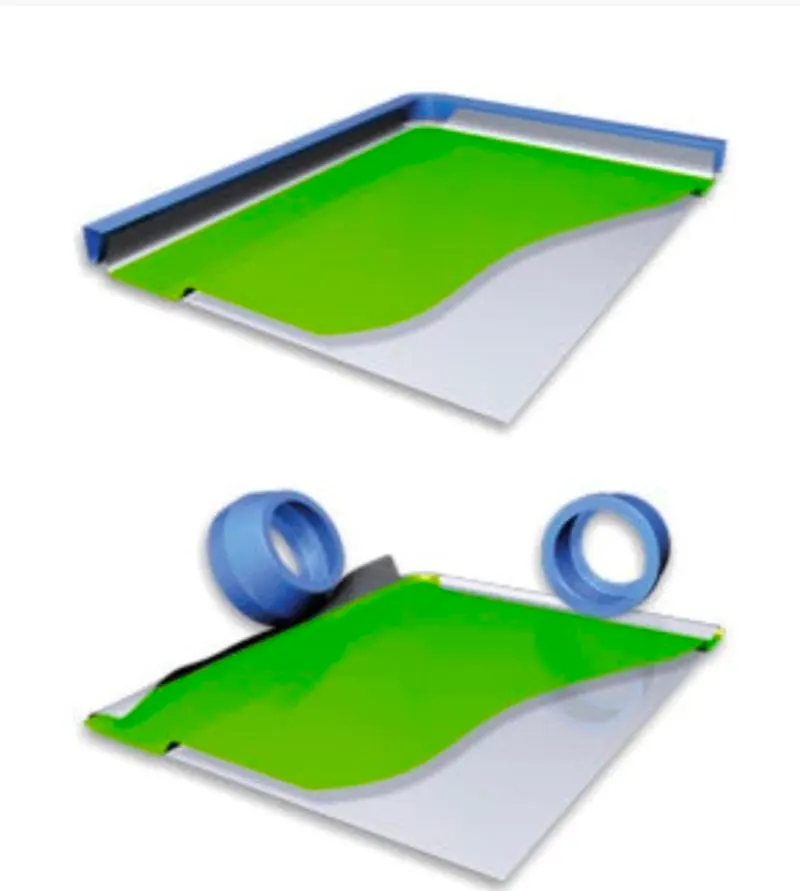
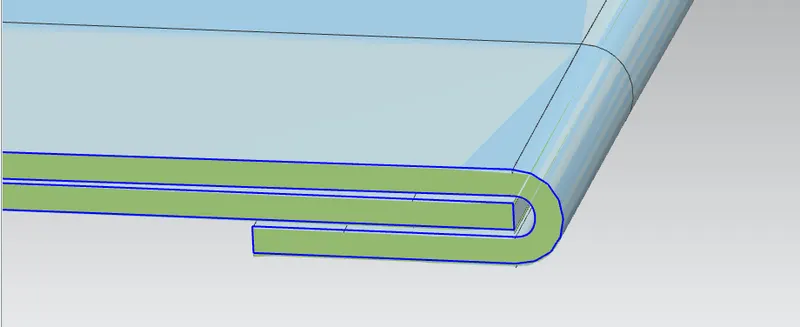
Hemming is a forming operation in which the edges of the sheet are folded or folded over another part in order to achieve a tight fit. Normally hemming operation are used to connect parts together, to improve the apperance of a part and to reinforce part edges.
In car production, hemming is used in assembly as a secondary opration after deep drawing, trimming and flanging operations to joint two sheet metal parts (outer and inner) together. Typical parts for this type of assembly are hoods, doors trunk lifts and fenders.
There are vaious types of hemming operations:
1. Conventional die hemming:
In conventional die hemming, the flange is folder over the entrie length with a hemming tool.
2. Roll hemming:
In roll hemming, the hemming roller is guided by an industrial robot to form the flange.
Open Hem:
A Hem has a full round fature and a redun flange. In open hem bent angle is equal to 180 degrees.
Tear drop Hem:
In tear drop th bent angle is greater than 180 degrees.
Closed Hem:
Hems without any inside radius are called as closed hem. Closed hems are noy recommend if the hem gemetry is to be paintd or if the material used is SST or Aluminium.
DESIGN
Design of back door
Thickness is given below,
1. outer panel upper & lower - 0.75mm
2. Inner panel back door - 0.75mm
3. Reinforcement - 1.5mm
Components of the Back Door:
Outer panel Upper & lower
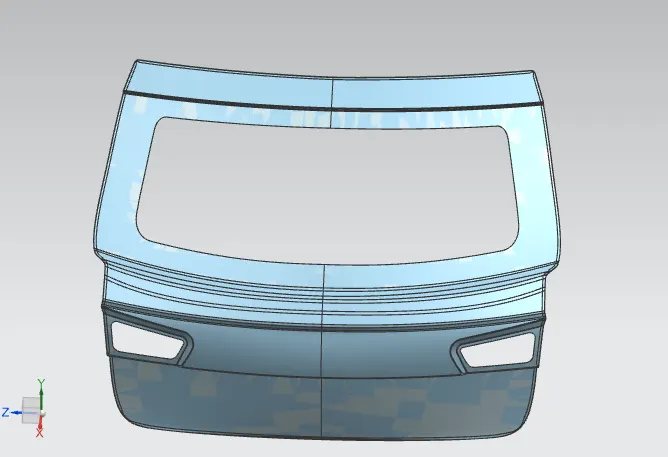
Given sufaces has to be repaired according to the smoothness. After repairing th surfaces, the door is divided into two parts as Door outer Upper and Door lower panel. Outer panel nothing but a outside cover for backside luggage room and its used make a car good looks.
Tooling direction
First, we need to create the Tooling direction for the Deep drawing operation like embossing is don't by considering this vector direction and it will help in manufacturing the part, After that we have to create sealing Flange by offsetting the outer panel to the specific distance.
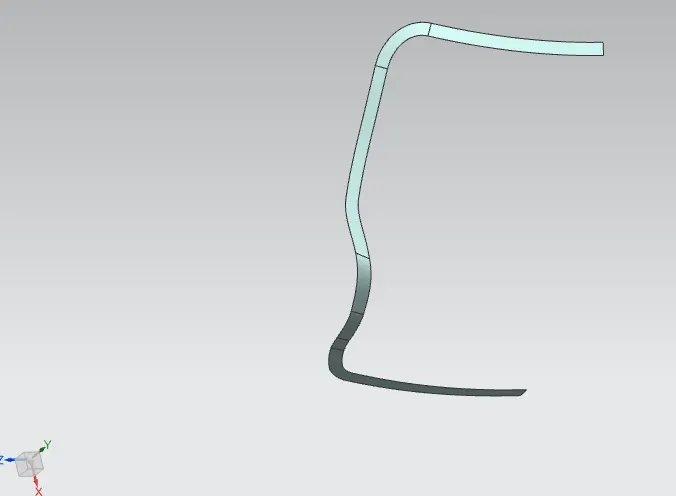
Then we will be creating the Back door inner panel flange by offsetting the outer surface at a distance considering the sheet thickness and thickening direction. Then created the connecting flange flange to joint the inner panel and sealing flange.
Then for the windshield panel mounting, windshield panel is created and joined with sealing flange. Then to improve the strength of the inner panel and to reduce the weight 'Y' type emboss and other cut-outs are created. Also, for Latch and stricker mounting cut - out is created this cut - out is also done on other side of the inner panel to maintain the centre of gravity of the Back door.
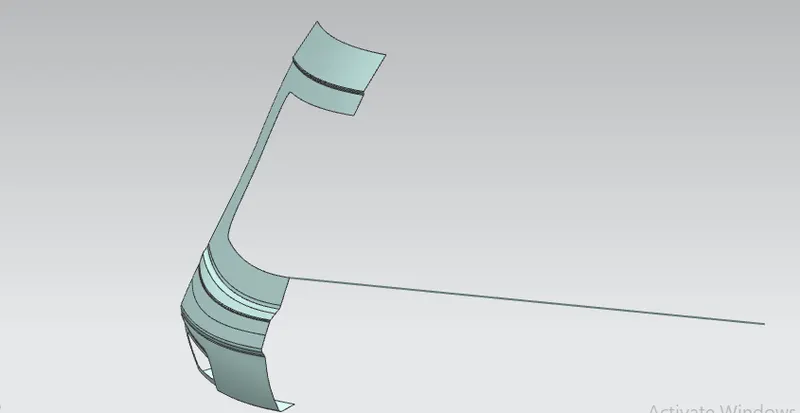
Sealing flange:
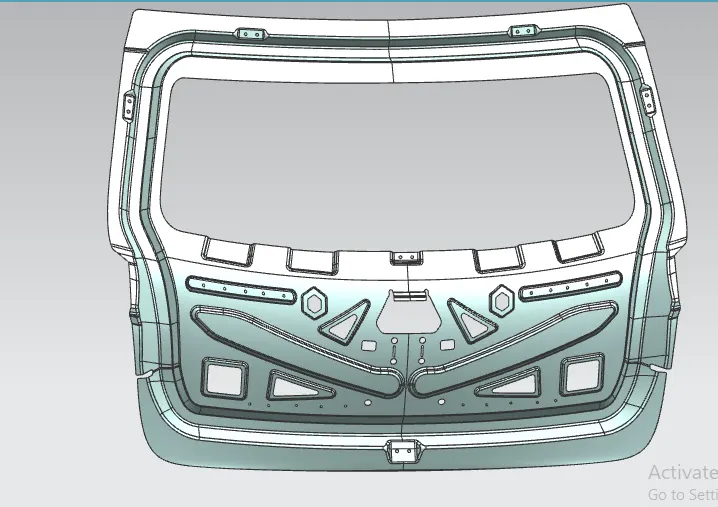
Inner panel
The inner panel supports the outer panel. It consists of embosses and holes. Embosses are provided stiffness as well as dissipates energy towards reinforcements.
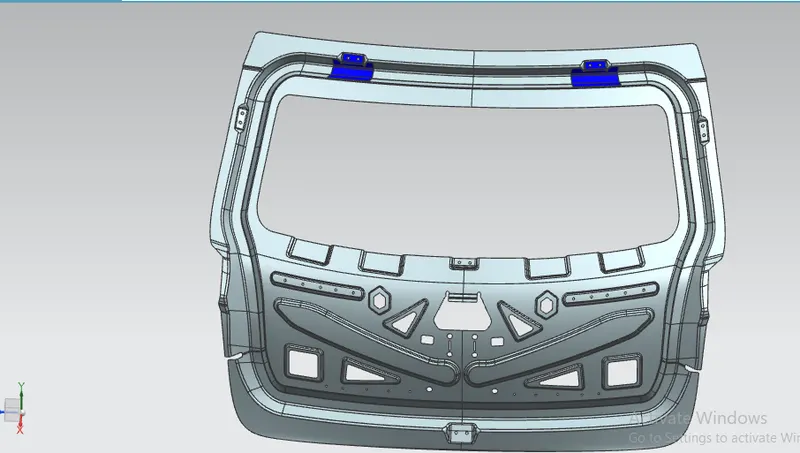
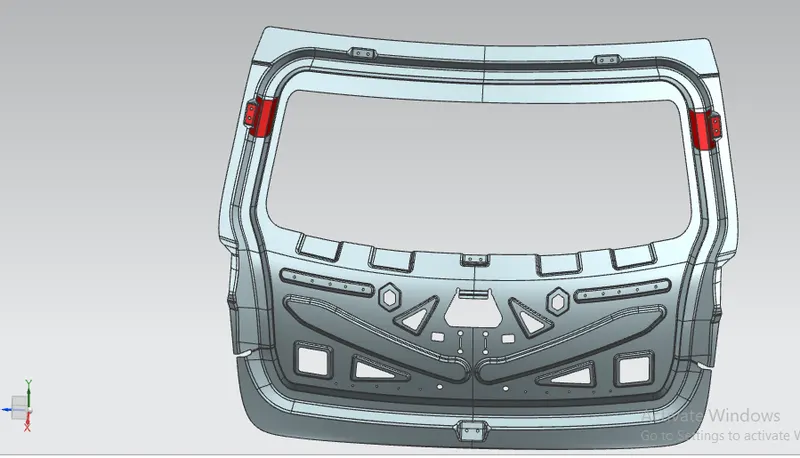
Hinge Mounting Reinforcements (LH & RH)
The hinges are attached to the downward direction of stricker. The hinge reinforcements mainly used to latch stragetory and create latch reinforcements.
Gas stay reinforcements (LH & RH)
Gas stay support to car body it is hydaraulic systems and its attached to the body to inner panel.
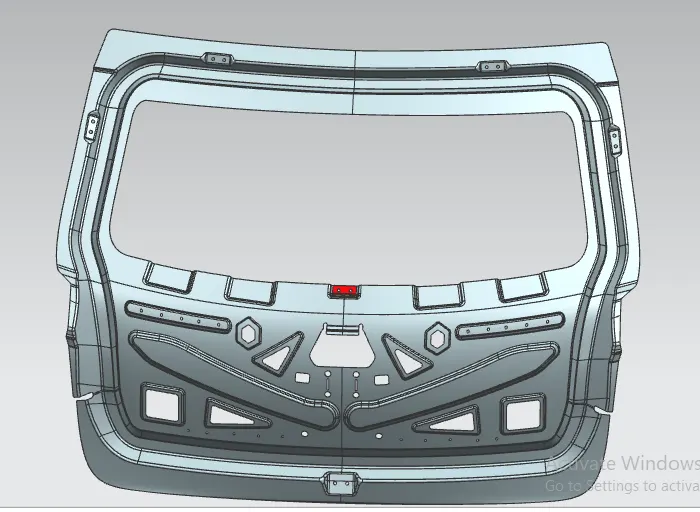
Wiper Motor reinforcements
Wiper motor is attached to the outer panel. It is used to movement for rear wiper in car.
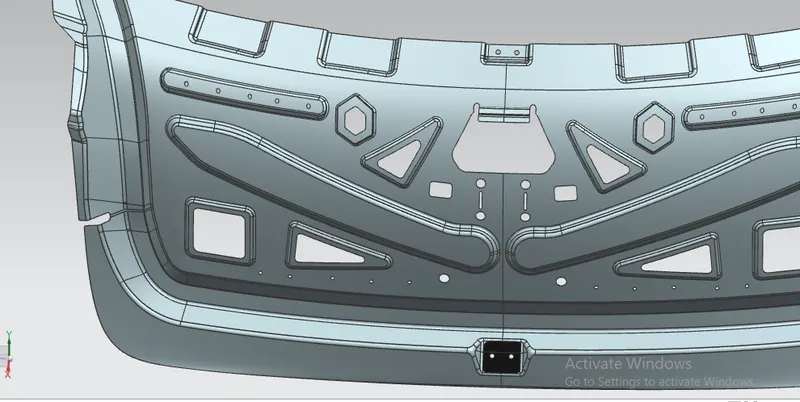
Latch Reinforcement
Latch reinforcements is used to stricker. This stricker is attached to the car luggage room body.
Latch Trajectory
The hinges should be usually placed on both sides of the hood in such a way that the strike its exactly into the hole provided.
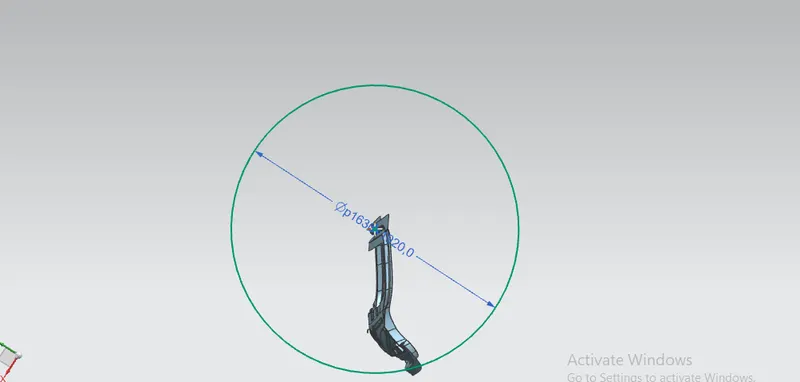
Position of latch and striker is perpendicular to the hinge then only the latch and stricker mechanism work property when the door closing and opening position. For the proper opening and closing of the door, the striker should be perpendicular to the trajectory of the Door. For this, hinges is assembled axis drawn.
To check the hinge axis as the center we drawn a big circle to the position the latch in such a way that it is perpendicular to the midpoint of two hinges, why because while closing and opening position be similar actions.
Embossing
Embossing is a metal forming process for producing raised or sunken designs or relief in sheet material by means of matched male and female roller dies, theoretically with no change in metal thickness, or metal between rolls of the desired pattern.
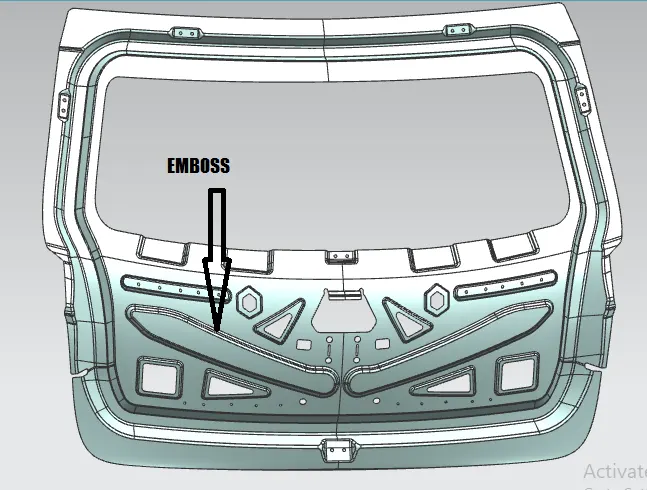
Metal sheet is drawn through the male and female roller dies producing a pattern or design on the metal sheet. Depending on the roller dies used, different patterns can be produced on the metal sheet.
Emboss should be in 7 degree to 25 degree inclined in angle and it should not be in 90 degree angle, why because when we do stamping in manufacturing the stamping tool fits the sheet metal hence it will not come`out of that sheet metal, so this is th main reason why the emboss fact is in angle.
Inner and outer panal Mounting Flange
I provided two mouting Flanges for mounting the inner panel with outer stylish panel. Two flanges is enough strength for holding the outer and inner panels with the help of sealants. In between inner panel and outer panel we providing sealants.
MASTIC SELANTS
A mastic sealant is a type of liquied sealand that cures in an elastic state, thus making it flexible while holding the bond of the surfaces that has attached together. It adheres to just about any material making an all- purpose type of sealant.
The main purpose of the outer panel is for the aesthetic looks. Thus we cannot use bolts or welding. This has to be done with the help of the hemming and mastic sealants. Mastic sealants are lastic component that behaves like the rubber. It is placed between the outer and inner panel. Initially is it paste form, but after the hot furnase bath it gets hardened thus jointing the outer and inner panel. Mastic sealant has the tendency to increase the panel and has influence of 80mm diameter.
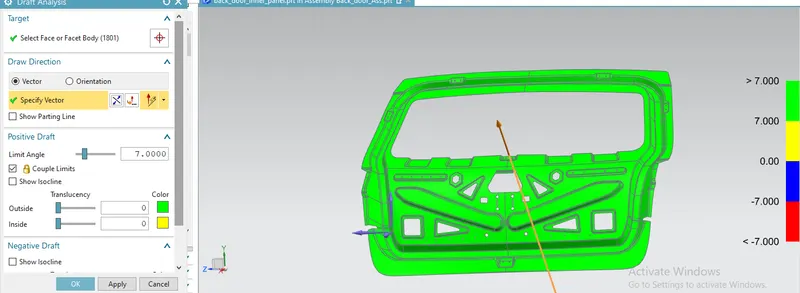
DRAFT ANALYSIS:
Draft analysis of inner panel is carried out through the tooling direction only. Only the green areas are acceeptable but the blue and red regions are never accepted.
HEMMING
It is folded to outer panel & inner panel.
RELIEF DATA
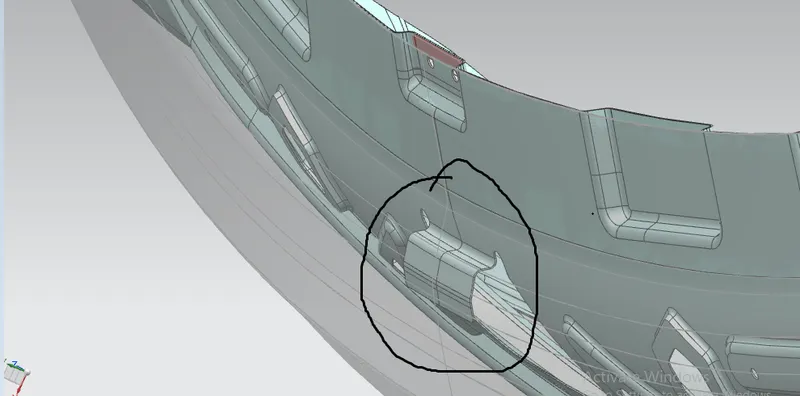
Relief is provided onto the part or component in order to remove any stresses developed in a particular area. I have sharp corners that takes place during the hemming process is carried out. Thus corners ar rounded or chamfered. We leaving 2 mm from sheet metal for Roll hemming process.
Outer upper panel
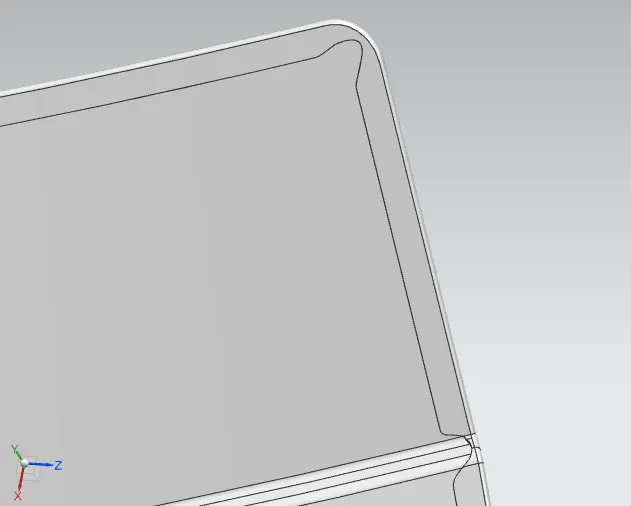
Outer lower panel
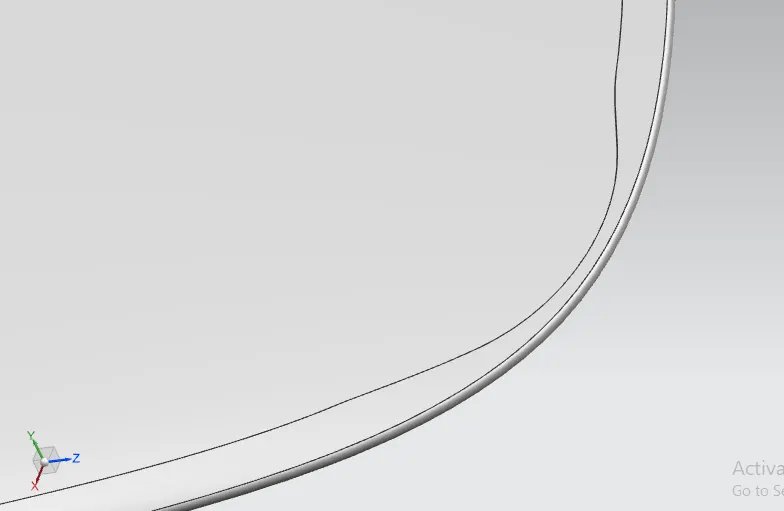
CONCLUSION:
Thus, For the provided styling surface of a back door design, l used appropriate design methodologies and provided the necessary reinforcement. and embosses for the Back Door design. Thus, I have design a back door of a car.
Thank you