Design of backdoor
Aim:
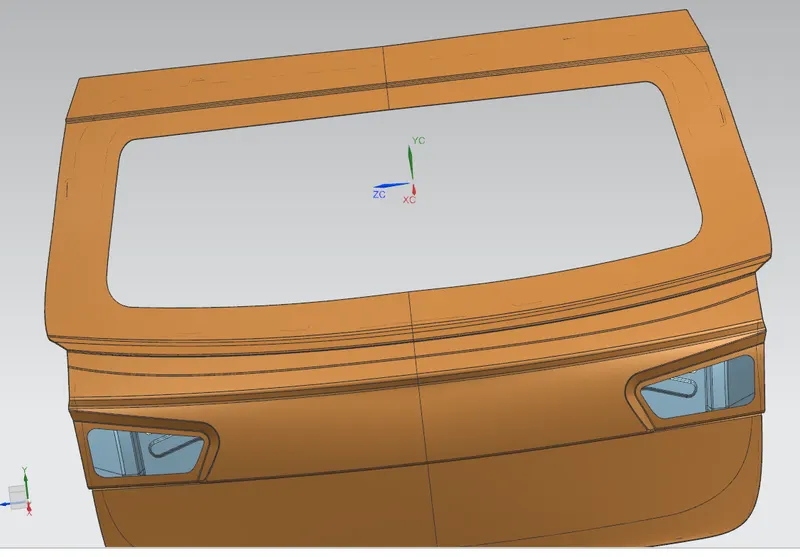
To design the Back door (Tail gate) of a car from the styling surface provided using NX CAD. The ultimate aim is to design the Back Door by following the Industrial Standards.
Back Door:
A back door is a BIW component found in all Automotive car generally used for opening and closing of the so called car luggage that is usually used for storing items inside a car. In general the opening and closing of the door is co-ordinated by the Latch and Stricker position and the Gas stay position that is mounted on the body and back door of the car. These positions play a major role in ensuring smooth opening and closing of the tail gate.
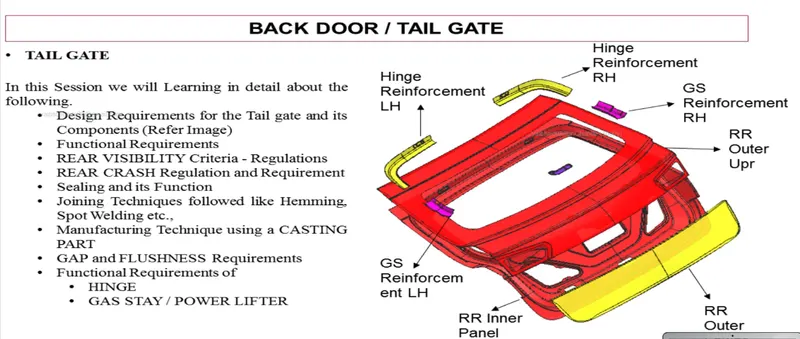
These parts are assembled together in order to obtain the back door of a car:
Design Of Door Inner Panel For Reducing Cost And Weight Of Back Door Assembly
In this paper we are going to reduce weight of a back door assembly by using tailor welded blank concept for front door inner panel and using less thickness with high strength material and reducing cost by replacing molded trim with hard pad in back door assembly.
a) Methods of preparing inner do or panel
1. In current automotive stamping technology , there are two basic paths that can be followed to arrive at the final inner door panel. The first method is part disintegration or part separation. In this technique, each different section of the blank is stamped separately and then spot welded together in the shape of the final part. This method has numerous advantages such as the ability to select the specific properties, i.e. the strength, thickness, corrosion resistance, etc. of each area of the blank. This method also gives a higher yield ratio of material used.
2. The other possible method is the integration method. In the integration method, the part is stamped out of a single blank. This reduces the number of tools needed; the assembly cost, and eliminates any fit ability problem. However, the design engineer is forced to work with same grade, thickness, and corrosion resistance throughout the entire part. Since the most demanding of all these conditions must be satisfied for the entire blank, this would increase the cost and weight of the part significantly.
3. A solution to the problems listed above is the utilization of tailor-welded blanks. A tailor-welded blank is a blank that is comprised of two separate pieces of sheet metal that has been welded together previous to stamping. Tailor welded blanks allow the welding of the different grades, different thickness or different corrosion coatings together in order give the properties needed in different areas, without increasing the number of tools needed to form the part and eliminating the fit ability concerns. They also allow a high degree of flexibility in designing parts and large blanks can be formed from much smaller sheets .The use of tailor-welded blanks would reduce the weight of the car. Having the ability to selectively place different thickness of material would result in weight reductions. An example of this used in production is the door inner panel. The only strength requirement on a door inner is in the region where the hinges attach to the panel.
b) Design guidelines for designing door inner panel
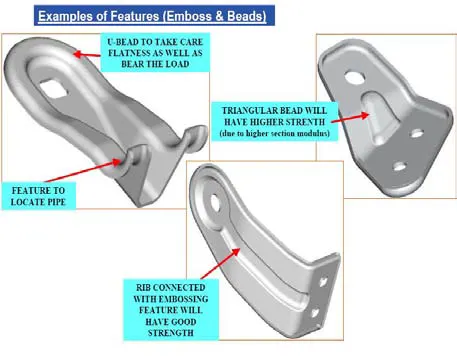
Beads and ribs increases the cross sectional area of component and load taking capacity.By adding beads reduces spring back effect of component.
c) Material used for new door inner panel
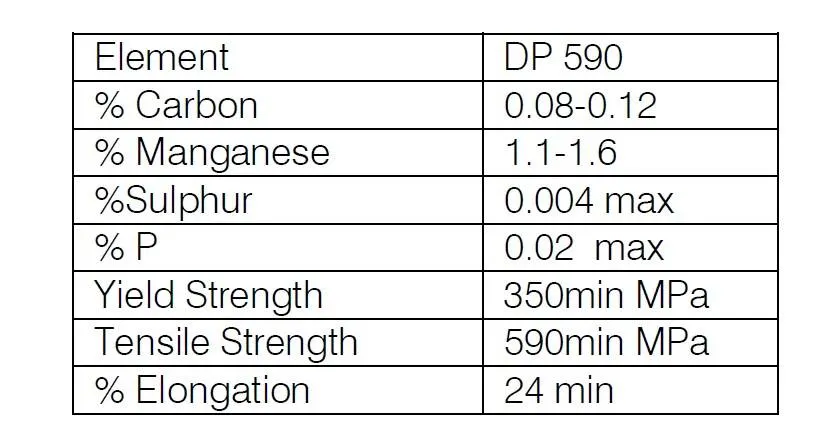
0.7mm thick, EDD 513, 1.2mm thick, DP590
d) Design of new door inner panel for solving water leakage issue
Tailor Welded Blanks are made from individual steel sheets of different thickness, strength and coating which are joined together by laser welding. When we design inner door panel with tailor welded blank in witch some portion of a panel having different thickness and other is different. In our case some portion of door inner panel is 0.7mm thick shown below with pink color and another is 1.2mm thick shown below with sky color. There is a 0.5mm gap between these two thicknesses and this is the reason that water is leakage between door inner panel and secondary sill in shower test.
Designing of Back Door using NX CAD:
What is a HATCHBACK:
A hatchback is a car body configuration with a rear door that swings upward to provide access to a cargo area. Hatchbacks may feature fold-down second row seating, where the interior can be reconfigured to prioritize passenger or cargo volume. Hatchbacks may feature two- or three-box design.
Why Hatchback ?:
1. Compact design:
Hatchback cars offer space and convenience over the luxurious sedan cars. They offer the convenience of driving in narrow spaces where a usual sedan or SUV may not fit. For example, driving a hatchback on a traffic-laden road is easier as compared to driving larger models of other types of cars.
2. Basic controls:
It is easier to learn driving on a hatchback car as compared to a sedan or SUV. Sedans may have complex mechanisms like additional gears or complicated control panels. This is not the case with a hatchback. These cars consist of some of the most basic models. Thus they are considered to be the best for new drivers. If you have a learning driver in your family, you can consider buying a hatchback rather than choosing other types of cars.
3. Low maintenance cost:
India serves as a huge market for hatchback cars. Models like Maruti Wagon R are manufactured in the country. This is one of the main factors that contributed to the maintenance cost being lower as compared to other types of cars. The availability of spare parts is high when it comes to Indian automobile manufacturers. This not only speeds up the repair/replacement process but also lowers the final cost.
4. Enhanced boot space:
As mentioned earlier, a hatchback car is capable of carrying a decent amount of goods/load plus passengers. To serve this purpose, you will receive a large boot space in your hatchback car. This makes it an ideal fit for families with fewer members, singles, and people who travel alone and carry load.
Nowadays, people prefer to change the fuel type of their car to CNG due to its affordability. The CNG kit mainly consists of a large cylinder filled with CNG fuel and control options. Enhanced boot space of hatchback cars serves as a perfect fit for installing the CNG kit, making this category of cars even more popular.
5. Affordability:
In India, buying a hatchback is cheaper than buying a sedan or SUV. We have numerous options like Maruti Alto, Maruti Wagon R, Tata Tiago, Hyundai Santro, and many more that cost less than 5 lakh rupees. As mentioned earlier, their maintenance cost is also low.
Thus, a hatchback is a complete package consisting of useful features and low cost. Those who wish to avail more features can always opt for premium hatchback models. The above factors make hatchback cars a popular choice in the Indian market.
Parts Of the BackDoor:
Outer panel
Inner Panel
Hinge Mounting Bracket ( LH & RH )
Gas Stay Bracket ( LH & RH )
Wiper Motor Support Bracket
Latch
Latch Reinforcement
Hinge reinforcement ( LH & RH )
Gas Stay Reinforcement ( LH & RH )
OUTER PANEL:
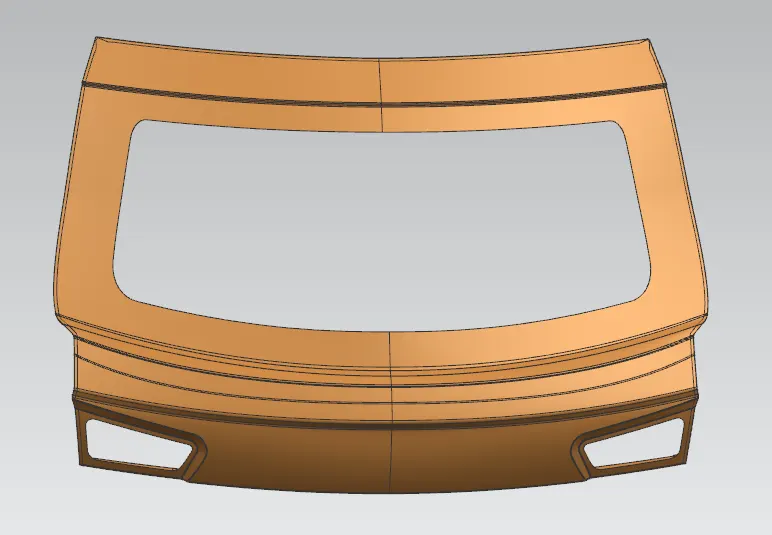
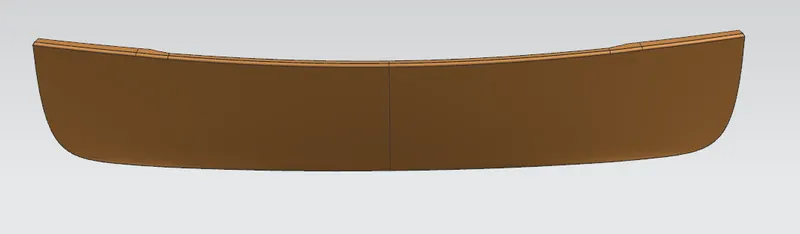
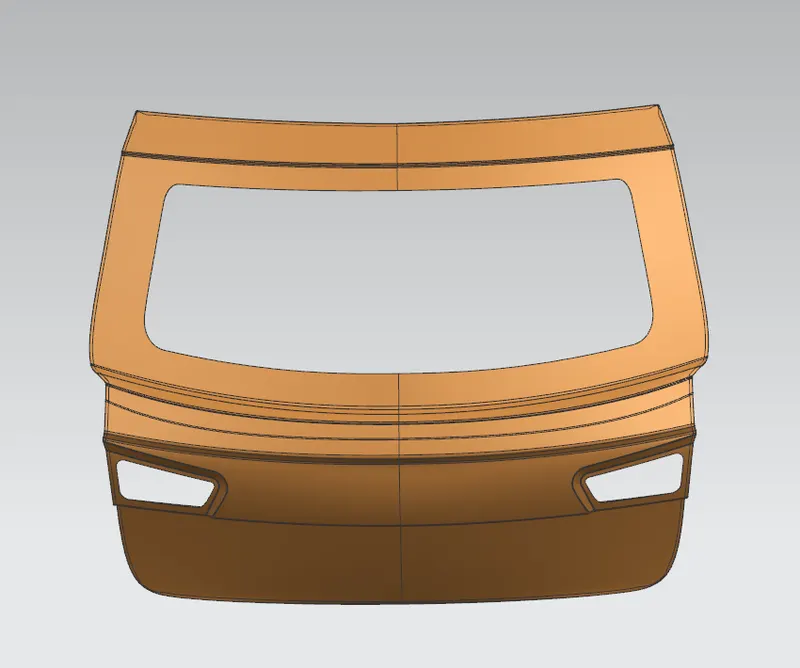
It is the outer part of the door and mostly responsible for asethetics of the vehicle. Outer and inner panels are connected by mastic sealants in center and by hemming process at edges. In some cases the number plate may also be installed on the outer panel of the back door .A two-part outer panel is considered for this design.(i.e. outer panel upper and outer panel lower respectively). Outer panel is manufactured by stamping steet metal with the thickness of 0.75mm.
INNER PANEL
Inner door panel is a component which is used for strengthening the door assembly and it is one of the most important components on which all accessories are mounted like hinges, glass guide channel and gas stay.
Why Inner Panel
Back door inner panel is mounted with the the Roof. The weight of Door inner panel is near about 7to8kg depends upon its material and its thickness. The possible method is the integration method. In the integration method, the part is stamped out of a single blank. This reduces the number of tools needed; the assembly cost, and eliminates any fit ability problem. However, the design engineer is forced to work with same grade, thickness, and corrosion resistance throughout the entire part. Since the most demanding of all these conditions must be satisfied for the entire blank, this would increase the cost and weight of the part.
- Materials used for the Inner panels are steels,Aluminum.
- The inner panel is given more strength by adding extra reinforcements.
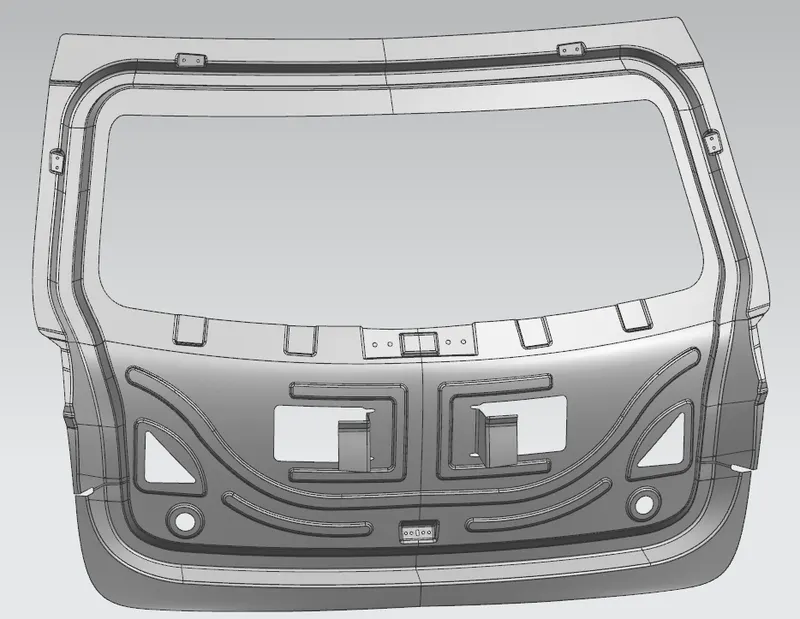
Above picture shows the inner panel for Back door of a car.
The design considerations made are:
- Embosses
- Space for Harness
- Mounting area of inner and outer panels
- Wind glass mount and fillets
- No sharp corners
Embossing:
- Embossing is a metal forming process for producing raised or sunken designs or relief in sheet materials by means of matched male and female roller dies, theoretically with no change in metal thickness or by-passing sheet or a strip of metal between rolls of the desired pattern. Metal sheet is drawn through the male and female roller dies producing a pattern or design on the metal sheet. Depending on the roller dies used, different patterns can be produced on the metal sheet.
- Emboss should be in 7 degree to 25 degree inclined in angle and it should not be in 90 degree angle for the stamping tool to fit in the sheet metal, so that it will not come out of that sheet metal.So this is the main reason why the embossed faces are made with angle.
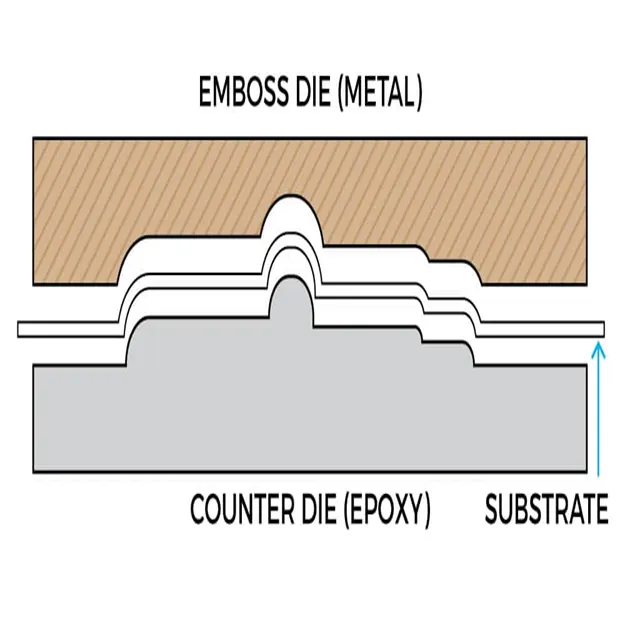
- The embossing process can produce a variety of patterns. Some of the most common patterns include stucco, leather grain, wood grain, weather grain, and rough sawn cedar. Most embossers will tool to form any needed pattern, depending on the cost parameters involved.
-
Characteristics of the metal embossing process include:
- Its ability to form ductile metals,
- Its use in medium to high production runs,
- The ability to maintain the same metal thickness before and after embossing,
- The ability to produce unlimited patterns, depending on the roll dies, and
- The ability to reproduce product with no variation.
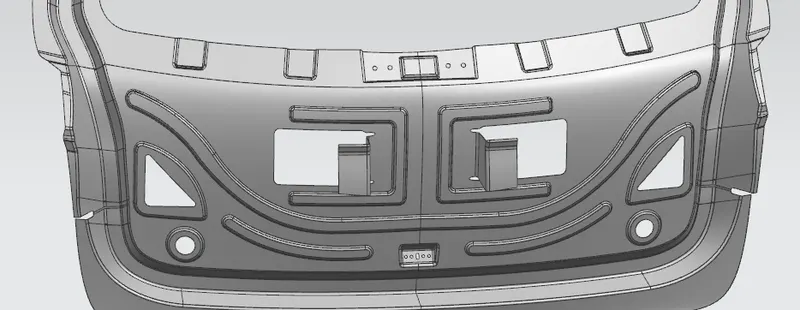
- The purpose of creating the emboss is to dissipate the imapct of force that initially falls on the embossed faces during collision from backside of the car, and remaining force hits the inner panel only after the force dissipated to the designed emboss.Here the emboss is designed towards the outer panel.
Cable Harness Gaps:
There are some gaps given to the inner pannel for harness cables.
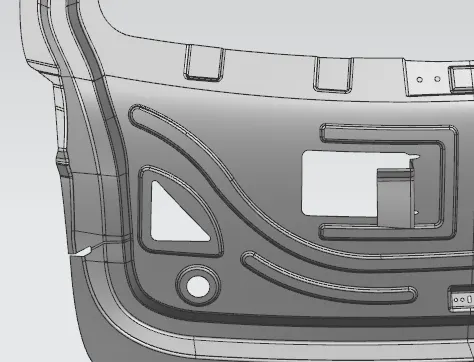
- Gaps towards left diddipates the force during the collison.
- Too much cuttings for the inner panel weakens the panel.
I & O Panal Mounting Flange (Inner &outer):
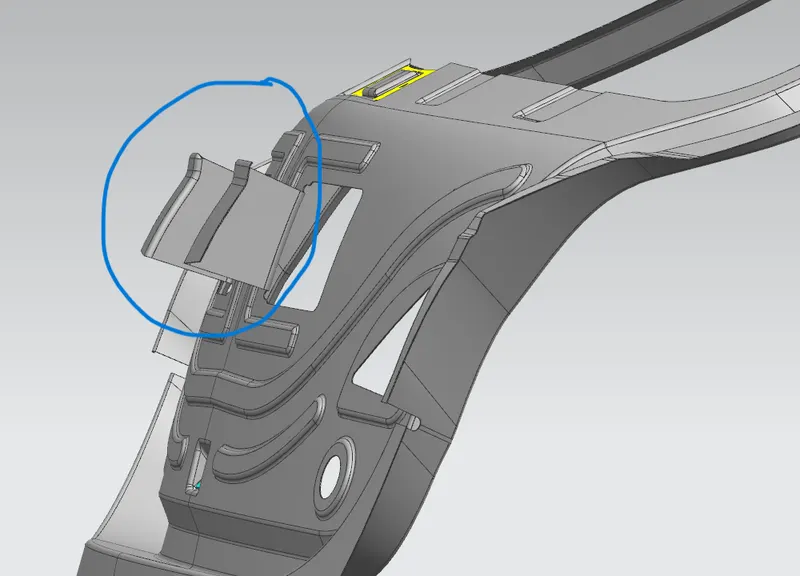
Two mounting flanges are provided for mounting the inner panel with outer panel, As two flanges gives enough strength for holding the inner & outer panels with the help of sealents provided.
MASTIC SEALANTS:
- A mastic sealant is a type of liquid sealant that cures in an elastic state, thus making it flexible while holding the bond of the surfaces that has attached together. It adheres to just about any material making an all-purpose type of sealant.
- The main purpose of the outer panel is for the aesthetic looks. Thus we cannot use bolts or welding. This has to be done with the help of the hemming and mastic sealants. Mastic sealants are elastic compound that behaves like the rubber. It is placed between the outer and inner panel. Initially is it in paste form, but after the hot furnace bath it gets hardened thus joining the outer and inner panel. Mastic sealant has the tendency to increase the strength of the panel and has influence of 80mm diameter.
Pros & Cons:
PROS:
- One positive characteristic of mastic sealant is that it has a very smooth exterior while keeping its rigid form underneath.
Surfaces do not have to be primed when using this type of sealant, and although applied thick, it adheres smoothly to any surface. It is important that the area to be joined or sealed be clean and dry, just like any other sealant on the market.
- Mastic sealant may be used outdoors as well because of its waterproof quality. It can be applied on rain duct leaks outdoors, for example.
- It is also favored for areas under high or low temperatures such as heater vents or drier vents and contains ultraviolet inhibitors to make sure that it is protected from damaging effects of the sun that will often weaken other types of sealants. That makes it a good choice for use on roofs, or any surface that is constantly exposed to sunlight. Most mastic sealants will also work well with metal because they do not corrode over time.
- it functions well in areas with mild vibration and heat, like heating ducts.
CONS
- Mastic sealant is not recommended for areas that have too much joint movement, or anything that will be moved a long length.
- It works well with constant pressure on it, but not constant movement.
- It also works best when applied thickly and is not recommended if only a thin layer is needed such as touch ups. Another sealant is a better choice for those types of repairs
Sealant Space in between Inner and Outer Panel:
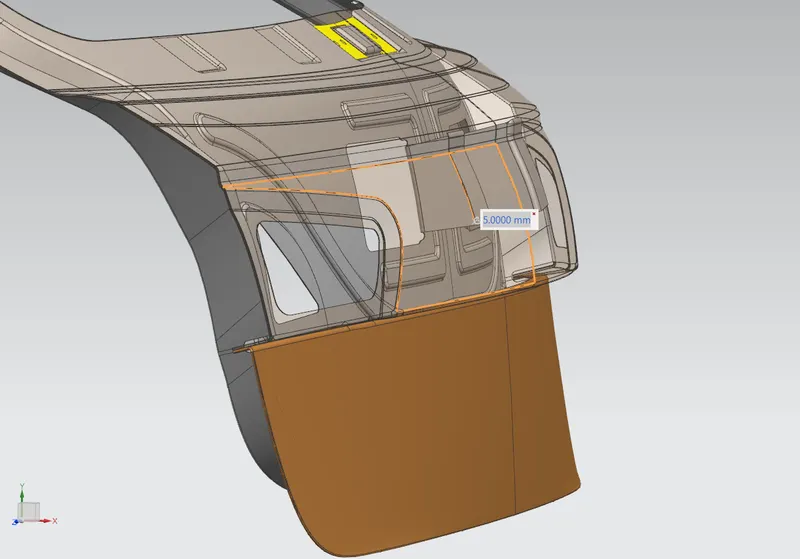
As per the above images, there is a 5mm gap between outer panel and inner panel is maintained for the mastic sealents to hold the Inner and outer panels together, and it also reduces the NVH of the vehicle.
WIPER MOTOR MOUNTING:
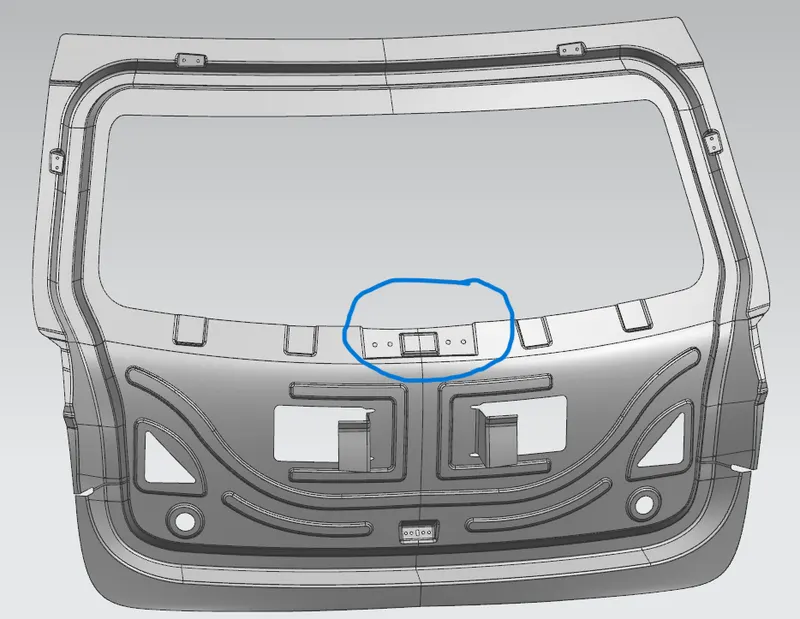
The highlited area in the below image shows the wiper motor mounting area.
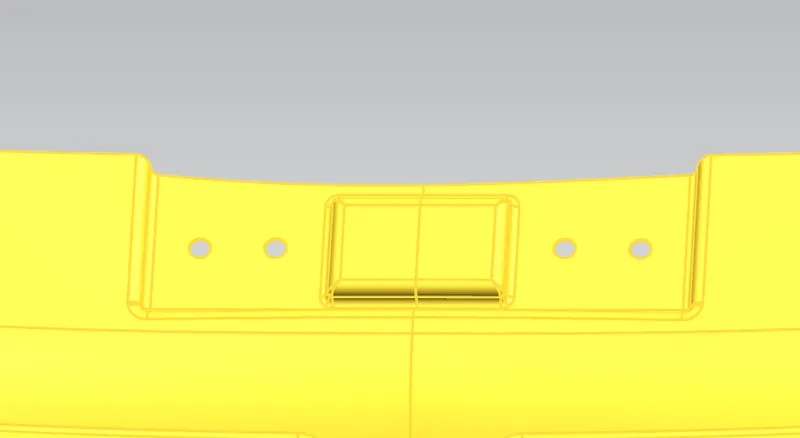
Below Picture represents the wiper motor mounting area with four holes.
Reinforcements:
Reinforcements are generally used to increase the strength of the mountings so that there is no unnecessary dents or noise occurs at the time of motion. This not only add strength to the part but also increase the overall stiffness of the part so that the part is completely stable. The Reinforcements used are
1) Latch and Stricker Reinforcement
2) Wiper Motor Reinforcement
3) Hinge Reinforcement
4) Gas Stay Reinforcements
REINFORCEMENT
- Vehicle Door reinforcement structures are provided to reduce impact during collisions. In one embodiment, the structure is to include a lower reinforcement panel configured to mount to a vehicle chassis and an upper reinforcement panel welded to the lower reinforcement panel wherein the deflection of a front deformable wall of the upper reinforcement panel is configured to trigger deflection of rear deformable wall of the lower reinforcement panel.
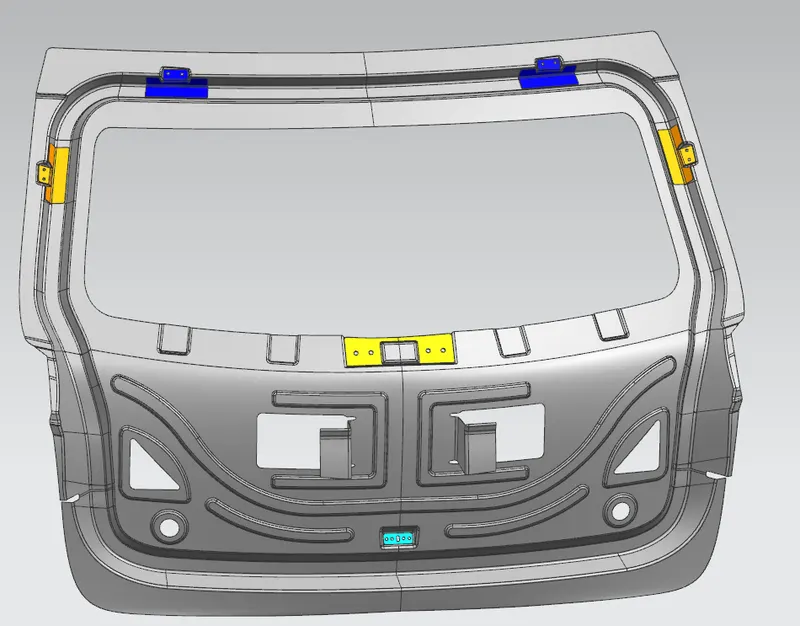
- The above Image shows the reinforcement that are used on different areas of the inner panel. They are usually spot welded on the inner panel.
Latch & stricker Reinforcements:
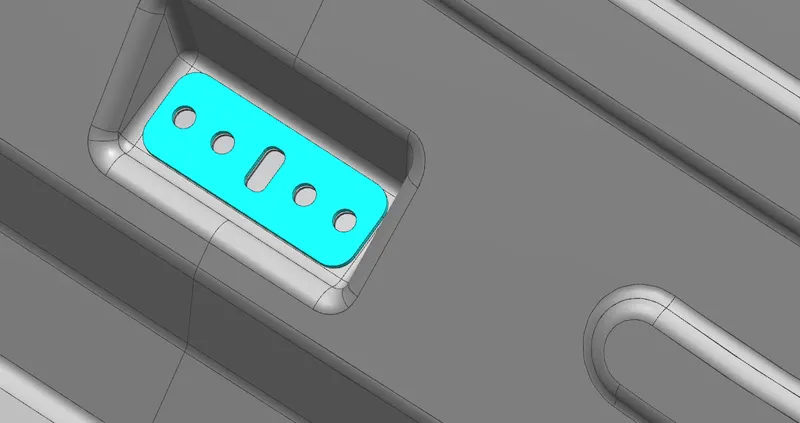
- Additional Latch & hinge Reinforcement is given to reduce the impact to the occupants inside the car.
- Reinforcement is required to strenghthen the latch and hinge when placed.
- As the strength drops in the areas like hinges,hood openings/closings,doors,etc...we need to provide the reinforcements.
- Stiffness pads are also placed to reduce NVH.
- The thickess of the reinforcement is given as 1.5mm but it may vary.
Hinge Reinforcement:
What is HINGE ?
Hinges are simple mechanical bearing devices that are used to connect two parts and allow them to rotate relative to each other about a fixed axis. Depending on the type employed, the components can move (most commonly) within a limited arc or with 360° freedom.
Material Used for HINGE
Due to the applications in which they are applied, hinges need to be able to withstand the stress of consistent opening and closing. To fulfill this requirement, many hinges are made of stainless steel as the strength of steel materials allows the hardware to bear heavy components, and the stainless characteristics prevent rust and corrosion. The latter is important because hinges used in external applications, especially near the ocean or salt lakes, can experience fatigue and failure much quicker due to exposure to moisture and salt in the environment.
Why we need Reinforcement ?
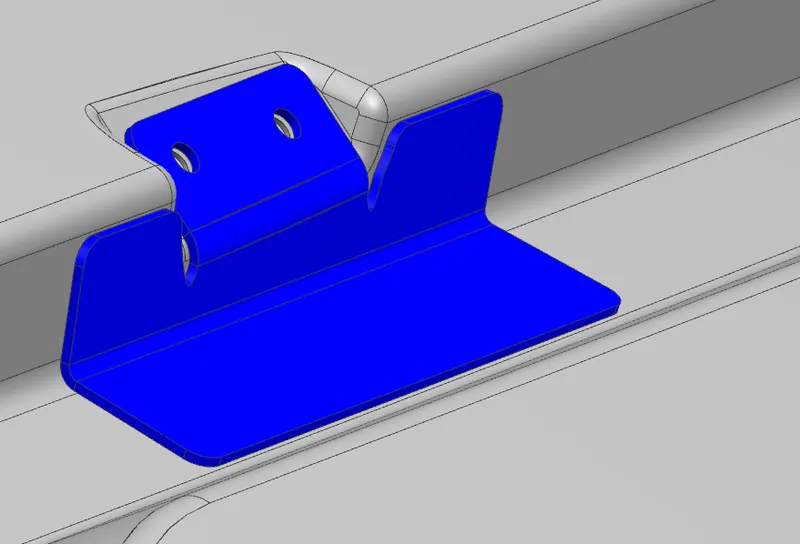
Hinge rotates in the rotational axis in that it will loose some strength there,It means huge Back door opens with the help of small hinges only in this case hinge needs extra strength,For this we providing extra strength in the form of Reinforcement
Hinge Reinforcement thickness can be between 1.2mm to 1.5mm.
Gas Stay Reinforcement:
What is Gas Stay or Gas Spring ?
Gas springs, or gas struts, are rods that provide support for doors, hatches, lids and covers that are horizontally hinged. They act as support in a variety of ways including, lifting, positioning and lowering; because of this versatility they are used in a wide range of applications.
Why we need Reinforcement ?
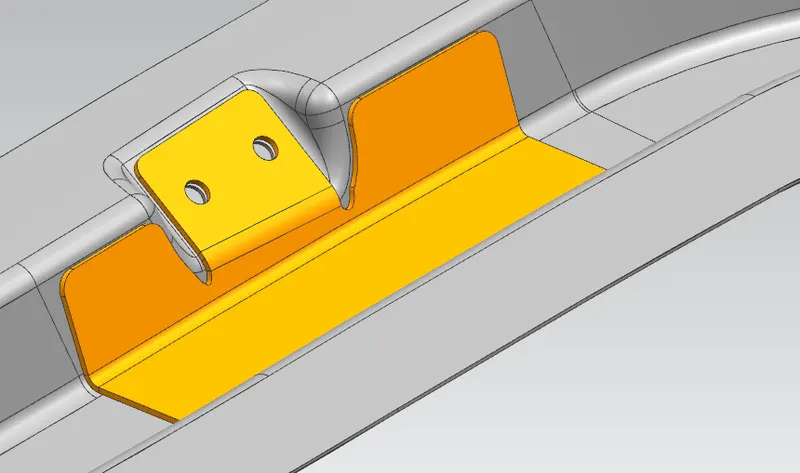
We need reforcement for gas stay also,while opening and closing the backdoor gas stay plays a major role here,We using gas stay for backdoors is for smooth opening of back door .
Gas stay Reinforcement thickness can be b/w 1.2mm to 1.5mm.
Wiper Motor Reinforcement:
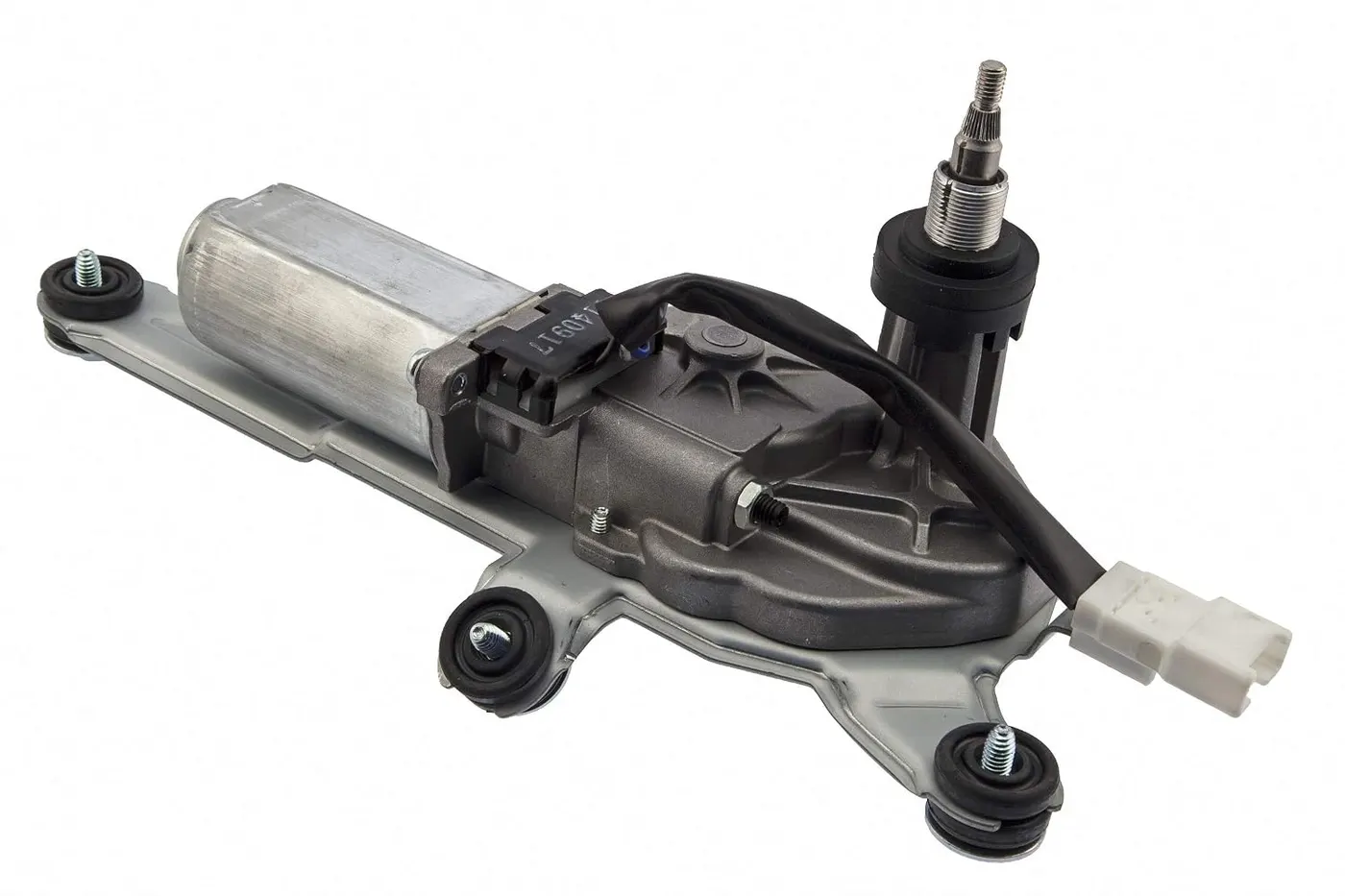
What is Wiper Motor ?
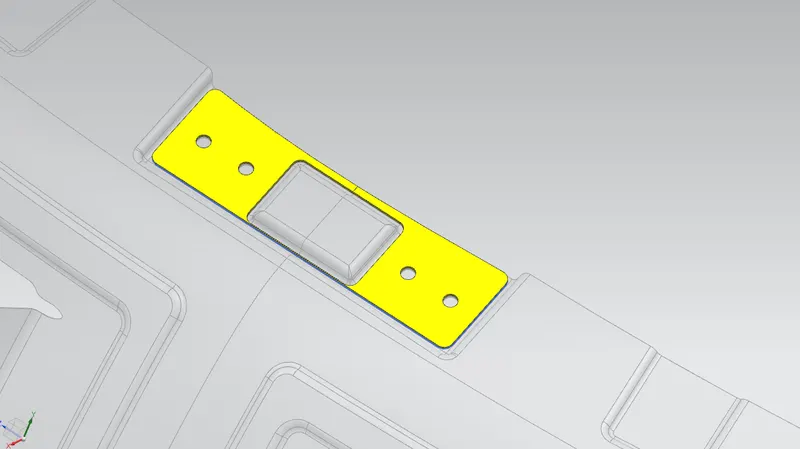
Windshield wipers are powered by a small electric motor, usually mounted on the firewall or under the cowl (the area under the windshield's base). The motor activates linkage that moves the wiper arms back and forth. On vehicles with a rear window wiper, a separate motor powers the one in the rear.
Hemming:
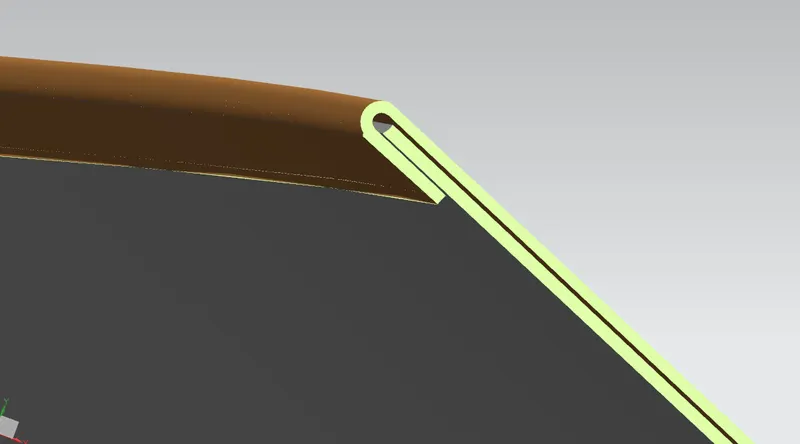
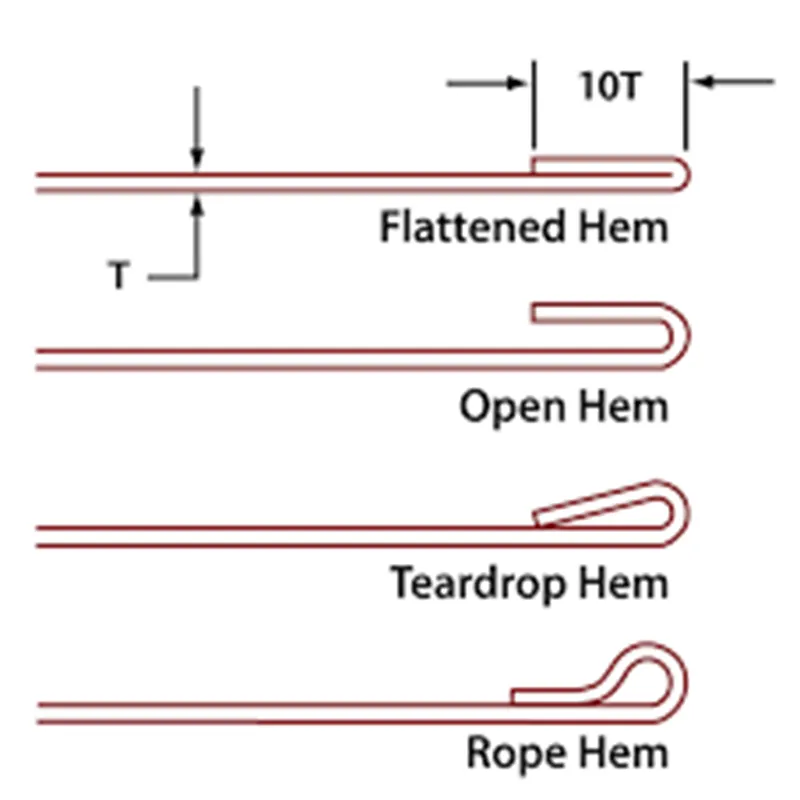
Hemming is a forming operation in which the edges of the sheet are folded or folded over another part in order to achieve a tight fit. Normally hemming operations are used to connect parts together, to improve the appearance of a part and to reinforce part edges.
In car part production, hemming is used in assembly as a secondary operation after deep drawing, trimming and flanging operations to join two sheet metal parts (outer and inner) together. Typical parts for this type of assembly are hoods, doors, trunk lids and fenders.
There are various types of hemming operations:
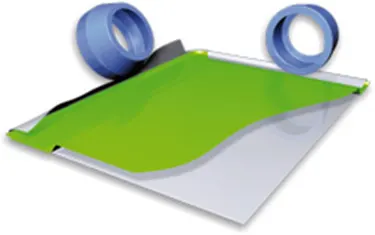
- Conventional die hemming: In conventional die hemming, the flange is folded over the entire length with a hemming tool.
- Roll hemming: In roll hemming, the hemming roller is guided by an industrial robot to form the flange.
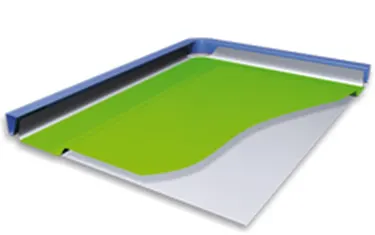
- Open Hem: A Hem has a full round feature and a return flange. In open hem bend angle is equal to 180 degrees.
- Tear drop Hem: In tear drop hem the bend angle is greater than 180 degrees.
- Closed Hem: Hems without any inside radius are called as closed hem. Closed hems are not recommended if the hem geometry is to be painted or if the material used is SST or Aluminium.
RELIEF DATA:
Relief is provided onto the part or component in order to remove any stresses developed in a particular area i.e sharp corners that takes place during the hemming process is carried out. Thus corners are rounded or chamfered.
2 mm is left from sheet metal for Roll hemming process.
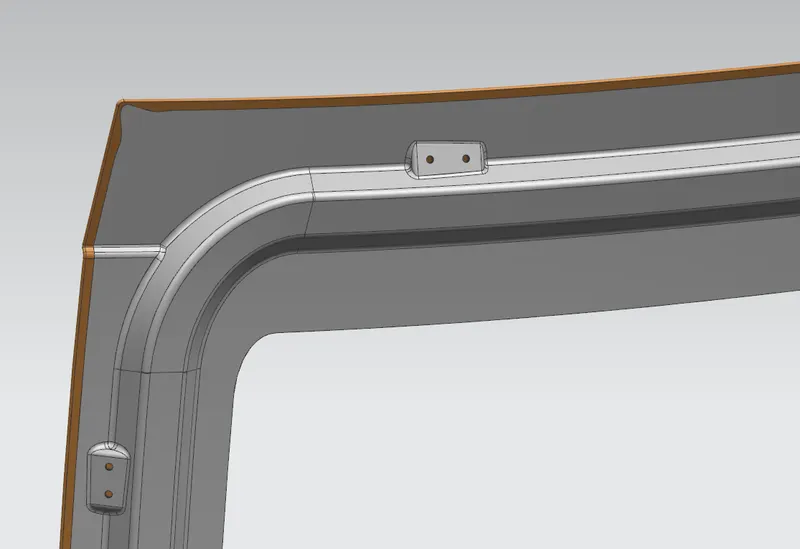
Above picture represents the relief at the corners.
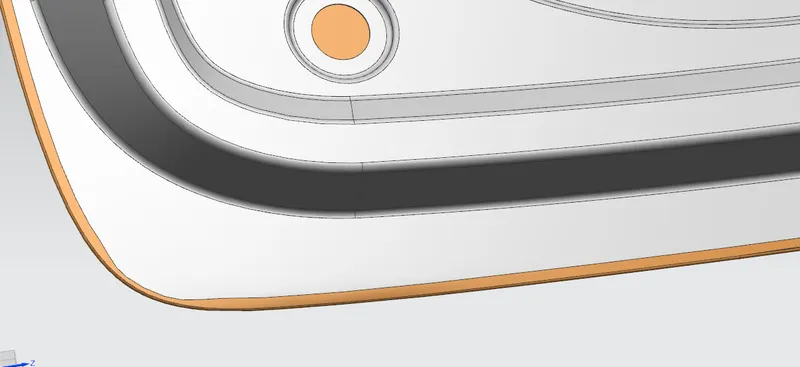
Above picture represents that there are no sharp corners, sharp corners are avoided by applying fillets.
POSITION OF LATCH
Position of latch and striker is perpendicular to the hinge then only the latch and striker mechanism works properly when the door closing and opening position.
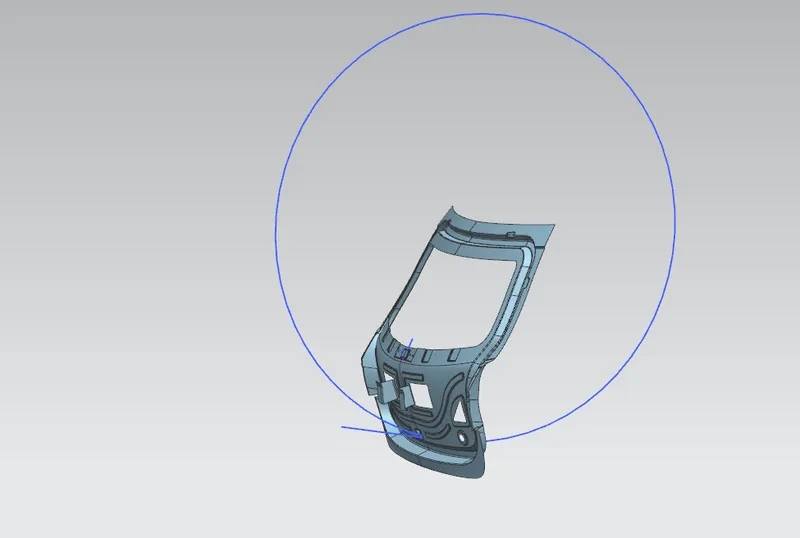
For the proper opening and closing of the Door, the striker should be perpendicular to the trajectory of the Door. For this, hinge is assembled at its position. Once it is placed, hinge axis is drawn.
- To check the hinge axis as the center we draw a big circle to the position the latch in such a way that it is perpendicular to the hood trajectory.
- In between the two hinges the striker is perpendicular to the midpoint of two hinges,Why because while closing and opening of latch and striker the opening position be similar actions.
- The below image show the perpedicularity of latch.
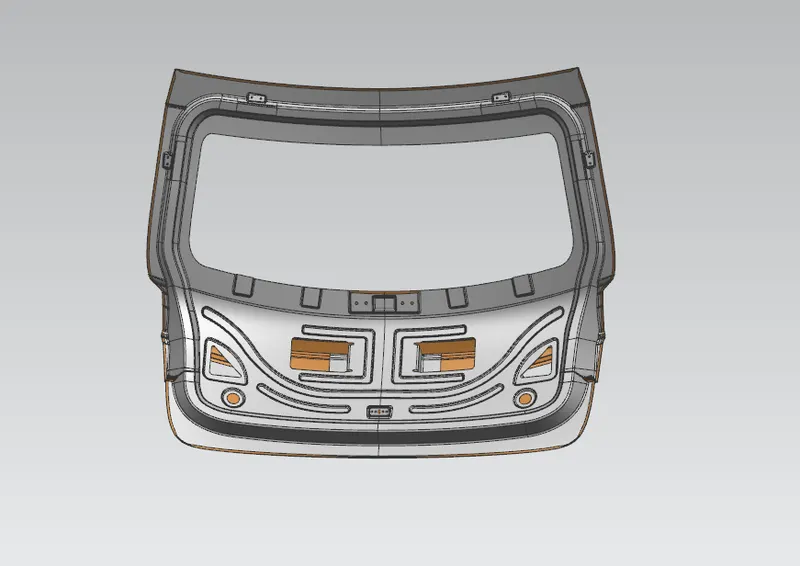
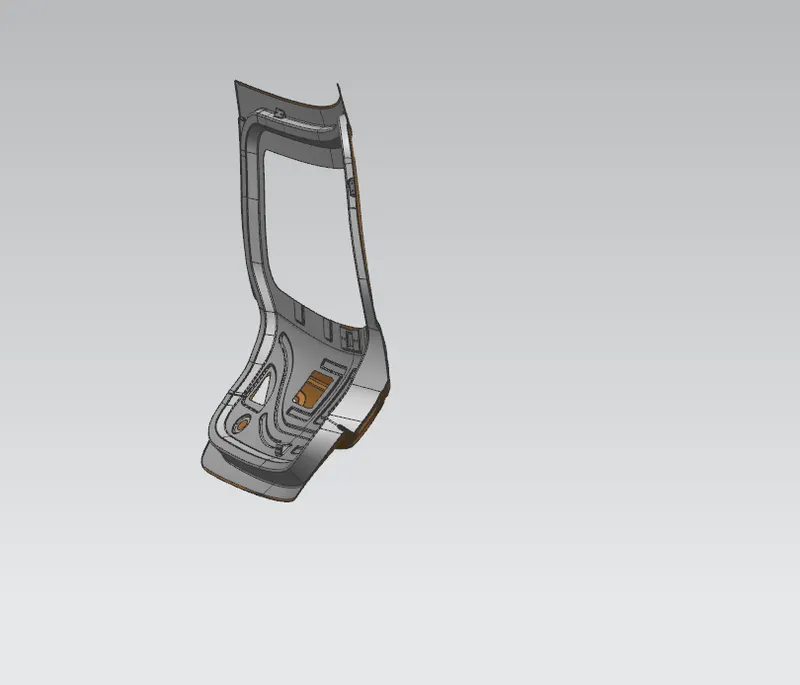
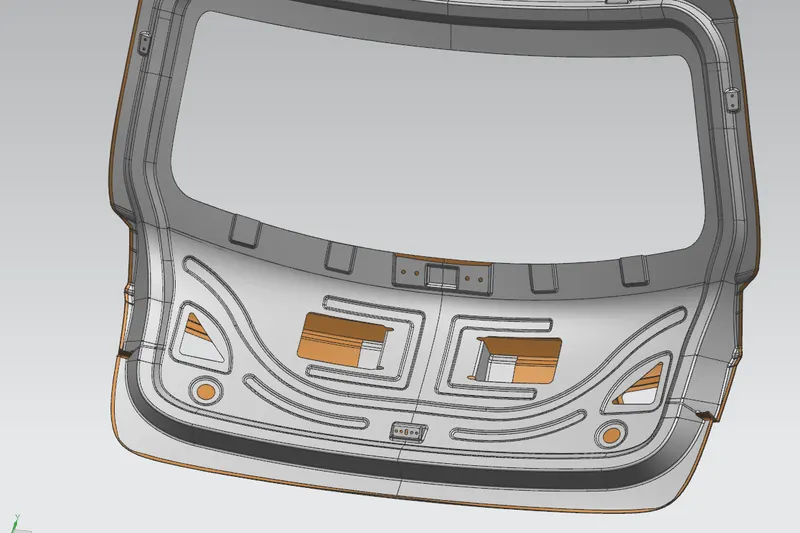
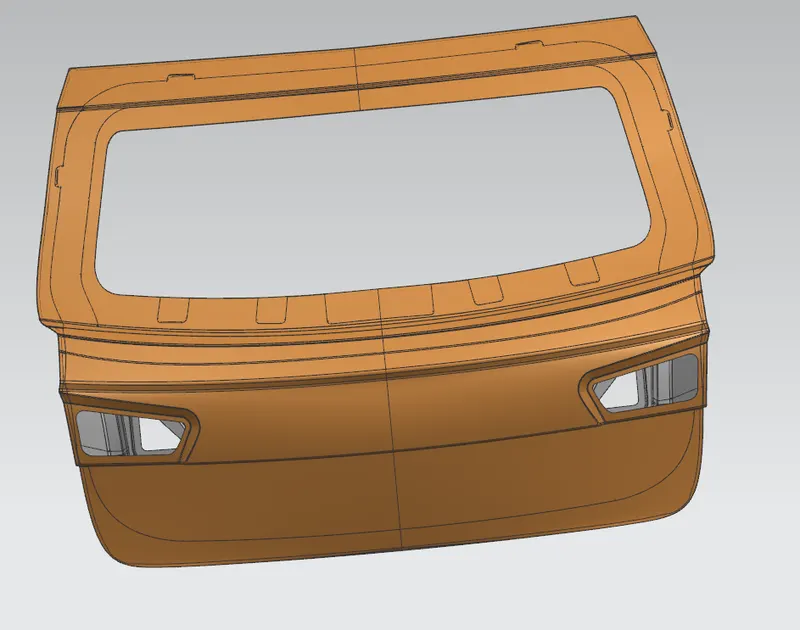
DESIGNED BACK DOOR PHOTOS:
Conclusion:
Therefore, the aim is achieved with the backdoor design by satisfying all the design requirements along with reinforcements embosses where ever required.
The CAD model is submitted in a zip folder.
Thank you.