Design of backdoor
AIM :
Use the provided styling surface to come up with a back door design, use appropriate design methodologies, and provide the necessary reinforcements and embosses
OBJECTIVE:
Design of the Outer upper and lower panel, inner panel, and the necessary reinforcements by following the design parameters and by the given CLASS A surface.
CONTENTS:
INTRODUCTION
DESIGN CONSIDERATIONS
HEMMING
INNER PANEL
OUTER PANEL
REINFORCEMENTS
DRAFT ANALYSIS
Introduction:
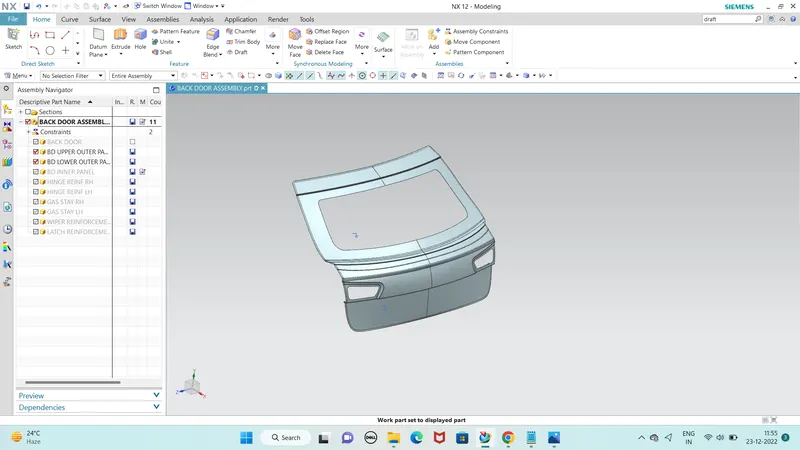
Backdoor/tailgate is one of the closure commodities in BIW sheet metal design. The backdoor has a lot of components inside and is designed to incorporate them easily. It affects the rear visibility and luggage area.
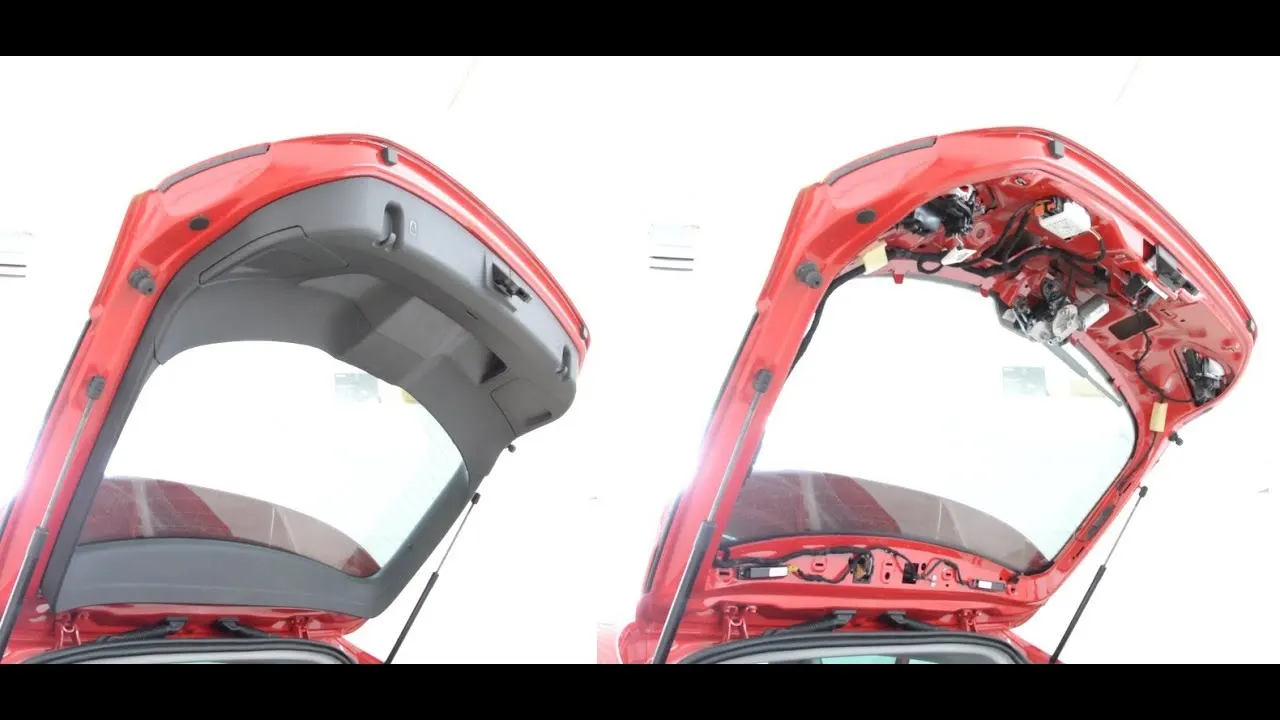
Fig 2 The back door of a hatchback (with and without trim panel)
Types of Backdoor based on working positions:
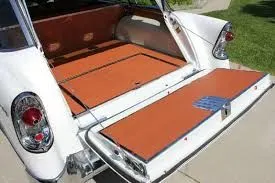
The door or opening of a cargo area may be hinged at the top, side & bottom. If the door hinged in the bottom it is called as a tailgate.
1.Top mounted
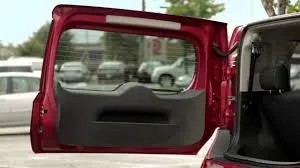
2.Side mounted doors
3.Bottom type
1.Top mounted:
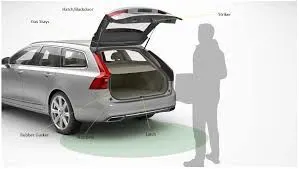
2 SIDE DOOR :
3 BOTTOM TYPE DOOR :
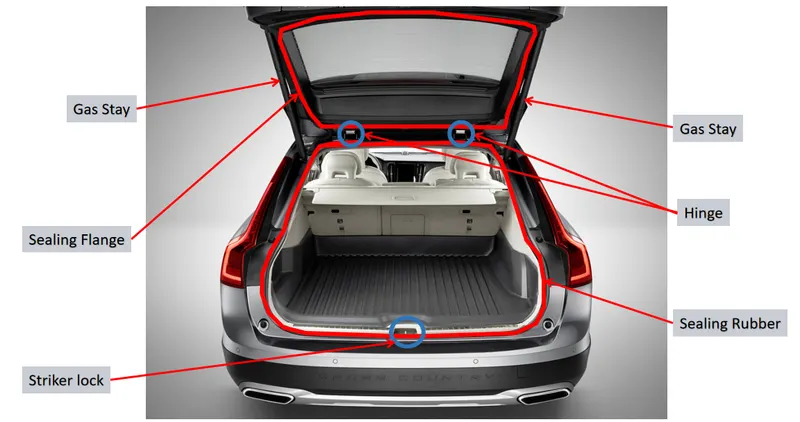
The backdoor consists of the following basic components:
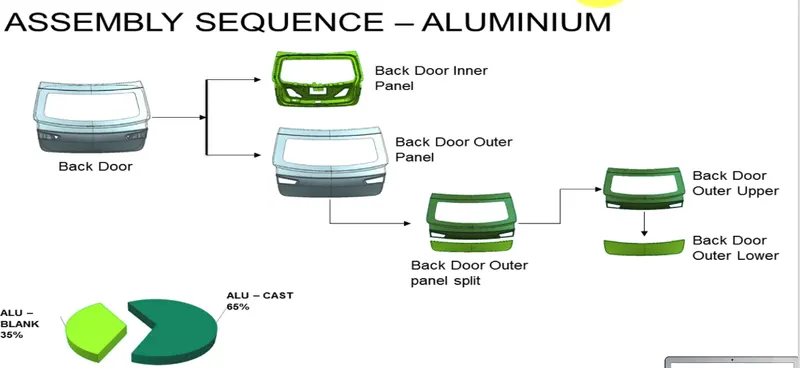
- Backdoor inner panel
- Back door outer panel upper
- Back door outer panel lower
- Hinge reinforcements
- Gas-stay reinforcements
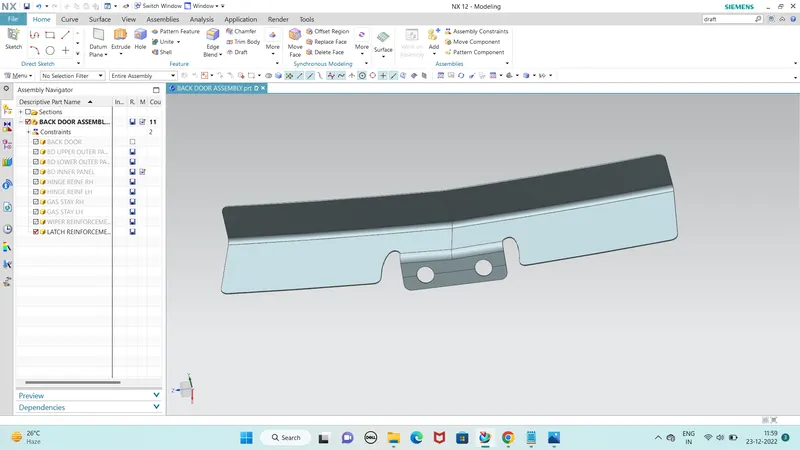
- Latch and striker reinforcement
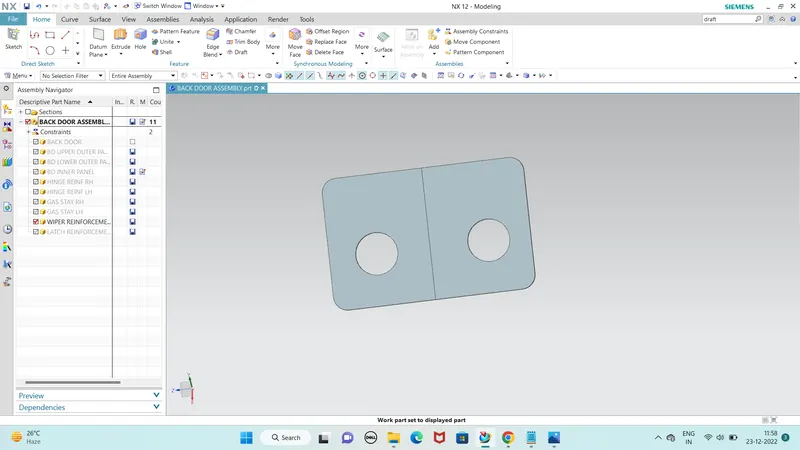
- Wiper motor reinforcement
OBJECTIVE
- To design the tailgate inner panel, outer panel(upper and lower).
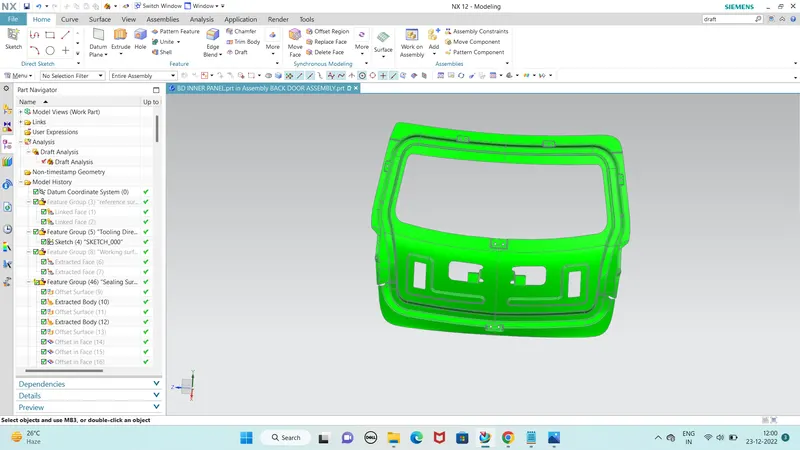
- Perform draft analysis on the inner panel
- Design all the necessary reinforcements.
SOFTWARE USED: NX CAD 12
Manufacturing process of Backdoor
As we know that backdoor is a BIW component that is basically manufactured using a metal forming process. There are different types of metal forming processes that are used for manufacturing automotive parts they are bending, forming, stamping, forging, extruding, etc. From which the stamping is the methodology used to produce the door panels, basically, a die and punch are used in a press machine to stamped out the complete door panel in a single or multiple presses. This method is used because it does not require separate tools to manufacture the component also it is less time consuming and requires less material for the part which is to be produced with precision and accuracy.
Materials used for the manufacturing of backdoor panel
The functional requirement of a backdoor panel is it should be light in weight but in contrast, it should have sufficient strength at the same time to fulfill these requirements the two types of material are used
1) Aluminum
2) Steel
The first one as we all know that it is light in weight compared to that of steel but at the same time the price of aluminum is more than that of steel. So, it is only used for expensive cars or sport vehicles where the weight of the car plays a crucial role. The manufacturing process used for panels made up of aluminum is different when compared to that of steel.
Aluminum panels are made by casting process rather than stamping which is used for steel material due to which the accuracy and precision of the panel is more as compared to that of steel. We can provide sufficient strength by varying the thickness of the sheet at weaker sections in the case of aluminum no reinforcements are needed to be provided but in steel panels, reinforcements are essential as we can not vary the thickness of the sheet it is uniform throughout so, steel panel requires more components as compared to that of aluminum. These are some of the advantages of aluminum over steel.
But the drawback of aluminum is it requires more cost to produce a single panel when compared with steel. So, it can't be used all cars but used for luxury cars only.
To overcome the drawback of steel recently a new method is used for manufacturing i.e is Ultralight steel auto body concept this method gives two ways to reduce the weight of the steel
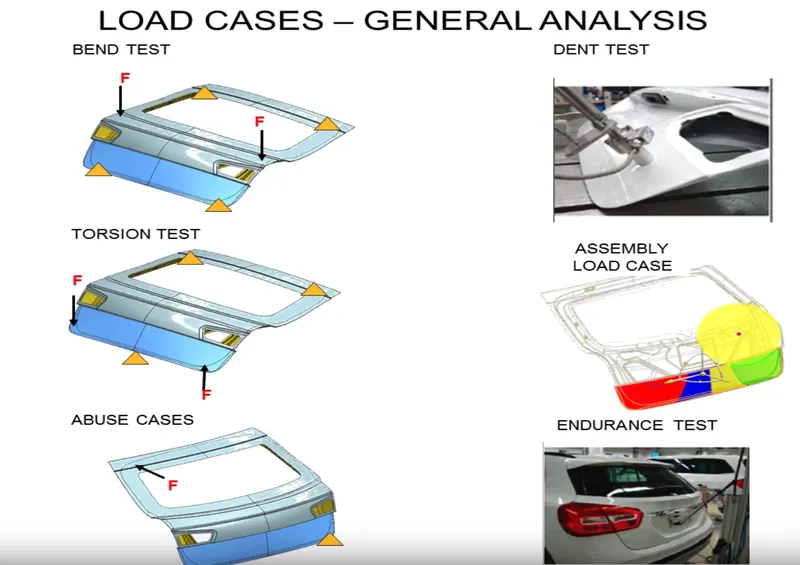
To overcome the drawback of steel recently a new method is used for manufacturing i.e is Ultralight steel auto body concept this method gives two ways to reduce the weight of the steel
1) Hydro-Forming
2) Tailor welded blank
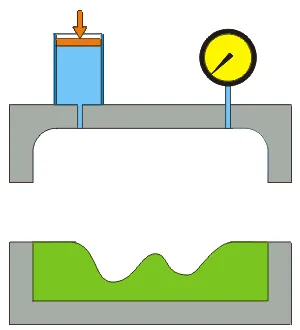
Hydroforming
Hydroforming is a cost-effective way of shaping ductile metals such as aluminum, brass, low alloy steel, and stainless steel into lightweight, structurally stiff, and strong pieces. Hydroforming is a specialized type of die forming that uses high-pressure hydraulic fluid to press room temperature working material into a die. To hydroform aluminum into a vehicle's frame rail, a hollow tube of aluminum is placed inside a negative mold that has the shape of the desired result. High-pressure hydraulic pumps then inject fluid at very high pressure inside the aluminum tube which causes it to expand until it matches the mold.
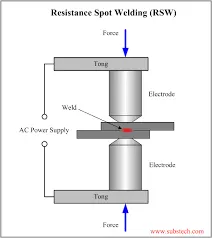
Spot Welding:-
Spot welding is a type of electric resistance welding used to weld various sheet metal products, through a process in which contacting metal surface points are joined by the heat obtained from resistance to electric current
DESIGN CONSIDERATIONS OF BACK DOOR ASSEMBLY :
- Rear Visibility.
- Support structures like hinges and gas stays.
- Mounts for wiper motor, tail lamps, and other wiring loops.
- Fit and clearances.
- Boot space and accessibility.
- Requirement of sealing and its function
- Embosses
Rear visibility criteria: This criteria deals with the visibility of passengers backwards through the rear wind shield glass.it mainly depends up on the Wind glass area .Here in this case as we already have a styling surface wind already included the wind shield area we need not to worry about the Rear visibility criteria.
Requirement of sealing and its function: In order to prevent water from entering the cabin we are introducing a sealing area where the sealing flange is provided on the inner panel and rubber mounting area is provided on the body side.
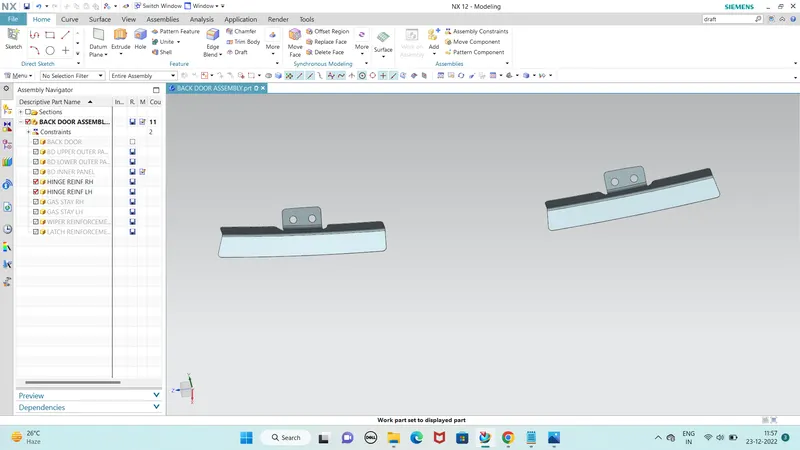
Reinforcements must be provided on both hinges .Because in sheet metals adding another solid body or a sheet body on it ,will results in decreasing the strength of the part. To overcome this problem Reinforcements are used
The central line or the axis of each hinges must be colinear
Emboss definition: Embosses are provided in the inner panel of the Back Door assembly. This helps in the weight reduction of the Back Door and also dissipates the force during the collision.
HEMMING :
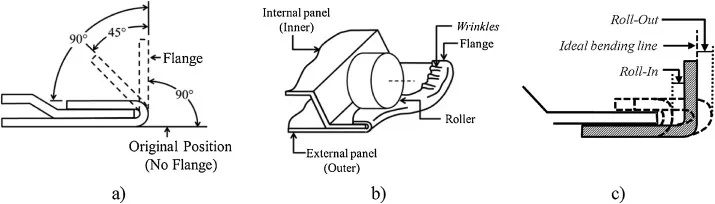
Joining techniques: To join inner and outer panels the Hemming process is used and to join outer upper and lower panels laser brazing welding is used.
Hemming: Hemming is a forming operation in which the edges of the sheet are folded or folded over another part in order to achieve a tight fit. Normally hemming operations are used to connect parts together, to improve the appearance of a part, and to reinforce part edges.
laser brazing welding:
Joining methods, in which the brazing solder is melted with the help of an industrial laser, have been used mainly in the mass production of vehicle bodies. There, laser beam brazing is mostly used for joining galvanized metal sheets or lightweight components made of aluminum, but also for other brazing material. Laser automobile brazing is usually realized with a brazing optic that is integrated in a robot. The laser beam is guided along the joint where it melts the brazing solder
DESIGN PROCEDURE :
REPAIR THE CLASS A SURFACE :
We need to check the given class A surface is OUTER PANEL whether its sewing properly or not still gaps are formed and we need fill the gaps by developing better curves on surface and trim that surface and by using THROUGH CURVE MESH we formed the good surface.
And create the Assembly Folder after we have to create the models in that assembly.
DESIGNING OF BACK DOOR INNER PANEL :
Firstly we have to extract the linked surfaces of outer panels
TOOLING DIRECTION :
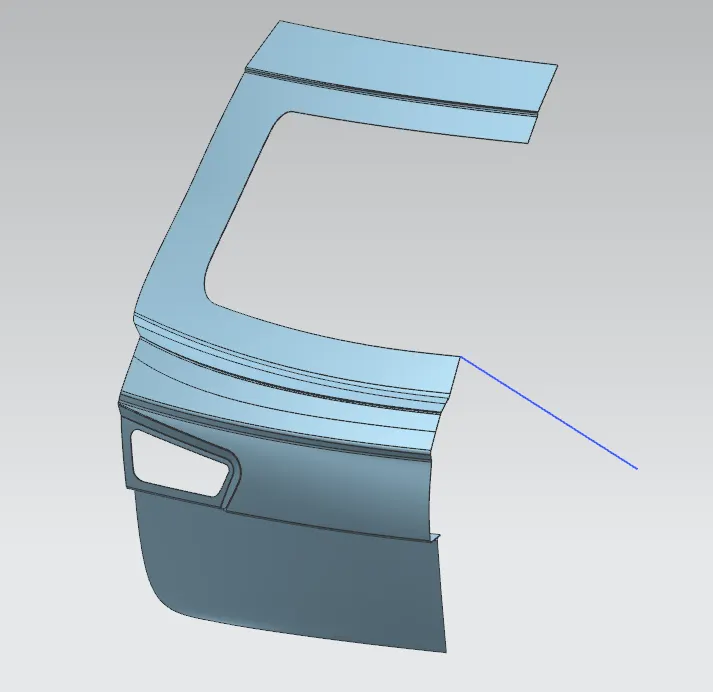
We have to develop the SEALING SURFACE
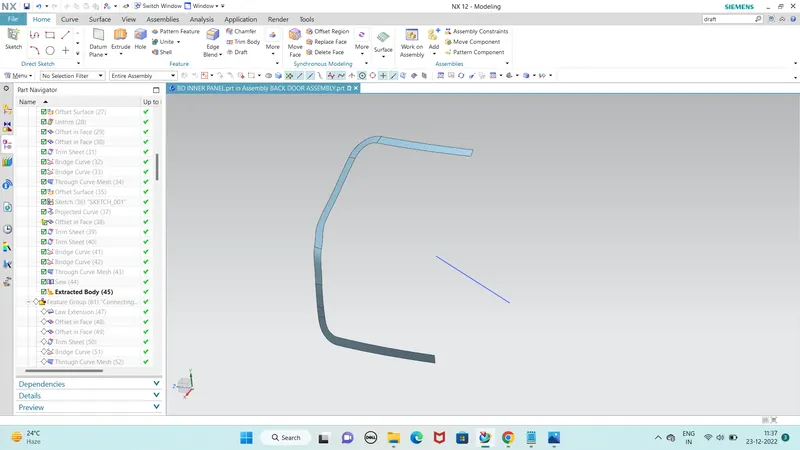
And we have to design the connecting flange by attaching the sealing flange
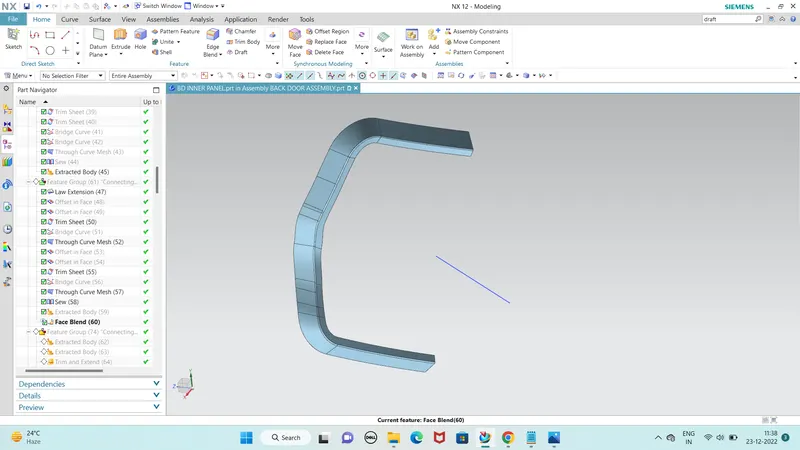
And developing the design by providing the blends
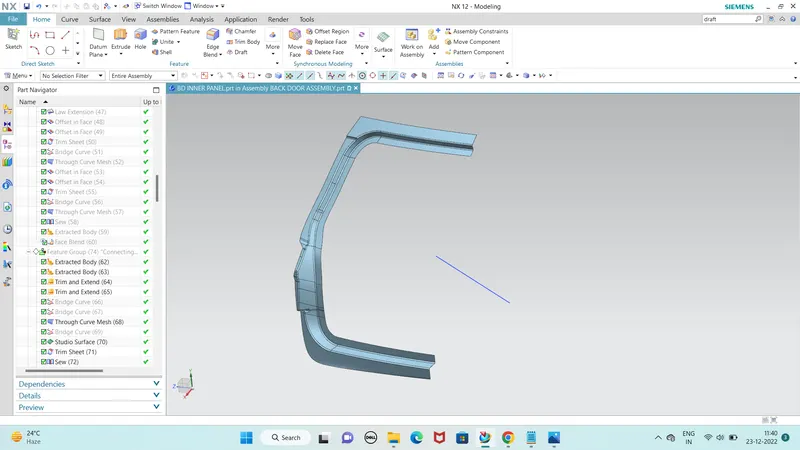
After we have design the WINDSHEILD AREA by the given outer panel
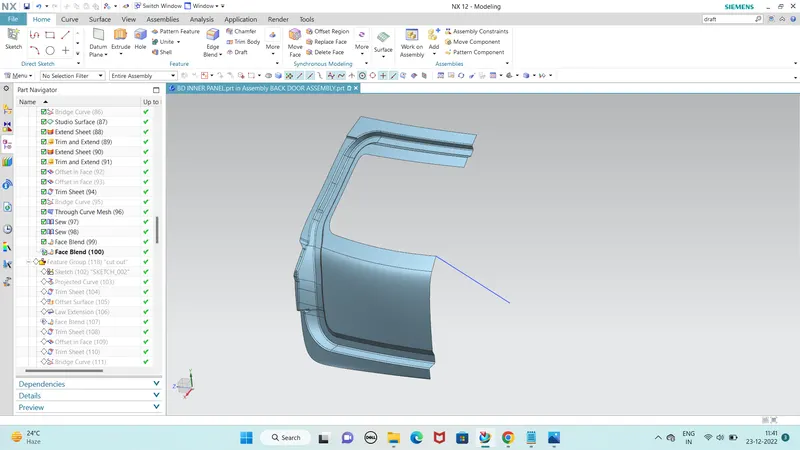
We have to give the CUT OUT in the lower portion of the Inner panel
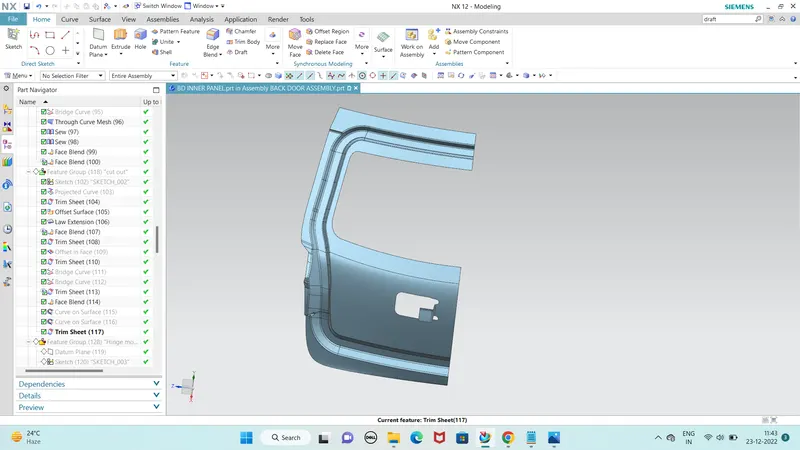
After we have to design the mountings for the reinforcements like HINGE, GAS STAY, WIPER, LATCH MOUNTINGS. And we have to give emboss near by the CUT OUT to produce more strength and changes the direction of forces.
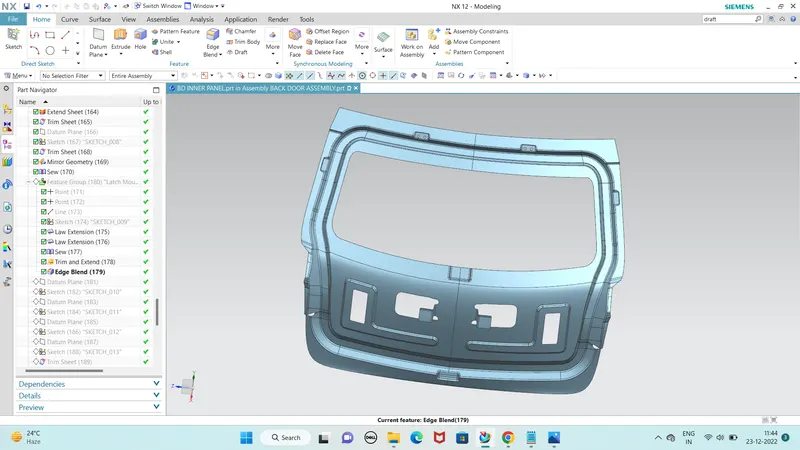
we have to give mirror geometry and after we have to design the latch mounting by the hinge mounting trajector circle and latch will be perpendicular to the trajectory circle we have design that with in the Design parameters.
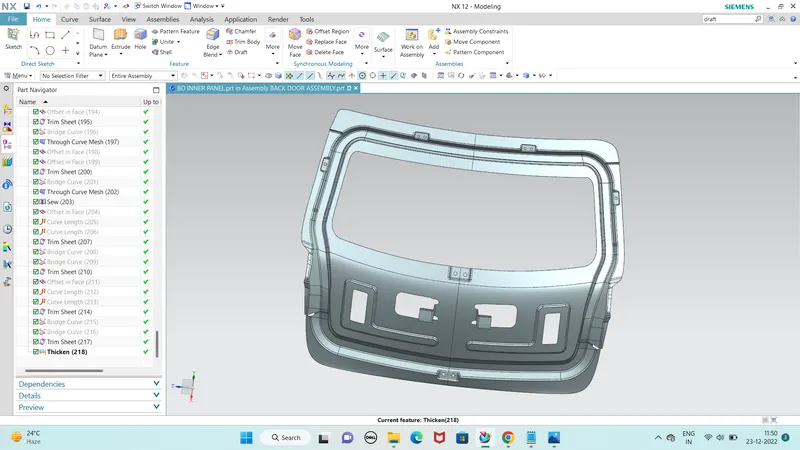
After we have give desired thickness tho the INNER PANEL = 0.75
DESIGN OF OUTER PANELS PROVIDING HEMMING :
Firstly we have to develop the good surface and sew together and give law extension to that boundary of the surface and offset the surface and that surface should be 6-10mm and we have to maintain the 0.2mm gap between the inner panel and outer panel. By the three face blend we provide the hemming surface.
DESIGN OF THE REINFORCEMENTS :
HINGE REINFORCEMENT :
GAS STAY REINFORCEMENTS :
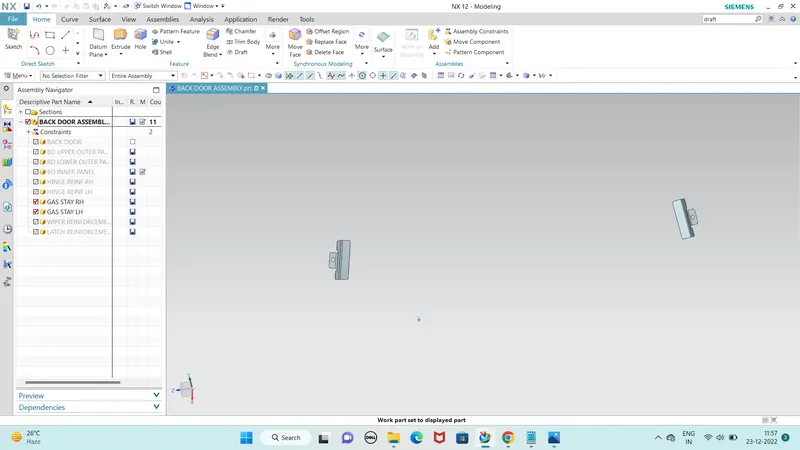
WIPER REINFORCEMENT :
LATCH REINFORCEMENT :
DRAFT ANALYSIS OF THE BACK DOOR INNER PANEL :
CONCLUSION:
Finally we made an Back Door Design and it is ready to manfacture.