Design of backdoor
Use the provided styling surface to come up with a back door design, use appropriate design methodologies, and provide the necessary reinforcements and embossed.
AUTOMOTIVE DESIGN OF CAR BACK DOOR USING NX CAD
OBJECTIVE:
i) From the given styling surface, develop a back door using appropriate design methodologies.
ii) The objective of this project is to design a BIW Back Door of a car with an Inner Panel, Outer Panel, and Reinforcements for the Hinges, Gas stay, Wiper Motor, and Latch by following the engineering standards.
iii) The Inner Panel must be subjected to Draft Analysis for verifying whether it satisfies the Deep Drawing requirements for the tooling direction created in the design.
INTRODUCTION:
The Back Door of a car is the rearmost part of the vehicle which gives access to the trunk space of the car. The rear door also supports the reinforcements and added weights of the Wiper Motor, Gas Stay, Tail Lamp, and Latch and Striker. The Backdoor/tailgate is one of the closure commodities in BIW sheet metal design. The backdoor has a lot of components inside and is designed to incorporate them easily. It affects the rear visibility and luggage area. The material used for door manufacturing depends on the budget and performance of the vehicle. Mainly Aluminium and Steel will be used whereas low-budget vehicles use Steel, making the manufacturing process easy and cost-efficient since it follows the Stamping of Moulds.
Components of the Back Door :
- Outer panel upper
- Outer panel Lower
- Inner panel
- Latch and Striker Reinforcement
- Hinge Reinforcement
- Gas stays Reinforcement
- Wiper motor reinforcement
Design consideration for a back door :
- Rear Visibility
- Boot Space and accessibility
- Fit and Clearance
- Support Structures like hinge and gas stays
- Mounts for wiper motor, tail lamps, and other wiring loops.
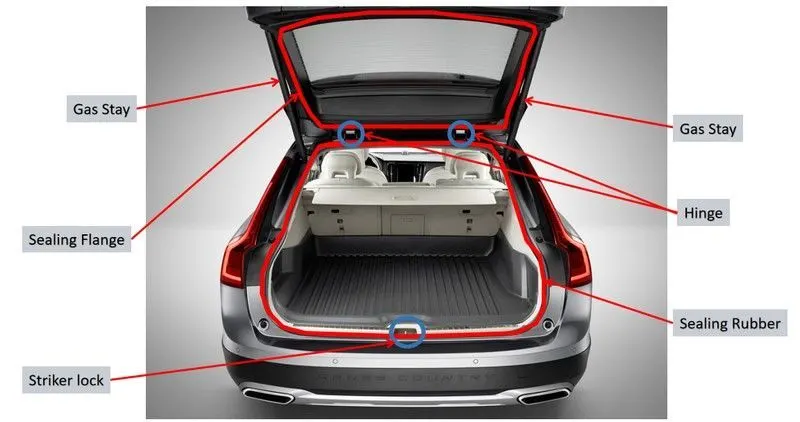
DESIGN INTENT
The intent of the project is to design a Body For the White Back Door of the vehicle considering the engineering standards and manufacturing requirements which satisfy the Deep Drawing Process.
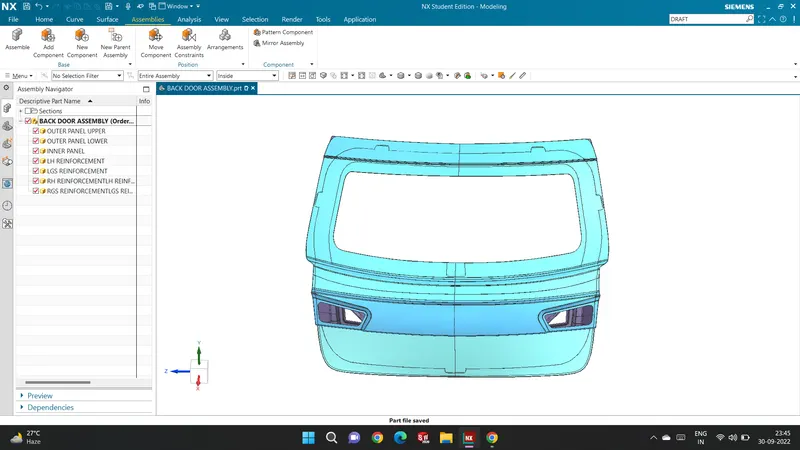
Force Distribution:
When the car hit the rear end, the force which acted should react outside. The Y/V emboss which is helps to move the force to the outer end.
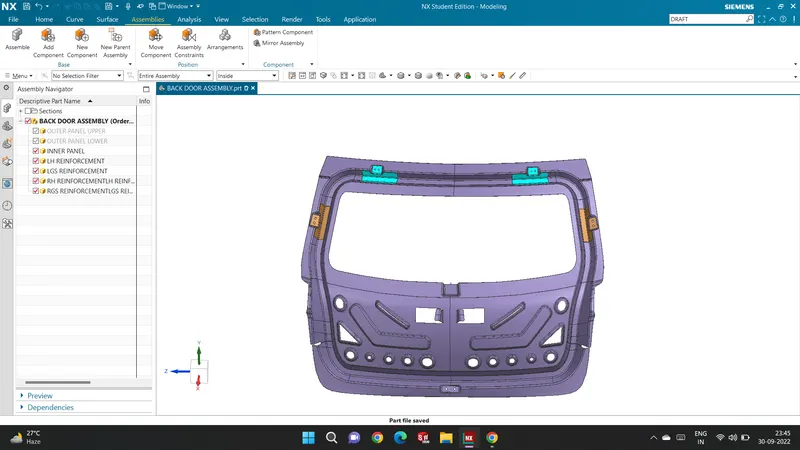
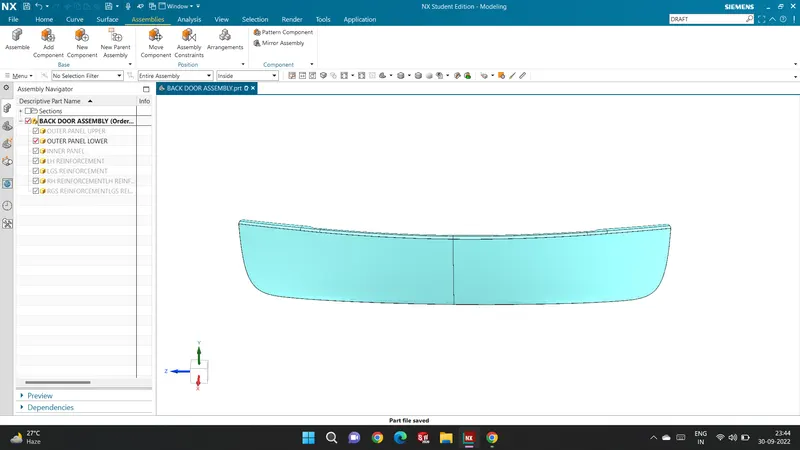
Outer Upper Panel:
The Outer Upper Panel was Extracted from a styling surface.
The thickness provided for the outer panel is 0.75 mm
Hemming is provided with the corner relief.
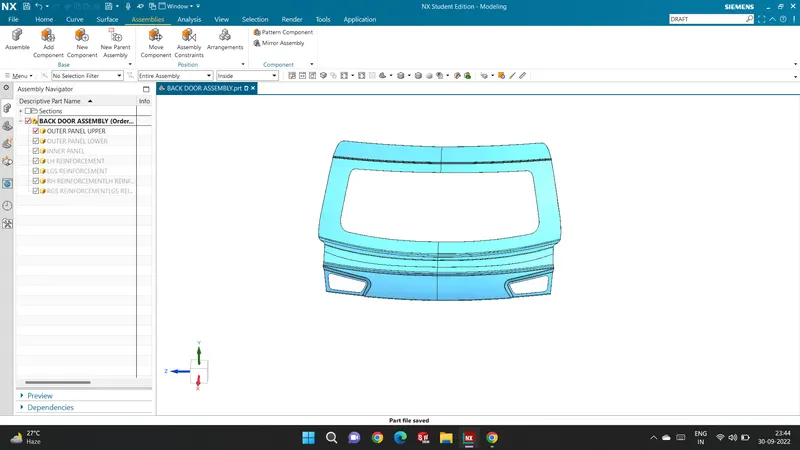
Outer Lower Panel:
The Outer Upper Panel was Extracted from a styling surface.
The thickness provided for the outer panel is 0.75 mm
Hemming is provided with the corner relief.
Tooling Direction:
-
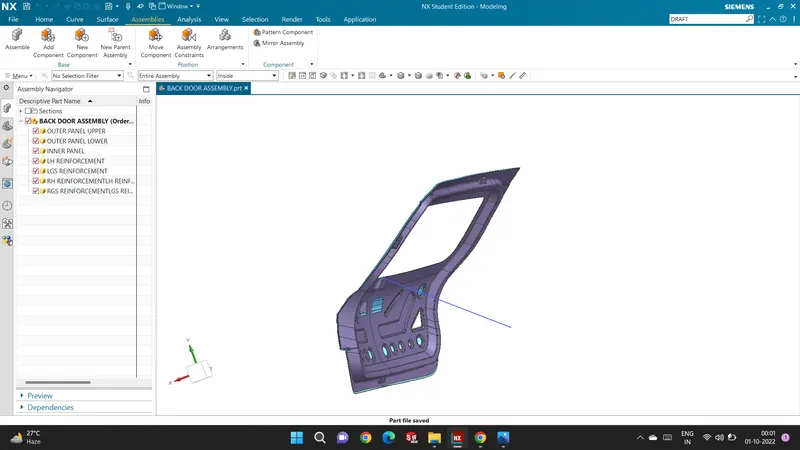
Before starting to design the inner panel of the back door the tooling direction for Deep Drawing purposes should be created.
-
Then the styling surface needs to be checked and analyzed since it might have irregularities, hence it must be fixed first.
DESIGN OF BACKDOOR INNER PANEL:
The Inner Panel is Extracted from a styling surface.
The thickness provided for the outer panel is 0.75 mm
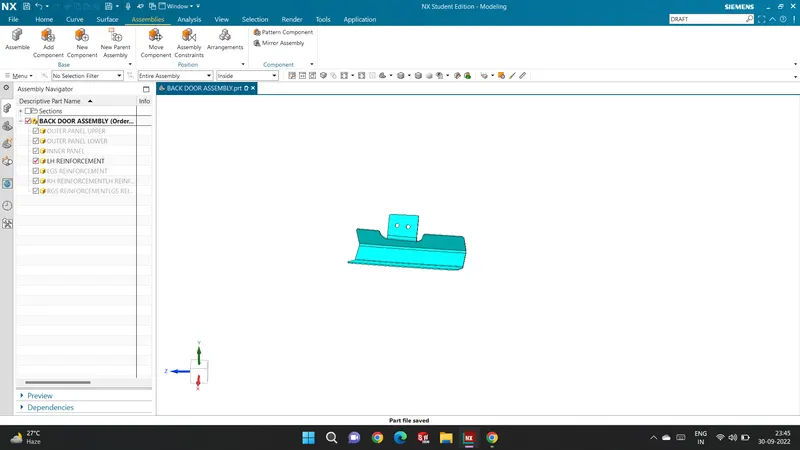
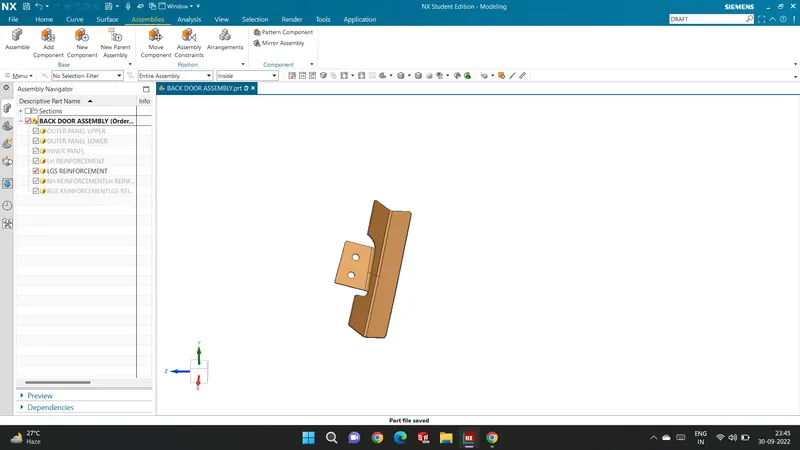
HINGE, GAS STAY & WIPER MOTOR EMBOSS:
HINGE AXIS
GAS STAY
WIPER MOTOR
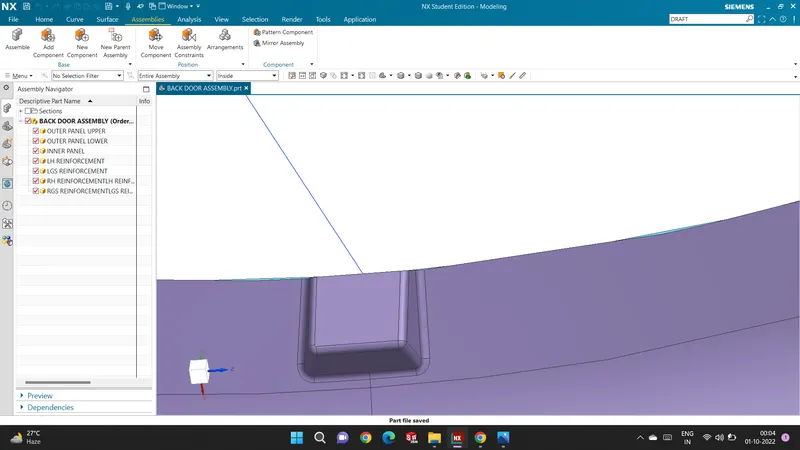
STRIKER POSITION:
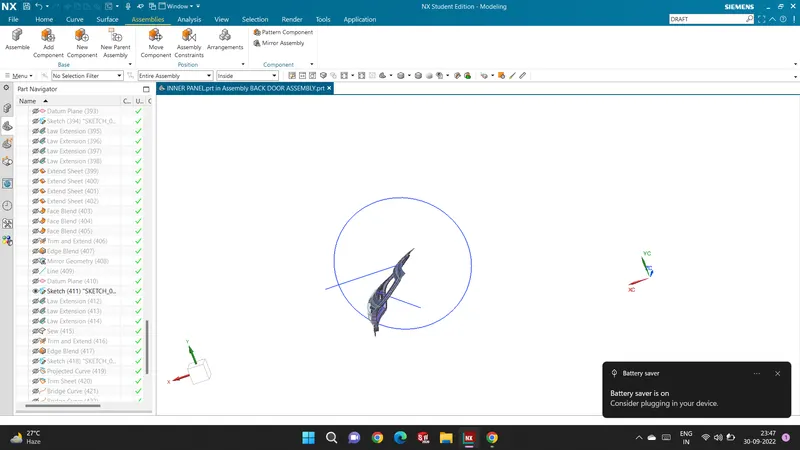
DRAFT ANALYSIS:
-
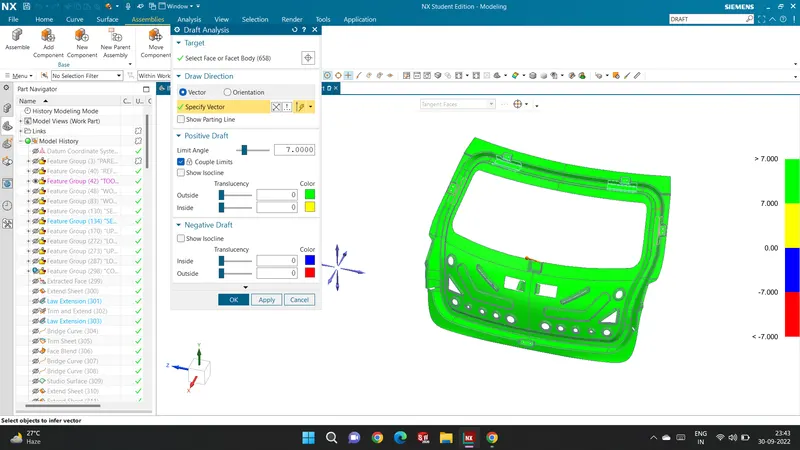
The draft analysis will be performed for the tooling direction created at first and checked that the model is suitable for manufacturing.
-
Then to get a complete green portion the necessary changes to the draft angle of the embosses were carried out by optimizing the model.
-
The Draft Analysis command enables us to detect whether the part drafted will be easily removed or not.
-
This type of analysis is performed based on color ranges identifying zones on the analyzed element where the deviation from the draft direction at any point, corresponds to specified values.
CONCLUSION:
Thus the Body In the White Back Door of a car was designed following the engineering standards and also the deep drawing requirements were satisfied.