Design of backdoor
To develop the car backdoor by using given surface method by automotive sheet design.
BACKDOOR :-
At the car's back end, there is a backdoor that leads to the luggage storage space in the boot.spare wheel, etc.These doors can be manually operated or powered by electricity.The majority of luxurious automobiles run on electricity.
The Back Door, also known as a "Hatch," "Tailgate," "Trunk-lid," or "Boot-door," is the fifth door in a very 4-door car.It is the part of the vehicle that is closest to the rear and provides access to the trunk. It also has mounts for the electric motor, tail lamps, hinges that support its weight when it is opened, gas stays that help open it and keep it open, radars, cameras, and other things.
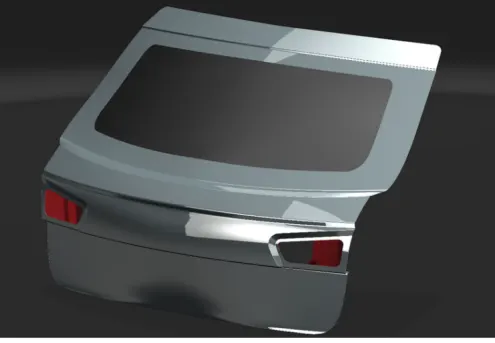
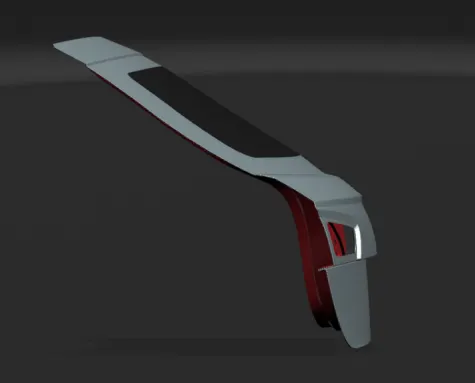
The material used for the backdoor varies depending on the vehicle's value range.Steel is used in the majority of low-cost vehicles because it is less expensive and has parts that are stamped using molds.Most of the time, these parts have the same thickness, and reinforcements are added to boost local strength where it's needed.The superior vehicles use aluminum parts which are normally bite the dust projected and subsequently can have variable thickness.Because aluminum components are lighter than steel ones, this prevents the need for reinforcements and keeps the load even lower.Aluminum, on the other hand, is more expensive than steel, so its applications in less expensive automobiles are limited.Aluminum is currently cost-effective for manufacturers in all price ranges due to the widespread use of plastic trims and plastic parts.The component's weight is reduced when aluminum is used, and as a result, the vehicle's fuel efficiency is improved.
Added reinforcements:
As previously mentioned, reinforcements are typically provided for local strengthening.A thinner sheet with thicker local reinforcements is preferred rather than making the entire panel from a thicker sheet.The panel itself is typically 0.55 to 1 mm thick, while the reinforcements typically range from 1-1.5 mm.
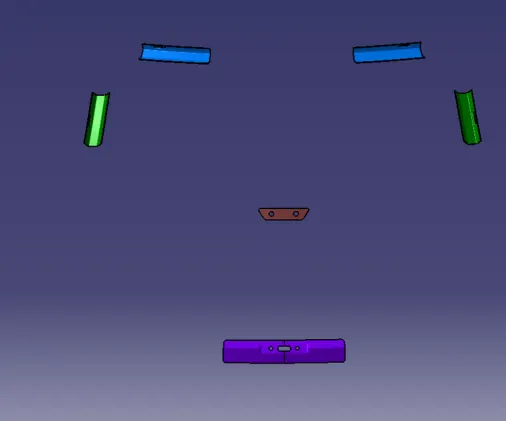
1. Outter panel - 0.75 mm
2. Inner panel - 0.75 mm
3. Reinforcements - 1.5 mm
Design Consideration for Backdoor Inner Panel:
1. Rear Visibility.
2. Support structures like hinges and gas stays.
3. Mounts for wiper motor, tail lamps, and other wiring loops.
4. Fit and clearances.
5. Boot space
6. Rear crash regulations and requirements.
7. Sealing and its functions.
8. Joining techniques like hemming, spot welding etc.
Types of Door Opening :
Top mounted door
Side mounted door
Bottom Door
In these project, I designed Top mounted door,So here we discuss mainly about top mounted door only.
Components of Backdoor :
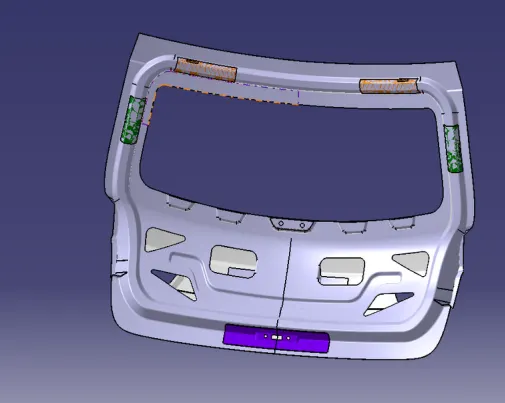
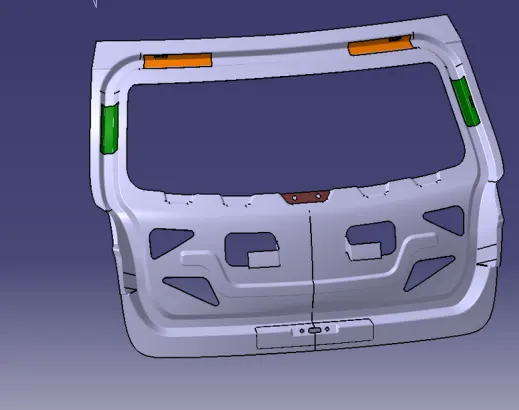
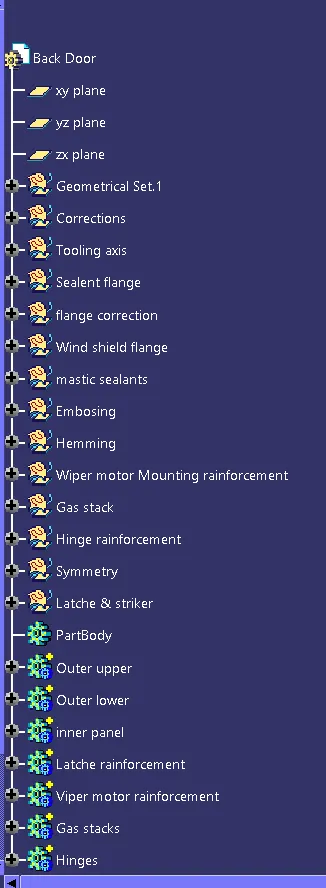
Inner panel
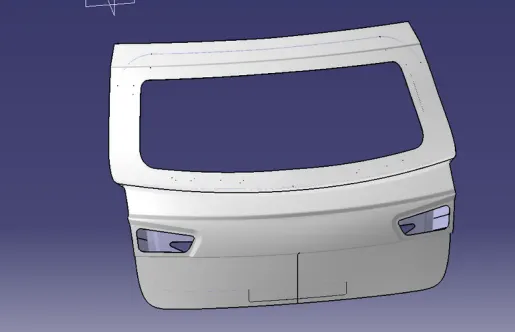
Outter panel upper
Outter panel lower
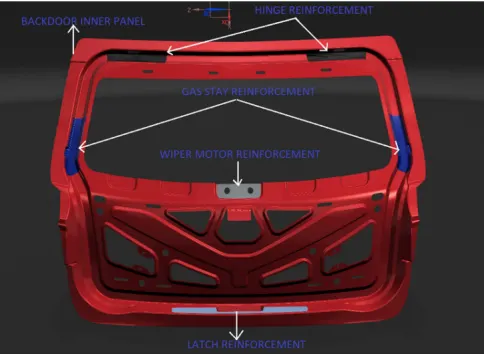
Hinge reinforcement LH
Hinge reinforcement RH
Gas stay reinforcement LH
Gas stay reinforcement RH
Wiper motor reinforcement
Latch reinforcement
Plastic trim
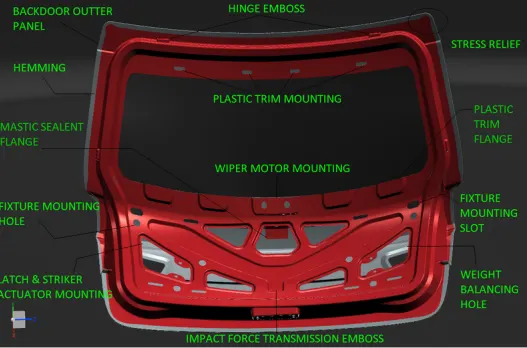
the backdoor only.
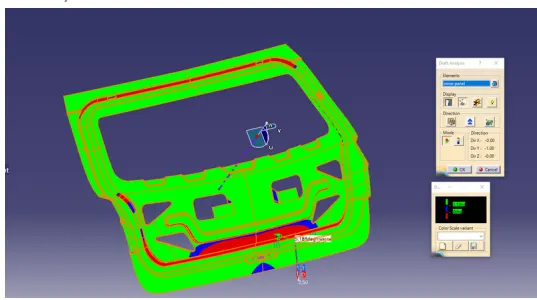
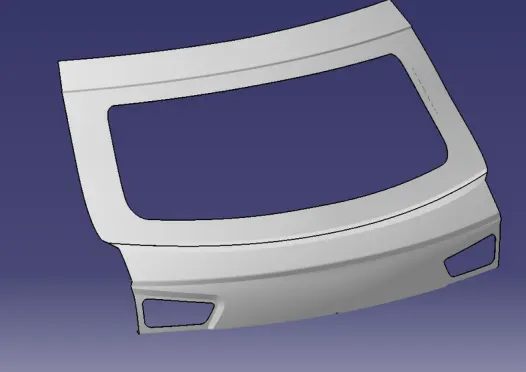
The styling team provided us with the outer panel's class A surface.The inner panel and all of the other components must be developed and finally assembled from this surface.First and foremost, we must search for surface irregularities and discontinuities.Small errors can be fixed, but major errors should be reported to the styling team.
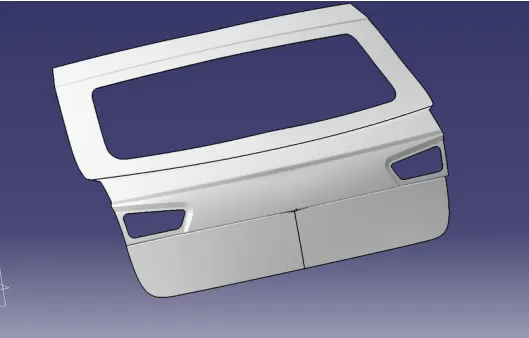
We must construct the backdoor's inner panel using the class A surface as a reference.The sealing flange, which determines how the backdoor will be mounted at the car's rear, is the inner panel's most crucial component.
Additionally, it seals the vehicle's rear and prevents water and dust from entering the interior.The sealing flange ought to have a width of at least 25 millimeters.
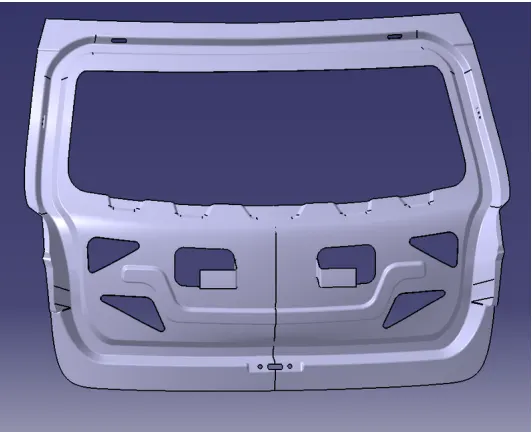
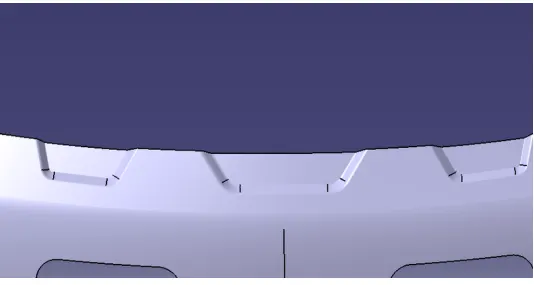
The cutouts are basically access holes for the installation of the wiper motor, latch, and striker motor. The embosses in the inner panel serve to both strengthen the component and dissipate the forces in the event of a rear collision to the exterior of the vehicle. Most of the time, these are put in after the inner and outer panels are put together.In order to maintain the panel's CG, holes may also be incorporated into the panel.
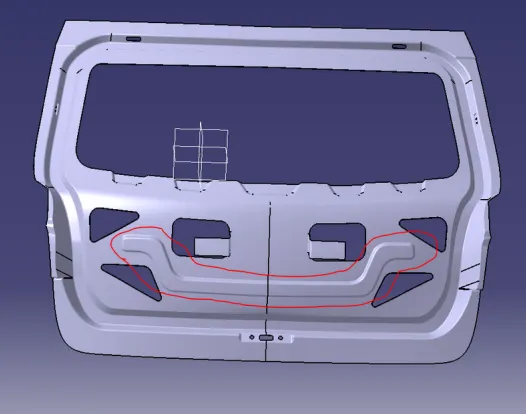
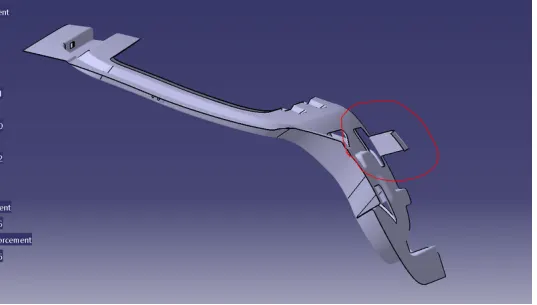
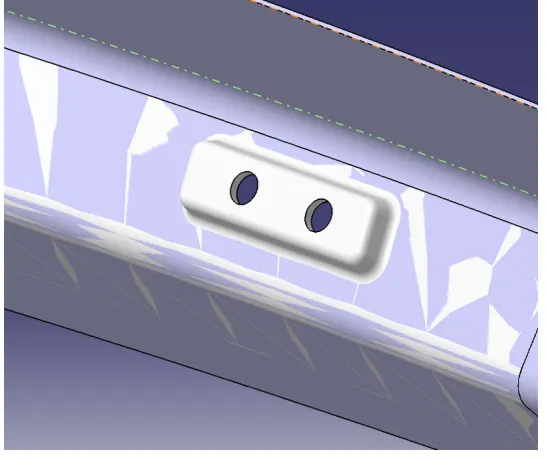
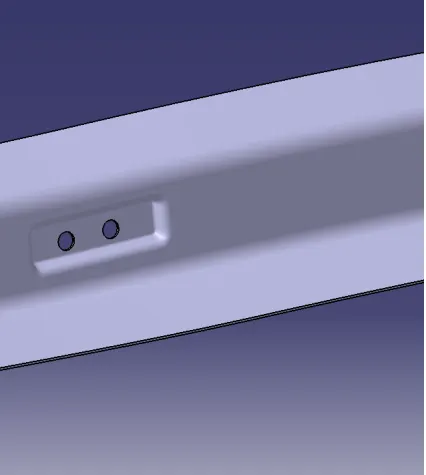
Hinge emboss :-
 \
\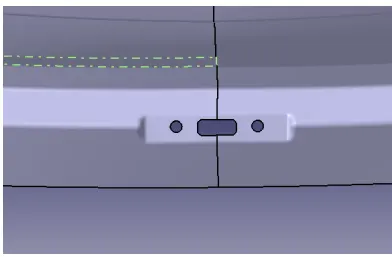
The roof is attached by hinges to the backdoor.The hinge can be installed either inside or outside the backdoor.The purpose of reinforcements is to strengthen the area where the hinge is assembled.
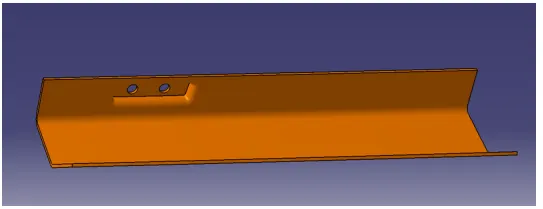
The Gas Stay is the component that maintains the open position of the backdoor.It can be operated manually or by a motor.
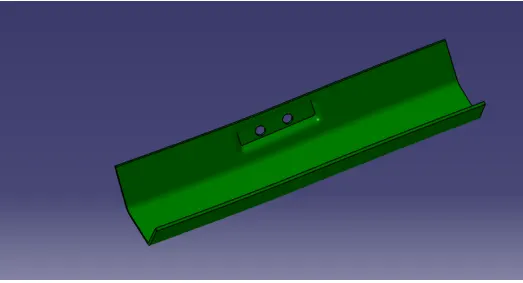
The backdoor window is cleaned with a wiper when water from the rain falls on it.The motor that is mounted on the inner panel drives it.The inner panel where the motor is mounted begins to deform as a result of the motor's vibration and heat, resulting in poor NVH. As a result, we must provide reinforcement where the wiper motor is located.
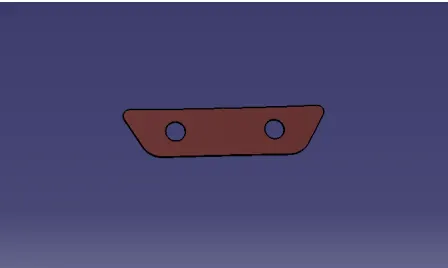
When designing a backdoor, the placement of the striker and latch is crucial.When the hinge is initially fixed, draw a circle around the center of the latch and the center of the hinge axis.The latch should have a center that is perpendicular to the circular trajectory..
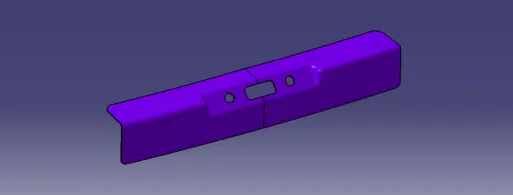
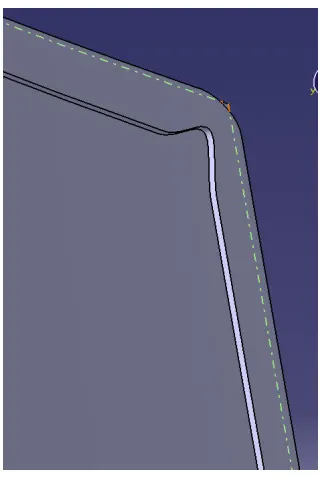
Hemming is used to join the inner panel and the outer panel at the corners.We don't use any kind of welding because it makes a mark on the outside panel and makes the car look bad.
Hemming is a forming procedure in which the sheet's edges are folded over or folded over another part to create a snug fit.Typically trimming tasks are utilized to interface parts together, to work on the presence of a part and to build up part edges