Design of backdoor
Design of backdoor
Objective
To create the back door inner panel, outer styling panel with Hemming and reinforcement using NX software with the help of the styling surface provided.
Introduction
The trunk (North American English) or boot (British English) of a car is the vehicle's main storage or cargo compartment, often a hatch at the rear of the vehicle. It is also called a tailgate.These doors can be operated manually or electric powered.
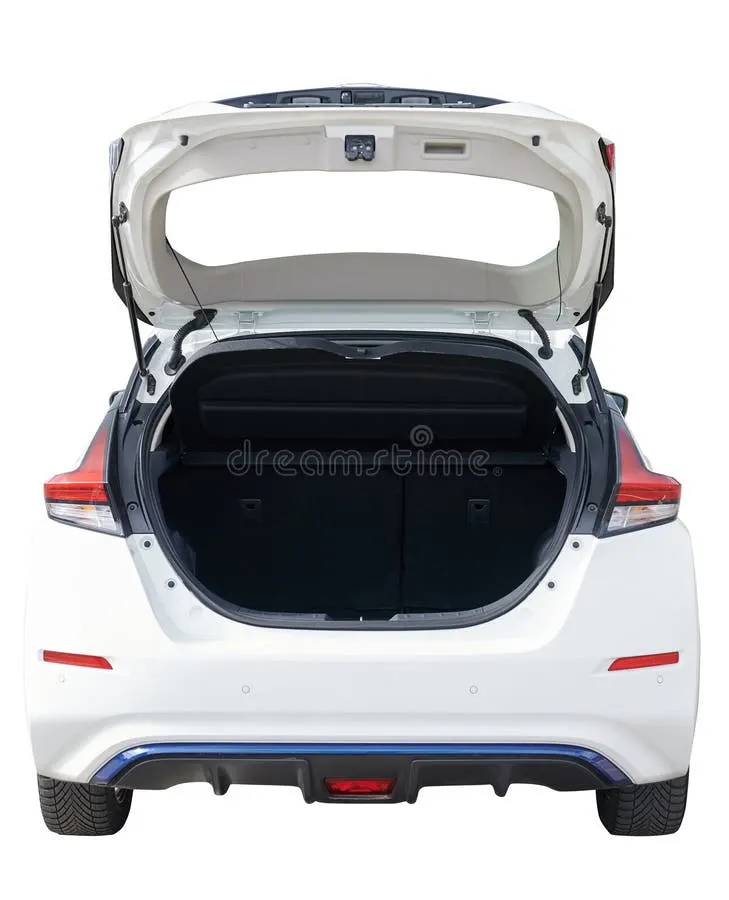
In most of the luxury cars door is electrically operated.This is a critical part for back impacts occur on the accidents, which should be ensure that crash wouldn’t injured the passengers. Back door consists of one inner panel and two outer panel. Most of the time the back doors are made from steel or aluminum based on the budget of the car the material is selected.
Types of doors based on working position,
- Top Mounted door
- Side mounted door
- Bottom mounted door
Back Door Assembly:
- Inner panel
- Outer panel
- Hinge and its reinforcement
- Wiper motor reinforcement
- Latch & stricker and its reinforcement
- Gas stay reinforcement
The Outer Panel is the styling surface of the back door design. Other components of the backdoor are designed with reference to the outer panel surface. It acts as the outer cover & deals with the aesthetics of the car.
In this design outer panel is divided into two-part.
- Outer Upper Panel
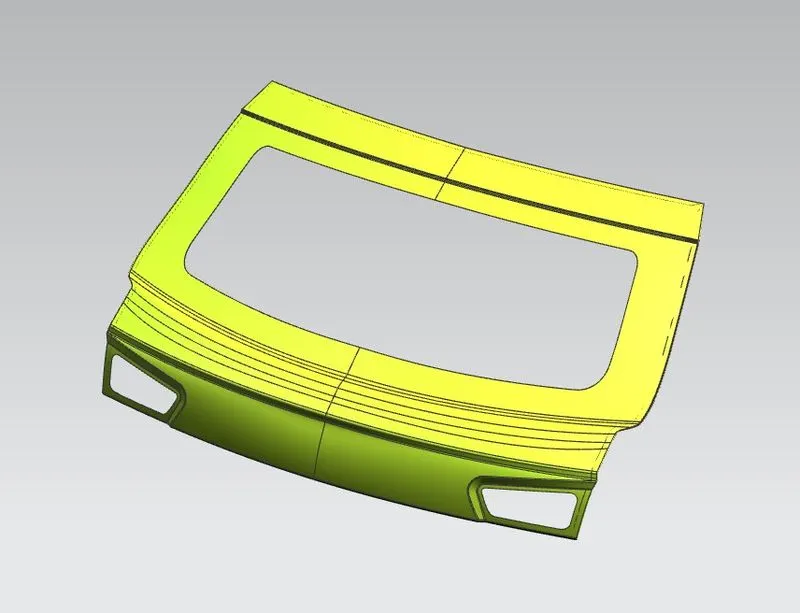
The Outer Upper Panel Extracted from a provided styling surface.
The panel is modified for the required design with the surface tools of NX CAD.
The thickness provided to the outer panel is 0.75 mm.
Hemming is provided with corner reliefs.
2.Outer Lower Panel
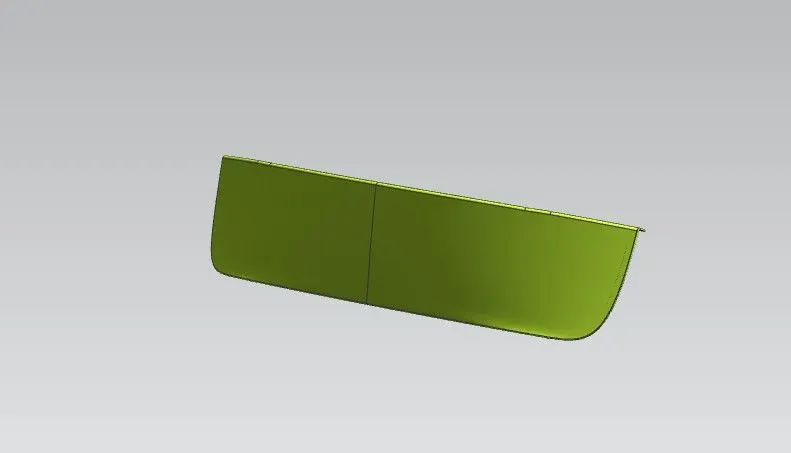
The Outer Upper Panel Extracted from the given styling surface.
The panel is modified for the required design with the surface tools of NX CAD.
The thickness provided to the outer panel is 0.75 mm.
Hemming is provided with corner reliefs.
Different types of Sheetmetal operations are done in the Back Door
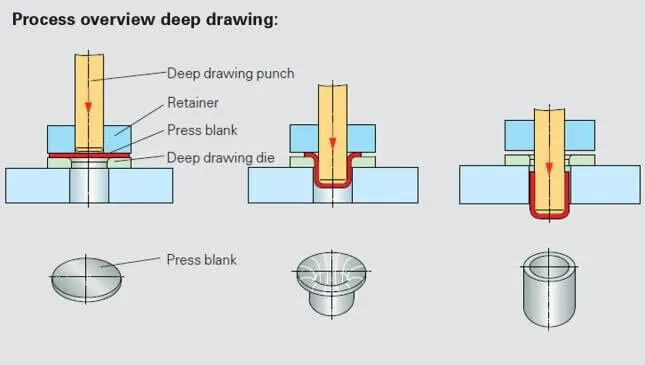
Deep Drawing:
The metal deep drawing process is an effective method of manufacturing of cups, cans and other similar deep drawing products.
Embossing:
Embossing is a metal forming process for producing raised or sunken designs or relief in sheet materials by means of matched male and female roller dies, theoretically with no change in metal thickness or by-passing sheet or a strip of metal between rolls of the desired pattern. Metal sheet is drawn through the male and female roller dies producing a pattern or design on the metal sheet. Depending on the roller dies used, different patterns can be produced on the metal sheet.
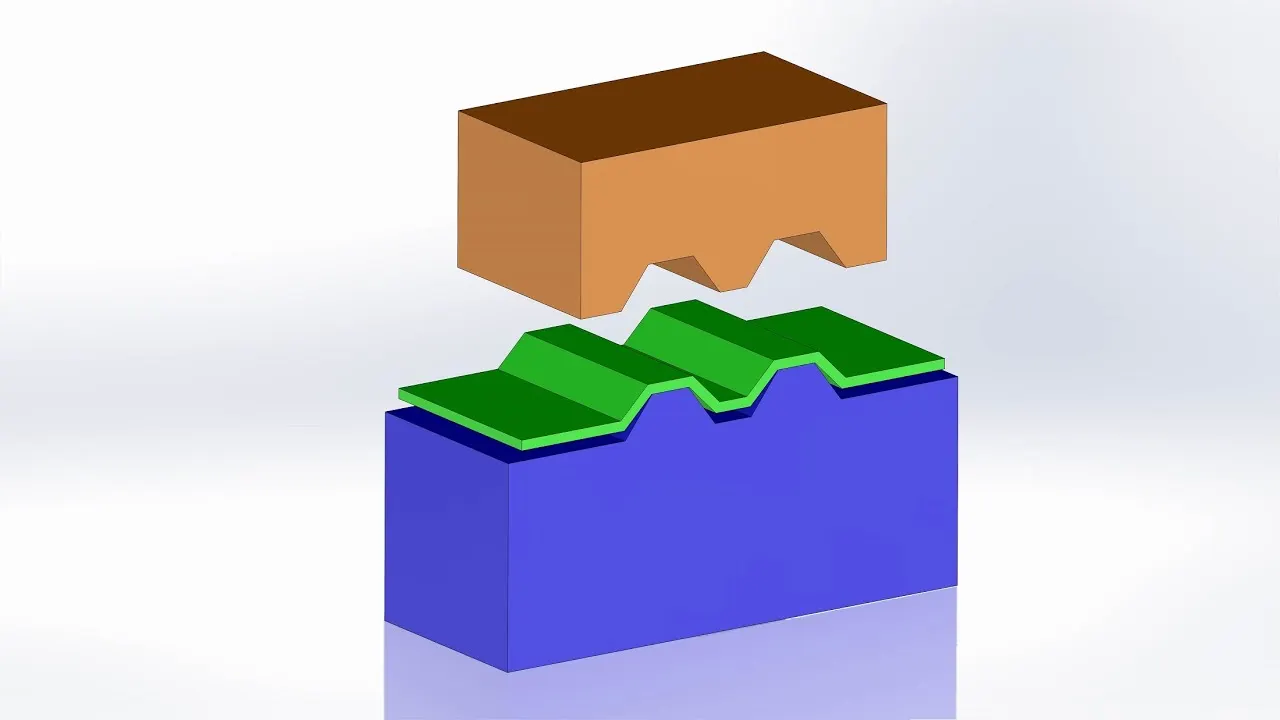
Hemming:
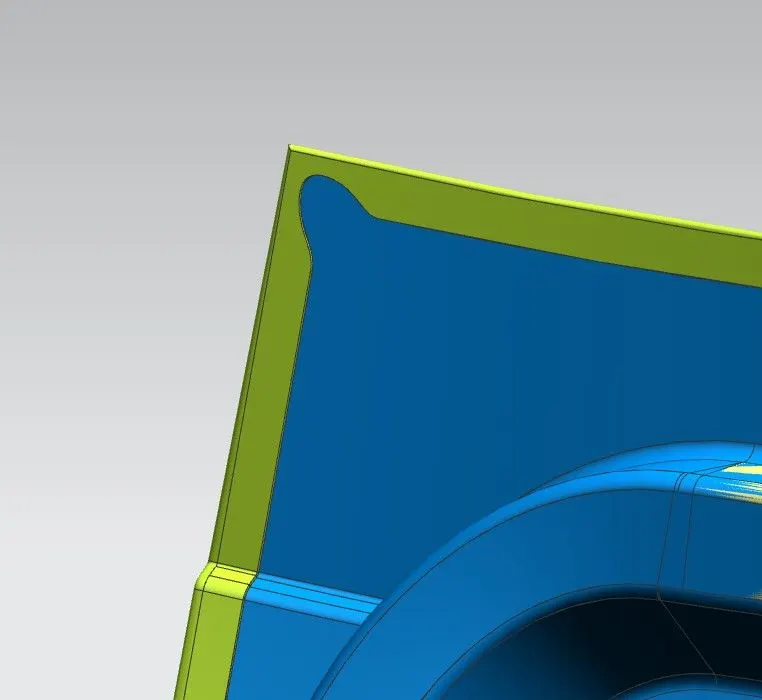
Hemming is a forming operation in which the edges of the sheet are folded or folded over another part in order to achieve a tight fit. Normally hemming operations are used to connect parts together, to improve the appearance of a part and to reinforce part edges.
Inputs for designing of backdoor:
- Outer Panel - 0.75 mm
- Inner Panel - 0.75 mm
- Reinforcements - 1.5 mm
Class A surface:
Backdoor outer upper and lower class A surface has to be repaired according to the smoothness. After repairing the surfaces, the door is divided into two parts as Door Outer Upper and Door Lower Panel.
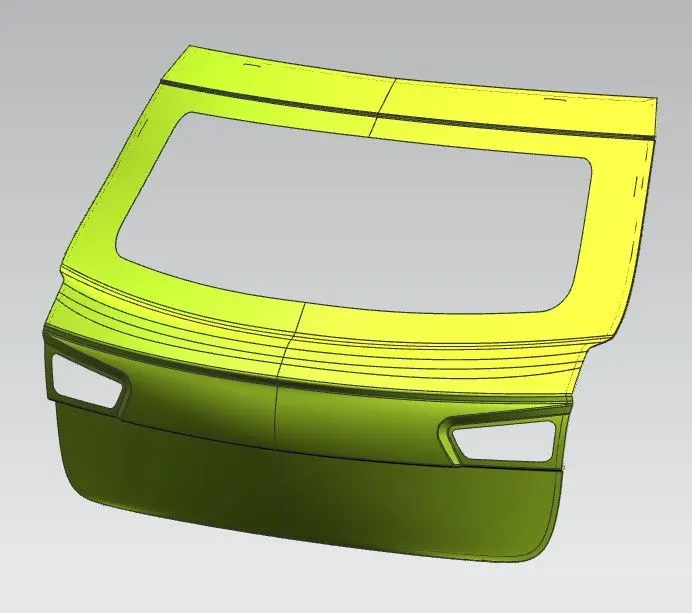
First, we need to create the Tooling direction for the Deep drawing operation. It shows that all the operations like embossing is done by considering this vector direction and it will help in manufacturing the part,
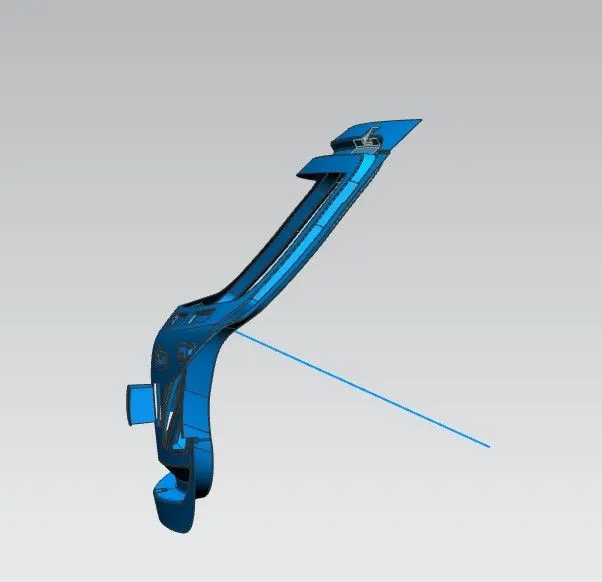
to assemble the back door with the vehicle Hinges are used to open and close the door. For that to increase the local area strength we have to design the emboss and provide the appropriate reinforcements to withstand the load acting upon it.
Hinge reinforcement:
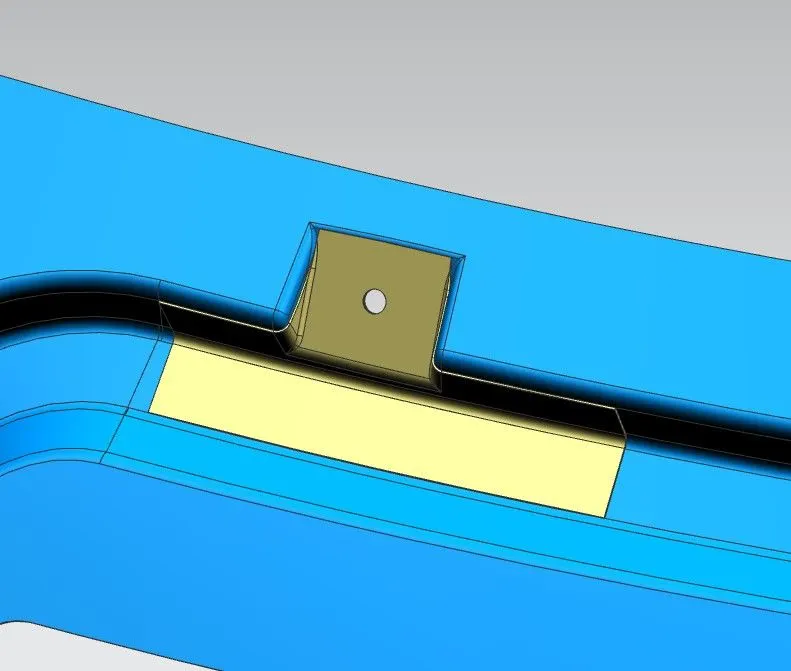
Gas stay area reinforcement:
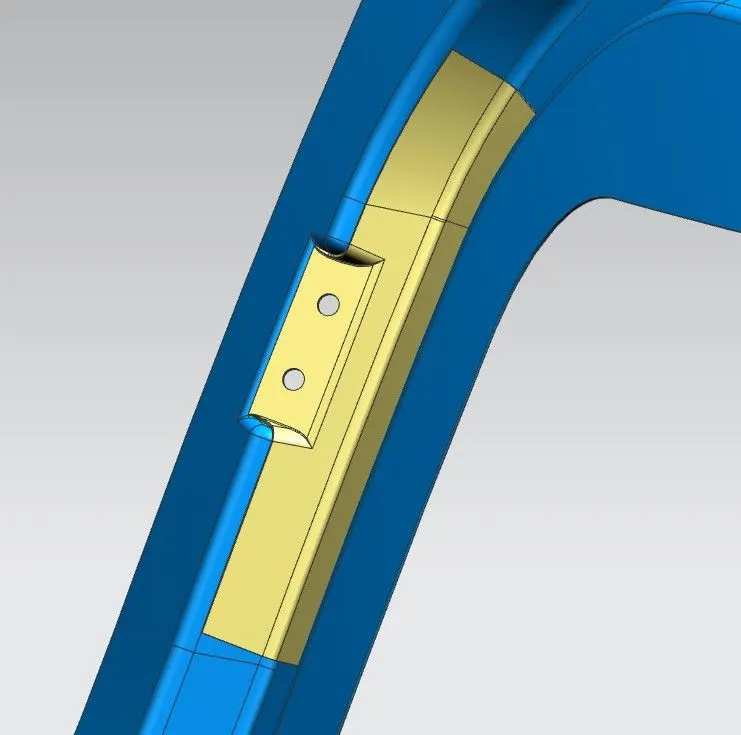
Latch & Stricker area reinforcement
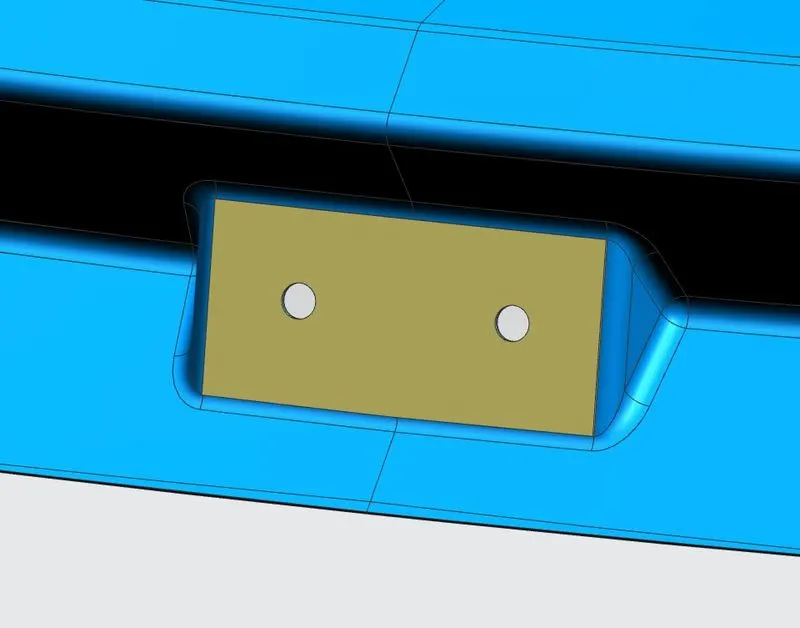
Trajectory for latch emboss
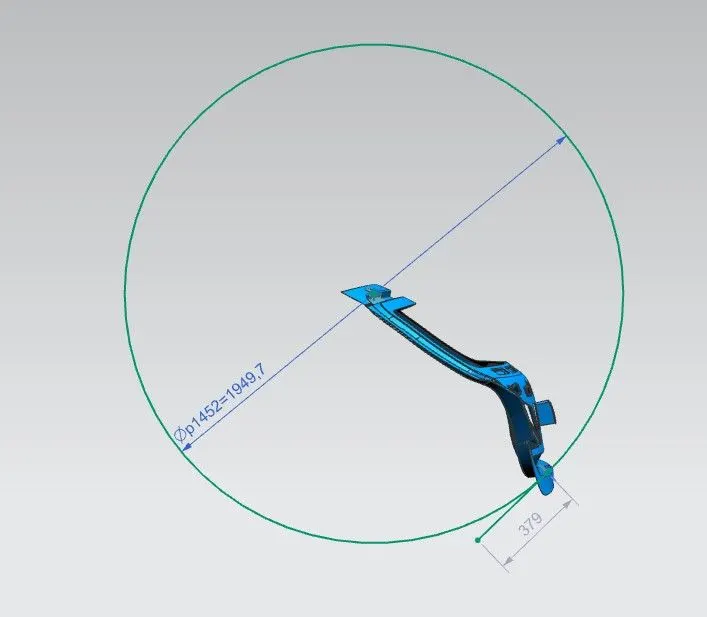
Wiper motor reinforcement
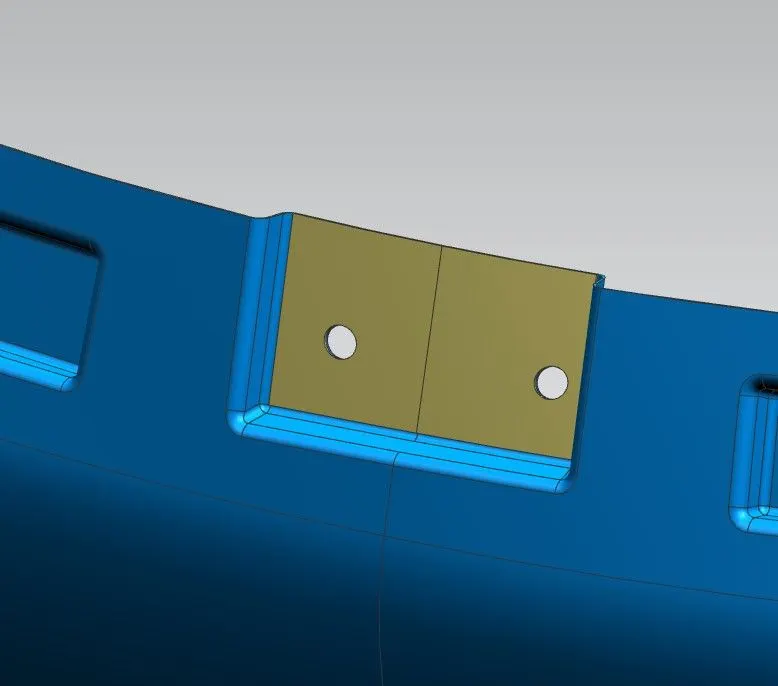
Draft analysis
DRAFT ANALYSIS:
- The draft analysis was performed for the tooling direction created at first and checked that the model is suitable for manufacturing.
- Then to get a complete green portion the required changes to the draft angle of the embosses were carried out by optimizing the model.
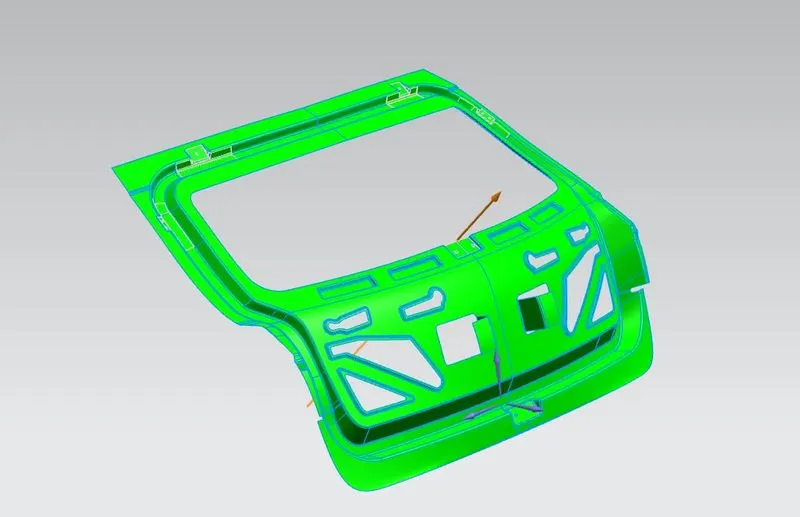
- The Draft Analysis command is used to detect that the part drafted will be easily removed or not.
- This type of draft analysis is performed based on color ranges.
- The identifying zones on the analyzed element where the deviation from the draft direction at any point, corresponds to specified values.
Assembly:
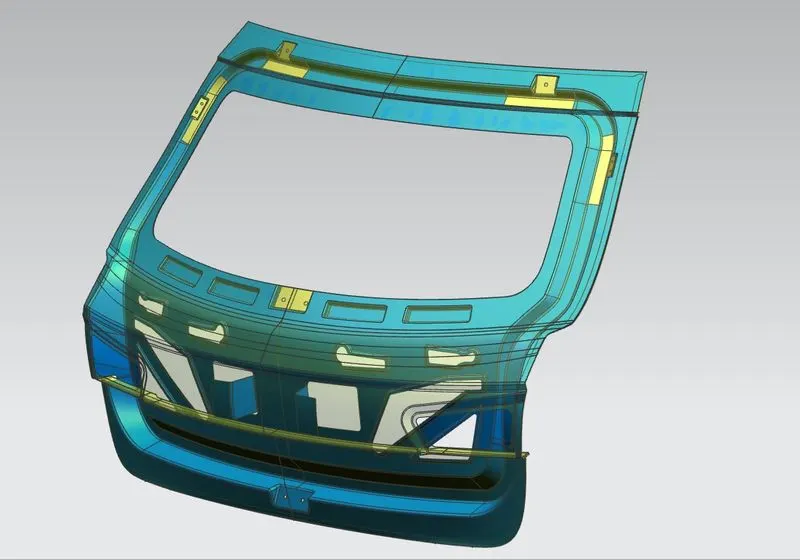
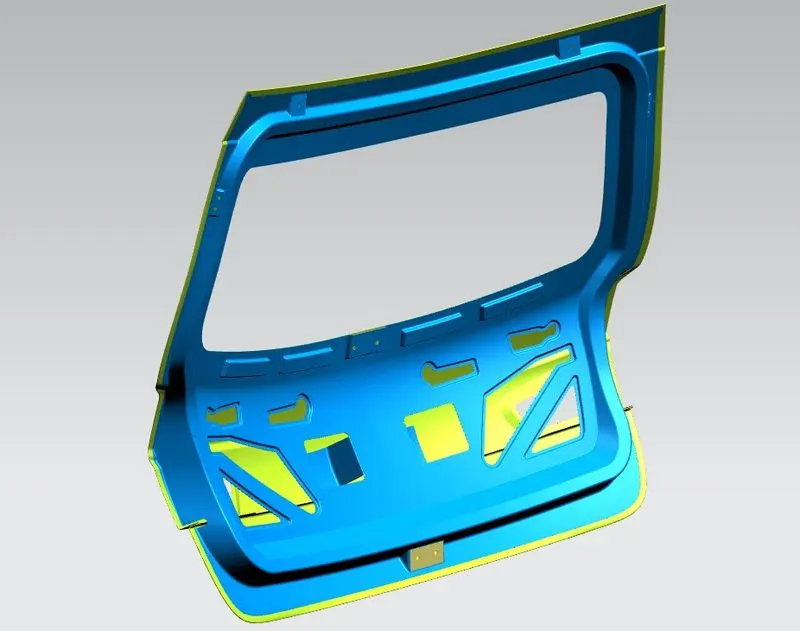
Inner panel and two outer panel are hemmed together. Both inner panel and outer panel are of same thickness which is 0.75mm.
Conclusion
Here the back door is designed as per the requirement and maintaining the passenger safety and security while designing. All parts are geometrically aligned well.