Design of backdoor
BACK DOOR:
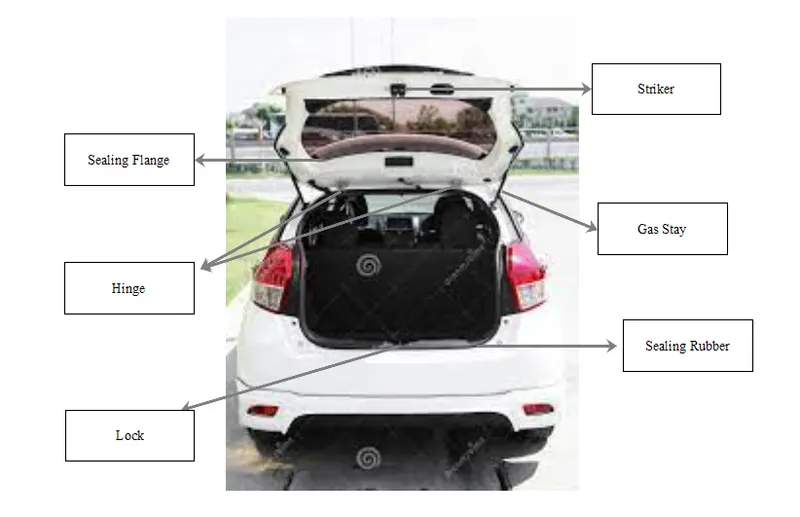
- A back door / tailgate is a hindged flap at rear portion of a car that can be lowered or lifted or removed when loading and unloading the vehicle.
- The back door provides access to trunk or boot of the car and rear view visibilty of the car.
OBJECTIVE:
- To come up with a back door design using the provided styling surface with appropriate design methodologies.
- To provide the necessary reinforcements and embosses for the back door.
PARTS OF BACKDOOR:
Main Parts:
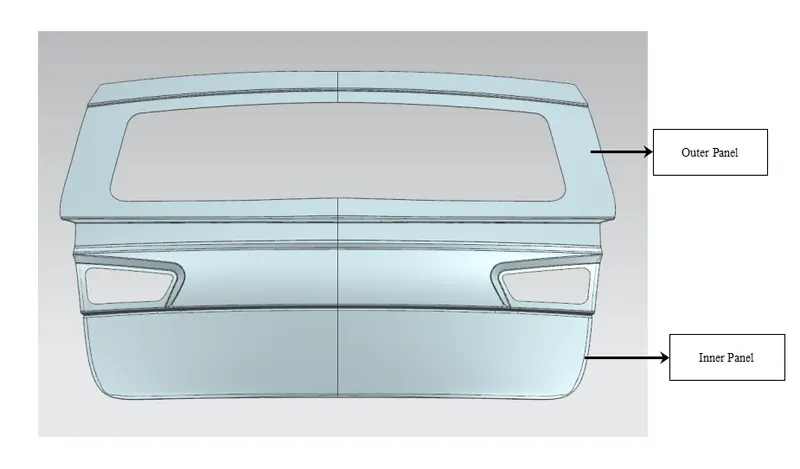
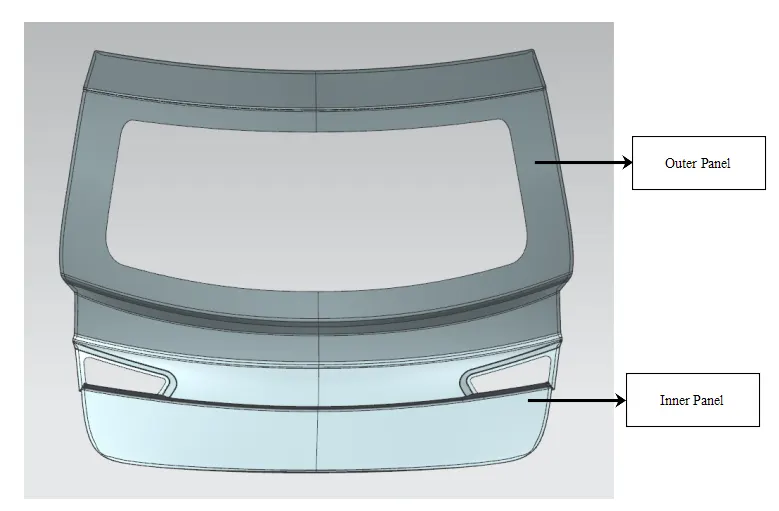
a) Outer Panel
b) Inner panel
Supporting Parts:
a) Reinforcement Members
MANUFACTURING TECHNIQUES:
- The back door is made of aluminium or steel.
- The manufacturing process used to manufacture the back door are stamping and casting.
- Based on the type of material used for manufacturing and process of manufacturing the reinforcement members depends. Such as aluminium based back door don't require reiforcement as the variable thickness can achieved through casting wherein steel are stamped so require reinforcement members.
- The manufacturing techniques for making backdoor consists of stamping, casting, spot welding, hemming, mastic seal etc.
- The process such as spot welding, hemming and mastic are joining techniques used to join the panels and reinforcement members.
Stamping:
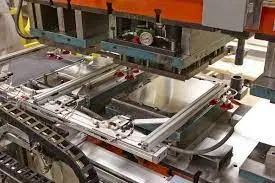
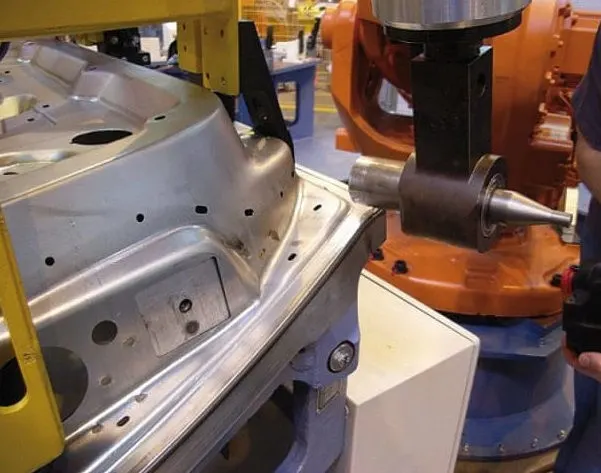
Stamping (also known as pressing) is the process of placing flat sheet metal in either blank or coil form into a stamping press where a tool and die surface forms the metal into a net shape. Stamping includes a variety of sheet-metal forming manufacturing processes, such as punching using a machine press or stamping press, blanking, embossing, bending, flanging, and coining.
Casting:
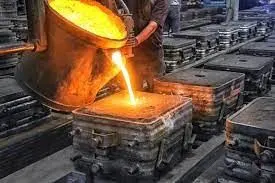
Casting is a manufacturing process in which a liquid material is usually poured into a mold, which contains a hollow cavity of the desired shape, and then allowed to solidify. The solidified part is also known as a casting, which is ejected or broken out of the mold to complete the process.
Spot Welding :
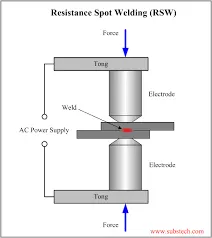
Spot welding is a type of electric resistance welding used to weld various sheet metal products, through a process in which contacting metal surface points are joined by the heat obtained from resistance to electric current.
Hemming :
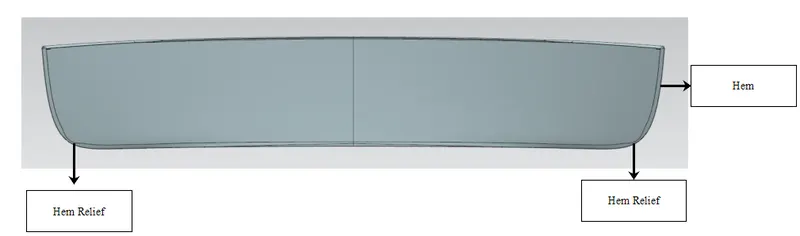
Hemming is a sheet metal forming process in which sheets are joined by bending it to 180°. Automotive body panels and automotive parts such as deck-lids, trunk-lids, doors, hoods and tailgates are formed by hemming process.
FACTORS CONSIDERED FOR BACK DOOR DESIGN:
a) Rear View Visibilty
b) Trunk Volume
c) Waterproof criteria
d) Collision force reduction to passenger compartment
These are the major factor considered while designing a backdoor. The other factor may include durability during loading and unloading condition, weight reduction, center of gravity etc.
GIVEN CLASS A SURFACE:
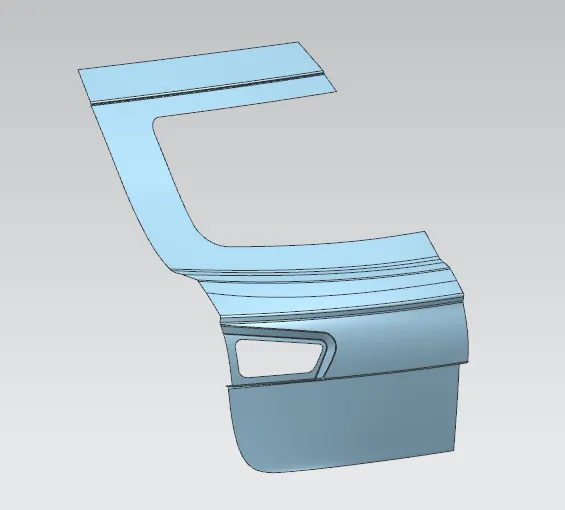
- The given class A surface was found to be discontinuous and patch work was done to improve the quality of the surface.
OUTER PANEL:
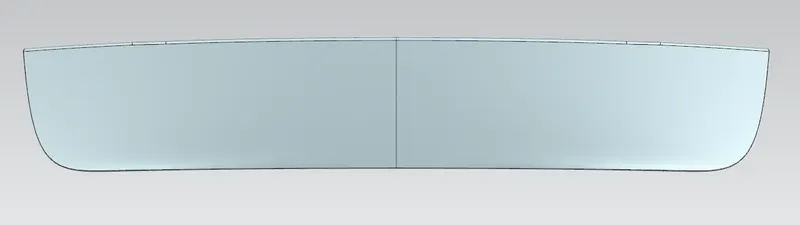
- The outer panel is segmented into upper outer panel and inner outer panel.
Upper Outer Panel:
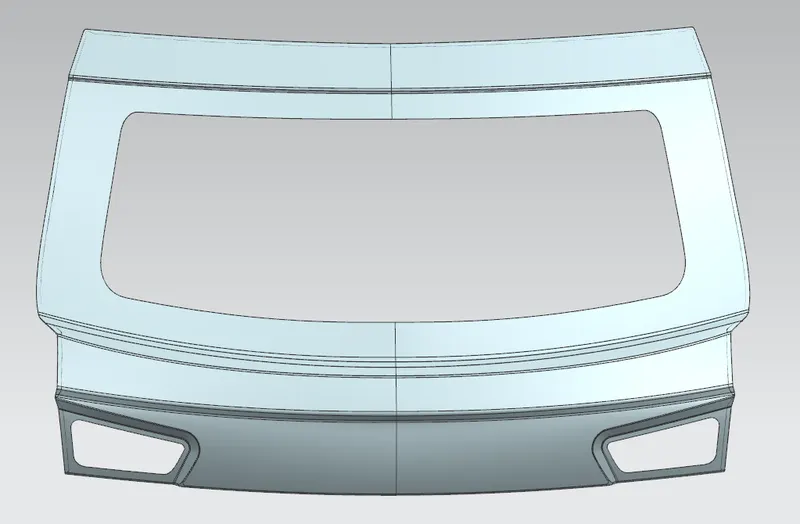
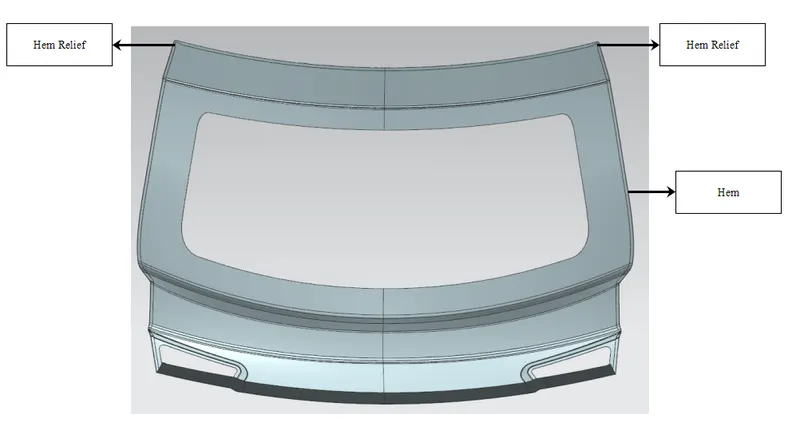
Inner Outer Panel:
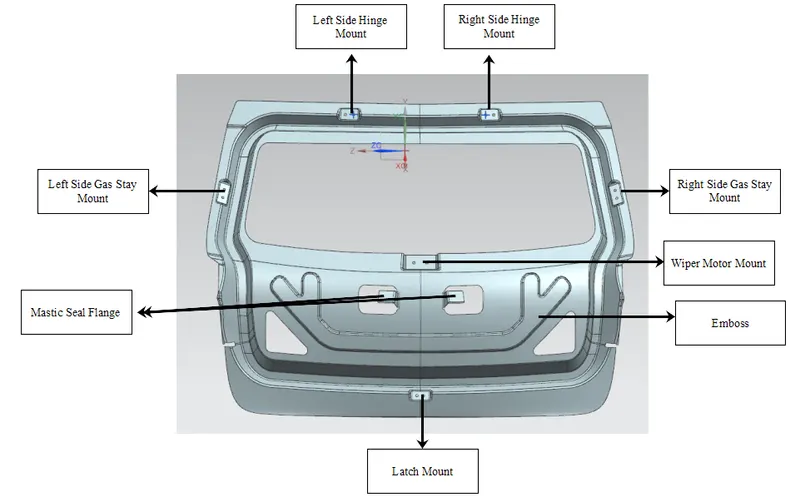
INNER PANEL:
REINFORCEMENT MEMBERS:
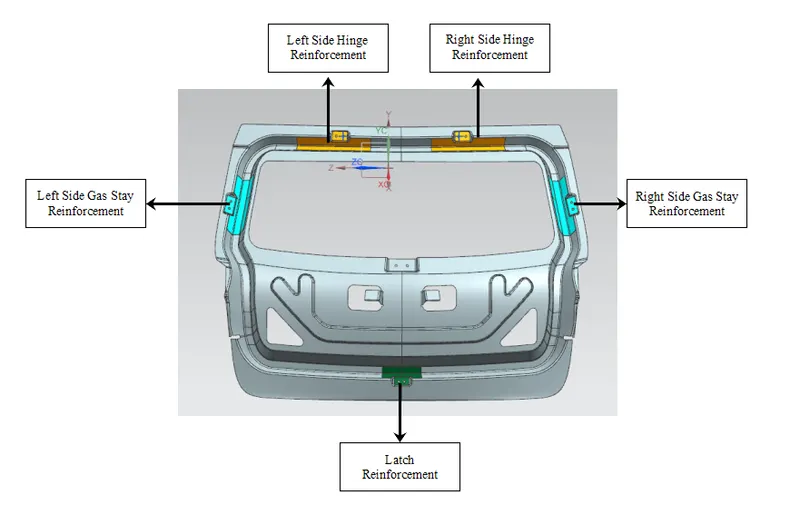
- The reinforcement members are provided to increase the strength at particular regions of the inner panel.
- The reinforcement members are provided at regions where an additional component is connected to inner panel such as gas stay, hinges etc.
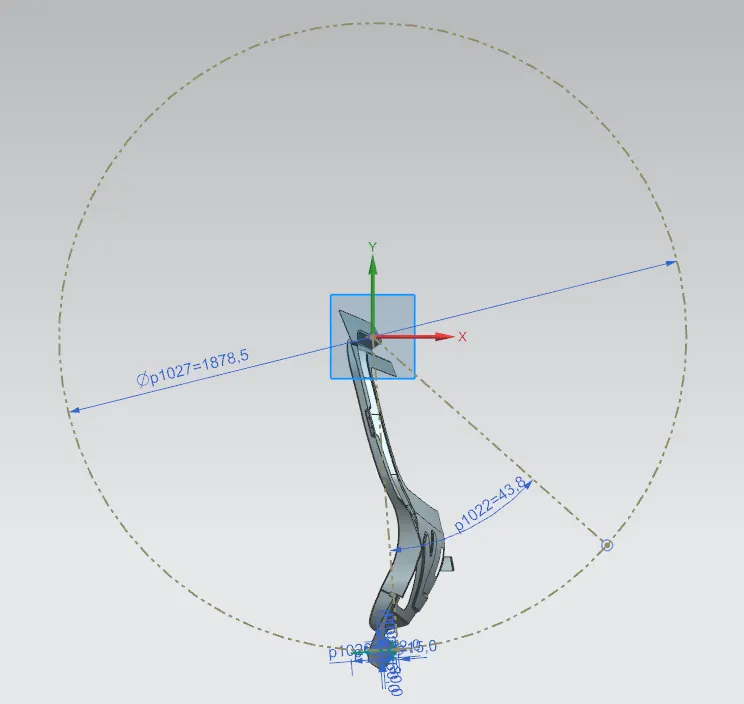
LATCH AND STRIKER SKETCH:
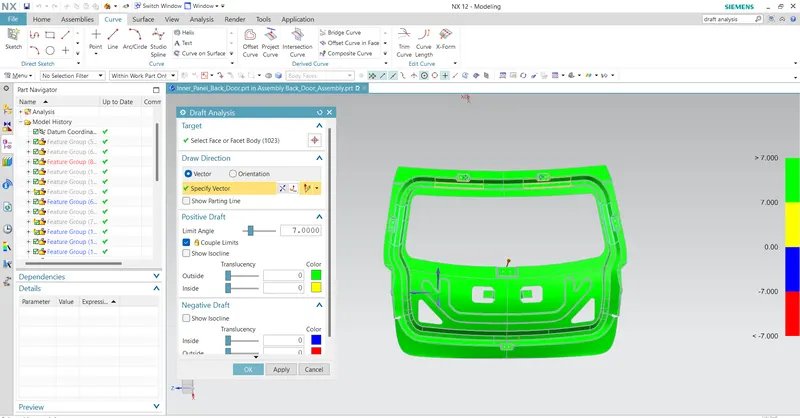
DRAFT ANALYSIS:
CONCLUSION:
- The back door was designed successfully with the the provided styling surface with appropriate design methodologies.
- The necessary reinforcements and embosses for the back door was provided.
- The draft analysis was performed.