Design of backdoor
BACK DOOR DESIGN
AIM:
Designing the backdoor using the provided styling surface to develop a backdoor design, using the appropriate design methodologies, and making the necessary reinforcements and embosses.
Back Door
A hinged board or door at the rear of the vehicle can be moved up or down during loading and unloading.
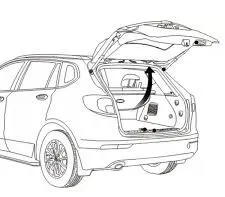
The Back Door is also called the 'Hatch' or 'Tailgate' or 'Trunk-lid' or 'Boot-door'. The vehicle's rearmost part gives access to the trunk and has mounts for tail lamps, hinges, wiper motor, gas stay, etc.
Functions of the Backdoor:
- It protects the occupants and luggage from getting damaged.
- It houses an assembly of tail lamps, a wiper motor, and other components.
- It serves as an entry and exit point for luggage/passengers.
- It houses windshield glass which helps in rear visibility.
- Parking sensors and rearview cameras are mounted on it.
Types of Backdoors
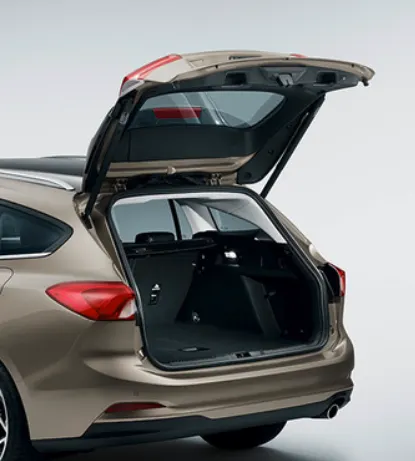
- Top mounted door
These types of back doors are used in a station wagon, pickup truck, and some other sports utility vehicles. Today's modern cars use top-mounted tailgating systems which are both powered and also gas stay supported. These tailgates provide greater rear visibility compared to other types.
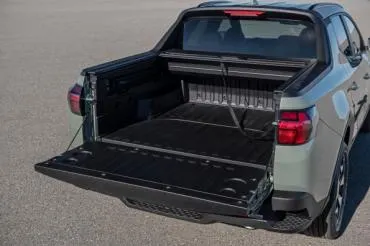
- Bottom mounted door
Bottom-type or split-type backdoor systems are used in estate-type cars, pickup trucks, and some luxury SUVs. These are the most convenient type of backdoor in which the bottom split is used as a support or even as a table for touring people.
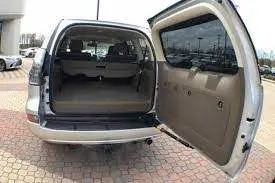
- Side mounted door
It is generally used in van-type MPVs, SUVs, and pickup truck vehicles. These side-mounted door/barn doors are a lot easier compared to top-mounted ones. These doors are generally small in size and can be easily accessed. These doors are more convenient for the goods handlers carrying lengthy objects, and long pipes where one door is kept open. It is a lot easier to load /unload things in vehicles having side-mounted doors.
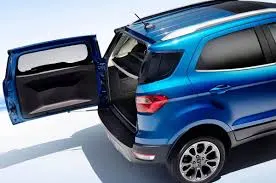
Components of Back Door:
The components of Back Door are as follows,
- Inner Panel
- Outer panel
- Hinge reinforcement
- Wiper motor reinforcements
- Latch&striker reinforcements
Design Methodology:
- Back Door styling surface
- Tooling Axis
- Door Outer Panel
- Door inner panel
- Sealing flange
- Emboss, Latch & Striker Trajectory
- Reinforcement mountings
- Hemming
- Draft Analysis
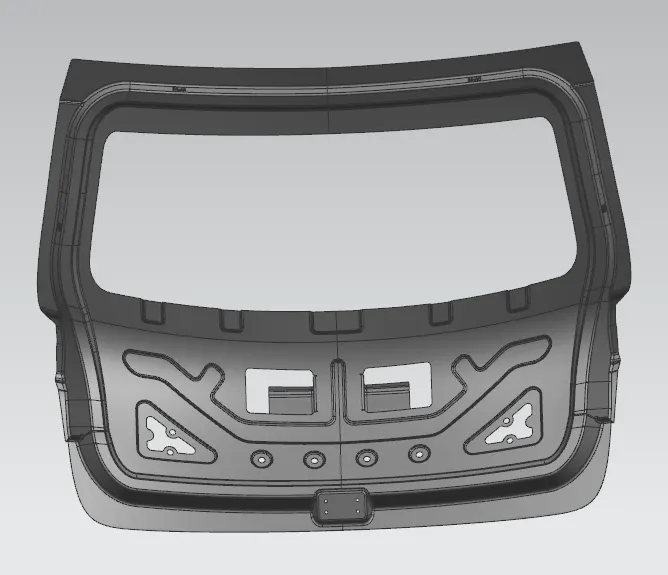
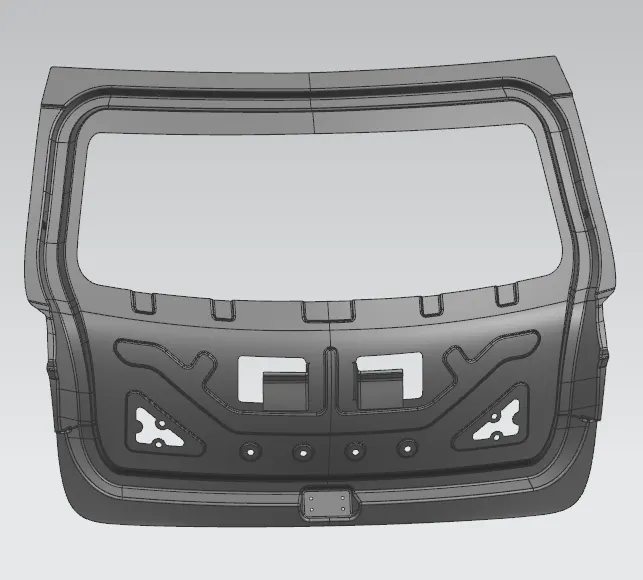
Inner Panel:
- The inner Panel is a component which is used for strengthening the door. its thickness is in the range of 0.65-0.75 millimeters. it is one of the most important components on which all accessories are mounted like hinges, Gas Stay, Wiper Moter, Latch, Striker, etc.
- The possible method is the integration method. In the integration method, the part is stamped out of a single blank. This reduces the number of tools needed and the assembly cost and eliminates any fit ability problem.
- There are many cases where the inner panel is subjected to stress due to frequent opening and slamming. These stress and depression factors are compensated by features like embosses and reinforcements.
Outer Panel:
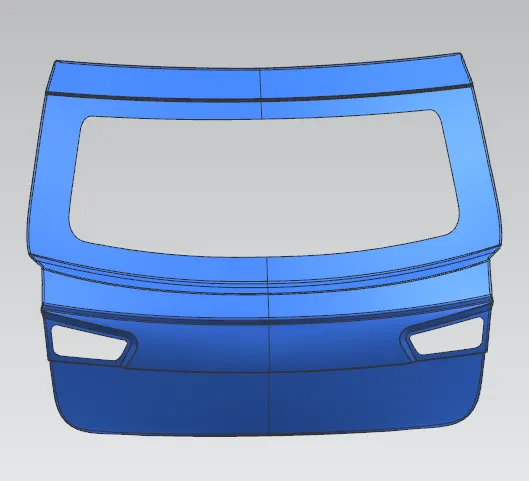
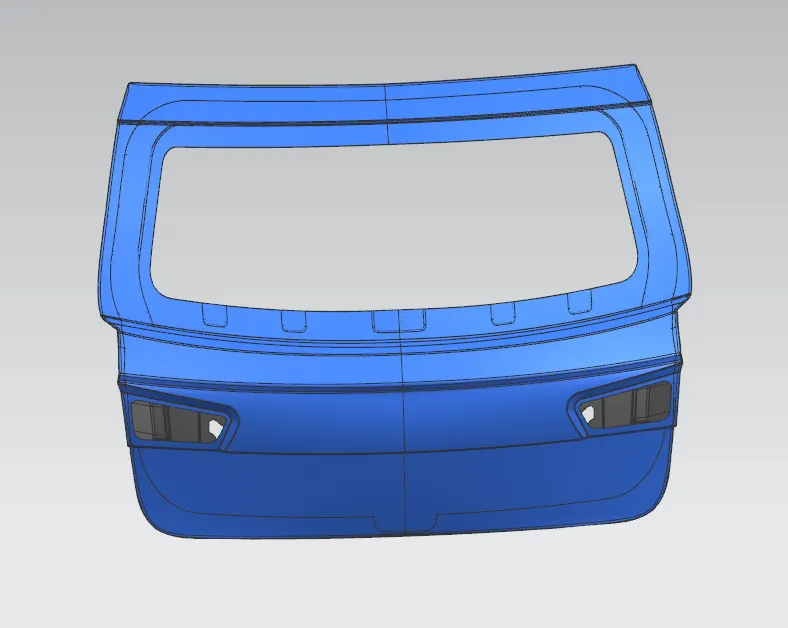
The Outer Panel is the styling surface of the back door. It is the source of the design of other parts of the back door, primarily the Inner Panel. The Outer panel of the back door is similar to other BIW components where it is the aesthetic part of a vehicle. The coating provided is multi-stage which has the properties of scratch resistance, rush prevention, and smooth and attractive finishes. The Outer panel also has the provisions for the tail lamp, and rear fog lamp and also has the provision for license plate mountings. Most of the hatchback cars have the provision for wiper motors. Its thickness is in the range of 0.65-0.75 millimeters.
Reinforcements:
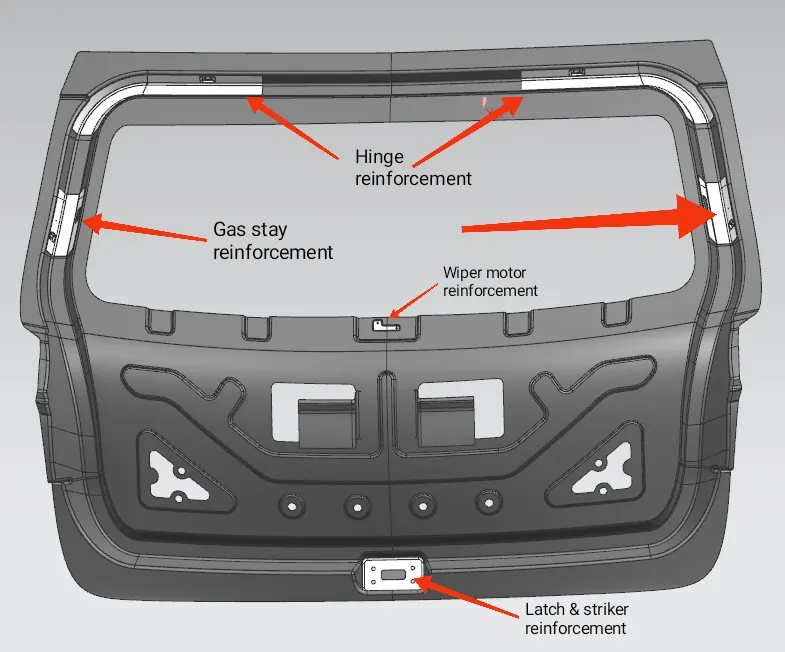
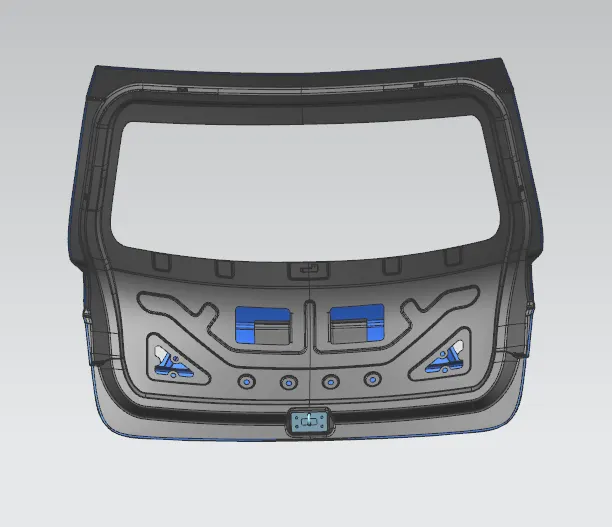
The inner panel accommodates the latch and striker, Wiper motor, trim mounting, hinge and gas stay, etc, and therefore the necessary cutouts are provided. Various reinforcements are also spot-welded to the inner panel.
- Hinge Reinforcements
- Gas stay Reinforcements
- wiper motor Reinforcements
- Latch& Striker Reinforcements
Hinge Reinforcements:
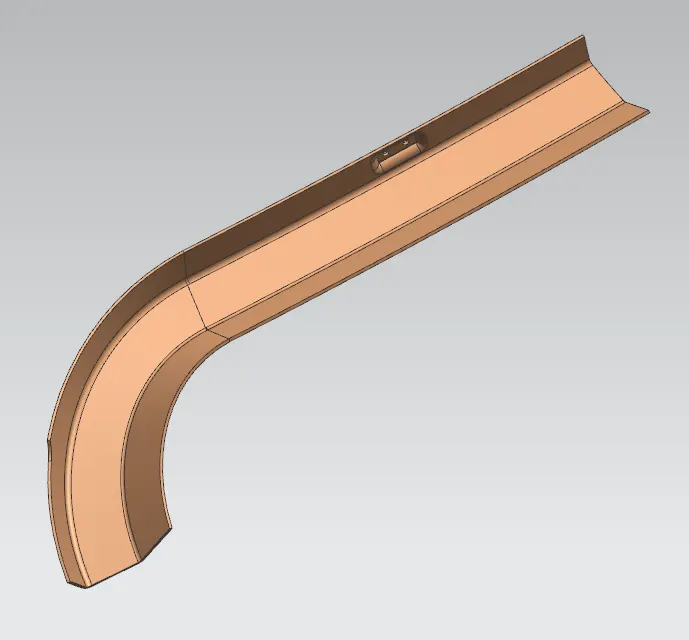
Hinges enable the opening and closing of the back door. One end of the hinge is fixed on the backdoor and the other on the roof, on both sides. Hinges can be placed outside or inside the back door. Hinge reinforcements are added in this region to compensate for the weak zone developed due to the load acting while opening and closing the back door. Embossing is provided at the Hinge mounting area to compensate for the functional holes punched.
Gas Stay Reinforcements:
It is used to lift the Tailgate.
There are two types of Gas stay reinforcements is there. They are
- Manual Lift System
- Power Lift System
Manual Lift System:
This mechanism is most used in Indian cars. It is operated man by on his own.
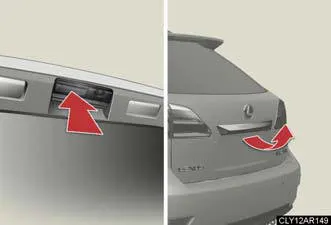
Power Lift System:
It works on the basics of the sensor.

- Gas Stay is a device used for supporting the back door in its open position. Gas stay requires no manpower and is engaged into a support position automatically as the back door opens. One end of the Gas Stay is fixed on the backdoor and the other end is on the Body Side or the Back door stationary area. Embossing is provided at the Gas Stay mounting area to compensate for the functional holes punched.
- Various simulation tests like the Bend test, Torsion test, and Abuse test performed on the back door as shown above reveal that there is a very weak zone developed at the Gas stay region. To compensate for that, a reinforcement is added in that region.
Wiper motor Reinforcement:
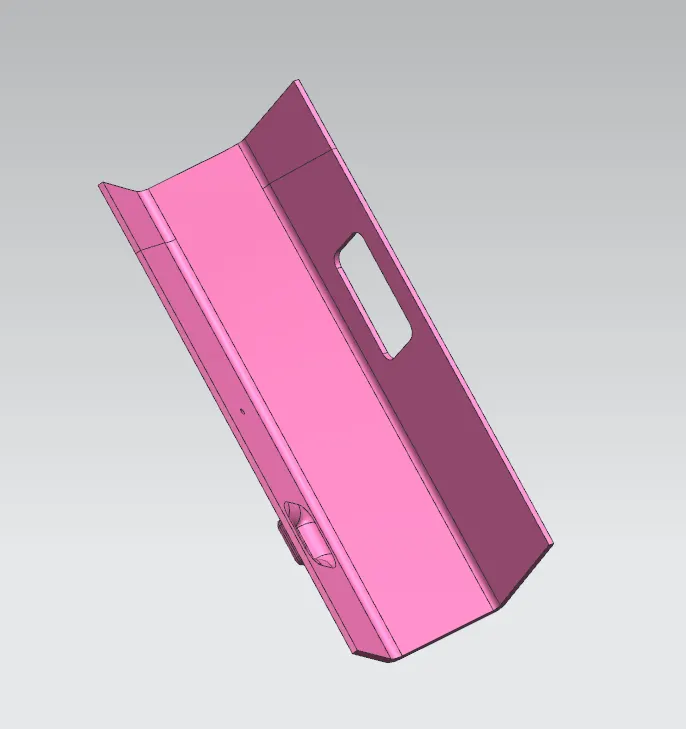
Wiper motor Reinforcement is created to mount the Wiper Motor Assembly.
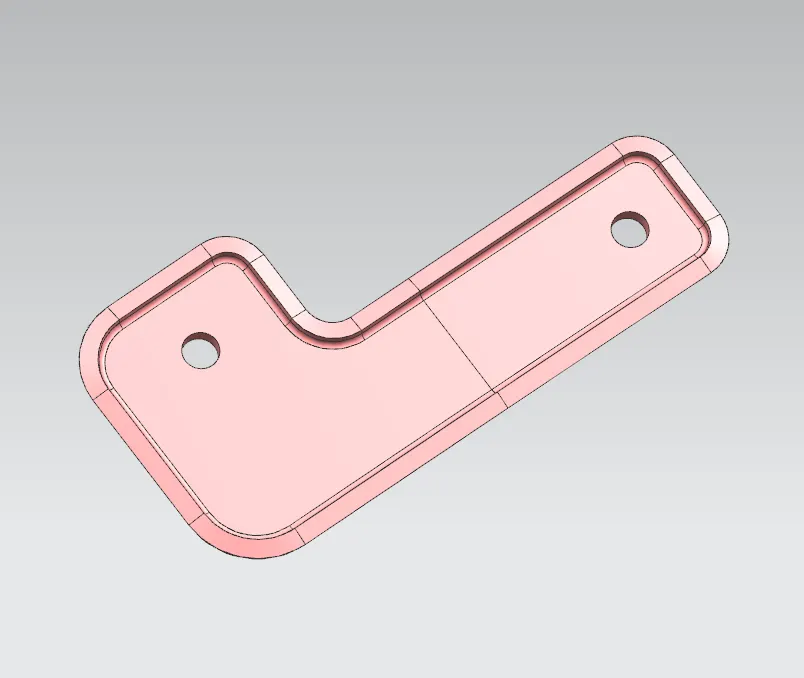
Latch & Striker Reinforcement:
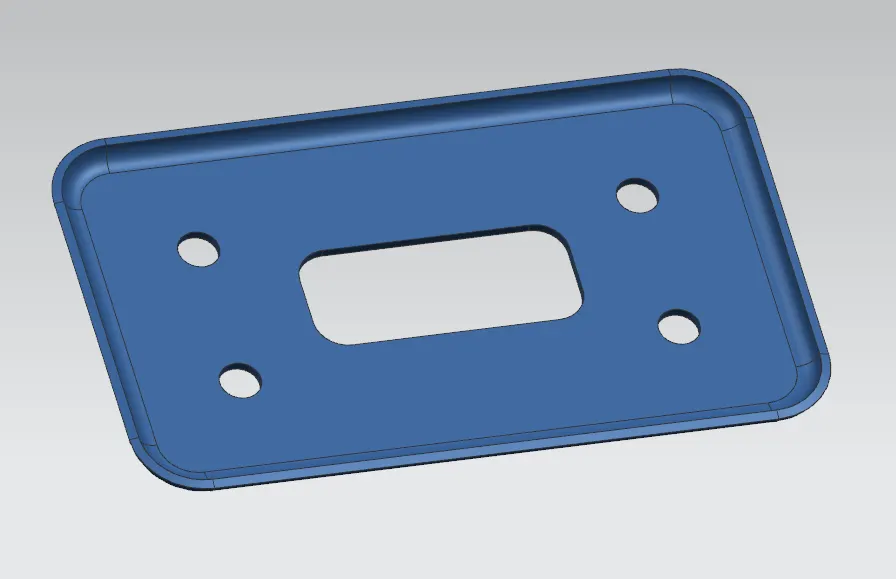
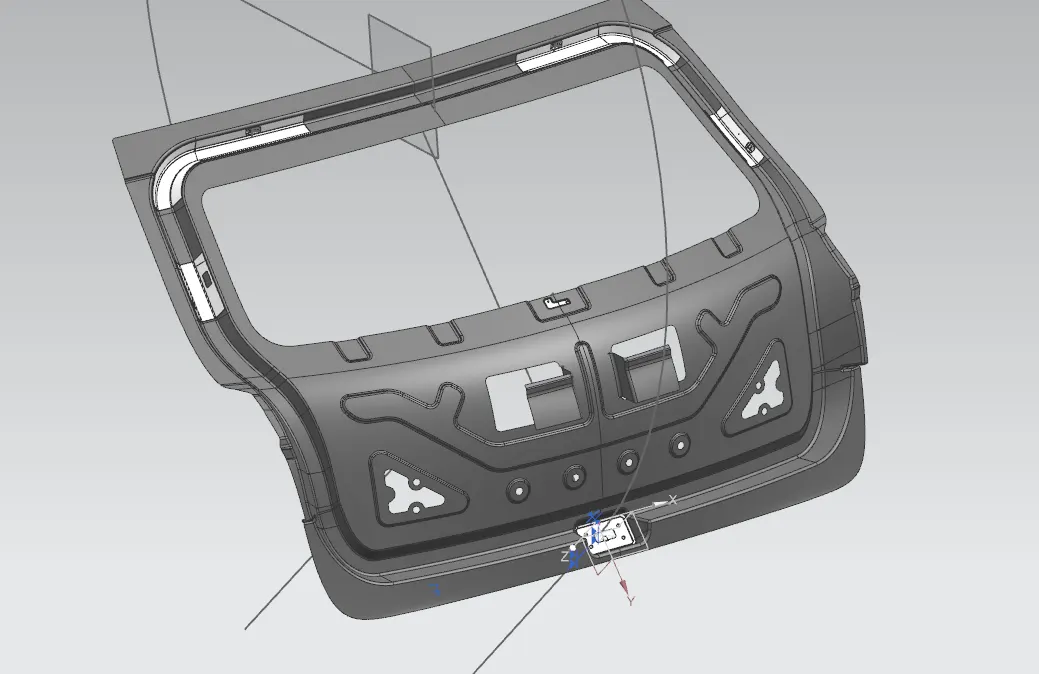
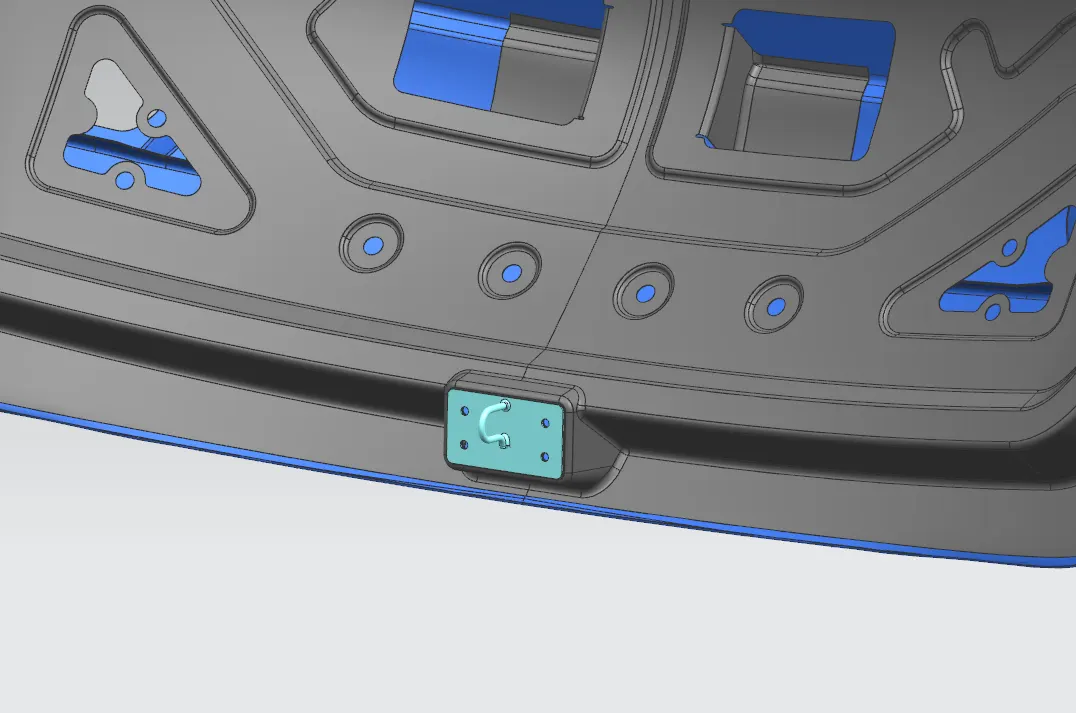
The Latch & Striker forms the locking mechanism of the backdoor with the car. Due to regular opening, closing, and over-slamming of the backdoor, there is stress developed in the Latch and Striker area. Further, during a rear collision, this area will be the first point of contact. To compensate for the same, reinforcements are added in this area.
Hemming:
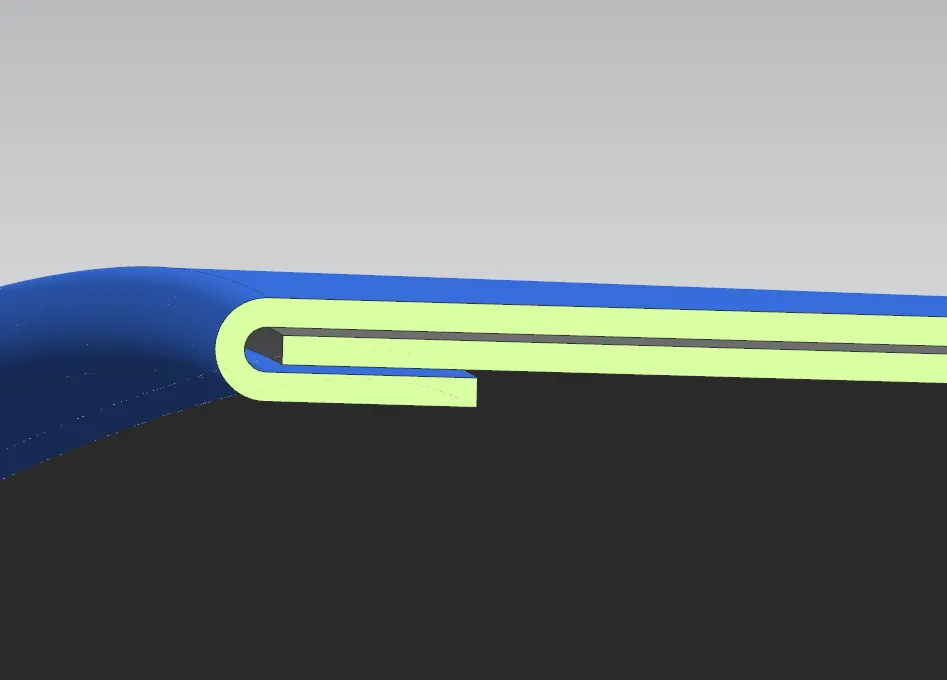
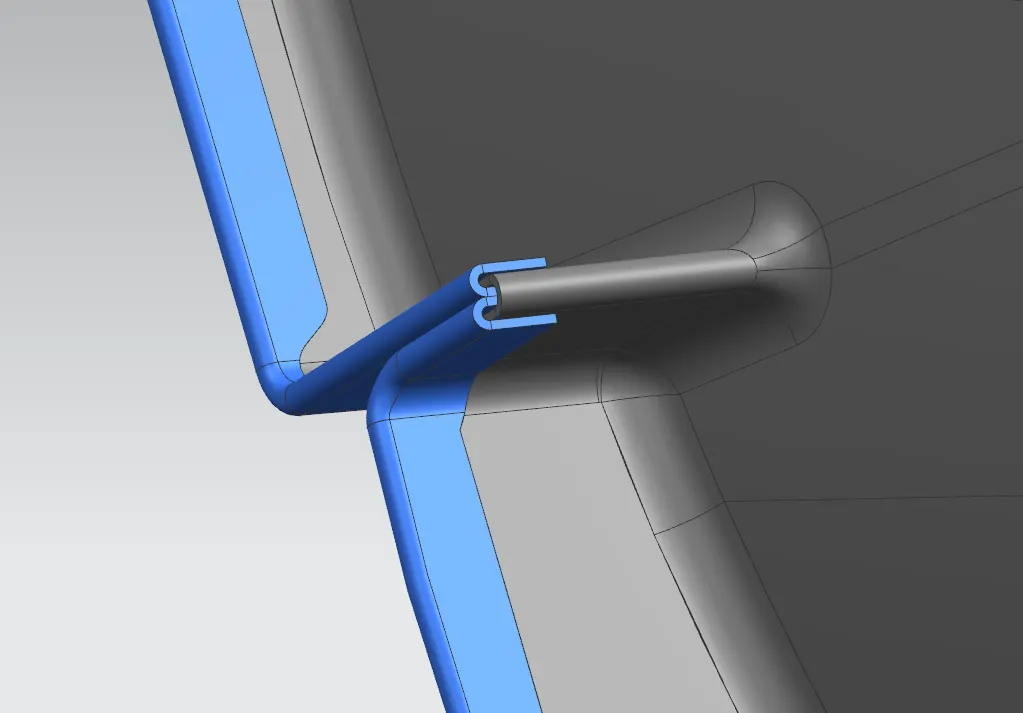
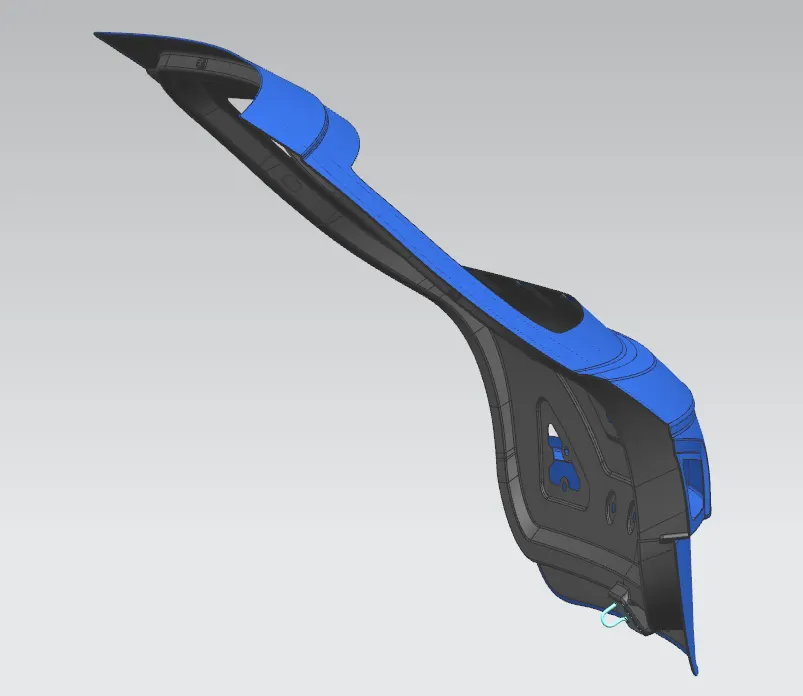
Hemming is the process of wrapping the flange of the outer panel to the flange of the inner panel so that they fit rigidly. After the hemming process, the sealants were applied along the edge of the flange of the outer panel so that water tightness was achieved. The below image shows the cross-section of the inner and outer panels joined by the hemming process.
Hemming reliefs:
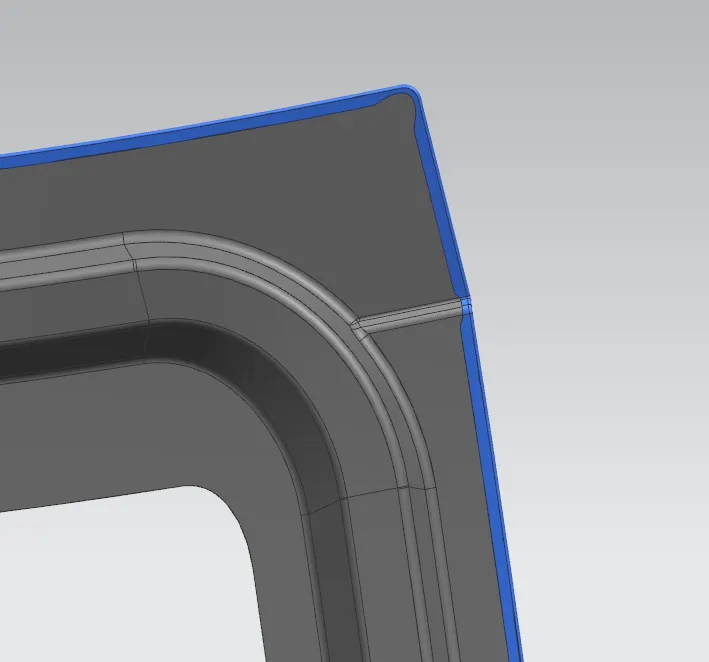
Usually, the reliefs were provided at the corners of the hemming flanges to avoid the hemming relief to avoid stress developed while hemming. stress produced during the hemming process.
Mastic Sealants:
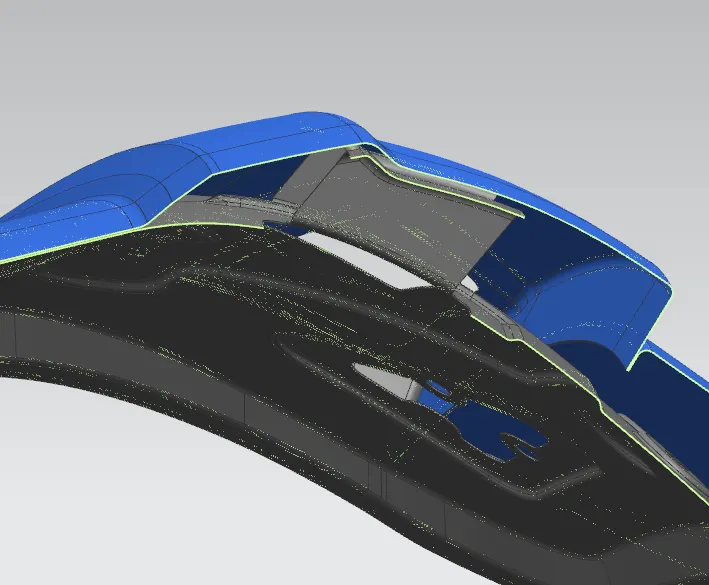
To improve NVH (Noise, Vibration, and Harshness) i.e. to reduce these levels. Mastic Sealants are used. They also improve the strength. They are made of hard Rubber and are introduced as a paste thereby joining the inner and outer panels with a thickness of 5mm. Mastic Sealants are preferred over Spot Welding to join the inner and outer panels since the latter reduces the car's aesthetics, especially on the outer panel which is the styling surface.
Draft Analysis:
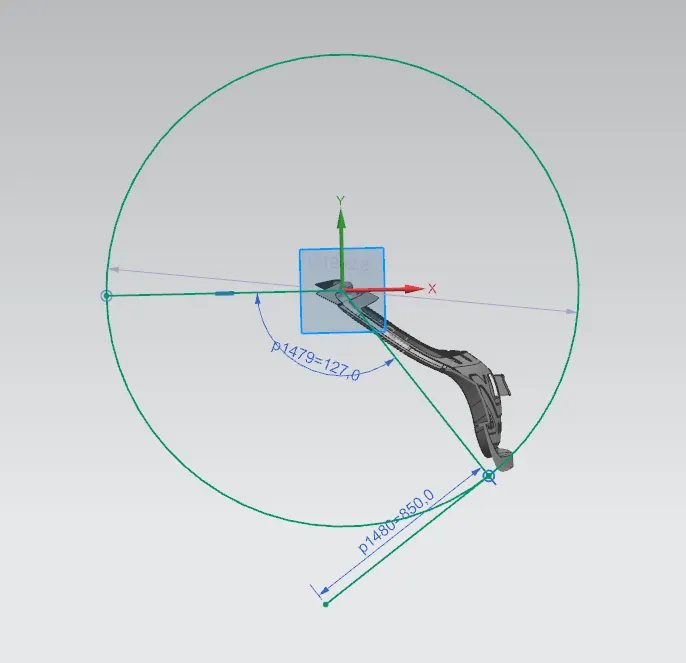
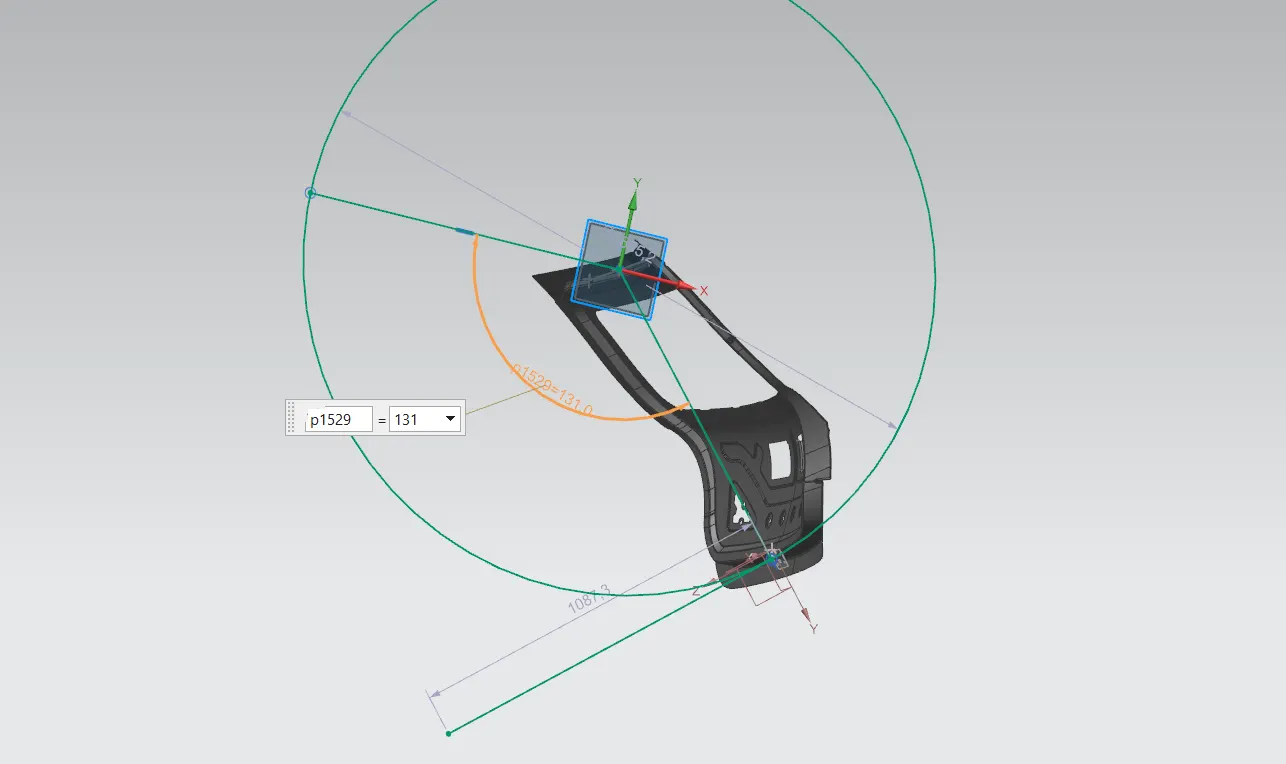
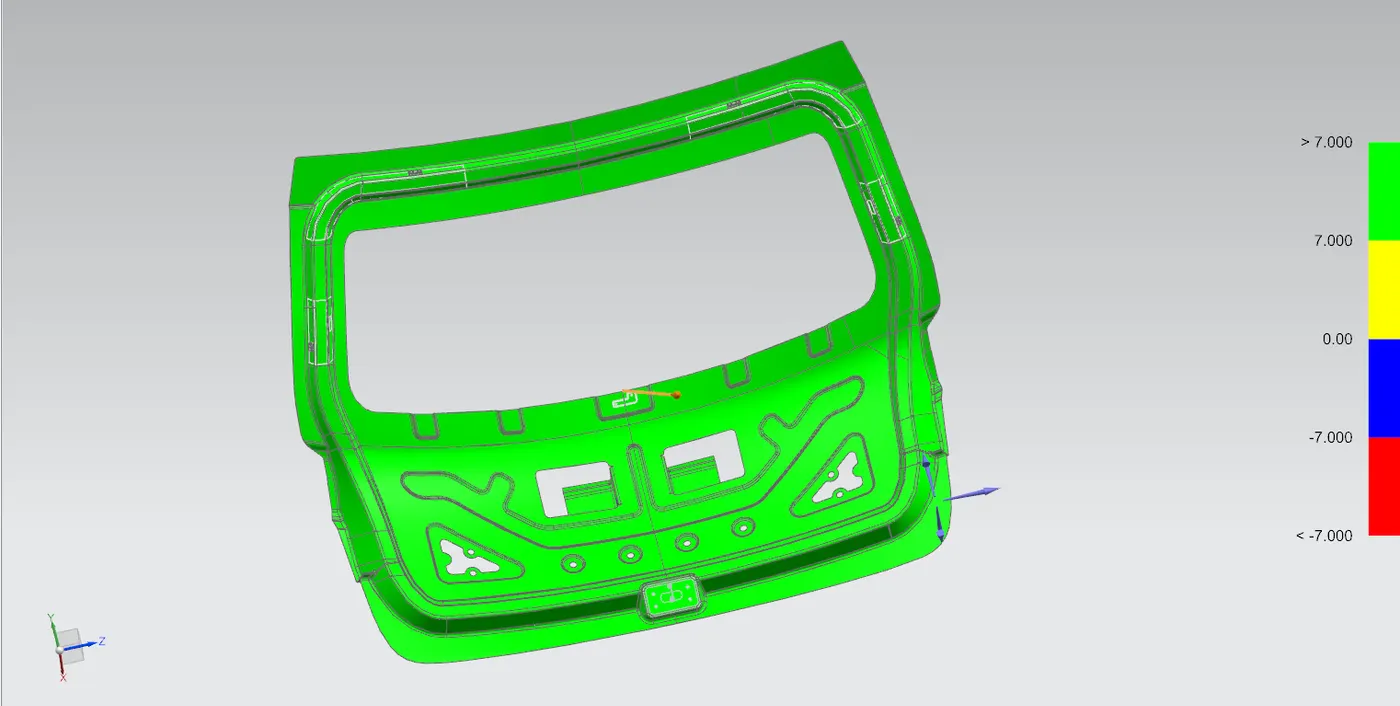
Every part that is manufactured from a press tool or other forming tools requires some positive draft on the faces which are parallel to the tooling direction. If we don’t give a draft (Zero Draft) or give negative drafts on these faces it will stick to the mold surface and when the mold is in motion it will destroy the surface thus reducing its surface finish. This Draft Analysis command enables us to detect if the part we have drafted can be easily ejected or not. It also gives insights about the critical zones, so that appropriate changes in the design can be made if needed.
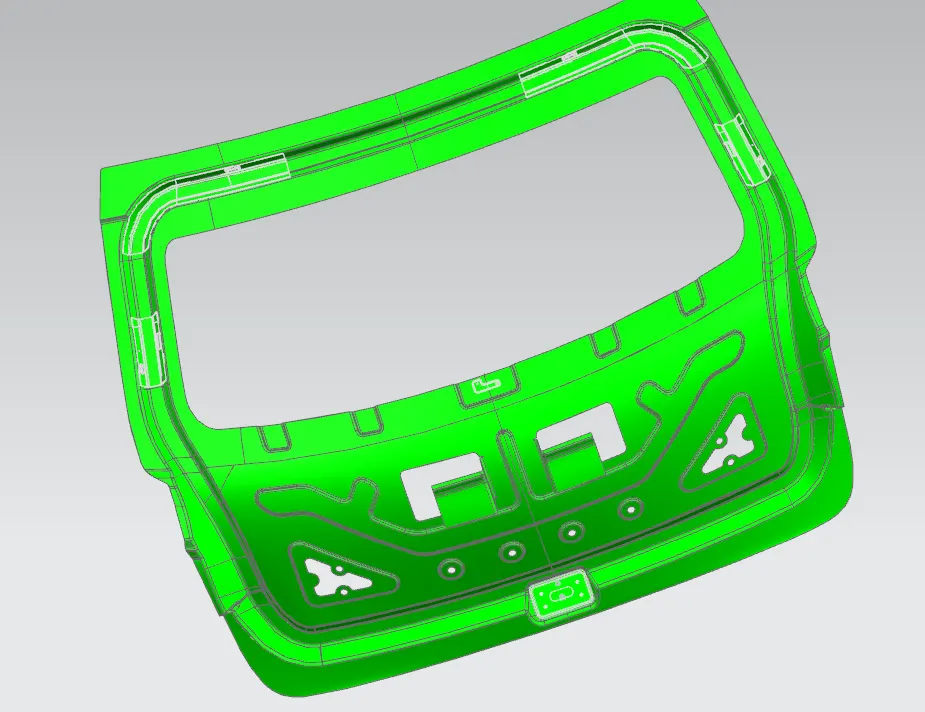
Final Assembly of Backdoor:
Conclusion:
Thus the design of BIW Fixtures of a Backdoor of a car has been designed using NX-CAD(Student Version)