Design of backdoor
Aim: The main objective od this project is to design the back door also referred as tail gate of a car by considering all the standards of the design.
Introduction:
The back door of the car is the rearmost part of the vehicle which gives access to the luggage compartment of the vehicle. In most cars these back doors operate with the help of gas stay which in turn reduces the effort required to lift the back door. Some luxurious premium cars have electric motor driven back door. The back door has different parts which are,
- Outer panel
- Inner panel
- Hinge reinforcements
- Gas stay reinforcements
- Wiper motor reinforcements
- Latch reinforcements
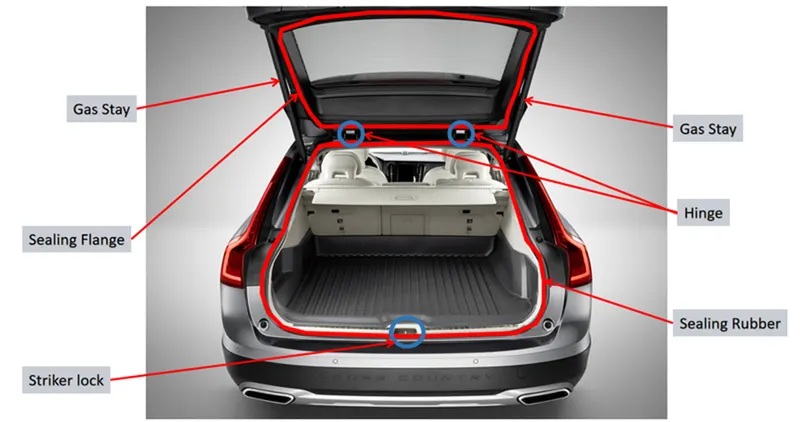
Mostly aluminium and steel are used as material for back door. In the back door outer panel there are two separate parts upper outer panel and lower outer panel, these two are attached by use of spot welding, both of these parts combine gives aesthetic look from the rear side of the car. Inner panel is the strengthen component which is held by the outer panel by hemming and mastic sealant inside it. It is provided with embosses which gives the additional strength to the back door and is designed to distribute the impact forces to the outwards. All the embosses in the inner panel are facing towards the outer panel can easily reduce the impact forces during rear collision.
Hinges are used for opening and closing the door that is connected with the rear roof rail, Gas stay mountings are used to hold the gas stay rod and wiper mountings are used to hod the wiper motor and rod. The striker is used for locking or unlocking the door and it is mounted at the bottom side of the inner panel. So connecting these components directly will loose the fasteners causes some noise results NVH issues. To compensate this, a flat mountings can be created and necessary reinforcements are to be provided which tightening the gap between inner panel and mountings.
Major factors to consider in designing of the back door
- Material selection
- Rear visibility criteria
- Hinge position
- Gas stay position
- Latch position
- Stiffness and strength of the part
- Hemming parameters
- Drawability
- Holes to access the working inside the panel
Material selection
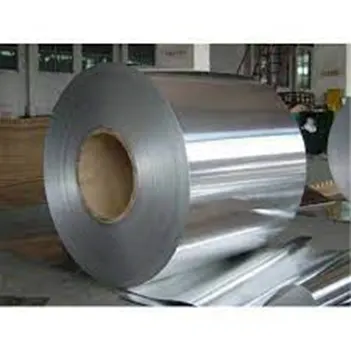
Back door of the car expected to possess a number of significant properties. It must have high tensile strength as well as high stiffness. The back door must have high tensile strength as well as high stiffness. It must also provide good quality safety both to the car body and to its occupants against crashes of all kinds—front, rear, side, or even rollover, meeting the Federal Motor Vehicle Safety Standard No. 208 [44]. It should also be able to protect occupants from noise, vibration, and/or harshness (NVH) by absorbing or reducing these conditions. Also, it should be easy to weld and form, as well as be highly paintable and easy to design. It should provide a good surface finish that is smooth, and should also be corrosion resistant. Improvement of fuel economy also necessitates the use of lightweight materials in BIW, as it constitutes a significant share of car’s weight; in addition, given environmental concerns in recent times, it is also expected to be recyclable. Given such extensive requirements, only steel and aluminium have been used for making BIW; the former is preferred for its high strength and low cost, while the latter is preferred for its lower density that helps reduce car weight.
Rear visibility criteria
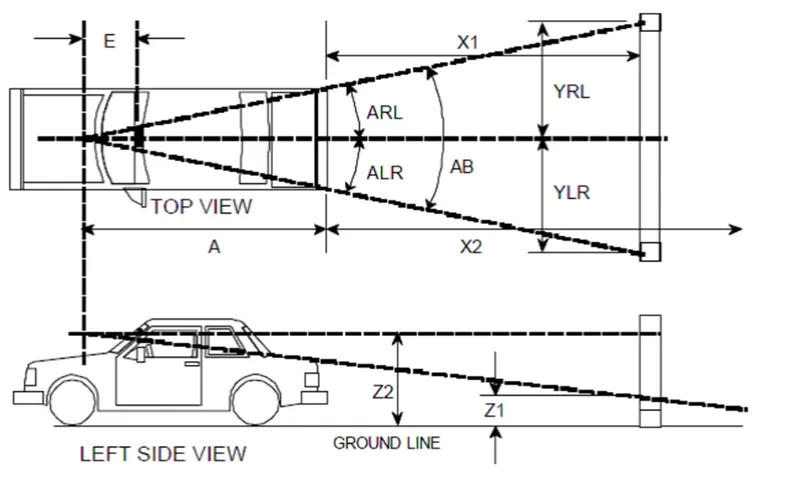
This criteria deals with the visibility of passengers backwards through the rear wind shield glass.it mainly depends up on the Wind glass area .Here in this case as we already have a styling surface wind already included the wind shield area we need not to worry about the Rear visibility criteria
Hinge position
hinges are the part which helps to open the Back Door to the luggage space. One part of the hinge is connected to the inner panel of the Back Door while the other is connected with the Roof There are a few things to consider while the positioning of hinges
The surface where the hinges to be mounted must be flat in order to keep the hinge tightly in touch with the inner panel , otherwise it leads to loosening of the nuts and bolts resulting in NVH
Reinforcement’s Must be provided on both hinges. Because in sheet metals adding another solid body or a sheet body on it ,will results in decreasing the strength of the part. To overcome this problem Reinforcements are used
Latch Position
Placing Latch/striker is on of the major factor to take care of .As a Latch/striker is separate body and itself a reinforcement , there is no need to add extra reinforcements. But like in hinges its compulsory to have a flat surface to mount it.
Stiffness
Sheet metal embossing is a stamping process for producing raised or sunken designs or relief in sheet metal. This process can be made by means of matched male and female roller dies. Or by passing sheet or a strip of metal between rolls of the desired pattern. Adding of emboss to a sheet metal part, drastically increase the strength of the part.
Hemming parameters
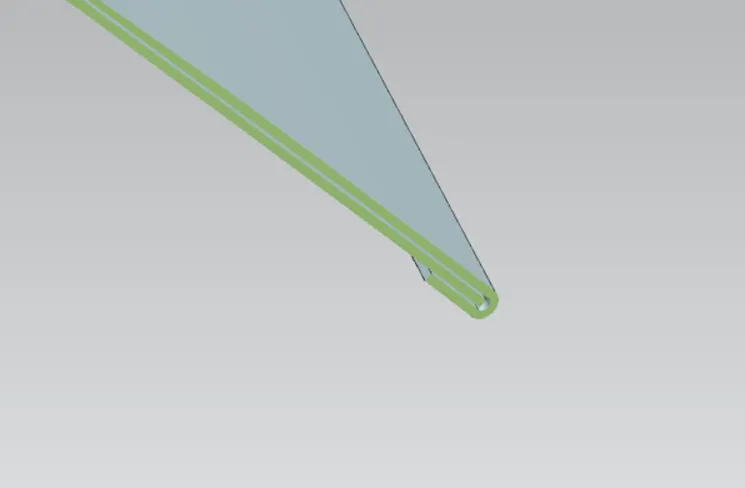
Hemming is a sheet metal forming process in which sheets are joined by bending it usually to 180°. Automotive body panels and automotive parts such as deck-lids, trunk-lids, doors, hoods and tailgates are formed by hemming process
While hemming the gap between two sheet metals must be in between .2 to .5 mm and the distance bend of the outer sheet metal to the edge of the inner sheet metal must be 2 mm
Drawability
The feasibility of deep drawing is called drawability. Draft analysis in Nx is used to study the deep drawing feasibility easily through checking draft angle in various faces . we should define a tooling direction in-order to check the draft angle
Holes
In the inner side of the Tail gate, we can see several holes in the hood. Every hole in it has its purposes. Apart from the holes for the fasteners, these holes allow e-coating, surface prep, and primer to drain from the cavities in between the tail gate skin and tail gate skeleton after the chassis is dipped into these during production.
Design procedure
In this project we are going to prepare back door outer panel, back door inner panel, reinforcements for hinges, gas stay, wiper mount and latch.
Back door outer panel
Outer panel is the styling surface of the back door. Glass for rear visibility is mounted on the outer panel upper. Rear light is also mounted on the outer panel upper. Number plate is mounted on the outer panel lower. Spot welds and other manufacturing process should be done only on the inner panel because the outer panel is styling surface which should not have any scratches or welds. Because it affects the style of the car which leads to bad impression on the customer
Outer panel upper and outer panel lower are joined using the laser brazing method
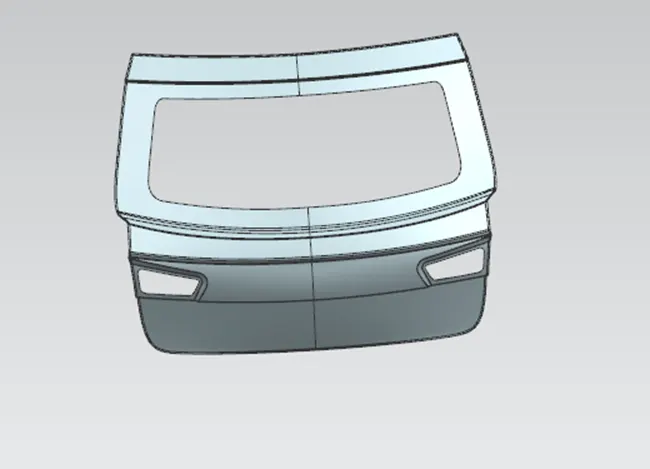
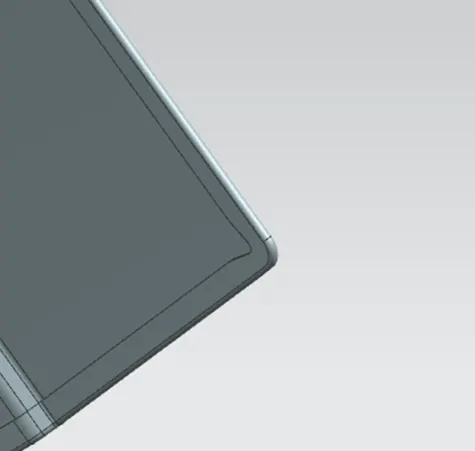
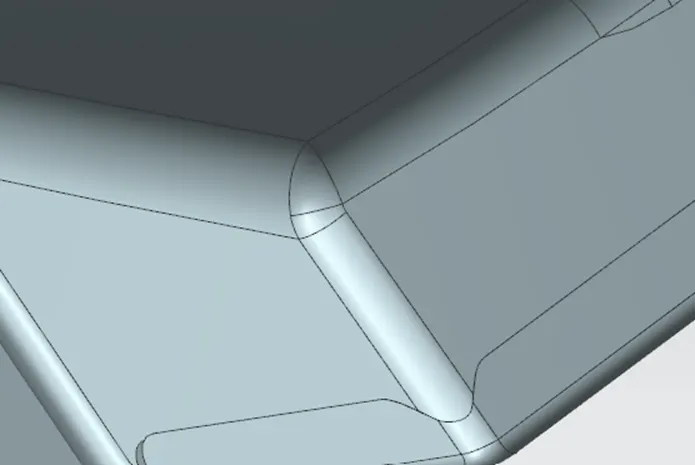
I have created hemming flanges appropriately by considering all the hemming parameters, I have maintained 0.2 mm gap between all the sheet metals. Proper relief are given at the corners and bends
Inner panel
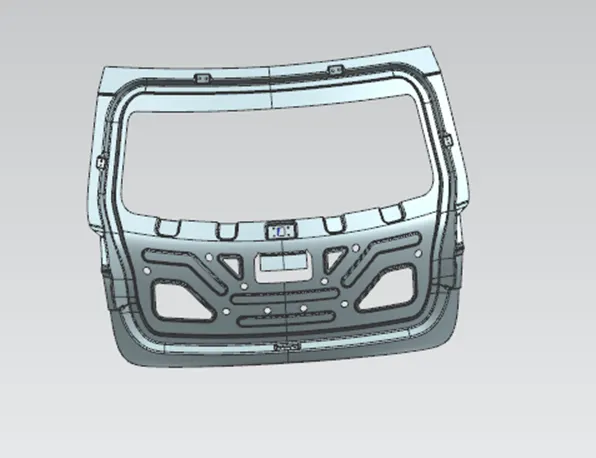
Inner panel is the part which gives enough strength to the outer panel as well as the it is the part where the viper, Latch , hinge and the gas stays are mounted along with the Reinforcements. Modelling of the inner panel is little Riskier while comparing all the other components of the Back door. Car backdoor inner panel is made of either steel or aluminium. Most of the luxury car's inner panel are made of aluminium because of its properties. But the cost of aluminium is high. Cost of aluminium is more as compared to steel. To easily understand, the cost of aluminium for inner panel is higher than the cost of all parts of backdoor together.
Emboss
Embosses are there for giving strength to the back door in case of over slamming. Concerning so many loads, cases there will be so many impressions and depression on the door. These things are recovered by embosses. Embosses need to be designed in such a way that they should follow force dissipation criteria for example in case of collision from the rear the forces should be transferred to the hinges and side body of the vehicle for the safety of occupants. One of the most important points to consider during the designing emboss is that the embossing direction should be towards the outer panel so that they will resist most of the force. All the emboss and cut-outs in the inner panel are designed by considering tooling direction. Emboss, edge blend, and the fillet are the most common function I used while designing embosses
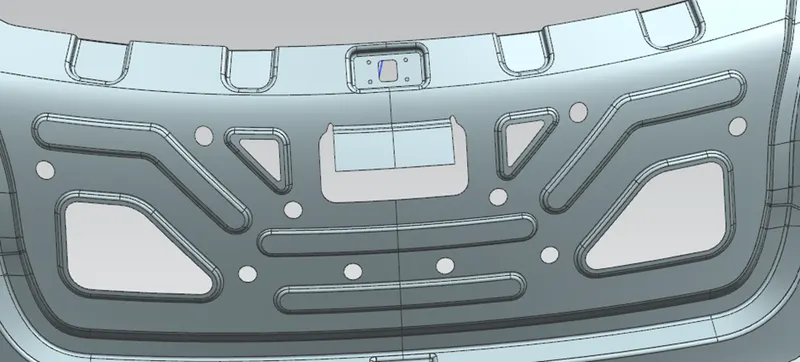
Wiper motor, latch reinforcements, hinge reinforcement and gas stay reinforcement are mounted on the inner panel of the backdoor only. The embosses in the inner panel helps stiffening the inner panel and act as a local reinforcement. Another purpose of giving emboss is to distribute impact forces towards hinges
The inner panel is produced by either casting or through deep drawn method. Mostly aluminium panel is only casted, steel inner panel is made by deep drawn process only. If it is deep drawn, then there must be a tooling direction through which that direction the panel is Deep Drawn
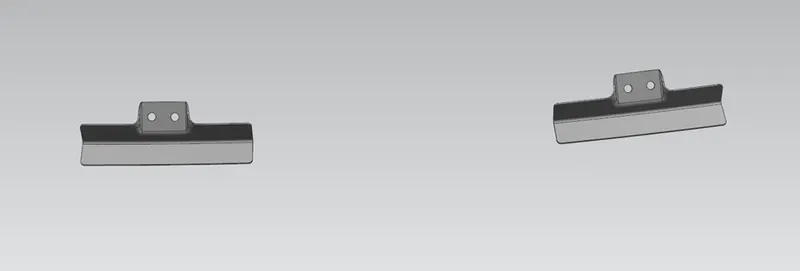
Hinge reinforcement
Hinges support the weight of the whole backdoor. Hence, the reinforcement must be provided there too. The emboss is designed in such a way that the hinge should operate freely. The hinge is connected to the rear roof of the car
Gas stay reinforcement
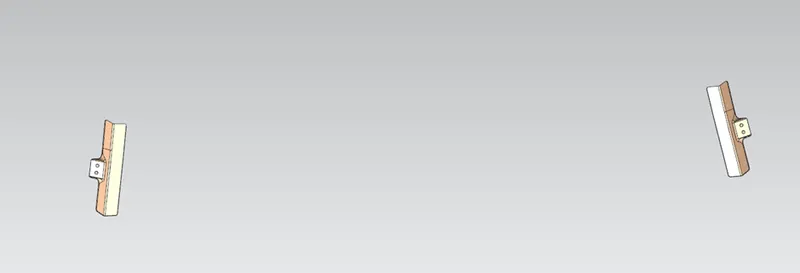
Gas stay reinforcement is used to lift the backdoor automatically. There are two types of gas stay one is semi-automated type the back door needs little force to lift after that it lift the backdoor automatically. In fully automated, it has power spindle which lift the back door automatically
Wiper motor reinforcement
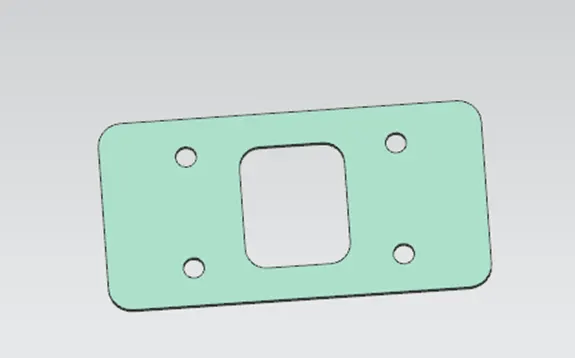
Wiper is used to Wipeout the rain water falls on the backdoor window. It’s actuated by the motor which is mounted on the inner panel. Due to the vibration and heat created by the motor. The inner panel where the motor is mounted gets deform and parts attached to the motor starts to vibrate which leads to poor NVH’s we have to provide the reinforcement where the wiper motor is placed.
Latch reinforcement
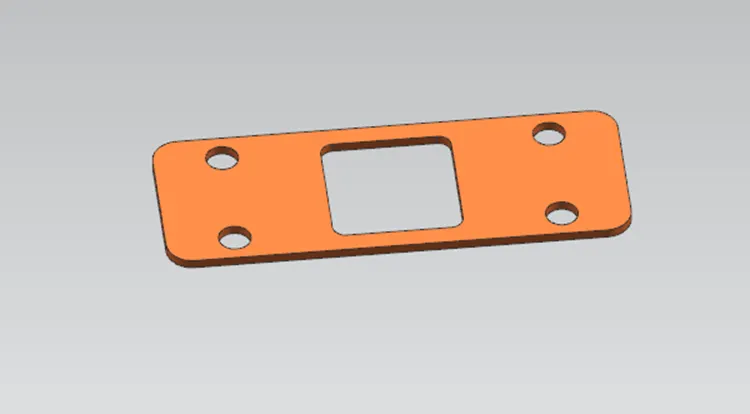
At bottom of the panel, reinforcement and emboss are given to accommodate the latch and striker assembly. Generally key operated or automatic remotely controllable mechanism is used to keep the door open or closed. The actuators, receivers and other electronics devices are mounted on the inner panel only
Draft analysis
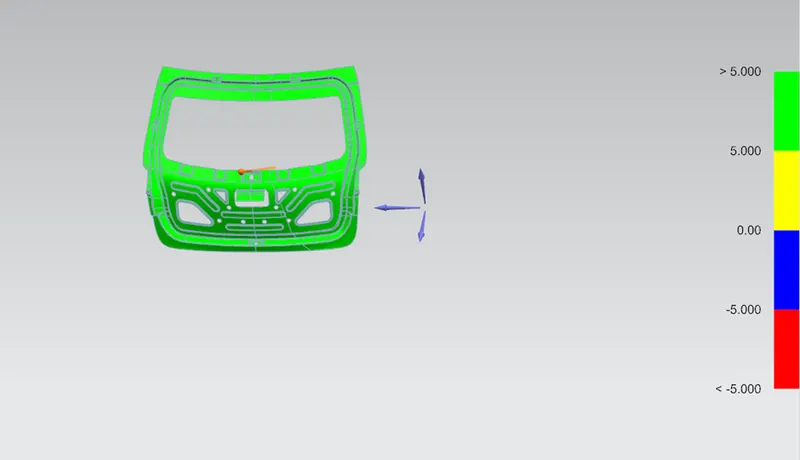
Draft analysis of inner panel is carried out through the tooling direction only. Only the green areas are acceptable and in worst case yellow region are acceptable but the blue and red region are never accepted
Conclusion
Back door is created successfully by following all the design considerations and parameters