Design of backdoor
Objective
To create the back door inner panel, outer styling panel with Hemming and reinforcement using NX software with the help of the styling surface provided.
Introduction
Back door of the car is also known as Tailgate. This is a critical part for back impacts occur on the accidents, which should be ensure that crash wouldn’t injured the passengers. Back door consists of one inner panel and two outer panel. Most of the time the back doors are made from steel or aluminum based on the budget of the car the material is selected. In case of the aluminum the strength of the back door would be stronger therefore reinforcement are not required indeed which will reduce overall weight of the part. But aluminum a bit expensive than steel.
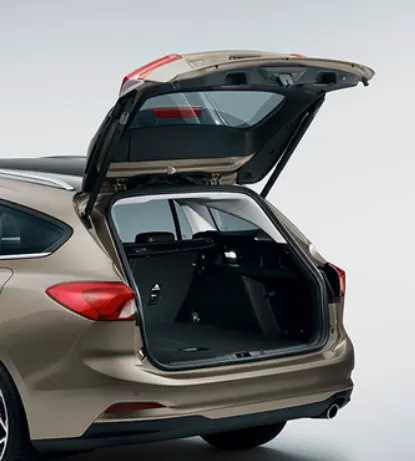
Types of doors based on working position
- Top Mounted Door
- Side mounted Door
- Bottom Door
The back door is operated by two types of comodities
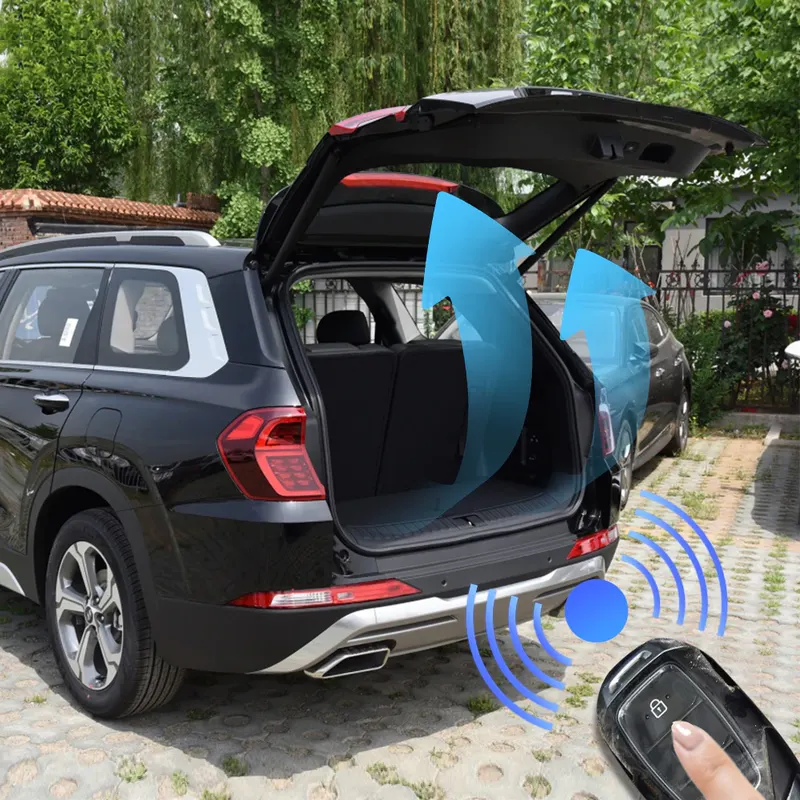
1.electrically operated
2.gas stay powered
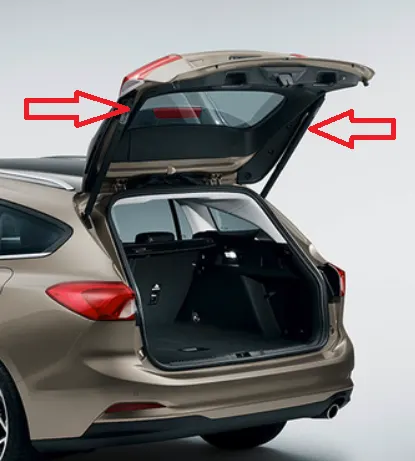
the main purpose of these mechanisims is to open the back door without heavy efforts, because the backdoor have different parts and the weight of the back door is high, so we are not able to open the back door manually, so we introduced these two types comodities. and these also decides the premium of the car, mostly the electrically operated used in premium cars.
1.gas stay powered
2.electrically operated
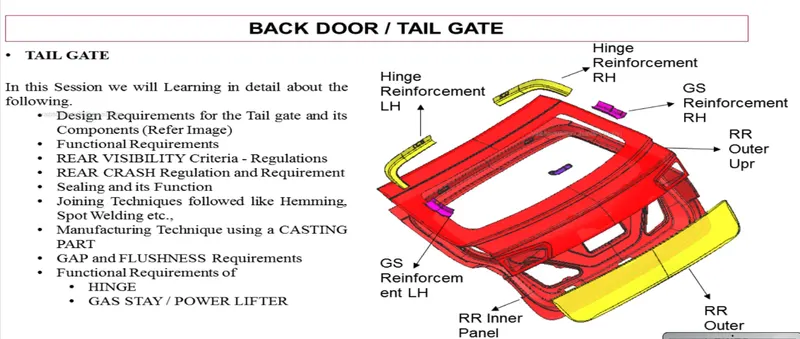
Back Door Assembly:
- Inner panel
- outer panel
- hinge and its reinforcement
- wiper motor reinforcement
- latch & stricker and its reinforcement
- gas stay reinforcement
the major problem in back door is material selection. mostly in past days steel is used, but it makes a very problems the steel parts have heavy weight,so it reduces the fuel economy, insted of steel presently in high end cars aluminium is used, the main objective of aluminium it have less desnser material and its sutaible for complex shapes, and it also gives the thcikness locally because it it done cating, in case of steel we used deep drawing operation. there are some of the advatanges and disadvantages are there
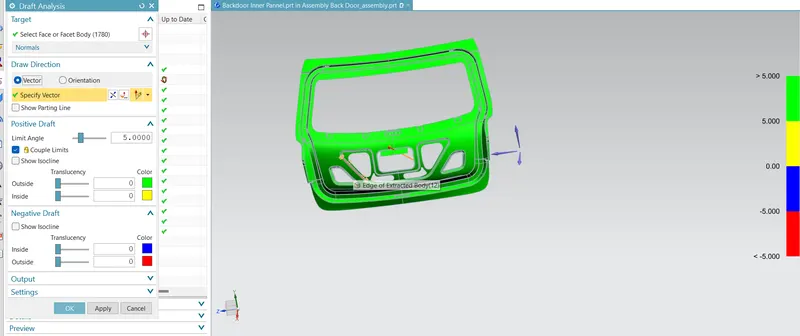
Inner Panel & Draft Analysis with Tooling Direction
In above figure on the left larger hole is used to mount the latch and striker actuator, there are the mounting points given for it. In middle there is space for the wiper motor assembly to be place and on the right there is hole is given as a symmetrical design and weight reduction. Thickness of the inner panel is 0.75mm. Rear visibility is maintained as per the stying panel.
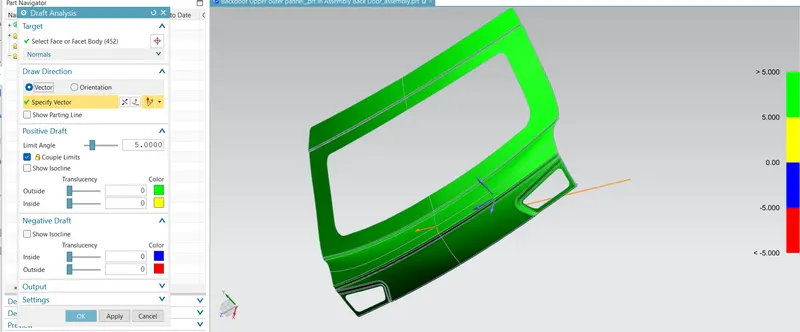
Outer Upper Panel & Draft Analysis with Tooling Direction
Based on the styling panel the outer upper panel was designed. Giving it to wrap on by hemming around the inner panel to protect as well as it is outer most part to avoid the joints hemming is used.
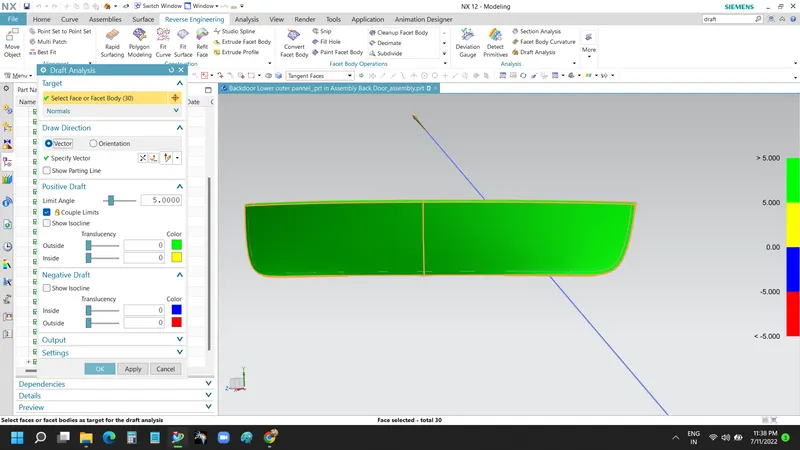
Outer Lower Panel & Draft Analysis with Tooling Direction
It is lower panel for the outer panel, it is the second component in the outer panel. Even it is hemmed to the inner panel which doesn’t have any other joint method other than hemming. Thickness is 0.75mm for the outer panel.
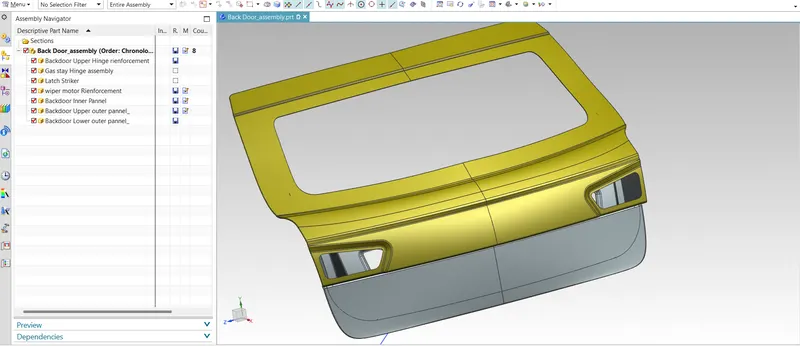
Assembly
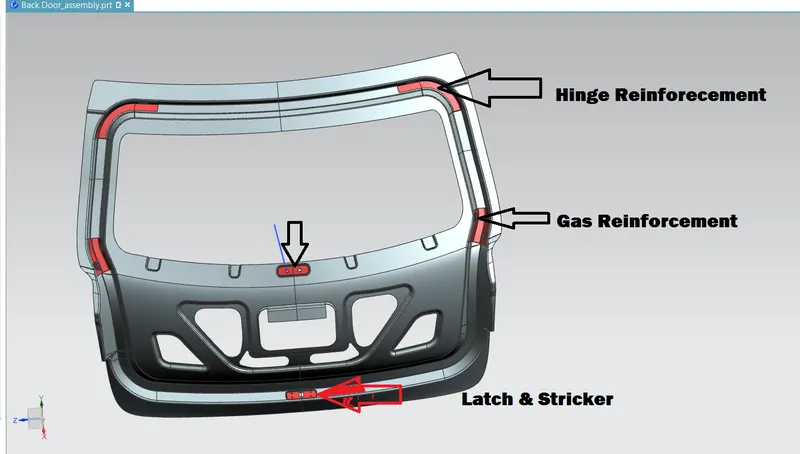
Reinforcement
It is an extra part given to the module for improving the strength/compensate the loss locally. These parts could be made from outer body scraps. Thickness could usually vary 0.75mm.
CONCLUSION
The back door outer and inner panel were designed with the help of the styling surface along the tooling direction.and
Draft analysis was performed on the inner panel and All the reinforcements were designed and placed at appropriate positions.