Hood design-Week 2
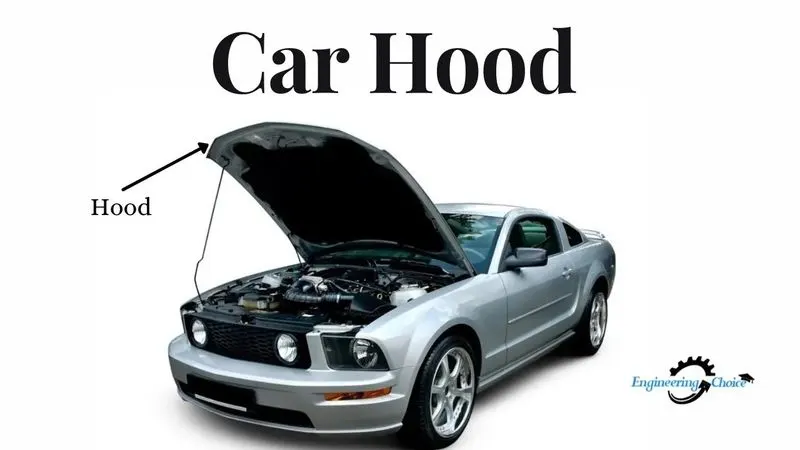
HOOD DESIGN - Hood refer to a fabric cover over passenger compartment of the car know as 'Roof' or 'Top' in many motor vehicles built in the 1930s and 1940s ,the resemblance to an actual Hood or bonnet is clear when open and viewed head on ; in modern vehicles it contineus to serve the same purpose but no longer resembles a head covering, The hood or bonet is the hinged cover over the engine of motor vehicles .Hood can open to allow access to the engine compartment, or trunk on rear engine and some mid engine vehicles,
A car hood is meant to protect the performance parts of the vehicle, including the engine while also providing easy access for repairs and maintenance. They serve a great deal of purpose in protecting the passenger inside the car and the pedestrian in the events of an accident.The hood can incur damange as well.
HOOD - TYPES
There ar two major types of Hood-
- Inlaid Hood
- Wrap around hood
Inlaid hood - It is lightest among all types of hoods.But it is easily subjected to border defectsand body unevenness during manufacturing.
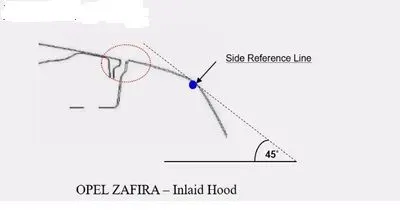
Wrap around hood - As name itself it wrap around the car body.it can mask the geometrical defects and provide adequate stiffness.It is relatively safer than other types as it provides more safer areas for the pedestrian during impact.
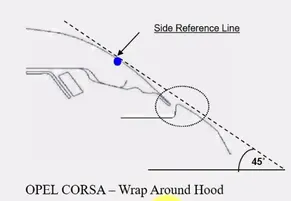
Types of hoods support
There are two types of support available for the hood support
- Gas Stay
- Support Rod
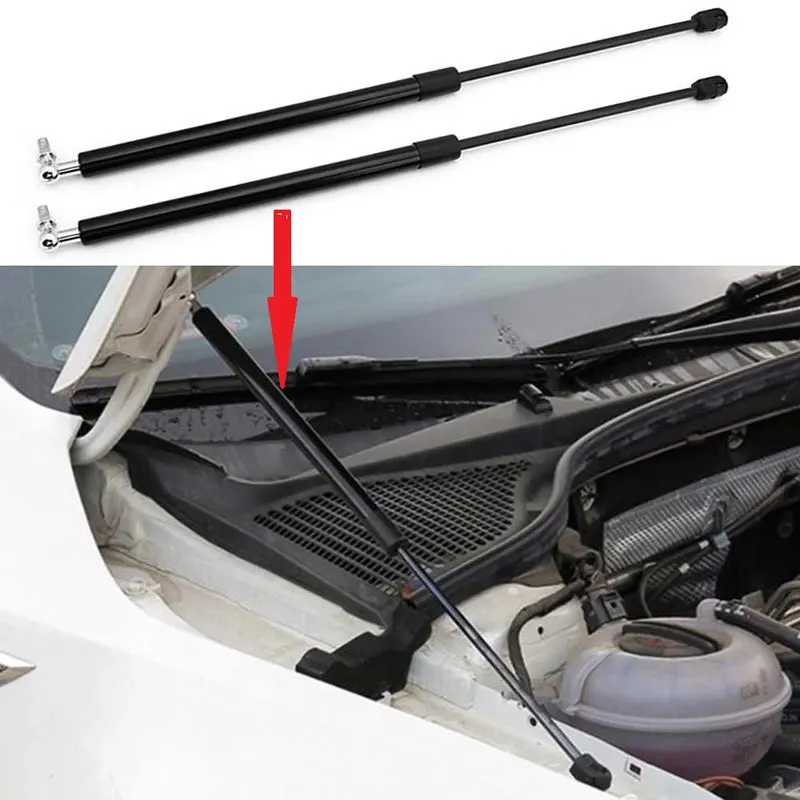
Gas Stay - Gas stay is the device for supporting the engine hood of a motor vehicle in its open position using an actuator activated by gas . This is mainly used when the car hood is heavy. In this, no men's power is required.spring stays are designed to be used on upward - lifting door;once the door is open and slightly,the spring will push the entrance to the fully open position .
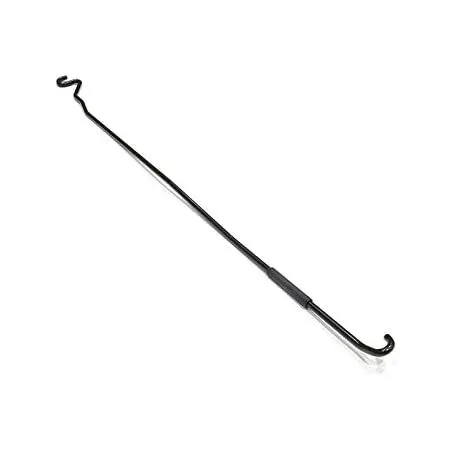
Support Rod - A support rod is a device for supporting the engine hood of a car in its open position using a rod .This is mainly used where the car bonnet weight is negligible. We have to lift the hood ourselves and place the supporrt proviided either in the hood or the engine components.
COMPONENTS OF HOOD-
- Outer Panel
- Inner panel
- Hinge
- Latch/striker
- Reinforcement
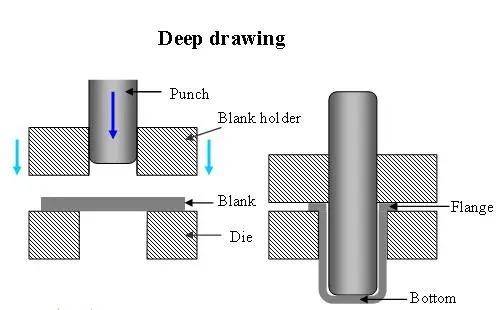
Outer Panel- A car hood panel is one of the most important components of the BIW ,it is considered the closure sheet -metal component. The outer panel has the aesthetic look to it but on its own is very waek and not capable of handling force during impact.Most automobile hood outer panels are made of traditional steel plates and their quality does not meet the needs of lightweight development.For this reason ,it is necessary to obtain lightweight effects through the applicaation of automotive aluminium sheets . The production process of the outer panel of the hood mainly includes blanking,deep drawing, trimming ,turnup and side turnup. Among them,deep drawingis a key process to ensure the quality of parts.
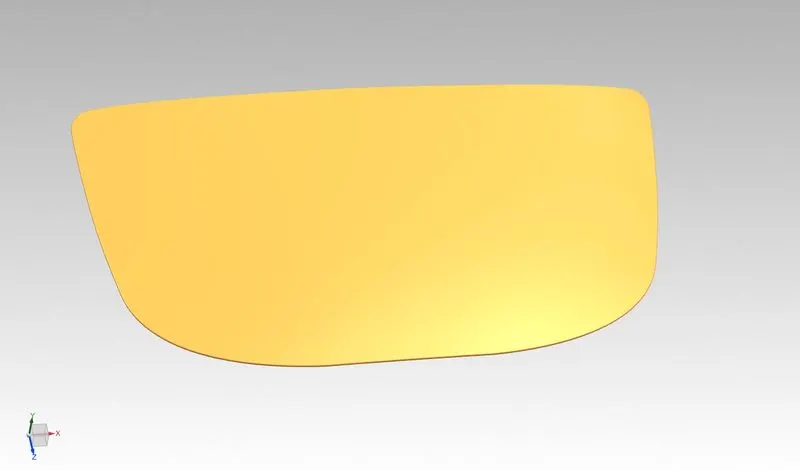
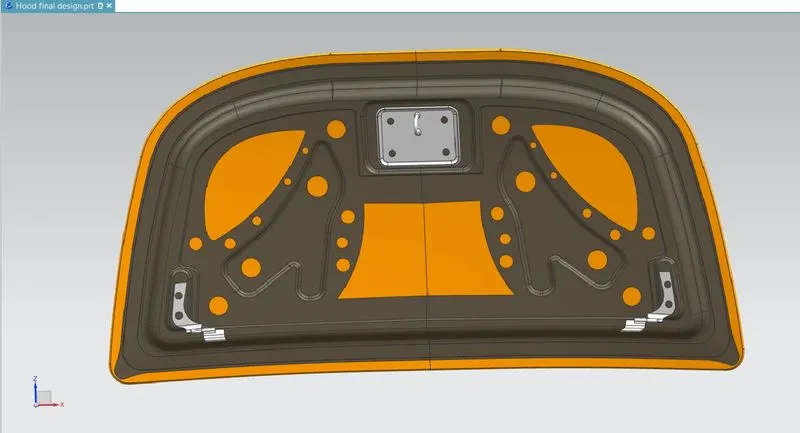
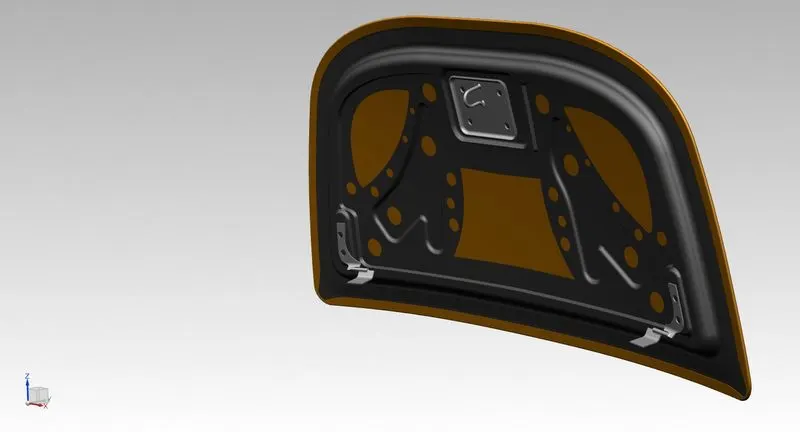
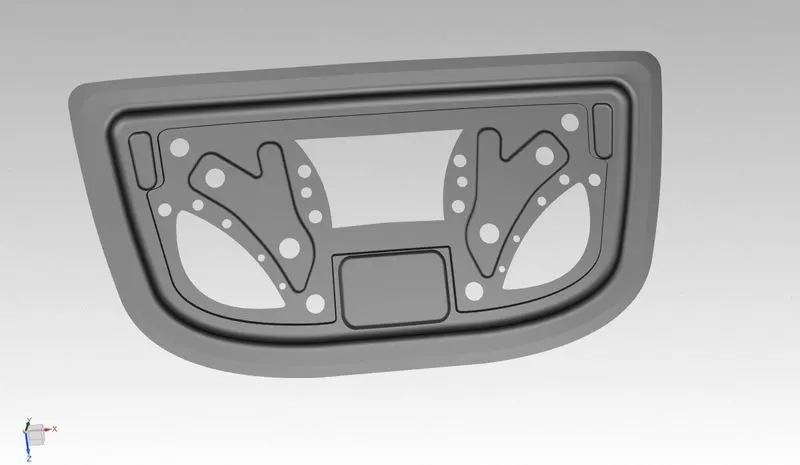
Inner Panel - The inner panel of the hood is not visible to the customer ,but this is the engineering feature of the outer panel.The hood is required to have a high initial reaction force against the impact exerted on the hood to enhance the energy absorption capacity.The hood is further required to minimize a reduction of a reaction force by deformation in a collision.A hood inner panel according includes an inner panel main body forming part of a hood of a vehicle a front bead provides on the inner panel main body and extending along a vehicle width direction, and a rear bead provided on the inner panel main body ,located on a rear side of the front bead of extending along the vehicle width direction.
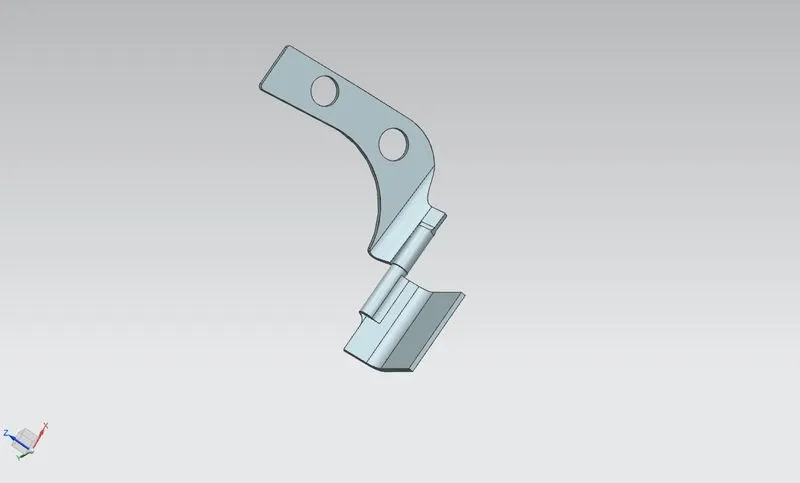
Hinge - A hinge is a machine elements that connects two bodies allowing angular movement about a fixed axis of ratation, all the while preventing translation and rotations on the remainingtwo axis .A hinge can be considered as a journal bearing with only one degree of freedom where a shaft is rotating in a hole .Hinges only allow one rotation ,either yawing ( the most common),pitching,or rolling .Hinges are a jointed and flexible device that is attached to any swinging part.
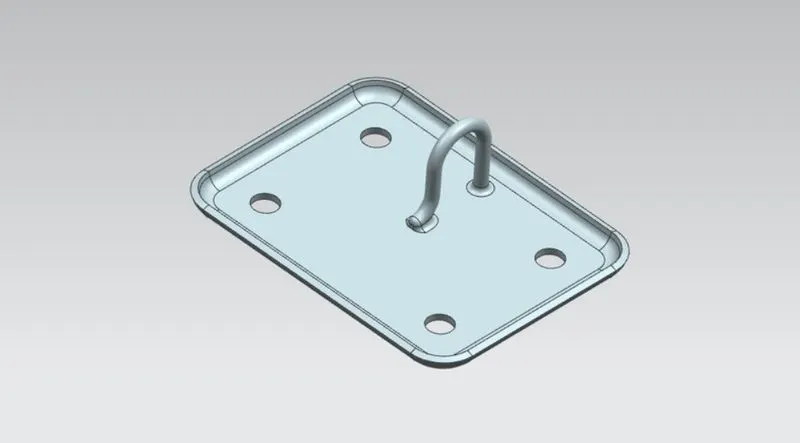
Latch- latchsare mechanical componentsthat allow the temporary joining of parts that are moving relative to each other .ythey actuated to release the coupling and allow the two parts to seperate. Lates are mostly seen on door and enclosure openings they are also used in device such as seat belts ,clamps ,straps and objects with retractable parts .The hood latch is extremly simple .when the hood is closed ,the latch slides over what is called catch and spring covers the latch to keep it snug.
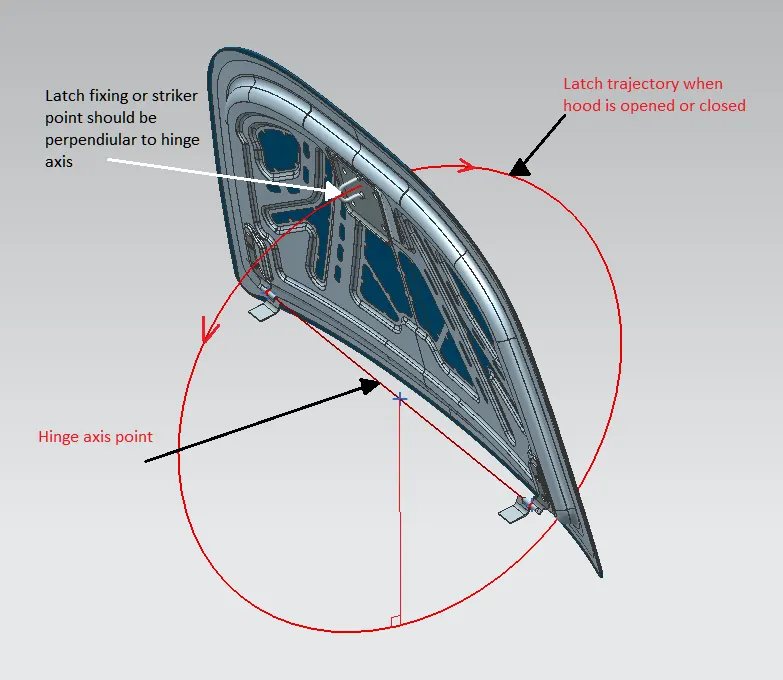
Latch Trajectory - The latch trajectory shows the striker's wway when the hood is opened and shut on vehicle.the range of the around trajectory is controlled by set standard dependent on the physical stature of an individual.the range is estimated from pivot hub up to the latch .It is the trajectory on which the movement oof the hood (opening and closing are dependent). This circular trajectory has a radius equal to the length from the centre points of the centre axis of the hinge to the strikeer point on latch.The striker point is also tangent to the trajectory.
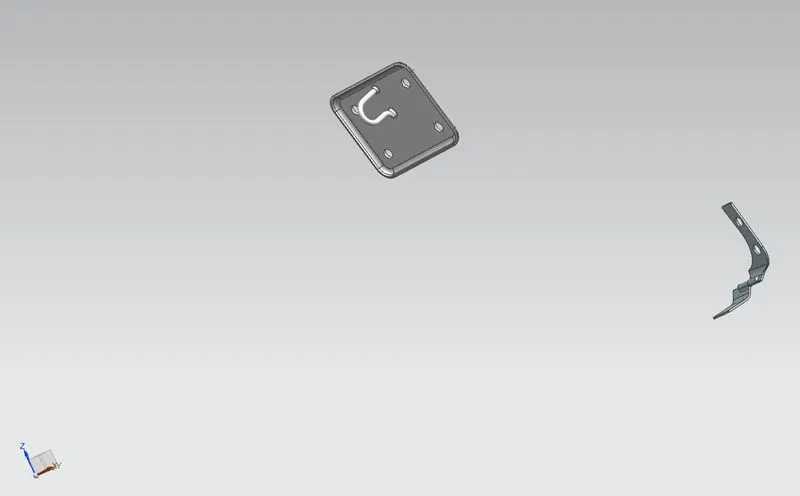
Rienforcement- Reinforcements are provided according to the design requirements .Mainly it is provided at the hinge and latch regions to improve the strength locally. Usually thickness of reinforcements will be higher thaan that of the inner panels and the value varies according to the cost and requirement.According to the design requirement here it is given 1.5mm thickness to both hinge and latch reinforcements.
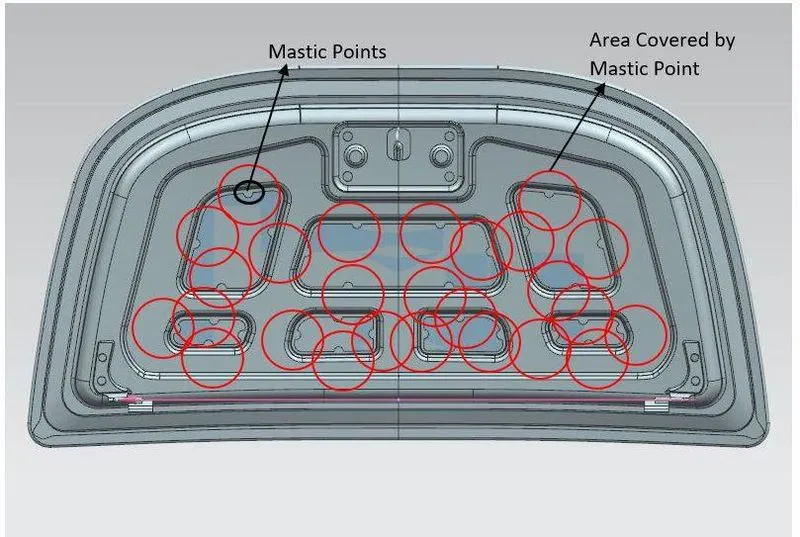
Mastic Data - Hood commonly possess large surface area and hemming can only be provided through its boundary. We cannot use other joining techniques like welding,riveting etc because they leave marks on the outer panel which spoil its aesthetic appearance so, mastic sealants are used to sick the inner surfaces of outer panel and inner panel.Mastic sealants are elastic compound that behave like rubber .It is applied between the inner and outer panel at specified spots. each spot of mastic sealants has its effects around a circular region of 80mm diameter. Thus ,the mastic points are arranged in such a way that it covers the areas away from the hemming which are more vulnerable a vibrate.
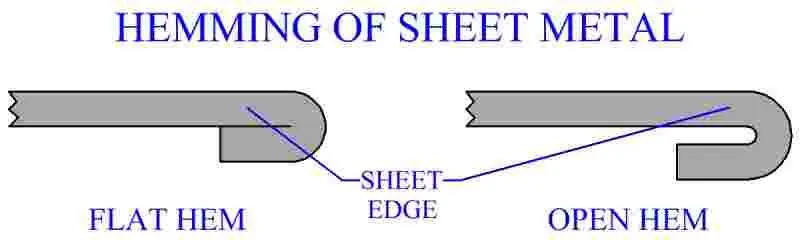
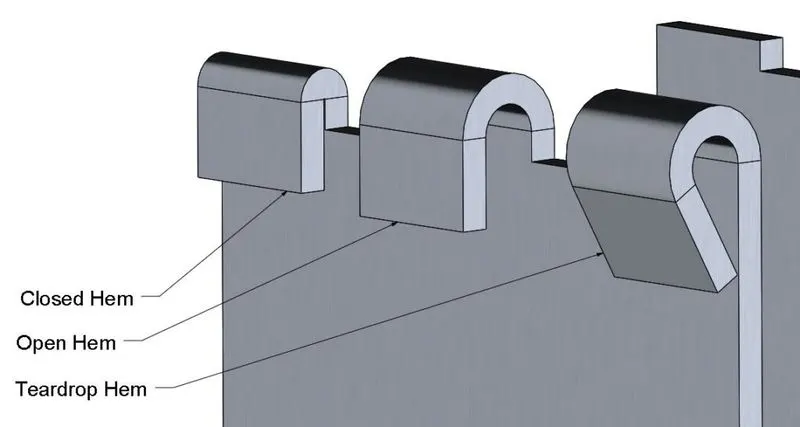
Hemming - Hemming is a sheet metal forming process in which sheets are joined by bending it usually to 180 degrees.Automotive body panels and automotive parts such as deck lids ,trunk lids , doors ,hood and tailgates are formingby the hemming process.
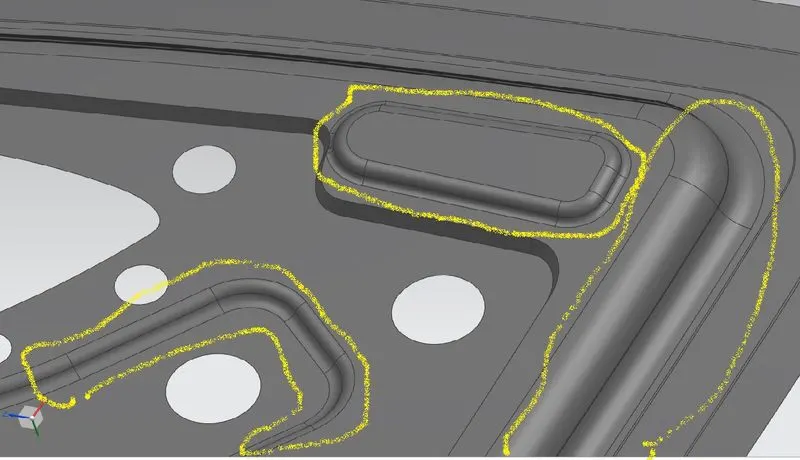
Emboss Definition- Throughout the inner panel we provide different embosses .we can increase the stiffness of the inner panel through these embosses.The shape and size of the embosses also determines the direction of the force distribution resulted from frontal collision.The force should be always distributed away from the passengers.Here in the figure the embosses are designed in such a way that the force is directed to either sides of the car.
Deep Drawing - In the this corporation,a sheet is pulled into the ideal shape using a punch and pass-on gadget.The sheet is outlined the condition the pass on by driving the punch down on it.To avoid th sheet wrinkling itself, the sides of the sheet are held someplace close to folios .In the automotive industry, deep drawing is usually carried out using rigid tools.
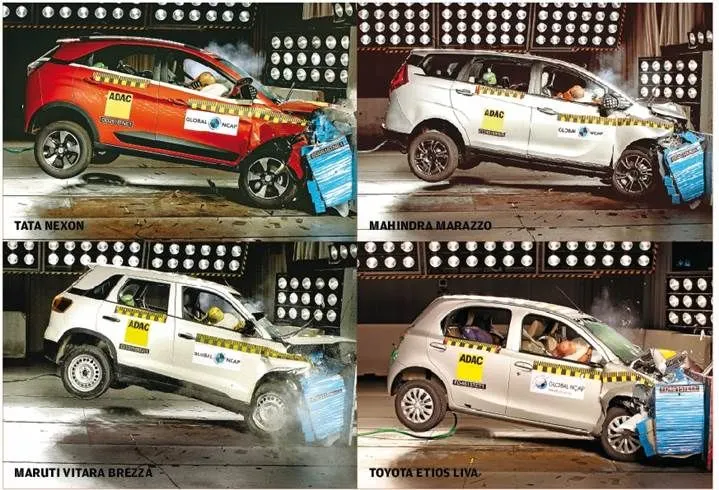
PASSENGER SAFETY- Whenever a frontal crash occurs in the car ,the first part affected will be the hood .So must be designed in such a way that it should not come from the body of the vehicle and must absorb the energy as far as possible ad divert the force towards the side panel of the car so that the amount of force which is sent to the cabin is lesser since the force lesser the passenger will experience less amount of force so that passenger safety is ensured.
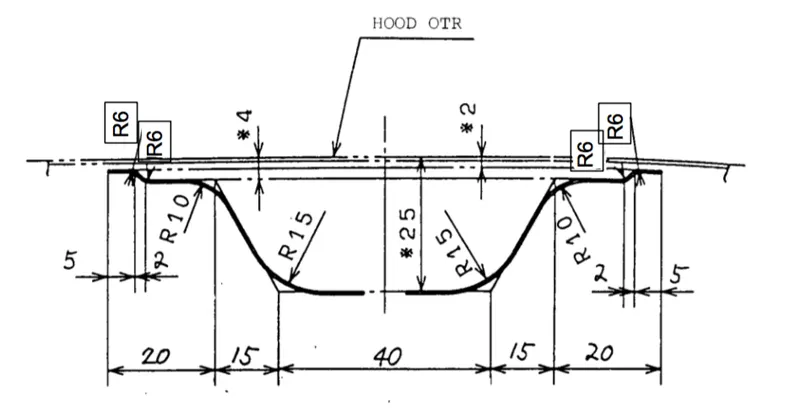
DATA TO BE USED :
Hood thickness Information
- Outer Panel Thickness = 0.75mm
- Inner panel Thickness = 075mm
- Reinforcement Thickness =1.5mm
MASTER SKETCH
FINAL HOOD ASSEMBLY DESIGNED