Design of backdoor
Introduction:
The backdoor is the rear component of a passenger car. It has a hinge connected either to the roof or to the c pillar.
Types of Back Door:
There are three types of backdoors based on the mounting position.
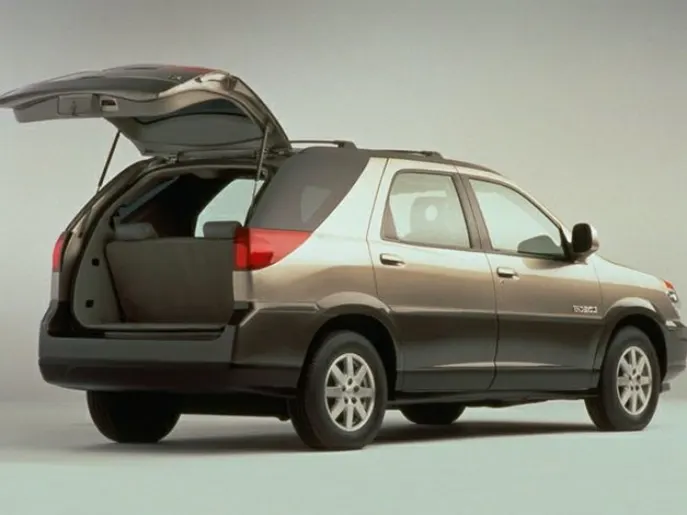
Top-mounted Backdoor:
Here the backdoor is mounted to the roof panel at the top side. Most SUVs uses this
Model.
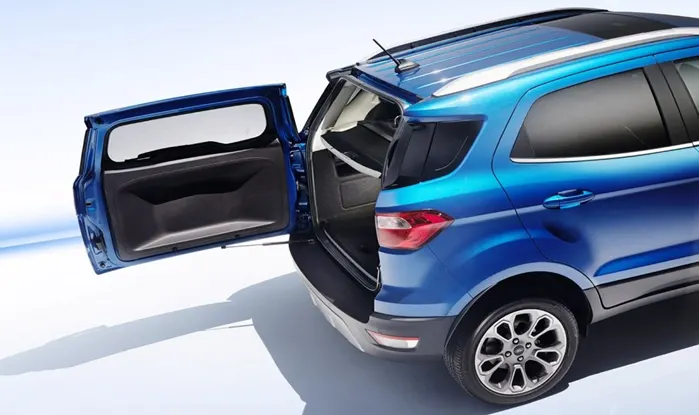
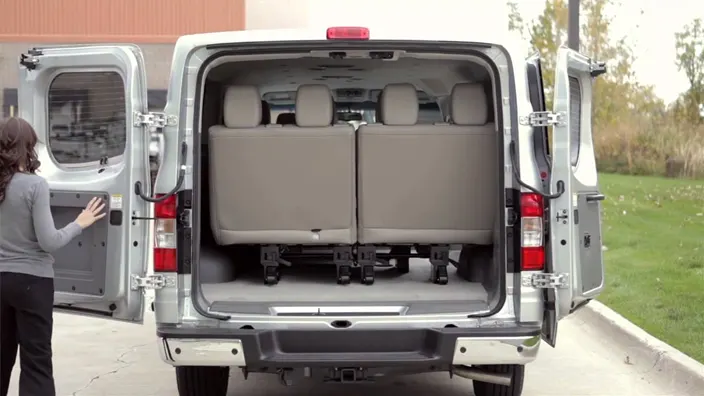
Side-mounted backdoor:
The backdoor is mounted to the C pillar of the Car body. This type is mostly used
Vans.
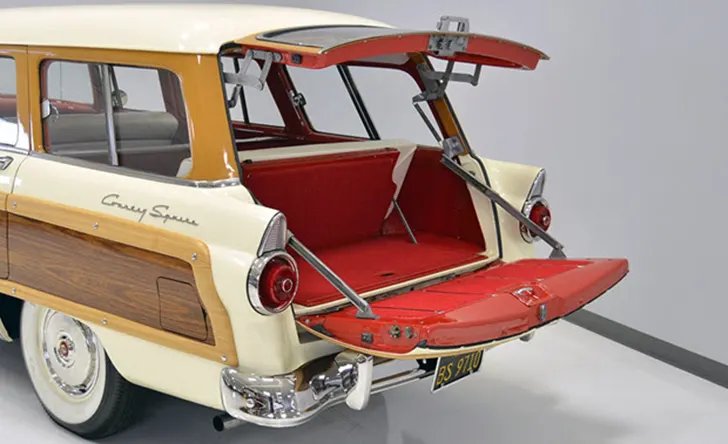
Bottom mounted Backdoor:
Here the backdoor is mounted to the bottom side of the car body.
Design Consideration:
Outer panel thickness: 0.75 mm
Inner panel thickness: 0.75 mm
Reinforcement thickness: 1.5 mm
Visibility Criteria:
The aesthetics of the backdoor is considered for the design of the backdoor. This is based on an earlier version of the car, customer feedback and other factors. This is done by benchmarking the car.
Force dissipation criteria:
The safety of the car is a prime consideration of any design. The force impacted during the crash of a car should not be passed to the passenger inside the car. The backdoor is also designed according to this. The Y and V embosses are used for the dissipation of the force impacted.
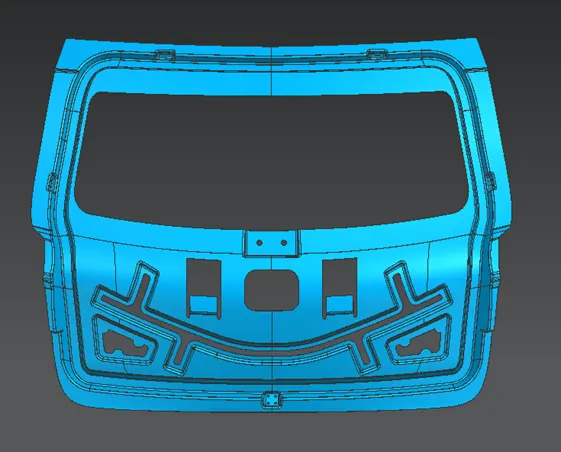
Latch and striker position:
The latch and striker are positioned at the bottom of the door. It is used for the locking of the door with the car body. The design should also consider the headroom when the door is in the open position. The angle of striking should be aligned with the tangent of the striking circle formed from the hinge.
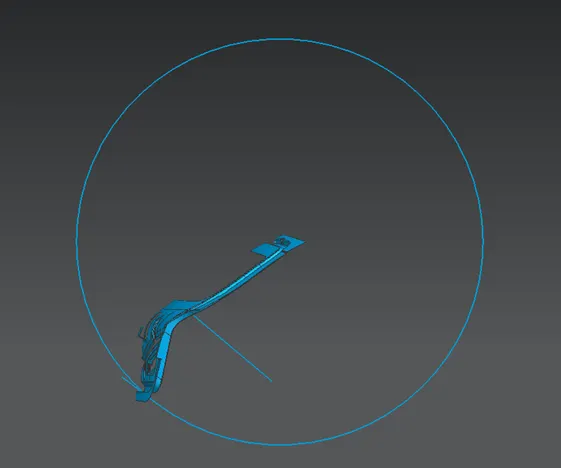
The process involved in manufacturing of the backdoor:
Design procedure:
- The class A surface is checked for any errors and all the necessary corrections are made.
- The class B surface is made using the offset command.
- The necessary corners errors and surface patchings are done to make smooth surfaces.
- The Y and V embosses are given at necessary locations. The Cutouts for weight reduction is also made.
- The embosses for the gas stay and hinges and latch, striker, are given at appropriate locations.
- The reinforcement panels are made using the reference data.
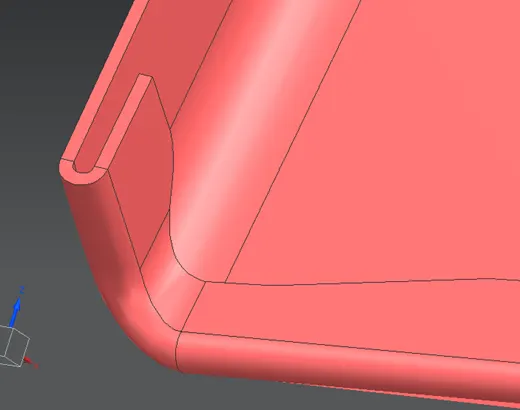
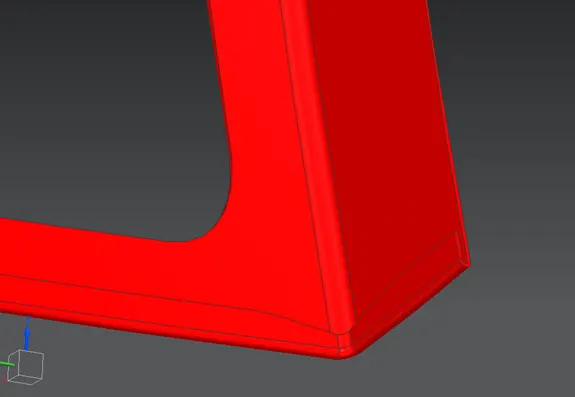
- The hemming process is carried out using bridge curve, sweep surface, studio surface commands.
- The corner reliefs for hemming is given wherever it is needed.
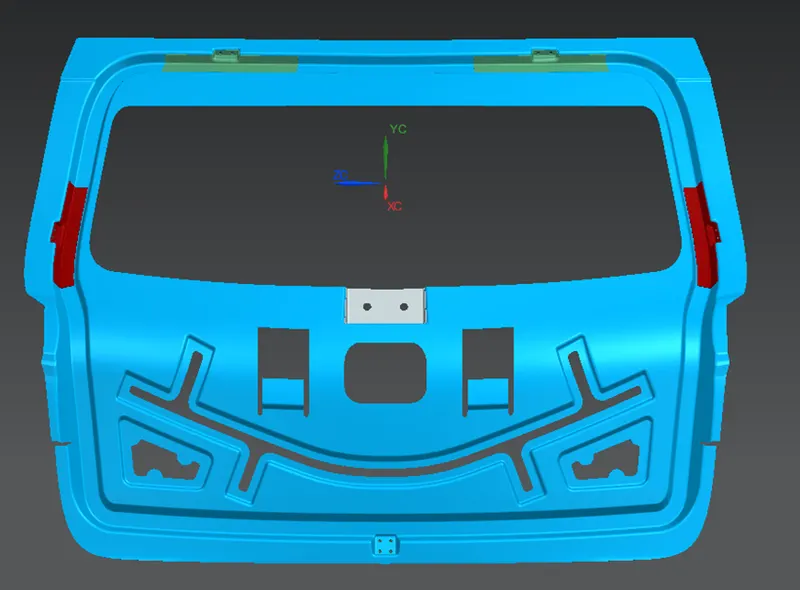
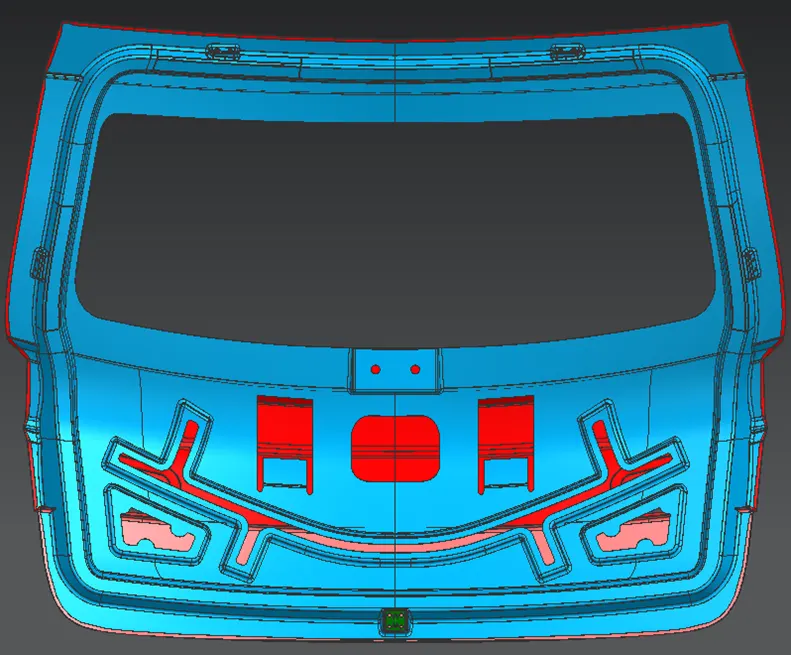
- All the parts are assembled in the assembly.
Inner panel:
The inner panel is designed using an offset of the class A surface.
Flanges are created and a round surface is given to the flanges.
The embosses for the hinges and the gas stays are given in the flange parts.
The piercing is done for the fitting of the parts.
Deep drawing of the inner panel:
Deep drawing is the process of making cup-shaped parts in sheet metal. Parts like cooking pan, drinking bottles, automobile sheet metal parts, etc... The process is done using a punching machine that has a die. The die has the shape of the final part required. There is a clearance between the die and punch. This place is filled by the sheet metal blank.
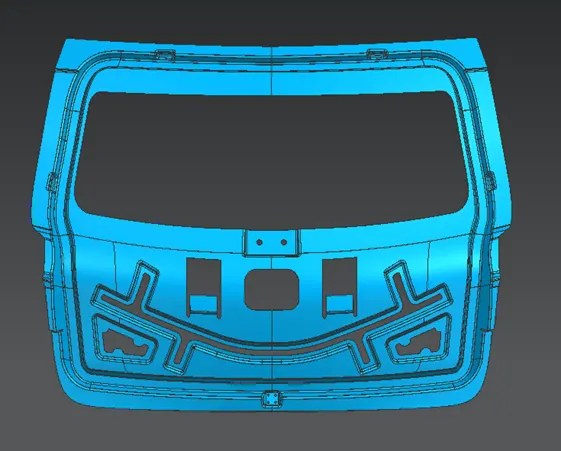
Piercing of the inner panel:
Piercing is a material-removing operation carried in sheet metal. It is similar to the deep drawing having a punch and dies assembly. The shear is provided to the sheet metal to perform a cut in the sheet metal part. The punch has the desired to be cut for this operation.
Applying mastic sealant:
The inner and outer panel is placed with a small gap between them. After assembly, the part may vibrate during motion. The aesthetics of the outer hood is the prime consideration for the hood of a car. So spot welding cannot be provided for inner and outer hoods. The mastic sealant provides the assembly criteria reduces the vibration and provides an adhesive bond between the sheets.
The inner hood sheet has few provisions for applying the mastic surface. These provisions are given in the design stage itself.
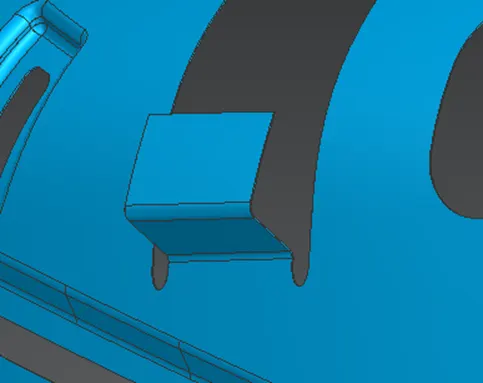
Hemming of outer panels:
Hemming is a forming operation in which the edges of the sheet are folded or folded over another part in order to achieve a tight fit. Normally hemming operations are used to connect parts together, to improve the appearance of a part and to reinforce part edges.
In automobile production, hemming is used in assembly as a secondary operation after deep drawing, trimming and flanging operations to join two sheet metal parts (outer and inner) together. Typical parts for this type of assembly are hoods, doors, trunk lids and fenders.
Hemming is carried in a set of rollers with increasing angles in each of the rollers.
Reinforcement for the rear door:
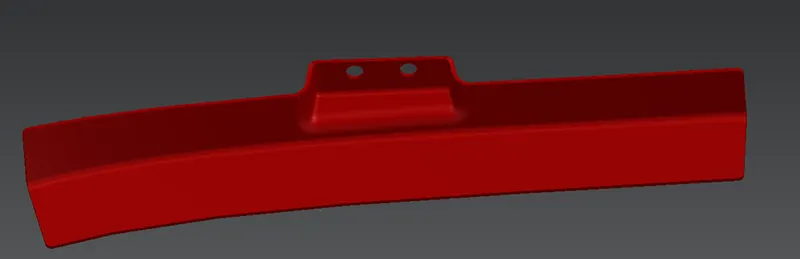
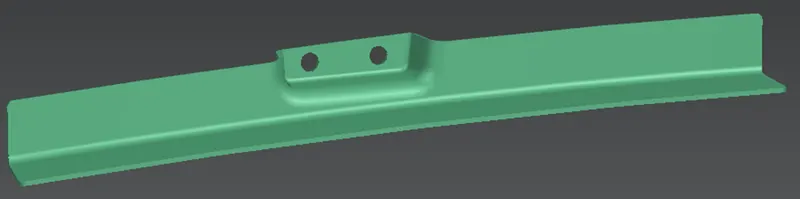
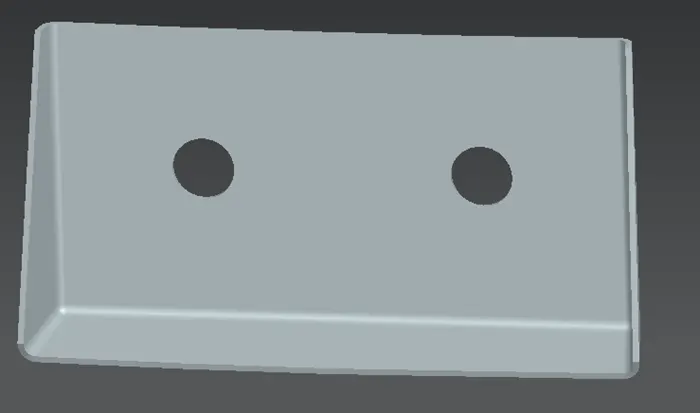
The reinforcements for the back door for the door hinges, gas stays are given using a wave geometry linker.
The thickness of the reinforcement is given as 1.5 mm
The reinforcements of the back door are attached using the welding process.
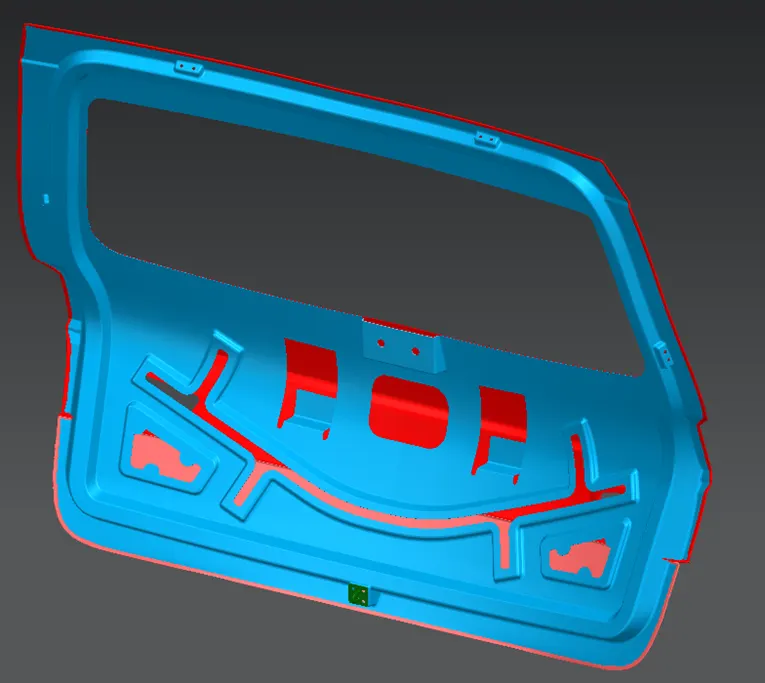
Draft analysis of inner panel:
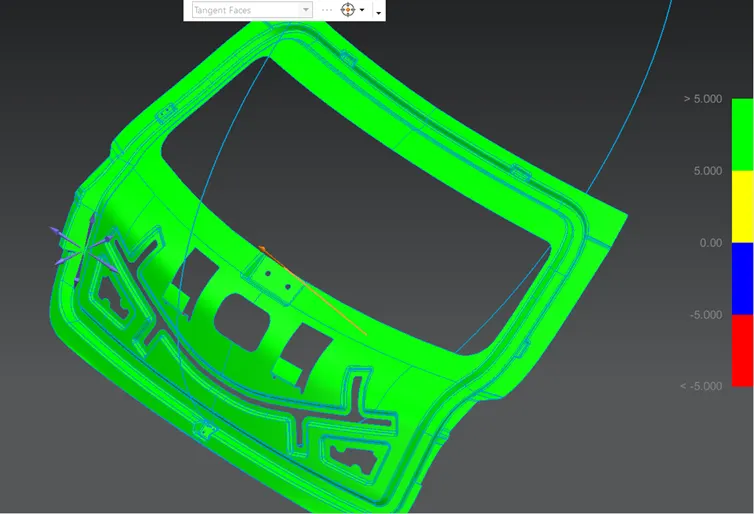
The tooling axis is drawn using a bisecting line of the parts.
The draft analysis tool is used for the analysis of the draft angles.
Assembly of the parts:
Conclusion:
The Backdoor is designed as per the design consideration. The assembly is made using the designed parts. The draft analysis is made for proper draft.