Design of backdoor
Objective:
Using the provided styling surface to come up with a back door design, by following appropriate design methodologies, and provide the necessary reinforcements and embossed
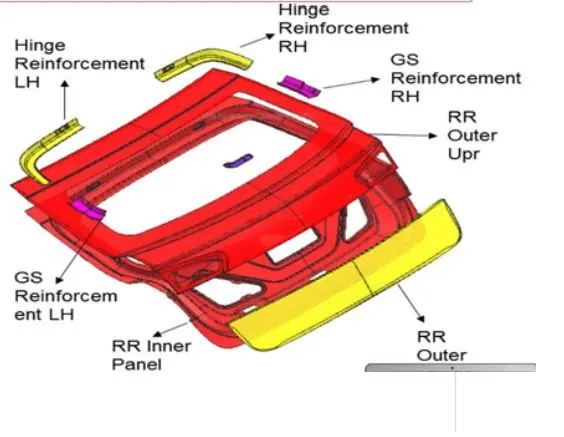
Back Door/Tail Gate:
A door that is located at the rear side of a car gives access to the boot space to store luggage, spare wheel, etc. These doors can be operated manually or electric powered. In most of the luxury cars door is electrically operated.
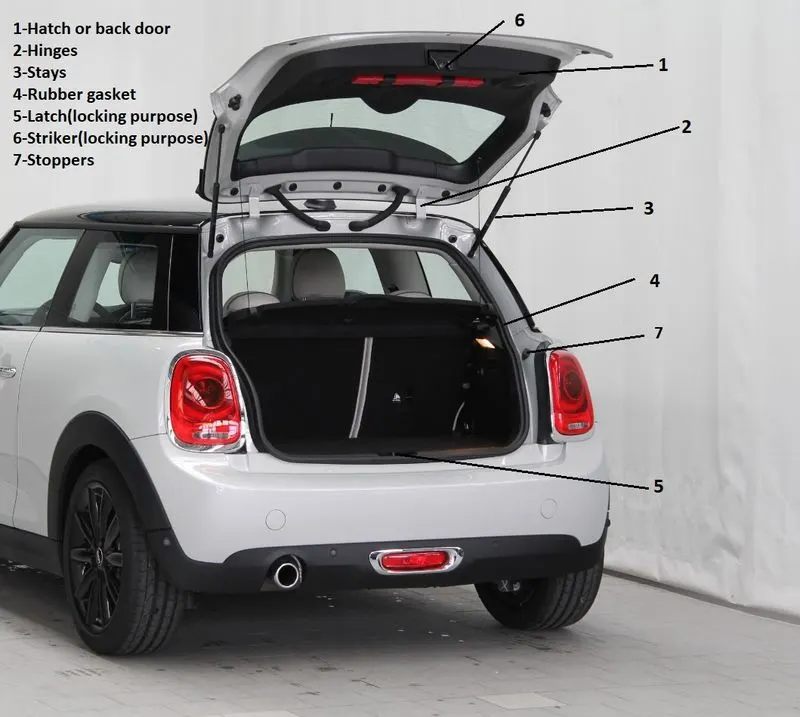
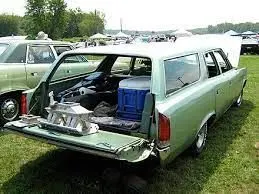
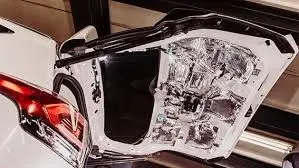
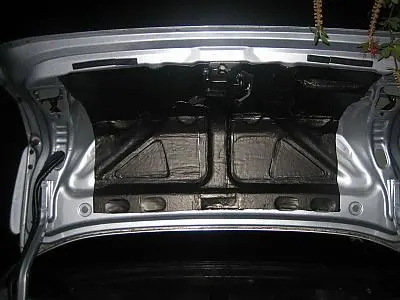
Back Door Components and Assembly:
- Inner panel
- Outer panel
- Hinges and its Reinforcement
- Wiper Motor Reinforcement
- Latch and striker, Reinforcement
Design Requirements of Tailgate design:
- Rear visibility criteria
- Rear crash Regulation and requirement
- Sealing and its functions
- Joining Techniques
- Manufacturing Techniques
- Gap and Flushness requirements
- Functional requirement of Hinge, Gas stay or Powerlifter
Manufacturing Techniques:
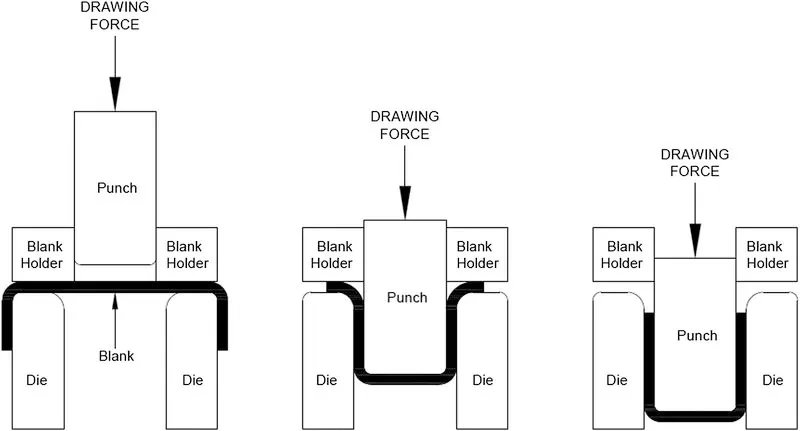
Deep Drawing:
- Deep drawing is a process in sheet metal forming by the mechanical action of a punch. A flat sheet metal blank is formed over a single, rigid, shape-defining tool half by a flexible rubber diaphragm under uniform hydrostatic pressure.
- The process results in scratch-free parts regardless of the sheet thickness or complexity of the tool, including undercuts. High forming pressure ensures close tolerance parts direct from the press with little or no secondary handwork required.
- The process is considered deep when the depth of the drawn part exceeds its diameter. This is achieved by redrawing the part through a series of dies.
- The flange region, the sheet metal in the die shoulder area, experiences a radial drawing stress and tangential compressive stress due to the material retention property.
- These compressive stresses, hoop stresses, result in flange wrinkles. These wrinkles can be prevented by using a blank holder, the function of which is to facilitate controlled material flow into the die radius.
Redrawing: The components from the deep drawing are redrawn to increase the depth of the component this we can observe in the making of deep cup-like components
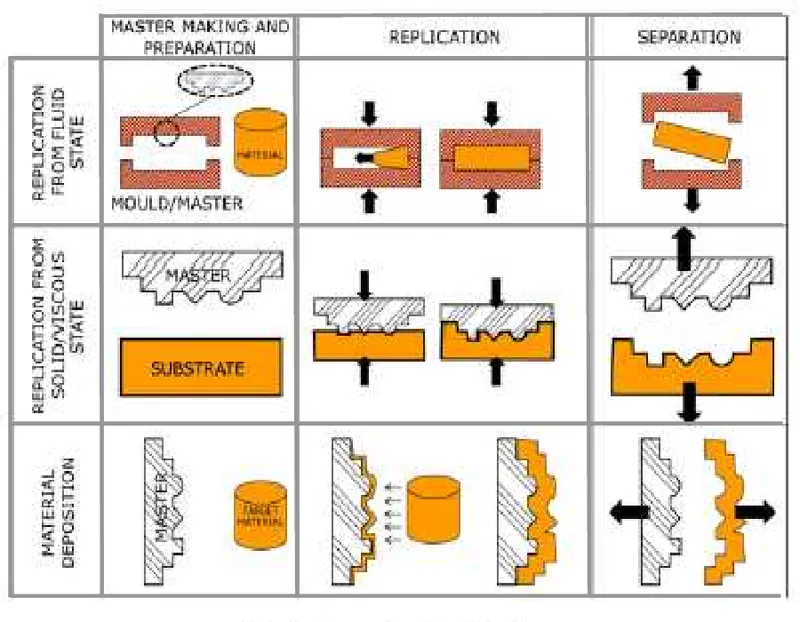
Embossing:
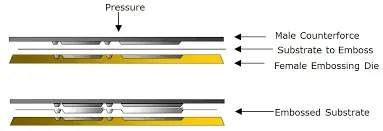
Sheet metal embossing is a stamping process for producing raised or sunken designs or relief in sheet metal. This process can be made by means of matched male and female roller dies or by passing sheet or a strip of metal between rolls of the desired pattern. It is often combined with foil stamping to create a shiny, 3D effect.
The metal sheet embossing operation is commonly accomplished with a combination of heat and pressure on the sheet metal, depending on what type of embossing is required. Theoretically, with any of these procedures, the metal thickness is changed in its composition.
The metal sheet is drawn through the male and female roller dies, producing a pattern or design on the metal sheet. Depending on the roller dies used, different patterns can be produced on the metal sheet. The pressure and a combination of heat actually "irons" while raising the level of the image higher than the substrate to make it smooth. The term "impressing" refers to an image lowered into the surface of a material, in distinction to an image raised out of the surface of a material.
Characteristics:
- The ability to form ductile metals.
- Use in medium to high production runs.
- The ability to maintain the same metal thickness before and after embossing.
- The ability to produce unlimited patterns, depending on the roll dies.
- The ability to reproduce the product with no variation.
The following materials are suitable for embossing:
- Aluminum (all alloys)
- Aluminum (T1/T2)
- Brass
- Card stock
- Cold-rolled steel
- Copper
- Galvanized steel
- High strength, low alloy, steel
- Hot rolled steel
- Steel (all alloys)
- Zinc
Hemming:
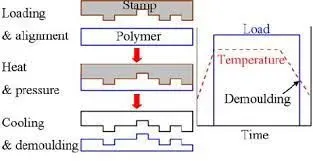
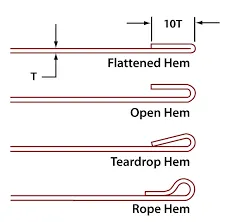
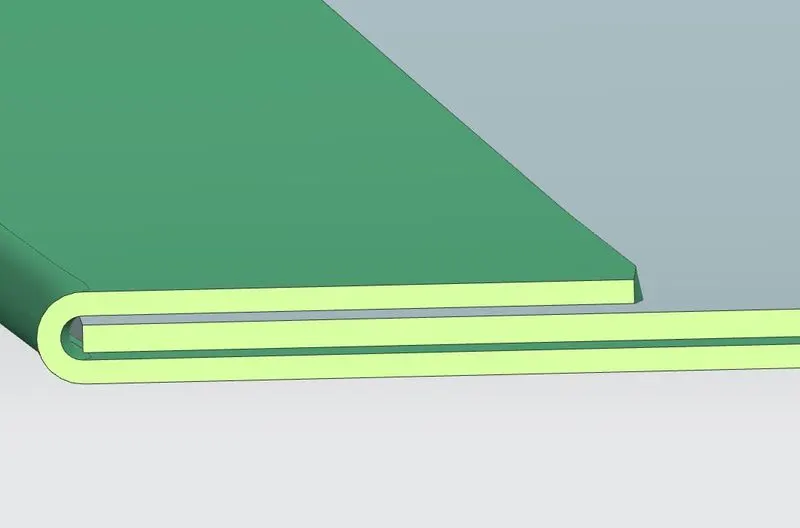
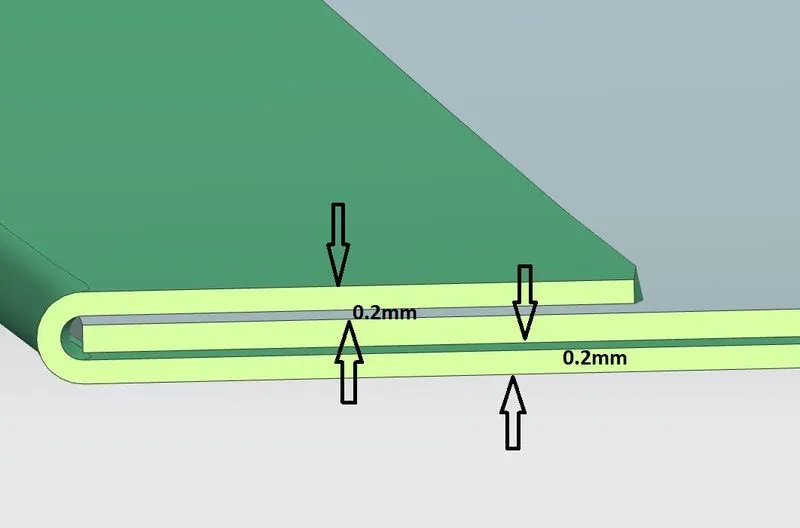
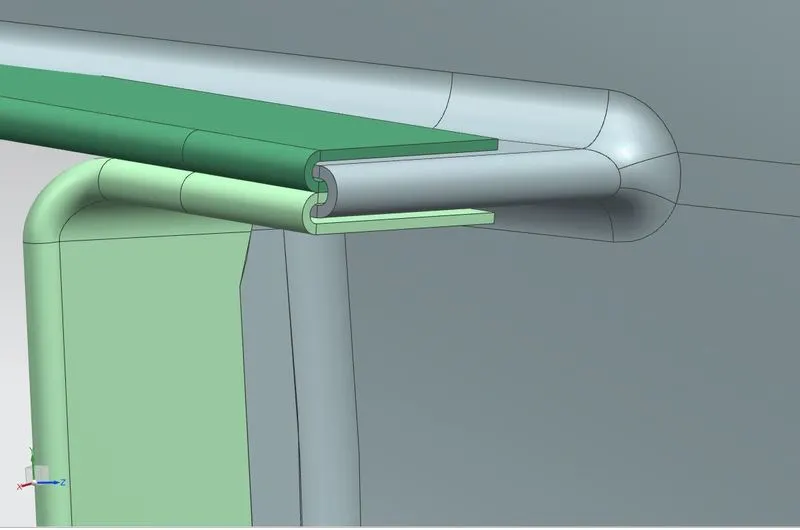
Hemming is a forming operation in which the edges of the sheet are folded or folded over another part in order to achieve a tight fit. Normally hemming operations are used to connect parts together, to improve the appearance of a part, and to reinforce part edges.
In car part production, hemming is used in assembly as a secondary operation after deep drawing, trimming, and flanging operations to join two sheet metal parts (outer and inner) together. Typical parts for this type of assembly are hoods, doors, trunk lids, and fenders.
There are various types of hemming operations:
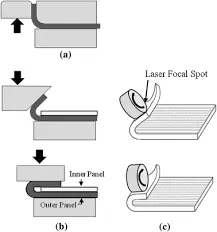
1. Conventional die hemming: In conventional die hemming, the flange is folded over the entire length with a hemming tool.
2. Roll hemming: In roll hemming, the hemming roller is guided by an industrial robot to form the flange.
Blanking:
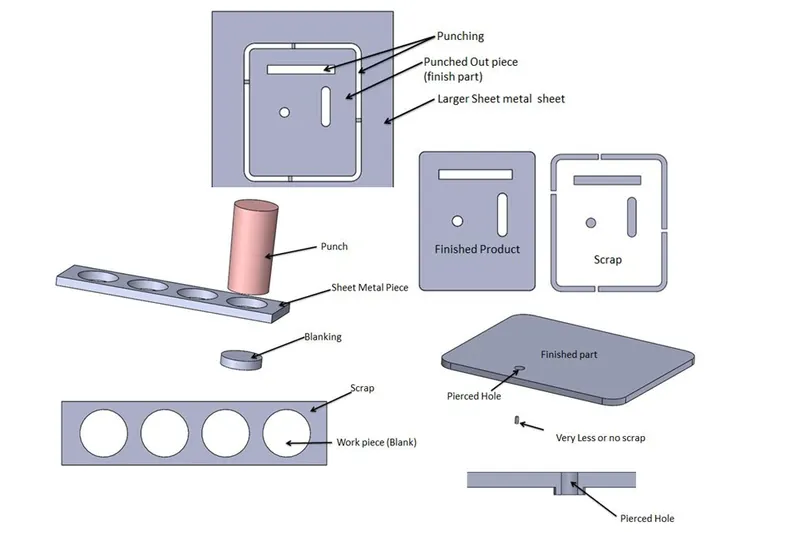
Blanking is a metal fabricating process, during which a metal workpiece is removed from the primary metal strip or sheet when it is punched. The material that is removed is the new metal workpiece or blank.
Characteristics of the blanking process include:
- Its ability to produce economical metal workpieces in both strip and sheet metal during medium or high production processes,
- The removal of the workpiece from the primary metal stock as a punch enters a die,
- The production of a burnished and sheared section on the cut edge,
- The production of burred edges,
- The control of the quality by the punch and die clearance,
- The ability to produce holes of varying shapes – quickly.
Punching:
Punching is a forming process that uses a punch press to force a tool, called a punch, through the workpiece to create a hole via shearing.
The characteristics of punching are:
- It is the most cost-effective process of making holes in a strip of sheet metal for average to high fabrication.
- It is able to create multiple shaped holes.
- Punches and dies are usually fabricated from conventional tool steel or carbides
- It creates a burnished region roll-over, and die break on the sidewall of the resulting hole.
- It is a quick process.
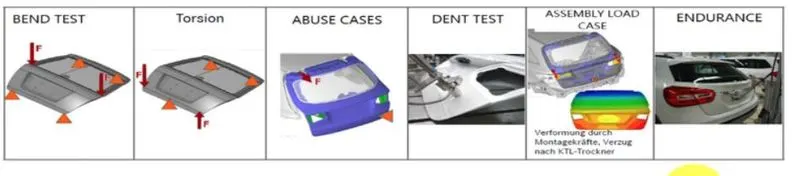
Load cases on Tailgate:
Desing of Tailgate/Back Door in Siemens NX:
Class A Surface:
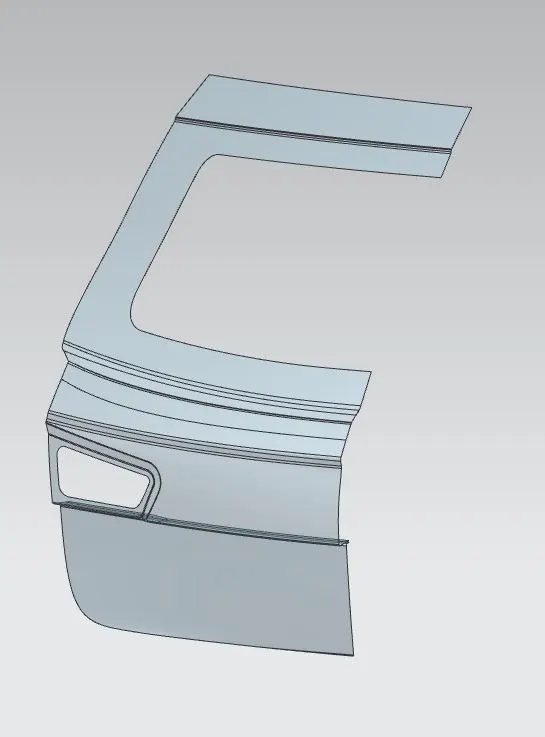
Outer Panel Upper:
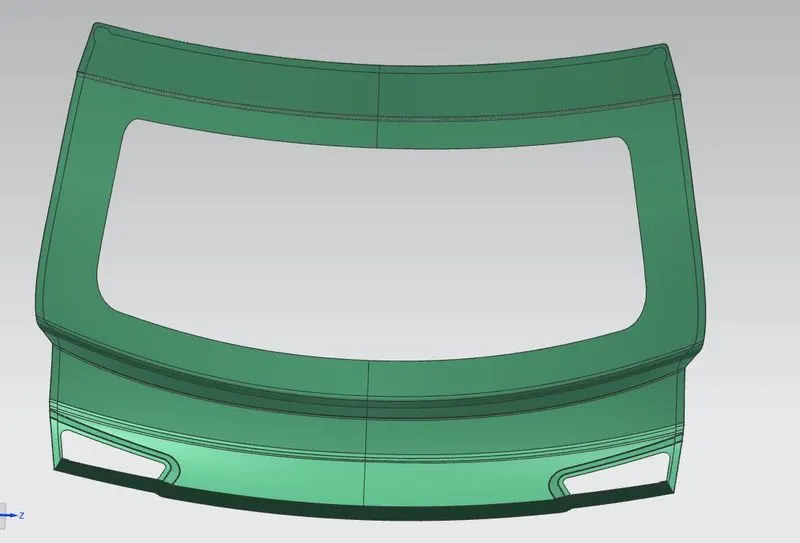
Outer Panel lower:
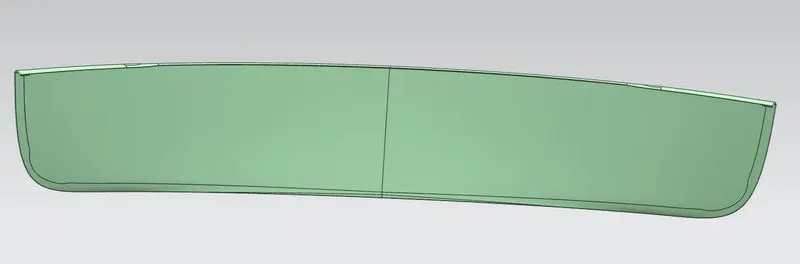
Hemming:
Inner Panel:
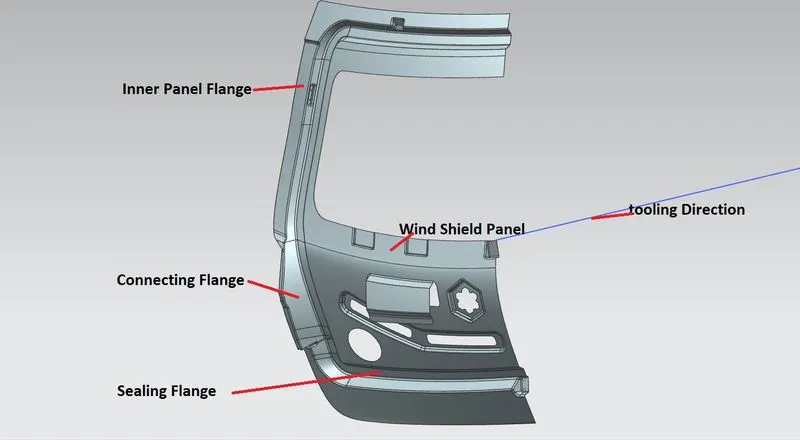
Hinge Emboss:
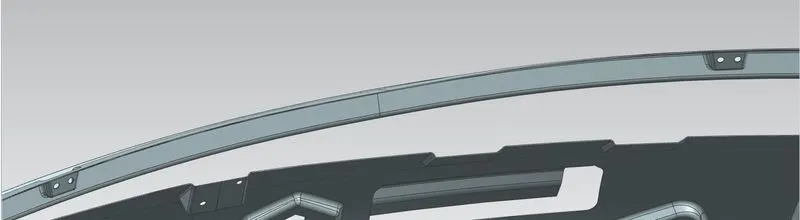
Gas Stay Emboss:
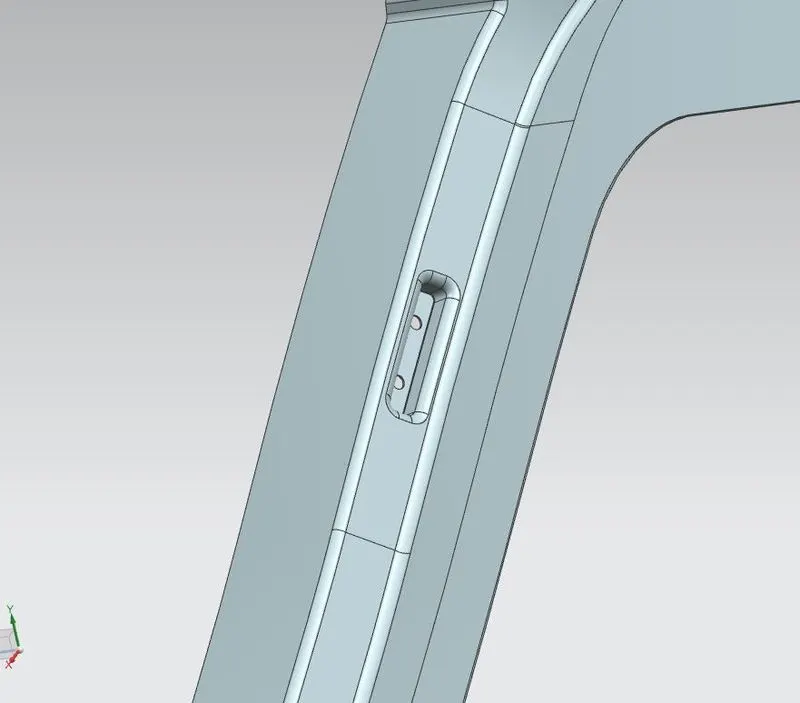
Latch and Striker Emboss:
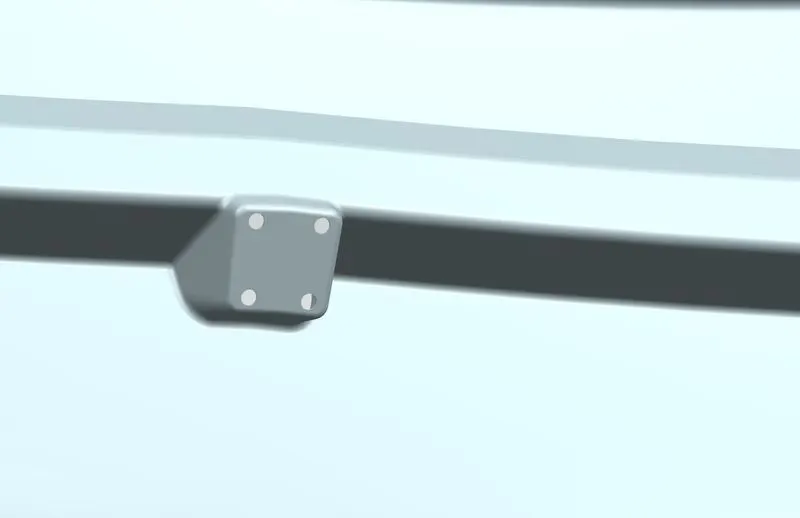
Reinforcements:
Hinge Reinforcement
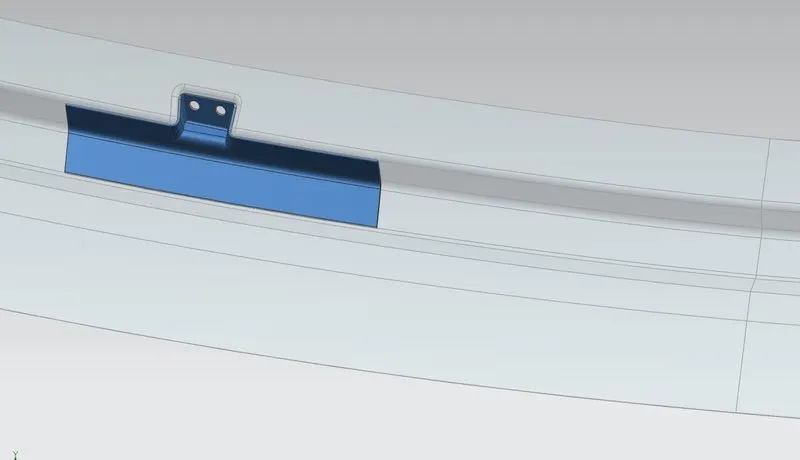
Wiper Motor Reinforcement
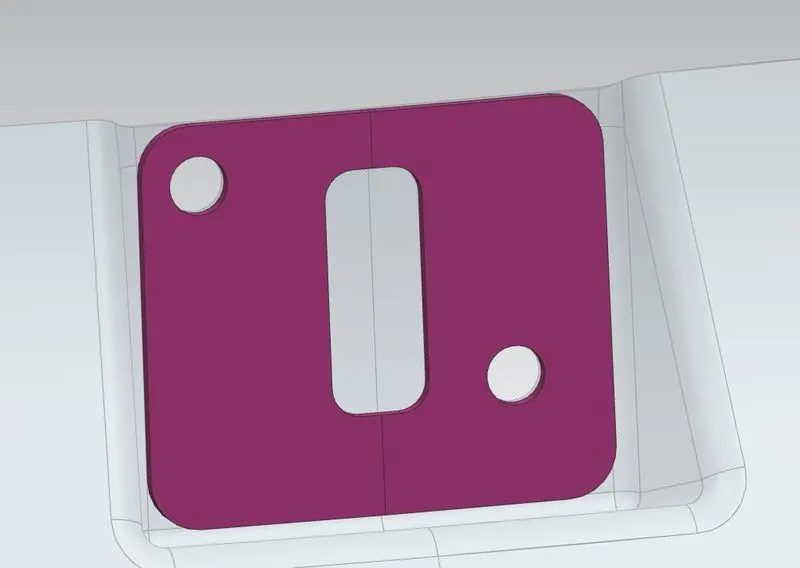
Gas Stay Reinforcement
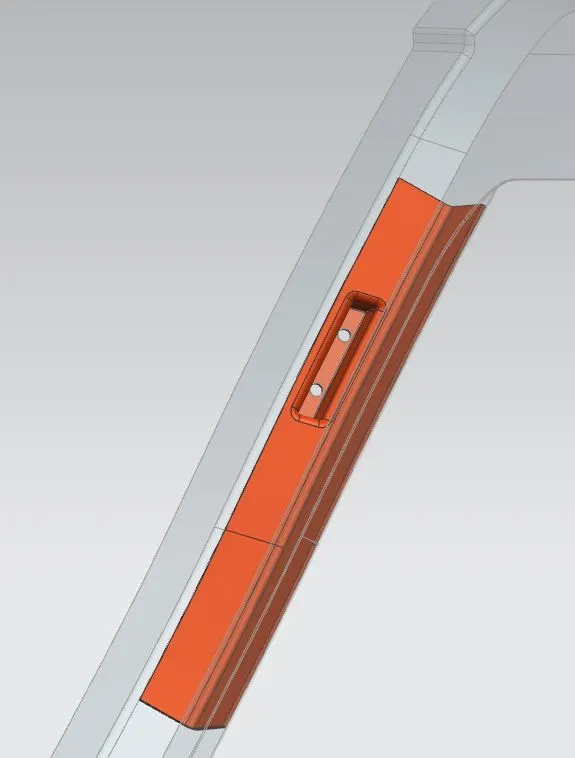
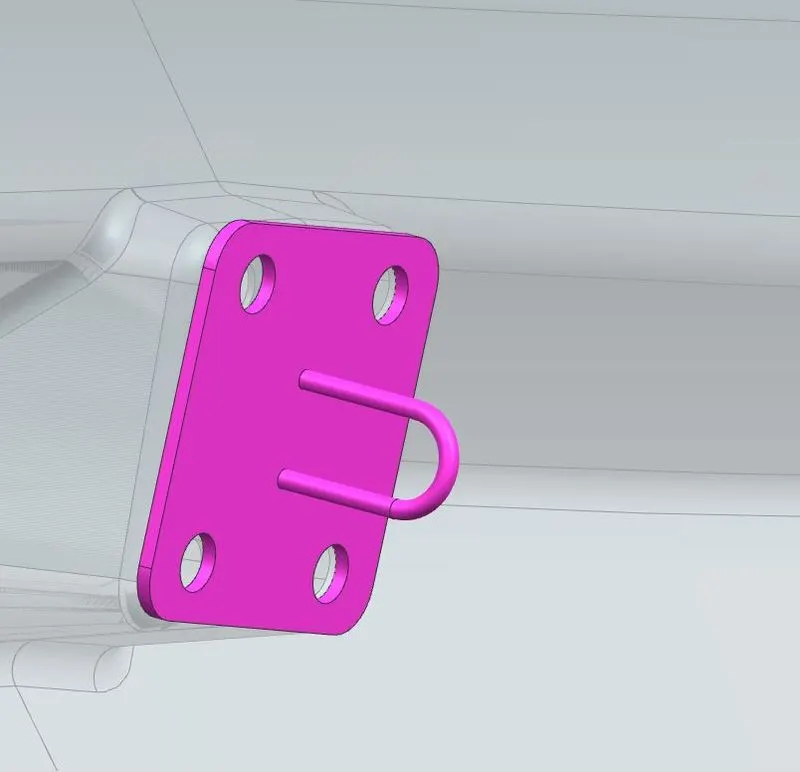
Latch and Striker:
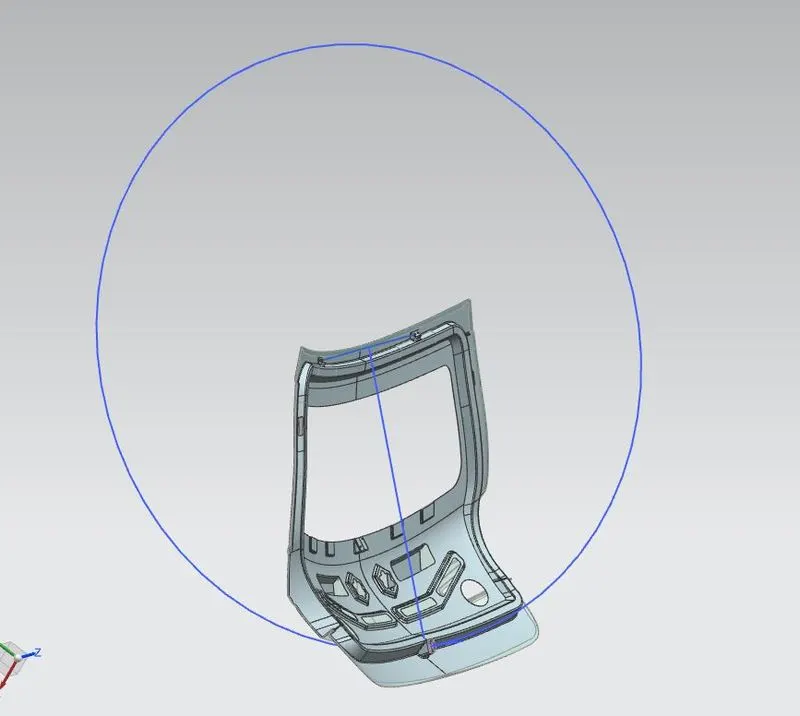
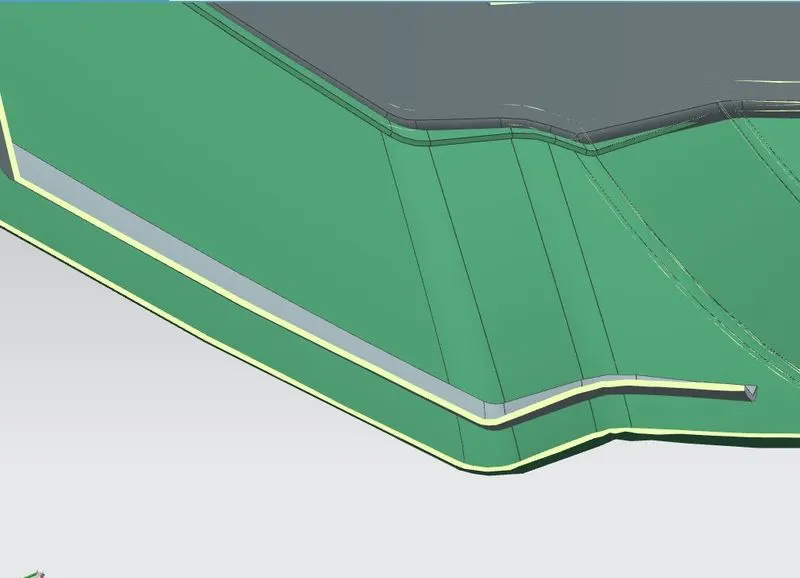
Mastic Seal:
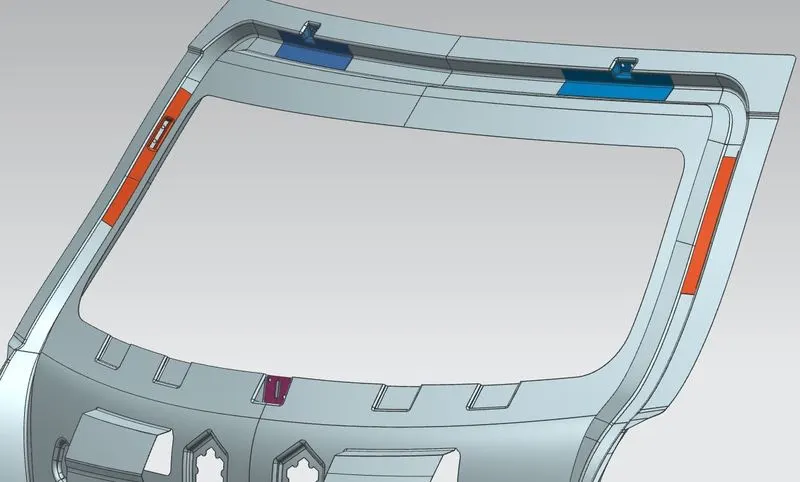
Inner Panel Assembly
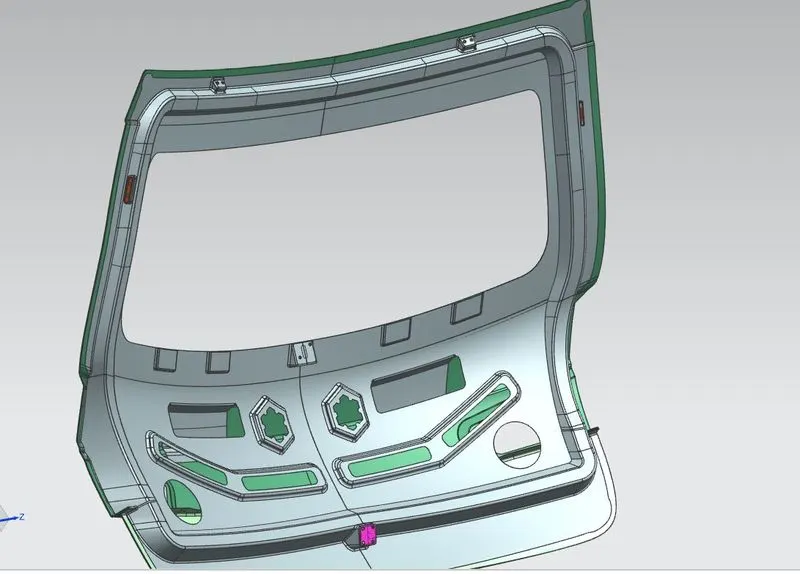
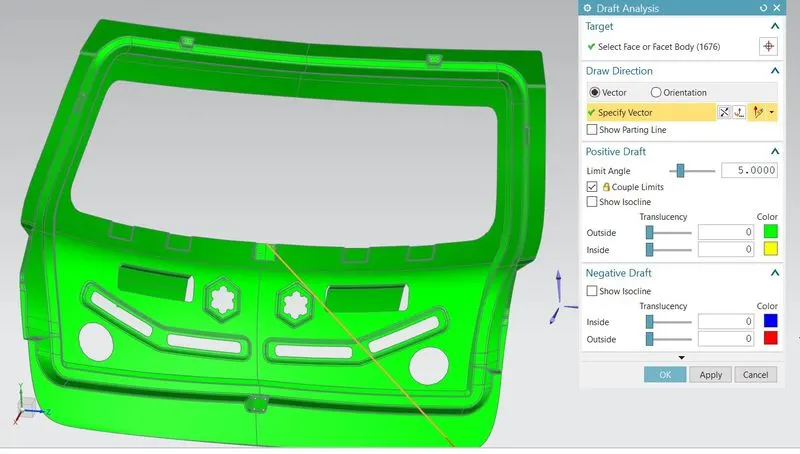
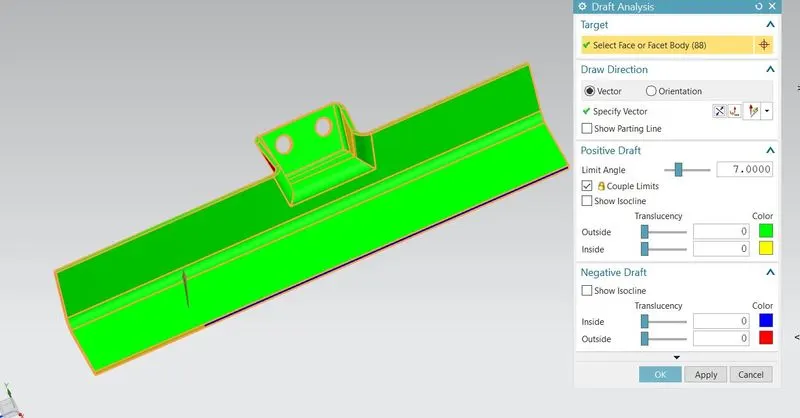
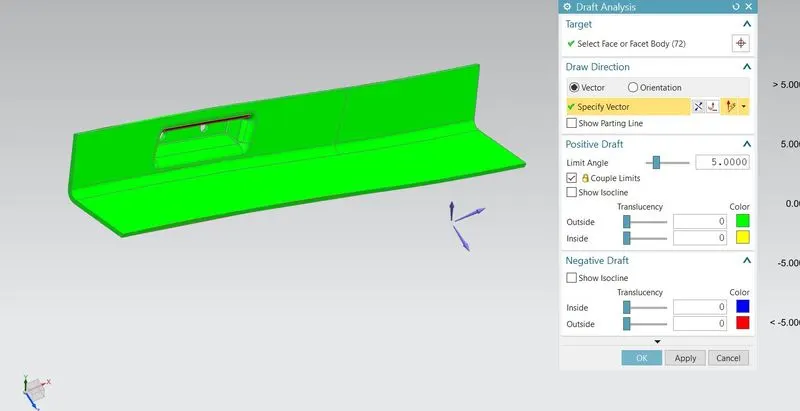
Draft Analysis:
Conclusion:
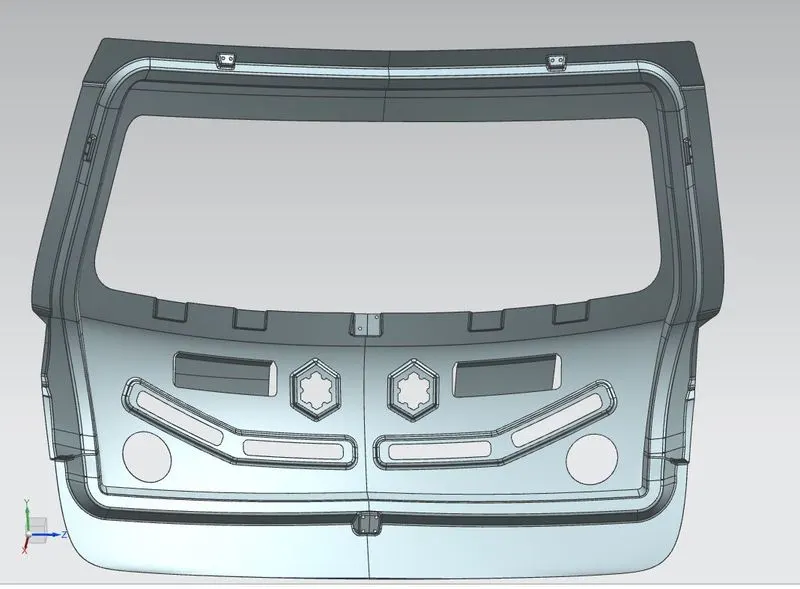
As per appropriate design methodologies, necessary reinforcements and embosses the Bac Door is modelled in the Siemens Nx