Design of backdoor
Aim: To design a Back Door using given Styling "Class A" Surface.
Introduction:
Back Door:
The backdoor or tailgate is the rear most part of the automobile which opens upwards,downwards or sideways to give access to the luggage space or seating area. In most of the cars the backdoor opens upwards. It is hinged to the roof and a gas stay support fixed at the body side outer for keeping the backdoor in open position.
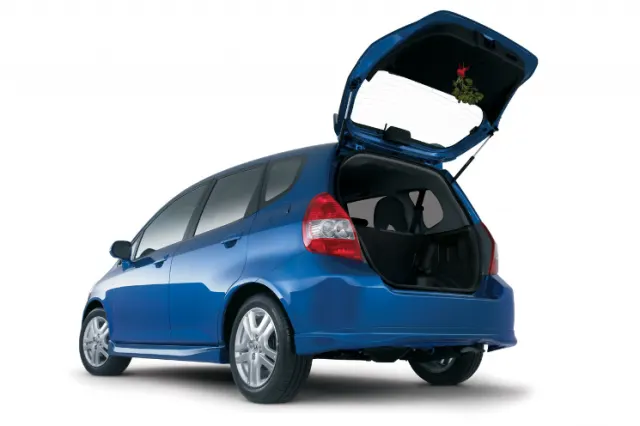
Top mounted Back door of a car
The material used in making the backdoor of car is mainly steel but nowadays Aluminium is also used in making the panels.
The main advantage of Aluminium over steel is that the density of Aluminium is very less as compared to steel so it reduces the overall weight of the car. But Aluminium is costly as compared to steel.
Different Sheetmetal processes used for manufacturing the Back Door
Deep Drawing:
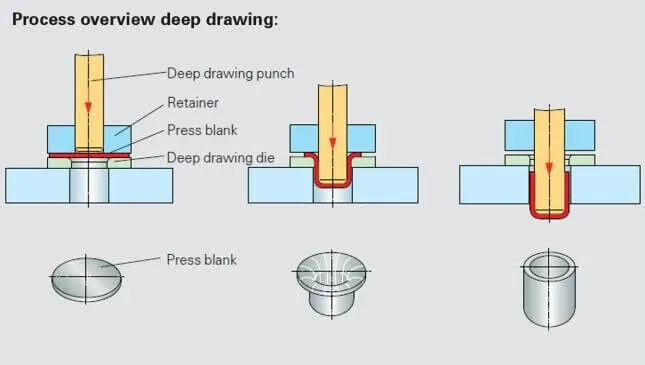
The metal deep drawing process is an effective method of manufacturing of cups, cans and other similar deep drawing products. The deep drawings having two main categories.
- First- stage drawing: The blank shape of metal is placed on the die and contact with the punch. When the metal specimen is flat piece of sheet metal used in forming and finish the product. Initially the punch moves in downward direction. The outer rim of blank is subjected to pure radial drawing (drawing toward in vertical axes) between die and blank metal. The metal become a bend and sliding over die and also stretched between die and punch. The metal in vicinity of punch head and contact with it bend and slide over radii and stretch over punch head.
- Redrawing: The components drawn from first stage again it is redrawn convert into more depth to form a cup shape in the die and punch. The second stage of drawing is called as redrawing.
Hemming
The inner panel is joined to the outer panel by the process of hemming.
At the corners the outer panel and the inner panel are joined together by hemming. No type of welding is done because it leaves a mark on the outer panel and damages the aesthetic beauty of the car.
Hemming is a forming operation in which the edges of the sheet are folded or folded over another part in order to achieve a tight fit. Normally hemming operations are used to connect parts together, to improve the appearance of a part and to reinforce part edges.
There are various types of hemming operations:
Conventional Die Hemming: In conventional die hemming, the flange is folded over the entire length with a hemming tool.
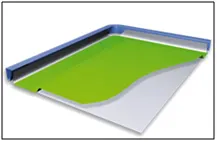
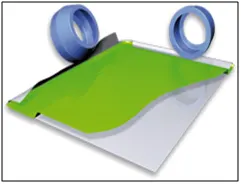
Roll Hemming: Roll hemming is carried out incrementally with a hemming roller. An industrial robot guides the hemming roller and forms the flange.
The main parts of the backdoor are:
- Outer Panel
- Inner Panel
- Hinge Reinforcement
- Gas Stay Reinforcement
- Wiper Motor Reinforcement
- Latch and Striker Reinforcement
Design:
Design is based on the tooling direction in order to satisfy the draft angle for manufacturability. Tooling axis is created as shown below
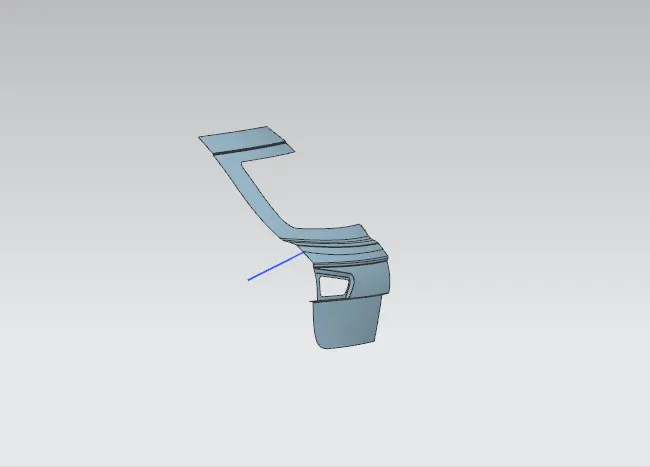
Fig 1: Tooling axis of back door
1. Outer panel:
The class A surface of the outer panel is provided to us by the styling team. From this surface we have to develop the inner panel and all the other parts and finally assemble them.
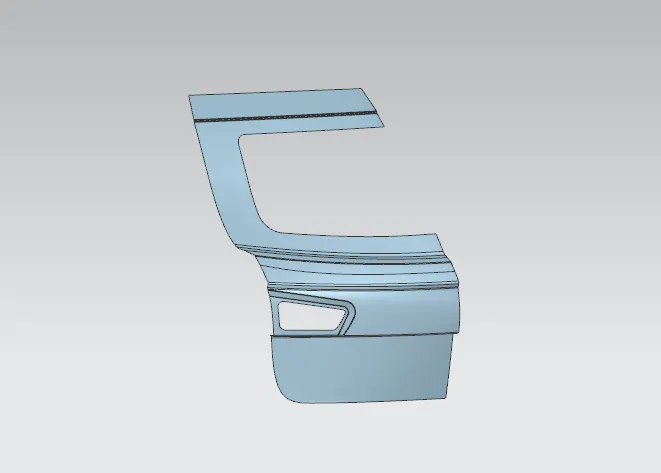
Fig 2: Provided Class A
Firstly we have to check for any surface discontinuity and irregularities. Small errors can be rectified but if there is any major error , should notify the styling team for corrections.
Final outer panel is created after creating the hemming surface and thickened for 0.75mm
2.Inner panel:
Considering the class A surface as reference we have to create the inner panel of the backdoor. The most important part of the inner panel is the sealing flange which decides how the backdoor will be mounted at the rear side of the car.
It also seals the rear side of the car and prevents the entry of dust and water from entering inside the car. The width of the sealing flange should be at least 25mm.
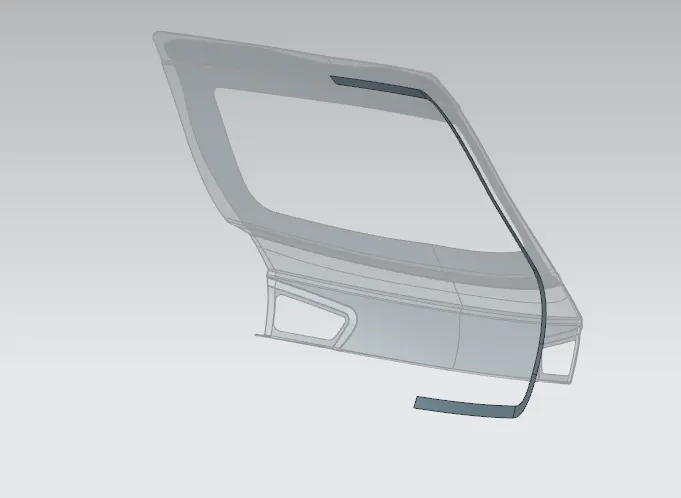
Fig 3: Sealing Flange
Emboss and Cutouts:
The embosses are provided in the inner panel for strengthening the part and also to dissipate the forces in case of rear collision to the outside of the car. Sometimes holes are also provided in the panel to maintain the CG of the panel.
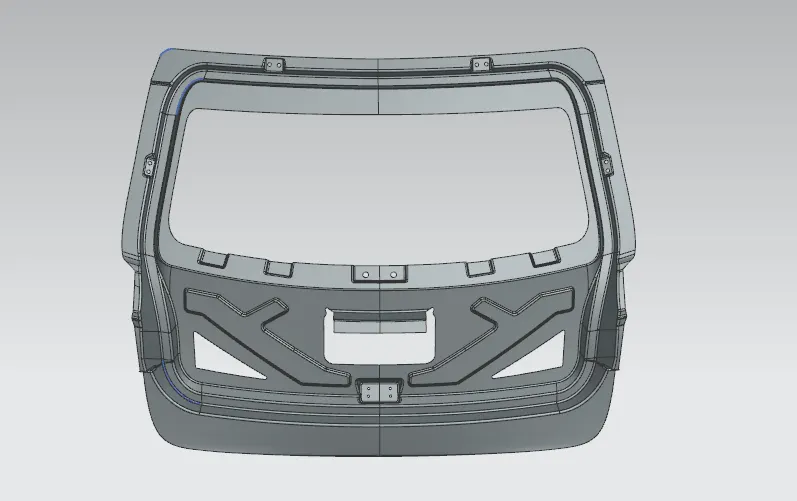
Fig 4: Inner panel front view
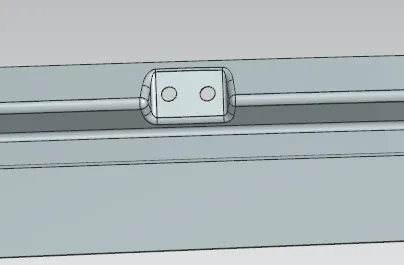
Fig 5: Hinge Emboss
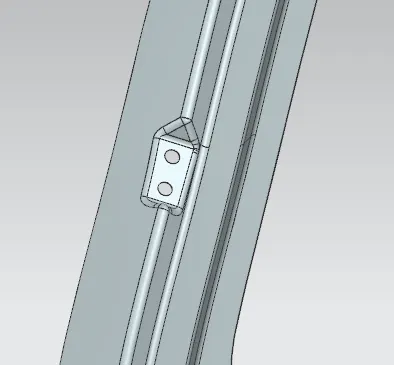
Fig 6: Gas stay emboss
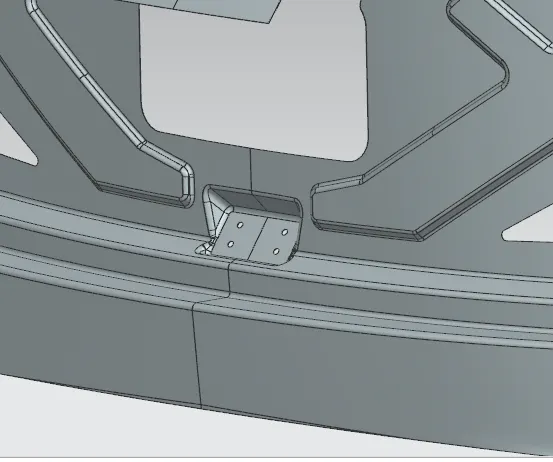
Fig 7: Latch & striker Emboss
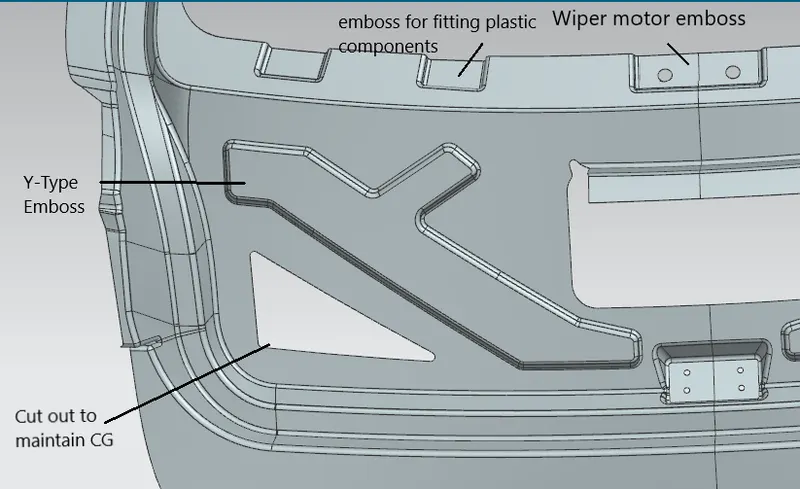
Fig 8: inner panel emboss description
The inner panel is mainly fixed to the outer panel by the process of hemming but still there will be rattling noise. So to avoid that extensions are created in the inner panel which is fixed to the outer panel by applying mastic seal. While designing 4-5 mm distance is given from the outer panel so that mastic seal can be applied in that area.
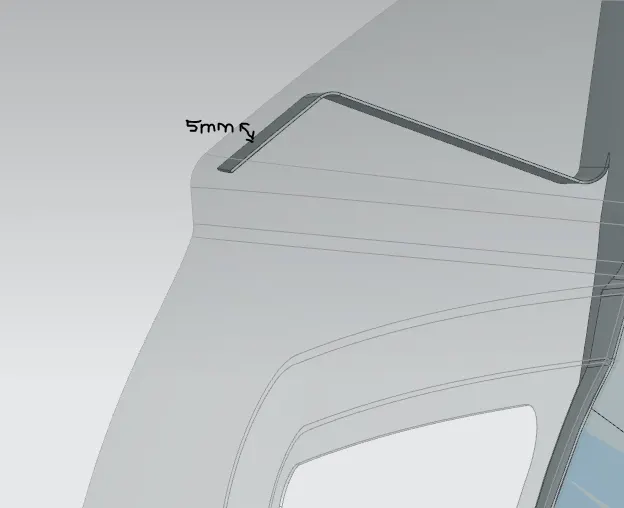
Fig 9: extension flange for mastic sealant
A 0.75 mm thickness is given to thicken inner panel
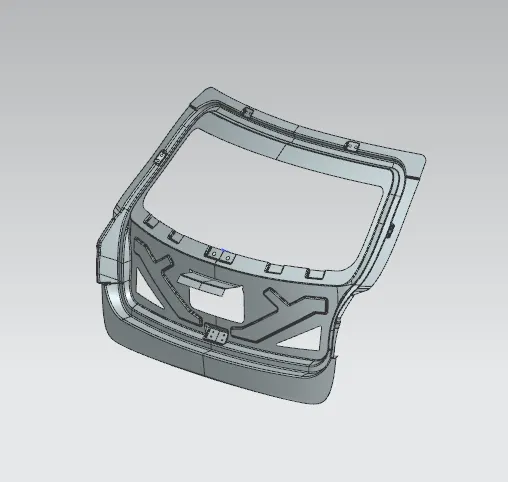
Fig 10: Isometric view of inner panel
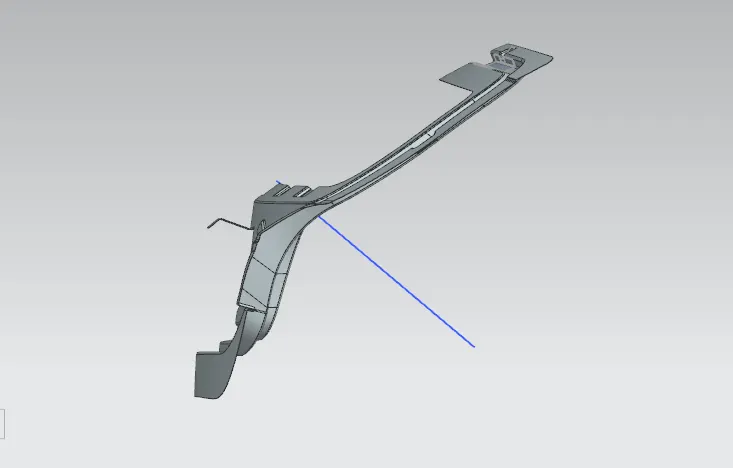
Fig 11: side view of inner panel
3.HINGE REINFORCEMENT:
The backdoor is hinged to the roof. The hinge may be fitted outside the backdoor or inside the backdoor. Reinforcements are designed to strengthen the localised part where the hinge is assembled.
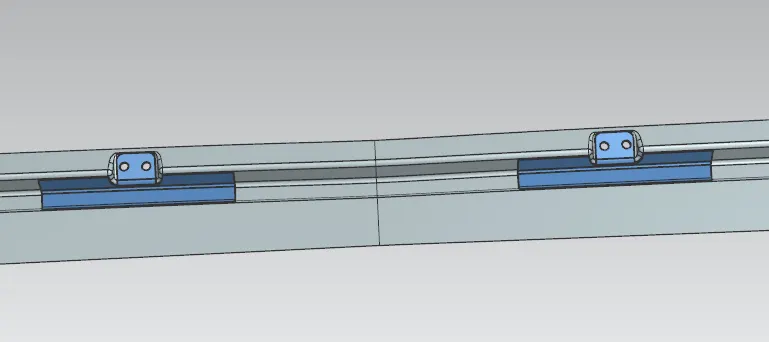
Fig 12: Hinge Reinforcement
4.GAS STAY REINFORCEMENT:
Gas Stay is that part which helps the backdoor to stay in the open position. It is either motor operated or manually operated.
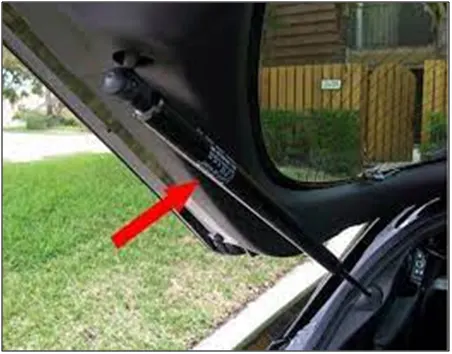
Fig13: Gas Stay image
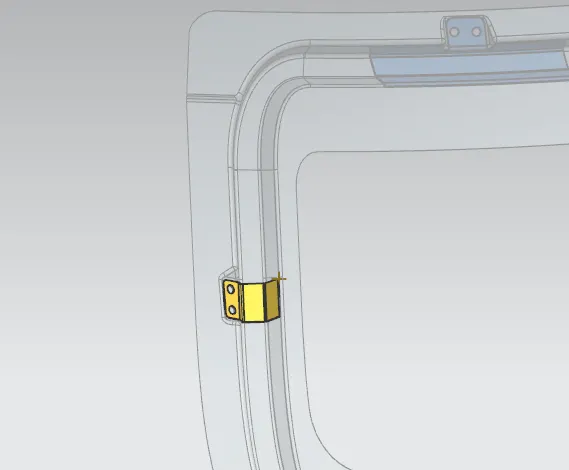
Fig 14: Gas stay reinforcement
5.WIPER MOTOR REINFORCEMENT:
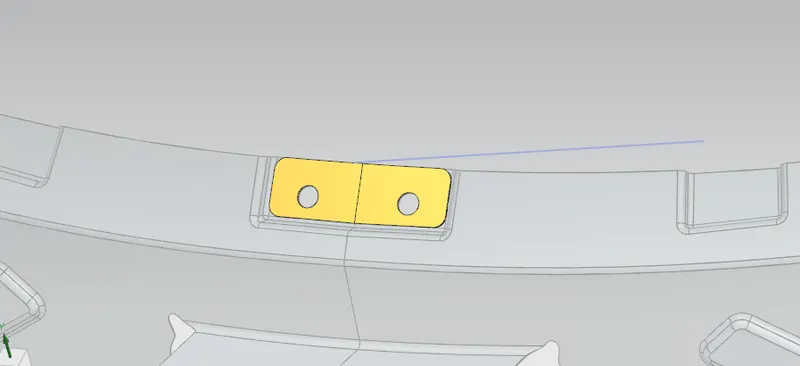
Fig 15: Wiper motor reinforcement
6.LATCH AND STRIKER REINFORCEMENT:
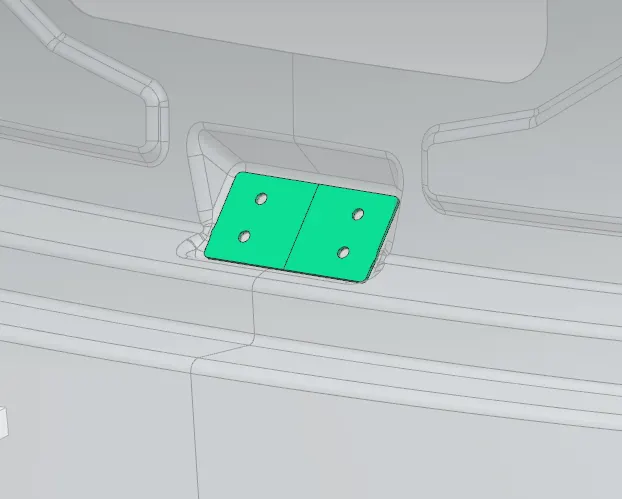
Fig 16: Latch & striker reinforcement
The fitment of latch and striker plays an important role in the designing of backdoor. At first the hinge is fixed, and by taking the centre point of the hinge axis and the centre point of the latch, draw a circle. the centre of the latch should be perpendicular to the circular trajectory.
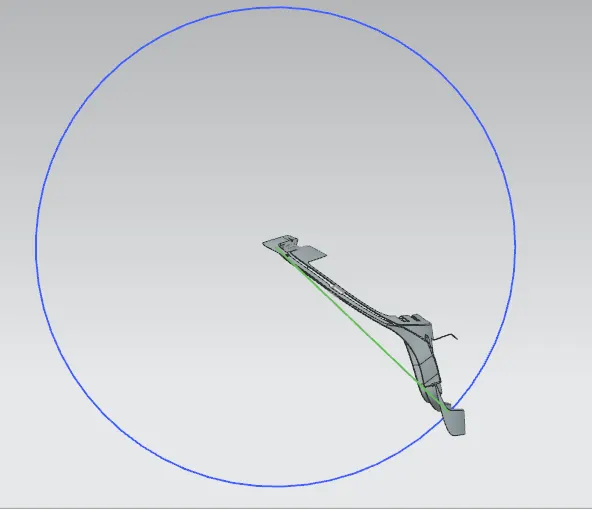
Fig 17: Latch & striker trajectory
All the reinforcements have a thickness of 1.5mm
Draft analysis
We check whether the inner panel that we have designed can be deep drawn. We use Draft analysis for this purpose. It is based on different colour zones that indicate whether the part can be manufactured or not.
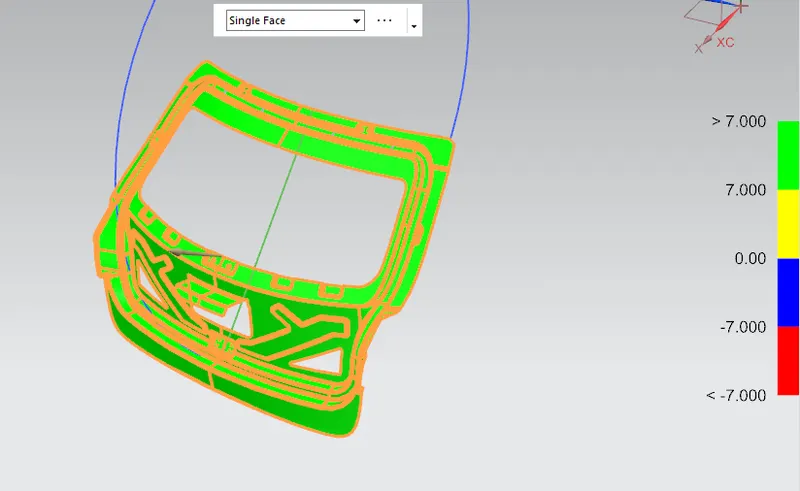
Fig 18: Draft analysis of inner panel
Green shows it has more than 7 degrees of draft for manufacturability which satisfies the condition for draft angle.
Hemming Design
The outer panel and inner panel is assembled using the hemming method.
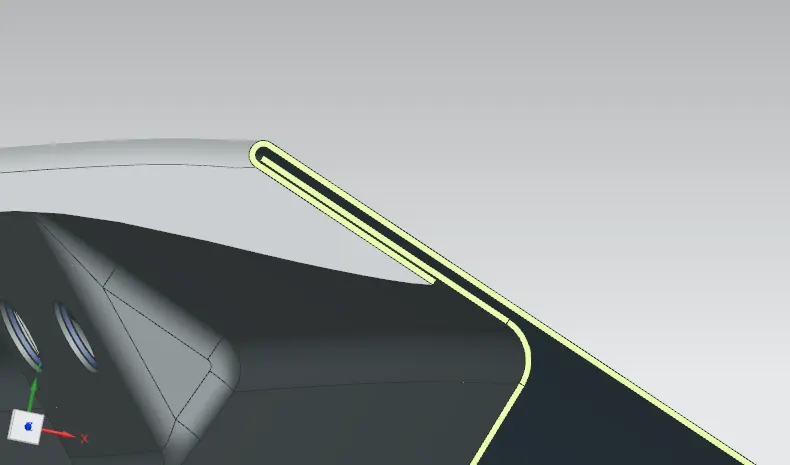
Fig 19: Hemmed outer panel
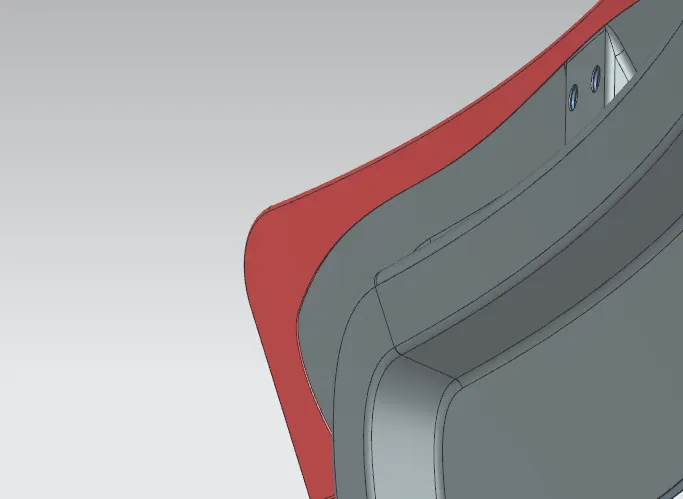
Fig 19.1: Hemmed outer panel
Final Assembly:
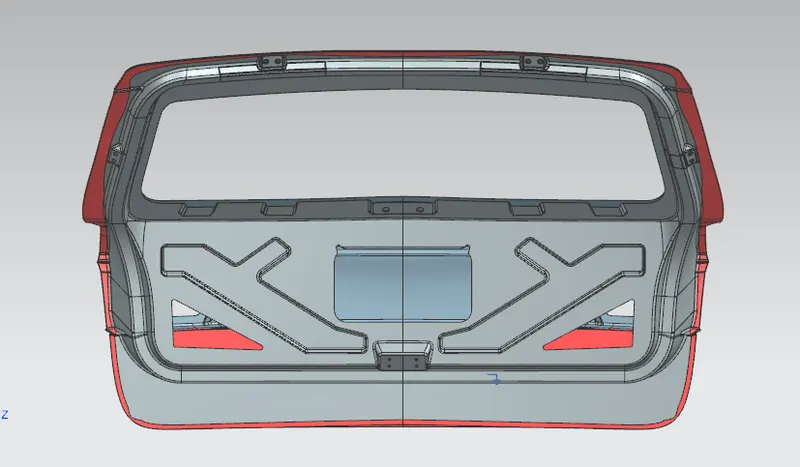
Fig 20: Final assembly back view
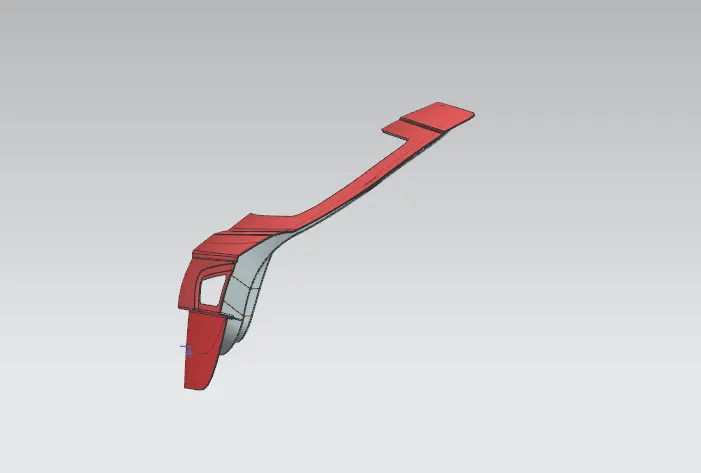
Fig 21: Final assembly side view
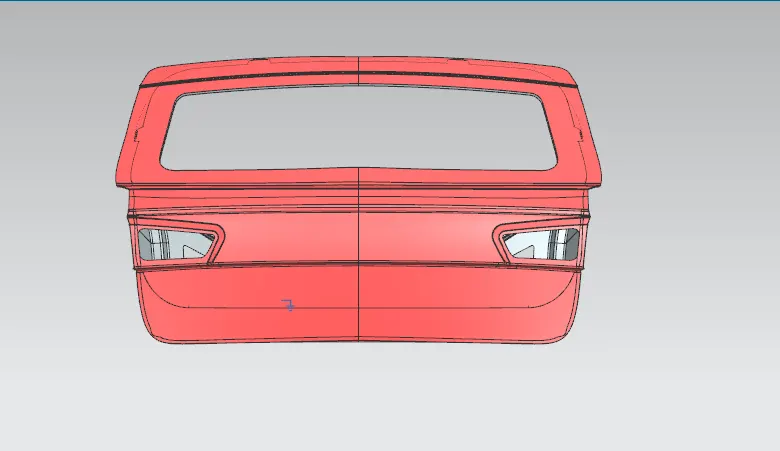
Fig 22: Final assembly front view
Conclusion:
- Hence, back door design was done using UG NX
- Draft analysis was made to ensure manufacturability for deep drawing process.