Design of backdoor
CAR BACK DOOR DESIGN
Aim: To design back door of car using given outer class 'A' surface.
What is back door of a car?
A door which is located at the rear side of a car which gives access for the boot space to store luggage, spare wheel etc.
These doors can be operated manually or electric powered. In most of the luxury cars door is electrically operated.
Types of doors based on working position,
- Top Mounted Door
- Side mounted Door
- Bottom Door
Gas Stay Powered:
Electric Operated:
Back Door Assembly:
- Inner panel
- outer panel
- hinge and its reinforcement
- wiper motor reinforcement
- latch & stricker and its reinforcement
Another form of resistance welding is Projection Welding. This process involves fusing a fastener’s embossed or coined projections to the metal base material to form a weld. As the materials never melt, they do not intermix. This means the resulting weld is more like a forging of the materials.
Spot welding is only suitable for a small selection of base materials. Low carbon steel is the most suitable material for spot welding. This is because it is more resistant to electricity and has a lower thermal conductivity than the copper electrodes used to create the required electrical current.
High carbon steels and aluminium alloys can form brittle welds that don’t last with the spot welding process. Pure aluminium can qualify for spot welding but requires higher current levels. This is because it has a lower resistance to electricity than low carbon steel.
The outter panel upper and outter panel lower are joined through the spot welding .So there must be no gap between the outter panel upper and outter panel lower.
Design of Back door in NX CAD:
Door parts thickness is cosidered below,
- Outer Panel - 0.75 mm
- Inner Panel - 0.75 mm
- Reinforcements - 1.5 mm
BACK DOOR DESIGN
The design consideration of back door are ,
- Visibility Criteria
- Force Dissipation
- Latch and Stricker Positions
- Hinge Position
- Gas Stay Position
- Hemming and Relief Areas
PARTS OF BACKDOOR
- Back door outer panel (upper and lower)
- Back door inner panel
- Hinge reinforcements
- Gas stay reinforcements
- Latch and striker reinforcements
- Wiper motor reinforcements
1. BACK DOOR OUTER PANEL
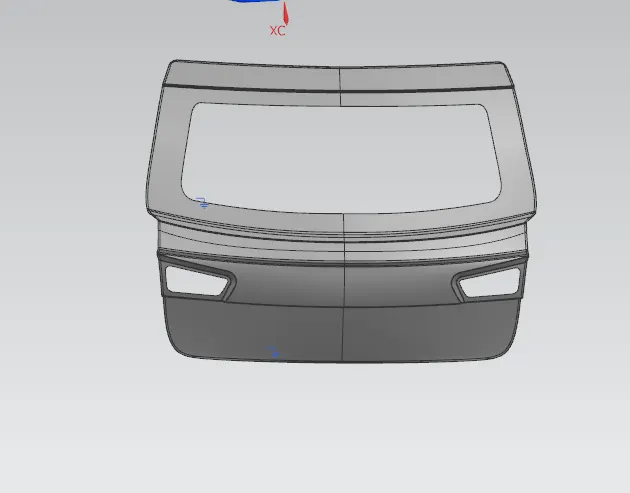
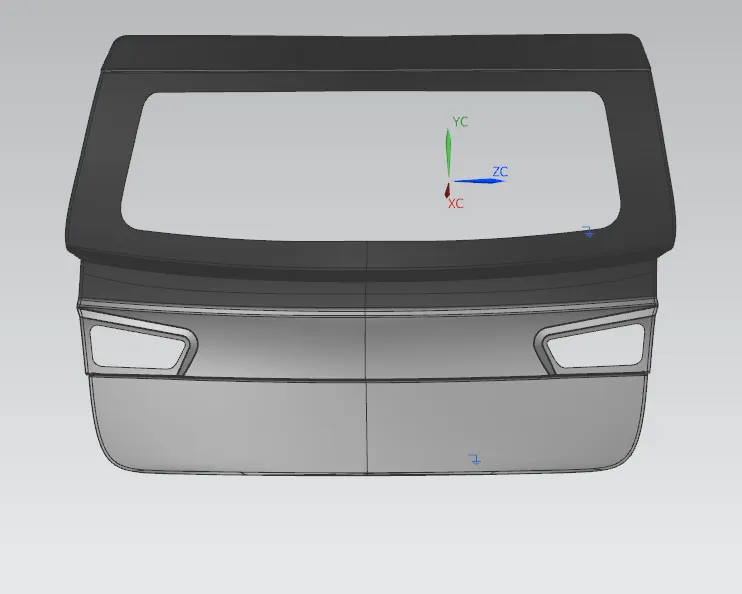
In this design back door is created as two different parts back door outer panel upper and lower. This outer panel designed based on visibility criteria and proper reliefs provided at the corner for hemming operation .The thickness of outer panel is 0.75 mm .
Backdoor Outer Panel Front View:
Backdoor Outer Panel Back View:
2.BACK DOOR INNER PANEL
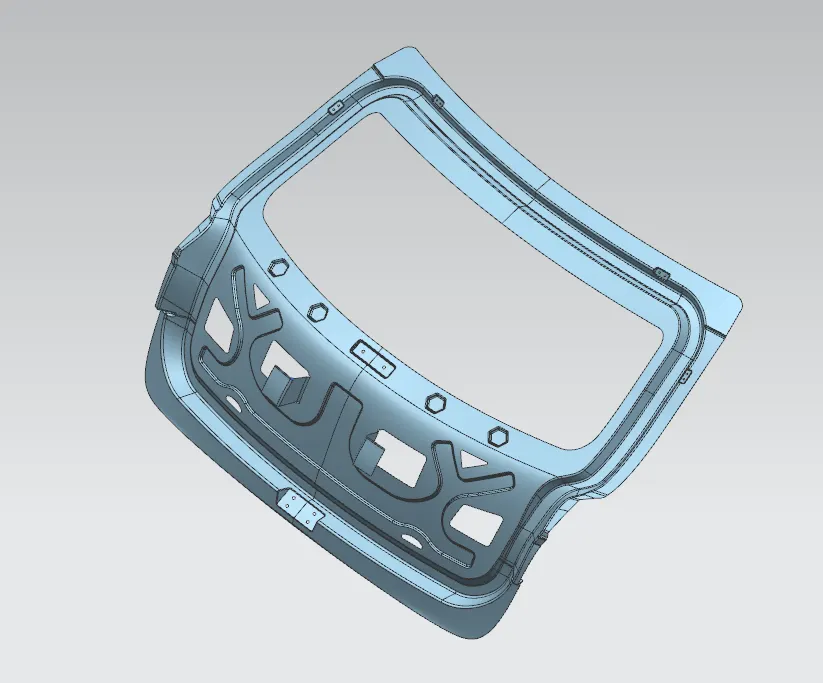
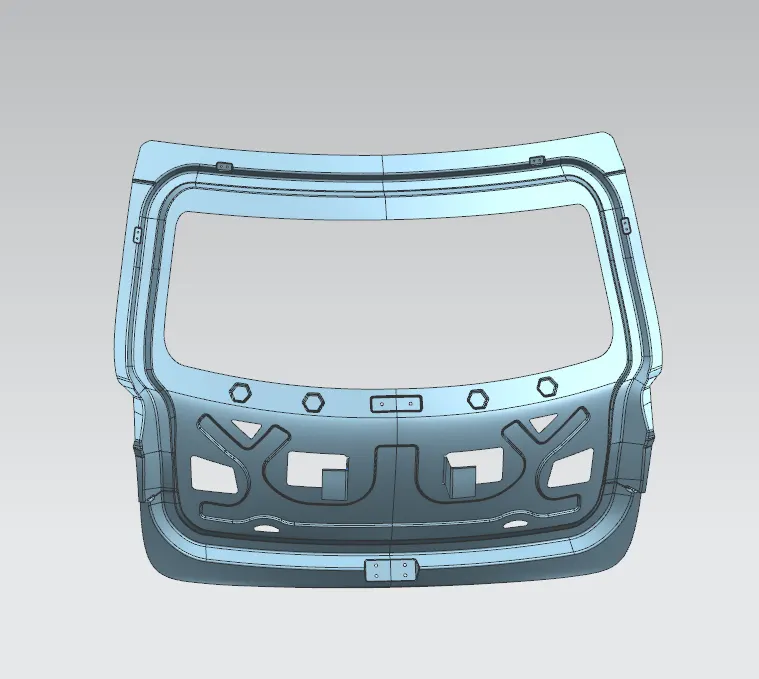
Back door outer panel designed based on hinge, gas stay, wiper motor position and reinforcement as well as visibility criteria .Suitable tooling direction is created for trouble free manufacturing process.In this design stamping operations created based on this tooling direction. Embosses are provided in this design for force dissipation. In this design appropriate clearance given in mastic areas .The inner panel thickness is 0.75 mm
Backdoor Inner Panel Isometric View:
Backdoor Inner Panel Front View:
Backdoor Inner Panel Side View:
- Force dissipation
This inner panel design created by considering the force dissipation criteria.The embosses are created in such a manner that force will dissipate in to sides of the back door during a collision and prevent reaching inside the passenger cabin.Y and V embosses provided in the back door for force dissipation and improve the strength of the metal.
fig.4.3 Embosses and force distribution
- Mastic Area
Mastics sealants used for joining of outer panel and inner panel. It increase the strength of back door and good NVH. So accurate clearance given for mastic sealant.
fig.4.4.mastic area
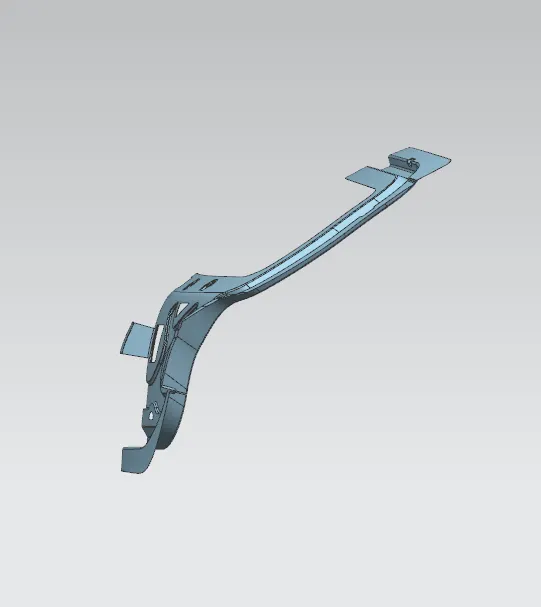
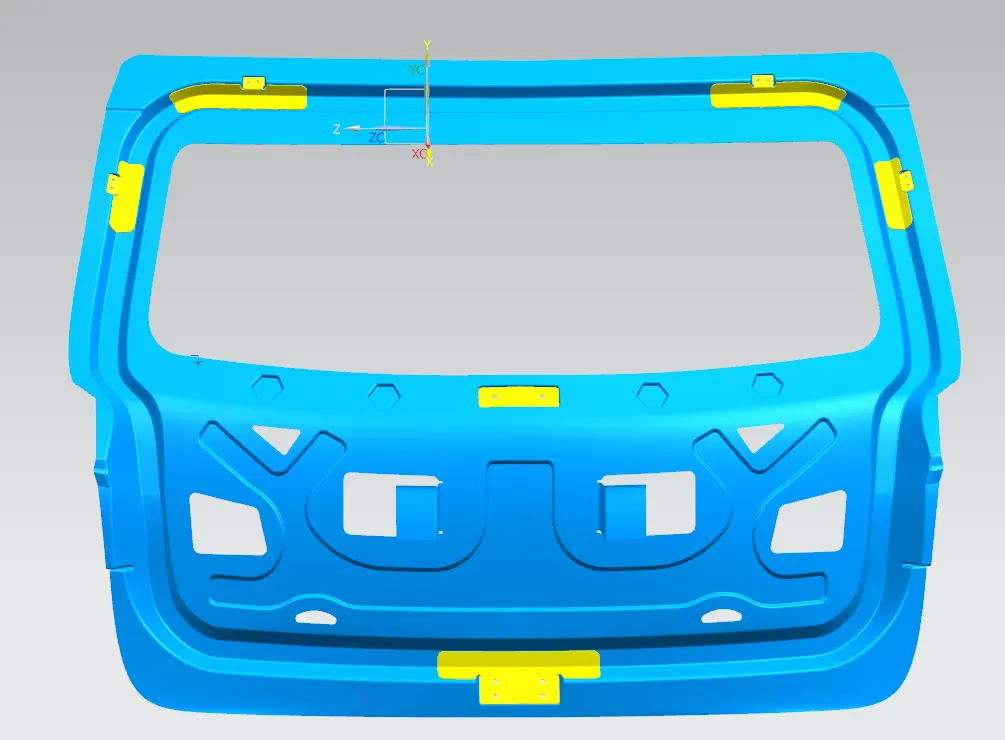
Reinforcements in inner panel
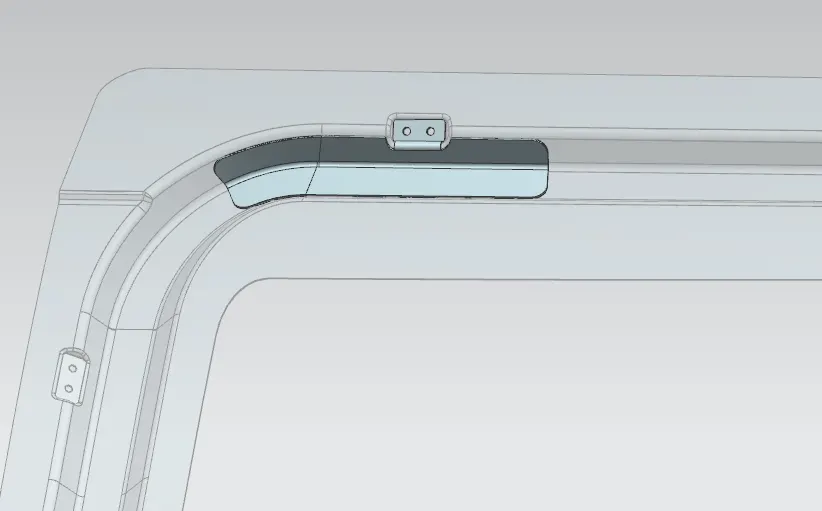
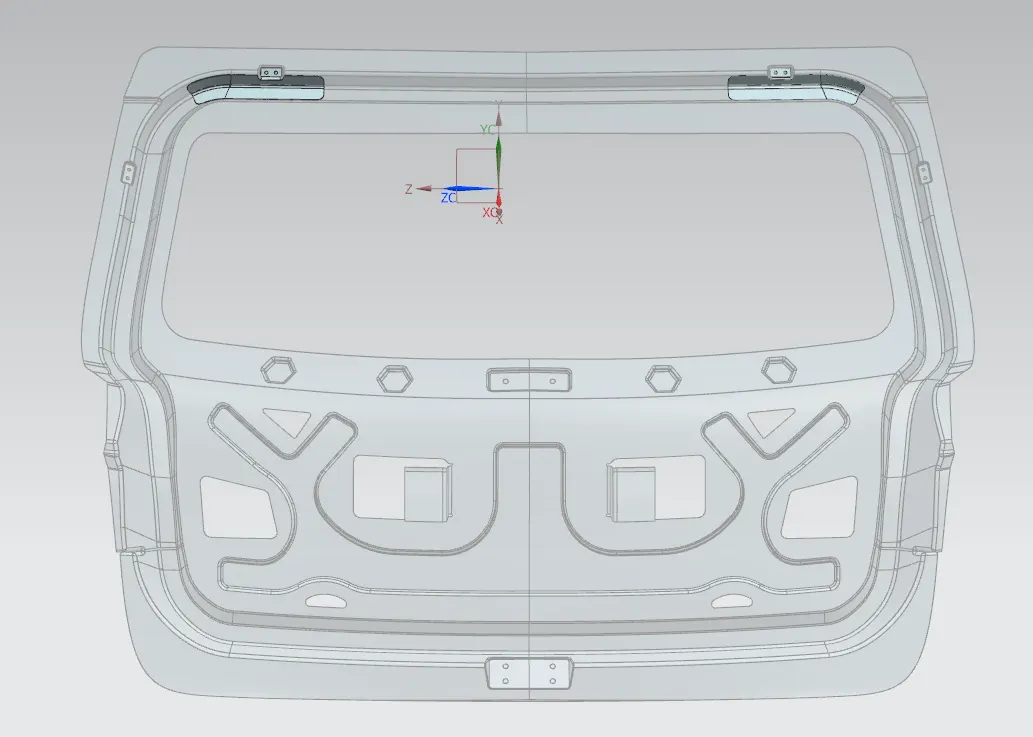
- Hinge reinforcement
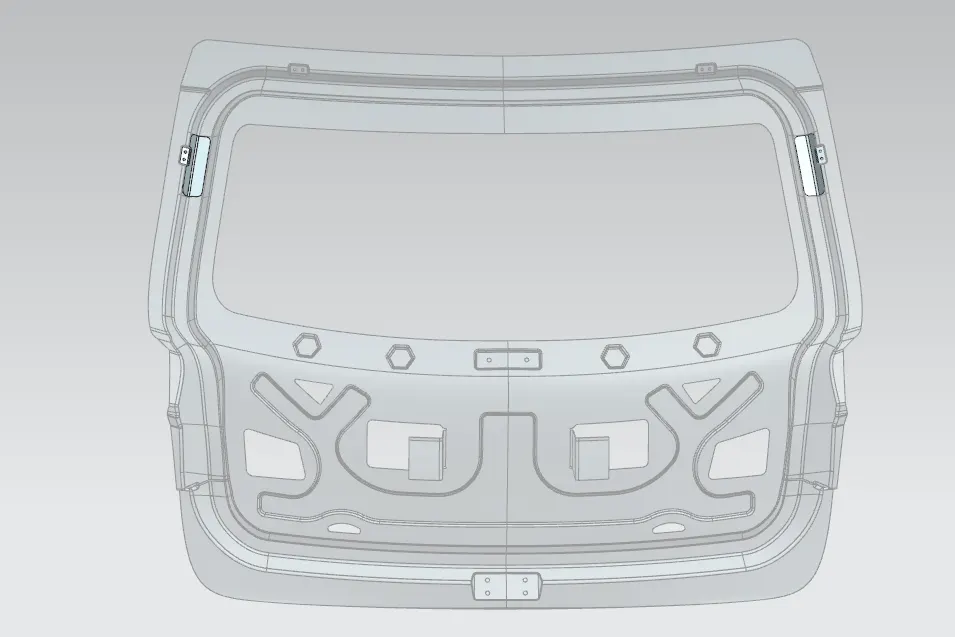
In this design hinges provided on the top side of the door. Appropriate reinforcement given for hinge mounting areas to improve the strength.
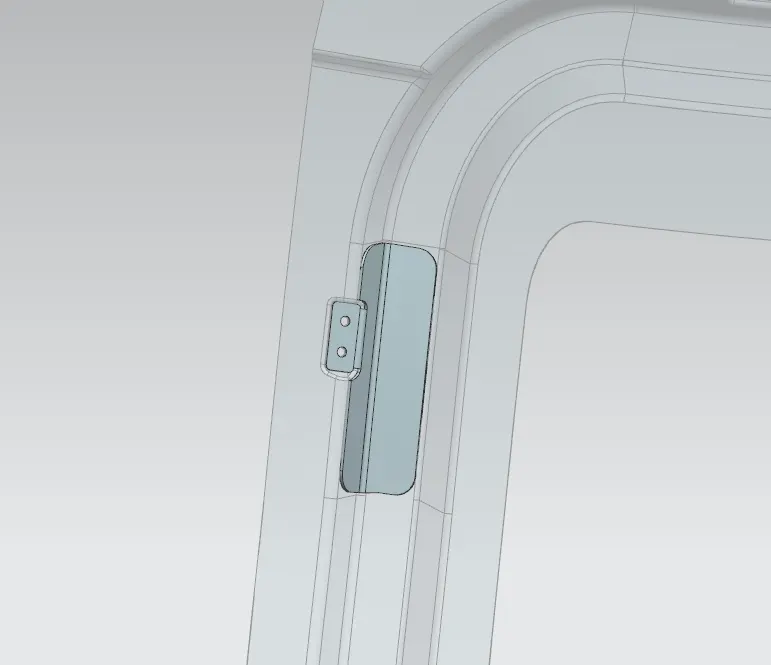
- Gas stay reinforcement
Gas stays support the weight of the back door while they are open. More load act on this region ,So suitable reinforcement provided for better strength
it is spot welded on the inner panel.
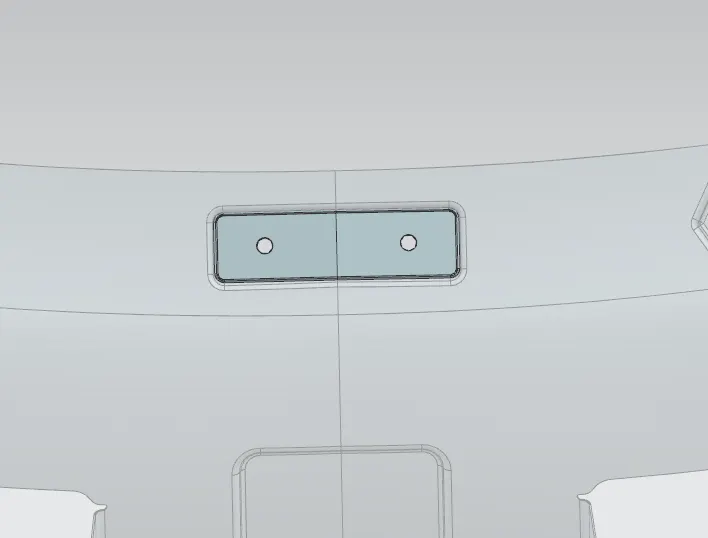
- Wiper motor reinforcement
Reinforcement provided in this region for fixing the wiper motor.
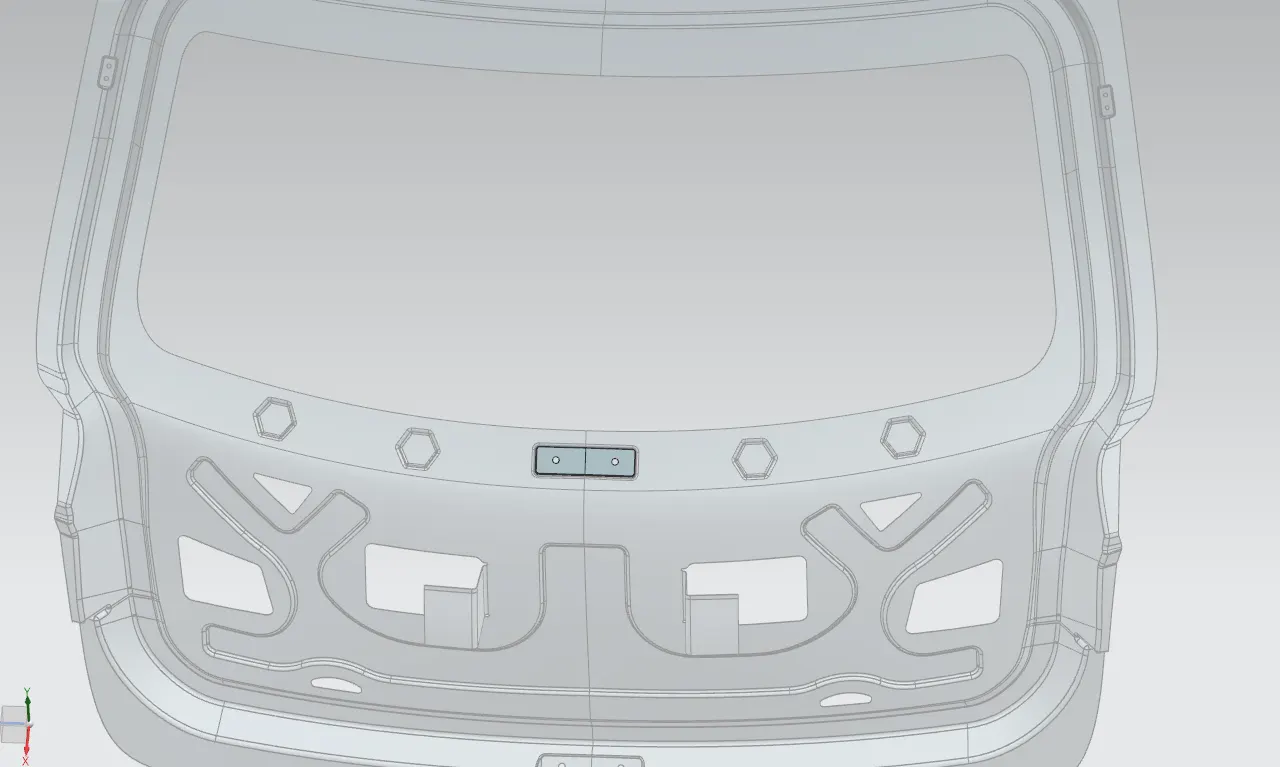
Latch and striker reinforcement
The striker is designed to create a tight fit between the door and the seal on the cab. The door open and shut several times in a day.So more force acting on this area.The reinforcement given in the latch and striker mounting area to increase the strength.it is spot welded on the inner panel
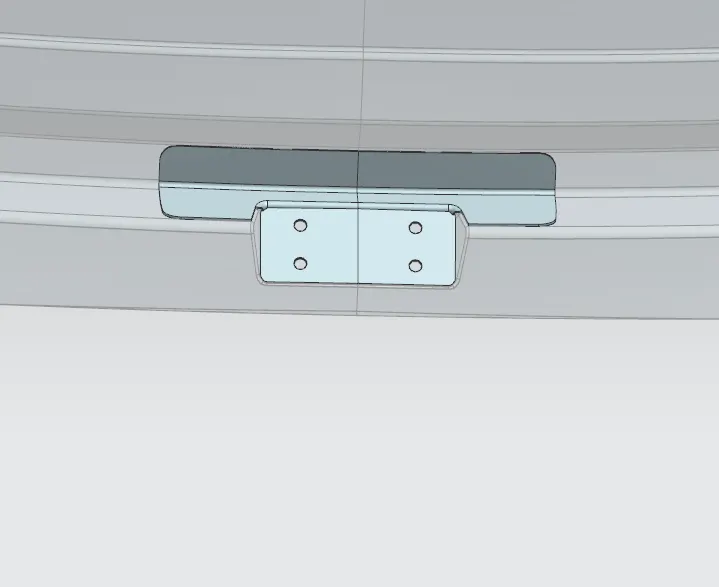
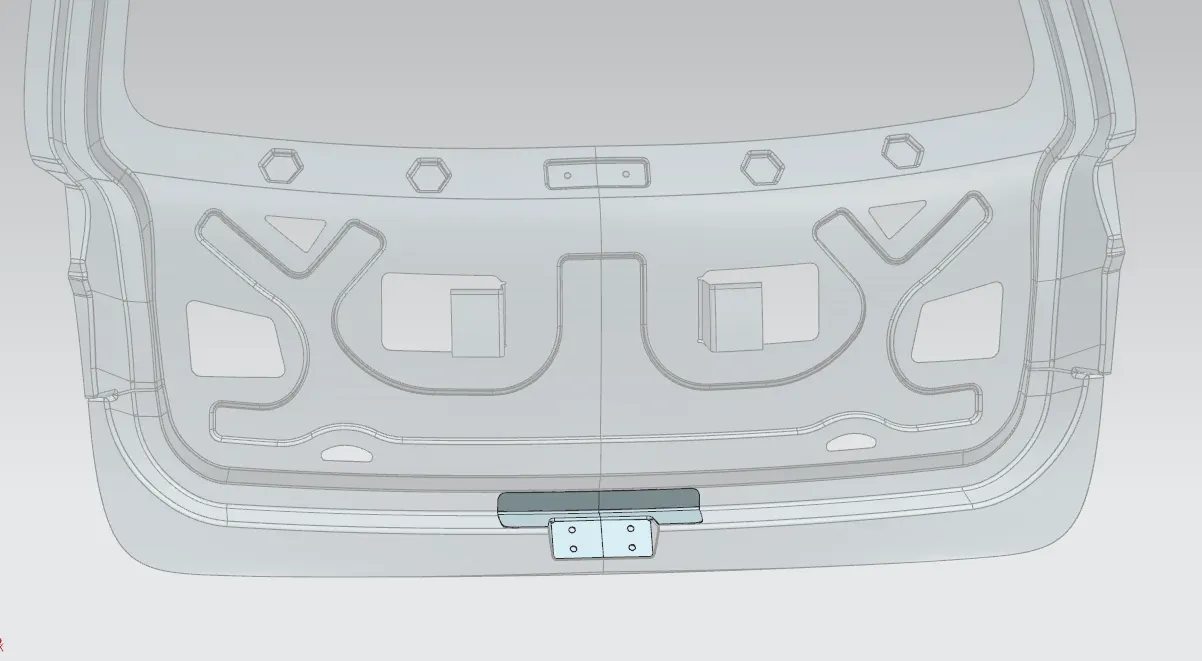
All reinforcement parts spot welded on the inner panel for better strength on that area.
- trajectory
The trajectory is created to position the latch and striker .latch system must be able to catch the striker of the door the while closing. Circle is drawn from the hinge axis. The striker follow this path.
fig.4.8 trajectory
- Hemming
Hemming is a technology used by the automotive industry to join inner and outer closure panels together (hoods, doors, tailgates, etc.).In addition adhesive bond provide for excellent joining of panels it also reduce vibration .here this design 0.2mm clearance provided for hem glue . At the edges hem relief is given:-
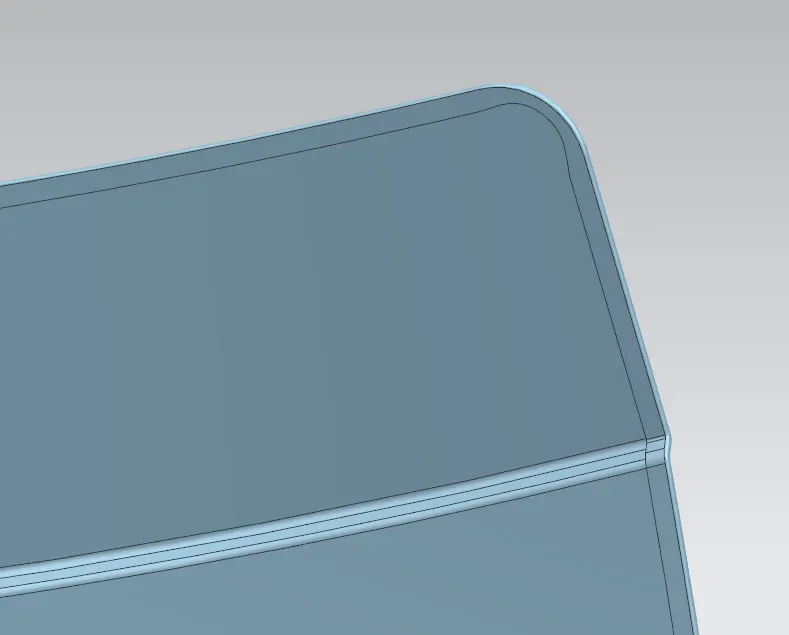
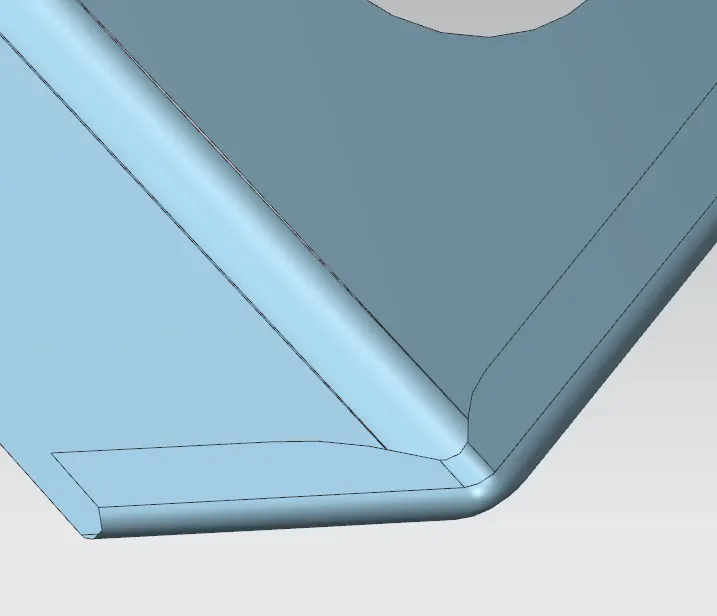
fig4.9 hemming area and corner relief
- Proper corner relief provided for trouble-free hemming operation
5.0 Draft Analysis
draft analysis performed to check the designed part is suitable for stamping operation with respect to the tooling direction.We can find out the errors by using this feature.The minimum draft angle is 7.The negative draft is denoted by different colour so we can easily find out the unsuitable areas.
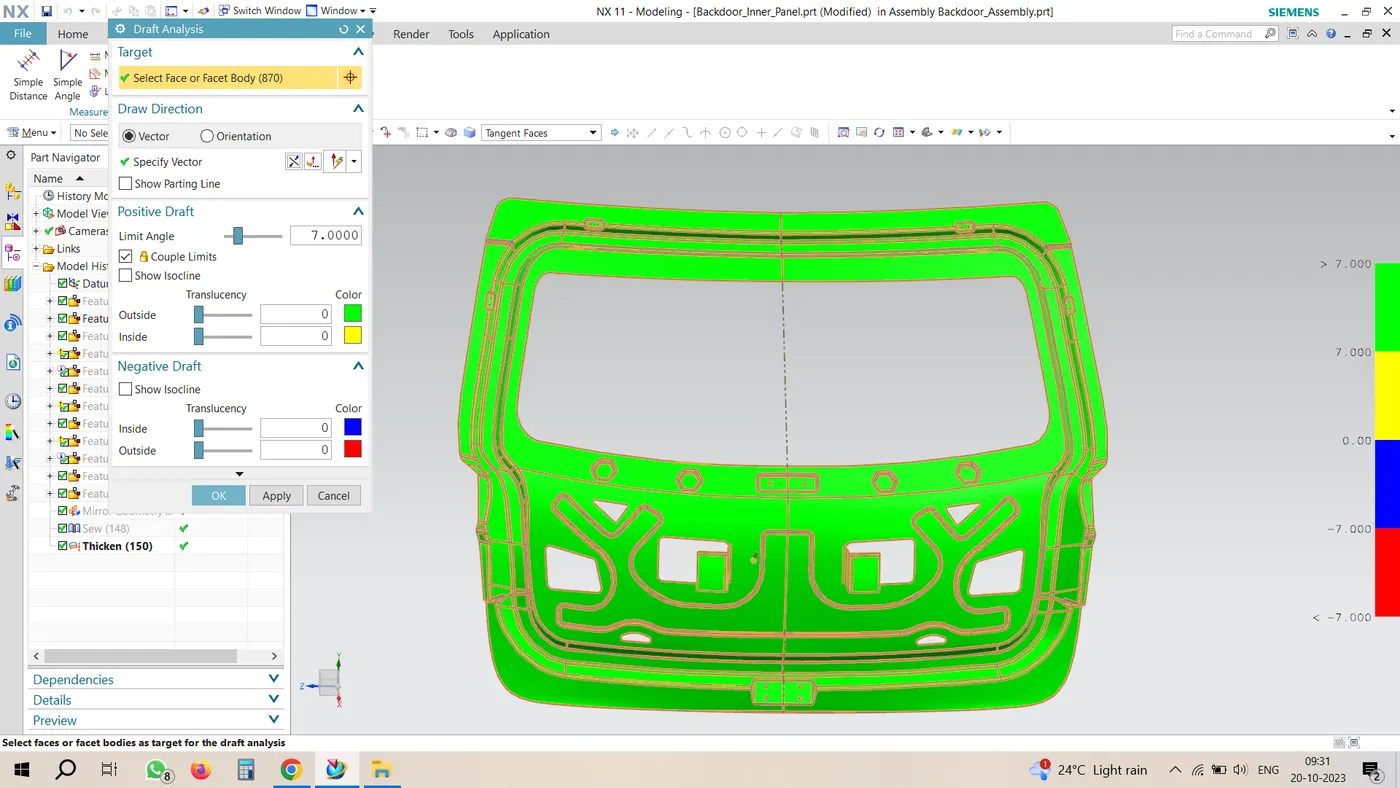
fig .5.draft analysis
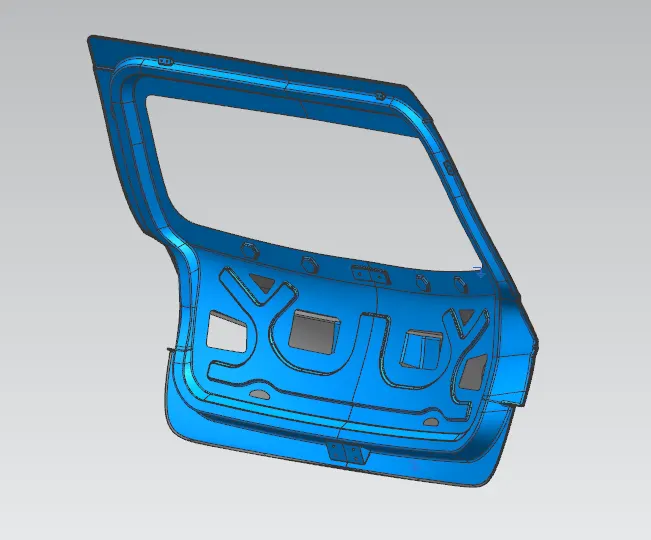
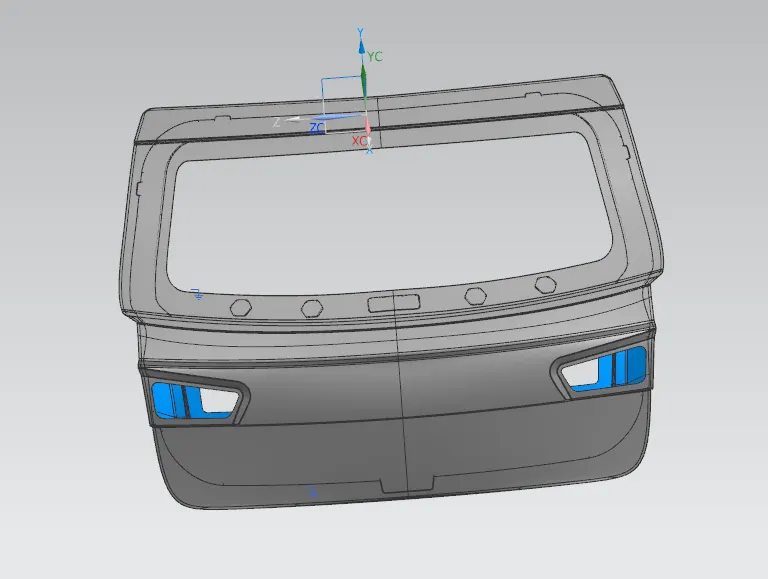
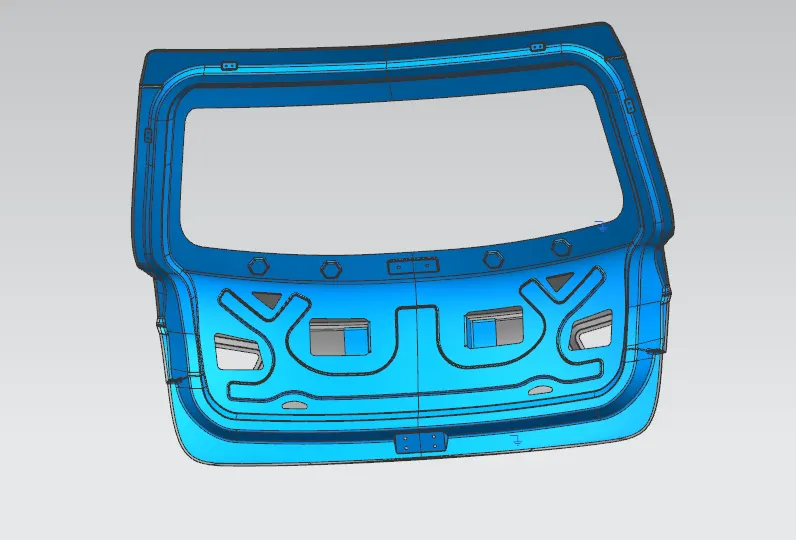
6.0 Final Assembly:-
Final Assembly of the below mwntioned parts:
- Back door outer panel (upper and lower)
- Back door inner panel
- Hinge reinforcements
- Gas stay reinforcements
- Latch and striker reinforcements
- Wiper motor reinforcements
Final Assembly Isometric View:
Final Assembly Front View:
Final Assembly Back View:
7.0CONCLUSION
The backdoor is designed based on design considerations .Required reinforcement provided on inner panel. The design is checked by using draft analysis feature .
Thus the back door was designed and developed from the given styling surfaces with essential reinforcements and emboss. To satisfy the manufacturing requirements draft analysis was also done on the inner panel.