Design of backdoor
Design of Backdoor
AIM
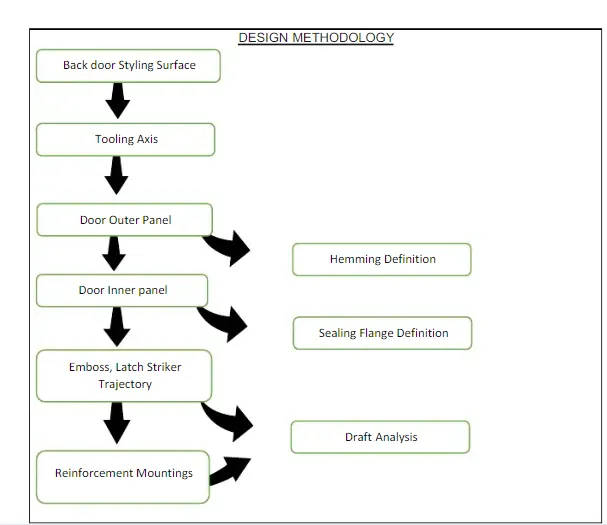
Use the provided styling surface to come up with a back door design, use appropriate design methodologies, and provide the necessary reinforcements and embosses
Objective:
- To design a back door of a car with an inner panel, outer panel and reinforcement for hinges, tail gate, Wiper motor and latch.
- The inner panel is subjected to the draft analysis to ensure whether it is satisfying the deep drawing requirements for the tooling direction that is created in the design.
-
Class A Surface Was Received From The Styling Team. My Objective Is To develop the Class ASurface Received into Manufacturable Product Design Following The OEM Design Standards Using CAD.
Summary:
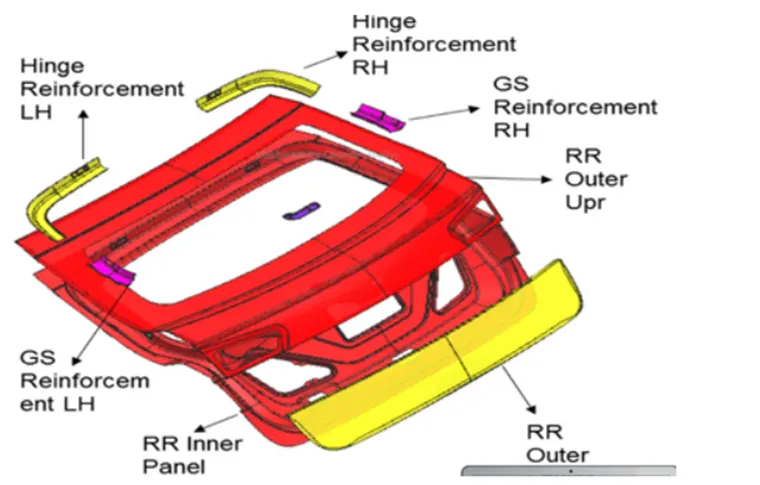
- Inner panel-Outer panel
- Hinge reinforcement
- Gas stay reinforcement
- Wiper motor reinforcement
- Latch/striker reinforcement-Hemming
- Top mounted
These type of back doors are used in a station wagon, pickup truck and some other sports utility vehicles. Today’s modern cars use top mounted tailgating systems which are both powered and also gas stay supported. These tailgates provide greater rear visibility compared to other types.
- Side mounted
It is generally used in van type MPVs, SUVs, pickup truck vehicles. These side mounted door/barn doors are a lot easier compared to top mounted ones. These doors are generally small in size and can be easily accessed. These doors are more convenient for the goods handlers carrying lengthy objects, long pipes where one door is kept open. It also saves accidental head impacts. It is a lot easier to load /unload things in vehicles having side-mounted doors.
- Bottom mounted
Bottom type or split type backdoor system is used in estate type cars, pickup trucks and some luxury SUVs. These are most convenient type of backdoor in which the bottom split is used as a support or even as a table for the touring people.
Materials Selection:
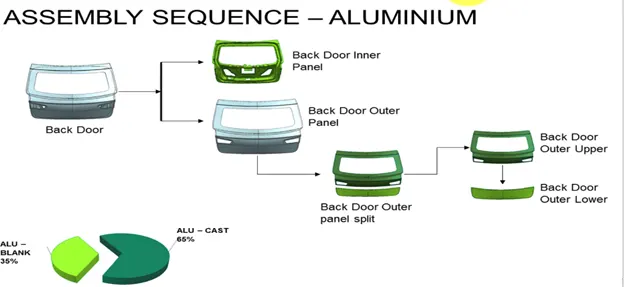
The selection of material plays a major role in determining the overall weight of the back door. The common materials used are Steel & Aluminum. The density of Steel is higher than Aluminum thus adding more weight to the door. The material used in the manufacturing of the backdoor depends upon the budget of the car, most low cost vehicles use steel as it is cheaper compared to Aluminium. Another aspect to be noted is that, if casted Aluminum parts are used instead of deep drawn steel parts there is no need of reinforcements and the overall weight of the car is reduced by approximately 5-10kg thus increasing the performance of the vehicle. Also the draft angle for casted parts is around 3 degrees while for deep drawn parts is around 7-10 degrees which helps in increasing the luggage/ cabin space.
BACK DOOR OUTER PANEL
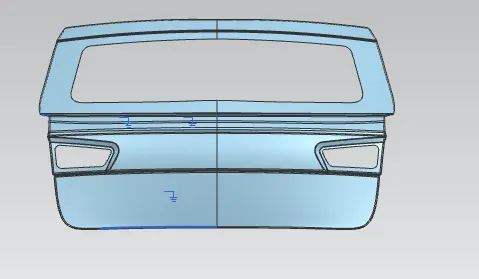
In this design back door is created as two different parts back door outer panel upper and lower. This outer panel designed based on visibility criteria and proper reliefs provided at the corner for hemming operation .
INNER PANEL
The inner panel is a component which is used for strengthen the door assembly and it is one of the most important components on which all accessories are mounted like hinges, glass guide channel, molded trim, latch etc. the possible method is the integration method. In the integration method, the part is stamped out of a single blank. This reduces the number of tools needed, the assembly cost and eliminates any fit ability problem.
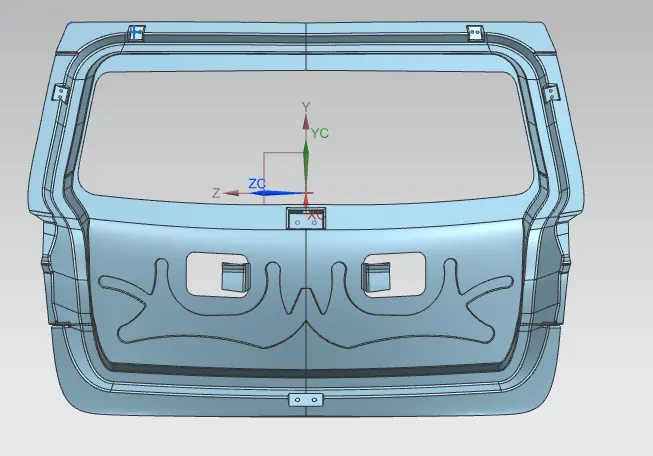
DRAFT ANALYSIS
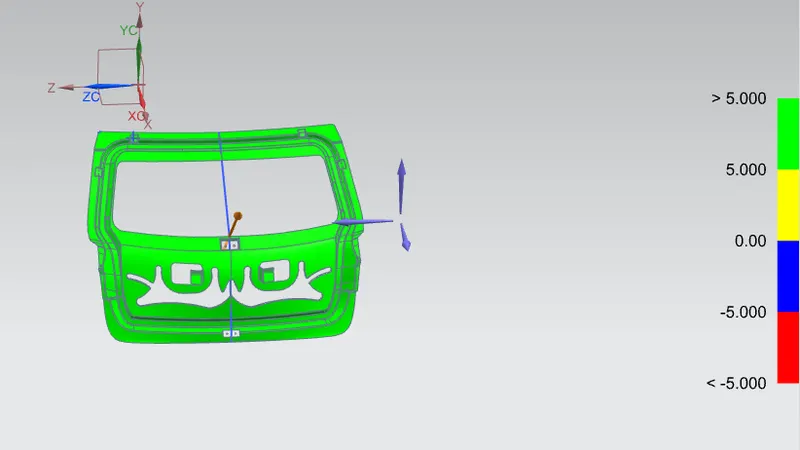
Draft analysis performed to check the designed part is suitable for stamping operation with respect to the tooling direction.We can find out the errors by using this feature.The minimum draft angle is 7.The negative draft is denoted by different colour so we can easily find out the unsuitable areas.
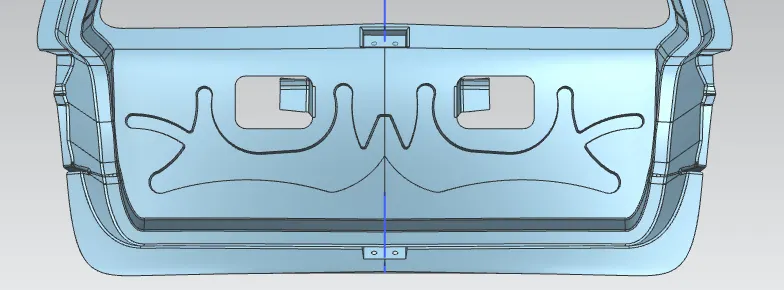
EMBOSS REINFORCEMENT
To strengthen the inner back door from collision we create emboss.
LATCH PLACEMENT
Hinge axis is taken as centre to draw a circle at the middle of the backdoor and latch is placed perpendicular to that circle.
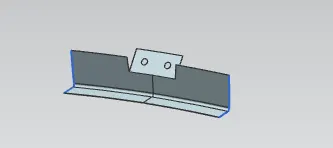
The striker is designed to create a tight fit between the door and the seal on the cab. The door open and shut several times in a day.So more force acting on this area.The reinforcement given in the latch and striker mounting area to increase the strength.it is spot welded on the inner panel
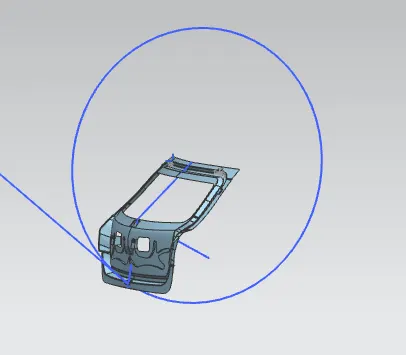
HINGE REINFORCEMENT
To Mount the back door into the roof and to open and close we create hinge reinforcement.

Tail Gate reinforcement
Tail gate are used to hold the door while at open condition.

HEMMING RELIEF
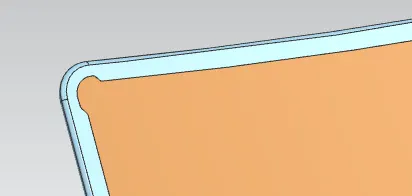
Hemming is the process of joining of two surfaces using set of rollers and to bend the parent part over the sub part.
Relief is given on the outer panel to decrease the stress concentration.
THICK BODY
CONCLUSION
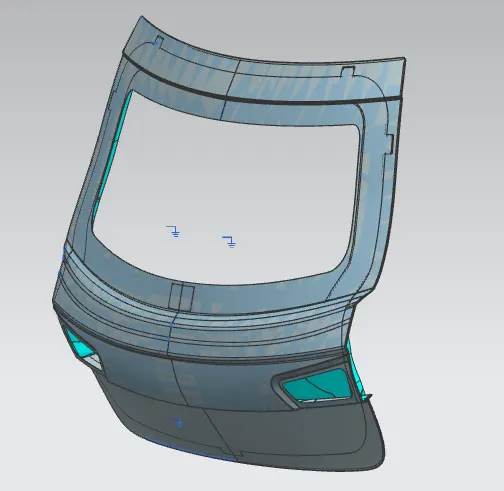
The backdoor is designed based on design considerations .Required reinforcement provided on inner panel. The design is checked by using draft analysis feature .