Design of backdoor
A tailgate or back door in a car is a movable door or gate located at the rear end of the vehicle. It is an essential component of various types of vehicles, including pickup trucks, SUVs, vans, and some hatchback models. The tailgate is designed to provide access to the cargo area or trunk of the vehicle, offering convenience for loading and unloading items.
It serves multiple important functions:
-
Cargo Access: The primary function of the tailgate is to provide a convenient and secure opening for loading and unloading cargo. It allows easy access to the rear storage space of the vehicle, enabling users to transport luggage, groceries, equipment, or any other items safely.
-
Vehicle Security: The tailgate incorporates locking mechanisms, such as latches and locks, to ensure the security of the cargo area. When properly closed and locked, it prevents unauthorized access and protects the contents from theft or damage.
-
Passenger Entry and Exit: In certain types of vehicles, especially larger ones like pickup trucks or SUVs, the tailgate can serve as a platform for passengers to enter or exit the rear seating area. By folding down or opening the tailgate, passengers can step onto it and easily access the rear seats.
-
Rear Visibility: The design of the tailgate often includes rear windows or rearview cameras, improving the driver's visibility when reversing or parking. These features help drivers monitor the area behind the vehicle, reducing blind spots and enhancing safety.
-
Aerodynamics: The tailgate plays a role in the overall aerodynamics of the vehicle. It is designed to minimize air resistance and drag, contributing to fuel efficiency. Modern tailgate designs often feature spoilers or sculpted contours to redirect airflow and reduce turbulence.
-
Tailgate Assist Features: Many vehicles now incorporate tailgate assist features, such as hydraulic or pneumatic systems, to assist in the opening and closing of the tailgate. These systems provide controlled lowering and lifting of the tailgate, reducing the effort required and preventing sudden drops or closures.
Design Methodology:
- From the given class-A skin data, the backdoor is modeled out.
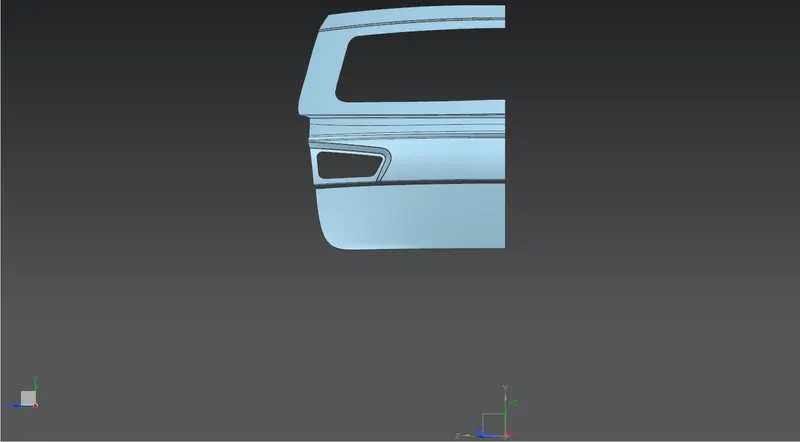
- In the given panel, the disjoint surfaces are reworked upon using either the Through Curve Mesh and/or Face Blends
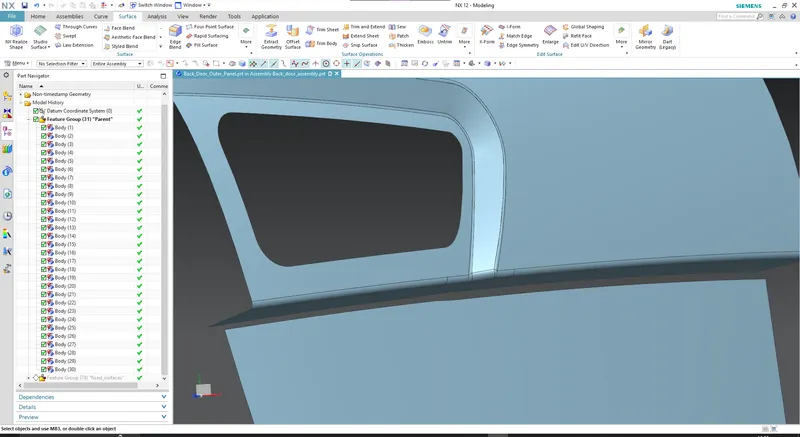
- The outerpanel lower and upper are disjoint. Using extend sheet, they are modeled so that they can be spot welded together.
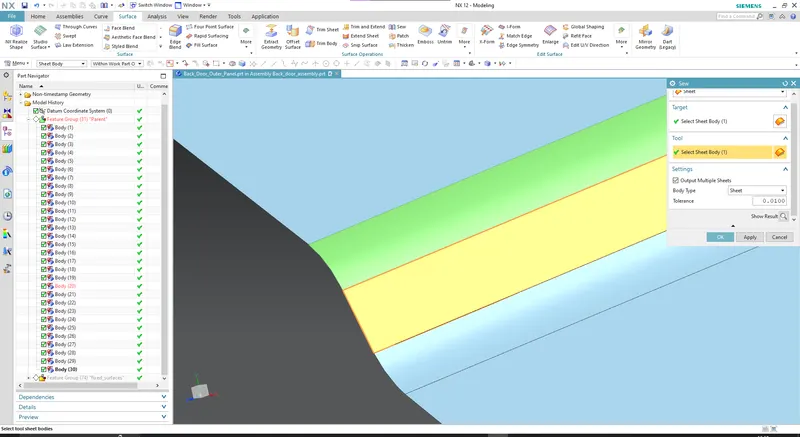
- The given surfaces are disjoint.
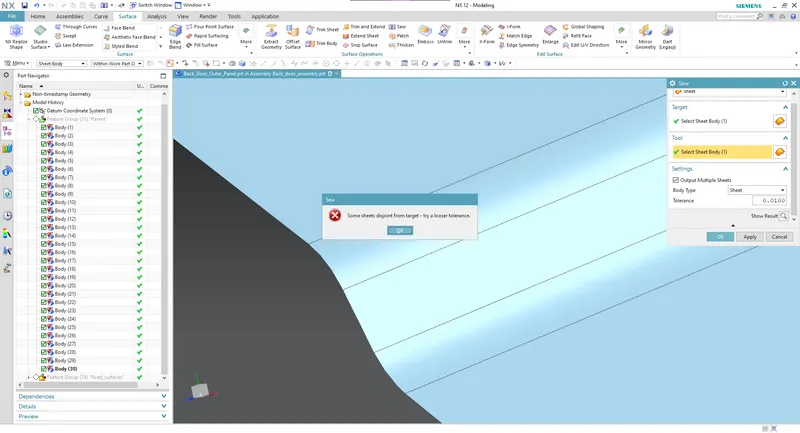
- Once reworked upon, the fixed surface is saved as a .Part file
- New part files are created inside the Backdoor Assmebly.
- Using Wave Geometry Linker the relevant surfaces are extraced into the active workpart.
For the inner panel, the sealing flange is designed first. The function of element is to ensure that the backdoor has Ingress protection from any fluid or microparticle contaminants.
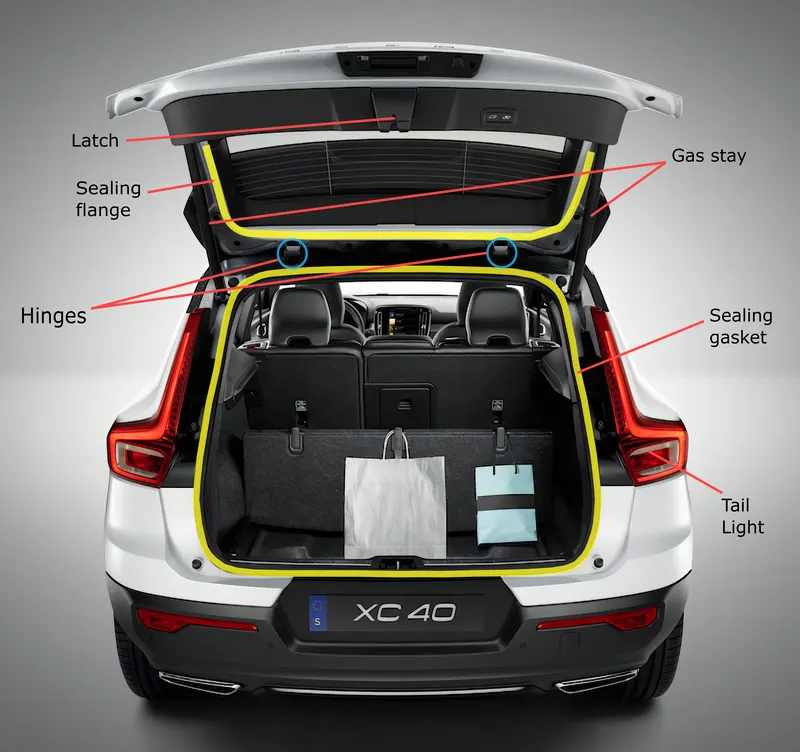
Using thourhg offset surface, offset in face, bridge curveand thorugh curve mesh, the sealing flange is designed in such a way that it fulfills its functional requirement as well as doesn't impede other sub-parts from functioning (for example space between hemming flange and the inner panel should be adequate)
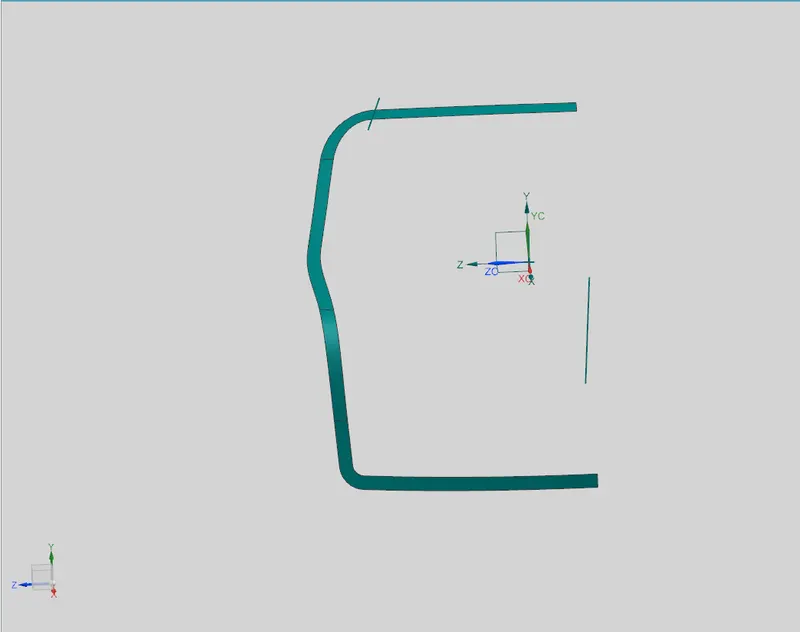
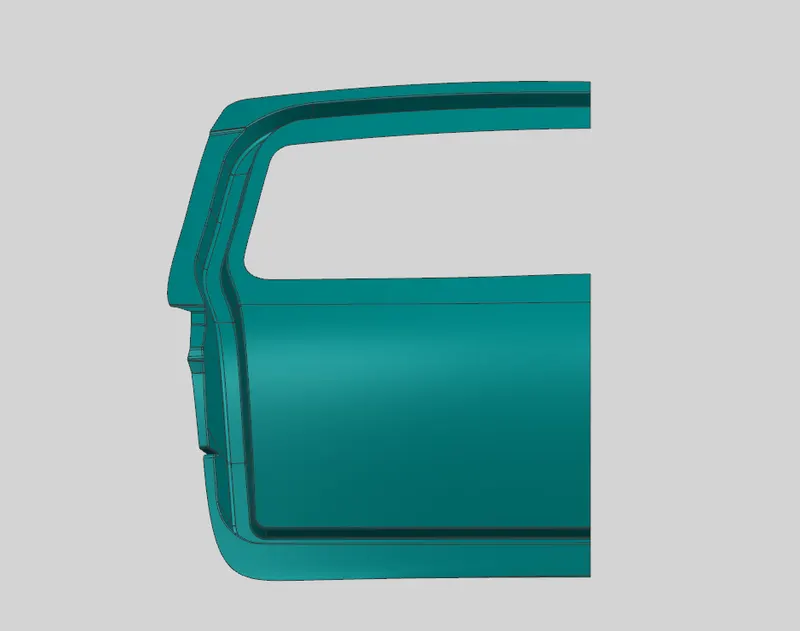
- Embossing is employed to strengthen or reinforce sheet metal components. By adding raised ridges or indented channels, the embossed areas provide additional stiffness and rigidity to the sheet metal, increasing its resistance to bending or deformation. By strategically placing embossed patterns or features, the sheet metal's structural integrity can be enhanced in specific areas.
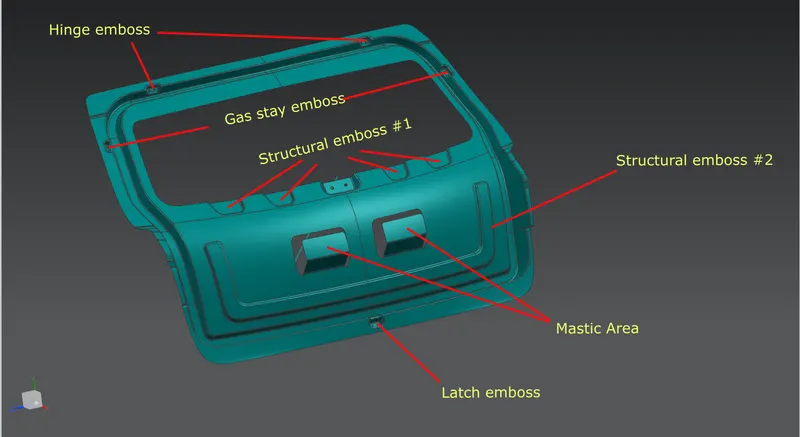
The embosses apart from the ones mentioned as structural embosses have holes in them to accomodate for fasteners, which leads to reduced structural integrity. This calls for reinforcements in those specific areas. They act as the structural backbones in those areas.
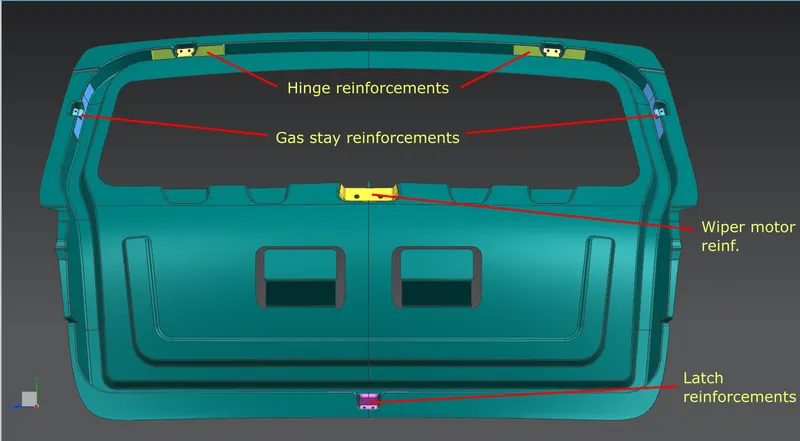
- Hemming : Hemming is a sheet metal forming technique used to create a folded edge along the perimeter of a sheet metal component. It involves bending the edge of a sheet metal panel back onto itself, resulting in a double-layered edge that offers improved strength, durability, and aesthetics.
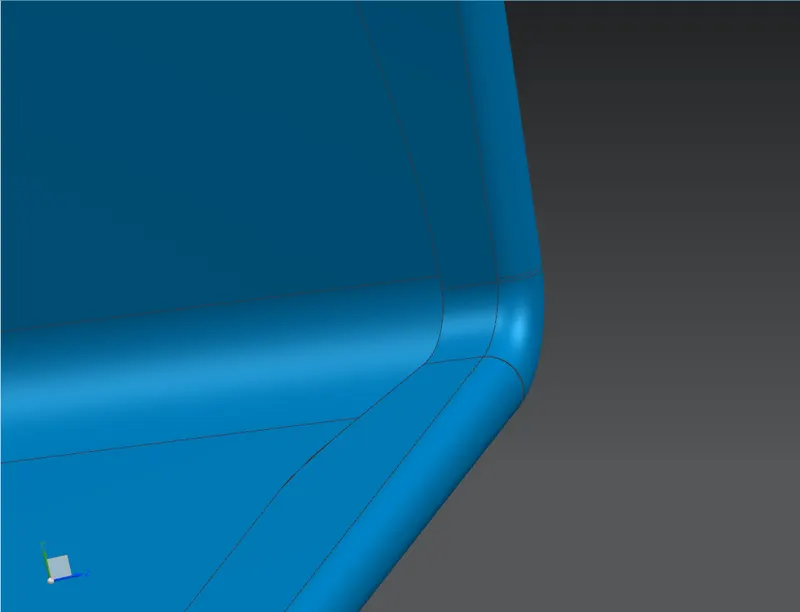
- Hemming relief, on the other hand, is a design feature added to the hemmed edge to allow for easier folding and prevent interference during the hemming process.
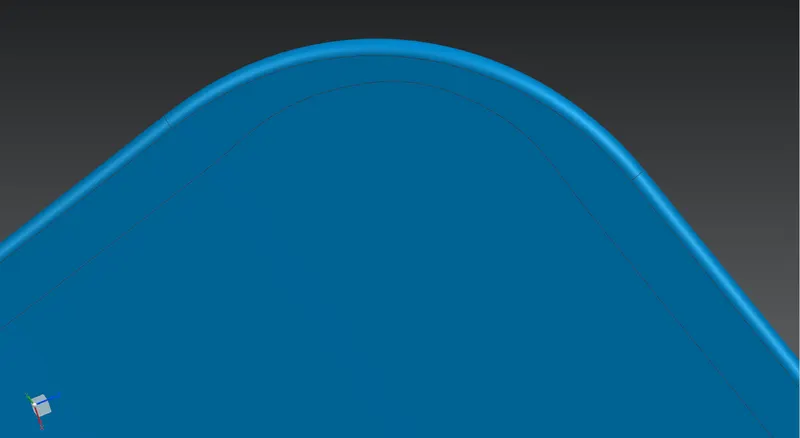
- It involves creating a small notch or relief cut at specific locations along the edge to allow for easier folding and prevent interference between the layers of the hemmed edge.
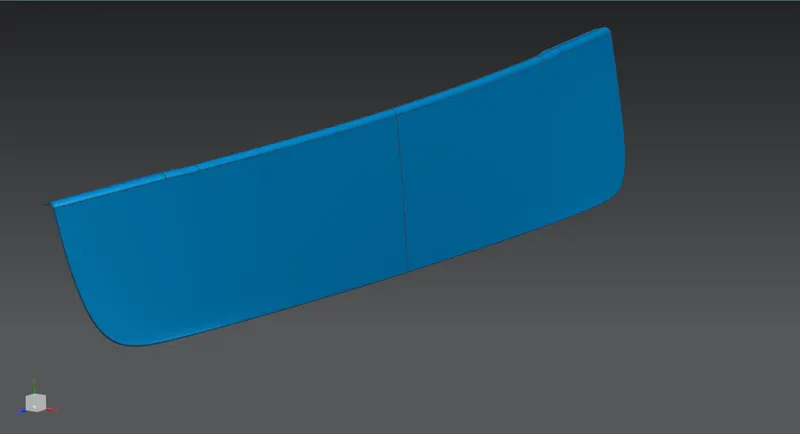
Outer Panel (Upper/Lower)
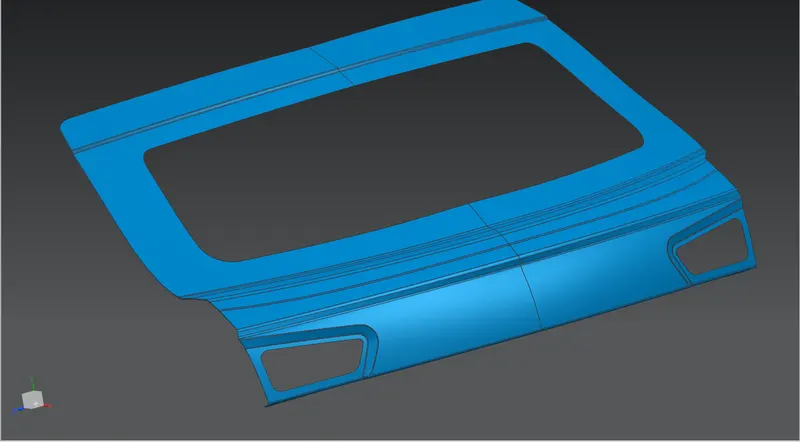
Draft Analysis: Draft analysis is a crucial aspect of sheet metal drawing and involves examining the geometry and design of a sheet metal part to ensure successful fabrication and assembly. It refers to the evaluation of the angles and tapers incorporated into the design of the part's surfaces. The purpose of draft analysis is to assess the manufacturability of the part and identify any potential issues or challenges that may arise during the sheet metal forming process.
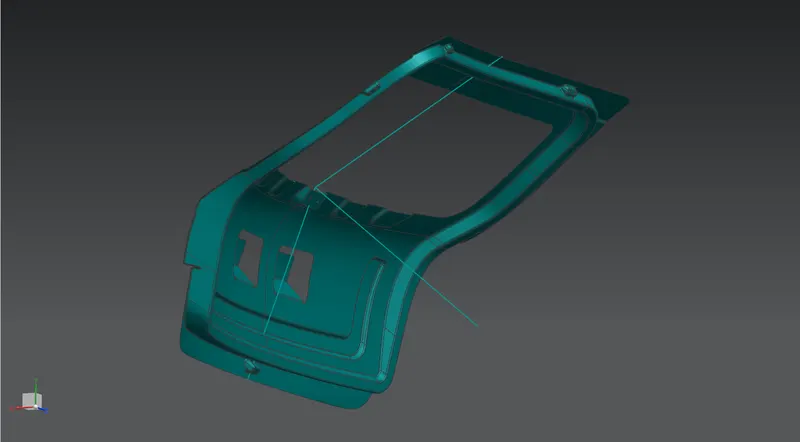
Tooling axis is defined using two line which connect the center of the outer panel skin to the two farthest endpoints. Then a bisecting line is created using these two reference lines.
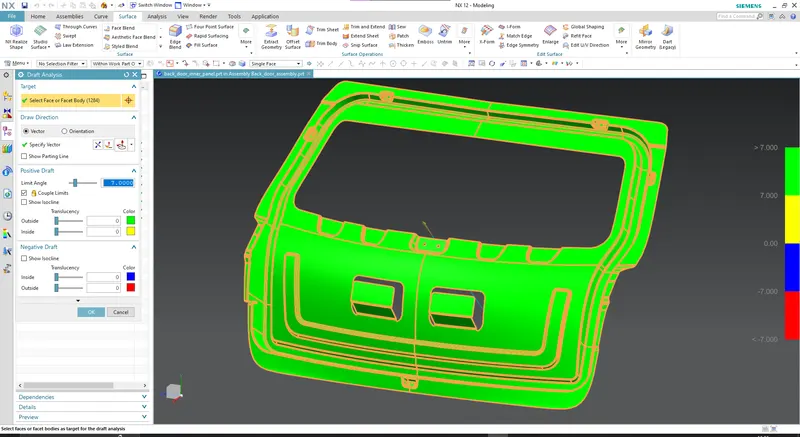
The draft analysis for a minimum draft of 7° clears the inner panel design.
Latch Trajectory:
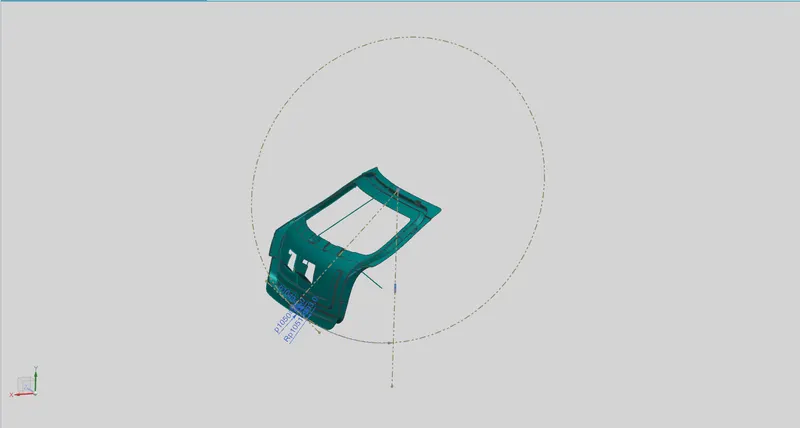
This is used to ensure that the latch on the inner panel will meet the striker on the floor part of the vehicle. This is the trajectory of the latch w.r.t the hinge axis (the tailgate rotates about the hinge axis)
Once the parts are created, using the thicken command the surfaces are converted into bodies.