Design of backdoor
Design of Backdoor
BACK-DOOR DESIGN
Objective:
Use the provided styling surface to come up with a back door design, use appropriate design methodologies and provide the necessary reinforcements and embosses.
Software Used: NX CAD
AIM:
Use the provided styling surface to come up with a back door design, use appropriate design methodologies, and provide the necessary reinforcements and embosses
INTRODUCTION:
BACK DOOR :
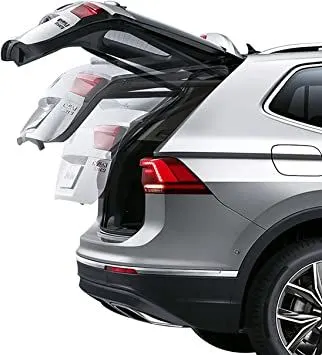
Back door or tail gate simply refers to the back of the car that can open and close.it covering the rear of the vehicle.It provide access to a cargo area (trunk/boot ).A tailgate hinged at the roof is a predominant characteristic of hatchbacks, estates/station wagons and liftbacks .The door or opening of a cargo area may be hinged at the top, side, or bottom.
In most cars, usually this process will be done manually. One has to get down the car to open and close the tail-gate with the car key.Nowadays, automobile manufacturers providing Advanced features like the automated tail-gate. An automatic tail-gate in the car will do the process of shutting and opening the tail-gate electronically.
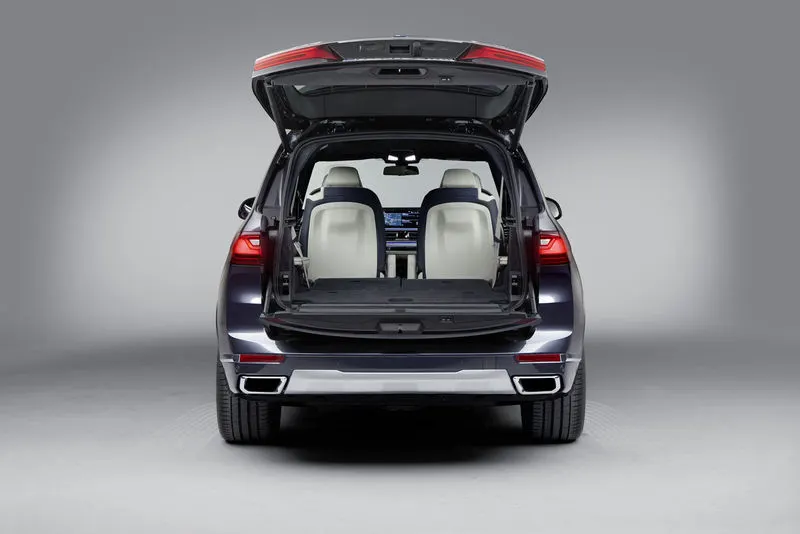
Conventional tailgate assemblies are made from stamped metal panels welded together to form a tailgate. Latches are added on either side of the tailgate to engage a striker on the pickup sides. A handle operates the latches to open and close the tailgate assembly. Steel tailgate assemblies provide a durable and secure closure for the pickup bed.
Another disadvantage of steel tailgate assemblies is the cost of the tooling required and equipment required to stamp metal tailgate components. Metal tailgate components are generally produced in a large stamping press. The stamping presses generally require finely machined tools made from hardened steel. The cost of tooling a metal tailgate is much more expensive.
Side Mounted Doors :
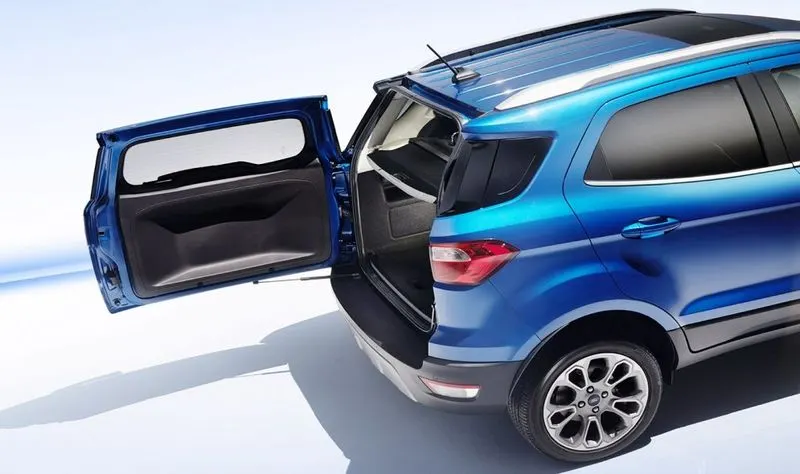
As the name signifies side-mounted doors are the one which is used in the van type MPVs, SUVs, pickup truck vehicles. These side-mounted doors or barn doors are a lot easier compared to top-mounted doors. These doors are generally smaller in size and can be easily accessed.
Components to create:
- Outer Upper Panel.
- Outer Lower Panel.
- Inner Panel.
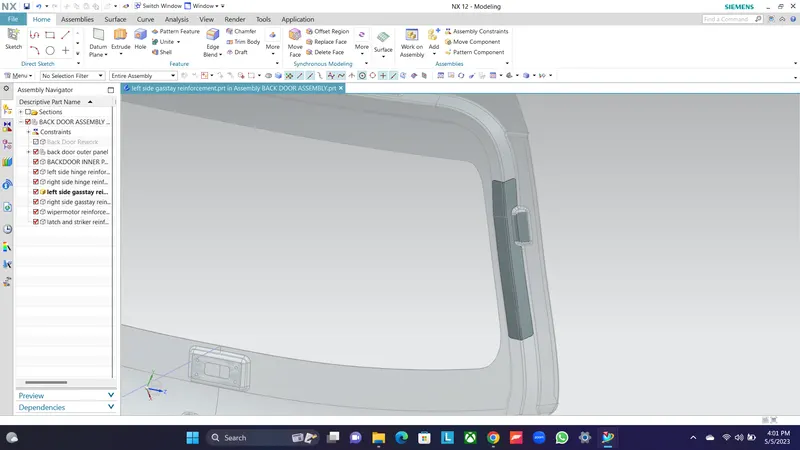
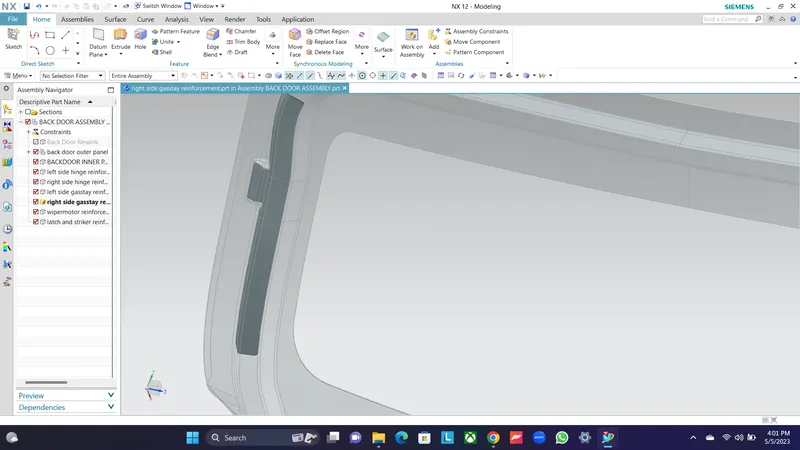
- Gas Stay Reinforcement LH And RH.
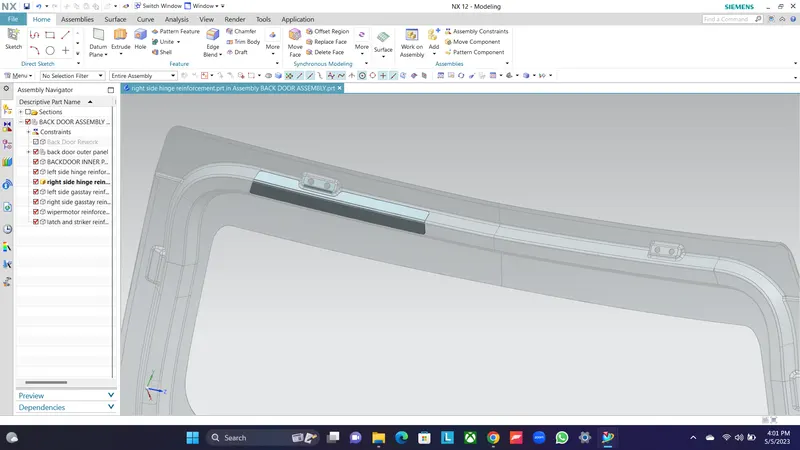
- Hinge Reinforcement LH and RH.
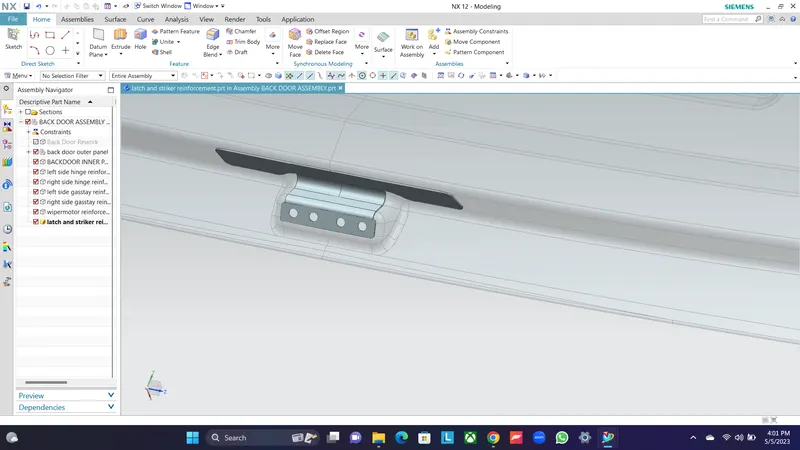
- Striker Reinforcement.
- Wiper Reinforcement.
Checking the Geometry:
- Once the model is opened, we get a Class A Surface of the back door.
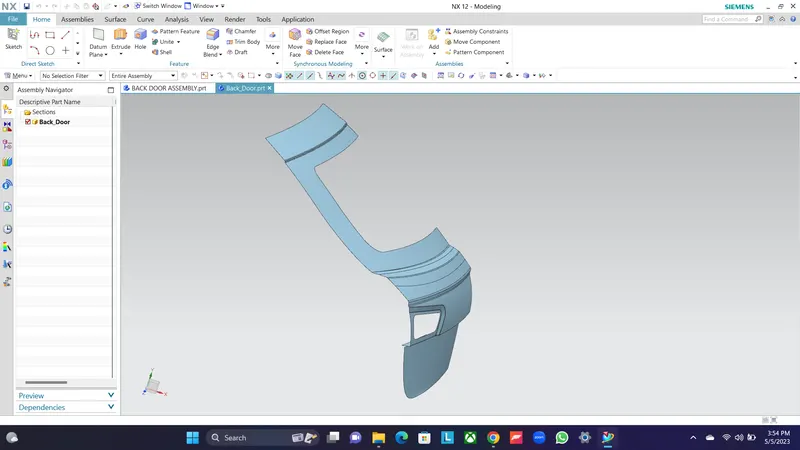
- Try joining the Upper surface of the car, if the surface sews together, we get the outer surface and if the surface didn’t join then we need to create the surface by using studio surface tool
- Create the fillet areas, Tail Lamp areas as those areas will be vulnerable and are unable to join together.
Tooling Direction:
The back door is going to be manufactured by deep drawing process. In Deep Drawing process have a tool which is core and Die. The core part follows the single Straight path the inclination angle of the core is known as a tooling direction. The tooling direction/axis is created so, that the Manufacturing team take the reference of this tooling axis and manufacture the part accordingly.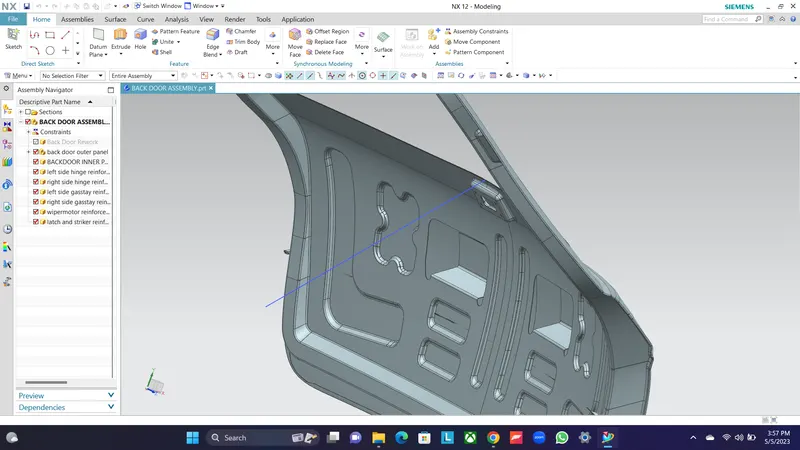
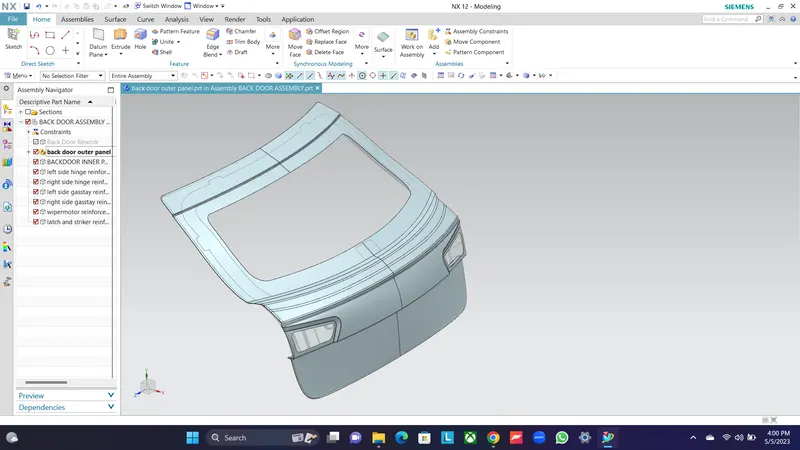
Back door outer panel:
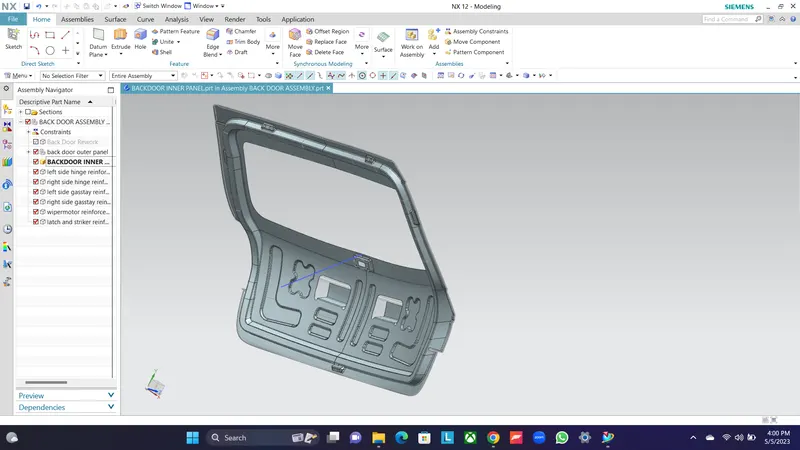
Back door inner panel:
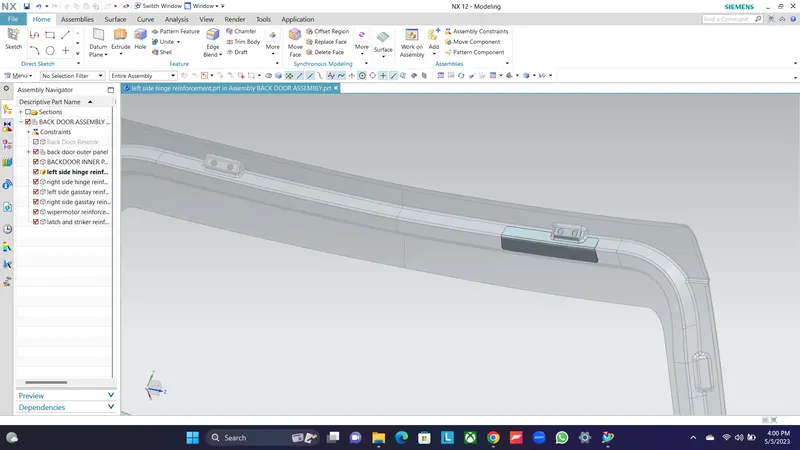
Hinge reinforcements:
Gas stay reinforcements:
Latch and striker reinforcements:
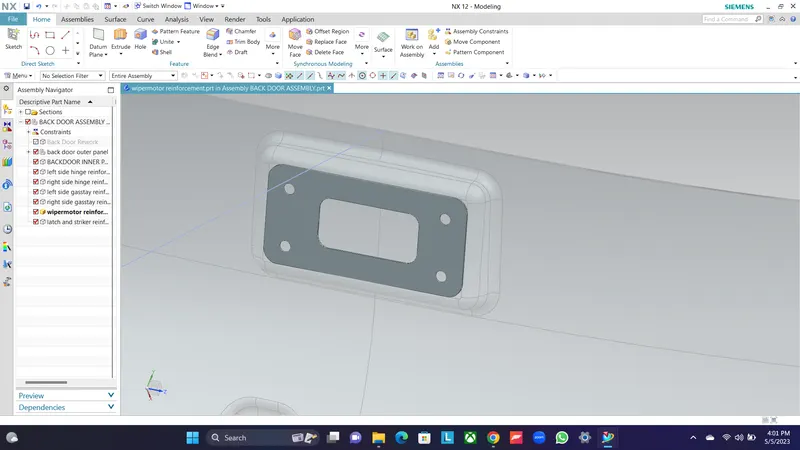
Wiper motor reinforcements:
Hemming Process:
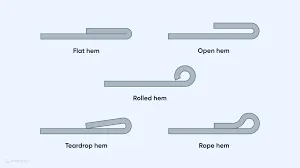
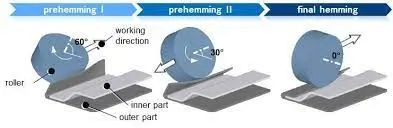
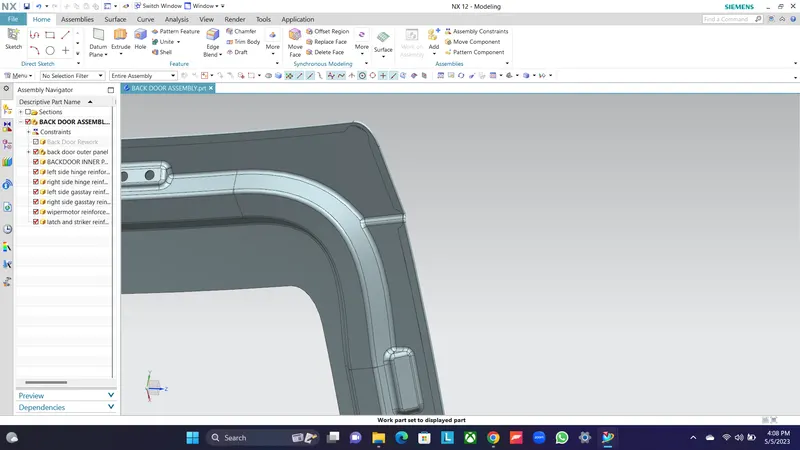
Hemming is a sheet metal forming process in which sheets are joined by bending it to 180°. Automotive body panels and automotive parts such as deck-lids, trunk-lids, doors, hoods and tailgates are formed by hemming process. In this process, usually a sheet is bent with the help of inner sheet in three different stages.
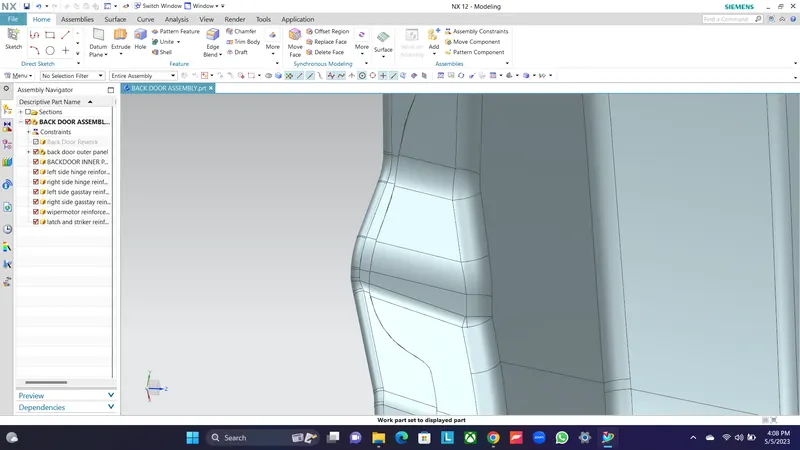
Mastic Selents:
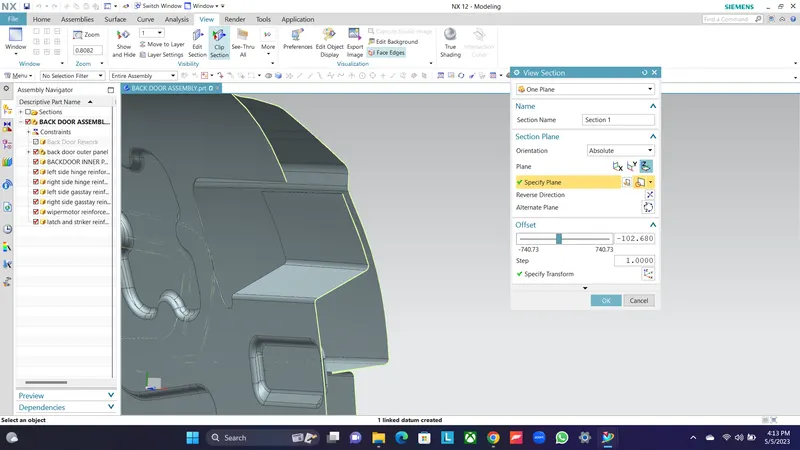
Draft Analysis:
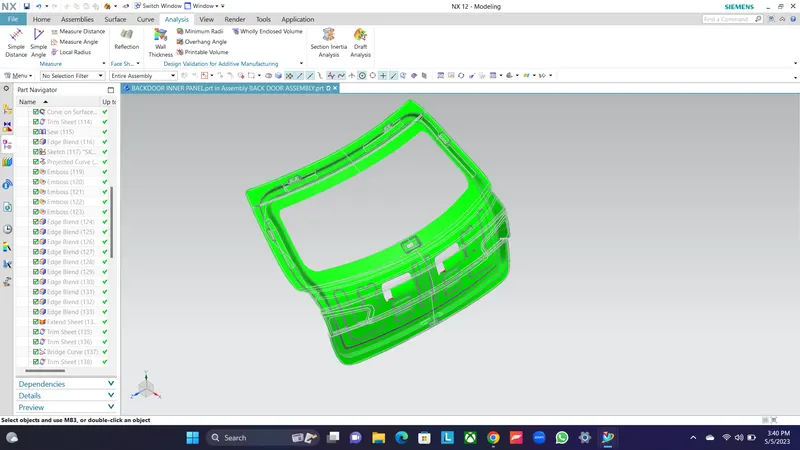
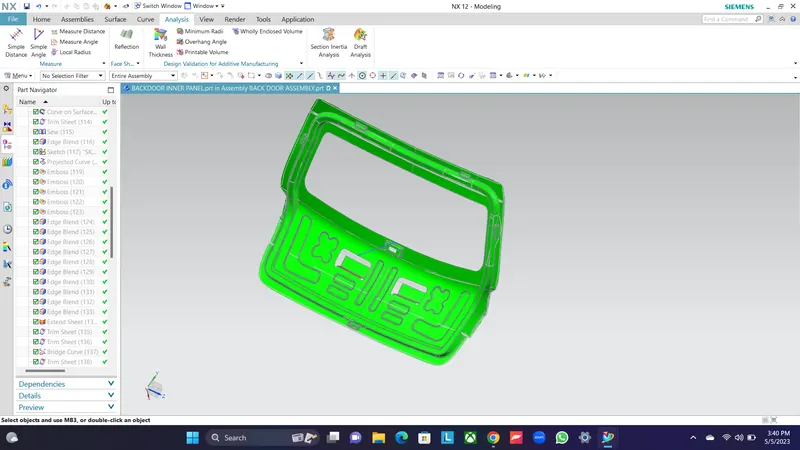
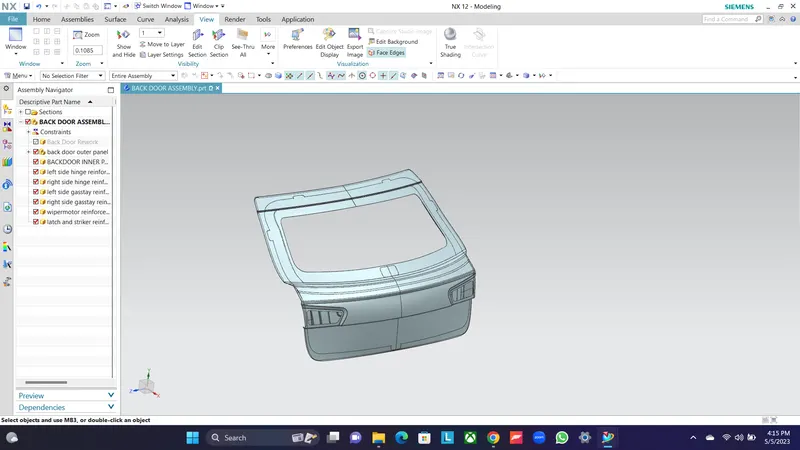
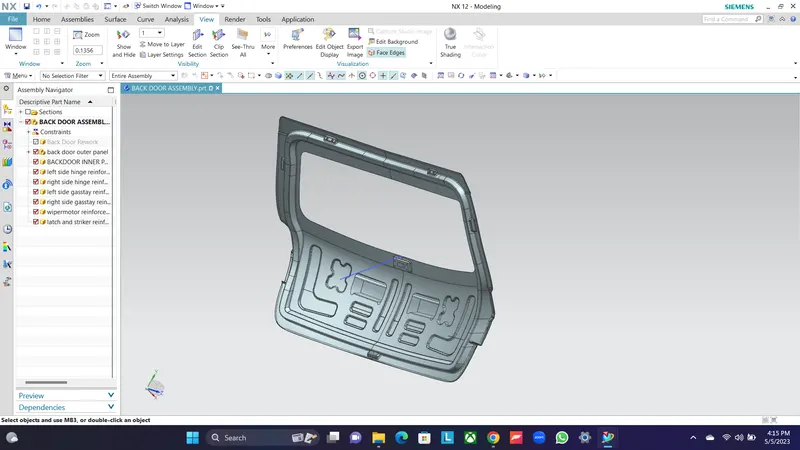
Assembly Images:
Conclusion:
Thus the back door was designed from the given styling surface and Draft analysis is also done on the inner panel to check the manufacturing conditions. In this challenge i learned to design the Inner panel, the Outer panel, Wiper Motor reinforcement, Hinge reinforcement, Gas Gtay reinforcements, Latch and Striker reinforcement and its position.